
In this answer
Short answer
A heat pump on a time-of-use tariff can cut running costs by a meaningful margin, and the published estimates cluster in the low hundreds of pounds a year. Nesta's research found heat pump owners could save up to £600 per year just by switching to a time-of-use tariff1. The Energy Saving Trust puts the figure for a heat pump appropriate tariff at up to £330 a year on heating bills2, and Energy UK's clean heat work gives £260 a year for an air source heat pump3. A separate Nesta study modelled a time-of-use tariff for heat pumps saving customers £318, or 18% of annual energy bills4.
Those are modelled or reported figures, not guarantees. The same body of evidence records that where heating patterns are not well aligned to the tariff, time-of-use tariffs can increase fuel bills5. The saving depends on how much of a household's heat and hot water can be moved into the cheap window, and on the ratio between the cheap and peak rates.
Why heat pumps suit time-of-use tariffs better than other homes
Time-of-use tariffs are most suitable for households with heat pumps, electric hot water systems or solar technologies, where they can offer meaningful savings7. The reason is that a heat pump can be run at almost any hour without the household noticing much difference. Smart Energy GB's guidance states that heat pumps can keep homes comfortable on smart tariffs by heating steadily at times when electricity is cheaper, without noticeable change for most households8.
That flexibility is what a flat tariff cannot reward. A gas boiler gives a household no way to buy its heat at a cheaper hour, because the fuel price does not vary. A heat pump runs on electricity, and electricity prices vary throughout the day, usually with a cheaper overnight charging window9. The same tariffs work for heat pumps, battery storage and large appliances too10.
Heat pumps are also suitable for almost all types of home, so the tariff question is not restricted to a narrow group of properties11. What does restrict it is thermal performance. Heat pumps are more efficient in well-insulated homes, and draughts or poor roof insulation can cause substantial heat loss and wasted energy12. A leaky home needs more heat, and more of that heat has to be bought at whatever rate applies when the household is cold, which is often the peak.
The dependence that remains is worth stating plainly. A heat pump on a time-of-use tariff is still connected to the grid and still bought from a supplier. The household gains control over when it buys, not over whether it buys. The tariff is a commercial product that a supplier can withdraw or reprice, and the saving exists only for as long as the cheap window does.
How the savings are achieved: shifting heating and hot water to cheaper hours
The mechanism is straightforward. Time-of-use tariffs offer cheaper electricity during off-peak hours, such as at night, when demand is low13. A heat pump that can be told to work harder in those hours, and to coast through the expensive ones, converts that price signal into a lower bill. The Energy Saving Trust's fact check states that switching to a heat pump time-of-use tariff that charges a different rate at different times of day could save money on bills14, and its in-depth guide says the same: switching to a heat pump time-of-use tariff should reduce the cost of running the heat pump, making it more likely that a household saves money15.
Two things make the shift possible. The first is that heat pumps can provide both space and water heating, which significantly lowers fuel bills16. Hot water is the easier load to move, because a cylinder can be reheated in the cheap window and drawn on later. The second is the way a heat pump prefers to run. Guidance for heat pump homes notes that leaving the heating on all day can save money, because heat pumps function differently to boilers and rely on good insulation to work efficiently17. Steady low-level operation fits a cheap overnight or early-morning window far better than a short, sharp evening burst.
Nesta's assessment of air-to-water heat pumps found that consumers using time-of-use tariffs can significantly reduce running costs, with further reductions possible for those with solar panels or battery storage18. The Heat Pump Association's background paper modelled an interim heat pump tariff discount that would decrease the cost of electricity faced by heat pump consumers by 12% in 2024 and by 24% in 2026 under central price forecast assumptions19. That is a modelled policy scenario, not an offer available to a household today.
"Time-of-use tariffs, for example, offer cheaper electricity during off-peak hours (like at night) when demand is low."
Tariff types: flat, two-level and three-level time-of-use structures
Ofgem's consumer guidance describes three main types of tariff: fixed rate, standard variable tariff and multi-rate20. The multi-rate group is where time-of-use sits. Within it, the structures differ in how many price levels they carry and when those levels apply.
| Structure | How it prices electricity | What suits it |
|---|---|---|
| Flat rate | One unit rate at all hours | Households that cannot shift load |
| Two-level time-of-use | A cheaper overnight window and a higher rate for the rest | Heat pumps with a cylinder that can be reheated at night |
| Three-level time-of-use | Cheaper periods during the day or night, and an expensive period | Heat pumps with storage, solar or a battery that can cover the peak |
The Energy Saving Trust's integrated electric home case study describes a three-level time-of-use tariff that offers three price levels across the day21. Its tariff guidance for renewable technology notes that a household will probably do best with a heat pump tariff that includes a peak rate, so that a battery can power the heat pump during the expensive period22. Heat pump tariffs generally offer one or more cheaper periods of electricity during the day or night, and maybe an expensive period too22.
Availability is not the constraint. The Energy Saving Trust's flexible futures work states that there are tariffs available now that can unlock these kinds of savings23. The same research warns that some tariff types might actually increase energy bills, which is why the structure matters as much as the headline cheap rate23. EDF Energy is one supplier with tariffs for heat pumps and electric vehicles, among others24.
What affects your actual saving: insulation, monitoring and controls
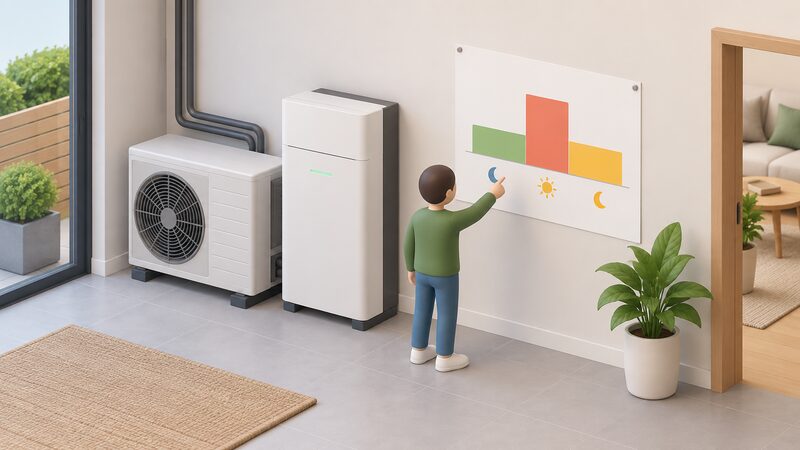
The headline figures assume a household that can move load. Fabric is the first constraint. Topping up wall, floor and loft insulation before installing a heat pump will help reduce its running costs25. Adding insulation to water tanks and pipes, and insulating behind radiators, reduces the amount of heat lost, so less money is spent heating water and hot water stays hotter for longer26. Both measures raise the share of heat that can be bought in the cheap window, because a better-insulated home holds warmth long enough to ride through the peak.
Controls are the second constraint. A heat pump needs a controller that knows the tariff and acts on it. The Energy Saving Trust's flexible futures report found that savings from a heat pump, solar and battery combination do not rely on households changing their heating patterns or actively altering their behaviour to respond to tariff signals27. That matters for anyone who does not want to manage a system by hand: the automation does the work, provided it is configured.
Take-up is the third constraint, and it is the weakest link in the chain. An Ofgem consultation published in August 2025 records that the number of heat pump users on specialised tariffs is low, at less than 5%6. The tariffs exist, the modelled savings are documented, and almost all heat pump households are still on something else.
Will a time-of-use tariff still save money if heating runs in the evening?
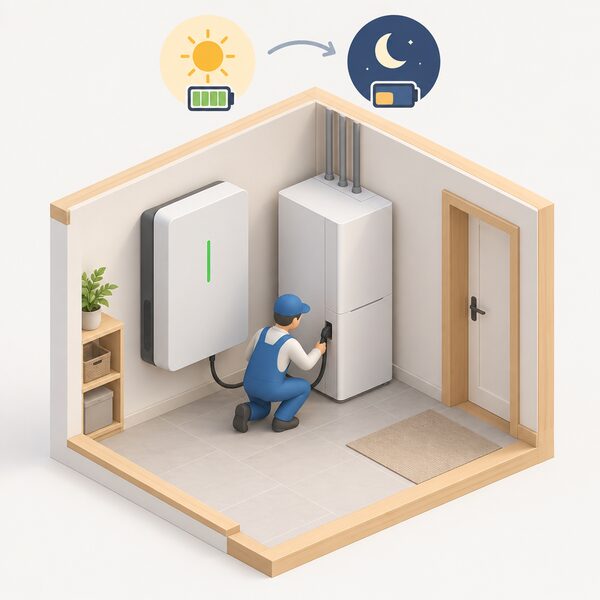
It can, but the margin depends on how much of the day's heat is bought at the cheap rate. A household that heats mainly in the evening peak pays the higher rate for most of its consumption, and the cheap window does little work. The Energy Saving Trust's tariff guidance is explicit that a heat pump tariff with a peak rate is best paired with a battery that can cover the expensive period22. Without storage, the evening load is bought at the peak rate.
There is a second route for evening comfort that does not involve the tariff at all. An air-to-air heating and cooling system can be especially cost-effective in a smaller house or flat with relatively few rooms, particularly homes that overheat in warm weather28. That is a different product from a wet heat pump system, and it is covered in more detail on the air-to-air heat pumps page.
For most households the practical answer is that the cheap window has to cover the bulk of the heat demand, not a slice of it. A well-insulated home with a cylinder that reheats overnight, and a controller that pre-warms the fabric before the peak, can do that. A poorly insulated home that switches the heating on at six in the evening cannot.
Heat pump plus solar and battery: where the bigger savings sit
The largest documented savings come from combining technologies. Energy UK's clean heat work found that a combination of a heat pump, solar and a battery can save households £810 more per year when operated flexibly on a time-of-use tariff, compared with the same assets not operating flexibly on a single-rate tariff3. The same study reports that in some cases energy bills were reduced by more than 80% compared with a gas-heated home on a standard tariff27.
The pairing advice is specific. The Energy Saving Trust states that batteries are better paired with heat pumps than with solar panels2. If a household already has solar panels, it can save more by using the free energy they generate to power the heat pump, and a solar battery can increase savings further by storing the sun's energy to power the heat pump later in the day25. The solar and battery with a heat pump page covers the equipment side.
Storage is not only for solar households. Independent case-study evidence says a battery is still useful on a time-of-use tariff without solar panels, especially with a heat pump or high electricity use21. A household with an electric vehicle charger should look at a heat pump tariff rather than an EV tariff if it also has a heat pump, because much of the EV tariff's cheap rate electricity cannot be used to run the heat pump22.
The limits, and what independence a tariff actually buys
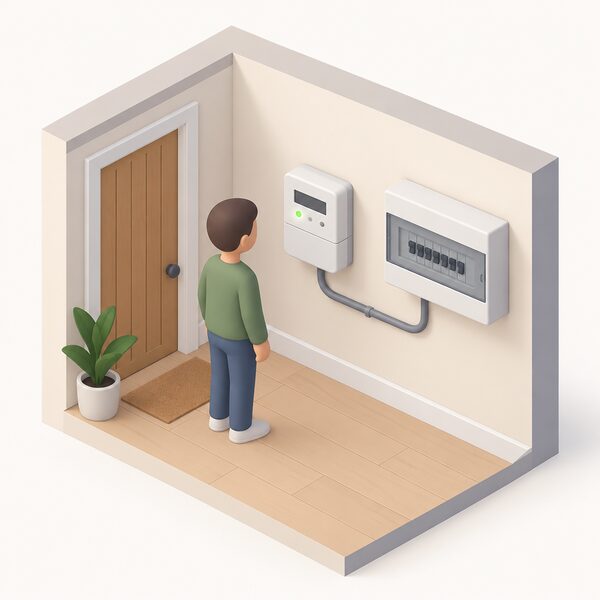
A time-of-use tariff changes when a household buys electricity, not who it buys from. The grid connection, the supplier relationship and the meter all remain. What the household gains is a degree of control over the price it pays, and that control is real but bounded: it depends on a smart meter, a supplier that offers the tariff, a controller that can act on the price signal, and a home that holds heat long enough to skip the peak.
The evidence base is consistent on the direction and inconsistent on the size. Reported and modelled annual savings for a heat pump on a time-of-use tariff run from £260 to £6003, with a separate modelled figure of £318, or 18% of annual energy bills4. The spread reflects different assumptions about the home, the tariff and how much load is shifted. A household weighing a switch is looking at a range, not a number.
The gap between the available saving and the take-up is the most useful single fact on this page. Less than 5% of heat pump users are on specialised tariffs6, while independent research describes the tariffs as available now23. For a household considering its energy independence, the tariff is one of the few levers that requires no new equipment, only a smart meter and a controller that uses it. The heat pump running costs page sets the tariff question against the wider cost picture, and the heat pumps and energy independence page covers what self-sufficiency a household can and cannot reach.
Sources28 cited
- Tech-affluent households are starting to make use of time-of-use tariffs, Nesta, 2025-08-06
- Renewable technologies: what really cuts energy bills, Energy Saving Trust, 2026-08-12
- Clean heat: supporting low-income households, Energy UK, 2026-06-11
- HeatFlex: the untapped potential of automated heat pump flexibility, Nesta, 2024-11-19
- Heat pump transition report, Department for Energy Security and Net Zero, 2026-05
- Smart meter Guaranteed Standards of Performance draft impact assessment, Ofgem, 2025-08
- Beyond retrofit: helping households benefit from the energy transition, National Energy Action, 2026-07-14
- How smart meters work with heat pumps, Smart Energy GB, 2026-04-24
- EV tariffs and home charging: what consumers need to know, Energy Ombudsman, 2026-09-11
- Should EV owners get fixed or time-of-use tariffs?, Uswitch, 2025-07-02
- Heat pumps, Energy Saving Trust, 2026-06-11
- How do heat pumps work, Smart Energy GB, 2026-03-16
- What is consumer-led flexibility and what it means for your home and business, Low Carbon Hub, 2025-10-17
- Heat pump fact check, Energy Saving Trust, 2026-07-01
- In-depth guide to heat pumps, Energy Saving Trust, 2026-07-16
- Heat pumps, Renewable Energy Association, 2026-09-17
- The best way to run your central heating to save money, ivie, 2026-09-20
- Air source heat pumps (air to water), Nesta, 2025-02-03
- Accelerating heat pump deployment: domestic interim heat pump tariff, Heat Pump Association, 2024-01
- Understand your electricity and gas bills, Ofgem, 2026
- Integrated electric home case study, Energy Saving Trust, 2026-08-12
- Tariffs for renewable technology, Energy Saving Trust, 2026-08-12
- Flexible futures: integrating smart tariffs with low-carbon home technologies, Energy Saving Trust, 2026-07-10
- EDF Energy, Energy Helpline, 2026-09-20
- Is now a good time to get a heat pump, Energy Saving Trust, 2025-12-12
- Stay warm in winter: five areas to add insulation in your home, Energy Saving Trust, 2025-02-07
- Supporting households with low-carbon technology combinations, Energy Saving Trust, 2026-07-15
- How a heat pump can cool your home, Which?, 2026-07-17
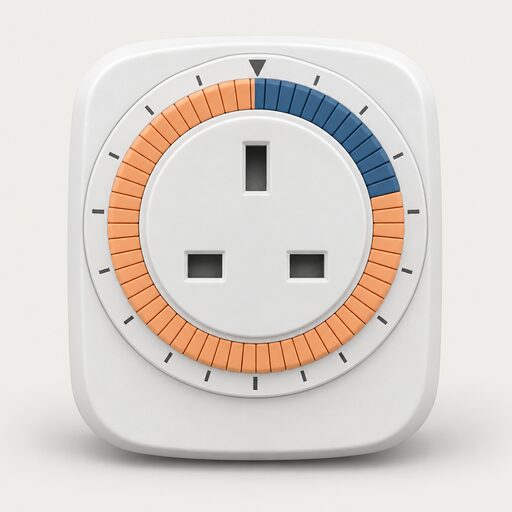 Heat Pump Electricity TariffsA heat pump tariff gives you cheaper electricity for part of the day, so running your heating costs less than on a standard rate.
 Time-of-Use Tariffs ExplainedCan you pay less for electricity by using it at different times of day?
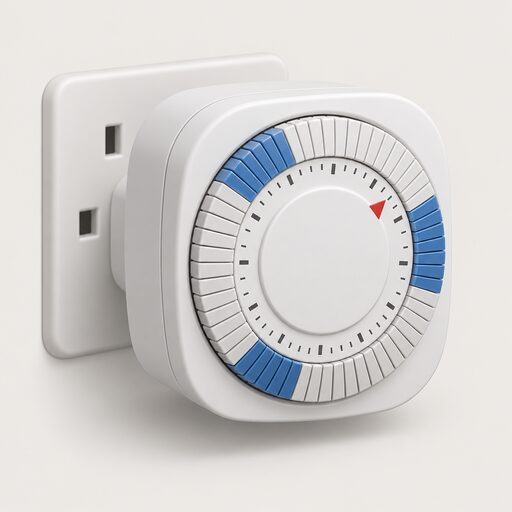 Controls and Time-of-Use TariffsCheaper electricity at night only saves money if your heating actually uses it then.
 Tracker vs Price CapTracker tariffs can cost more than the price cap, so how do they compare?
 Heat Pump Running CostsWhat does a heat pump cost to run each year, and is it cheaper than a gas boiler?
 Meters and Time-of-Use TariffsDo you need a smart meter for a time-of-use tariff, and does it have to send readings every half an hour?