

In this comparison
An EV tariff is a multi-rate electricity product built around a cheap window, usually overnight, that is designed for charging a car. A standard tariff is a single-rate product: one unit price whatever the hour. Ofgem groups household tariffs into three main types, fixed rate, standard variable tariff (SVT) and multi-rate, and the EV tariff sits in the third group1.
The gap between the two is the reason households ask. Standard tariff electricity unit rates have been reported at 26.16p per kWh against 20.99p per kWh on the cheapest fixed deal, a difference of 5.17p per kWh, with standard tariff unit rates 31% higher than that fixed deal2. Off-peak home charging has been quoted at 7p per kWh, while a typical public rapid charger runs at 79p per kWh3. The cheap window is what closes that gap, and it is also what limits it: an EV tariff usually applies the lower rate only to EV charging, not to the rest of the home's electricity use4.
What an EV tariff is and how it differs from a standard tariff
A standard variable tariff is the default product. The price paid can go up or down with the cost of buying energy on the open market, and it is the tariff a household lands on when a fixed deal ends or when it has never switched8. Ofgem's price cap protects households on standard variable and default tariffs9. Standard variable tariffs are usually the most expensive tariffs offered by energy companies, and a standard variable dual fuel tariff will cost more than a fixed dual fuel tariff most of the time10.
EV tariffs work differently. They are typically two-rate tariffs, where it is cheaper to use energy at night, so the car can be charged more cheaply overnight12. Many follow the shape of Economy 7, with a lower unit rate for seven hours during the night13. The newer versions are more dynamic than Economy 7 or Economy 10, which use fixed cheaper periods, and usually work best with a smart meter14.
There are two broad structures. Two-rate tariffs, also called Time of Use or TOU, move the whole supply between peak and off-peak prices. Type of Use tariffs are add-ons to an existing energy tariff, offering cheaper rates just for the specific energy used to charge the EV, with the cheaper kWh cost applying at any time of day or night15. A third shape, the add-on EV tariff, lets a consumer keep their existing household tariff and receive separate EV charging discounts, credits or other benefits16. Some tariffs add credit for a number of free miles, public charging network membership, environmental incentives or event tickets17.
The practical difference for a household is control. A standard tariff asks nothing of the timing of charging. An EV tariff pays for timing, and in return the supplier needs to know when the electricity went into the car.
Rate application: the cheap window usually covers the car, not the house
This is the point most often misunderstood. An EV tariff usually applies the lower rate only to EV charging, not to the rest of the home's electricity use, which is what separates it from a standard time-of-use tariff4. A dishwasher run at 2am on an EV tariff may not attract the cheap rate at all.
Type of Use tariffs take the opposite approach in one respect: the cheaper rate applies to the specific energy used to charge the car, and it applies at any time of day or night15. That suits a household whose charging cannot be shifted, but it removes the incentive to charge overnight.
Where off-peak or peak pricing is displayed for an EV tariff, it is part of the standard EV tariff rather than an option available to all customers17. Costs also vary by region and by household, so the headline rate on a supplier's page is not a national figure17.
VAT follows the same rule for both tariff types. Electricity for domestic and residential use attracts the reduced rate, while fuel for business use is usually standard-rated18. VAT is charged at the lower 5% level for domestic energy, which is why home charging is treated more favourably than road fuel, where VAT is generally charged at 20%7.
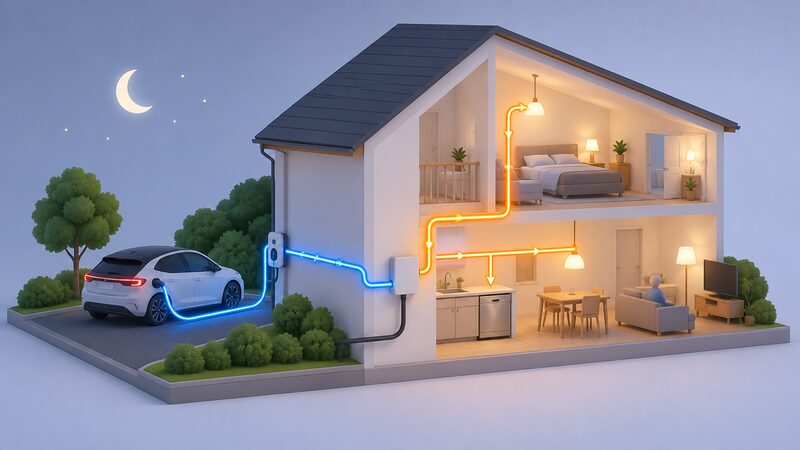
Cost comparison: standard rates can be around three times higher than dedicated EV tariffs
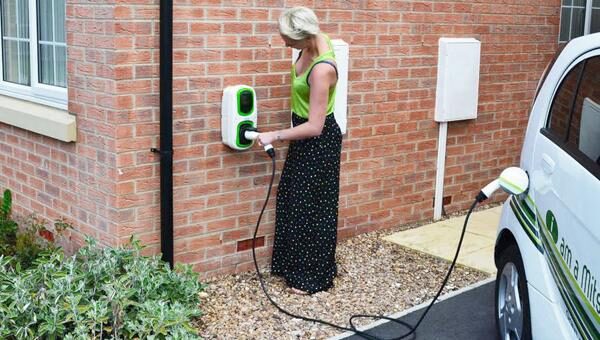
The comparison that matters is not the headline unit rate but the cost of a mile. Home charging is likely to be cheaper than charging at a public EV station, and cheaper still with off-peak electricity or a specialist EV charging tariff20. Off-peak home charging has been quoted at 7p per kWh, against a typical public rapid rate of 79p per kWh, more than ten times as much3.
Against a standard tariff, the arithmetic is less dramatic but still clear. Standard tariff electricity unit rates have been reported at 26.16p per kWh against 20.99p per kWh on the cheapest fixed deal, a difference of 5.17p per kWh, and standard tariff unit rates 31% higher than that fixed deal2. Households on standard tariffs have been reported paying 25% more to run electrical appliances than those on the cheapest available fixed deals2.
| Charging route | Cost over 7,100 miles | Against petrol |
|---|---|---|
| 80% off-peak home, 20% rapid | £439 | £735 saving22 |
| Average standard and standard plus public | £1,068 | £106 saving22 |
| 80% standard, 20% rapid public | £1,167 | £395 more than petrol22 |
| Average rapid and ultra-rapid public | £1,562 | £389 more than petrol22 |
The table shows where the tariff decision lands. A household that can put most of its charging into an off-peak home window is in the first row. A household relying on public rapid charging is in the last, and pays more than petrol. The tariff is not a small optimisation; it decides which side of petrol the household sits on.
Standard single-rate meters: why standard tariffs offer no off-peak perks
A standard tariff is a single-rate product, and a single-rate meter cannot separate one hour from another. That is the structural reason there is no off-peak perk to be had: the product has no mechanism to price time.
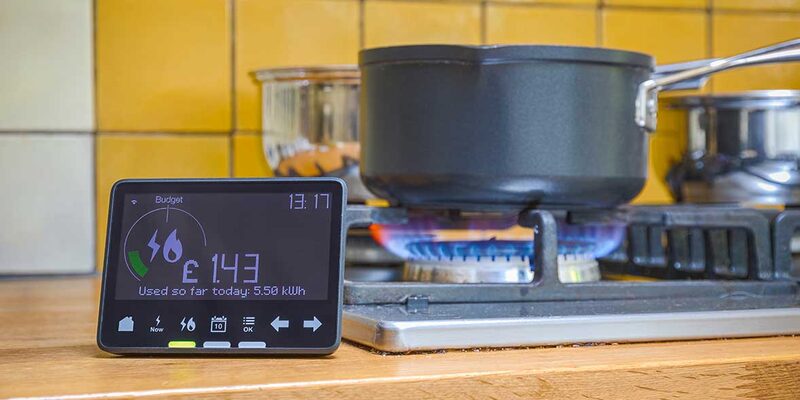
The meter matters as much as the tariff. For many EV-specific tariffs, particularly smart or time-of-use tariffs, a working smart meter is required16. EV and other time-of-use tariffs typically require a smart meter24. In most cases a smart meter is required to access EV tariffs25. Charging an EV does not itself require a smart meter, but without one some EV-specific tariffs are out of reach16. Some suppliers ask a household to demonstrate an operational smart meter and an EV before granting access to their EV-specific tariffs15.
The scale of the shift is visible in the numbers. The proportion of home EV charge points that use an EV tariff is 62%6. Consumers with smart meters have been offered tariffs that could save up to two-thirds of the cost of charging an electric vehicle if charging at certain times of day26.
A standard tariff is not without merit. Standard variable energy tariffs do not often come with exit fees, and a household is free to switch at any time without penalty23. For a household without a smart meter, or one that expects to move soon, that is a real consideration. It is simply not a tariff that rewards timing.
Which tariff suits which household
The dividing line is whether the household can put most of its charging inside a cheap window, and whether it has the meter to prove it.
A household with off-street parking, a smart meter and a car that sits at home overnight is the natural fit for a two-rate EV tariff. The average-consumption household with an EV could already save around £330 annually by smart-charging on a time-of-use tariff compared with a static one5. Home EV drivers get the benefit of accessing lower tariffs at times when demand for electricity is lower27.
A household that cannot shift its charging, or that charges mostly away from home, gains less. Type of Use tariffs, which give a cheaper rate for the specific energy used to charge the car at any hour, suit that pattern better15. Add-on EV tariffs, which keep the existing household tariff and add separate charging discounts or credits, suit a household that does not want to move its whole supply16.
A household without a smart meter, or one unwilling to have one installed, is largely limited to standard products. A household with no off-street parking faces a different constraint: the Electric Vehicle (EV) Pavement Channels Grant requires residents to have, or commit to installing, an EV chargepoint connected to a domestic energy supply, and the fund must benefit residents without off-street parking28.
| Household pattern | Tariff shape that fits |
|---|---|
| Off-street parking, smart meter, car home overnight | Two-rate EV or time-of-use tariff12 |
| Charging at unpredictable hours | Type of Use add-on, cheap rate at any hour15 |
| Wants to keep the existing household tariff | Add-on EV tariff with separate charging credits16 |
| No smart meter | Standard single-rate product16 |
The average gas and electric bill type in the UK is the standard variable tariff, so the default position for most households is the one that offers no off-peak EV benefit at all11.
What owning an EV charger means for energy independence
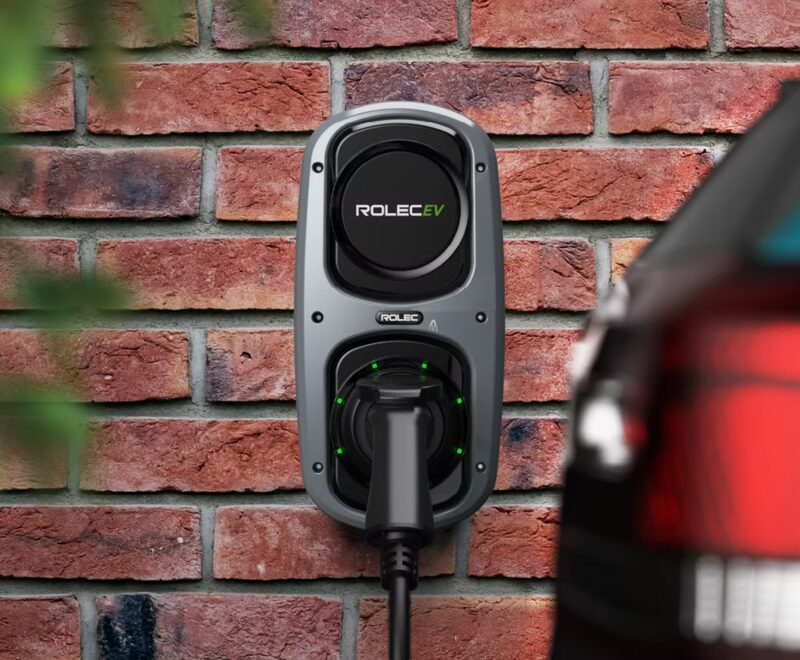
A home chargepoint moves a household's transport fuel from a forecourt to its own electricity supply. That is a real transfer of control: charging at home is likely to be cheaper than at a public EV station, and the household decides when it happens20. The tariff is what converts that control into money.
The dependence that remains is worth stating plainly. An EV tariff still runs through a supplier and the grid, and the cheap window exists because there is less demand on the national grid overnight, not because the household generates anything17. A standard EV charger draws electricity from the home supply without distinguishing between solar-generated power and grid electricity, so a household with panels needs a charger that can tell the difference before solar changes the picture29. The tariff and the charger are separate decisions.
There is a property effect. Installing an EV charger could increase a property's value by between £3,000 and £5,000, according to the National Association of Property Buyers, depending on location, charger type and local public charging availability20. That figure is an estimate attributed to that body, not a guaranteed outcome.
The grant landscape is time-limited. The Electric Vehicle (EV) Pavement Channels Grant is aimed at residents without off-street parking who have or will install a chargepoint on a domestic supply28. Households weighing a chargepoint against a tariff should note that support for the hardware and the choice of tariff are separate questions, and the tariff is the one that keeps paying.
Upcoming changes that could shift the maths

Three changes are in view, and each touches a different part of the calculation.
The first is standing charges. In February 2025, Ofgem considered introducing a zero standing charge variant within the energy price cap30. A lower or zero standing charge changes the fixed part of a bill, which matters more to a low-usage household than to one charging a car every night.
The second is road taxation. Electric Vehicle Excise Duty is not intended to be introduced until April 2028, when battery-electric cars would pay 3p per mile and plug-in hybrids 1.5p per mile on top of VED22. ChargeUK analysis indicates that public-charging-reliant EV drivers would likely pay more than petrol and diesel again after its introduction22. Pure electric vehicles are currently the only band where nothing is paid either for the first-year rate or the standard rate19. The Society of Motor Manufacturers and Traders has proposed temporarily halving VAT on new EV purchases and scrapping the VED expensive car supplement for zero-emission vehicles31.
The third is the export side. The Smart Export Guarantee's lowest untied tariff rate was 1p per kWh, from E Energy, in Year 5 of the scheme32. That is the floor a household with solar and an EV is working against when deciding whether to store or export.
None of these changes alters the core comparison. A standard tariff prices every hour the same. An EV tariff prices the hours when the grid is quiet, and asks the household to move its charging into them.
Sources32 cited
- Understanding your electricity and gas bills, Ofgem, 2026
- The price cap: why every time you turn on this one household appliance will cost you 10p more than your neighbour, Uswitch, 2026-04-22
- How much does it cost to charge an electric car, Which?, 2026-04-27
- Does a hybrid car need an EV tariff, Uswitch, 2025-07-02
- Electricity distribution networks study: government response, GOV.UK, 2025-07-07
- Smart meter Guaranteed Standards of Performance draft impact assessment, Ofgem, 2025-08
- VAT on EV charging, Zapmap, 2026-08-24
- Standard rate tariffs, Uswitch, 2026-08-26
- Energy price cap review of historical debt related costs, Ofgem, 2026-03-25
- Types of energy tariff, Confused.com, 2025-11-03
- The average gas and electric bills in the UK, Energy Helpline, 2026-09-20
- Understanding energy flexibility, Smart Energy GB, 2026-08-17
- Electric cars and energy bills, Uswitch, 2026-04-27
- Energy tariffs explained, Uswitch, 2026-02-17
- EV energy tariffs, Zapmap, 2024-09-16
- EV tariffs and home charging: what consumers need to know, Energy Ombudsman, 2026-09-11
- EV energy tariffs news, Zapmap, 2024-05-14
- VAT rates on goods and services, HM Revenue & Customs, 2026-07-10
- Electric car tax, Zapmap, 2024-05-14
- EV charger installation and maintenance, NICEIC, 2025-08
- What does the new Electric Car Grant mean for you-mean-for-you), NICEIC, 2025-07-29
- Reduced public charging prices could boost EV sales, ChargeUK, 2026-07-31
- Fixed and variable tariffs: what's the difference, Energy Helpline, 2026-09-20
- Charging electric vehicles, Energy Saving Trust, 2026-04-23
- Benefits for Britain, Smart Energy GB, 2026-04-24
- Public Accounts Committee report, UK Parliament, 2023-10-20
- Agile Streets future flexible charging report, Energy Saving Trust, 2025-10-03
- Electric vehicle pavement channels grant, Energy Saving Trust, 2025-11-03
- Can solar panels charge electric cars, The CPA, 2026-04-15
- Requirement to offer lower standing charge tariffs, Ofgem, 2025-02
- Unprecedented EV discounting shores up September new car market, SMMT, 2024-10
- Smart Export Guarantee annual report Year 5, Ofgem, 2025-12
 Time-of-Use Tariffs ExplainedCan you pay less for electricity by using it at different times of day?
 Free Electricity and RewardsCovers tariffs and offers that give free or half-price electricity in set windows, including recurring weekly free hours, weekend offers and savings challenges.
 Tariffs and Energy IndependenceA tariff decides what you pay for power from the grid and what you get paid for sending solar back.
 The Full Tariffs GuideWhich energy tariff suits how you live, and will switching really save you money?
 Public EV Charging PricesCovers the published price series for public charging, how per-kWh rates differ by network and speed, and how they have moved over the past year.
 Charging and Energy IndependenceCharging an electric car at home can cut your fuel costs, but how much does it really free you from the grid?