In this guide
The Smart Export Guarantee (SEG) pays households for electricity they export to the grid, and the rate is set by the supplier rather than by government. That single design choice explains almost everything about SEG rates: they range from 1p to 25p per kWh across the market, and two identical solar installations on the same street can be paid very differently1. Ofgem's Year 5 annual report put tied tariffs, those requiring the household to take its import supply from the same company, at an average of 15.39 p/kWh, up from 5.5 p/kWh in Year 12.
The scheme came into force on 1 January 2020 and applies in Great Britain, where most energy suppliers are required to offer an export tariff3. Suppliers must pay more than £0 per unit of metered exported power, but beyond that floor they choose the rate, the contract length and the other terms5. Payments are calculated from export meter readings, so a smart meter is a condition of qualifying rather than an optional extra7.
For a household, the SEG is a modest but real step towards energy independence: it turns surplus generation into income and reduces reliance on buying every unit back from a supplier. The dependence that remains is significant, though. The rate is set by a commercial counterparty, the export must be metered and reported, and the highest rates are usually tied to taking import supply from the same company, which keeps the household inside a supplier relationship rather than outside one.
What the Smart Export Guarantee is and who qualifies
The SEG enables small-scale generators to receive payments from electricity suppliers for electricity exported back to the National Grid, providing certain criteria are met7. It was introduced by the Smart Export Guarantee Order 2019, which provides for payments by mandated electricity suppliers to small-scale low-carbon generators exporting electricity to the grid10. It came into force on 1 January 2020, following the closure of the Feed-in Tariff to new applicants3.
Eligibility is aimed at homes and small businesses. All licensed energy suppliers with more than 150,000 customers must offer an export tariff to small-scale electricity generators12. Ofgem's own guidance is that SEG licensees must offer a SEG tariff to all eligible generators, and that any generator wishing to be paid for exported electricity must apply to a SEG licensee7. A SEG licensee is simply an electricity supplier that offers a SEG tariff; it does not have to be the company that supplies the property's electricity, and a household can use separate companies for SEG payments, electricity supply and gas supply if it wishes7.
The scheme's territorial extent is Great Britain. Northern Ireland sits outside it, and the suppliers operating there are not bound by the same obligation4. That matters for anyone comparing rates across the UK: the SEG is a GB scheme, and the four-nations picture is really a three-nations one for export payments.
There is also a floor written into the scheme. Suppliers can set their own SEG tariff rates provided they offer more than £0 per unit of metered exported power, and all SEG tariffs must pay a rate greater than 0p/kWh at all times5. That floor is the only rate the rules fix. Everything above it is a commercial decision, which is why the market spans such a wide range.
How SEG rates are set: suppliers choose their own rates, from 1p to 25p per kWh

SEG licensees choose the rate they will pay generators, the contract length and other terms, subject to the requirement that the tariff rate is greater than zero13. Ofgem states the same principle in its generator guidance: details of SEG payments, including the amount due and the contract length, are determined by the chosen SEG licensee7. The Department for Energy Security and Net Zero's own briefing is blunter still: under the SEG, it is up to the energy suppliers to decide how much to pay an exporter14.
The practical result is a market that runs from a paltry 1p to 25p per kWh1. Ofgem's Year 5 report records the trajectory of tied tariffs, which require the household to take import supply from the same company: they started at 5.5 p/kWh in Year 1 and climbed steeply to 15.39 p/kWh by Year 52. That growth reflects competition for solar and battery households rather than any change in the rules.
The gap between the top and bottom of the range is not explained by the electricity itself. Every unit exported displaces roughly the same amount of grid generation. The difference comes from what the supplier is buying: a low flat rate is a cheap way to meet the obligation, while a high rate is usually a customer acquisition cost, paid to win the household's import supply as well. That is why the best rates tend to come with conditions attached.
Fixed or variable: how tariff types differ
Export tariffs come in the same broad shapes as import tariffs. A fixed SEG tariff pays a set rate per kWh of electricity exported over the length of the contract16. A variable SEG tariff varies the price based on market demand, as long as the price never falls below zero16. Ofgem's consumer research tested tariff types including 12-month fixed terms, 24-month fixed terms and standard variable structures, the same categories households meet on the import side17.
The trade-off is the familiar one. A fixed export rate gives certainty about what each exported unit earns for the length of the contract, which suits a household that wants to model payback. A variable rate follows the market and can rise, but it can also fall, and the floor is zero rather than any guaranteed minimum above it.
Contract length is set by the supplier, not the scheme, so fixed terms vary. Some tariffs carry no fixed end date at all, which means the rate can be changed with notice rather than being locked. The table below sets out the structure of a sample of tariffs as recorded in mid-2026, showing how type, term and rate combine.
| Tariff | Type | Term | Rate |
|---|---|---|---|
| SEG Tariff | Fixed | Unknown | 1.0p |
| Octopus SEG Tariff | Fixed | No fixed end date | 4.1p |
| OVO SEG Tariff | Fixed | 12 month fixed term | 4.0p |
| SEG Beyond Exclusive | Fixed | No fixed end date | 12p |
| Next Export Exclusive v3 | Fixed | 12-month fixed term | 13p |
| Export 12m | Fixed | 12-month fixed term | 15p |
| Solar Saving | Variable | No fixed end date | 15p |
| SEG Install Exclusive | Variable | No fixed end date | 20p |
| Solar Savings Exclusive | Fixed | 12-month fixed term | 25p |
Rates and terms as recorded on 12 May 202618.
The spread in that table is the whole story of SEG rates in one view: the same scheme, the same meter, and a twenty-five-fold difference between the lowest and highest rate. A household comparing export tariffs is comparing commercial offers, not entitlements.
Octopus Flux: a time-of-use tariff with peak export rates up to 29p
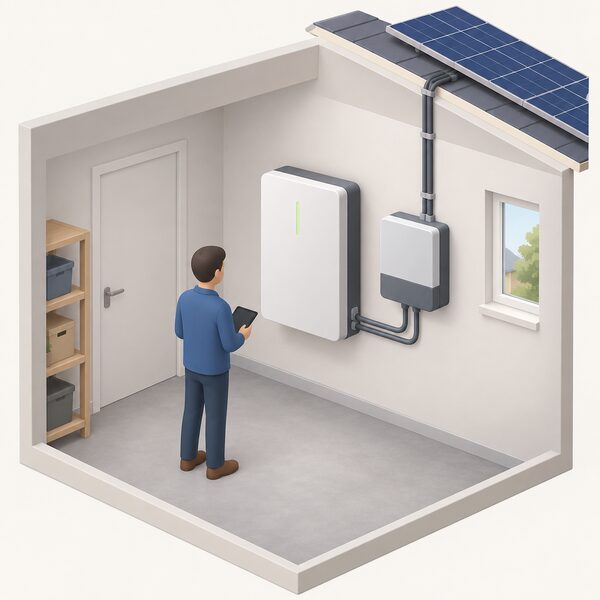
Time-of-use export tariffs pay different rates at different times of day, on the logic that exported electricity is worth more when demand is high. Octopus Flux is the best-known example. Ofgem's Year 5 report records that Octopus Energy's Intelligent Octopus Flux Export tariff offered the second highest rate available, averaging 27p/kWh2. Independent guidance from April 2026 lists Intelligent Octopus Flux at 23p for Octopus customers who have solar panels and a battery1.
The standard Flux tariff is variable and pays a peak rate between 4pm and 7pm. Independent guidance from October 2024 records a peak rate of 20 to 28p per kWh exported, depending on where the household lives, for Octopus Energy customers with solar panels and a battery19. The same source records a much lower rate, around 5p/kWh, between 2am and 5am, which is the point of the design: the tariff rewards exporting into the evening peak and pays little for overnight export.
Flux is not a standalone export product. It requires the household to be on the matching import tariff, and it is aimed at homes with both solar panels and a battery, because the battery is what allows export to be shifted into the peak window18. That is a tie-in in the ordinary sense: the export rate is available only alongside the import supply relationship.
Published figures for Flux vary by product and by date. Octopus Flux is a three rate electricity tariff combining both import and export, with symmetrical import and export rates across three price periods in the day, and a peak export rate of up to 29p at peak times19. Intelligent Octopus Flux, a separate tariff for Octopus customers who have solar panels and a battery, is given as 23p, while a peak export rate cap of roughly 22.8p/kWh is also reported for the 4 PM to 7 PM peak window19.
Outgoing Octopus: a flat export rate of 12p to 15p per kWh
Outgoing Octopus is the flat-rate alternative to Flux. Independent statistics recorded on 12 May 2026 list Outgoing Octopus at 12p per kWh, fixed with no fixed end date18. Separate independent guidance from 2026 records Octopus at 15p per kWh, alongside British Gas's Export and Earn Plus package at 15.1p per kWh20. The two figures are not a contradiction so much as a snapshot problem: flat export rates move, and the date attached to each figure matters.
The same supplier also appears at the bottom of the range. Octopus Energy's standard Smart Export Guarantee tariff is listed at 4.1p for anyone, as recorded in April 2026, and the Octopus SEG Tariff appears at 4.1p in the May 2026 statistics1. A household on the standard SEG product and a household on Outgoing Octopus are both Octopus export customers, and they are paid very differently.
That pattern is worth stating plainly because it is the most common source of confusion about SEG rates. The scheme obligation is met by the cheapest product a supplier offers; the higher rates are separate commercial products, often with conditions. A household that applies for "the SEG" and stops there will typically land on the lowest rate the supplier offers, not the best one.
For context on scale, the average export rate across the market has been reported at around 12p/kWh9. That sits between the standard SEG products at 4p and the premium products at 15p and above, which is what a market average would look like when most households are on the lower tier.
Ecotricity's Smart Export Tariff: what's coming and what it requires

Ecotricity is planning to roll out its own Smart Export Tariff to customers in the near future21. That is a statement of intent rather than a live rate, and no rate is published for it. Households considering Ecotricity for export should treat the tariff as forthcoming and check the position at the point of application.
What Ecotricity's existing terms show is the shape of the conditions that tend to attach to export products. Its Domestic EcoFixed 1 Year Green Tariff states that where a household moves house during the fixed term, there are no exit fees where the tariff is transferred to the new property, though tariff rates may change depending on the location of the new property22. That is a maker's term for its own product, and it illustrates the general point that export tariffs carry contract conditions of their own, separate from the import contract.
The wider market context is that not every supplier is a SEG licensee. Suppliers that are not SEG licensees can still choose to make export payments to generators, but they are not bound by the SEG arrangements23. That distinction matters when a household sees an export offer from a company that does not appear on Ofgem's list: the offer may be genuine, but it is not backed by the scheme's obligations.
Eligibility and metering: smart meters, export MPANs and MCS certification
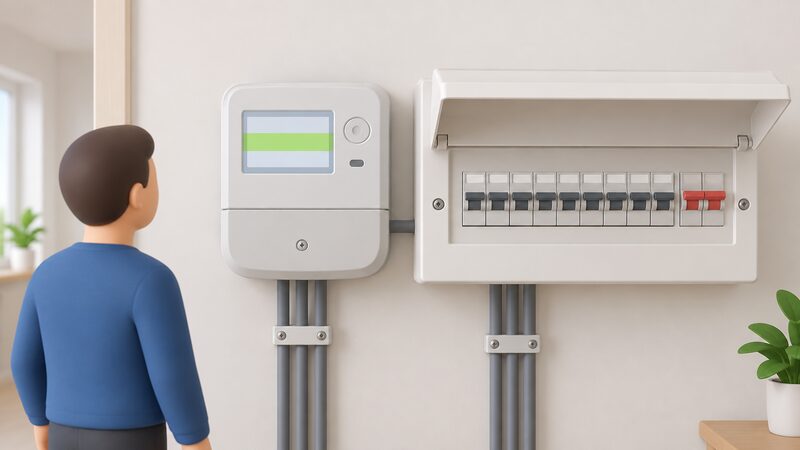
The metering requirements are the practical gate on SEG payments. Generators must have a smart meter to monitor exports in order to qualify for the SEG8. Payments are calculated using export meter readings, and the household is paid for the exact amount of unused electricity exported back to the grid as recorded by the smart export meter6. The meter must also have an associated export MPAN25.
For households with an existing Feed-in Tariff installation, most accredited FIT installations will be eligible for the SEG provided they have a smart or export meter installed26. That is a useful bridge between the two schemes, and it means the metering question is usually about whether the export meter exists rather than whether the installation qualifies.
There is a further rule for households with more than one installation. A household can receive SEG payments for an installation when it already receives FIT export payments for a different installation, as long as the installations are completely separate with distinct import and export meters and different import and export MPANs27. Two arrays on one meter do not qualify; two separately metered installations can.
The application route is direct. Generators should contact SEG licensees directly, and Ofgem publishes a list of SEG licensees every year28. The licensee does not need to be the household's current energy supplier7. In practice, though, the highest rates are usually tied to taking import supply from the same company, so the freedom to choose a separate export licensee is real but often costs the household the best rate.
Batteries and solar: how storage changes what you're paid
A battery changes the economics of export in two directions at once, and the net effect is not always more export income. Adding a battery to a solar installation increases self-consumption from 30 to 40% to 70 to 80%, and increases annual savings from around £150 to £450 a year8. Those savings come largely from using generation on site rather than exporting it, which means less electricity is exported and less is paid for at the export rate.
That is the central tension for a household weighing storage against export income. Every unit the battery keeps for evening use is a unit not sold at 15p or 25p, but it is also a unit not bought at the import rate, which is higher. The price paid for exporting is almost always less than the price to buy electricity from the grid, so self-consumption is worth more per unit than export in most cases15.
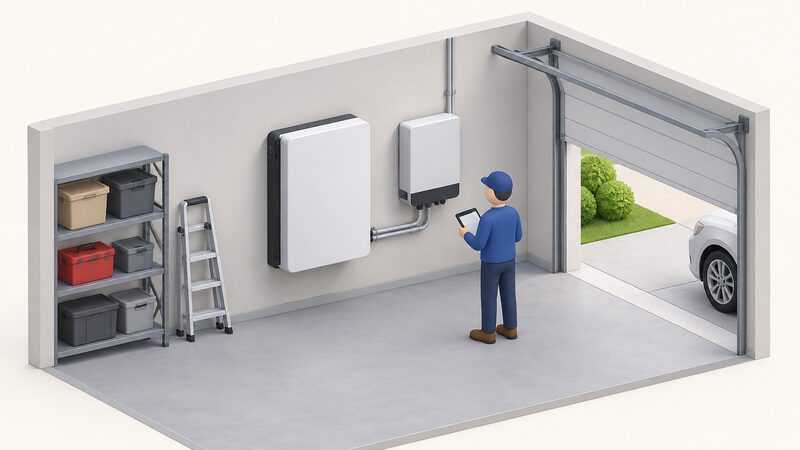
Batteries also open the door to the higher-paying export products. Households with an energy storage system can still apply for the SEG, and a battery can store electricity from the grid before exporting it later16. Generators are entitled to payments based upon actual meter readings, even if some suppliers offer deals with alternative payment models7. Time-of-use export tariffs such as Flux are aimed specifically at homes with solar panels and a battery, because the battery is what makes peak-window export possible18.
How payments work: frequency, statements and switching
Payment frequency is set by the supplier. Independent statistics recorded on 12 May 2026 show Octopus SEG Tariff paying monthly and OVO SEG Tariff paying every three months18. There is no scheme-wide rule on frequency, so a household comparing two tariffs at the same rate may still prefer one on cash-flow grounds.
Statements and readings follow the meter. Payments are calculated from export meter readings, and the household is paid for the exact amount exported as recorded by the smart export meter6. That means the reading cycle matters: a missed or estimated reading delays payment, and the amount paid depends on what the meter recorded rather than on what the panels generated.
Switching is where the SEG's structure shows its limits. In theory a household can move to another supplier without moving its SEG tariff, but it may find itself moved to a less generous export rate by its old supplier21. It cannot receive SEG payments from more than one supplier16. And to get the best rate, the household will usually need to switch to the same company for both import and export29. The export tariff and the import supply are therefore linked in practice even where the rules keep them separate.
Exit fees can complicate a move. Ofgem's consumer research found that 57% net of consumers could identify that exit fees may still apply to a fixed contract even when moving to another deal with the same supplier17. For a household on a fixed import tariff with a tied export rate, the cost of leaving may sit on the import side rather than the export side.
Choosing a SEG tariff: what to compare
The first thing to compare is the rate itself, and the second is what the rate requires. Independent guidance for households with a heat pump, solar panels and a battery recommends looking for a good SEG tariff for exported electricity and then either a dynamic tariff or a heat pump tariff for import, from the same company29. That is a description of the market's structure rather than a recommendation of any product: the best export rates are usually available only alongside the matching import tariff.
The second comparison is between a flat rate and a time-varying one. A flat rate is simpler and pays the same amount whenever export happens. A time-varying rate pays more in the peak and less outside it, which suits a household that can shift export into the peak window, typically with a battery. Dynamic import tariffs charge a different amount every half-hour based on what it costs to generate electricity at that time, and export products built alongside them follow a similar logic29.
The third comparison is contract length and exit terms. Fixed terms of 12 months appear in the market, as do tariffs with no fixed end date18. A household that expects to move house, add a battery or change its import tariff should weigh the term as carefully as the rate.
The fourth is the tie-in. A tied tariff pays more but requires the household to take import supply from the same company, which reduces the ability to shop separately for import and export. Ofgem's guidance confirms that a household can choose separate companies for SEG payments, electricity supply and gas supply if it wishes, so the tie-in is a commercial condition rather than a scheme rule7.

Sources30 cited
- Smart Export Guarantee rates: the best and worst SEG tariffs, Which?, 2026
- Smart Export Guarantee Annual Report Year 5, Ofgem, 2025
- Feed-in Tariffs scheme closure, Ofgem, 2020
- Solar panel installation, Energy Saving Trust, 2026
- Smart Export Guarantee briefing, House of Commons Library, 2026
- Smart Export Guarantee, Ofgem, 2026
- Smart Export Guarantee: information for generators, Ofgem, 2026
- Great British Energy and solar guidance, UK Parliament POST, 2026
- Battery storage advice, Centre for Sustainable Energy, 2025
- Smart Export Guarantee Order 2019 explanatory memorandum, legislation.gov.uk, 2019
- Feed-in Tariffs: scheme closure, Ofgem, 2026
- Export payments, Electricity North West, 2026
- Feed-in Tariffs: tariffs and payments, Ofgem, 2026
- Understanding consumers' energy tariff choices, Ofgem, 2025
- Making the most of your solar PV panels, Centre for Sustainable Energy, 2026
- Smart Export Guarantee advice, Energy Saving Trust, 2026
- Understanding your electricity and gas bills, Ofgem, 2026
- Smart Export Guarantee, Solar Energy UK, 2026
- Four ways to make solar panels more cost effective, Which?, 2024
- Feed-in Tariff guide, Uswitch, 2026
- Can I switch energy supplier if I have solar panels?, Uswitch, 2026
- Domestic EcoFixed 1 Year Green Tariff July 2025 principal terms, Ecotricity, 2025
- Smart Export Guarantee: electricity suppliers, Ofgem, 2026
- Draft licence conditions, Department for Business, Energy and Industrial Strategy, 2019
- Guidance for SEG licensees, Ofgem, 2019
- Feed-in Tariffs: information for generators, Ofgem, 2026
- Guidance for FIT Generators V18, Ofgem, 2024
- SEG contacts, guidance and resources, Ofgem, 2026
- Tariffs for renewable technology, Energy Saving Trust, 2026
- Adjustments to Guaranteed Standards of Performance 2026, Ofgem, 2026
 The Full Tariffs GuideWhich energy tariff suits how you live, and will switching really save you money?
 Tariffs and Energy IndependenceA tariff decides what you pay for power from the grid and what you get paid for sending solar back.
 Solar Export PaymentsIf you have solar panels, how do you actually get paid for the electricity you send back to the grid?
 Supplier-Controlled ChargingSmart charging tariffs let your energy supplier decide when your car charges, usually overnight when electricity is cheaper.
 The Full Solar Panels GuideHow much do solar panels cost, and what could they save you each year?
 Solar and Battery Import TariffsWhat does a special import tariff actually get you when you have solar panels or a home battery?