
In this answer
Short answer
Yes. A home battery can receive Smart Export Guarantee payments for electricity it exports to the grid, provided the installation is metered so that exports can be measured. Ofgem states that all installations eligible for the Feed-in Tariff are also eligible for the SEG, provided they are fitted with an export or smart meter capable of taking measurements at half-hourly intervals1. The Energy Saving Trust confirms that a household with an energy storage system can still apply for the SEG, giving the example of a battery storing electricity from the grid before exporting it later2.
What changes with a battery is the volume, not the principle. Which? reports that having a storage battery reduces exports and therefore payments, and that a battery may render a household ineligible for some SEG tariffs3. Home Energy Scotland puts the trade-off plainly: installing battery storage lowers the amount exported and so reduces export payments, but overall savings are greater than relying on export payments alone4.
Rates vary widely. Ofgem's scheme rules leave the rate, contract length and other terms to each SEG licensee1, and independent surveys put the range at 1p to 25p per kWh5. A total of 270,395 installations were registered to a SEG tariff at the end of March 20257.
What the SEG pays for and who pays it
The Smart Export Guarantee obliges licensed electricity suppliers above a threshold to offer a tariff for electricity exported to the grid, and to pay for it. Ofgem's scheme rules state that SEG generators are paid by their chosen SEG licensee for the electricity which they export back to the National Grid10. The payment obligation sits in the supply licence: Standard Condition 57 provides that a SEG licensee, whether mandatory or voluntary, shall make SEG payments to SEG generators in accordance with Schedule A11.
The government does not make the payments. Uswitch's guidance is explicit that the government does not make FIT or SEG payments, and that energy suppliers signed up to either scheme are responsible for administering it and making payments12. Ofgem's own annual report describes the scheme as a route for households to receive payments from electricity suppliers, known as SEG licensees, for the electricity they export13.
Two features matter for a household with a battery. First, the rate is not set centrally: SEG licensees determine the rate, contract length and other terms which SEG generators will receive1. Second, the supplier relationship is flexible: you can choose to use separate companies for your SEG payments, electricity supply and gas supply if you wish10. That separation is what allows an export tariff to be matched with an import tariff from a different company, a point developed below.
The scheme replaced the Feed-in Tariff for new applicants. The Energy Saving Trust notes that the SEG replaced FIT but also pays for electricity exported to the grid14. For a battery owner, the practical consequence is that the export side of the arrangement is governed by a supplier contract rather than a legacy scheme, and that contract's terms, including whether storage is accepted, are the supplier's to set.
Yes, battery storage can qualify, provided the metering can measure exports
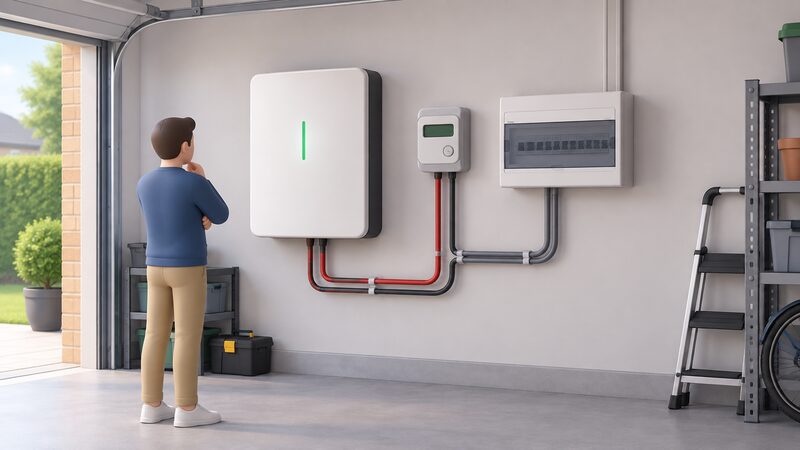
The eligibility test is about measurement, not about the battery itself. Ofgem's scheme closure guidance states that all installations eligible for the FIT scheme are also eligible for the SEG, provided they are fitted with an export or smart meter capable of taking measurements at half-hourly intervals1. The Energy Saving Trust confirms that a household with an energy storage system can still apply for the SEG2.
Where a battery is added to an existing accredited installation, the metering must separate the sources. Ofgem's co-location guidance, aimed at participants in the Renewables Obligation, Feed-in Tariffs, Renewable Energy Guarantees of Origin and Smart Export Guarantee who are considering co-locating electricity storage with an accredited station or installation, sets the framework15. For a FIT installation with added storage or EV charging, the meter must be able to measure the amount of electricity generated or exported from the installation separately from any other source, unless pro-rating is allowable16.
The same principle appears in the FIT generator rules: you must be able to measure the electricity generated, and exported if applicable, by the installation separately from all other sources to receive generation payments and metered export payments3. A battery that shares a meter with the rest of the house, or that cannot be distinguished from grid import, creates exactly the measurement problem these rules are designed to prevent.
"All installations which are eligible for the FIT scheme are also eligible for the SEG, provided they are fitted with an export or smart meter capable of taking measurements at half-hourly intervals"
Eligibility: smart meters, evidence and the FIT overlap
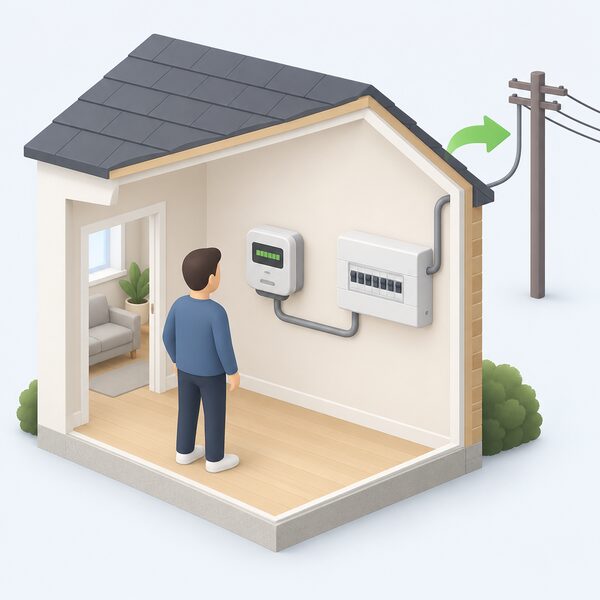
Three conditions do most of the work: a smart meter, documentary evidence, and a clean position on any existing Feed-in Tariff.
On metering, Ofgem states that SEG payments are calculated by using export meter readings1, and the Parliamentary briefing on the scheme records that generators must have a smart meter to monitor exports in order to qualify8. Uswitch's solar guidance repeats the requirement: you must have a smart meter to sign up for SEG17. MCS Certified explains the function: a smart meter can record electricity sold back to the grid, which is needed for consumers to get paid through schemes such as the SEG18. Smart meter eligibility for installation may vary by supplier and region19, and the programme excludes Northern Ireland21.
On evidence, applications typically require your smart meter data and an MCS certificate22. Guidance for installations with battery storage states that proper evidence will be needed to verify energy eligibility for SEG payments23. Where a battery is added to an existing FIT installation, the separate-measurement rule described above applies16.
On the FIT overlap, the rule is a bar on double payment for the same electricity. Ofgem states that you cannot receive both SEG payments and FIT export payments for the same electricity3. The Energy Saving Trust sets out the route: you cannot get both FIT export and SEG payments, but you can opt out of FIT export payments and receive SEG payments instead, while continuing to receive FIT generation payments until the end of your contract2. Ofgem confirms the mechanism: to register for the SEG, you must first opt out of FIT export payments for your installation by contacting your FIT licensee3.
A further wrinkle affects legacy deemed exports. Ofgem states that if you currently receive deemed export payments, these will stop and you will instead receive export payments for the amount of electricity recorded by the meter exported to the grid3. For a battery household, that shift from a deemed assumption to metered measurement is the point at which the battery's effect on export volume becomes financially visible.
Export rates: 1p to 25p per kWh, and why they sit below import prices
There is no single SEG rate. Ofgem's rules leave the rate to each licensee1, and the published range is wide. Which? reports rates from as little as 1p/kWh to as much as 25p/kWh depending on supplier and tariff5, and its separate survey of SEG tariffs gives the same 1p to 25p span6. The Centre for Sustainable Energy puts the average at around 12p/kWh9. The Parliamentary briefing records that, as of June 2026, SEG payments can reach up to 25 pence per kWh, which it describes as comparable to the unit rate of electricity8. The Centre for Alternative Technology notes that some suppliers offer 15 pence or more per kWh but some pay much less24.
| Measure | Figure | Source |
|---|---|---|
| Lowest reported rate | 1p/kWh | Which?5 |
| Highest reported rate | 25p/kWh | Which?5 |
| Average export rate | around 12p/kWh | Centre for Sustainable Energy9 |
| Rate described as comparable to unit electricity rate | up to 25p/kWh, June 2026 | Parliamentary briefing8 |
| Example variable tariff rate | 15p/kWh | Solar Energy UK25 |
The gap between export and import prices is structural. Which? states that SEG rates are often less than what you pay for electricity, and advises shopping around26. That is the arithmetic a battery household faces: every kilowatt-hour kept in the battery and used at home avoids an import at the retail rate, while every kilowatt-hour exported earns the SEG rate. Where the export rate is 1p and the import rate is many times that, self-consumption is worth more per unit than export. Where a supplier pays 25p, the comparison narrows.
Rates also differ by contract type. The Energy Saving Trust explains that a fixed SEG tariff pays a set rate per kWh of electricity exported over the length of the contract2. Variable tariffs move. Solar Energy UK's listing shows a variable tariff with no fixed end date at 15p25. The choice between fixed and variable export rates is its own decision, covered in fixed vs variable export rates.
How a battery changes what you export, and what you earn
A battery does not increase the amount of electricity a solar array generates. It changes where that electricity goes. The Parliamentary briefing, citing Great British Energy, records that adding a battery to a solar installation increases self-consumption from 30 to 40% to 70 to 80%8. Electricity used in the home is electricity not exported, so the export meter records less.
Which? states the consequence directly: your exports, and therefore your payments, reduce if you have a storage battery, and a storage battery may render you ineligible for some SEG tariffs3. Home Energy Scotland frames the same trade-off: installing battery storage will lower the amount you export, meaning you will get less money from export payments, but overall savings are greater than relying on export payments4.
The Energy Saving Trust describes the residual export route: surplus solar electricity can be sold back to your energy supplier through a SEG tariff when the battery is full27. That is the sequence in practice. The battery absorbs the surplus first, the home draws from it later, and only what exceeds both the immediate load and the battery's capacity reaches the grid.
The wider case for storage rests on bill reduction rather than export income. Government analysis states that installing solar PV and battery storage, alongside a heat pump, can significantly lower bills in all cases28. Home Energy Scotland reports that the savings from solar PV with the SEG are considerably higher than without29. For a household weighing independence, the battery shifts the balance away from selling to the grid and towards consuming what the roof produces, which reduces exposure to import prices but also reduces the income the export tariff would have produced.
Choosing an SEG tariff when you have storage
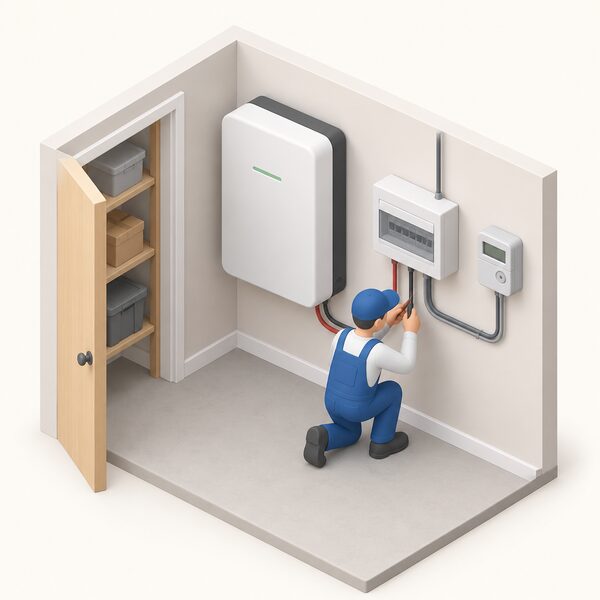
The first filter is whether a tariff accepts battery storage at all. Which? reports that some tariffs exclude it3, and Solar Energy UK's tariff listing records supplier terms on this point, including tariffs marked as accepting battery storage and others marked unknown25. A tariff that pays well but excludes storage is not available to a battery household, whatever its headline rate.
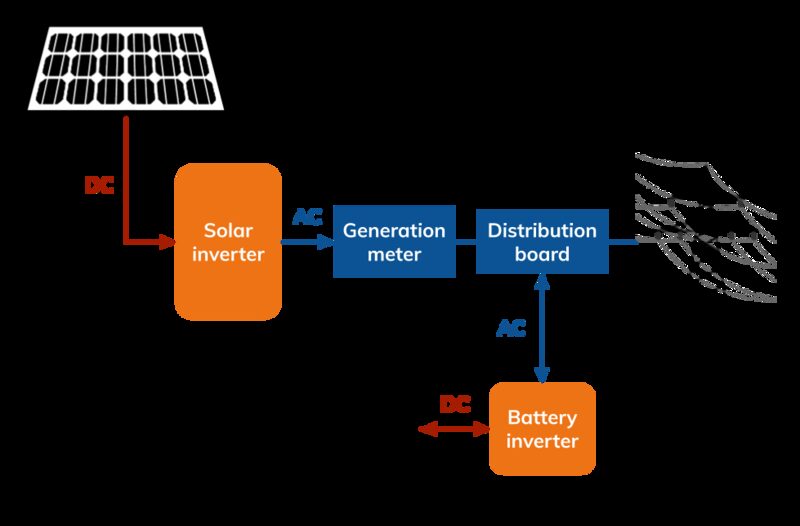
The second consideration is the pairing of import and export. Ofgem confirms that you can use separate companies for SEG payments, electricity supply and gas supply10, which means the best combination is often an export tariff from one supplier and an import tariff from another. The Energy Saving Trust suggests a dedicated solar and battery tariff, or a good SEG tariff matched with a dynamic import tariff or an Economy 7 tariff30. It also notes that a solar panel and battery tariff can be especially useful if a solar system is bigger than average or a heat pump smaller than average, where a good SEG rate is not available from a company with a good import tariff30.
| Approach | What it involves | Source |
|---|---|---|
| Dedicated solar and battery tariff | A tariff designed for the combination | Energy Saving Trust30 |
| Good SEG tariff plus dynamic import tariff | Export with one supplier, import priced half-hourly | Energy Saving Trust30 |
| Good SEG tariff plus Economy 7 | Export with one supplier, night-rate import | Energy Saving Trust30 |
| Separate companies for SEG, electricity and gas | Permitted under the scheme rules | Ofgem10 |
Some tariffs are tied to a particular installation route. Solar Energy UK's listing records an OVO Energy tariff described as exclusive to solar and battery installed by OVO25. Others are open to any MCS-certified installation. The application itself is a documentary exercise: the supplier's SEG form, your smart meter data and your MCS certificate22.
For a household, the independence question is what remains dependent. The battery reduces reliance on imported electricity for the hours it covers, and the export tariff converts any surplus into income from a supplier rather than a payment for generation. What remains is the grid connection, the supplier relationship, and the fact that the export rate is set by that supplier's contract rather than by a fixed national rate. The scheme's own figures show how many households have taken that route: 270,395 installations were registered to a SEG tariff at the end of March 20257. Ofgem's earlier annual report records the scheme's purpose as paying households for electricity exported to the National Grid13, and the licence condition behind it remains the obligation on licensees to pay11.
Sources30 cited
- Smart Export Guarantee (SEG), Ofgem, 2026
- Smart Export Guarantee, Energy Saving Trust, 2026
- Feed-in Tariffs: FIT generators, Ofgem, 2026
- Battery storage, Home Energy Scotland, 2026
- Are solar panels worth it?, Which?, 2026
- Smart Export Guarantee rates: the best and worst SEG tariffs, Which?, 2026
- Smart Export Guarantee Annual Report Year 5, Ofgem, 2025
- POSTnote 771: Smart Export Guarantee, Parliamentary Office of Science and Technology, 2026
- Battery storage advice, Centre for Sustainable Energy, 2025
- Smart Export Guarantee: SEG generators, Ofgem, 2026
- Draft licence conditions, Department for Business, Energy and Industrial Strategy, 2019
- Can I switch energy supplier if I have solar panels?, Uswitch, 2026
- Smart Export Guarantee annual report 2022-23, Ofgem, 2023
- Buying a house with solar panels, Energy Saving Trust, 2026
- Guidance for generators: co-location of electricity storage, Ofgem, 2024
- Guidance for FIT generators V18, Ofgem, 2024
- Feed-in Tariff guide, Uswitch, 2026
- Smart meters, MCS Certified, 2026
- Renting and smart meters, Smart Energy GB, 2026
- Smart meter costs, Smart Energy GB, 2026
- Get a smart meter, Smart Energy GB, 2026
- Smart Export Guarantee, MCS Certified, 2026
- Flexi-Orb consumer guide, Flexi-Orb, 2025
- Solar photovoltaic, Centre for Alternative Technology, 2026
- Smart Export Guarantee, Solar Energy UK, 2026
- Solar panel costs, Which?, 2026
- Battery storage, Energy Saving Trust, 2026
- Clean flexibility and heat pump transition report, Department for Energy Security and Net Zero, 2026
- Solar panels, Home Energy Scotland, 2026
- Tariffs for renewable technology, Energy Saving Trust, 2026
 Exporting From a Home BatteryCan you actually get paid for electricity your home battery sends to the grid?
 Export Tariff ApplicationsHow the Smart Export Guarantee application works, how export readings are collected, and how often payments are made.
 Export Rates Per kWhHow much will your supplier pay you for the solar power you send to the grid, and why do rates vary so much from one company to another?
 Batteries and Smart TariffsA home battery can earn its keep if your electricity prices change through the day.
 Solar and Battery Import TariffsWhat does a special import tariff actually get you when you have solar panels or a home battery?
 Export Tariff EligibilityTo get paid for solar power you send to the grid, you need a certified installer, your network operator told about the connection, and a meter that records what you export.