

In this comparison
The choice between a fixed and a variable export tariff comes down to one trade: a rate you can read off a statement today against a rate that moves with the market. A fixed export tariff sets a price per unit for a defined term or, in several cases, with no fixed end date at all. A variable export tariff moves, sometimes with wholesale prices and sometimes with the time of day. The Smart Export Guarantee sets the floor, not the ceiling: there are no set tariffs, and the only requirement is that the tariff must be greater than zero at all times1.
The spread is wide. A comparison of export tariffs dated 12 May 2026 lists Outgoing Octopus at 12p per kWh, the Octopus SEG Tariff at 4.1p per kWh, Export Variable at 3.0p per kWh, Next Flex Export v1 at 6p per kWh and Export and Earn Flex at 3.02p per kWh1. Which? guidance from April 2026 lists Outgoing Octopus at 12p per kWh and Outgoing Octopus Agile at 9.09p average, paid on real-time pricing that varies every half hour2. Ofgem's Smart Export Guarantee annual report for Year 5 records that Octopus Energy's Intelligent Octopus Flux Export tariff offered the second highest rate available, averaging 27p per kWh3.
What a household gets from either structure is a payment for exported electricity, and what it keeps is dependence: on a supplier, on the grid as the destination for every unit, and on the meter and certification chain that makes the payment possible. Neither structure changes the fact that the export tariff is a commercial arrangement with a company, not a form of independence from one.
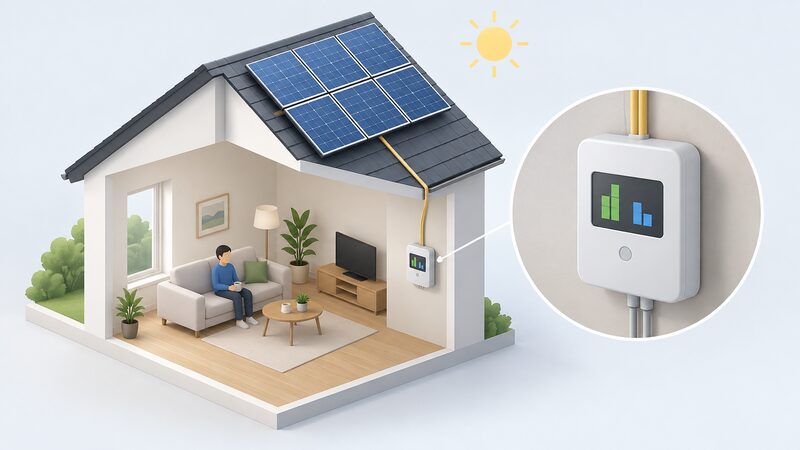
Fixed or variable export tariff: what the choice comes down to
The distinction is the same one that runs through import supply. A fixed rate tariff sets the price you pay for a period of time5. A standard variable tariff is where the price you pay can go up or down based on things like the cost of buying energy on the open market5. On the export side the direction of payment reverses, but the structure does not: a fixed export rate holds a stated price per unit, and a variable export rate moves.
The practical difference for a solar household is certainty of income against exposure to movement. Fixed-price arrangements give more certainty over bills but, depending on the market, may increase your costs overall6. That finding was written about import tariffs, and the same logic applies to export: a fixed export rate removes the upside as well as the downside. A household that fixes at 12p does not benefit if wholesale prices spike, and does not lose if they fall.
There is a second difference that matters more than most householders expect: exit terms. Most fixed tariffs include exit fees for each fuel which customers have to pay if they want to switch to a different deal7. If you have 50 days or more left on your fixed tariff you might have to pay an exit fee if you want to switch8. Choosing a tariff with low or no exit fees, in case circumstances change and you want to cancel your contract early, is the standard advice9. Several export tariffs in the comparison carry no fixed end date, which changes the exit question entirely: there is no term to run out.
A third difference is what happens at the end. With a fixed-rate import tariff, you roll onto your provider's standard variable rate when the tariff ends10, and the supplier will automatically move you onto this tariff when the fixed deal has ended11. Suppliers will probably move you to their standard variable tariff when a fixed plan ends, although some may offer the chance to move to another deal12. On export, a fixed tariff with a 12-month term behaves the same way: the term ends and the household is left on whatever the supplier offers next, which is why the term length is worth reading before signing.
For a household weighing energy independence, the fixed or variable export choice is a small lever. It changes the price received for exported units. It does not change the fact that the units leave the property, that a supplier administers the payment, or that the household remains connected to the grid for everything it cannot generate or store.
What a fixed export rate guarantees, and what it does not

Smart Export Guarantee tariffs offer a fixed rate for every unit of electricity that you sell back to the grid13. That is the guarantee: a stated price per exported unit. It is not a guarantee of income, because income depends on how much is exported, and it is not a guarantee that the rate survives the term.
The comparison data shows how varied the fixed category is.
| Tariff | Rate | Term | Payment cycle |
|---|---|---|---|
| Outgoing Octopus | 12p per kWh | Fixed, no fixed end date | Monthly |
| Octopus SEG Tariff | 4.1p per kWh | Fixed, no fixed end date | Not stated |
| Utilita Smart Export Guarantee | 3.0p per kWh | Fixed, no fixed end date | Not stated |
| Next Export Exclusive v3 | 13p per kWh | 12-month fixed term | Not stated |
| Next Export Premium v3 | 17.5p per kWh | 12-month fixed term | Not stated |
| Export Exclusive 12m V3 | 18p per kWh | 12-month fixed term | Not stated |
| So Export Flex | 4.5p per kWh | Fixed or variable, no fixed end date | Not stated |
All figures from a comparison of export tariffs dated 12 May 20261.
Two things follow. First, "fixed" describes the rate structure, not the contract length: a tariff can be fixed in price and open-ended in term. Second, the term length is where the risk sits. A 12-month fixed term at 18p is a different proposition from an open-ended fixed rate at 12p, and the comparison does not rank them.
"your unit price is fixed, not your energy bill"
That distinction is the one to hold on to. A fixed export rate fixes the price per unit. The bill, or the credit, still depends on volume: the amount you're charged is set by the amount of energy you use, the unit cost and the daily fee11. On export, the amount credited is set by the amount exported and the unit rate.
What a fixed export rate does not guarantee is that the supplier will keep offering it, that the household will stay eligible, or that the rate will still be competitive when the term ends. It also does not guarantee a minimum income, because export volume depends on generation, storage and how much the household uses on site first.
Variable export rates: how they move and when they pay more
A variable-rate tariff means the price you pay for each unit of energy can go up or down over time15. On export, the same structure applies to the price received. The variable entries in the comparison run from 3.0p to 15.1p, all with no fixed end date1.
| Tariff | Rate | Term |
|---|---|---|
| Export Variable | 3.0p per kWh | No fixed end date |
| Export and Earn Flex | 3.02p per kWh | No fixed end date |
| Export Variable Value | 5.6p per kWh | No fixed end date |
| Next Flex Export v1 | 6p per kWh | No fixed end date |
| Export and Earn Plus | 15.1p per kWh | No fixed end date |
All figures from a comparison of export tariffs dated 12 May 20261.
The range within the variable category, from 3.0p to 15.1p, is wider than the range within the fixed category. That is the point of a variable rate: it can be the best or the worst of the available options depending on when it is read.
Some variable export tariffs pay more at particular times. Octopus Energy Flux is an import and export tariff, so what you pay to use electricity also varies with these times16. It pays less, around 14p per kWh, during the rest of the day per kWh exported16. Outgoing Octopus Agile is paid based on real-time energy pricing varying every half hour, with an average of 9.09p2. A household with a battery can shift exports into the higher-priced half hours; a household without one exports when the panels generate, which may not be when the price is highest.
The Feed-in Tariff, now closed to new applicants, adjusted its generation and export tariffs annually, based on the 12-month period ending on 31 December of the previous year17. That is a reminder that variable does not always mean half-hourly: it can mean an annual reset. The Smart Export Guarantee has no equivalent annual reset mechanism, because there are no set tariffs and the only requirement is that the tariff must be greater than zero at all times1.
For independence, a variable export rate is the structure that rewards flexibility. It pays a household for timing exports well, which is a form of control over the value of its own generation. It also exposes that household to price movements it does not control, and to the supplier's decisions about when and how much to pay.
Outgoing Octopus: the rate, the terms and the 30-day notice

Outgoing Octopus is listed as a fixed export tariff with no fixed end date, at 12p per kWh, paid monthly, and it requires an Octopus import tariff1. Which? guidance from April 2026 also lists Outgoing Octopus at 12p per kWh for Octopus Energy customers with solar panels2.
The rate is the headline. The terms around it matter as much. Because the tariff has no fixed end date, there is no contract expiry to trigger the automatic move to a standard variable rate that applies to fixed-term import deals11. The rate can still change, and the notice a household receives is set by the tariff terms and by the supplier's obligations, not by the fixed-term rules.
The pairing question follows from that. Octopus Go works with any vehicle, while there are some vehicles that will not work with the Intelligent Octopus Go tariff18. Both are import tariffs, and Outgoing Octopus sits alongside an Octopus import tariff, so the export arrangement is compatible with either in principle. The vehicle compatibility limit applies to the import side, not the export side.
Octopus Flux is also listed as requiring an Octopus import tariff, at a variable rate with no fixed end date1. The Intelligent Octopus Flux Export tariff was available to customers on the Intelligent Flux import tariff, who had solar PV and battery storage but also allowed Octopus to control their battery exports3. That is the clearest example in the export market of a tariff that trades control for rate: the household hands the supplier control of when the battery discharges, and the recorded average was 27p per kWh3.
The dependence here is worth stating plainly. A household on Outgoing Octopus depends on Octopus for both its import supply and its export payment. That is a single commercial relationship covering both directions of flow. The rate is attractive against the SEG alternatives listed, and the concentration is real.
Eligibility and setup: DNO permission, MCS certification and the second meter point
Eligibility for an export tariff runs through three gates: certification, connection permission and metering.
- Certification. For solar PV, wind and micro-CHP installations up to 50kW, the Smart Export Guarantee requires presenting a Microgeneration Certification Scheme certificate or equivalent4. The technology and installer must be certified under the Microgeneration Certification Scheme or equivalent, and suppliers may ask for an MCS certificate4. The SEG and the government's previous Feed-in Tariff and Renewable Heat Incentive schemes all require the renewable energy product and installer to be certified and meet MCS standards19. The MCS is a certification scheme for microgeneration installation companies and products, defining and maintaining consistent standards20. Having solar tiles or panels installed by an MCS-certified installer may be a requirement to sign up for export tariffs21, and the same point is made for solar panels generally22.
- Connection permission. Most suppliers will require a 'DNO Response' in order to apply for an export tariff, the email from SSEN confirming commissioning documents are logged and the system is compliant with G98/G9923. That requirement sits with the distribution network operator, and it is the gate that catches households whose installer did not complete the paperwork.
- Metering. A household needs a registered smart meter that records exported electricity, even if not signing up to a smart tariff4. That is the second meter point: the meter must be able to see units flowing out as well as in.
For a household buying a property with panels already fitted, the check is whether the system is properly registered with MCS and any export tariffs24. Registration is the thing that travels with the installation, and its absence is the most common reason a new owner cannot sign up.
The independence picture here is mixed. Certification and DNO permission are one-off gates that, once passed, stay passed. The smart meter and the supplier relationship are ongoing dependencies: the payment exists because a metered, registered, certified system is connected to a network and administered by a company.
Battery storage and export tariffs: what changes
A battery changes which export tariffs are available and how much they pay. The comparison data shows that Export Variable includes battery storage, while the SEG Tariff entry records battery storage as unknown1. That is a meaningful split: some export products are built around households with storage, and some are not.
The clearest case is the Intelligent Octopus Flux Export tariff, which was available to customers on the Intelligent Flux import tariff, who had solar PV and battery storage but also allowed Octopus to control their battery exports3. The household gets a higher recorded average, 27p per kWh, and gives up control of when the battery discharges3. Octopus Energy Flux pays less, around 14p per kWh, during the rest of the day per kWh exported16, with the higher rates concentrated in particular periods.
A battery also changes the value of a variable rate. Outgoing Octopus Agile is paid on real-time pricing varying every half hour, averaging 9.09p2. Without storage, a household exports when the sun shines. With storage, it can hold units and release them into higher-priced half hours, which is the mechanism that makes a variable export rate worth considering at all.
The trade is control against rate. A household that keeps manual control of its battery can choose when to export and can respond to whatever the tariff pays at that moment. A household that hands control to the supplier accepts the supplier's schedule in exchange for a rate it would not otherwise reach. Both are commercial arrangements, and neither removes the dependence on the supplier to measure, price and pay for the export.
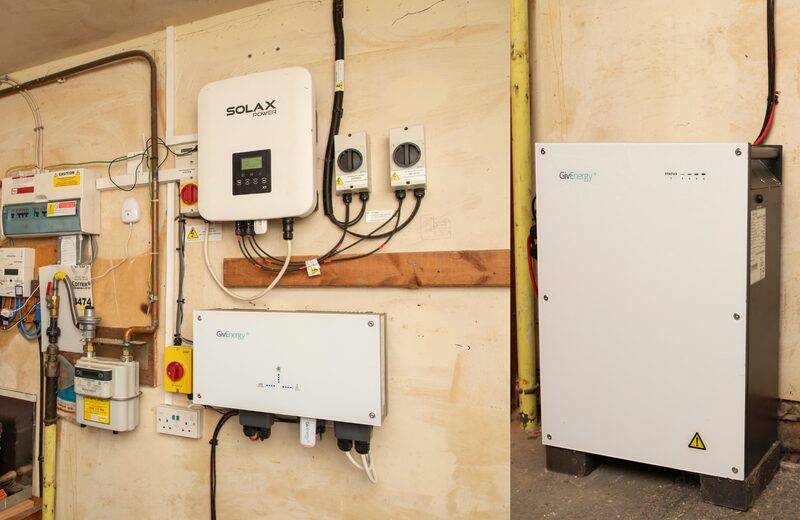
Fixed vs variable for your household: how to compare
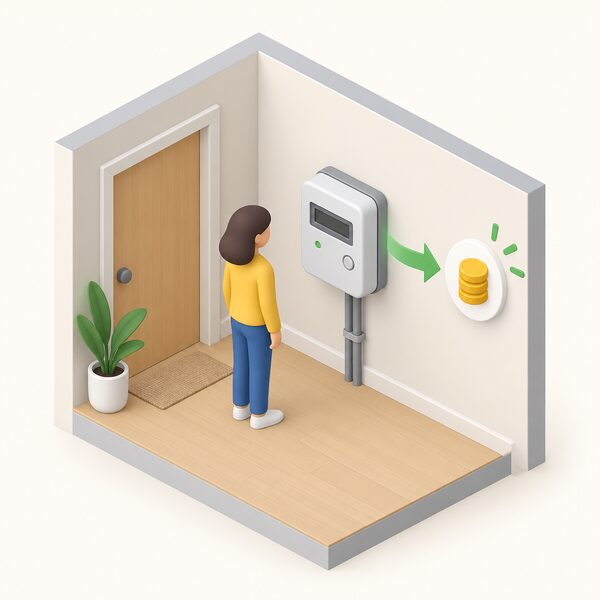
Comparison starts with the two figures that decide the outcome: the rate per exported kWh and the term. Everything else is a condition on those two.
The rate spread across the tariffs listed is from 3.0p to 18p on fixed structures and from 3.0p to 15.1p on variable ones, with the recorded Year 5 average of 27p on a supplier-controlled battery tariff sitting above both1. A household comparing on rate alone would pick the highest number. A household comparing on terms would look at the term length, the payment cycle, the import tariff requirement and the exit position.
The payment cycle varies. Outgoing Octopus is listed with a monthly payment cycle1. Some variable export tariffs are listed with a three-month payment cycle1. That affects cash flow rather than total income, but it is a term worth reading.
Understanding of the underlying structures is not universal. Around 1 in 5 reported that they have no understanding of what fixed or variable tariffs are, 15% and 19% for fixed and variable respectively25. That finding is about import tariffs, and it suggests that the fixed or variable label on an export tariff may not carry much meaning for a substantial share of households.
The comparison that matters for independence is between a rate the household can predict and a rate it can influence. A fixed export rate is predictable and passive. A variable export rate, particularly a half-hourly one, is unpredictable and active: it pays more to households that can shift exports, which usually means households with a battery and the willingness to let a supplier or a system decide when it discharges.
Neither structure changes the underlying position. The household still exports into a grid it does not control, is paid by a company it does not control, and depends on certification, a DNO response and a smart meter to be paid at all. The export tariff is the price of that arrangement, and the fixed or variable choice is a choice about how that price is set.
Sources25 cited
- Smart Export Guarantee, Solar Energy UK, 12 May 2026
- Smart Export Guarantee rates: the best and worst SEG tariffs, Which?, April 2026
- Smart Export Guarantee Annual Report Year 5, Ofgem, December 2025
- Smart Export Guarantee, Energy Saving Trust, 20 May 2026
- Check if you are owed money on your energy bill, Ofgem, 2026
- Getting the best energy deal, Age UK, 10 September 2026
- Energy tariffs explained, Uswitch, 17 February 2026
- Choosing an energy tariff, Citizens Advice, 24 August 2023
- Five top tips from Which? to cut your energy bills, Climate Action Wales, 18 March 2026
- Understanding energy bills, StepChange, 20 September 2026
- Your gas or electricity supplier has put up its prices, Citizens Advice, 17 September 2026
- Fixed energy, Uswitch, 7 September 2026
- Tariffs for renewable technology, Energy Saving Trust, 12 August 2026
- Best deal energy, Home Energy Scotland, 20 September 2026
- Standard rate tariffs, Uswitch, 26 August 2026
- Four ways to make solar panels more cost effective, Which?, October 2024
- Guidance for FIT Generators V18, Ofgem, 1 April 2026
- Octopus EV energy tariffs, Uswitch, 9 October 2025
- The SEG and previous renewable schemes, House of Commons Library, 13 May 2026
- Feed-in Tariffs Annual Report Scheme Year 13, Ofgem, December 2023
- Solar roof tiles, Energy Saving Trust, 13 August 2026
- Solar panel installation, Energy Saving Trust, 7 September 2026
- Micro generation connections above 3.68kW per phase, SSEN, 17 September 2026
- Buying a house with solar panels, Energy Saving Trust, 13 August 2026
- Understanding consumers' energy tariff choices, Ofgem, July 2025
 Export Rates Per kWhHow much will your supplier pay you for the solar power you send to the grid, and why do rates vary so much from one company to another?
 The Full Tariffs GuideWhich energy tariff suits how you live, and will switching really save you money?
 Solar Export PaymentsIf you have solar panels, how do you actually get paid for the electricity you send back to the grid?
 Fixed-Rate Energy TariffsWhat a fixed energy tariff fixes and what it does not, the contract lengths sold in the UK, exit fees and the 49-day window, how fixed rates compare with the price cap, and what happens when the term ends.
 Export Tariff ApplicationsHow the Smart Export Guarantee application works, how export readings are collected, and how often payments are made.
 Fixed and Variable TariffsCompares capped standard variable tariffs with fixed deals, including exit fees, contract end and rollover.