

In this comparison
For a household with a heat pump, the choice between Next Pumped and E.ON Next's standard variable tariff is not a choice between two prices for the same pattern of use. It is a choice between two pricing structures. Next Pumped is a dedicated heat pump tariff that E.ON Next says is designed to maximise the benefits of a new system, and the company states that being on it with a heat pump means a household can save more than on its standard variable tariff1.
The standard variable tariff works differently. Its unit rates move with the Ofgem price cap, which is reviewed every three months, and E.ON Next tells standard variable customers that prices could go up or down when the cap is reviewed in January, April, July and October each year2. On the company's own account, variable tariffs have no term limit, so a household can switch supplier or move to a fixed dual fuel tariff at any time, and the price of each unit changes each six months3.
The reason the structure matters more than the headline rate is that a heat pump uses electricity steadily rather than in short bursts. Independent guidance notes that a heat pump uses roughly the same amount of electricity every hour of the day if it is set up to deliver steady warmth4. On a flat standard tariff that pattern is expensive, because electricity bought at the standard, price-capped rate costs around four times more per unit than gas5. Independent research puts the value of moving a heat pump onto a time-of-use tariff at £640 to £750 a year against a single rate tariff with a standard heat pump profile6.
What Next Pumped is, and how it differs from a standard variable tariff
Next Pumped is E.ON Next's dedicated heat pump tariff, which the company describes as designed to maximise the benefits of a new system1. It sits alongside the company's standard variable tariff, which is the default arrangement a household falls onto when a fixed deal ends or when a new occupant takes over a supply.
The structural difference is what the rate is built around. A standard variable tariff is a single rate for all hours, capped by Ofgem and reset at each cap review. A heat pump tariff is built around the load a heat pump creates, and independent guidance describes the two common models: a set, cheaper rate per kWh regardless of where the household lives, or a discount compared with the region's standard tariff4. Suppliers vary in which they use.
That distinction matters because the standard variable tariff is not designed for a large, steady electrical load. It is designed as a universal default. A heat pump tariff is a specialist product, and specialist products carry conditions: a smart meter, a heat pump, and in most cases an installation arranged through the supplier or an approved installer.
The dependence that remains is worth stating plainly. A heat pump tariff still ties the household to a supplier and to the grid, and it still exposes the household to wholesale prices through whatever mechanism the tariff uses. What it changes is the shape of the exposure: from a flat rate set by the cap to a rate structure that rewards running the heat pump at particular times. For a household weighing independence, that is a shift in control over when energy is bought, not independence from the network.
How the price is set: Ofgem cap reviews every three months
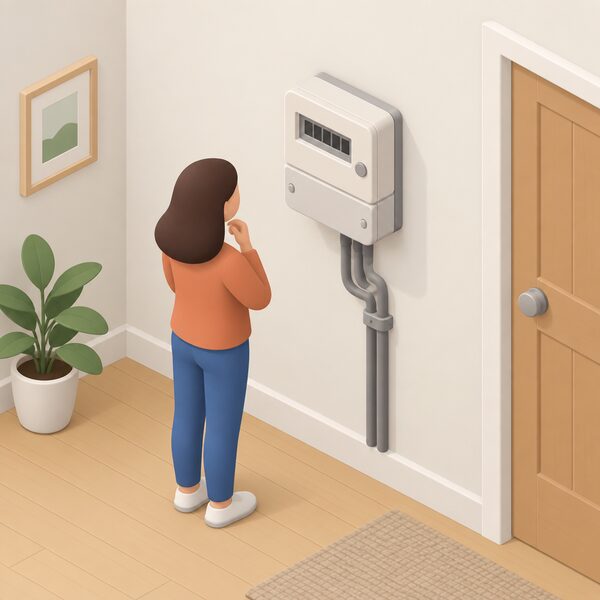
The standard variable tariff is a capped product. Ofgem reviews and sets the price cap every three months based on the cost of wholesale energy10, and the same three-month cycle is repeated across official and independent guidance: the regulator updates the cap every three months11, the cap is calculated every three months12, and Ofgem sets the price cap level every three months to determine what a unit of gas and electricity will cost13.
The cap applies to standard variable tariffs specifically. Independent guidance states that Ofgem sets the price cap for standard variable tariffs every three months14. For a household on a heat pump tariff, the cap is not the mechanism that sets the rate, though it remains the backdrop against which any supplier's offer is judged.
There is a historical wrinkle worth knowing, because it explains why older explanations of the cap describe a different rhythm. Ofgem's own 2020 explainer states that every six months the regulator worked out how much it costs a supplier and revised the cap level15. The three-month cycle is the current arrangement, and the six-month description reflects the earlier design.
For a heat pump household, the practical consequence is that a standard variable tariff resets four times a year, and each reset can move the rate in either direction. E.ON Next names the four review points directly: January, April, July and October each year2. A heat pump tariff is not bound to that calendar in the same way, which is part of what a household is buying when it moves onto one.
Why a heat pump changes the maths
The running cost question turns on two facts that pull in opposite directions. The first is the unit rate: electricity bought at the standard, price-capped rate costs around four times more per unit than gas5, and independent guidance states that on standard electricity tariffs, where electricity is nearly four times more expensive than gas, heat pumps can cost slightly more to run than new gas or oil boilers16. The Energy Saving Trust puts it more bluntly: most heat pumps on a standard flat-rate tariff cost the same or even more to run than an efficient gas boiler17.
The second fact is the load profile. A heat pump uses roughly the same amount of electricity every hour of the day if it is set up to deliver steady warmth4. That is the opposite of a household that runs a washing machine in the evening and a shower in the morning. A steady load on a flat rate pays the flat rate for every hour.
Put those together and the case for a specialist tariff becomes an argument about structure rather than about a discount. Independent guidance states that switching to a heat pump time-of-use tariff should reduce the cost of running the heat pump, making it more likely that a household will save money18, and that by switching to a heat pump time-of-use tariff a household can reduce running costs significantly16.
The modelling gives a figure. Independent research found average savings of £640 to £750 a year by operating a heat pump flexibly on a time-of-use tariff against a single rate tariff with a standard heat pump profile6. Under a modelled pass-through tariff, a heat pump used flexibly would save an average of £750 a year compared with a consumer on a single rate tariff6. Those are modelled figures, not guarantees, and they depend on the heat pump being run flexibly rather than on the tariff alone.

Time-of-use tariffs compared: Economy 7, Next Drive Smart, Next Pumped and Next Optimise
The UK time-of-use landscape has two generations in it, and they behave differently. Economy 7 and Economy 10 use fixed cheaper periods, while newer EV and tracker tariffs can be more dynamic and usually work best with a smart meter19. Economy 7 and Economy 10 are older time-of-use tariffs that need compatible meters, while newer flexible tariffs typically rely on a smart meter instead19.
Economy 7 has a specific drawback for a heat pump household. An Economy 7 tariff might charge a higher rate for peak-time energy compared to a standard tariff20. A heat pump that runs through the evening peak would meet that higher rate, which is the opposite of what a steady load needs.
The newer generation of tariffs is where heat pump households tend to look. Independent guidance for homes with a heat pump, solar panels and a battery recommends looking for a good SEG tariff for exported electricity and then either a dynamic tariff or a heat pump tariff for import, from the same company21. That is a structural recommendation about pairing import and export with one supplier, not a recommendation of any particular product.
| Tariff type | Structure | Meter requirement | Fit with a heat pump |
|---|---|---|---|
| Standard variable | Single rate, capped, reset every three months2 | Any | Steady load pays the full rate every hour4 |
| Economy 7 | Cheaper fixed night period, higher peak rate20 | Compatible meter19 | Evening running meets the higher peak rate20 |
| Heat pump tariff | Set cheaper rate per kWh, or a discount on the regional standard rate4 | Smart meter9 | Built around the heat pump load1 |
| Dynamic or tracker | Wholesale-linked, more dynamic pricing19 | Smart meter19 | Recommended alongside a heat pump tariff for import21 |
Peak rates are the risk in any time-of-use design. Independent guidance records peak rates between 4pm and 7pm that have been seen up to as much as 50% pricier than standard tariff rates, varying by supplier4. A heat pump tariff that shifts the load away from that window avoids the premium; one that does not, does not.
Export earnings: the Smart Export Guarantee at 17.5p/kWh

A heat pump household with solar panels has a second income stream to consider, and it is priced separately from the import tariff. The Smart Export Guarantee pays for electricity exported to the grid, and the rates vary widely. Official statistics for the scheme's fifth year record that the lowest tied and untied tariffs were 5p per kWh with Octopus and 1p per kWh with E Energy respectively22. Official guidance states that as of June 2026, SEG payments can reach up to 25 pence per kWh, which is comparable to the unit rate of electricity23.
E.ON Next's own export product, Next Export Premium v3, is listed at 17.5p per kWh on a 12-month fixed term8. For comparison, Utilita's Smart Export Guarantee tariff is listed at 3.0p per kWh on a fixed rate with no fixed end date8. The gap between those two figures is the clearest illustration of how much the export side of the arrangement varies between suppliers.
The pairing matters because the import and export sides are usually bought together. Independent guidance for heat pump, solar and battery homes recommends a good SEG tariff for exports and then either a dynamic tariff or a heat pump tariff for imports, from the same company21. A household that takes a heat pump tariff from one supplier and an export tariff from another is not doing anything wrong, but it is giving up the simplicity of a single account and, in some cases, a tied rate.
"Look for a good SEG tariff for your exported electricity and then either a dynamic tariff or a heat pump tariff for your import"
Installation route: MCS-certified installers, BUS grant check and heat loss survey
A heat pump tariff is the supply side of the arrangement. The installation is a separate transaction with its own rules, and the rules are set by the Boiler Upgrade Scheme rather than by the supplier.
Installers must be MCS certified and be certified to install heat pumps and/or biomass boilers24. The same requirement appears in the scheme's property owner guidance: to participate in BUS, installers working with consumers must be MCS certified and members of a consumer code approved by the Secretary of State25. The scheme's annual report states that installers and the low-carbon heating products supported under the scheme must be Microgeneration Certification Scheme certified, and that installers must be MCS certified to participate in the BUS scheme26.
The practical sequence for a household is:
- Confirm the installer holds MCS certification and membership of an approved consumer code25.
- Have a heat loss survey carried out, since the system size follows the building rather than the boiler being replaced.
- Check the Boiler Upgrade Scheme grant position before work starts, because the grant is claimed through the installer.
- Arrange the smart meter, which is required for a heat pump or EV tariff9.
- Move onto the heat pump tariff once the installation is commissioned.
E.ON Next offers Ideal and Vaillant heat pump installations with seven-year manufacturers' warranties27. That warranty is a product guarantee from the manufacturer, and it is separate from anything the tariff provides.
Costs and discounts: up to £200 off an air source heat pump for existing customers
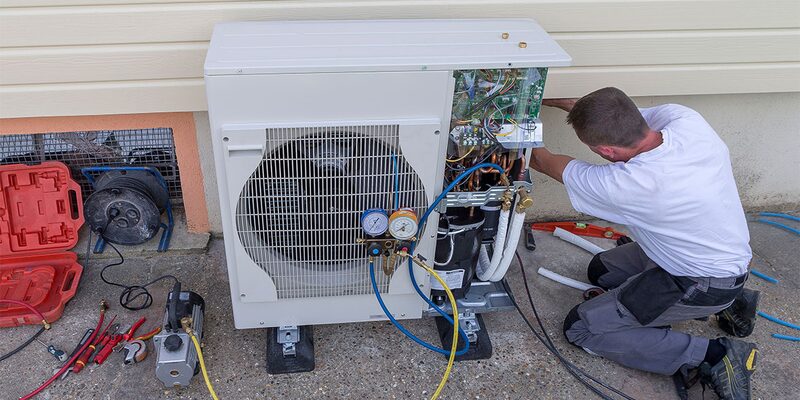
E.ON Next runs an installation discount for its own customers. The company advertises a special £200 discount for E.ON Next customers1, and states on its costs page that if you are an E.ON Next customer you are eligible for £200 off your quote just for being with us7. The renewal page lists £200 off a heat pump among its offers3. The eligibility condition is explicit: the £200 discount offer applies to E.ON Next customers only1.
On finance, E.ON Next states that it offers payment plans, including 0% APR interest free options for up to two years, to make the switch to heat pumps more affordable7. That is a payment structure rather than a discount, and it spreads the installation cost over time.
Prices for air source heat pump installation are installer-quoted and vary with the property, the system size and the work needed. The published material does not give a fixed installation price, so no range is given here. What is published is the discount amount and the finance terms, both of which apply to the quote rather than to the supply tariff.
For a household thinking about independence, the discount is a one-off reduction in the cost of the hardware. The tariff is the recurring part, and it is the recurring part that determines whether the heat pump is cheap or expensive to run over its life.
What a smart meter has to do with it
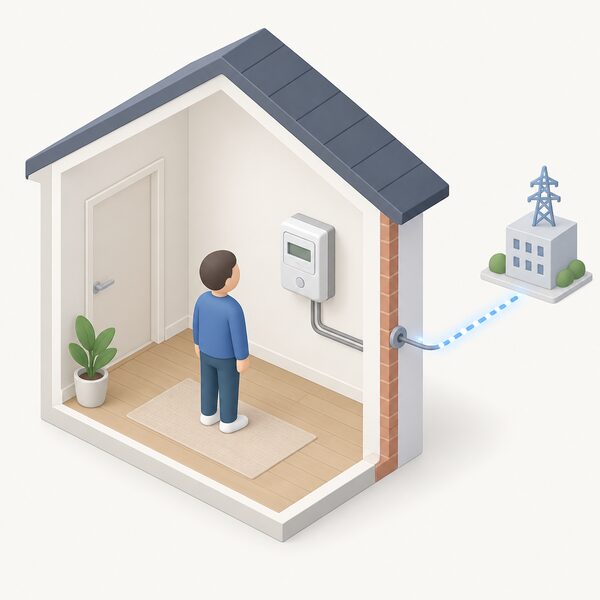
A smart meter is the enabling condition for the whole arrangement. Independent guidance states that a household needs a smart meter to get a heat pump or electric vehicle tariff9. Without one, the supplier cannot see when the electricity is used, and a time-of-use rate cannot be applied.
Smart meters are compatible with Economy 7 tariffs and fixed rate tariffs, and they can also enable a household to join other newer time-of-use tariffs20. That compatibility means a household does not need a different meter to move between tariff types; the same device supports the older restricted-hour tariffs and the newer flexible ones.
The meter also changes what a household can do with the data. Smart meters support energy flexibility, which is the shifting of demand to times when the grid is under less strain19. For a heat pump, that flexibility is the mechanism by which the modelled savings are realised: the heat pump runs when the rate is low, and the meter records it.
The dependence that remains is worth naming. A smart meter connects the household's consumption data to the supplier and to the wider system. That is what makes the cheaper rate possible, and it is also what makes the household's usage visible in detail. A household that wants the tariff takes the meter with it.
Moving home, switching and what the tariff does not cover
Two administrative points come up often enough to state directly. The first is moving home. Independent guidance states that if a contract is broken, the household automatically goes onto a standard variable tariff in the new home28, and that a new occupant is placed on a deemed contract with the supplier, which will be for their default or standard variable tariff28. A heat pump tariff does not travel with the household; it is arranged at the property.
The second is switching. E.ON Next states that variable tariffs have no term limit, so a household can switch suppliers or move to a fixed dual fuel tariff at any time3. That removes the exit fee question on the variable side, though a fixed tariff taken later would carry its own terms.
On contact, E.ON Next publishes a phone number, 0808 501 5200, for getting in touch2. Payment can be made by monthly Direct Debit, by card through the online account or by phone, by bank transfer, or in cash at a Post Office, Payzone or PayPoint using the barcode on the bill2. Contact hours are published in more than one form across E.ON Next's own pages, and the two versions do not agree, so a household should check the current hours before calling.
What the tariff does not do is make the household independent of the grid or of a supplier. Next Pumped changes when and at what rate electricity is bought. The heat pump still draws from the network, the household still has a supplier, and the rate still moves with whatever mechanism the tariff uses. The gain is control over timing and a rate structure matched to a steady load; the remaining dependence is the connection itself.
Sources28 cited
- Air source heat pumps in Bournemouth, E.ON Next, 2026-09-17
- Fixed Direct Debits, E.ON Next, 2026-09-17
- Renew your tariff, E.ON Next, 2026-09-19
- Time of use tariffs explained, Which?, 2026-04-23
- Air source heat pump costs and savings, Which?, 2026-04-14
- Domestic heat pump flexibility modelling, Nesta, 2024-11-19
- Air source heat pump costs, E.ON Next, 2026-09-17
- Smart Export Guarantee, Solar Energy UK, 2026-05-12
- Deciding if a heat pump is right for you, Citizens Advice, 2025-12-08
- Electricity prices in Great Britain, House of Lords Library, 2026-06
- Energy price cap explained, Welsh Government, 2026-03-04
- Standard rate tariffs, Uswitch, 2026-08-26
- How to read your energy bills, National Energy Action, 2026-06-12
- Choosing an energy tariff, Citizens Advice, 2023-08-24
- Energy price caps explained, Ofgem, 2020-12
- Air source heat pumps, Energy Saving Trust, 2026-07-16
- Renewable technologies: what really cuts energy bills, Energy Saving Trust, 2026-08-12
- In-depth guide to heat pumps, Energy Saving Trust, 2026-07-16
- Energy flexibility, Smart Energy GB, 2026-08-17
- What is Economy 7, Smart Energy GB, 2026-04-07
- Tariffs for renewable technology, Energy Saving Trust, 2026-08-12
- Smart Export Guarantee Annual Report Year 5, Ofgem, 2025-12
- POST note on electricity prices, Parliament, 2026
- Boiler Upgrade Scheme guidance for installers v5.1, Ofgem, 2026-07-02
- BUS guidance for property owners, Ofgem, 2026-03-25
- BUS Annual Report 2024 to 2025, Ofgem, 2025-07
- Heat pumps vs boilers, Which?, 2025-09-22
- Moving home: dealing with your energy supply, Citizens Advice, 2026-09-20
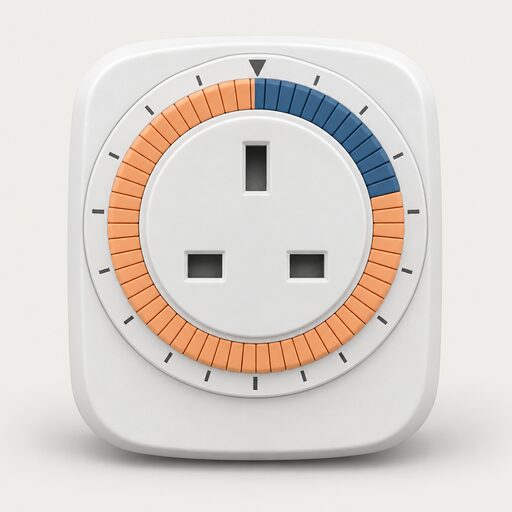 Heat Pump Electricity TariffsA heat pump tariff gives you cheaper electricity for part of the day, so running your heating costs less than on a standard rate.
 Heat Pump Running CostsWhat does a heat pump cost to run each year, and is it cheaper than a gas boiler?
 How Much Does a Heat Pump CostA heat pump usually costs around eleven thousand pounds installed, though quotes vary a lot depending on your home.
 Policy, Targets and Coming RulesHeat pumps are central to the government's plans for greener home heating.
 Fixed and Variable TariffsCompares capped standard variable tariffs with fixed deals, including exit fees, contract end and rollover.
 The Full Tariffs GuideWhich energy tariff suits how you live, and will switching really save you money?