
In this answer
Short answer
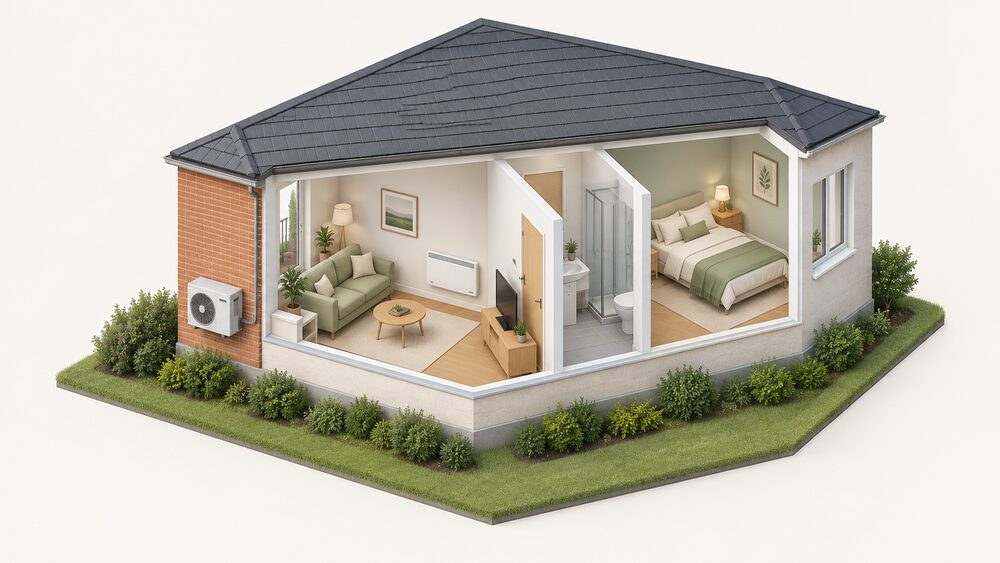
A flat heated by direct electric heating, whether panel heaters, storage heaters or infrared, is the case where a heat pump has the clearest running-cost case in the whole housing stock. The reason is arithmetic rather than marketing: the Energy Saving Trust states that heat pumps are about three times more efficient than standard electric heaters, because they move heat from the air or ground rather than generating it from a resistance element1. Nesta puts the same relationship at three to four times more useable heat per kilowatt of electricity used compared with direct electric heating such as electric radiators or boilers2.
The headline savings figures vary widely by source. One electricity network operator states that fuel bills can be reduced by 50%3, and a European heat pump industry body cites reductions of up to 60% on household heating bills4. A distributor's product page reports reductions of around 40% in heating costs when old electric heaters are replaced5. These are not the same measurement, and none of them is a guarantee for a particular flat.
What matters for a household is that the saving is not automatic. Government guidance is explicit that not everyone who installs a heat pump will see savings straight away, because electricity is currently more expensive than gas6. In a flat already on electric heating that caveat bites less hard, because the alternative is electricity too. But the tariff, the insulation and the specification of the unit all move the number.
How a heat pump compares with electric panel heating in a flat
The comparison is not between two ways of burning something. It is between two ways of using the same electricity. A resistance heater converts one kilowatt of electricity into at most one kilowatt of heat. A heat pump moves existing heat from outside to inside, so the same kilowatt of electricity delivers several kilowatts of heat.
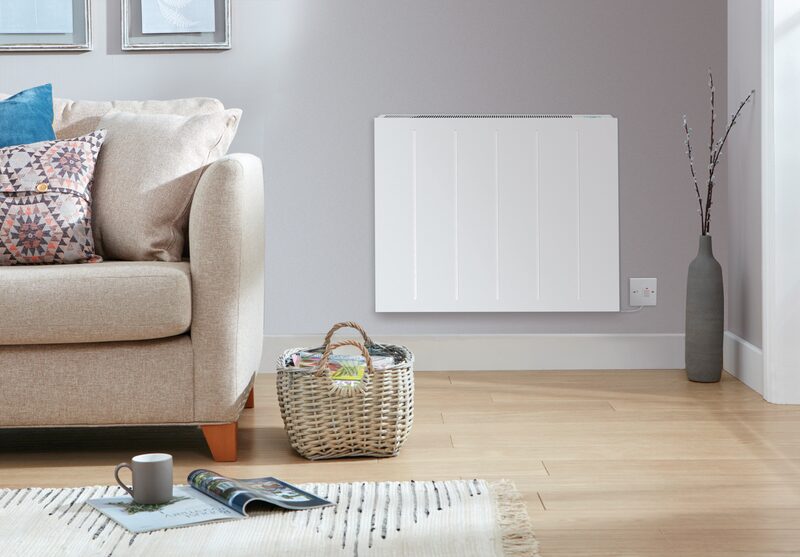
The Energy Saving Trust states that heat pumps take heat from the air or ground, making them about three times more efficient than standard electric heaters1. Nesta's figure is three to four times more useable heat per kilowatt compared with direct electric heating like electric radiators or boilers2. Against infrared heating specifically, the Energy Saving Trust states that heat pumps use less electricity to produce the same amount of heat, typically two to four times less9, and the same comparison appears in its guidance on electric wallpaper10. Home Energy Scotland describes heat pumps as much more energy efficient than boilers and electric heating11.
There is also a performance gap between installations. Official research found that systems on the Heat Pump Monitor platform operate, on average, at 39% higher efficiency than systems installed under the Electrification of Heat programme12. That is a comparison between two groups of real installations, not a laboratory figure, and it shows how much the quality of design and commissioning changes the outcome.
For a flat, the practical translation is this: a heat pump does not change the fuel, it changes the quantity of fuel needed for the same warmth. That is the whole of the saving, and it is why the saving is larger against resistance heating than against a gas boiler.
Why the saving depends on electricity levies and tariffs
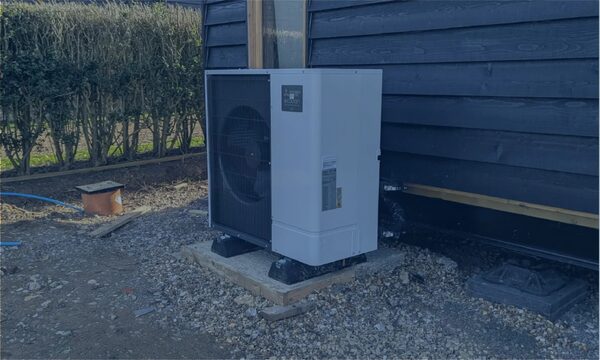
A heat pump runs on electricity, and electricity in the UK carries policy costs and levies that gas does not. Parliament's research service states plainly that reducing the price of electricity relative to gas would make heat pumps more competitive13. That is the structural reason a heat pump can be a large saving in an electrically heated flat and a smaller or absent one in a gas heated house.
Tariffs are the second lever. Government guidance notes that additional savings are possible with flexible electricity tariffs13. Ofgem's own consultation work found that households with heat pumps could save more than £250 annually by shifting to a smart tariff and using their heat pump flexibly7. The Energy Saving Trust's research is more cautious in one direction and more striking in another: it found which tariff types provide the best heat pump savings, and which might actually increase energy bills14. A time-of-use tariff is not automatically better.
Where a heat pump is combined with solar and a battery, the numbers grow. Energy UK reports that a combination of a heat pump, solar and a battery can save households £810 more per year when operated flexibly than the same assets on a single-rate tariff15. The same publication reports households saving up to 64% on their energy bills through packages of measures such as a battery, a heat pump and rooftop solar with a time-of-use tariff15. Those figures describe a package, not a heat pump alone.
What a flat owner needs before a heat pump can deliver these savings
The technology is only one of several conditions. The rest sit with the building, the electrical supply and the paperwork.
Insulation first. The Energy Saving Trust states that topping up wall, floor and loft insulation before installing a heat pump will help reduce its running costs6. In a flat, the loft and floor may not be within the leaseholder's control, which is where energy improvements in flats and apartments becomes relevant.
Correct specification. The Renewable Energy Consumer Code states that heat pumps require electricity to run, and must be specified correctly for the property they are to be installed in to work efficiently, otherwise energy bills can be high16. A unit sized for a house and fitted to a flat will not deliver the efficiency figures above.
Electrical capacity. The Consumer Protection Association notes that older properties may require upgrades to the consumer unit or electrical improvements17. A heat pump draws a continuous load that a flat's existing supply may not comfortably carry.
Full space heating. Boiler Upgrade Scheme installer guidance requires that the heat pump can provide the full space heating demands of the property12. A heat pump that only covers part of the load leaves the resistance heaters in place, and the saving shrinks accordingly.
Documentation. Approved Document L guidance for new dwellings sets out what operating and maintenance information should include: the heat loss calculation, design flow temperature, competent person scheme confirmation, size of the emitter circuit and minimum set back temperatures18. The same categories are what a flat owner should expect to see for a retrofit.
Permission. Installation of a ground source heat pump within the curtilage of a house or block of flats does not require planning permission, though listed building consent may be required for a listed property19. Air source heat pumps benefit from permitted development on detached houses or blocks of flats20. Leasehold consent from a freeholder or management company is a separate question from planning, covered in leasehold consent for energy work.
What size heat pump does a flat need, and where can it go
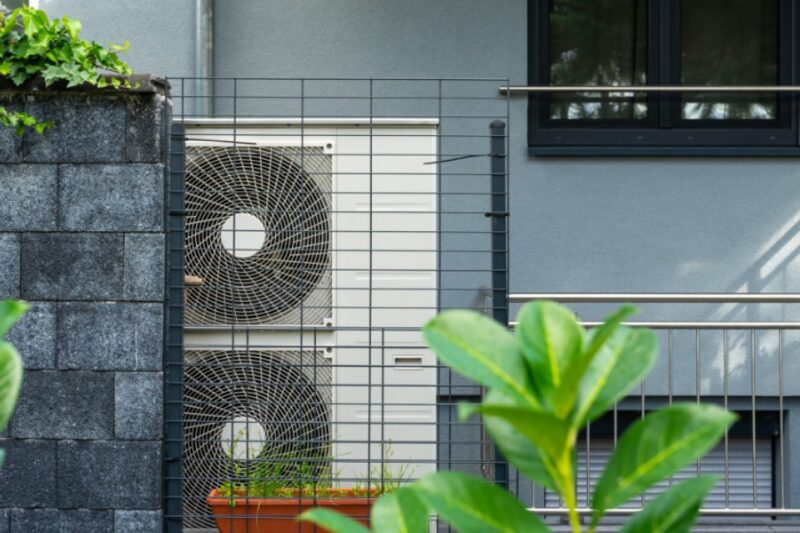
There is no standard flat size. Sizing follows the calculated heat load of the individual property, and the permitted development rules constrain the physical unit rather than the output.
| Constraint | House | Block of flats |
|---|---|---|
| Outdoor compressor unit volume (permitted development) | 1.5 cubic metres | 0.6 cubic metres8 |
| Ground source: planning permission within curtilage | Not required | Not required19 |
| Air source: permitted development | Detached houses | Blocks of flats20 |
| Hybrid sizing under Warm Homes: Local Grant | Minimum 55% of calculated heat load | Minimum 55% of calculated heat load21 |
The 0.6 cubic metre limit for a block of flats is the binding constraint in most apartment installations, because it caps the physical size of the outdoor unit regardless of how much heat the flat needs. Where the load exceeds what a compliant unit can deliver, a hybrid arrangement becomes the practical route, and the Warm Homes: Local Grant rules recognise this by requiring a heat pump sized to provide a minimum of 55% of the calculated heat load in retrofit and packaged hybrid installations21.
For smaller flats, the Energy Saving Trust notes that an air-to-air heating and cooling system can be especially cost-effective if the home has relatively few rooms, particularly where it overheats in warm weather22. That is a different product from a wet heat pump system, and it does not heat water.
Where the savings estimates come from, and how much to trust them
The figures quoted at the top of this page come from different kinds of source, and they are not interchangeable.
The 50% figure comes from an electricity network operator's own heat pump pages3. The up to 60% figure comes from a European heat pump industry association4. The around 40% figure comes from a distributor that installs heating systems5. The £260 a year figure comes from the Energy Saving Trust, and is described as a saving compared to an old gas boiler, not against electric heating12. The Energy Saving Trust's savings figures are calculated from a weighted average of projected, current and recent energy price caps12.
Two of the sources in this area are forward-looking rather than current. A Cadent Green Gas Taskforce report gives a heat pump cost assumption for flats of £8,000 in 2030, alongside a bio-hybrid figure of £7,500, and an electricity price assumption for heat pumps of £0.017 per kWh in 205023. Those are modelled projections for a future decade, not prices a household can act on now.
"In some cases, energy bills were reduced by more than 80% compared with a gas-heated home on a standard tariff"
That 80% figure is the highest quoted here and it describes a three-technology package on an appropriate tariff, not a heat pump on its own. Cornwall Insight's study found that households can save money simply by being on a typical time-of-use tariff, without changing how they heat their homes24. The Energy Saving Trust puts the saving from an air source heat pump at £260 a year compared with an old gas boiler, calculated from a weighted average of projected, current and recent energy price caps25. Actual savings vary with property type, size and location, insulation levels, the existing heating system, occupancy patterns, energy tariffs, installation quality and how the household uses the home afterwards27. A flat on electric heating is a different case again.
The honest position is that the direction of the saving is well evidenced and the size of it is not. A flat owner weighing this up is comparing a known resistance heating bill against a heat pump bill that depends on the unit chosen, the insulation, the emitter circuit and the tariff.
Grants, and what they cover
Government grants exist to cover part of the cost of installing a heat pump26. The Clean Heat Grant scheme offers upfront capital grants to enable the installation of heat pumps and, in limited circumstances, biomass boilers, for households and small non-domestic buildings26. The Energy Saving Trust confirms that there are government grants available27.
Grant rules attach conditions to the installation rather than to the property type, so a flat is not excluded by being a flat. The conditions that matter most are the specification requirements described above, including the requirement that the heat pump can provide the full space heating demands of the property12. Where a certified installer is required to access a grant, that is a condition of the scheme rather than a recommendation about who to use.
Support differs across the four nations. Home Energy Scotland provides advice on renewable technologies for Scottish households11, and the Welsh Government publishes separate heat pump guidance23. Households in England, Scotland, Wales and Northern Ireland should check the scheme operating in their nation before assuming a grant amount.
Sources27 cited
- Electric heating, Energy Saving Trust, 2026-07-01
- Interim boilers for broken heating, Nesta, 2026-09-17
- Heat pumps, Electricity North West, 2026-09-19
- Tackling upfront costs, European Heat Pump Association, 2026-07-27
- Heating systems, AgilityEco, 2026-09-20
- Is now a good time to get a heat pump, Energy Saving Trust, 2025-12-12
- Smart meter Guaranteed Standards of Performance, Ofgem, 2025-08
- Planning guidance for heat pumps, London Borough of Richmond upon Thames, 2026-04-22
- Infrared heating explained, Energy Saving Trust, 2026-03-13
- Electric wallpaper explained, Energy Saving Trust, 2026-03-26
- Advice on renewable technologies, Home Energy Scotland, 2026-09-20
- Boiler Upgrade Scheme guidance for installers, UK Government, 2026-07-02
- Research briefing on heat pumps, UK Parliament POST, 2026-09-19
- Flexible futures, Energy Saving Trust, 2026-07-10
- Clean heat: supporting low-income households, Energy UK, 2026-06-11
- Consumers, Renewable Energy Consumer Code, 2026-09-17
- Is your home suitable for a heat pump, Consumer Protection Association, 2026-02-18
- Approved Document L Volume 1 consultation, Welsh Government, 2026-09-17
- Heat pumps, New Forest District Council, 2026-09-17
- Air source heat pumps fact sheet, Pendle Borough Council, 2026-09-17
- Warm Homes: Local Grant policy guidance, UK Government, 2026-07
- How a heat pump can cool your home, Which?, 2026-07-17
- Heat pumps, Welsh Government, 2025-11-17
- Supporting households with low carbon technology combinations, Energy Saving Trust, 2026-07-15
- Heat pump, UK Government, 2026-09-10
- Energy terms explained, Ofgem, 2026-09-20
- Electric central heating, Which?, 2025-09-22
 Heat Pump Electricity TariffsA heat pump tariff gives you cheaper electricity for part of the day, so running your heating costs less than on a standard rate.
 Energy IndependenceA heat pump runs your heating on electricity instead of gas or oil, so how much does that really cut what you pay and how exposed you are when fuel prices jump?
 Controls and Time-of-Use TariffsCheaper electricity at night only saves money if your heating actually uses it then.
 Insulation a Heat Pump NeedsWill a heat pump still work if your home is not well insulated, and would you need to add loft, wall or floor insulation first?
 Insulation Savings and PaybackHow much can you really save by adding insulation, and does it depend on your home, your heating and how you use it?
 The Full Heat Pumps GuideWill a heat pump keep my house warm in winter, and what does one cost to buy and run?