
In this guide
Changing how a household runs its heating and appliances saves real money, but the published figures cluster in a narrower band than the headlines suggest. The single largest behavioural saving in the UK evidence is turning the room thermostat down by one degree: the Energy Saving Trust puts the saving from moving from 22°C to 21°C at around £120 a year in Great Britain and £80 a year in Northern Ireland1, while Cadent and Confused.com both give about £90 a year for the same change2. Official advice in Northern Ireland expresses it as a percentage instead: turning the thermostat down by one degree Celsius could save as much as 10 per cent on heating bills4.
Using a full set of heating controls properly is the second large item, at £100 a year in Great Britain and £110 in Northern Ireland1. Beyond those two, the savings come in small pieces: shorter showers, full washing loads, appliances off standby, lights off. Bundled together, the estimates for a package of small changes run from £3045 to £313 in Great Britain6 to around £3502 and up to £3517, depending on which measures the publisher counts and which household they model.
Those numbers are averages applied to a typical home. They are not a promise. A household already heating sparingly, already timing the boiler tightly and already washing at 30 degrees has little left to give up, and the honest answer for it is close to nothing. A household heating an uninsulated house to 22°C all day has far more than the average to gain. Behaviour change is also the one energy measure that reverses the moment the habit lapses, which is why it belongs alongside fabric work rather than instead of it.
What behaviour change can and cannot save: the honest numbers
The bundled figures are the ones most often quoted and the ones most worth unpicking. The Energy Saving Trust states that energy bills can be lowered by £313 a year in Great Britain through its energy saving tips6. The Welsh Government's climate action service puts the equivalent package at up to £351 a year7. Confused.com describes around £350 a year both in Great Britain and Northern Ireland2. Take Charge, a free advice programme run with Electricity North West, is framed as helping households save around £304 on their bills5. These differ because each counts a different list of actions, some include hardware such as controls or LED lighting, and each assumes a different starting temperature, occupancy and unit rate.
For scale, policy changes move bills by comparable amounts: the UK Government reported a reduction in energy bills of an average of £150 from April 20269. A household doing everything on a tips list is therefore in roughly the same territory as a national policy intervention, which is both an argument for doing it and a reminder that habits alone do not transform a bill.
Three limits are worth stating plainly.
- Behaviour does not change the fabric. A draughty, uninsulated house needs more heat at 19°C than an insulated one needs at 21°C, and no habit closes that gap.
- Behaviour does not change the tariff. Except by switching, a household does not control the tariff its supplier sets, though it can change how much energy it uses10.
- Behaviour is not free of comfort cost. Every degree removed is a degree of warmth removed, and for some households the line between saving and going cold has already been crossed.
Turning the thermostat down: the biggest single lever
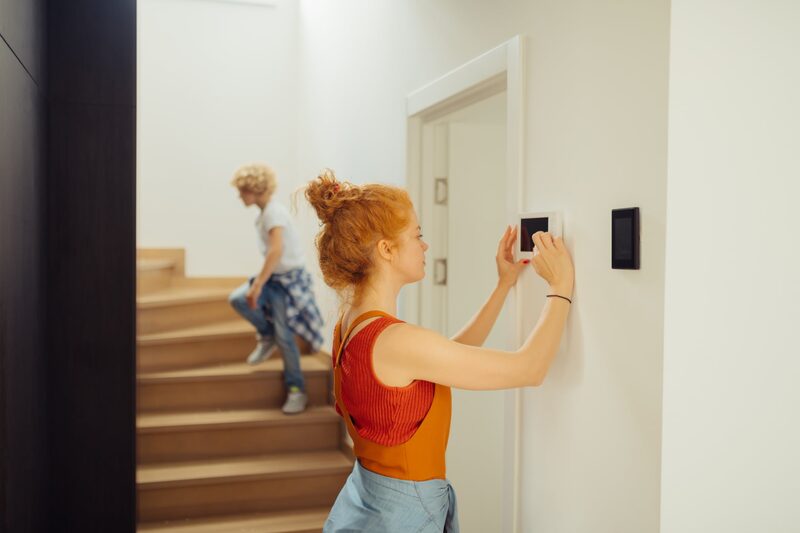
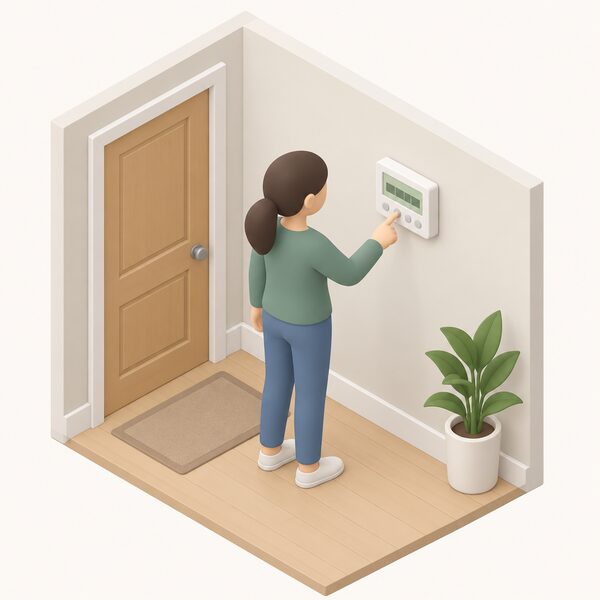
The thermostat is the one control that moves the whole heating bill at once. The Energy Saving Trust figure of £120 a year in Great Britain and £80 in Northern Ireland is for the specific step from 22°C to 21°C1, and the same organisation repeats it in its advice for renters12. Cadent gives £90 a year for that same step in main living areas3, and Confused.com gives £90 a year2 and elsewhere up to £90 a year13. The spread comes from different assumed unit rates and dwelling types rather than from any disagreement about the physics.
The percentage framing travels better between houses. Official guidance in Northern Ireland states that turning central heating down by one degree could cut heating bills by up to 10 per cent14, and the same 10 per cent figure appears in nidirect's insulation advice4 and in British Gas Energy Trust's tips under the same framing. One outlier exists: East Herts District Council's advice states that reducing the thermostat by 1 degree could save up to 25 per cent of heating bills and associated carbon15. That sits far above every other published estimate on this point, and the two figures cannot both be right; the 10 per cent figure is the one repeated across official and independent sources.
Two practical points follow. The percentage applies to the heating portion of the bill, not the whole bill, so a home with high appliance and hot water use sees a smaller proportional change overall. And the saving is only real if the boiler actually runs less: dropping the thermostat while extending the programmed hours can cancel it out entirely.
Heating controls: the habit that needs hardware
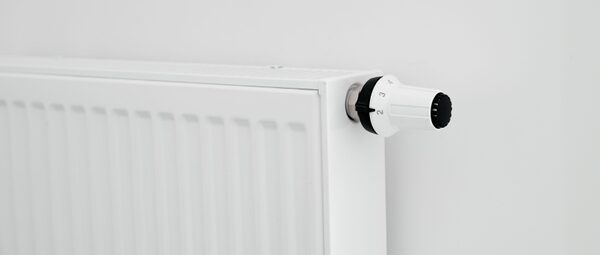
Heating controls are where behaviour and equipment meet. The Energy Saving Trust puts the saving from installing and using a full set at £100 a year in Great Britain and £110 in Northern Ireland for an average semi-detached house1. Cadent gives £110 a year where a system previously had no controls3. Confused.com describes a smart thermostat and controls cutting up to £110 a year13.
A conventional set has three parts working together:
- A programmer, setting when the heating and hot water run.
- A room thermostat, setting the target temperature and switching the boiler off once reached.
- Thermostatic radiator valves (TRVs), letting individual rooms be run cooler than the room the thermostat sits in.
The Boiler Plus policy increased minimum boiler efficiencies, required time and temperature controls, and required an additional energy efficiency measure chosen from weather compensation, a smart thermostat, flue gas heat recovery or load compensation16. Understanding how a boiler works and how to set it correctly is itself described as a way to reduce a heating bill12.
On cost, where a programmer and thermostat already exist, adding TRVs to all radiators costs around £3701. A full control set on an existing system is installer-quoted and the figure varies with the property and the pipework, so no range is published here.
Controls remain a large part of what funded schemes actually deliver. Ofgem's Energy Company Obligation reporting records 514,780 heating controls measures18, and heating controls accounted for 8 per cent of reported installations under the Warm Homes: Social Housing Fund19. In Northern Ireland, the Better Energy Homes Plus scheme bundles remote smart heating controls with boiler upgrades, insulation, LED bulbs, a low-flow shower head, a hot water tank jacket, reflective radiator panels and draught proofing where required20. A fuller treatment sits on how much heating controls can save.
Using an in-home display to see where the money goes
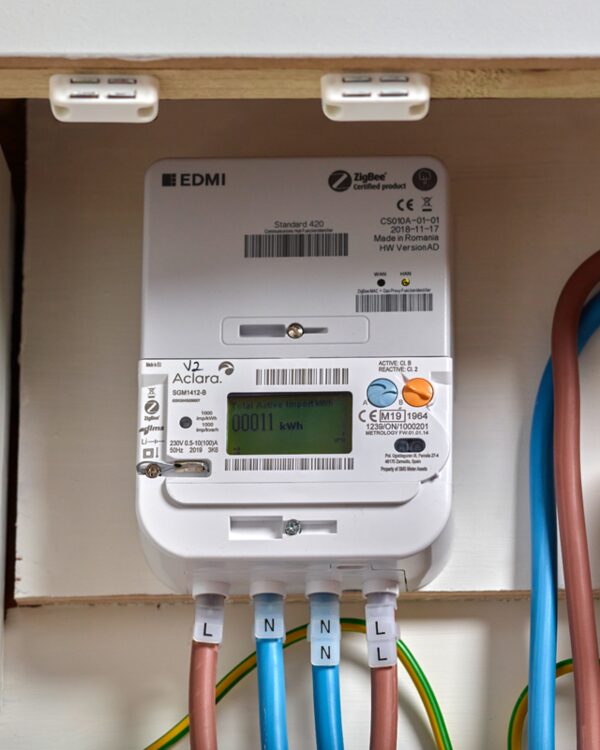
An in-home display is a small portable device that tells you in pounds and pence how much energy you are using21. Alongside cost, it shows meter readings, and on a prepayment account it shows how much credit is left, when credit is running low and whether there is debt on the account21. Smart Energy GB describes it as showing in near real time how much gas and electricity a customer is using and what it costs22. Ofgem's guidance notes that the display shows how much energy is being used during the day23, and both operating modes allow budgets to be set for energy spending10.
The point of the display is feedback speed. A quarterly bill tells a household what it spent three months ago, averaged across everything; a display tells it what the tumble dryer costs while the tumble dryer is running. That is what turns a vague intention into a measurable habit, and it is why both the display and the meter are recommended for tracking spending in real time [along with the meter itself]. The Welsh Government's guidance makes the same point: equipped with an in-home display screen, smart meters help monitor and manage energy consumption24.
Which number settles the bill matters. The bill is calculated from the meter readings the smart meter sends automatically to the supplier23, not from the display. If the display and the bill disagree, the meter is the record. A display showing an unfamiliar tariff or a stale figure is a prompt to contact the supplier, not evidence of overcharging.
Why a smart meter alone will not cut your bill
This is the most common misunderstanding in the whole subject, and the clearest correction comes from Smart Energy GB itself.
"Smart meters do not reduce energy bills automatically, but they can help carers understand usage patterns more clearly."
What a smart meter does is administrative and informational. It sends electricity and gas readings to the supplier automatically, so readings do not need to be submitted manually and bills are based on accurate readings rather than estimates23. Readings travel over the Data Communications Company's secure network, so a household pays only for the energy used rather than the approximate cost of an estimated bill10. It opens access to more flexible tariffs, including dual-rate tariffs23, can add prepayment credit without a trip to a shop23, and could help energy be used in a more flexible way25. Suppliers install them free of charge26.
The dependencies are real and should be weighed by any household thinking about independence. A smart meter is a supplier-linked device on a national communications network. Ofgem records that a meter may stop recording the energy used, or may no longer send readings to the supplier26. If a supplier goes out of business, the meter may not work in smart mode with the new supplier and readings may have to be taken and submitted manually instead, though it may return to smart mode after a change of tariff or supplier27. Data on use is what the meter offers; the saving still has to be made by the household.
Timing heating around the day you actually have
Programmed heating hours are where most households have more room than they think, because the schedule usually dates from whoever installed the boiler. Heating an empty house between nine and five, or heating bedrooms during the working day, costs money for warmth nobody occupies. Local advice programmes treat this as a core visit task: the Local Energy Advice Programme offers day to day energy efficiency hints and tips and checks that the heating controller is working correctly28.
In practice, three checks cover most of it. First, whether the programmed times still match when anyone is home, including weekends, which many programmers treat differently from weekdays. Second, whether the room thermostat is in a sensible place, because a thermostat in a cold hallway will overheat the rest of the house. Third, whether TRVs are set consistently, since a radiator in an unused room left wide open pulls heat from the boiler for no benefit.
Timing interacts with the thermostat saving rather than adding to it. Cutting two hours from the schedule and dropping the setting by a degree do not simply stack: both reduce the same boiler runtime. That is one reason published bundles are not the sum of their individual items. The related question of when it is worth shifting electricity use is covered under no-cost and low-cost measures and measuring results after the work.
Why households do not use the controls they have
Some households genuinely do not know how their programmer works. Others know perfectly well and are not underusing their heating but rationing it. National Energy Action has documented what that looks like across the UK: going to bed early to stay warm, heating only one room or avoiding central heating altogether, leaving curtains closed all day or putting newspaper over windows, bathing less often or resorting to a sink wash, spending the day in a library or cafe, cutting back on electricity and using candles instead of lights, cooking on a barbecue or portable stove, using unsafe or unserviced heating appliances, and not inviting friends or family into the home29.
The distinction matters for any page that quotes savings figures. A £90 saving from a degree off the thermostat assumes a household that was comfortable at 22°C and remains comfortable at 21°C. Where a home is already cold, the same advice offers nothing and the relevant route is advice, income and benefits support, and fabric improvement. Free advice services and the National Energy Action page set out where that help comes from.
Where the heat goes first: walls, roof and windows
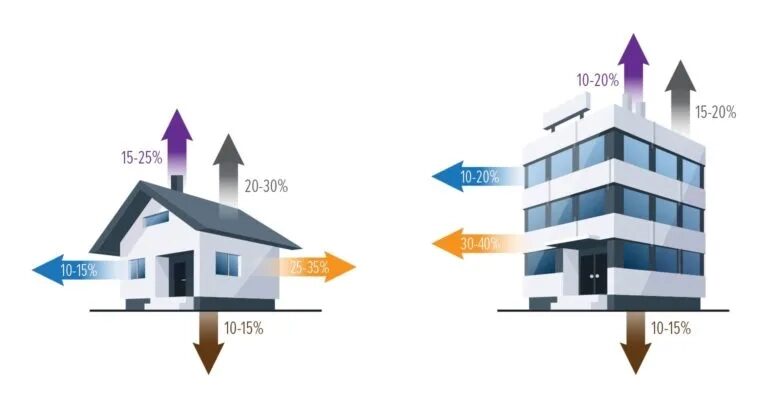
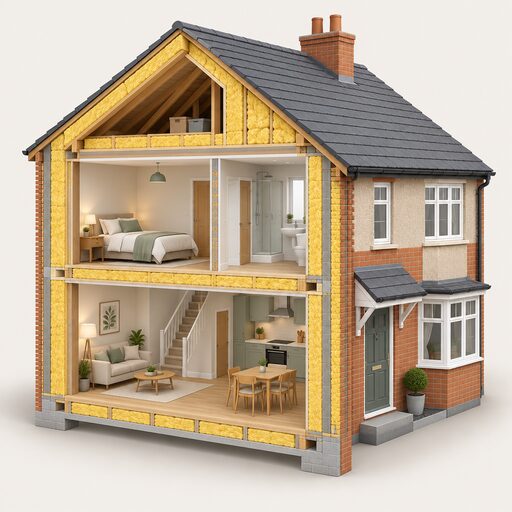
Behaviour is cheap and fabric is not, but the fabric sets the ceiling on what behaviour can achieve. The Energy Saving Trust estimates that an uninsulated dwelling loses a third of all its heat through the walls and a further quarter through the roof8. Cadent puts 21 per cent of heat loss in a home through windows and doors, and states that draught-proofing both could save the average household £40 a year3.
Glazing works the same way. Heat will be lost through windows and doors in any property, but that loss can be reduced where a home has energy efficient double or triple glazing, and in combination with other measures such as cavity wall insulation, loft insulation and an efficient heating system it can lead to a reduction in annual heating bills30. Properly installed insulation, efficient windows and doors and reduced draughts can significantly reduce energy use and bills31.
The practical sequence follows from those proportions: the largest losses are through the largest, least insulated surfaces, which is why walls and roof come before windows in most plans. This is covered in more depth in where a UK home loses heat and what a fabric first approach means.
For independence, the difference is decisive. Habits reduce what a household buys from a supplier this winter and stop the moment the habit does. Insulation reduces the heat the building needs at all, permanently, and it is the only one of the two that survives a change of occupant.
Free advice and support across the four nations
Free, impartial advice exists in every UK nation and is the cheapest starting point of all.
| Nation | Service | What it offers |
|---|---|---|
| Scotland | Home Energy Scotland | Free, impartial advice on reducing energy use, managing bills and home comfort32; a home energy check giving a free personalised report32 |
| Scotland (rural) | Home Energy Scotland | Advice on saving energy, warmer homes, heating options for off-gas homes and funding for improvements33 |
| Great Britain | Energy Saving Trust | Free and impartial advice on reducing carbon emissions, using water more sustainably and saving money on bills34 |
| Northern Ireland | NI Energy Advice | Free advice on saving energy, energy efficiency grants and oil buying clubs35 |
| England (local) | Local Energy Advice Programme | Free telephone advice on benefits, money and bill problems, plus day to day tips and a heating controller check28 |
| UK-wide | National Energy Action | Free advice on bills, keeping warm and safe at home, benefits and income maximisation36 |
The Home Energy Scotland home energy check estimates how much energy a home may be using and suggests changes to reduce bills33, and its default assumptions about fuel bills can be changed in the "Your fuel bills" section37, which matters for anyone on an unusual tariff or heating with oil. Local authorities also signpost the Energy Saving Trust's room by room green renovation guide alongside Home Energy Scotland's free advice on improving efficiency38.
The Energy Saving Trust manages Scottish Government schemes on its behalf through Home Energy Scotland, working with advice providers and energy companies39. That institutional arrangement is why the same figures, such as the £120 and £80 thermostat savings, appear across Scottish public bodies and UK-wide advice pages: they come from one modelling source. A household comparing two sets of numbers should check whether they are genuinely independent estimates or the same estimate quoted twice.
Further routes into structured help are listed under Home Energy Scotland, NI Energy Advice and the pillar guide to getting started.
Sources39 cited
- Thermostats and heating controls advice, Energy Saving Trust, 10 February 2026
- How to make your home more energy efficient, Confused.com, 6 July 2026
- Energy efficiency advice, Cadent Gas, 20 September 2026
- Insulation, nidirect, 2 September 2026
- Take Charge with SP Electricity North West, Energy Saving Trust, 2 February 2026
- What is the energy price cap, Energy Saving Trust, 7 September 2026
- Energy price cap explained, Climate Action Wales, 4 March 2026
- Scottish House Condition Survey 2024: key findings, Scottish Government, February 2026
- DESNZ annual report and accounts 2025 to 2026: performance report, GOV.UK, April 2026
- How do smart meters save energy, Smart DCC, 2026
- Tips to improve the EPC rating of your home, Energy Saving Trust, 3 August 2026
- How to save energy and money if you rent your home, Energy Saving Trust, 14 November 2025
- Energy saving tips for the home, Confused.com, 14 October 2025
- Energy efficiency tips, nidirect, 17 September 2026
- Home and business grants, schemes and advice, East Herts District Council, 17 September 2026
- Written evidence on boiler standards, UK Parliament, 2026
- Summary of updates to ECO4 delivery guidance, Ofgem, 7 August 2025
- ECO public reports and data, Ofgem, 11 August 2026
- Warm Homes: Social Housing Fund statistics, August 2026, GOV.UK, August 2026
- NISEP list of schemes 2026-27, Utility Regulator Northern Ireland, April 2026
- Our view on smart meters, National Energy Action, 12 June 2026
- Smart meters and carers, Smart Energy GB, 19 August 2026
- Get help with your smart meter, Ofgem, 17 September 2026
- Smart meters, Climate Action Wales, 2026
- How to use your smart meter, Smart Energy GB, 16 March 2026
- Getting a smart meter, Ofgem, 2026
- What happens if your energy supplier goes out of business, Ofgem, 2026
- Grants and funding for energy saving, Tameside Council, 17 September 2026
- Lived experience: 'not coping' strategies, National Energy Action, 29 April 2026
- Energy efficient windows and doors, Glass and Glazing Federation, 20 September 2026
- Energy efficiency advice and assessment, London Borough of Bromley, 17 September 2026
- Reduce energy bills and stay warm in winter, Home Energy Scotland, 20 September 2026
- Support for people in rural homes, Home Energy Scotland, September 2026
- Energy efficiency advice, Torridge District Council, 17 September 2026
- Cost of living and winter support, Belfast City Council, 20 September 2026
- Getting help with your energy bills, Birmingham City Council, 24 June 2026
- Home energy check, Home Energy Scotland, 20 September 2026
- Financial help for energy efficiency and low carbon heating improvements, City of Edinburgh Council, 20 September 2026
- Energy saving home improvements, Scottish Government, 17 September 2026
 Do Smart Controls Save Money?Do smart heating controls really cut your bills, and by how much?
 Smart Thermostats ExplainedWhat does a smart thermostat actually do, and is it worth it?
 Heating Controls CostA smart thermostat usually costs between about a hundred and two hundred and fifty pounds, but fitting can push that higher.
 Thermostat and Room TemperaturesWhat temperature should a thermostat be set to, and does it differ from room to room?
 Insulation Savings and PaybackHow much can you really save by adding insulation, and does it depend on your home, your heating and how you use it?
 Whole-House Retrofit CostsA whole-house retrofit can cost anywhere from a few thousand pounds to over fifty thousand, so what you actually pay depends on how much work your home needs.