
In this guide
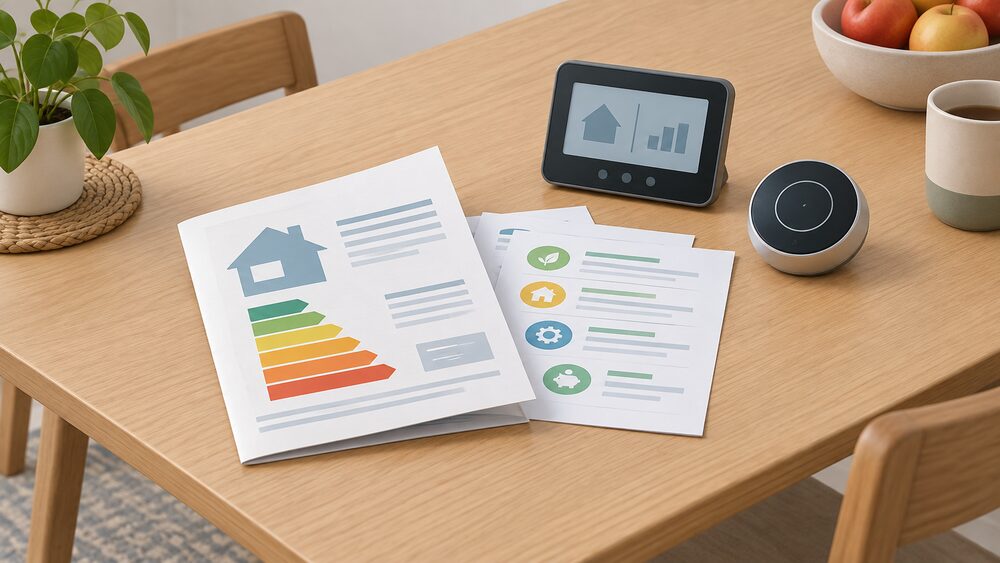
The first step is not a purchase. It is reading the home's Energy Performance Certificate, which official guidance describes as a good starting point for improving the energy efficiency of a property1. The certificate explains how energy efficient a building is and how it could be improved2, giving an assessment of the home's efficiency3 along with its heating source, estimated carbon emissions and estimated energy cost. Attached to it is a recommendation report listing cost effective measures, from low energy bulbs to upgrading insulation, each with an indication of cost and typical savings.
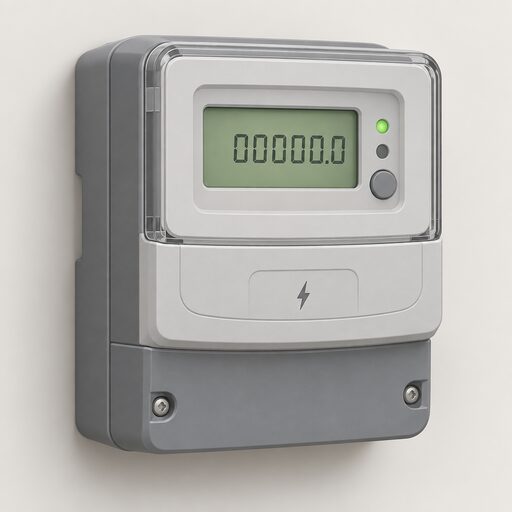
The second step is to see what the house actually uses, rather than what a model says it should. A smart meter measures gas and electricity use and sends the data to the supplier, and comes with an in-home display showing how much energy is being used during the day. There is no direct cost for the meter itself. The third step is the set of adjustments that cost nothing: turning a thermostat down one degree, from 22 to 21 degrees, is estimated to save around £120 a year in Great Britain, or £80 in Northern Ireland4.
Only after those three does spending make sense, and the reason is the size of the sums involved. In England in 2024, the estimated average cost to improve dwellings to at least energy efficiency band C was £7,480 across all tenures5. Against a figure like that, a £50 to £150 certificate6 and a free meter7 are cheap ways to find out which part of the £7,480 the house actually needs.
Start with the EPC: the assessment that shows where the home stands
Energy Performance Certificates are the basis of many energy efficiency policies in the domestic built environment11, which is why so much else, grants, rental rules, targets, is expressed in their language. For a householder the practical value is narrower and more useful: the certificate gives information about the energy efficiency of a property, as well as its heating source, estimated carbon emissions and estimated energy cost12.
Assessors determine the rating using the standard assessment procedure (SAP), with a reduced version, RdSAP, used for existing homes where full information may not be available13. That matters for expectations. A reduced procedure fills gaps with assumptions, so a certificate is a modelled standardised comparison rather than a measurement of the particular household's behaviour. It tells what the building is likely to need; the meter tells what the household actually does.
The Energy Efficiency Rating is the first rating to appear on the certificate and is required in adverts for sale or rental, showing both a current and a potential rating14. The potential figure is the one most often misread: it is what the modelling expects if the recommended measures are carried out, not a promise.
Most homes already have a certificate, because one must be provided when a building is advertised for sale or for let to a new tenant15. Prospective buyers and tenants are entitled to see it at no cost, and a buyer receives a copy from the seller that can be reused within its period of validity16. That makes the first step free for a large share of households. Reform is under way: an independent advisory letter on domestic rating metrics recommends four primary metrics in real-world units, covering total energy use intensity (kWh/m2/yr), space heating demand intensity (kWh/m2/yr), heating system type ranked in six categories, and energy cost intensity (£/m2/yr)17. A householder starting now works with the certificate as it stands while knowing the metrics are being revised.
More detail on reading the document sits in using an EPC and its recommendation report to plan improvements.
What the EPC tells you: bands, costs and the improvement report
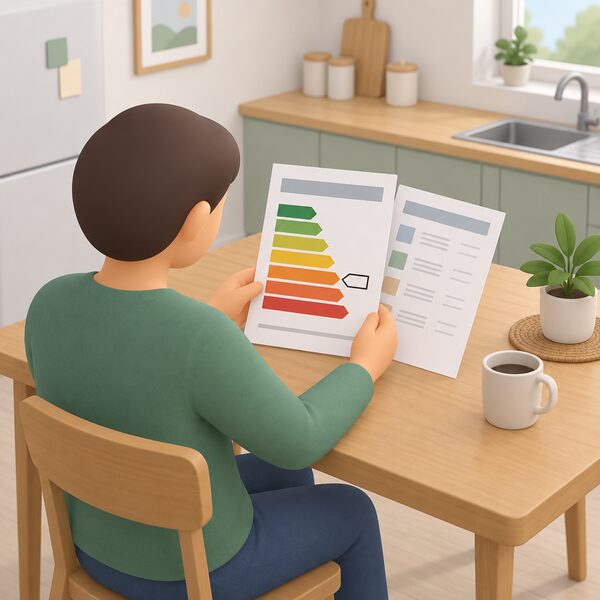
Certificates rate how energy efficient a building is, with ratings from band A (very efficient) to band G (inefficient)17. Band C is the pivot in policy. The UK government's stated aspiration is for as many homes as possible to reach band C by 2035, where practical, affordable and cost effective18, and the same band is used as the target in later policy statements on the rented sector19.
The most useful page is not the coloured graph but the recommendation report behind it, which lists measures that could improve efficiency together with an indication of cost and typical savings for each improvement over three years14. It is also the page most people never reach: among those aware of certificates, 32 per cent recalled seeing the section recommending ways to improve energy efficiency, in the winter 2025 attitudes tracker20. Each certificate comes with that report, covering measures from low energy bulbs to upgrading insulation16.
| What to look at | What it gives you |
|---|---|
| Current band, A to G | Where the home stands now17 |
| Potential band | The modelled result if recommendations are carried out14 |
| Recommendation report | Measures with indicative cost and typical savings over 3 years14 |
| Heating source and estimated cost | The fuel the home depends on and its modelled running cost12 |
| Validity date | Up to 10 years from issue, or until a new one is commissioned8 |
The certificate is valid for a maximum of ten years or until another is commissioned for the same building, whichever comes sooner8. Cost varies from one company to another depending on the size, location and age of the building8, and is usually in the £50 to £150 range6.
Insulation first: the walls and roof are where most of the heat goes
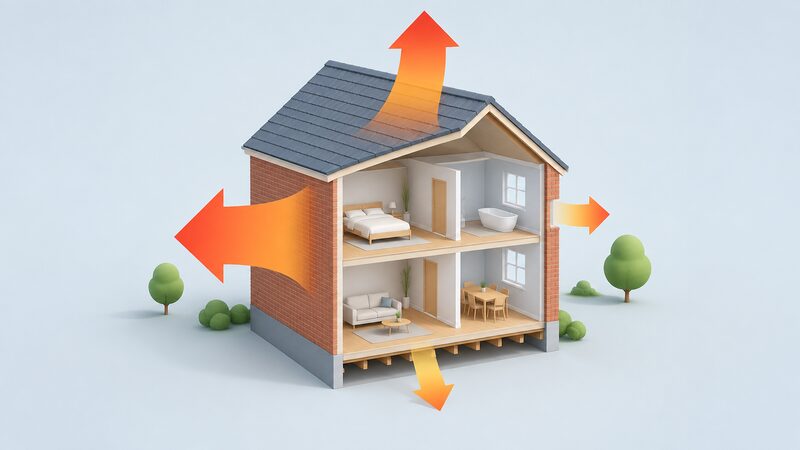
The reason assessment tends to point at fabric before machinery is arithmetic. An un-insulated dwelling loses a third of all its heat through the walls and a further quarter through the roof9. Independent guidance puts the same figure on walls: around a third of all the heat lost in an uninsulated home escapes through them4.
A building losing that much heat needs a larger heating system, burns more fuel at any given thermostat setting, and gets less from any low-carbon technology installed later. That is the whole logic of a fabric first approach, and it is also why the order of work matters: see what order home energy improvements should be done in and where a UK home loses heat.
For independence, fabric is the only measure that reduces demand outright. Insulation does not depend on a supplier, a tariff, an app or a manufacturer's servicing. Once installed it keeps working with no account attached to it. Every other measure discussed here changes how energy is bought, monitored or generated; insulation changes how much is needed in the first place. The trade-off is that it is the least visible spend and often among the more disruptive to install.
Measure before you manage: what a smart meter shows
A smart meter automatically sends electricity and gas meter readings to the supplier7, and readings travel over the Data Communications Company's secure network21. The immediate effect is administrative rather than physical: bills are based on accurate meter readings and not estimates, readings do not have to be submitted by hand, and more flexible tariffs, including dual-rate tariffs, become accessible22. In prepayment mode, credit can be added automatically or without visiting a shop22.
The part that bears on efficiency is the in-home display. Smart meters come with one so consumers can see and manage energy use23, and it shows how much energy is being used during the day7. Official guidance in Wales describes the display as helping households monitor and manage consumption10. The data shared through the meter is used to bill for energy used, to offer new products and services such as new tariffs where permission has been given, and to help make the energy system more efficient by recording demand more accurately22.
That last point is worth naming plainly: the meter serves the supplier and the system as well as the household. Data flows outward. The household's gain is visibility, and visibility only turns into savings if something changes as a result. Guidance puts it no more strongly than that a household could find ways to save money using up-to-date information on its energy use7.
Working out consumption is covered further in working out how much energy your home uses before you spend.
Smart meters are free, but they do not save money on their own
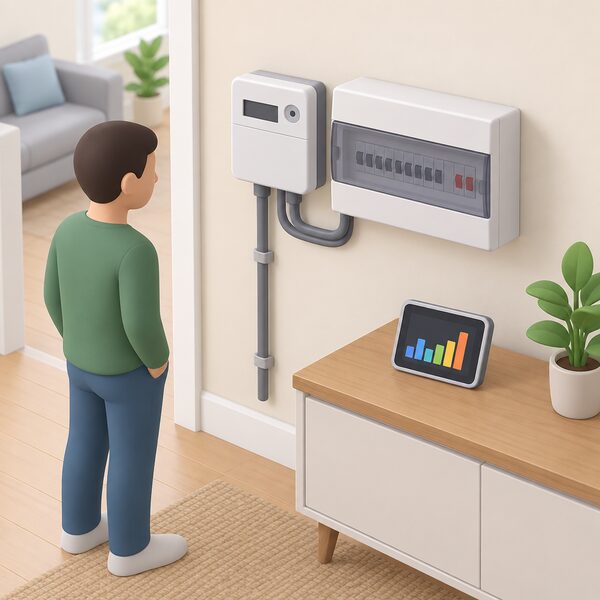
There is no direct cost for a smart meter; any expenses are recouped through energy bills over time, and installation, typically about 90 minutes, is free of charge10. Suppliers provide them free on request7. The installation should cause minimal disruption, key safety checks should be carried out during the appointment, and an in-home display should be offered and demonstrated23.
The limits are equally concrete.
- A meter may stop recording the energy used, or may continue recording but stop sending readings to the supplier22. Since accurate readings are what displace estimates, a transmission fault means billing can fall back on estimates until readings are supplied.
- On a change of supplier, a second-generation meter keeps all its smart functions with no interruption; a first-generation meter may lose some smart functionality24.
- Where a supplier ceases trading, the meter may not work in smart mode with the new supplier, and readings may have to be taken and submitted manually; it may return to smart mode after a later change of tariff or supplier25.
- Households with solar panels or other renewable generation can still have a meter installed, but some suppliers are not yet ready to supply smart meters to those customers24.
Thermostat and habits: the adjustments that cost nothing
Turning a room thermostat down by one degree, from 22 to 21, is estimated to save around £120 a year in Great Britain or £80 in Northern Ireland4. The gap between the two figures reflects different energy prices and heating fuels rather than different physics, and it is a useful reminder that saving figures are tied to the tariff and fuel behind them.
Adjustments of this kind belong at the start for three reasons: they carry no capital cost, they can be reversed if the house becomes uncomfortable, and they establish what the household is prepared to live with before money is committed to equipment sized for a different set of habits. Free advice services in Wales publish consumer-body tips on cutting bills alongside the certificate guidance6, and Northern Ireland publishes its own energy efficiency tips26.
Further no-cost and low-cost measures are collected in no-cost and low-cost ways to cut energy use first and how much changing habits can save.
Grants and free advice across the four nations
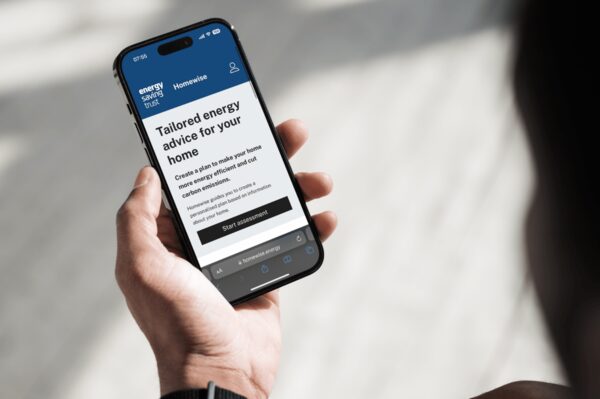
Free, impartial advice exists in every nation, and in most cases it is the correct second call after reading the certificate, because it is the route to funding as well as guidance.
| Nation | Free advice and funding routes |
|---|---|
| Scotland | Home Energy Scotland provides free, independent and impartial energy advice to householders, community groups and businesses throughout Scotland27, and runs a Funding Finder to search for support on improving efficiency, reducing bills and making a home warmer28. The Home Energy Scotland Scheme provides grants and loans for clean heat and energy efficiency measures29. Households in Scotland may be able to get an interest-free loan or a grant to make a home more energy efficient30. |
| Wales | Nest supports eligible households; one route requires a certificate rating of 54 (E) or less31. |
| Northern Ireland | NI Energy Advice offers free independent and impartial energy advice to domestic householders26. Free advice covers saving energy at home, energy efficiency grants and oil buying clubs32. The NIHE Home Energy Saving Tool can be used to create an action plan to make a home more energy efficient33. |
| England | Local referral services such as the Local Energy Advice Programme refer households for further improvements including loft or cavity wall insulation and, in some cases, a new boiler34. Community schemes such as Action on Energy provide advice and support for improving home energy efficiency35. A single-entry point, Home Energy Advice, is proposed on GOV.UK to help homeowners, landlords and tenants find tailored, impartial and trusted advice36. |
Independent guidance on room-by-room green renovation is also published by the Energy Saving Trust28. Nation-specific detail is set out in free home energy advice in Scotland, in Wales, in Northern Ireland and in England, and the sequencing question is covered in checking what grant help you can get before you start work.
Renting or selling: the rules that change the starting point
A certificate must be provided when a building is advertised for sale or for let to a new tenant15. For landlords there is more than a disclosure duty. Guidance for landlords of domestic private rented property refers to the 2018 Minimum Level of Energy Efficiency standard, set at band E37: no property without at least a rating of E or above can be rented out unless an exemption applies38.
That floor is under revision, and the documents describe the change at different stages. The UK government has proposed raising the minimum standard required of privately rented homes in England and Wales to the equivalent of band C by 203039, with a 2025 consultation setting out the same target and proposing that properties with a current band C be recognised as compliant under the future standard until that certificate expires40. A later government response describes preventing landlords from renting out homes below a rating of C or equivalent19. A 2026 roadmap update states the requirement as a minimum score of band C against the fabric performance metric and either the heating system or smart readiness metric, from 1 October 203041. In Scotland, the intention stated in earlier policy was to require private rented properties to reach a standard equivalent to band C where technically feasible and cost effective at change of tenancy42.
Tenants have a narrower but real starting point. A private renter can choose to have a smart meter if the energy bills are in their name or they prepay for energy, after checking the tenancy agreement and letting the landlord know43. More generally, any household that pays for energy, owner or renter, should be able to book an installation where a meter is expected to work at the property23. Further detail is in where to start if you rent your home, and sellers may want is it worth improving a home's energy efficiency before selling.
After the first steps: building a plan rather than buying a product
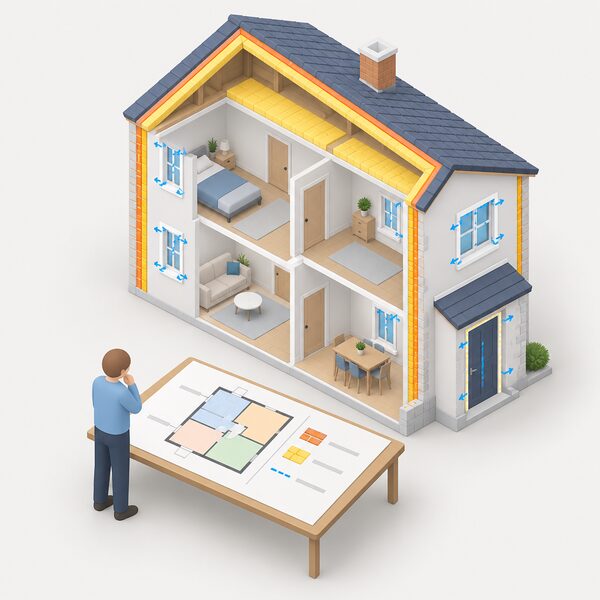
Once the certificate has been read, the meter is showing daily use and the free adjustments are made, the question becomes sequence and budget. The Northern Ireland tool is explicit that its output is an action plan rather than a quotation33, and referral services in England work the same way, passing households on to insulation or heating measures rather than selling them34. Independent guidance on green renovation approaches a house room by room, putting efficiency first28.
Two figures should shape that plan. The average estimated cost of improving a dwelling in England to at least band C was £7,480 across all tenures in 20245, and the national aspiration is band C by 2035 where cost-effective, practical and affordable18. Those caveats are load-bearing: the target is conditional on cost-effectiveness for a reason, and a plan for a particular house has to test each measure against that house rather than against the average.
For independence, the honest summary is that these first steps improve information and reduce waste, but they do not remove dependence. The certificate is a modelled document produced under a government procedure. The smart meter reports to a supplier over a network operated by a third party, and can drop out of smart mode when a supplier changes or fails25. Grants come with eligibility rules set by government. Only the fabric measures those first steps point towards, walls, roof, draughts, cut the amount of energy the house needs at all. The assessment stage is the cheapest way to find out which of those is worth doing, and in what order.
Next steps are set out in whole house plans and who writes one, payback periods for home energy measures compared and the overview in Getting Started with Home Energy.
Sources43 cited
- Low carbon heating, nidirect, 2026-09-17
- Energy performance certificates: a guide, Scottish Government, 2026-08-24
- Energy efficiency advice and assessment, London Borough of Bromley, 2026-09-17
- Tips to improve the EPC rating of your home, Energy Saving Trust, 2026-08-03
- English Housing Survey 2024 to 2025: housing quality and energy efficiency, GOV.UK, 2024
- Five top tips from Which? to cut your energy bills, Climate Action Wales, 2026-03-18
- Getting a smart meter, Ofgem, 2026
- Energy performance certificates: consumer guidance, Isle of Anglesey County Council, 2025-09
- Scottish House Condition Survey 2024: key findings, Scottish Government, 2026-02
- Smart meters, Climate Action Wales, 2026
- Energy Performance Certificate (EPC) accuracy research, GOV.UK, 2026-05-26
- How energy efficiency data can help reduce our carbon footprint, Office for National Statistics, 2020-09-23
- Energy Performance Certificates research briefing, House of Commons Library, 2026-09-17
- Domestic EPC reform consultation, Scottish Government, 2021-07-23
- Energy Performance of Buildings (Scotland) Regulations 2025: government response, Scottish Government, 2025-10-10
- Energy performance certificates, nidirect, 2026-02-26
- Letter on reform of domestic EPC rating metrics, House of Commons Library, 2026-09-20
- Heat and Buildings Strategy, GOV.UK
- Accelerating to net zero: responding to the CCC progress report, GOV.UK, 2024-12-17
- DESNZ Public Attitudes Tracker: heat and energy use in the home, winter 2025, GOV.UK, 2025
- How do smart meters save energy, Smart DCC, 2026
- Get help with your smart meter, Ofgem, 2026-09-17
- Smart meters: your rights and expectations, GOV.UK, 2025-08-08
- Smart meter myth busting, Smart Energy GB, 2026-09-17
- What happens if your energy supplier goes out of business, Ofgem, 2026
- Energy efficiency tips, nidirect, 2026-09-17
- Area Based Schemes, Glasgow City Council, 2026-06-08
- Financial help for energy efficiency and low carbon heating improvements, City of Edinburgh Council, 2026-09-20
- The Heat in Buildings Programme, Scottish Government, 2026-09-17
- Apply for the Boiler Upgrade Scheme, GOV.UK, 2026-09-17
- Nest: eligibility, Welsh Government, 2026-09-17
- Cost of living and winter support, Belfast City Council, 2026-09-20
- Home Energy Saving Tool, Northern Ireland Housing Executive, 2026-09-17
- Grants and funding for energy saving, Tameside Council, 2026-09-17
- ECO4 Flex, South Cambridgeshire District Council, 2026-09-17
- Reforming consumer protection for home upgrade schemes, GOV.UK, 2026-06-17
- Minimum energy efficiency standards, Carmarthenshire County Council, 2026-09-20
- Minimum energy efficiency standards, Planning Portal, 2026
- Heat resilience and sustainable cooling: committee report, UK Parliament, 2025-05-09
- Improving the energy performance of privately rented homes: 2025 update, GOV.UK, 2025-02-07
- Clean Flexibility Roadmap: July 2026 update, GOV.UK, 2026
- Heat in Buildings Strategy: Fairer Scotland Duty assessment summary, Scottish Government, 2021-11
- Smart meters, Energy Ombudsman, 2026-09-20
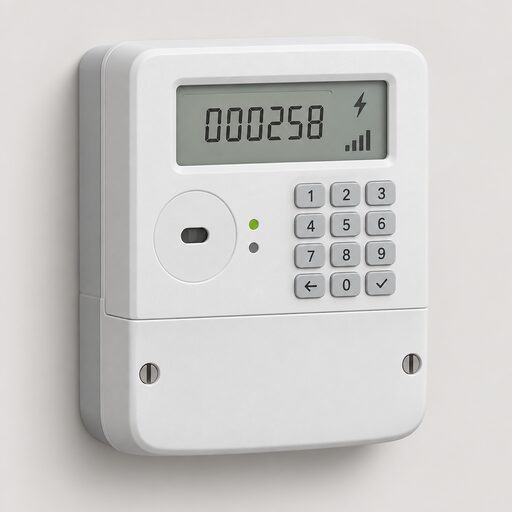 Moving Home Energy ChecklistThe immediate energy tasks on moving in: finding the supplier and meters, taking opening readings, checking whether the meters are smart, setting up billing, prepayment top-ups, the Priority Services Register, and your rights as a buyer or renter.
 The Full Where to Start GuideWhich home improvements actually cut your bills, and which should you do first?
 Quick Wins and No-Cost MeasuresThe measures that need little or no outlay: thermostat and flow temperature settings, heating controls, kettle and tumble dryer habits, appliance ratings and smart meter data.
 Take Control of Your EnergyHow do you read your own energy use and keep hold of your meter readings?
 The Full How To GuideSwitching supplier, sending meter readings, sorting an EPC, claiming a grant, complaining when something goes wrong, coping in a power cut: where do you start with any of it?
 Home Energy AssessmentsWhich home energy check do you actually need?