

In this answer
Short answer
Nest is the Welsh Government's fuel poverty scheme, run under the Warm Homes Nest banner. It has two halves: free, impartial energy advice that is open to every household in Wales, and funded home energy improvements for households that meet income, health and property conditions1. The single entry point is the freephone number 0808 808 2244, open Monday to Friday from 9am to 6pm3.
The scheme exists because Wales has a large stock of hard-to-heat homes. Energy Performance Certificates cover around 55% of the Welsh housing stock, based on Census 2021 analysis by the ONS, against around 60% in England4. Where a home does have a certificate, the funded work is tied to its rating: an EPC of 54 (E) or less qualifies, and an EPC of 68 (D) or less qualifies where someone in the household has an eligible health condition5.
For a household, Nest is a route to a warmer home without capital outlay, but it is not a route to energy independence. The improvements reduce how much gas or electricity the home needs; the home remains connected to the grid and to a supplier, and the scheme is administered by the Welsh Government rather than owned by the householder1.
What Nest is, and who runs it
Nest is a Welsh Government scheme, delivered as part of the wider Warm Homes Programme, and it is described by the Energy Saving Trust as one of the fuel poverty schemes that provide additional targeted support to low-income households, alongside Warmer Homes Scotland1. Its stated purpose is to help households facing an immediate risk to their health and wellbeing because of a lack of essential heating or hot water3.
That framing matters. Nest is not a general home improvement grant and it is not a universal entitlement. It is a targeted fuel poverty intervention, and the Welsh Government's own customer charter commits the scheme to "be open and avoid raising expectations that we are unable to meet"10. In practice that means the advice half is broad and the funded half is narrow.
The advice service is the widest part of the scheme. The Welsh Government's annual report states that this free and impartial service is available to all households in Wales, and local authority pages repeat that all households in Wales have access to free, impartial advice to help reduce energy bills and maximise income8. That advice covers energy efficiency, other grants, energy tariffs and benefits entitlement checks11.
The funded half is where the conditions bite. Nest provides free home energy efficiency improvements for eligible households, and independent guidance describes the offer as trusted advice and fully funded energy efficiency upgrades for low-income households12. The scheme's own history shows how the boundary has moved: a 2015 consultation summary recorded that the scheme did not cover replacement windows or replace old, inefficient boilers, a reminder that what is funded has changed over time and should be confirmed at the point of application14.
For a household's independence, the distinction is straightforward. Advice costs nothing and changes nothing physical. Funded measures change the building, which lowers the energy a home needs to buy, but the household still buys that energy from a supplier and still relies on the grid.
What Nest pays for: advice, insulation, heating and heat pumps
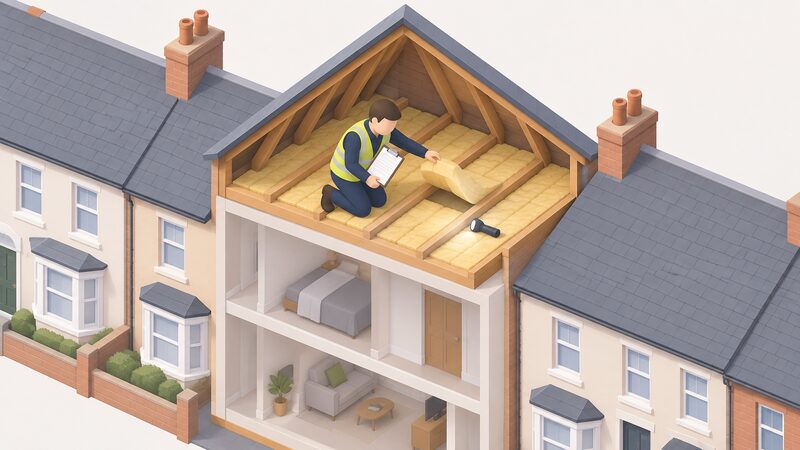
The funded measures fall into three groups: heating, insulation and low-carbon technology. On heating, the Welsh Government lists replacement of a boiler or electric storage heaters to ensure a safe and reliable heating system3. Independent guidance describes the same offer as free home energy efficiency improvements such as a new boiler, central heating and insulation15.
On insulation and low-carbon measures, the scheme covers heat pumps, insulation and solar panels16. Which of these a particular home receives depends on the assessment, not on a fixed menu, and the Energy Saving Trust's work on combining low-carbon technologies points to the same targeted approach in Wales and Scotland7.
"heat pump"
The scale of delivery is worth knowing. In 2022-23, 100% of installations were completed by Wales-based installers, and Nest works in partnership with Rent Smart Wales to ensure private landlords are officially registered before being allowed access to support9. That installer base keeps the work and its supply chain inside Wales, which is a form of local economic resilience rather than household energy independence.
What the scheme does not do is make a home self-sustaining. A heat pump, insulation or solar panels reduce purchased energy, and solar panels generate some of it, but there is no battery or off-grid element in the published offer, and no route through Nest to disconnection from a supplier16. The household's dependence shifts in size, not in kind.
Eligibility: income, benefits, health conditions and tenure
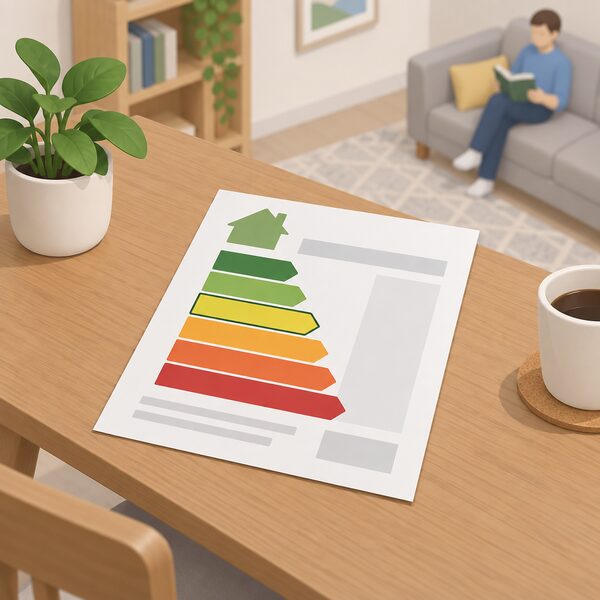
Three conditions run together: who lives in the home, what the home's energy rating is, and whether the household owns or privately rents it. The official eligibility statement requires that the household owns or privately rents the home, receives a means-tested benefit or lives in a low-income household, and lives in a home with an EPC rating of 54 (E) or less, or 68 (D) or less where a household member has an eligible health condition18.
The health conditions are listed specifically rather than left to interpretation. They include respiratory disease (respiratory infections, broncho-constriction in asthma, and chronic obstructive pulmonary disease), circulatory disease including cardio-vascular disease, strokes and heart attacks, mental health conditions including depression, anxiety, psychosis and bipolar disorders, dementia, and intellectual and development disorders5.
Independent guidance summarises the same test as being available for those on low incomes with a home energy performance certificate of E or below, or D with eligible health conditions17. The scheme's own eligibility rules put figures on those bands: an EPC rating of 54 (E) or less, or 68 (D) or less where a household member has an eligible health condition, alongside owning or privately renting the home and either receiving a means-tested benefit or living in a low-income household12.
Tenure is the third gate. Social housing tenants are not the target group here; the scheme is built around owner-occupiers and private renters. Private renters must provide the landlord's details so that Nest can request permission for any work, and the Rent Smart Wales registration check applies before a private landlord is allowed access to support5. Comparable schemes elsewhere in the UK list income, housing tenure and where you live as the factors that decide eligibility, which is the same shape of test19.
EPC ratings: the 54 (E) and 68 (D) thresholds and the reserve list
The EPC thresholds are the part of Nest that households most often misread. The rule is stated as two figures: an EPC rating of 54 (E) or less, or 68 (D) or less where someone in the household has an eligible health condition5. Band D itself spans scores of 55 to 68, so a home at the top of band D sits exactly on the health-condition threshold6.
Where a home has an EPC rating of 68 (D) or less but no-one in the household has an eligible condition, the details are placed on a reserve list5. The reserve list is not a refusal and not a queue position with a date attached; it is a holding place for households that meet the property test but not the health test.
The wider context explains why the thresholds sit where they do. EPCs cover around 55% of the Welsh housing stock, based on Census 2021 analysis by the ONS, so a meaningful share of Welsh homes have no certificate at all and cannot be assessed against the threshold until one is produced4. For those homes, the practical first step is often an assessment rather than an application.
How to apply and what happens in the assessment
The route in is a phone call or the website. The Welsh Government's own instruction is to check eligibility by calling Nest free on 0808 808 2244, and local authority pages repeat the same number and the same website3. The Warm Homes Programme adds that a callback from an advisor can be requested instead of waiting on the line22.
The process then runs in stages. Nest checks eligibility and asks for evidence, for example a letter confirming benefit entitlement, and then arranges for an assessor to visit the home23. Owner-occupiers provide one of three items as proof: a mortgage statement, a buildings insurance policy or the property deeds5. Benefit evidence is a benefit award letter or a Council Tax statement5.
Private renters provide the landlord's details so permission can be requested, and the Rent Smart Wales registration check applies5. Comparable schemes ask for proof of total gross household income covering wages, benefits, pensions and any other income, and some crisis funds ask for three months of bank statements for all adults in the household, which gives a sense of how much paperwork a means-tested application can involve19.
If a household is not eligible, the programme states that it can help find other schemes that suit their circumstances22. People who do not think they are eligible, or are not sure, can still make contact for energy efficiency advice, help with other grants, energy tariffs and benefits entitlement checks11.
Contacting Nest: phone, hours, Welsh and email

The freephone number is 0808 808 2244, published consistently by the Welsh Government, by councils including Anglesey, Bridgend and Carmarthenshire, and by National Energy Action21. The line runs Monday to Friday from 9am to 6pm, and one Welsh Government page adds that the hours exclude bank holidays3.
Calls and emails are welcomed in Welsh, and the published wording is bilingual3. For households that find a phone call difficult, Nest accepts email at advicewales@est.org.uk for people who are hard of hearing, neurodivergent, or who have difficulties communicating by telephone11. A listening service on 0800 123 737 is listed as open from 4pm to 11pm27.
Green Homes Wales, a separate Welsh scheme, also routes general advice through the same Nest number, stating that households can contact Nest on 0808 808 2244 for free and impartial general advice on current support options28. That makes the Nest line a de facto front door for Welsh home energy support, even where the funding that follows comes from a different programme.
Where Nest fits in the UK landscape
Wales is not alone in running a named fuel poverty scheme, but the entry points differ. The Energy Saving Trust describes Nest and Warmer Homes Scotland as the fuel poverty schemes providing additional targeted support to low-income households7. Northern Ireland runs the Northern Ireland Sustainable Energy Programme, where eligibility can depend on income, housing tenure and where you live, and where proof of ownership is a mortgage statement or property deeds19. Northern Ireland's Better Energy Homes Plus sets income limits of £28,000 gross for a single-person household and £35,000 gross for a couple or single-parent family29.
Those figures are not Nest's, and they are not transferable, but they show the shape of the means test used across the UK. For a Welsh household, the practical comparison is with the free home energy advice available in Wales and with the wider question of checking what grant help is available before starting work.
Nest's limits are worth stating plainly. It funds measures, not independence: the home stays on the grid, the household stays with a supplier, and the scheme is administered by government rather than owned by the occupant1. The advice service is universal, the funded work is not, and the reserve list means some eligible-property households wait without a date5. What Nest does reliably is reduce the energy a home needs and, in the process, reduce the bill attached to it.
Sources29 cited
- Get help with energy efficiency in your home: Nest, Welsh Government, 2026
- Home energy efficiency, Bridgend County Borough Council, 2026
- Get help with unexpected costs such as food and heating, Welsh Government, 2026
- Energy performance of building certificates in England and Wales, April to June 2025, Department for Energy Security and Net Zero, 2025
- Nest eligibility, Welsh Government, 2026
- Energy efficiency of housing in England and Wales, Office for National Statistics, 2025
- Supporting households with low carbon technology combinations, Energy Saving Trust, 2026
- Warm Homes Nest scheme annual report 2024-2025, Welsh Government, 2026
- Warm Homes Nest scheme annual report 2022-2023, Welsh Government, 2023
- Nest home energy support scheme customer charter, Welsh Government, 2024
- Apply, Welsh Government, 2026
- Funding for homeowners, Elmhurst Energy, 2026
- Delivering warmer homes for private renters in Wales, Citizens Advice, 2025
- Summary of responses, Welsh Government, 2015
- Grants and funding for energy bills, StepChange Debt Charity, 2026
- Get free home energy efficiency improvements: Nest, Welsh Government, 2026
- Insulation grants, Which?, 2026
- Fuel poverty, House of Commons Library, 2026
- Northern Ireland Sustainable Energy Programme, Energy Saving Trust, 2026
- Cold Weather Payment, nidirect, 2026
- Nest: a scheme to make your home warmer and more energy efficient, Isle of Anglesey County Council, 2026
- Nest Warm Homes programme, Welsh Government, 2026
- Get help with the cost of energy efficiency, Citizens Advice, 2023
- Warwickshire Crisis Resilience Fund: oil and LPG, Act on Energy, 2026
- Help with household costs, Isle of Anglesey County Council, 2026
- Heating your home, Carmarthenshire County Council, 2026
- Additional help, National Energy Action, 2026
- Green Homes Wales, Development Bank of Wales, 2026
- NISEP list of schemes 2026-27, Utility Regulator, 2026
 Fuel PovertyHow the Welsh Government defines and measures fuel poverty, the latest modelled estimate of 340,000 households (25%) as at October 2024, who is most affected, and how the Tackling Fuel Poverty Plan and the Warm Homes Nest scheme are meant to bring the figure down.
 Energy Policy in WalesWhat help can you get in Wales to make your home warmer and cheaper to run?
 The Full Grants and Schemes GuideWhich grants can you actually get right now, and how do you apply for them?
 Check Which Energy Grants ApplyWhich energy grants can you actually get right now, and which have closed?
 Fuel Poverty PolicyWhy does fuel poverty mean something different depending on where in the UK you live?
 Why Energy Grants DifferWhere you live in the UK changes which home energy grants you can get.