

In this answer
Short answer
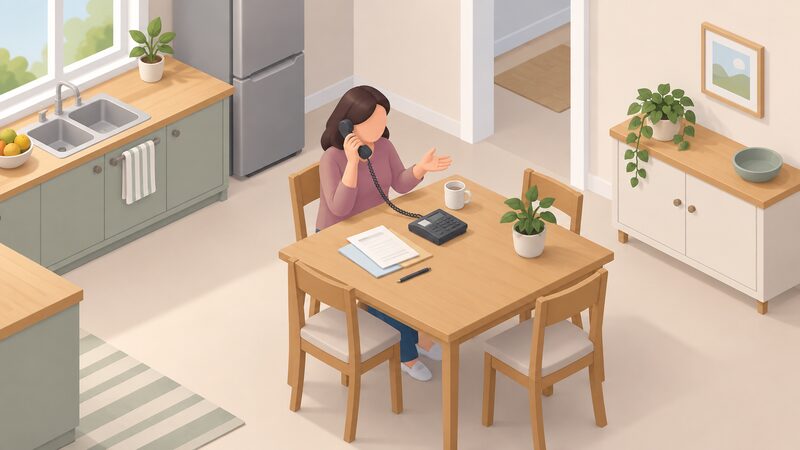
Nest is the Welsh Government's Warm Homes scheme, and the number to reach it is free: 0808 808 2244. The line runs Monday to Friday from 9am to 6pm, and the scheme also offers the option of requesting a callback from an advisor rather than waiting on hold1. The same number appears in Welsh Government guidance, on council pages and through independent advice services, which makes it the single reliable route into the scheme3.
The call is not only for people who already know they qualify. Nest states that householders who do not think they are eligible, or are not sure, can still make contact for energy efficiency advice, help with other grants, energy tariffs and benefits entitlement checks3. Free expert energy advice is available to all householders in Wales through the Nest helpline, and where a household turns out not to be eligible, the scheme helps find other schemes that suit its circumstances2.
What follows sets out who runs Nest, who qualifies, how the Energy Performance Certificate rules work, and how tenure affects an application. It also covers the practical detail of the call itself: hours, language, email alternatives and the evidence a household should have to hand.
Nest Wales: the phone number and how to apply
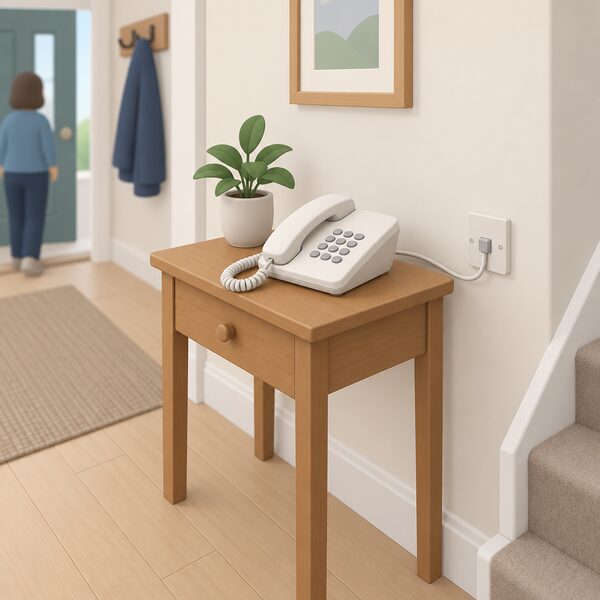
The freephone number is 0808 808 2244, and it is the same number whether a householder is ringing for general advice, an eligibility check or to start an application1. Independent advice services publish the same figure, including National Energy Action, which confirms it as the current Welsh contact point8. Council pages across Wales repeat it too, so a householder who finds the scheme through a local authority route still ends up at the same line7.
The application itself is a two-stage process. Nest advises first, and the Green Homes Wales scheme sits behind it: a householder needs to speak to Nest to get advice before applying to Green Homes Wales, and after that conversation registers an interest in the scheme on the Green Homes Wales website10. The Welsh Government's own announcement of Green Homes Wales points householders to the same route, describing the scheme and directing them to find out more through the Development Bank of Wales11.
In practice the first call is a triage conversation. The advisor establishes the household's circumstances, checks the benefit or health condition position, looks at the property's Energy Performance Certificate rating, and then either moves the household towards an application or signposts alternatives. Because the scheme also handles general energy advice, a call that ends without an application is not a wasted one3.
What Nest is and who runs it
Nest is a Welsh Government scheme, delivered under the Warm Homes Programme banner, and it exists to make Welsh homes warmer and more energy efficient places to live6. Its stated purpose is to help households facing an immediate risk to their health and wellbeing because of a lack of essential heating or hot water, which places it closer to a health intervention than a general retrofit grant1.
The scheme has been operated by British Gas for a long period. A Welsh Government consultation response records that British Gas had managed the Welsh Government's Nest scheme for over three years at that point, and described the model as successful13. That matters for a householder because it means the delivery chain is a single named contractor working to Welsh Government rules, rather than a market of competing installers.
Quality control is built into the scheme rather than left to the household. Nest includes an independent quality assurance service: experts check the quality of scheme designs and visit installers' work, and issues are corrected before the installer is paid14. For a household receiving a heating system or insulation at no cost, that is the main protection available, and it is worth knowing it exists before work begins.
Nest also works in partnership with Rent Smart Wales to ensure that all private landlords are officially registered before being allowed access to support15. That registration requirement is a gate on landlord involvement, not on tenants, and it is covered further below.
Who qualifies: income, benefits and health conditions
Nest looks to support people in Wales living on a lower income who receive a means-tested benefit, or who live with a respiratory, circulatory or mental health condition7. The health route is unusual among UK energy schemes and it is the reason a household without a qualifying benefit can still be eligible.
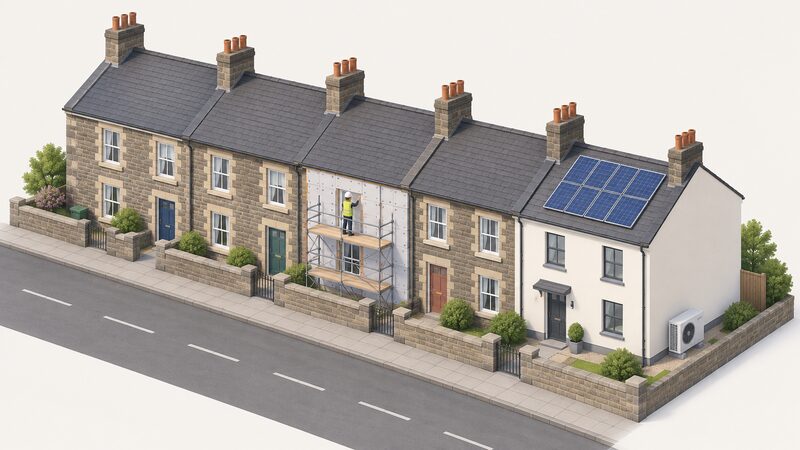
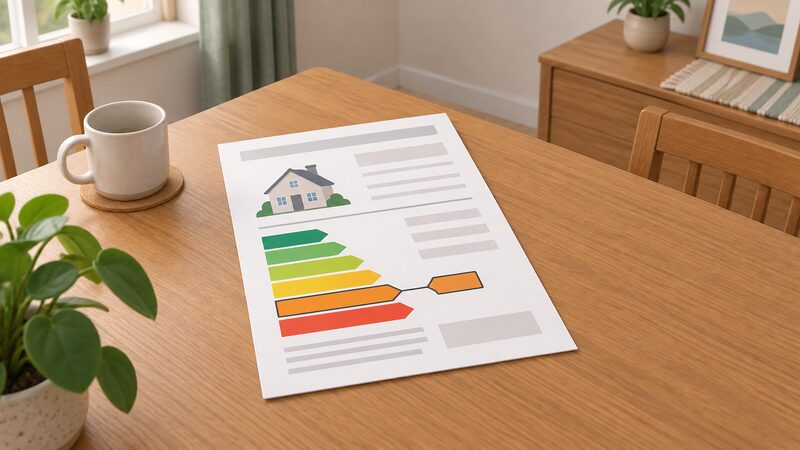
The published eligibility conditions combine three elements: the household owns or privately rents its home, receives a means-tested benefit or lives in a low-income household, and lives in a home with an Energy Performance Certificate rating of 54 (E) or less, or 68 (D) or less where a household member has an eligible health condition6. Independent guidance from Which? describes the same structure, summarising Nest as available for those on low incomes with a home energy performance certificate of E or below, or D with eligible health conditions16. The Energy Saving Trust frames the scheme as funding energy efficiency improvements for low-income households and those living in deprived communities across Wales17.
Income is assessed against thresholds that vary by household composition rather than a single national figure. For a couple with two children under 14 years, the published thresholds are £624 weekly, £2,703 monthly or £32,433 annual4. The threshold moves with the number and age of children, so the figure that applies depends on the household's own make-up, and the advisor on the phone works from the household's actual circumstances rather than a headline number.
Evidence is requested at the point of application. The scheme asks for evidence that the household receives a means-tested benefit, such as a benefit award letter or a Council Tax statement4. Comparable schemes elsewhere in the UK ask for wage slips, benefit award letters and bank statements where income rather than a benefit is the qualifying route, which indicates the kind of paperwork worth having ready before the call18.
EPC rating rules and the reserve list
The Energy Performance Certificate is the technical gate on the scheme. Nest is aimed at houses with a poor EPC rating, and the Welsh Government describes the Warm Homes Nest Scheme in exactly those terms19. The two thresholds are 54 (E) or less for the standard route and 68 (D) or less where a household member has an eligible health condition6.
An EPC can be found through the official certificate service, which covers properties in England, Wales and Northern Ireland20. Wales lodged 20,000 domestic EPCs in January to March 2023, a 1% increase on the comparable period, which gives a sense of how many Welsh properties are being assessed and how current a household's certificate is likely to be21.
The EPC position also interacts with the private rented sector. The UK Government has consulted on raising the minimum standard for privately rented homes in England and Wales to EPC Band C and is considering the responses, a change that would sit alongside rather than replace the Nest thresholds22. For a privately renting household in Wales, the practical effect is that a landlord may have a separate incentive to improve the property, while Nest remains the route to funded measures for the tenant's own circumstances.
Where a household is not eligible, the scheme does not simply end the conversation. Nest states that if a householder is not eligible, the scheme can help find other schemes that suit their circumstances2. That is the practical function of the reserve list: a householder whose EPC is too high, or whose income sits above the threshold, is pointed towards other Welsh and UK-wide routes rather than left without an answer.
Renting or owning: tenure rules and landlord permission
Nest is available to households that own or privately rent their home6. Social housing tenants sit outside the scheme's core eligibility, and council tenants with heating concerns are directed to their own landlord route instead: Anglesey Council, for example, asks tenants to contact their Housing Management Officer on 01248 752 200 to discuss concerns7.
For private renters, landlord involvement is required and is conditional. Nest works in partnership with Rent Smart Wales to ensure that all private landlords are officially registered before being allowed access to support15. A landlord who is not registered cannot access the scheme, which means a tenant's first practical question is whether their landlord is registered, not whether the property qualifies.
Leaseholders and tenants in buildings covered by the Landlord and Tenant Act 1985 in England and Wales have additional routes where a heat network or building-level issue is involved: guidance from January 2026 directs them to the Housing Regulator, the Regulator of Social Housing, LEASE and the First Tier Tribunal23. That is a separate escalation path from Nest and applies where the problem sits with the building rather than the dwelling.
The tenure rules matter for energy independence in a direct way. An owner-occupier who receives Nest measures keeps the benefit of them permanently, because the improvement attaches to the property they own. A private renter receives the same warmth but not the same control: the measures belong to the landlord's asset, and the tenant's independence from high bills lasts only as long as the tenancy. That is a structural limit of the scheme, not a fault in it, and it is worth stating plainly.
How Nest differs from ECO and GBIS
The Welsh Government states that the Nest scheme is not identical to ECO or GBIS5. The distinction is not cosmetic. ECO, the Energy Company Obligation, is funded by energy suppliers and delivered through them, while Nest is a Welsh Government scheme delivered under the Warm Homes Programme6. The Affordable Warmth Obligation sits within ECO, and in Wales that strand is called Nest and is managed by British Gas, which is how the two frameworks overlap in practice9.
The Great British Insulation Scheme operates on its own terms, and where local authorities and governments in Scotland and Wales refer households for it, they must issue a Statement of Intent and a declaration24. That referral machinery is separate from the Nest application route, so a householder cannot assume that a Nest conversation automatically triggers a GBIS referral or the reverse.
The practical consequence for a householder is that a refusal from one scheme says nothing about the others. A household above the Nest income threshold may still qualify under ECO4 or GBIS rules, and a household whose EPC is too high for Nest may still be eligible for insulation funding elsewhere. The schemes are compared in more detail on the pages covering ECO4 and the Great British Insulation Scheme, and the Welsh position sits within the wider picture set out in home energy grants in Wales.
Contact details, hours and language
The freephone number is 0808 808 2244 and the line is open Monday to Friday from 9am to 6pm1. A callback from an advisor can be requested instead of waiting, which is the scheme's own alternative for householders who cannot hold on the line2. The same number is published by the scheme's complaints policy as the route to the advice team, so it covers both new enquiries and existing case queries25.
Calls and emails are welcomed in Welsh, using the scheme's own wording: Croesawir galwadau ac e-byst yn Gymraeg3. That commitment covers both contact channels, so a householder can conduct the eligibility conversation, the advice conversation and any follow-up correspondence in Welsh.
For householders who are hard of hearing, neurodivergent, or who have difficulties communicating by telephone, the scheme gives an email address: advicewales@est.org.uk3. That address sits alongside the freephone number rather than replacing it, and the Welsh language commitment applies to email as to calls.
Green Homes Wales, the scheme that sits behind Nest, publishes its own contact route for complaints and queries: 0800 587 4140, Monday to Friday 9am to 5pm, pressing option 426. That is a different number with different hours from the Nest line, and it is the correct route once a household has moved into the Green Homes Wales process rather than the initial Nest advice stage.
What the scheme means for a household's energy independence
Nest reduces a Welsh household's dependence on purchased energy by improving the fabric and heating system of the home at no cost to the occupant, and the quality assurance process means the work is inspected before the installer is paid14. That is a permanent reduction in the energy a home needs, which is the most durable form of independence available to a householder.
What remains is substantial. The household is still connected to the gas and electricity grids, still buying units from a supplier, and still exposed to price movements. The scheme does not install renewable generation or storage, so it lowers demand rather than replacing supply. The Welsh Government's wider targets, including meeting the equivalent of 100% of Wales's annual electricity consumption from renewable sources and at least 1.5GW of locally owned renewable capacity by 2035, sit at national level and do not change an individual home's position27.
There is also a delivery dependence. Nest is administered by the Welsh Government and operated by British Gas, so the household's route to support runs through a single contractor and a single phone line13. That is efficient while the scheme is funded and running, and it is a single point of failure if it is not. The scheme received an additional £5 million in July 2026, bringing total funding to £37 million in that financial year, which indicates the programme was actively funded at that point28.
For a householder, the honest summary is that Nest is worth a phone call because the call itself is free and carries advice even where it does not carry a grant. The independence it delivers is real but partial: a warmer, cheaper-to-heat home, still on the grid, still on a supplier, still exposed to whatever the next price cap brings.
Sources28 cited
- Get help with unexpected costs such as food and heating, Welsh Government, 2026-04-15
- Nest Warm Homes Programme, Welsh Government, 2026-09-18
- Apply for free home energy efficiency improvements, Welsh Government, 2026
- Nest eligibility, Welsh Government, 2026-09-17
- Support for householders impacted by the closure of the Energy Company Obligation scheme, Welsh Government, 2026-03-13
- Nest eligibility criteria, House of Commons Library, 2026-05-13
- Nest: a scheme to make your home warmer and more energy efficient, Isle of Anglesey County Council, 2026-09-17
- Struggling with energy bills, National Energy Action, 2026-05-06
- Heating your home, Carmarthenshire County Council, 2026-09-20
- Get help with the cost of energy efficiency, Citizens Advice, 2023-03-17
- Written statement: Green Homes Wales scheme, Welsh Government, 2024-10-17
- Get help with energy efficiency in your home: Nest, Welsh Government, 2026-09-17
- Summary of responses, Welsh Government, 2015-10
- Written statement: Housing Cabinet Secretary responds to UK Government action on GBIS and ECO4, Welsh Government, 2025-01-23
- Warm Homes Nest scheme annual report 2022 to 2023, Welsh Government, 2023-11-30
- Insulation grants, Which?, 2026-02-26
- Welsh Government Nest scheme, Energy Saving Trust, 2024-11-18
- Affordable Warmth Scheme, Northern Ireland Housing Executive, 2026-09-17
- Warm Homes Nest Scheme, Parliamentary Office of Science and Technology, 2026-06-25
- Find an energy certificate, GOV.UK, 2026-09-17
- Energy Performance of Buildings Certificates in England and Wales, January to March 2023, Department for Energy Security and Net Zero, 2023
- Improving the energy performance of privately rented homes: 2025 update, Department for Energy Security and Net Zero, 2025-02-07
- Heat networks consumer protections draft guidance, Ofgem, 2026
- Great British Insulation Scheme: local authorities, Ofgem, 2026-09-17
- Nest home energy support scheme customer service and complaints policy, Welsh Government, 2024-04-01
- Green Homes Wales, Development Bank of Wales, 2026-09-17
- UK Solar Roadmap, Department for Energy Security and Net Zero, 2035
- Written statement: first 100 days commitment to warmer and more energy efficient homes, Welsh Government, 2026-07-16
 Grant ScamsGrant schemes attract cold callers, doorstep sellers and fake approval letters using real scheme names.
 The Full Grants and Schemes GuideWhich grants can you actually get right now, and how do you apply for them?
 Who to Call for Energy HelpA single reference to the right contact for each situation: gas escapes, power cuts, water leaks, meter faults, billing disputes, scams and free advice.
 Fuel PovertyHow the Welsh Government defines and measures fuel poverty, the latest modelled estimate of 340,000 households (25%) as at October 2024, who is most affected, and how the Tackling Fuel Poverty Plan and the Warm Homes Nest scheme are meant to bring the figure down.
 Check Which Energy Grants ApplyWhich energy grants can you actually get right now, and which have closed?
 NIE Networks Meter ReplacementExplains the programme replacing electricity meters across Northern Ireland, who carries out the work and how appointments are made.