

In this guide
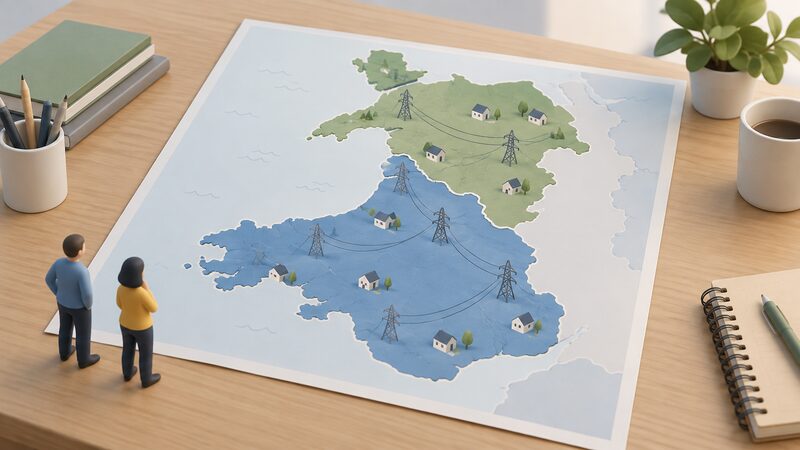
Wales is not served by a single electricity distribution company. The high voltage transmission network across England and Wales is owned and operated by National Grid1, while the local wires that actually fail in a storm are run by two different distribution network operators: National Grid Electricity Distribution manages the local grid in west Wales2, and SP Energy Networks is the distribution network operator for north Wales3. Whichever company covers the property, a cut is reported the same way: dial 105, the free power cut line, which works in England, Scotland and Wales4.
The rules that follow a cut are set by Ofgem under the Guaranteed Standards of Performance, and those rules cover England, Scotland and Wales alike5. Outside severe weather, the operator has 12 hours to restore supply; in a severe storm category 1 that extends to 24 hours, and in a category 2 storm to 48 hours5. Where the standard is missed, a household payment of £100 applies (£195 for a business), with an extra £45 for every additional 12-hour period without electricity, up to a maximum of £400 where 5,000 or more properties are affected5.
For a household thinking about energy independence, the honest position is that none of this changes the supply itself. Compensation is a payment after the event, and the Priority Services Register buys information and practical support, not priority reconnection. Rural Welsh properties on long overhead spurs are exposed to exactly the weather that triggers the extended 24 and 48 hour deadlines, which is why the question of backup power is a separate question from the question of compensation.
Who runs the electricity network in Wales
Two layers matter. National Grid owns and operates the electricity transmission network in England and Wales, the tower lines that move bulk power between regions1. That company does not answer domestic fault calls. The distribution network operator does, and Wales is split between two of them: National Grid Electricity Distribution for west Wales2, and SP Energy Networks for north Wales3. A household's operator is determined by geography, not by who sends the bill, and cannot be changed by switching supplier. This is the point that confuses most callers: the energy supplier sells the electricity, the network operator owns the cable in the street and is the only party that can restore it. The distinction is set out in more detail on electricity network operators.
Reporting a cut: dial 105
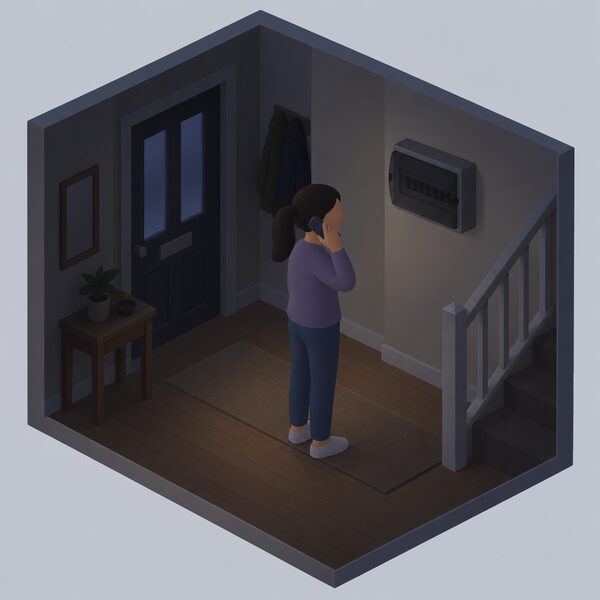
The 105 line is free and connects the caller to their local electricity network operator in England, Scotland and Wales9. The same number is used to report a power cut or an electrical fault, including after flooding, and to report damaged cables and equipment, which are a common cause of cuts4. Northern Ireland is the exception across the UK: there the number is 03457 6436434, which is covered on power cuts in Northern Ireland.
Before calling, it is worth establishing whether the loss of supply is confined to one property. A tripped fuse or consumer unit inside the home is not a network fault, and a supply interrupted by the householder's own actions is not compensated. Operators also publish live fault information online and post local updates on social media, which is the fastest route to a restoration estimate during a widespread storm event10. For the practical checks, see is the power cut just my property or the local area and what number do I call in a power cut.
Restoration time limits: 12 hours normally, up to 48 in severe storms
The core Guaranteed Standard is 12 hours for interruptions outside severe weather6. Network operators state the same standard in their own terms: where supply fails because of a problem on the network during normal weather conditions, it must be restored within 12 hours11. In more extreme weather events the restoration time permitted under the Standards of Performance varies11: Ofgem sets 24 hours in severe storm category 1 weather and 48 hours in severe storm category 2 weather5.
The categories are defined by fault volume rather than by wind speed or by a named storm. Ofgem describes a category 1 storm as unusually bad weather conditions, including lightning, causing at least 8 to 13 times more faults than normal, and a category 2 storm as very severe weather causing at least 13 times more faults than normal5. Independent guidance describes the same thresholds slightly differently, putting a category 1 storm at 8 to 12 times the daily average faults in a 24-hour period and a category 2 storm above 12 times13. Either way, the categorisation is made by reference to how many faults the operator's own network suffered, and it is applied after the event.
| Condition | Restoration deadline |
|---|---|
| Normal weather, network fault | 12 hours6 |
| Severe storm category 1 | 24 hours5 |
| Severe storm category 2 | 48 hours5 |
There is a separate case worth knowing about in rural Wales: planned interruptions for vegetation clearance around overhead lines. One operator states that the longest shutdown typically allowed for tree trimming is 8 hours, and planned cuts sit outside the unplanned compensation regime entirely.
For an exposed rural property, the practical reading is that the guarantee is a backstop, not a promise of a short outage. A 48-hour standard in a category 2 storm means a household may lawfully be without electricity for two days, which is what shapes decisions about backup power for heating and about backup power by home type.
Compensation: £100 for homes, plus £45 for each extra 12 hours

Where the standard is missed in normal weather, the payment is £100 for homes or £195 for businesses, triggered either where fewer than 5,000 properties are affected for more than 12 hours, or where more than 5,000 properties are affected for more than 24 hours5. On top of that, an extra £45 is due for every additional 12-hour period without electricity5. Ofgem's own worked examples: a cut of more than 12 hours that runs to 36 hours attracts two additional £45 payments, adding up to £90; a cut of more than 24 hours that runs to 72 hours attracts four additional £45 payments, adding up to £1805. The maximum in normal weather is £400 where the cut affects 5,000 or more properties5.
Independent consumer guidance sets out the same two-tier structure from the household's point of view: £100 if fewer than 5,000 homes were affected and power is off for 12 hours, or £100 if more than 5,000 homes were affected and power is off for longer than 24 hours, with £45 for every 12 hours after that in both cases7. One operator states plainly that entitlement can arise from a power cut lasting longer than 12 continuous hours15.
Storm compensation works on a different clock and a much higher ceiling. For a category 2 storm, the payment is £90 for the first 48 hours and an extra £45 for every 6 hours after6, up to a maximum of £2,2357. In a category 1 storm, published operator tables show £90 at a continuous 24 hours and £450 at 72 hours11. Independent guidance describes the category 2 threshold as £90 once power has been cut off for 48 hours14. One network body gives £85 at 48 hours in a category 2 storm16, while operator documentation records both an £85 and a £90 version of the same payment11: these amounts do not agree, and they are reviewed and updated each year based on inflation5. The storm cap itself has moved: Ofgem announced a rise in the storm compensation cap, with the old arrangement having paid £70 after the first 48 hours and then £70 for every 12 hours thereafter, capped at £70017.
| Scenario | Initial payment | Thereafter | Cap |
|---|---|---|---|
| Normal weather, fewer than 5,000 properties, over 12 hours | £100 home, £195 business5 | £45 per further 12 hours5 | £400 where 5,000+ affected5 |
| Normal weather, more than 5,000 properties, over 24 hours | £100 home, £195 business5 | £45 per further 12 hours5 | £4005 |
| Severe storm category 2, over 48 hours | £906 | £45 per further 6 hours7 | £2,2358 |
| More than 4 cuts of 3+ hours, 1 April to 31 March | £1005 | not applicable | claim required18 |
When compensation is paid automatically, and how to claim
For unplanned electricity cuts, payment should be automatic: the network operator should pay within 10 working days7. Ofgem states that the operator will pay automatically if it holds bank details, and that payment could be through a cheque, cash or bank transfer6. Network bodies describe the usual route as a cheque sent to the property that has been without power16, which is why compensation sometimes arrives addressed to an occupier rather than an account holder.
Where the automatic payment does not arrive, a claim is made to the local network operator, and an extra £40 compensation may be owed for the missed payment6. Timescales differ by cause. For an ordinary unplanned cut, the 10 working day clock applies; for a storm cut, the guidance is to contact the operator to make a claim if payment has not arrived within 4 weeks of the power coming back on7. Where a claim is made and accepted, payment should follow within 10 working days7. One consumer guide states that a claim must be made within 30 days of the outage13, so delay carries a real risk of losing the entitlement.
Ofgem research found low awareness of the Guaranteed Standards of Performance among participants, alongside widespread agreement that compensation is an important element of responding to service failings, and service failings related to loss of supply were typically seen as the most severe20. That combination, a payment people are entitled to but do not know exists, is the main reason automatic payment matters. The mechanics are covered further on power cut compensation and the Guaranteed Standards of Performance.
Repeated cuts: the four-cuts-a-year payment
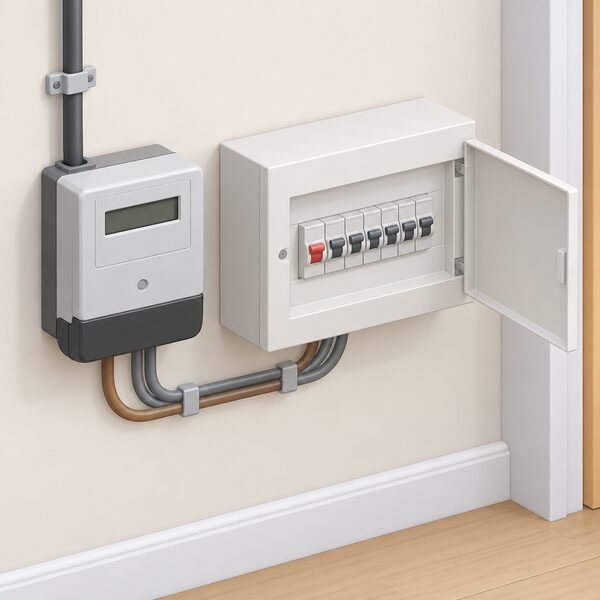
Beyond duration, there is a frequency payment. An extra £100 may be due where the supply has gone off more than four times between 1 April and 31 March the following year, with each cut lasting at least 3 hours5. This one is never automatic: a claim must be made with the local network operator, which decides whether the payment should be made18. One operator publishes a figure of £95 for power cuts lasting more than 3 hours on 4 separate occasions in the same financial year21, and independent guidance also cites £9514: the published amounts differ between documents, and the sums are inflation-linked and revised annually5.
Two exclusions bite here. The payment is not available if compensation has already been received for any power cut in the same 12 months, and planned cuts notified in advance do not count7. Households on a circuit that fails repeatedly can also ask the operator to investigate: one states that where a customer feels they have had too many power cuts recently, the operator will investigate22. For homes in that position, the repeat pattern, rather than the single long outage, is often what justifies looking at essential loads and backup circuits.
Where compensation is not paid
The Guaranteed Standards are narrow. Ofgem lists as not covered: blackouts caused by a national power shortage, damage to electrical equipment or appliances, and a low supply after a power cut6. Citizens Advice puts the same point in terms of emergencies, stating that compensation is not paid in certain situations where the cut was caused by an emergency, for example a blackout because of a national power shortage7.
- National shortage and rota disconnection. Where the grid as a whole is short of generation and supply is shed deliberately, Ofgem rules do not provide compensation for an emergency power cut of that nature23. These planned temporary cuts would be shared across customers throughout England, Scotland and Wales. See rota power cuts.
- Damage to appliances. Loss or damage to equipment is outside the standards6 and is a separate matter, covered on compensation if a power cut damaged my devices.
- Low supply after a cut. Also excluded6.
- Faults inside the property. A tripped fuse or an internal fault is not a network failure.
- Planned interruptions already notified. These do not count towards the repeat-cuts payment7. Separately, £40 may be payable where two days' notice of a planned cut was not given, or where the cut happened on a different day from the one notified8.
The Priority Services Register: free support for vulnerable households
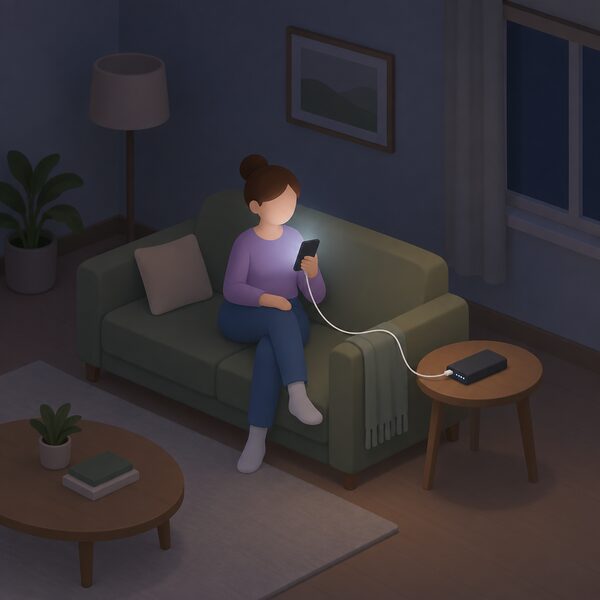
The Priority Services Register is a free service, provided by water and power suppliers, for households that may need extra help in a power cut24. It informs energy suppliers and distribution network operators about people who might need additional support25, and operators use it to tailor their services to those households26. Eligibility is broad and circumstance-based: having a disability, relying on medical equipment that needs electricity or water27, living with a condition such as dementia, or having a sight or hearing impairment are all recognised grounds.
What registration provides, in operators' own descriptions, includes a direct number to get straight through, an agreed password before visits, special help through the British Red Cross, notice of planned interruptions, updates during unplanned cuts, and free 24-hour power cut alerts and text updates for medically dependent customers26. Ofgem requires that for both planned and unplanned power cuts, network operators must offer registered customers extra help, for example giving them battery packs so they can still charge phones or medical equipment6. Registrants may also receive a free personalised Power Cut Plan tailored to their needs, routines and communication preferences, included in the welcome letter28. Accessible routes include a British Sign Language Video Relay service, free to use, and a dedicated textphone on 0800 316 545730.
Registration is straightforward. Operators take details through a short online application form31, by telephone on 0800 294 3259, or by a leaflet completed and returned by post, with leaflets available in alternative languages, large print and easy read28. Registration can be made on behalf of a family member, friend or someone being cared for28. Welsh local authority guidance notes that signing up also means contacting utility suppliers directly32. Details are normally shared with the energy supplier and local gas and water networks27, and who the bill is paid to does not change28. Operators state that registration data is not used to sell anything, and is processed on the basis of legitimate interests and substantial public interest: protecting adults and children at risk30. More detail sits on the Priority Services Register and how to join the Priority Services Register.
What a Priority Services registration does not do
This is the point most often misunderstood, and operators are explicit about it.
"Our teams work hard to restore power to affected areas but can't prioritise individual households."
Registration does not mean the electricity supply will be restored more quickly, and does not guarantee a power supply33. Energy UK states that being registered on the register does not guarantee a continuous supply of energy25. Network bodies make the same point: the service cannot exempt properties from potential power cuts, but aims to provide extra information and support34. One operator qualifies this slightly, noting that some customers, depending on their circumstances, may be given priority if there is a power cut, but that is a matter of support and contact rather than a place in the repair queue. Registration also will not reduce bills.
For a household that depends on electricity for medical equipment, a stairlift or heating, the conclusion is uncomfortable but clear: the register is an information and welfare service, and continuity of supply has to come from equipment in the home. That is the subject of help during a power cut if you rely on medical equipment and home UPS systems.
Preparing a Welsh home for a power cut
Network operators' preparation advice is consistent and inexpensive. Keep a mobile phone fully charged so it can be used to go online for updates or to call10. Keep a torch handy10, along with spare batteries, and a battery-powered radio tuned to a local station35. Keep warm clothes, blankets and food that does not need heating accessible10, and a thermos flask filled before an expected interruption35. Keep a note of key contacts, check on neighbours, and follow the local network operator on social media for updates10. Where a planned cut is known about in advance, turning freezer temperature settings down a couple of hours beforehand helps the contents ride it out36.
Writing down the reporting number before it is needed is the single most useful step, since a power cut removes broadband and, in many homes, the means of looking it up: 105 in England, Scotland and Wales4. Household energy advice in Wales is also available through a freephone line on 0808 808 22 4437.
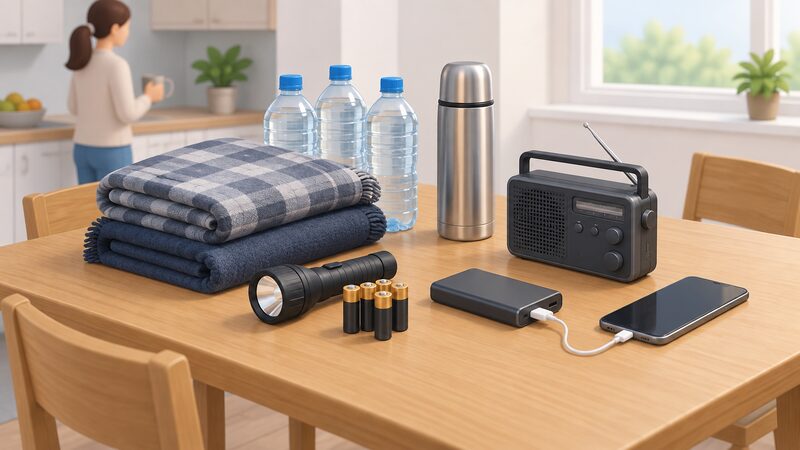
Beyond the kit, the independence question is about what the household can run without the network. A portable power station or a home battery removes dependence on the operator's repair schedule for a defined set of circuits; a generator does the same but adds a fuel dependency and strict rules on connecting a generator to a house. None of these affect entitlement to compensation, and none of them remove the underlying dependence on the grid for everyday supply. What they change is how much a 12, 24 or 48 hour restoration standard actually costs the household while the operator works. Preparation for the season is covered on how to prepare your home for a winter power cut.
Sources37 cited
- What role does National Grid play in your energy bill, National Grid, 2026-09-17
- EV charger installation in west Wales, Fuse Energy, 2026-09-09
- EV charger installation in north Wales, Fuse Energy, 2026-08-13
- Storms and bad weather, Energy Networks Association, 2026-09-17
- Check if you can get a payment for a power cut, Ofgem, 2026
- Plan for a power cut, Ofgem, 2026
- Get compensation if you have a power cut (Wales), Citizens Advice, 2026-09-17
- Get compensation if you have a power cut, Citizens Advice, 2026-09-17
- Power cuts: what to do if your power goes out, Smart Energy GB, 2026-08-19
- What happens in an energy shortage, Energy Networks Association, 2026-09-17
- Standards of performance, National Grid, 2026-09-17
- Performance standards, SSEN, 2026-09-17
- How to get power cut compensation, Uswitch, 2025-06-23
- How to find out if there is a power cut, Which?, 2026-06-04
- Compensation for a power cut lasting more than 12 hours, UK Power Networks, 2026-09-17
- Power cut compensation, Energy Networks Association, 2026-09-17
- Ofgem announces rise in storm compensation cap, Ofgem, 2023-09-01
- Check if you can get a payment for a power cut, Ofgem, 2026
- Is compensation paid in other parts of the UK, NIE Networks, 2026-09-19
- Energy consumer experiences of customer service standards, Ofgem, 2026-06-23
- Repeat power cuts, SSEN, 2026-09-19
- Multiple or repeat power cuts, UK Power Networks, 2026-09-17
- Emergency power cuts, Electricity North West, 2026-09-19
- What to do in a power cut, Met Office, 2026-09-20
- Support for vulnerable customers, Energy UK, 2026-09-04
- Who can join the Priority Services Register, National Grid, 2026-09-17
- Priority Services community toolkit, SSEN, 2026-09-20
- Priority Services for customers with sight loss, SSEN, 2026-09-19
- Priority Services and dementia, SSEN, 2026-09-19
- Priority Services for customers with hearing loss, SSEN, 2026-09-19
- Sign up to our Priority Services Register, UK Power Networks, 2026-09-17
- Heating your home, Carmarthenshire County Council, 2026-04-04
- Emergency power cuts, Sainsbury's Energy, 2026-09-20
- Vulnerable customers urged to sign up for extra help this winter, Energy Networks Association, 2022-11-16
- Preparing for a power cut, SSEN, 2026-09-19
- Tips to prepare for a power cut, Electricity North West, 2026-09-19
- Advice for those worried about energy bills, Smart Energy GB, 2026-08-19
 Power Cuts in ScotlandWho do you call when the power goes out in Scotland, and how long should it take to come back on?
 Network Operators and 105When the lights go out, who do you actually ring?
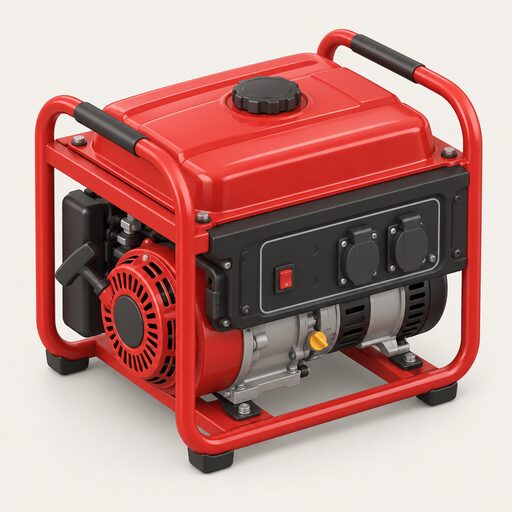 The Full Backup Power GuideHow long do UK power cuts usually last, and what can keep your fridge, heating or phone going until the power comes back?
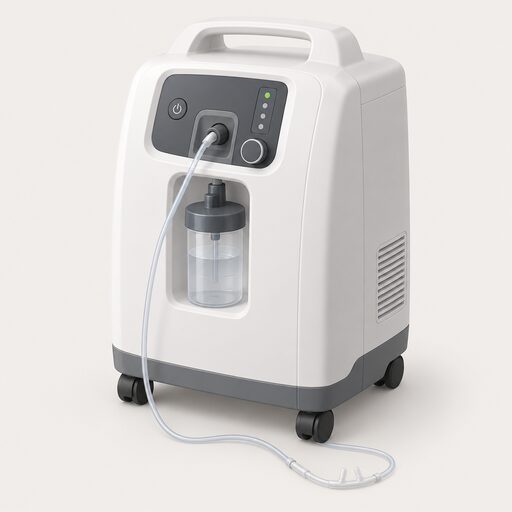 Vulnerable Households EnergyIf someone in your home relies on powered medical equipment, or needs extra warmth because of a health condition, what help is available?
 New Electricity ConnectionWho do you contact for a new or upgraded electricity connection, and what will it cost?
 Energy Supply in WalesWales makes more electricity than it uses, but how much of it comes from renewables, and will that reach all of it by 2035?