
In this guide
Lithium-ion cells are now in laptops, phones, e-scooters, e-bikes, mobility vehicles, power banks and home storage batteries, and each of those items has the potential to cause a serious fire in a home1. The mechanism behind almost all of these fires is thermal runaway: non-compliant or incompatible battery components, or use outside a battery's safe design parameters, can trigger it2. Once it starts, the fire develops very quickly and produces large amounts of extremely toxic gases1.
The scale of the risk tracks the size of the cell. The larger the battery, the larger the danger, and some of the largest lithium batteries found in homes sit in mobility vehicles1. That is why the recall of LG Energy Solution ESS home batteries matters more than a phone charger recall: these are wall-mounted units of several kilowatt hours, and the maker states that an affected battery may overheat and catch on fire, which can result in severe property damage or serious injuries3.
Against that, the official picture on home storage is more measured than headlines suggest. A government report on domestic battery energy storage systems recorded few fires involving domestic lithium-ion battery storage systems, while noting that the use of large batteries in the domestic environment represents a safety hazard4. Both things are true at once: incidents are uncommon, and the consequences when they happen are serious enough that the recall, registration and disposal rules exist.
Why lithium batteries can catch fire in the home
The primary risk is thermal runaway8. In an e-bike or e-scooter battery, the main causes of fires are overcharging, over-discharging, or charging the battery too quickly9. E-bike battery fires can also begin with poor design or damage to the battery9. The same pattern holds across device types: the failure is usually a combination of a cell pushed outside its design envelope and a charging routine that keeps pushing it.
Heat is an aggravating factor rather than a cause on its own. High temperatures can cause batteries, especially lithium-ion, to overheat and potentially catch fire11. That matters in a UK context for batteries kept in a conservatory, a shed or a hot vehicle in summer, and it is the reason a swollen or warm battery is treated as a fault rather than a quirk.
Two features of lithium fires shape what a household should expect. The first is speed and toxicity: these fires can develop very quickly, producing huge amounts of extremely toxic gases, and those gases will render a person unconscious1. The second is reignition. Even if a fire is extinguished, it is common for the fire to start again, which is why the advice for a householder is not to fight it. In the event of a fire, do not try and tackle it yourself: leave and call 9991.
"These fires can develop very quickly, producing huge amounts of extremely toxic gases, these gases will render a person unconscious."
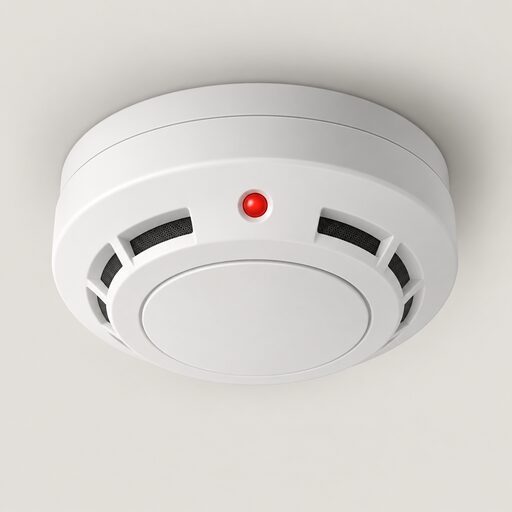
The practical consequence is that prevention and detection carry the weight, not extinguishing. A working smoke alarm in the room where a battery charges, a closed door, and a charging location away from the only escape route are the measures that give a household time to leave.
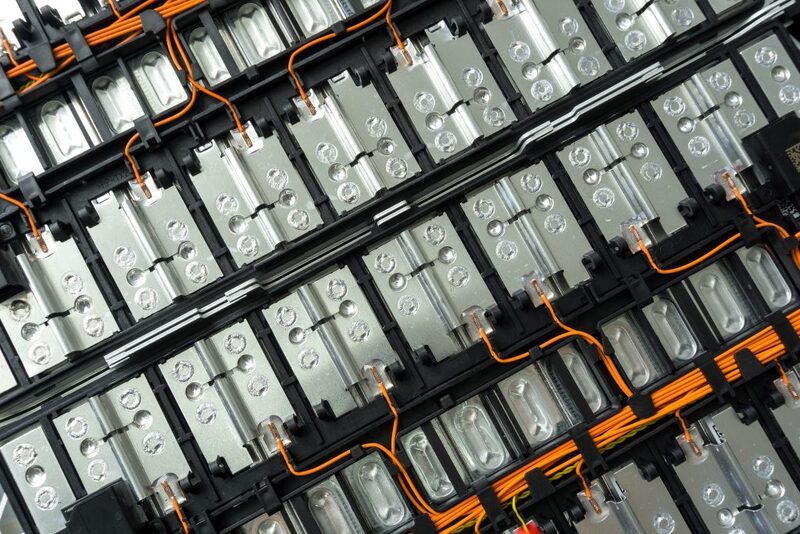
The LG ESS home battery recall: what has happened and which models are affected
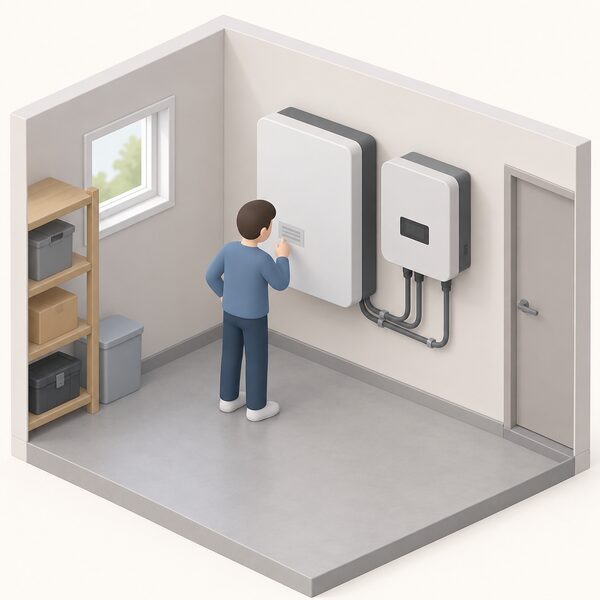
LG Energy Solution is running a voluntary corrective action on RESU ESS home batteries, and the maker states that the recalls have expanded to include additional models and batteries3. Incidents have occurred and caused damage to property3. Electrical Safety First reports that LGESS are replacing all potentially affected ESS Home Batteries12.
The affected models named in the independent recall listing are the RESU7H Type R, RESU7H Type C, RESU10H Type R and RESU10H Type C12. The maker's own serial number check page covers a wider set: RESU3.3, RESU6.5, RESU10 and RESU13, plus the RESU7H and RESU10H Type C and Type R variants and the RESU10M3. The two lists do not match exactly, and the recalls have expanded to include additional models and batteries, so a householder holding any RESU unit should check the serial number rather than rely on the model name alone3.
One point is easy to miss and worth stating plainly: affected batteries may be inside an energy storage system even if it is not LG-branded3. A household that bought a system under another brand name, or inherited one with a house, cannot rule the battery out from the inverter badge.
For a household, this is the sharpest form of the dependence that comes with a home battery. A unit bought to reduce reliance on the grid can be shut down by a manufacturer's safety action, and the household then depends on the maker's replacement programme and, in the interim, on the grid it was trying to displace.
How to check your battery by serial number and register it
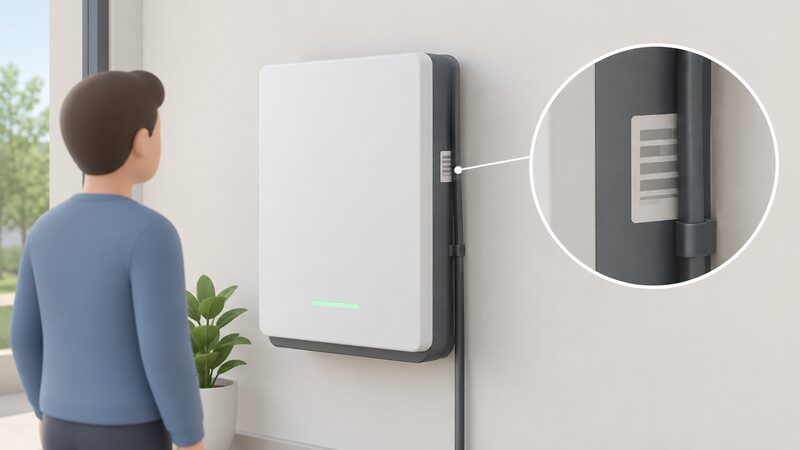
The check is done by serial number, and the maker's guidance is specific about where to find it without opening anything. On the RESU3.3, RESU6.5, RESU10 and RESU13, look to the right-hand side of the battery; the serial number label may be partially obscured by battery cables or conduit3. On the RESU7H and RESU10H Type C, Type R and Type R Secondary, the label is behind the access cover at the bottom right of the battery3.
Registration is through the maker's recall portal, and the maker states that the diagnostic software update will be implemented through the remote software update function provided by the inverter company3. That is the route by which a household may not need to do anything at all beyond registering: the diagnostic can arrive over the connection the inverter already has.
The wider lesson is about records. A household that can put its hand on the battery model, serial number and installation date within a few minutes is in a much better position when a recall lands than one that has to trace an installer from years ago. The same discipline applies to any registered electrical work: for gas appliances the equivalent check is the Gas Safe Register, which can be reached on 0800 408 5500 or by texting Gas and the business registration number to 8508013. There is no single equivalent register for battery installers, which makes the paperwork the household holds more important, not less.
What LG is doing: free replacement, diagnostic software and compensation
The remedy has three parts, and the maker states each of them. First, a free diagnostic software update intended to identify and shut down batteries at risk of overheating3. Second, replacement: LGESEG will replace batteries diagnosed by the diagnostic software and remove those batteries from the property at no cost to the householder3. Third, compensation: LGESEG is providing compensation to affected consumers to cover any additional expenses incurred due to increased electricity bills or costs associated with using alternate energy sources after the shutdown of the affected batteries3.
The maker also states that it will replace the battery for free and remove the affected battery from the property at no cost, and that it is rolling out the diagnostic software via technician site visit at no cost3. Where an installer or qualified electrician attends, the maker states it can provide technical guidance and arrange payment for their time3.
| Element of the remedy | What the maker states | Cost to the householder |
|---|---|---|
| Diagnostic software | Free update, intended to identify and shut down batteries at risk of overheating3 | No cost3 |
| Delivery route | Remote software update via the inverter company, or a technician site visit3 | No cost3 |
| Replacement | Batteries diagnosed by the software are replaced and removed from the property3 | No cost3 |
| Compensation | Covers additional expenses from increased electricity bills or alternate energy sources after shutdown3 | Claim through the maker3 |
On data, the maker states that any data collected in the recall form will not be used for sales advertising purposes and will only be used for product support, campaign and recall purposes, unless the householder opts in to marketing, and that the General Data Protection Regulation applies to personal information it collects3. For comparison, National Grid Electricity Distribution states that it will not use information to contact customers with adverts, offers or promotions or sell data to third parties for marketing15.
The dependence here is administrative rather than technical. The household cannot test its own battery for the fault, cannot perform the fix, and cannot verify the diagnosis independently. It relies on the maker's software, the maker's technician and the maker's compensation process.
What to do immediately if your battery is affected
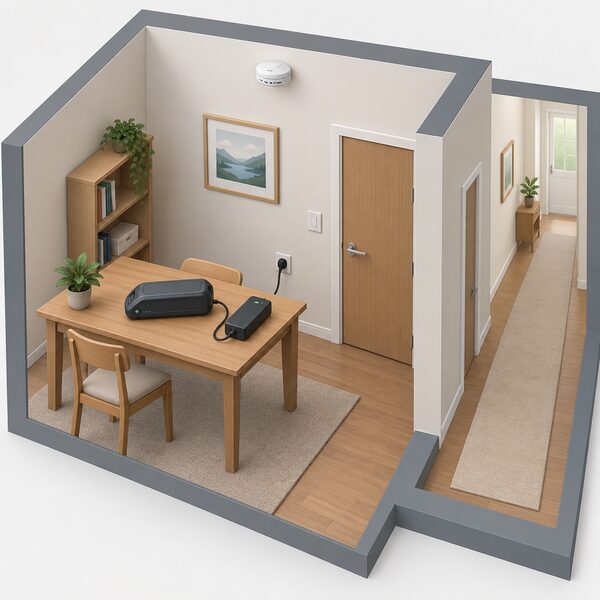
The immediate actions are consistent across the recall pages. Electrical Safety First strongly recommends that anyone who discovers they have an electrical item that has been recalled should stop using it until it has been checked by the manufacturer16. For the UPP U004 e-bike battery, the guidance is more specific: stop using it immediately, disconnect it and keep the battery safely away from your living area21.
For a home battery, stopping use is not a householder task. The unit is wired into the property, and the maker's process is the shutdown and replacement route. What a household can do is register, keep the unit's location clear for a technician, and not attempt any intervention on the unit or its cabling.
For smaller lithium products the householder has direct control, and the general charging rules apply. Charge items away from escape routes, never in a corridor or a room that provides the only way out of the home, and disconnect the charger once charging is complete1. Charge in a room that has a working smoke alarm, which does not compromise the escape route, keeping the door closed while charging and away from any heat source1. Do not charge devices overnight when anyone is asleep or leave them on charge when the home is empty1. Avoid covering lithium-ion batteries while charging9. If a device or piece of equipment is stored without being used for any length of time, the battery should be removed1.
If a battery shows damage, the guidance is to stop using and charging it immediately and replace it9. A swollen cell is damage, not wear.
Other recalled lithium products: chargers, site connectors and standby savers
The recall system covers far more than home batteries, and the pattern across the notices is worth understanding because it shows what kinds of fault trigger action.
| Product | Risk stated | Action stated |
|---|---|---|
| Lithium Battery Charger szYB-29.4V2A | Recalled product16 | Stop using it immediately and contact the retailer for further advice16 |
| Lithium Battery Charger szYB-42V2A | Serious risk of electric shock17 | Stop using it immediately and contact the retailer for further advice17 |
| HL R-Team E-Bike Batteries and Chargers | Electric shock and fire18 | Stop using until checked by the manufacturer18 |
| BOOW LiFePO4 Leisure Battery | Serious risk of fire from large inconsistencies in build quality and construction; earthing arrangements insufficient, presenting a risk of overheating and fire19 | Dispose of safely via a local household waste disposal site19 |
| Small electric oil filled radiator | Fire, because the thermostat may become faulty and therefore not stop the product overheating20 | Stop using until checked by the manufacturer20 |
| UPP U004 e-bike battery | Recalled product21 | Stop using immediately, disconnect and keep away from living areas21 |
The charger recalls are the most instructive for anyone buying backup power kit. A charger is a cheap accessory and an easy place for a manufacturer to cut corners, and a charger that presents a serious risk of electric shock can sit in a household for years without any obvious sign. The BOOW leisure battery recall shows the other failure mode: a product that looks sound but has earthing arrangements insufficient for the job, presenting a risk of overheating and fire19.
The SavePower Universal Standby Saver was recalled for all units after reports of units catching fire during use, and the YXT-030 USB charger for 3G, 3Gs and 4G handsets is also listed as recalled. Both belong to the same family of small, cheap, always-on devices that households plug in and forget.
How common electrical fires are and where the data comes from
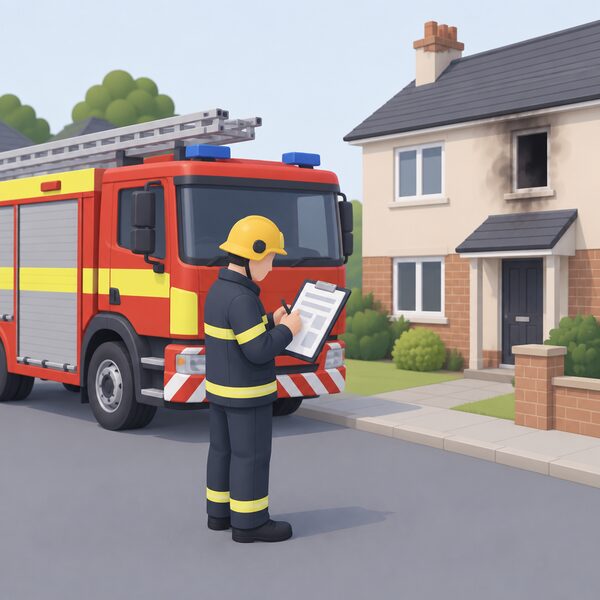
Electrical Safety First states that every year, half of accidental domestic fires in the UK are caused by electricity, and that this figure is not changing5. It attributes these fires to misuse of appliances, poor regulation of electrical safety checks, particularly in the private rented sector, and faulty appliances5. The same source records over five fires a day in England caused by white goods such as tumble dryers, washing machines and dishwashers5.
The older official dataset is starker in absolute terms: more than 12,500 fires in homes across the country are reported as having an electrical source of ignition, with a further 25 deaths and 590 non-fatal injuries6. That figure dates from December 2004 and should be read as historical rather than current.
For solar and battery installations specifically, the numbers are small and the reporting is improving. A government report on domestic battery energy storage systems recorded few fires involving domestic lithium-ion battery storage systems, while stating that the use of large batteries in the domestic environment represents a safety hazard4. On solar, a February 2026 official report estimated an annual frequency of 28.9 fires per gigawatt of installed capacity, and a frequency analysis of PV-related fires across five countries estimated an annual rate of 29.3 fires per gigawatt of installed capacity7.
The data quality issue is acknowledged. Fire and rescue services complete the Home Office's online Incident Recording System for every incident they attend22, and the All-Party Parliamentary Group for Electrical Safety has recorded a recommendation that lithium-ion battery fires will be recorded under the new UK fire reporting system14. Until that recording is consistent, any figure for lithium battery fires specifically is a floor rather than a total.
Buying safely: online marketplaces, e-bikes and conversion kits
E-bike batteries can be a severe fire risk if used, charged or sourced incorrectly, and second-hand e-bike batteries and chargers can be a serious fire risk9. The official advice is blunt: never be tempted to buy a lithium battery second-hand, as you will not know its history, the damage it may have suffered or the dangers it could pose1. Always buy devices and replacement batteries from a reputable seller1.
The regulatory picture is moving. The government's product safety consultation proposes that online marketplaces must act with due care to prevent, identify and remove dangerous products being sold via their platforms2. Electrical Safety First's Battery Safety Campaign asks for a clear and enforceable duty on online marketplaces and extension of liability for defective products to online marketplaces, particularly those sold by third party sellers13. It also asks for standards for conversion kits and charging systems and for consideration of a temporary ban on the sale of universal chargers13. The Battery Breakdown report recommends third-party certification for all e-bike and e-scooter batteries before they enter the UK market14.
The Lithium-ion Battery Safety Bill [HL] states its first purpose as better protecting householders and communities from the dangers of lithium-ion batteries23. None of this is yet a single, enforceable regime covering every product a household might buy, which is why the sourcing advice carries the weight in the meantime.
For a household building backup power, the practical reading is that the cheapest route to a battery is also the least traceable. A product bought from a marketplace seller with no UK presence is hard to recall, hard to get repaired and hard to hold to account.
Safe disposal: why batteries must not go in household waste
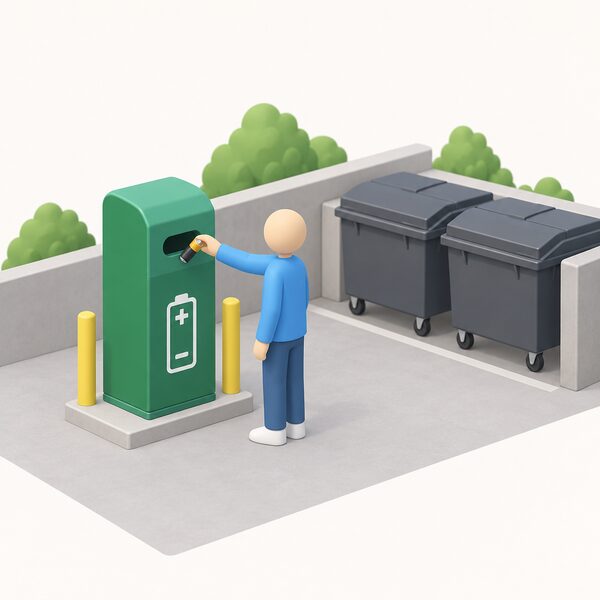
Batteries, appliances, and appliances with batteries, even AA or AAA ones, must not go in general waste or normal recycling24. Recycling is the safest and most responsible way to dispose of batteries and electrical items that are faulty, old, or beyond repair24. For an affected BOOW LiFePO4 leisure battery, owners are advised to dispose of batteries safely via their local household waste disposal site19. For the UPP U004 e-bike battery, the guidance is not to dispose of it in general waste or normal recycling, because that could put other people at risk, and to find a suitable local recycling point or seek advice on safe disposal21.
The reason is mechanical as much as environmental. A lithium cell that is punctured, crushed or shorted in a collection vehicle or a waste transfer station can enter thermal runaway, and the resulting fire is in a place with no smoke alarm and no escape route. That is why a swollen power bank or a dead e-bike pack is a hazardous item rather than bulky waste.
Electrical Safety First's Battery Safety Campaign asks the government to make regulations ensuring the safe disposal of lithium batteries once their lifecycle ends13. Until that exists as a single regime, the routes are the local household waste disposal site and retailer or council battery collection points.
Where the risk sits in a household's energy independence
A home battery is one of the few pieces of kit that genuinely reduces a household's dependence on the grid, and the recall record does not change that. What it does change is the shape of the remaining dependence. A household with a recalled LG ESS unit depends on the maker's diagnostic software to know whether its battery is safe, on the maker's technician to act, and on the maker's compensation process for the cost of running on grid electricity in the meantime. None of that is within the household's control.
The same is true at a smaller scale. A power bank, an e-bike battery or a portable power station is a self-contained energy store, but its safety depends on a charger the household did not design, a cell it cannot inspect and a supply chain it cannot see. The measures that reduce the risk are unglamorous and entirely within reach: buy from a reputable seller, charge in a room with a working smoke alarm and away from the only escape route, do not charge overnight or while out, do not cover a battery while charging, check for damage and replace rather than repair, and take anything faulty to a household waste disposal site rather than the bin.
For the wider picture on keeping power available during a network failure, see backup power for UK homes, portable power stations and backup power safety and standards. For the specific case of a swollen cell, see how to dispose of a swollen power bank, and for heat as a factor, are lithium-ion batteries a fire risk in hot weather.
Sources24 cited
- Lithium-ion batteries, North Wales Fire and Rescue Service, 2026
- The UK's new product safety framework, GOV.UK, 2026-03-31
- LG ESS Battery serial check, LG Energy Solution, 2026
- Domestic battery energy storage systems, GOV.UK, 2020-10-02
- 10 ways to avoid electrical fires in your home, Electrical Safety First, 2026-09-19
- Part P electrical safety, Wigan Council, 2004-12
- Fire safety of solar photovoltaic panels, GOV.UK, 2026-01-07
- Battery Breakdown, Electrical Safety First, 2026-09-17
- E-bikes, Electrical Safety First, 2026-09-17
- E-scooters, Electrical Safety First, 2026-09-17
- Be summer ready, Electricity North West, 2026-09-19
- LG ESS Battery Division RESU ESS Home Batteries, Electrical Safety First, 2026-09-17
- Battery Safety Campaign, Electrical Safety First, 2026-09-17
- Westminster, Electrical Safety First, 2026-09-17
- Smart meters, National Grid Electricity Distribution, 2026-09-17
- Lithium Battery Charger szYB-29.4V2A, Electrical Safety First, 2026-09-17
- Lithium Battery Charger szYB-42V2A, Electrical Safety First, 2026-09-17
- HL R-Team E-Bike Batteries and Chargers, Electrical Safety First, 2026-09-17
- BOOW LiFePO4 Leisure Battery sold via Amazon, Electrical Safety First, 2026-09-17
- Electric radiator, Electrical Safety First, 2026-09-17
- Is your e-bike battery safe?, Electrical Safety First, 2026-09-17
- Fires in England with solar panel or photovoltaic panel mentioned, GOV.UK, 2023-10-26
- [Lithium-ion Battery Safety Bill [HL]](https://bills-api.parliament.uk/api/v1/Publications/56005/Documents/4984/Download), UK Parliament, 2024-07-29
- Recycling electricals and batteries, Electrical Safety First, 2026-09-17
 Home Battery Fire SafetyHow likely is a home battery to catch fire, and what keeps it safe if it does?
 Recycling Old ElectricalsOld batteries and broken electricals can cause fires in bin lorries and at recycling plants, so where should they actually go?
 Recycling and DisposalWhat happens to a domestic storage battery at end of life, who takes it back, the transport and handling rules for damaged lithium units, and the difference between recycling, refurbishment and second-life reuse.
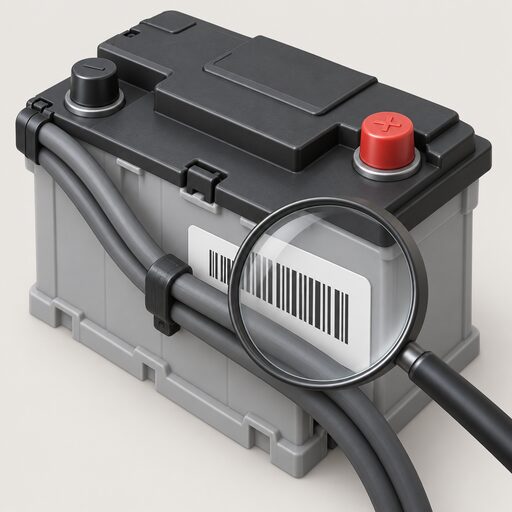 Recalls and Safety NoticesWhich LG RESU home batteries have been recalled, and how can you tell if yours is one of them?
 Second-Life EV BatteriesUsed electric car batteries can store solar power at home, but can you actually buy one in the UK?
 Siting and LocationWhere can a home battery actually go?