
In this answer
Short answer
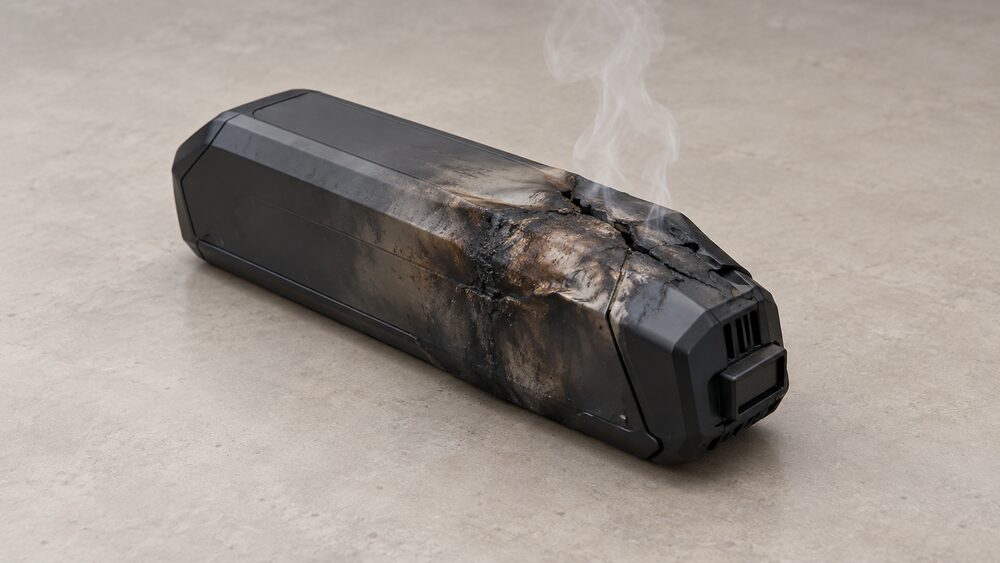
Yes. A lithium-ion battery fire can start again after it has been put out. Electrical Safety First, the UK charity that publishes the Battery Breakdown research programme, states plainly that even if a fire is extinguished, it is common for the fire to start again, describing this as part of the dynamic nature of lithium-ion fires1. The reason is that the heat driving the fire sits inside the cells rather than at the surface, so cooling the outside of a pack does not necessarily stop the reaction within it.
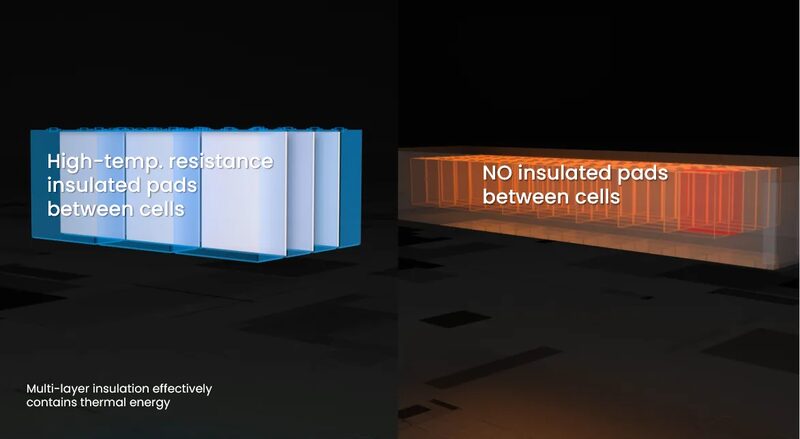
The mechanism behind this is thermal runaway, which Electrical Safety First identifies as the primary risk with lithium-ion batteries1. Once a cell is in runaway, the heat spreads to nearby cells and pushes them into the same uncontrollable and irreversible state2. That is why a fire that appears to be out can return: the fuel and the heat are still there, sealed inside the casing.
This matters for any household with a battery in it. North Wales Fire and Rescue Service notes that the average UK home holds many rechargeable items containing lithium-ion batteries, including laptops, mobile phones, e-scooters, e-cigarettes and mobility vehicles, and that each of these has the potential to cause a serious fire in the home3. The same chemistry sits inside a home storage battery, a power tool pack or a leisure battery.
Why reignition happens: thermal runaway and trapped heat
Thermal runaway begins when a battery cell overheats, whether from an internal fault, physical or electrical abuse, or extreme temperatures2. The elevated cell temperature then drives exothermic reactions, which produce more heat than can be dissipated to the surroundings. Eventually the internal structure of the cell becomes unstable and collapses, venting flammable and toxic gases, fire and explosion6.
The critical point for reignition is what happens next. The heat spreads to nearby cells, causing them also to enter an uncontrollable and irreversible state of thermal runaway2. Because that process is described as irreversible, extinguishing the visible flame does not reset the cell. The energy is still being released inside the casing, and the battery can reignite.
The triggers are well documented. Electrical Safety First attributes thermal instability to flawed design, low-quality components, or improper charging or discharging1. Its Battery Breakdown report lists poor quality and substandard components, flawed design, physical abuse and improper charging or discharging as causes7. The government's own product safety consultation reaches the same conclusion, noting that non-compliant or incompatible battery components and use outside safe design parameters can lead to thermal runaway, causing fires8.
For e-bikes and e-scooters specifically, overcharging, over-discharging, or charging the battery too quickly are named as some of the main causes of fires9. Poor design, incorrect charging, or damage to the battery are also cited9. A recall notice for a radiator fan illustrates how ordinary the trigger can be: the internal lithium polymer battery may fail during charging or whilst in standby mode, and if the product is charged or left unattended in standby mode, a fault may occur leading to thermal runaway and the product catching fire11.
How soon after extinguishing can a fire return?

There is no published interval after which a lithium-ion battery is safe. The guidance treats the risk as ongoing rather than time-limited, which is why the emphasis falls on monitoring and on not being present when a battery is charging. North Wales Fire and Rescue Service advises against charging devices overnight when anyone is asleep, and against leaving them on charge when the home is empty3. That advice exists precisely because a failure can develop while nobody is watching.
The wider safety guidance points the same way. Electrical Safety First advises charging a device in a room that has a working smoke alarm, which does not compromise the escape route, keeping the door closed whilst it is charging and away from any heat source3. Leaving items on charge continuously or overnight is described as a fire risk for both e-bike and e-scooter batteries9.
Temperature is a further factor. Northern Powergrid notes that high temperatures can cause batteries, especially lithium-ion, to overheat and potentially catch fire12. A pack that has already been through a fire event is more vulnerable, not less, because the damage is done.
What this means in practice is that the period after extinguishment is not a safe period. It is a period of continued hazard, and the decision about when a scene is stable belongs to the fire and rescue service rather than to the occupant.
Small device packs and large home batteries
The mechanism does not distinguish between a phone and a home battery. North Wales Fire and Rescue Service puts it simply: the larger the battery, the larger the danger, and some of the largest lithium batteries can be found in mobility vehicles3. Size changes the severity and the amount of stored heat, not whether reignition is possible.
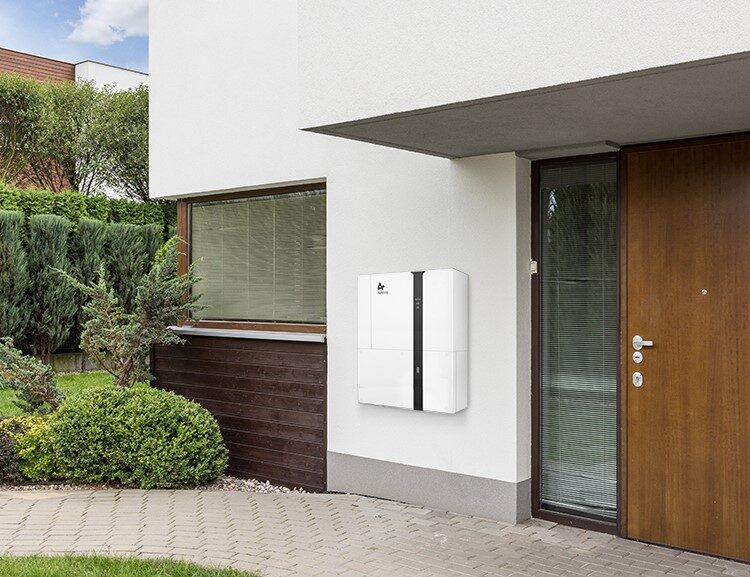
The chemistry in a home storage system is often chosen for stability. sonnen states that its lithium-iron-phosphate battery can be charged and discharged over 10,000 times without issues, whilst still retaining capacity13. Zendure makes a related point about the wider category, noting that many currently available options can pose a safety hazard if they are damaged, and that it comes down to the electrolyte, with risk of fire, burn injuries and property damage14. Lithium iron phosphate is not exempt from damage risk; it is a different risk profile.
At the scale of the electricity system, the Clean Flexibility Roadmap records a fire incidence rate of 0.7 over five years to 24/25 for grid-scale battery sites5. That figure covers large installations, not household packs, and is given here as context for how the industry records incidents rather than as a household statistic.
For a household, the practical distinction is between a battery that is engineered, installed and sited to a standard, and one that is not. Electrical Safety First notes that lithium-ion batteries require protection from impact and water ingress15, which is a design requirement rather than a user instruction. A home battery installed to the relevant standards sits in a different category from a second-hand e-bike pack bought online.
Warning signs and what to do about a damaged battery
Damage is the clearest signal. Electrical Safety First advises that if any damage is noticed on an e-bike battery, use and charging should stop immediately and the battery replaced9. The identical instruction is given for e-scooter batteries10. Second-hand e-bike batteries and chargers are described as a serious fire risk9, and the charity warns against buying a lithium battery second-hand because the history, any damage suffered, and the dangers it could pose are unknown3.
Recall notices show what a damaged unit can look like in the market. Some UPP e-bike batteries were advertised as a little burnt, described as a potential sign of damage and increased risk4. The same batteries were linked to serious fires, risking explosion and the release of toxic gases4, and were the subject of a government withdrawal notice in January 20244. A separate press release describes such a battery reaching up to 600 degrees centigrade in thermal runaway, releasing toxic gases and creating a ferocious fire that is almost impossible to extinguish16.
The Battery Safety Campaign, run by Electrical Safety First, calls on the government to make regulations ensuring the safe disposal of lithium batteries once their lifecycle ends7. The APPG for Electrical Safety has secured a commitment that lithium-ion battery fires will be recorded under the new UK fire reporting system17, which matters because better incident data is the basis for better warnings.
"Affected batteries risk entering thermal runaway, a rapid and extreme chemical reaction that can cause ferocious fires almost impossible to extinguish."
Disposal of a damaged or fire-affected battery
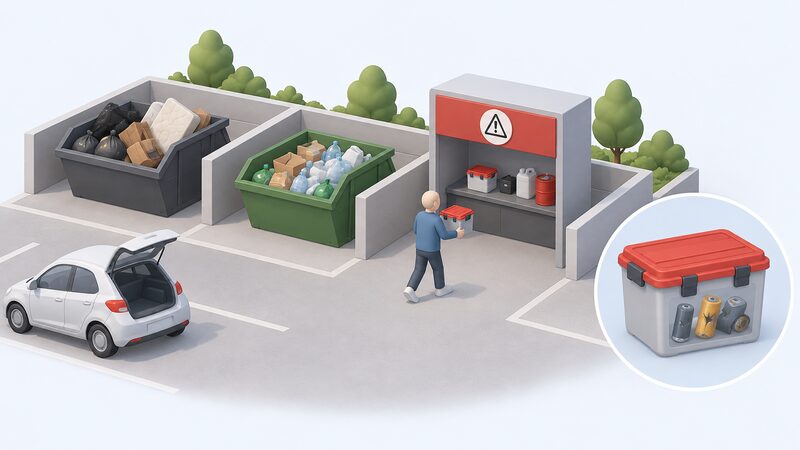
A battery that has been through a fire, or that shows damage, does not go in the bin. Recall notices direct owners to dispose of batteries safely via their local household waste disposal site, checking first whether the centre accepts that type of battery18. The UPP notice is more specific: do not dispose of the battery in the general waste or normal recycling, because this could put other people at risk, and instead find a suitable local recycling point or seek advice on how to dispose of it safely4.
Electrical Safety First frames the general principle: recycling is the safest and most responsible way to dispose of batteries and electrical items that are faulty, old, or beyond repair19. For individual cells, Fogstar's safety guide advises disposing of damaged batteries immediately via a recycling point, or returning them to the retailer, who can repair them with a new insulator and wrap20.
There is a legislative dimension. The Lithium-ion Battery Safety Bill [HL] provides that the Secretary of State must, within six months of the passing of the Act, by regulations make provision regarding the disposal of lithium-ion batteries21. Until such regulations are in force, the route for a household is the local authority waste site or a retailer take-back scheme.
Storage matters too. North Wales Fire and Rescue Service advises that if a device or equipment is stored without being used for any length of time, the battery should be removed3. Always use the correct battery and charger for the device, and charge as per the manufacturer's instructions3. For anyone relying on a home battery for energy independence, these are the conditions that keep the system inside its design envelope.
What this means for a household's independence
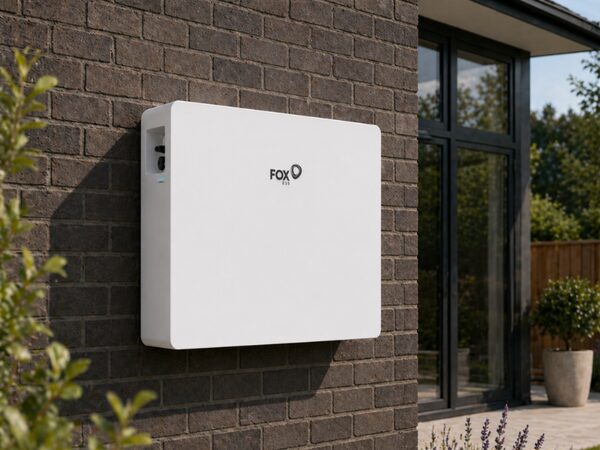
A home battery reduces dependence on the grid for the timing of electricity use, and it does nothing to reduce dependence on the chemistry inside it. The reignition risk is a property of the cell, not of the installation, and it persists after the visible fire is out. That is the honest limit of what a battery can offer a household: independence in when energy is drawn, not independence from the physics of stored energy.
The dependence that remains is on competent installation, on correct charging equipment, on siting that keeps a failing pack away from escape routes, and on the fire and rescue service when something goes wrong. Electrical Safety First's design work on e-bike and e-scooter batteries15 and the government's product safety framework8 both point at the same conclusion: the safety of a lithium battery is largely decided before it reaches the household, by its design and its components.
For a household with an installed system, the practical position is that a home battery is engineered, sited and maintained to a standard, and that this is what separates it from the loose packs behind most reported fires. For a household with e-bikes, e-scooters, power tools or leisure batteries, the position is closer to the recall notices: damage, second-hand purchases and overnight charging are the recurring themes. The home battery fire safety page covers containment and fire service guidance for installed systems, and battery recycling and disposal covers end of life in more detail.
Sources21 cited
- Battery Breakdown, Electrical Safety First, 2026
- Thermal runaway, Electrical Safety First, 2026
- Lithium-ion batteries, North Wales Fire and Rescue Service, 2026
- Is your e-bike battery safe, Electrical Safety First, 2026
- Clean Flexibility Roadmap: July 2026 update, GOV.UK, 2026
- Battery Breakdown: thermal runaway, Electrical Safety First, 2026
- Battery Safety Campaign, Electrical Safety First, 2026
- The UK's new product safety framework, GOV.UK, 2026
- E-bikes, Electrical Safety First, 2026
- E-scooters, Electrical Safety First, 2026
- Valiant radiator fan recall, Electrical Safety First, 2025
- Be summer ready, Electricity North West, 2026
- sonnenBatterie products, sonnen, 2026
- Zendure technology, Zendure, 2026
- How e-bike and e-scooter design can be improved, Electrical Safety First, 2026
- Dangerous product risking fire found for sale across the UK, Electrical Safety First, 2026
- Westminster, Electrical Safety First, 2026
- BOOW LiFePO4 leisure battery sold via Amazon, Electrical Safety First, 2026
- Recycling electricals and batteries, Electrical Safety First, 2026
- 18650 battery safety, Fogstar, 2026
- [Lithium-ion Battery Safety Bill [HL]](https://bills-api.parliament.uk/api/v1/Publications/56005/Documents/4984/Download), UK Parliament, 2024
 Lithium Battery SafetyLithium batteries power phones, e-bikes, scooters and home storage, and any of them can catch fire.
 Recycling Old ElectricalsOld batteries and broken electricals can cause fires in bin lorries and at recycling plants, so where should they actually go?
 Home Battery Fire SafetyHow likely is a home battery to catch fire, and what keeps it safe if it does?
 Maintaining Backup PowerWill your generator actually start when the power goes off?
 Recycling and DisposalWhat happens to a domestic storage battery at end of life, who takes it back, the transport and handling rules for damaged lithium units, and the difference between recycling, refurbishment and second-life reuse.
 Backup Power and EPSWill your lights stay on when the power goes out?