
In this answer
Short answer
A home battery is a physical device bolted to your wall. When the company that made it stops trading, the battery does not stop with it: it keeps charging, discharging and doing the job it was installed to do. What a household actually loses is softer but just as real: the manufacturer's warranty, its spare parts, its technical support and, in some cases, the app and cloud services that let you monitor and control the system from your phone.
The risk is not theoretical. UK battery makers have ceased trading within the last few years, and guidance published for owners of one such brand states the position bluntly: its warranties "can only be enforced against GivEnergy itself and their closure likely means you will be unable to" claim in future1. This page sets out what survives a manufacturer's collapse, what does not, and how to weigh that risk before you buy.
The battery itself keeps working
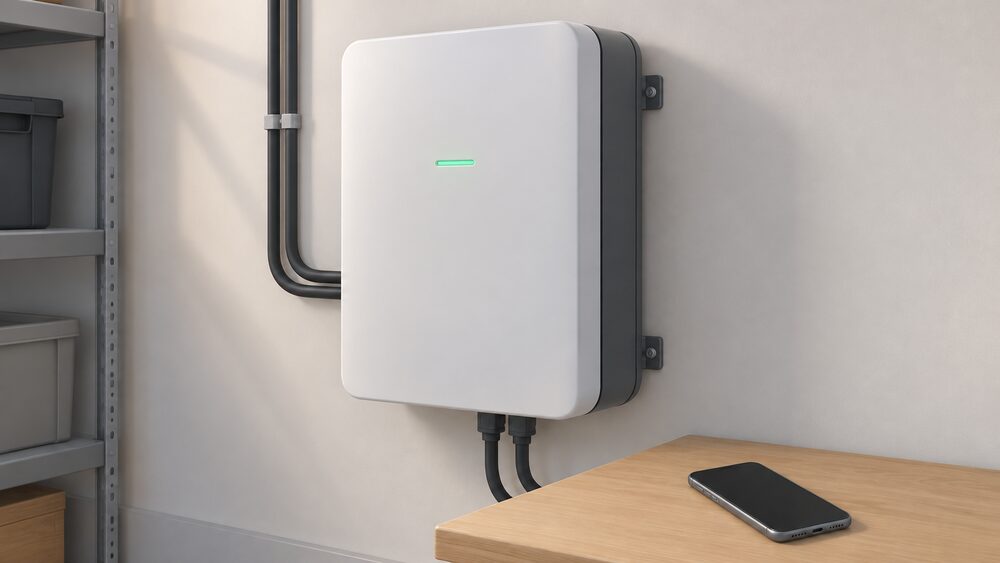
The hardware on your wall is independent of the company that built it. Guidance issued to owners of a failed battery brand states that "the built in local management capabilities of your system will continue to monitor battery cells and shut down if there is an issue"1. In other words, the safety and control electronics that protect the cells live inside the unit, not on the manufacturer's servers.
The battery's basic behaviour also carries on as designed. A battery in Balance mode charges when excess solar generation is available and discharges when there is household demand, maximising the use of self-generated solar energy3. Protection features remain active too: Powervault batteries, for example, automatically stop charging if the cell temperature falls below zero, and resume when it rises again4.
What changes is the absence of a manufacturer behind the product. No firmware updates, no technical support line, no replacement cells from the factory. The household keeps the energy independence the battery bought it, but the long-term backing that came with the purchase is gone.
What the warranty covers, and who honours it
A manufacturer's warranty is a promise from that manufacturer, and it is only as good as the company standing behind it. When the maker ceases trading, that promise generally dies with it: the warranties of the failed brand referred to above can only be enforced against the company itself, so its closure likely means owners cannot claim in future1.
For comparison, a manufacturer that is still trading will typically offer a term such as the 10 year manufacturer warranty covering the battery on installations where a battery is added by an energy supplier2. Maker warranties also carry exclusions worth reading before anything goes wrong: the myenergi libbi system warranty, for instance, excludes parts or faults associated with the existing installation, including consumer units, breakers, cables or an existing solar PV system5.
The practical route after a manufacturer fails runs through the seller. The guidance for owners of the failed brand states that if the battery was bought from an energy company, an installer or a wholesaler, these are the first point of contact, and that credit card purchases may allow a claim via the card provider1. Separately, faults caused by poor workmanship are covered free of charge by the installation warranty, which is a promise from the firm that fitted the system, not the maker6. See home battery warranties for how these terms work in general.
Apps, cloud services and remote monitoring
This is where a manufacturer's collapse bites hardest. Monitoring apps commonly rely on the maker's infrastructure: the mySolarEdge app, for example, uses communication with SolarEdge servers to let you monitor your system, production data, battery and smart devices7. If those servers are shut down or never maintained again, the window into your system can go dark, even though the battery itself keeps running.
The distinction that matters is between local control and cloud-dependent features. Local management, the cell monitoring and safety shutdown inside the unit, continues after the maker's closure1. Remote features routed through the company's servers, app dashboards, historical production data, smart device control, do not have that protection7.
A related behaviour is worth knowing: if your electricity supply stops for any reason, such as a power cut, your solar system will shut down2, and solar panels automatically switch off during a power cut as a safety feature preventing electricity being exported to the network, usually restarting on their own once power returns8. That is grid-safety behaviour, not manufacturer behaviour, and it does not change when a maker fails. For how monitoring works in normal times, see monitoring a home battery.
The installer and the manufacturer: two different companies, two different risks
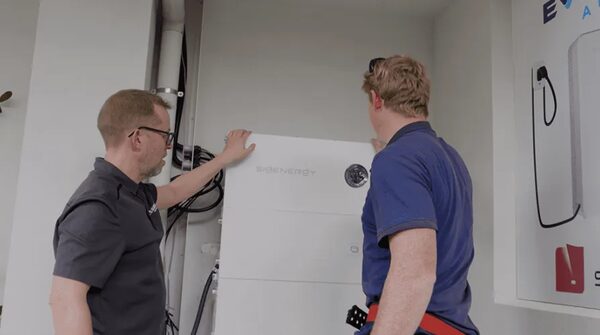
Most households buy a battery through an installer, and the two firms carry two different promises. The manufacturer warrants the product; the installer warrants the workmanship, and "any faults caused by poor workmanship should be covered, free of charge, by your warranty" with the installation company6. If the manufacturer fails, the installer's obligation on the installation itself can still stand.
The installer is also the more likely survivor of the two, and the more accountable one. Consumer guidance is to check that the solar PV company is MCS certified or equivalent and a member of the Renewable Energy Consumer Code (RECC)9, and to check that the company is MCS certified or Flexi-Orb certified, which is often required for government support schemes or to get Smart Export Guarantee payments10.
Be aware that installers often sell a narrow range. In a January 2026 survey, almost three quarters of owners had only one brand of panel offered by their chosen installer, while 14% had a choice between two brands11, and 25% had used a larger solar panel company for their work12. A single-brand installer has a single point of failure if that brand's maker collapses, so the choice of installer and the choice of manufacturer are bound together.
Replacement batteries, compatibility and expanding later
A failed manufacturer closes off the most obvious expansion path: more of the same product. Adding storage later is still possible in principle. Battery storage can be added to existing solar panels to maximise the benefits of a system, under council-backed schemes in Birmingham13 and Norfolk14, and some firms can assess many existing solar PV systems even if they were installed by another company15.
Whether a different brand's battery can join your existing system is a compatibility question for an installer to answer, not a general rule. Costs also vary widely: solar battery storage prices depend on the amount of solar energy produced, the size of your house or commercial premises, and the number of batteries needed16.
One caution on the economics: the Energy Saving Trust reports that adding a battery to a solar panel system can increase bill savings, but often not enough to recover the cost of the battery within its expected lifetime, particularly where households already have access to a good export tariff17. A replacement or expansion bought after a maker's failure should be weighed on that same basis. See adding more batteries later and modular and stackable systems.
Choosing a manufacturer with staying power before you buy
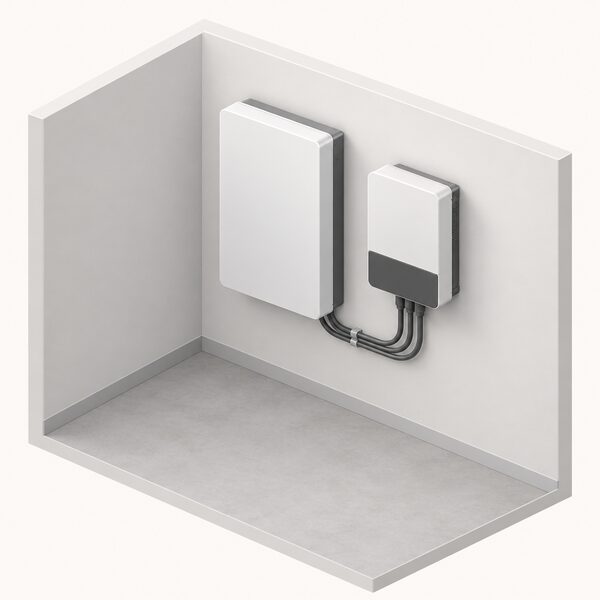
No householder can audit a company's balance sheet, but the purchase itself can be structured to spread the risk. Buying the battery as part of a single installation supply has a VAT consequence: where the installation is carried out at the same time, the customer perceives a single supply and the battery is a better means of enjoying the principal supply of solar panels, the battery is treated as part of that single supply18. A single, certified installer sale also gives a clear counterparty if the maker later fails.
Consumer law provides a floor, not a rescue. The Consumer Rights Act 2015 covers faulty goods, faulty digital content, services matching what was agreed, and unfair terms in a contract19. But a right against a company in administration is rarely worth the paper it is written on, which is why the seller and the payment method matter as much as the brand.
Two comparisons show how this risk is handled elsewhere in energy. If a FIT licensee fails, generators must contact a new energy supplier who is a FIT licensee and ask them to take over the FIT payments as soon as possible20. If an energy supplier goes out of business, you will still have electricity and gas supplied to your home: your energy supply will not be cut off21, and energy is not cut off at any point when a supplier goes out of business22. Batteries have no equivalent of the Supplier of Last Resort: there is no automatic backstop for a failed manufacturer, so the protection has to be built in at the point of purchase. For the wider picture, see home batteries and household energy independence and the buying a home battery checklist.
Sources22 sources
- GivEnergy FAQs for owners, ESA-uk.org, 2026-04-17
- Solar panel maintenance and cleaning guide, E.ON Next, 2026-09-17
- Moixa operation modes, Moixa, 2022-02-22
- Powervault FAQs, Powervault, 2026-09-17
- myenergi libbi system warranty, myenergi, 2026-09-17
- Solar panel problems and how to solve them, Which?, 2026-03-26
- MySolarEdge app does not display production data, SolarEdge, 2026-09-17
- Planned power cuts FAQ, SSEN, 2026-09-19
- Solar panel installation advice, Which?, 2026-08-12
- Buying advice for solar panels, Which?, 2026-08-12
- SolarEdge solar panels review, Which?, 2026
- SolarEdge solar panels owner survey, Which?, 2026
- Switch Together Birmingham: buying solar panels and battery storage, Birmingham City Council, 2026-01-27
- Solar Together Norfolk, South Norfolk and Broadland Council, 2026-09-17
- How to add battery storage to a feed-in tariff solar system, Good Energy, 2026-07-24
- Retrofitting a solar battery pack to your existing system, Duracell Energy, 2026-09-17
- Supporting households with low carbon technology combinations, Energy Saving Trust, 2026-07-15
- VAT Energy Saving Materials manual, VENSAV3210, HMRC, 2026-09-17
- Complaints and concerns advice hub, HETAS, 2026-07-14
- Feed-in Tariffs: generators, Ofgem, 2026-09-17
- What happens if your energy supplier goes out of business, Ofgem, 2026
- Energy supplier out of business guide, Uswitch, 2026-05-29