In this guide
GivEnergy Ltd, the UK's best known domestic battery manufacturer, went into administration on 9 April 2026 and ceased trading on 15 April 2026, with all employees made redundant1. The administrator confirmed that neither hardware warranties nor ongoing user and software support would be honoured, and directed consumers to their installer1. That single fact changes what a GivEnergy battery is worth to a household, and it sits above everything else on this page.
The hardware itself is still in homes and still works. The All in One is a battery and an inverter in one integrated product, documented at 13.5kWh, with the All in One 2 expandable to up to 40.5kWh using 13.5kWh expansion batteries3. The AC coupled inverter is a standalone battery inverter that can be used without solar panels at all6.
What follows is the position on the company, the warranty, the range and the specifications, and what remains of the independence a home battery is bought for.
GivEnergy Ltd has ceased trading: what it means for owners
The administration is the first thing any householder needs to understand, whether they already own a GivEnergy system or are looking at one second hand. GivEnergy Ltd entered administration on 9 April 2026, with Chris Brooksbank of CB Business Recovery appointed as administrator, and ceased trading on 15 April 20261. The administrator's notice states that no further goods or services should be provided to the company, and that all employees have been made redundant1. The Energy Storage Association describes GivEnergy as the largest domestic battery manufacturer to stop trading to date, and reports that the company closed its support lines3.
Five months on, as of 5 September 2026, no buyer or restructuring has been announced8. The administrator's report showed unsecured creditors owed more than £17 million, remaining stock written down to about £115,000 and all 28 staff made redundant8. The GivEnergy Cloud app is still running through the separate GivEnergy Software Ltd, which is not in administration8.
The administration does not cover every company that carries the name. The administrator was not appointed over Givenergy Commercial Limited, Givenergy Software Limited, Givenergy Group Limited or Givenergy Property Limited1. GivEnergy Software Ltd is not in administration, and the online systems are not currently expected to be affected by the proceedings against GivEnergy Ltd2. That distinction matters, because the app and portal a household uses to see and control a battery sit with the software company, not the hardware company.
The practical consequence is that a GivEnergy battery is now a product without a manufacturer behind it. Spare parts, firmware updates and technical support were all named by the company itself as areas of doubt before the appointment1. For a household, that means the installer who fitted the system becomes the main route for faults, and the value of the brand on a second-hand listing is not what it was.
Warranty and software support after the administration
The published warranty terms were generous on paper. GivEnergy documents describe product warranties spanning 12 years, a 12 year standard warranty on inverters, and a 12-year unlimited-cycle warranty on the high voltage stackable battery range4. The single phase battery warranty document sets out 12 years or 5000 cycles from the date of installation, but only when the unit is installed and commissioned by an SAA approved installer and a GivEnergy certified technician11. The same document contains a sting: if the system exceeds the offline threshold, the warranty may revert to a 12-month standard warranty from the date of commission11.
Claims under that warranty were limited to replacement or repair using either new or refurbished goods at the supplier's sole discretion, and only once a claim was approved11. That is a common structure across the industry rather than something unusual to GivEnergy, but it means the remedy was never a guaranteed new unit.
"the Company has ceased to trade"
The administrator's confirmation that hardware warranties will not be honoured overrides all of it1. A household holding a 12-year certificate has a document, not a promise that anyone will act on it. The same applies to software: the cloud service moved to a paid tier at £4.99 per month for full app and portal features, with basic local control free, and GivEnergy Software will charge a single monthly fee for cloud premium access covering remote access, historical data, automation and API usage3. Local control at the unit continues without that subscription, but remote access and historical data do not.
The range: batteries, inverters and the All in One
GivEnergy sold a broad catalogue: inverters, a range of differently sized batteries, single and three-phase systems, EV chargers and smart plugs4. Three product families matter most to a household.
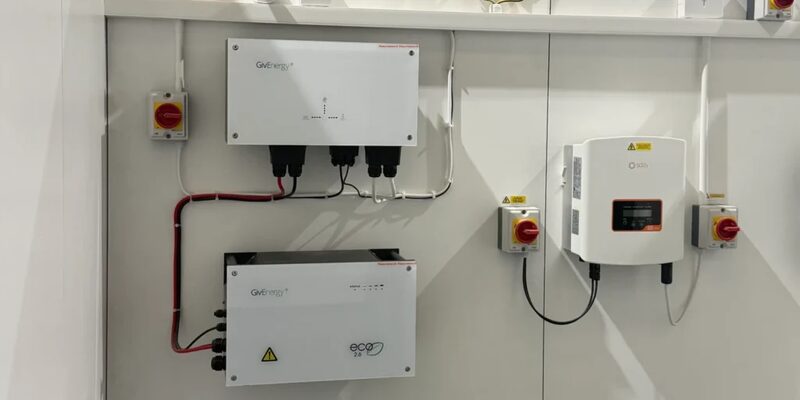
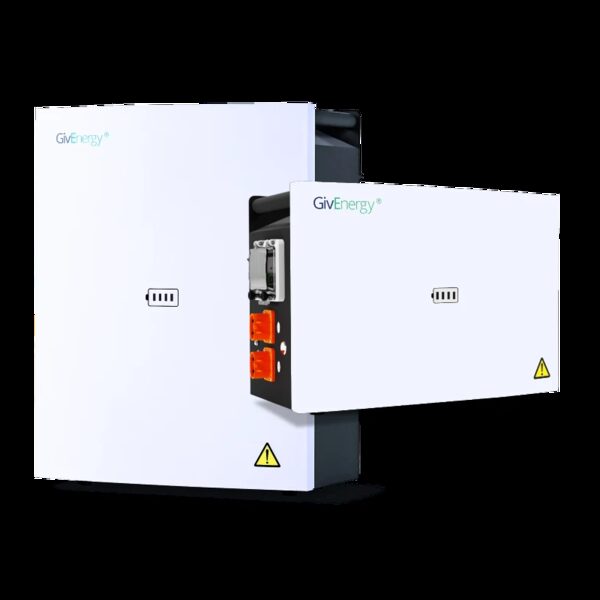
The All in One is the flagship. It is a battery and an inverter in one integrated product, removing the need to install the two separately, and a single unit comprising the battery and inverter components together3. The datasheet describes a modular design with 4 removable battery packs7.
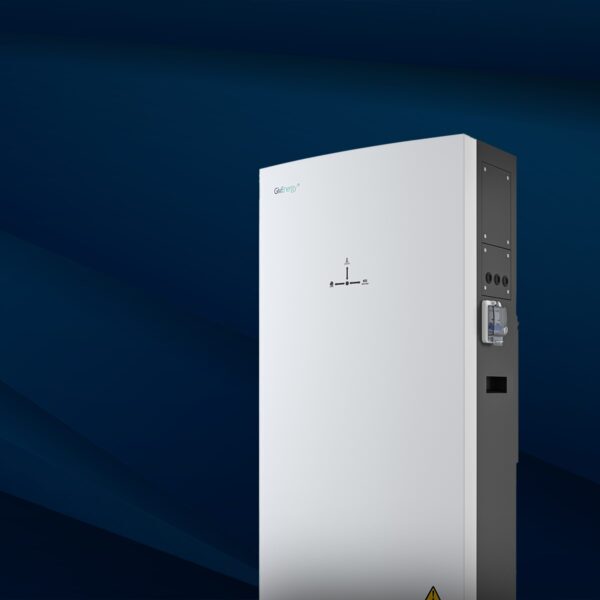
The hybrid inverter is a solar and battery inverter in one unit, typically used for new solar projects and for standalone battery installations3. The third generation high voltage model is described as a battery and solar inverter in one unit, with a battery voltage range of 120 to 510V12.
The AC coupled inverter is a standalone battery inverter, typically used for homes looking to add storage to an existing solar array and for homes using wind or hydro power3. It is the route for a household that already has panels and a solar inverter and does not want to disturb them.
Battery options span the All in One at 13.5kWh and high voltage stackable units at 10.2kWh, 13.6kWh, 17.0kWh and 20.4kWh4. The 13.5kWh expansion battery increases the storage capacity of any All in One 2 system and is described as ideal for medium to large homes seeking enhanced energy independence5.
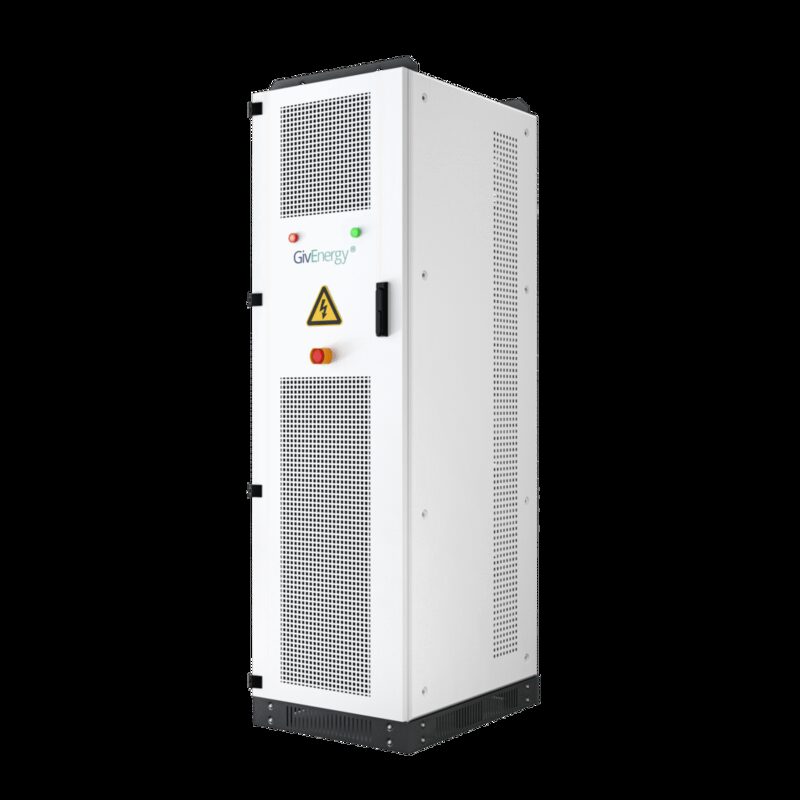
All in One: 13.5kWh battery and inverter in one unit
The All in One is the product most householders mean when they say GivEnergy battery. It combines an inverter and battery in one enclosure, which removes a separate wall-mounted inverter and the DC cabling between the two9. The datasheet gives a battery capacity of 13.5kWh, describes it as AC coupled, and states it is complete with a substantial 13.5kWh useable battery pack7. It is transformerless, rated to an altitude of 4000m, and built around 4 removable battery packs7.
Capacity is where the range gets interesting. The All in One 2 can reach up to 40.5kWh of capacity when expansion batteries are added, and the 13.5kWh expansion battery is designed specifically to increase the storage capacity of that system5. The All in One 2 is also described as handling heavy energy loads while remaining one of the most affordable battery storage systems in the market, which is a maker's claim rather than an independent finding5.
Two practical details sit alongside the capacity. The unit is sold with a GEM120 meter, and it comes with an inbuilt DC isolator4. Certification depends on the model: the 3.6 requires G98 certification while the 6.0 requires G99, which determines what the installer must submit to the network operator14.
| Specification | All in One |
|---|---|
| Battery capacity | 13.5kWh7 |
| Usable capacity | 13.5kWh stated as useable7 |
| Coupling | AC coupled7 |
| Battery packs | 4 removable packs7 |
| Meter | GEM1204 |
| DC isolator | Inbuilt4 |
| Parallel operation | 2 units (All in One 2)5 |
| Maximum capacity | up to 40.5kWh with expansion batteries5 |
For a fuller comparison of this product shape against others, see all-in-one home battery systems and the dedicated GivEnergy All in One page.
AC coupled inverter: adding storage to existing solar, wind or hydro
The AC coupled inverter exists for a specific household: one that already generates its own electricity and wants to store it without replacing what is already on the wall. GivEnergy describes it as typically used for homes looking to add storage to an existing solar array and for homes using wind or hydro power3. It is a standalone battery inverter, and it works as a standalone energy storage system or alongside solar, hydro or wind-turbine generation3.
The technical reason this matters is where the battery sits. AC coupled battery storage is located on the grid or AC side, where the microinverter feeds AC power that has already been inverted15. That extra conversion step costs a little efficiency, but independent guidance notes that AC coupled systems are extremely flexible and are often ideal for adding battery storage to an existing solar setup16. The alternative, DC coupling, ties the battery to the solar array before inversion and is harder to retrofit.
Scalability is the other advantage. Capacity expansion is a matter of adding multiple energy storage units or microinverters as needed, with both battery storage and system output power growing15. The AC coupled inverter itself has a battery voltage range of 45V to 58V and carries a 12 year warranty17.
One compatibility point is worth flagging for existing owners. The GivEnergy dongle was required for the AC coupled inverter generation 1 pairing, and any low-voltage battery could be paired in that configuration4. The GivEnergy Wi-Fi Dongle is now listed as discontinued18. Systems built on that pairing are running with a part that is no longer sold new.
Specifications at a glance
The figures below are the manufacturer's own published numbers. They describe the hardware as it was specified, not the support position, which is covered above.
| Product | Key figure | Source |
|---|---|---|
| All in One | 13.5kWh battery capacity, AC coupled | 7 |
| All in One 2 | up to 40.5kWh with expansion batteries | 5 |
| 13.5kWh Expansion Battery | 13.5kWh nominal capacity | 13 |
| High voltage stackable | 10.2, 13.6, 17.0 and 20.4kWh variants | 4 |
| High voltage stackable | 200 to 600 VDC operating voltage | 10 |
| AC coupled inverter | 45V to 58V battery voltage range | 17 |
| Hybrid inverter Gen 3 | 120 to 510V battery voltage range | 12 |
| Single phase battery pack | 95 mWh throughput on usable capacity | 11 |
Temperature limits are set out in the welcome pack and the stackable battery page. A GivEnergy battery will operate normally from 0°C to 50°C, and between 0°C and -10°C it will function with reduced operation3. The high voltage stackable range lists charging from 0°C to 55°C, discharging from -10°C to 55°C and storage from -30°C to 60°C10. Those are the manufacturer's figures, and how close a unit runs to them depends on where it is sited. More on that is at ventilation, temperature and operating conditions.
Installation, installers and UK support
GivEnergy described itself as a UK company with a UK contact centre and around 30 in-house call centre employees, and its home battery storage was described as designed, engineered and supported in the UK4. The UK distribution centre was at Newspaper House, Chemical Lane, Stoke-on-Trent19. That structure is what the administration removed: the support lines are closed and the staff are gone1.
What remains is the installer network. GivEnergy approved installers were required to have undergone detailed battery installation training direct from the manufacturer, and their services covered consultancy, quality installation, aftercare, maintenance and support4. The company also ran a network of trusted installers with training and dedicated support20. Installers are independent businesses, so their own survival is separate from the manufacturer's.
Support documentation still exists. GivEnergy's support pages list an email address and troubleshooting instructions covering checking settings, clearing external controls and safely updating firmware21. Those pages are a record of how the products were supported rather than a live service.
For the wider process, see home battery installation and home battery warranties.
What a GivEnergy battery means for household energy independence
A home battery's contribution to independence is real but bounded, and the GivEnergy case shows both halves clearly. GivEnergy batteries are described as a smart, efficient way to store renewable energy and reduce reliance on the grid, and the system is said to protect against price spikes and outages, keeping lights on and bills down14. The 13.5kWh expansion battery is aimed at medium to large homes seeking enhanced energy independence13. Those are the maker's claims, and the underlying mechanism is straightforward: generation or cheap grid electricity stored on site and used later instead of bought at the moment of demand.
The dependencies that remain are the ones that matter. A GivEnergy battery does not take a home off the grid. It stays connected, and it still relies on a supplier for whatever it imports. The AC coupled inverter can run a standalone battery without solar panels, and GivEnergy batteries are compatible with solar, wind and hydro and work with any smart tariff, so the charging source can be the grid at off-peak times rather than your own roof3. That is a shift in when you buy electricity, not whether you buy it.
The manufacturer dependence is the harder lesson. Remote access, historical data, automation and API usage now sit behind a paid cloud tier, and the app and portal depend on GivEnergy Software's servers and a broadband connection3. Local control continues without it, but the remote layer does not. Add the closed support lines, the discontinued Wi-Fi dongle and the administrator's position on warranties, and the picture is a working battery with a thinner safety net than its paperwork promised1.
For households weighing the wider question, home batteries and household energy independence sets out what storage can and cannot do, and home battery storage covers the technology across brands. Anyone considering a used GivEnergy unit should treat the absence of manufacturer support as a material part of the price.
Sources23 cited
- GivEnergy updates, Energy Storage Association (UK), 2026-04-15
- Solar panel battery storage, Which?, 2026-04-09
- GivEnergy FAQs, Energy Storage Association (UK), 2026-04-17
- Installer media pack, GivEnergy, 2026-09-17
- All in One 2, GivEnergy, 2026-09-17
- UK Datasheet AC Coupled, GivEnergy, 2024-02
- UK Datasheet All in One, GivEnergy, 2025-03
- GivEnergy Enters Administration: What It Means for UK Battery Owners and Buyers | UK Solar Calculator, photovoltaics.co.uk
- All in One, GivEnergy, 2026-09-17
- High voltage stackable batteries, GivEnergy, 2026-09-17
- Single Phase Battery Warranty Document, GivEnergy, 2026-09-17
- Hybrid Inverter Gen 3, GivEnergy, 2026-09-17
- All in One, GivEnergy, 2026-09-17
- GivEnergy news feed, GivEnergy, 2026-02-16
- DC coupled vs AC coupled vs hybrid, Hoymiles, 2025-09-23
- Everything you need to know about battery storage, Plymouth Energy Community, 2026-09-20
- AC Coupled Inverter, GivEnergy, 2026-09-17
- GivEnergy Wi-Fi Dongle, TradeSparky, 2026-09-17
- UK Welcome Pack, GivEnergy, 2026-09-17
- GivEnergy, GivEnergy, 2026-09-17
- GivEnergy support, GivEnergy, 2026-02-16
- GivEnergy products, GivEnergy, 2026-09-17
- Home battery storage without solar, GivEnergy, 2026-01-20
 GivEnergy EV chargersGivEnergy went into administration, so what happens if you already own one of their EV chargers, or were about to buy one?
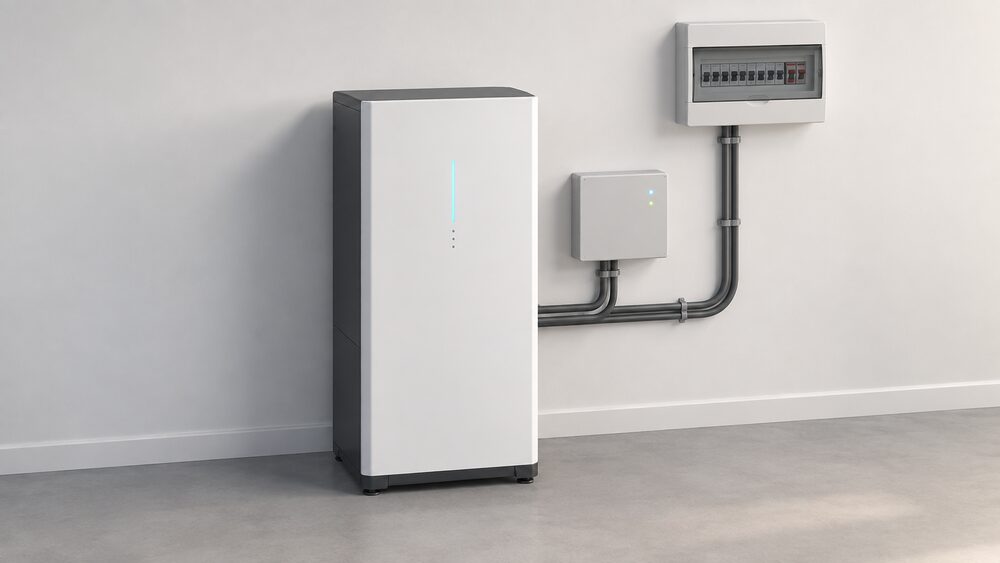 GivEnergy All in OneCan the GivEnergy All in One really keep your lights on in a power cut, and how much can it store?
 GivEnergy home batteries and invertersIf you own a GivEnergy battery, or are being quoted for one, the company behind it went into administration in April 2026.