In this guide
GivEnergy Ltd, the company behind the GivEnergy EV charger, went into administration on 9 April 20261. All of its employees were made redundant, and the company ceased to trade2. The administrator is Chris Brooksbank of CB Business Recovery3. GivEnergy is described as the largest domestic battery manufacturer to stop trading to date3. Anyone considering a GivEnergy EV charger, or already owning one, is dealing with a product whose maker has failed.
The charger itself is a 7.2kW home unit that works with the grid, renewables and home storage batteries4. It was added to the GivEnergy portfolio in 2023, and a distributor product page states the GIV-EV-7.2 charger has been discontinued. GivEnergy accessories, including the EV charger, carry a 5 year standard warranty5, while the company's broader product warranties span 12 years6.
What follows covers the company's position, the charger's specification, how it integrates with battery storage, installation requirements, warranty terms and what administration means for owners in practice.
GivEnergy Ltd has entered administration: what it means for EV charger owners
The administration of GivEnergy Ltd is the single most important fact about this product line. On 9 April 2026 the company went into administration1, and by 15 April 2026 all its employees had been made redundant and the company had ceased to trade2. The administrator appointed was Chris Brooksbank of CB Business Recovery3. GivEnergy Ltd held company number 115710893.
For charger owners, the practical consequences fall into three areas. First, support: GivEnergy closed its support lines3, and independent guidance confirms that support lines are closed1. The published support email address and telephone number may no longer be monitored. Second, spares: there are serious doubts about the provision of spare parts2. Third, warranty enforcement: independent guidance states that if a battery is faulty, owners are unlikely to be able to claim against GivEnergy warranties1.
The online side is different. GivEnergy's app and portal are managed by GivEnergy Software Ltd, which is not in administration3, and the company's online systems are operated by a different company within the GivEnergy group3. Independent guidance states that owners can still monitor and control their battery as before1. Local standard access remains free3.
For a household, this is the central tension. The hardware in the ground keeps working, and the software layer that controls it sits outside the failed entity. But the manufacturer that would honour a warranty, supply a replacement part or service the unit has stopped trading. That is a dependence no household can substitute for on its own.
GivEnergy at a glance: the company behind the charger
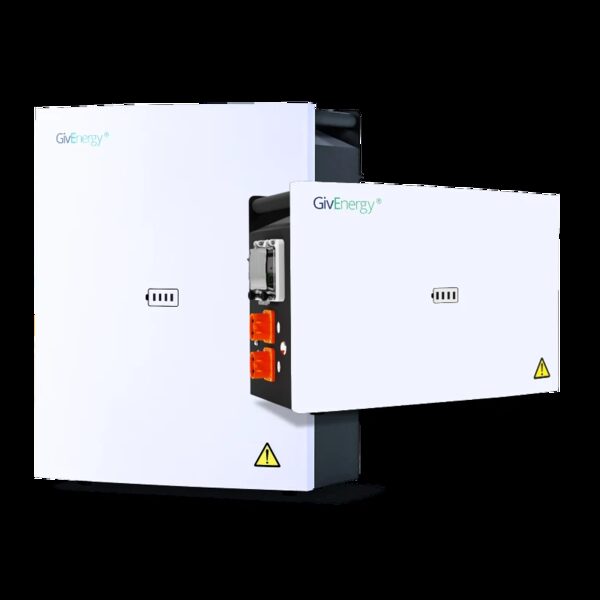
GivEnergy describes itself as a UK company with a UK contact centre6, and as one of the largest manufacturers of battery storage systems in the UK, now operating on an international scale7. Its home battery storage systems are described as designed, engineered and supported in the UK8. The UK distribution centre is at Newspaper House, Chemical Lane, Stoke-on-Trent ST6 4QZ5.
The product portfolio covers all manner of inverters, a range of differently sized batteries, single and 3-phase systems, EV chargers and smart plugs6. The company's stated mission is to accelerate the global transition to clean energy7, and it describes its technology offer as cutting-edge hardware, intelligent software and a strong installer network delivering affordable, accessible solutions9. It serves homeowners, businesses and installers7.
The manufacturing entity named in the warranty documents is Shenzhen GivEnergy Co., Ltd, described as the manufacturer of the GivEnergy range of inverters8. GivEnergy Australia Pty Ltd is the importer and manufacturer's master distributor in Australia8.
In 2025 the company reported 14,300 new installations10, and it launched seven products that year: the All in One 2, Gateway 2, PC 3 Phase Inverter, String Inverter, HV 10kW and HV 8kW, and Backup Box10. The website moved to givenergy.com, with givenergy.co.uk visitors redirected10.
That scale matters for context. This was not a small operation at the point it failed. It reported thousands of installations a year and a broad product range, which is why the administration has consequences across a large installed base of batteries, inverters and chargers.
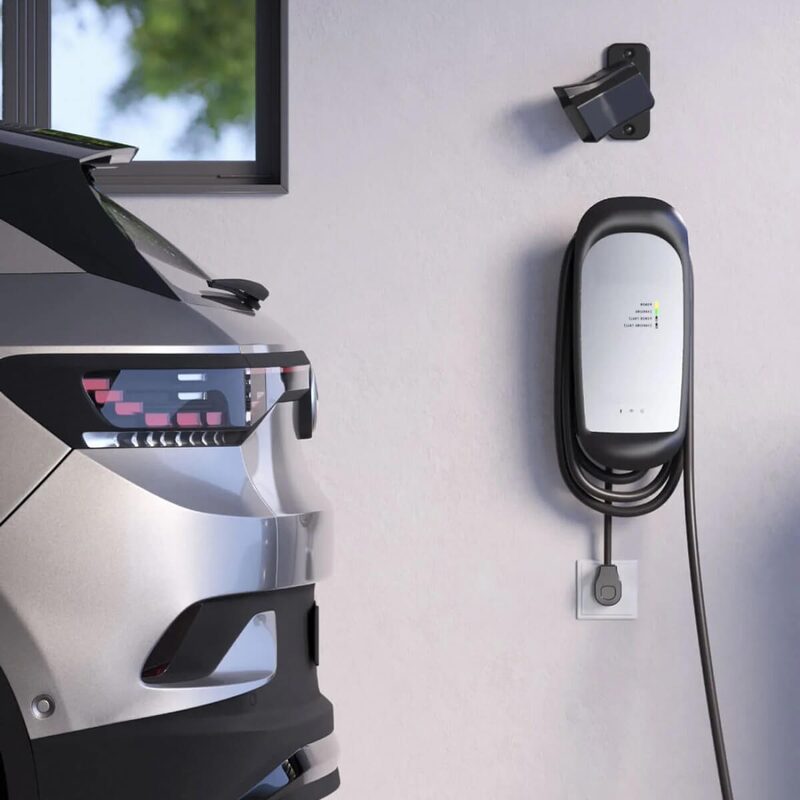
The GivEnergy EV charger: 7.2kW home charging
The GivEnergy EV charger is a 7.2kW unit. Independent guidance on home charging recommends a 7.4kW charger to get the most out of an installation and benefit from reasonable charging times11, so the GivEnergy unit sits in the standard single-phase home charging band. For a fuller explanation of how charger ratings translate into charging times, see EV charging speeds and times.
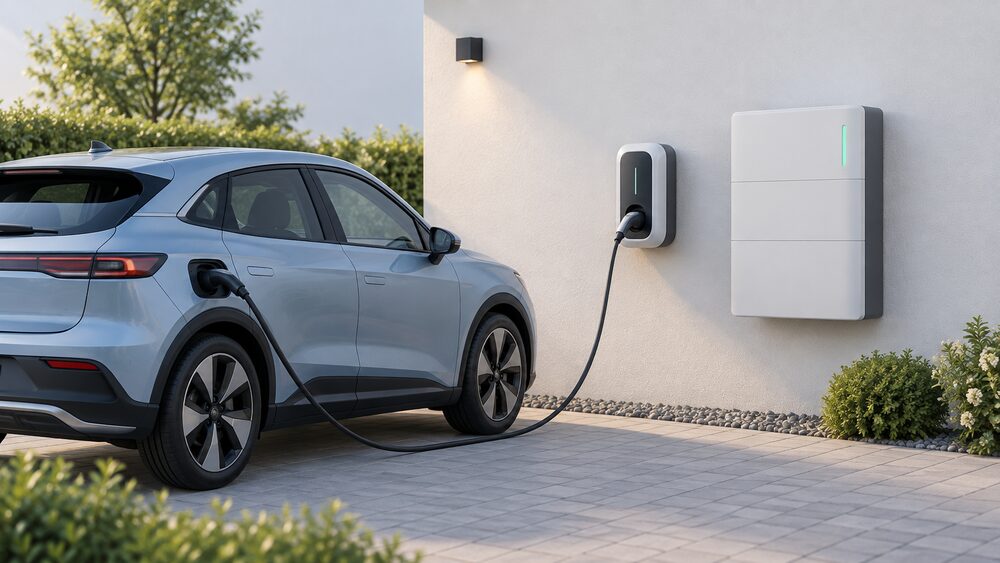
The charger is described as playing nicely with the grid, renewables and home storage batteries4. It can be installed at the same time as a GivEnergy battery storage system, afterwards as part of a continuing smart energy setup, or simply as a standalone product5.
GivEnergy's wider battery hardware gives a sense of the ecosystem the charger was designed to sit within. The battery has a rated capacity of 100Ah, a voltage range of 68 to 87V DC and a weight of 72kg, and the battery pack is 99% recyclable12. The AC Coupled Inverter carries a 12 year manufacturer warranty13. The High Voltage Stackable Battery range carries a 12 year unlimited-cycle warranty and a maximum charge/discharge current of 25A14.
| Specification | GivEnergy EV charger |
|---|---|
| Rated power | 7.2kW4 |
| Energy sources | Grid, renewables, home storage batteries4 |
| Installation options | With a battery system, after one, or standalone5 |
| Accessory warranty | 5 years standard5 |
| Installer requirement | Any electrician, per maker guidance10 |
Charging from the grid, renewables or your home battery
The integration between charger and battery is the reason a household would choose this unit over a generic wallbox. GivEnergy batteries store renewable energy and reduce reliance on the grid4, and the home battery storage system is described as scalable, so extra batteries can be added as energy needs grow, and compatible with existing solar or able to operate independently8.
A GivEnergy battery system can be charged from the grid at off-peak times, which the maker states can lead to substantial savings8. The system automatically pulls from the grid if charge drops below 4%5. The batteries can automatically charge and discharge based on the times that save money6.
The distinction that matters here is between a charger that is aware of where its electricity comes from and one that is not. Standard EV chargers draw electricity from the home supply without distinguishing between solar-generated power and grid electricity15. A charger integrated with a battery and solar system can, in principle, draw on stored generation rather than importing. For more on this, see EV charging alongside a home battery and charging an EV from solar panels.
Bidirectional charging is a related but separate capability. It lets an EV either draw or supply power to your home or the grid16, and allows EVs to power your home or export energy to the grid, providing backup power during outages17. Vehicle-to-grid technology allows an EV charger to not only charge a vehicle but also take energy from the vehicle18, and V2G allows electric vehicles to send electricity back to the grid when needed, generating cash for the owner19. The GivEnergy charger is not described in the available material as bidirectional.
The independence this offers is partial. A battery and charger combination reduces reliance on grid imports at peak times, but the household remains connected to the grid, to a supplier, and to the manufacturer's software for scheduling and monitoring.
Installation: who can fit it and when it goes in
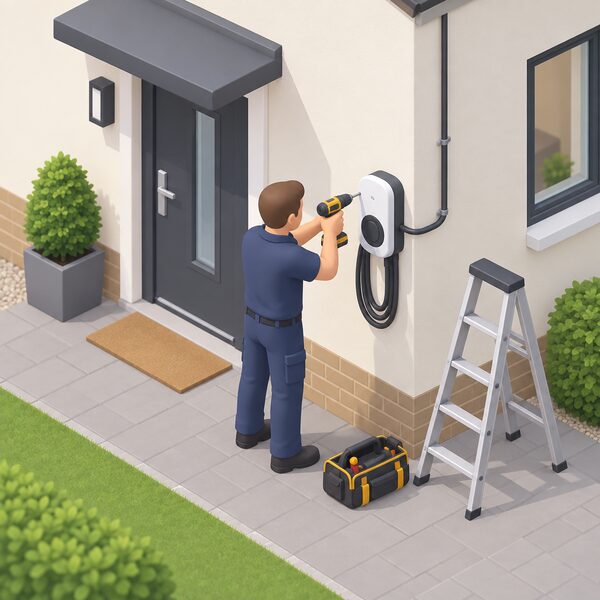
GivEnergy's own guidance is unusually permissive. The maker states that any electrician can fit a GivEnergy EV charger whether or not they have done approved installer training, as it is a plug-and-play accessory set up through the customer app10. That is the maker's position, and it applies to the charger specifically.
Independent and official guidance points the other way. EV chargers should be installed by a registered electrician with experience in this type of installation20. EV chargers should be installed by a qualified electrician with relevant experience, with compatibility between the charger, solar system and any battery storage considered from the outset15. Installation should always be done by a qualified and certified electrician21, and householders are advised to hire an electrician registered with a recognised certification body, such as NICEIC22. Official guidance recommends using a reputable company and ensuring the installer has the relevant qualifications23.
Building regulations approval is always required when installing an EV home charger, and a competent and reputable installer should be used, with specific processes for notifying the local building control authority24. Installing a home charger is classified as development, and it is up to the householder to ensure the correct permissions are in place25. For the full process, see home EV charge point installation and planning permission for a home EV charge point.
The installer's responsibilities under the IET Code of Practice include assessing the adequacy of supply capacity for the new EV load plus existing demand, assessing the adequacy of earthing, and notifying the electricity Distribution Network Operator once the charge point has been installed26. To install EV chargers, competence in the IET Code of Practice for Electric Vehicle Charging is required27.
In Northern Ireland, anyone competent to install an EV charge point or heat pump can submit the relevant form, including an installer working on behalf of the customer28. The same applies across the networks covered by Energy Networks Association guidance29.
GivEnergy's approved installer scheme required completing free GivEnergy product training and providing proof of electrical certifications and business details10. Approved installers offer consultancy, quality installation, aftercare, maintenance and support, and have undergone detailed battery installation training direct from the manufacturer6. With the company in administration, that scheme's future is uncertain.
Warranty: 12-year product terms and what administration changes
The warranty structure has two layers. GivEnergy accessories, including the EV charger, voltage optimiser and PV protect, come with a 5 year standard warranty5. GivEnergy products more broadly carry product warranties spanning 12 years6, and battery storage systems carry 12 years as standard when fitted by a GivEnergy approved installer10.
The 12 year term is conditional. Non-compliance results in a default to a 12-month warranty instead of the full 12 years offered as standard, and call outs become chargeable10. The single-phase battery warranty requires installation and commissioning by an SAA approved installer and a GivEnergy certified technician7. The inverter warranty is transferrable to subsequent owners, subject to conditions including a written request by the original owner, proof of ownership, equipment remaining at the original installation premises, and agreement to the supplier's terms7.
"The warranty is transferrable to subsequent owners under the following conditions:"
Other conditions bite. The inverter warranty requires internet connectivity for a minimum of 90% of the time since initial installation, and a continuous outage that must last no longer than 14 days8. Maintenance works conducted or arranged by the buyer, such as cleaning the battery pack, are excluded7. Installation, use and maintenance must comply with all applicable laws, regulations, safety standards and product and installation manuals, and failure may void the warranty7. Claims should be made within 1 month of a problem being detected and confirmed7. The remedy is limited to replacement or repair using either new or refurbished goods at the supplier's sole discretion7.
The inverter warranty also states that the inverter is not intended to provide primary energy supply to support medical or any other life support equipment8. For wider context on charger warranties, see EV charge point warranties and aftercare.
GivEnergy Commercial Limited and the wider group: who is still trading
The administration does not cover every entity bearing the GivEnergy name. GivEnergy Commercial Limited continues to trade and is currently unaffected3. GivEnergy Group Ltd, company number 14404895, is not in administration, and other subsidiary companies are currently trading3. Givenergy Australia PTY Ltd is not covered by the administration of GivEnergy Ltd2.
GivEnergy Software Ltd is not in administration1, and GivEnergy's app and portal are managed by that company3. The online systems are not currently expected to be affected by the administration proceedings of GivEnergy Ltd3.
GivEnergy Commercial's All-in-One product is available in 30kW and 50kW variants with 69kWh storage capacity, aimed at applications from SMEs to large industrial sites12. That is commercial-scale storage, not domestic charging equipment.
| Entity | Status |
|---|---|
| GivEnergy Ltd (11571089) | In administration, ceased trading2 |
| GivEnergy Commercial Limited | Continues to trade, unaffected3 |
| GivEnergy Group Ltd (14404895) | Not in administration3 |
| GivEnergy Software Ltd | Not in administration, manages app and portal1 |
| Givenergy Australia PTY Ltd | Not covered by the administration2 |
The distinction matters for owners because the software that controls a GivEnergy system sits in a surviving entity, while the hardware warranty sits with a failed one. A household's monitoring and scheduling may continue; its route to a replacement part or a warranty repair does not have a clear owner.
Owning a GivEnergy charger now: support, spares and independence
For existing owners, the practical position is that the system should continue to work. Independent guidance states plainly that whether to replace a GivEnergy system is an individual choice, and the system should continue to work3. The app gives real-time visibility of battery, solar and grid usage, and tools to control charging, discharging and tariffs9. Troubleshooting guidance covers batteries not charging or discharging9.
Support is the weak point. GivEnergy Ltd closed its support lines3, and support lines are closed1. The published support email address and the warranty contact email address may no longer be monitored. The company previously operated around 30 in-house call centre employees6, and maintained a network of trusted installers with expert training and dedicated support7, but that structure belonged to the trading company.
Spares are the second weak point. There are serious doubts about the provision of spare parts2. For a charger, the parts most likely to need replacement over time are the unit itself, the cable and the internal components. None of those has a confirmed supply route through the manufacturer now.
The independence picture is therefore mixed. A GivEnergy charger paired with a GivEnergy battery reduces reliance on grid imports and allows charging from stored solar or off-peak electricity, which is a genuine gain in energy independence. But it adds a dependence on a manufacturer's app and cloud service, and now on a failed company for hardware support. The grid connection, the electricity supplier and the software platform all remain outside the household's control. For alternatives that change the fuel or the charging source, see EV charging and household energy independence and vehicle-to-grid and vehicle-to-home charging.
Sources29 cited
- Solar panel battery storage, Which?, 14 May 2026
- GivEnergy file administration, Energy Storage Association UK, 15 April 2026
- GivEnergy FAQs, Energy Storage Association UK, 17 April 2026
- GivEnergy products, GivEnergy, 17 September 2026
- UK Welcome Pack, GivEnergy, 17 September 2026
- Installer media pack, GivEnergy, 17 September 2026
- Single-phase battery warranty document, GivEnergy, 17 September 2026
- 3-phase inverter warranty document, GivEnergy, 17 September 2026
- GivEnergy support, GivEnergy, 16 February 2026
- GivEnergy news feed, GivEnergy, 12 February 2026
- Should I buy an electric car, Which?, 16 April 2026
- SME battery cabinet datasheet, GivEnergy, April 2023
- AC coupled inverter datasheet, GivEnergy, February 2024
- High voltage stackable batteries, GivEnergy, 17 September 2026
- Can solar panels charge electric cars, CPA, 15 April 2026
- Battery storage, Energy Saving Trust, 19 August 2026
- Integrating solar panels with EV charging, Uswitch, 2 July 2025
- Vehicle-to-grid best practice guide, Energy Saving Trust, 5 May 2026
- LCT strategy, Energy Networks Association, 17 September 2026
- EV charger regulations in England, NICEIC, 19 August 2026
- EV charging, Uswitch, 19 September 2026
- Electric vehicle charger installation and maintenance, NICEIC, August 2025
- Building regulations for EV charging, Planning Portal, 17 September 2026
- Electric vehicle charging, Planning Portal, 2026
- Planning permission for EV charging, Planning Portal, 2026
- Single EV connection, Electricity North West, 20 September 2026
- Section 722 EV charging guide, Elec-Mate, 2 July 2026
- EVs and heat pumps FAQs, NIE Networks, 19 September 2026
- Connecting to the networks FAQs, Energy Networks Association, 17 September 2026
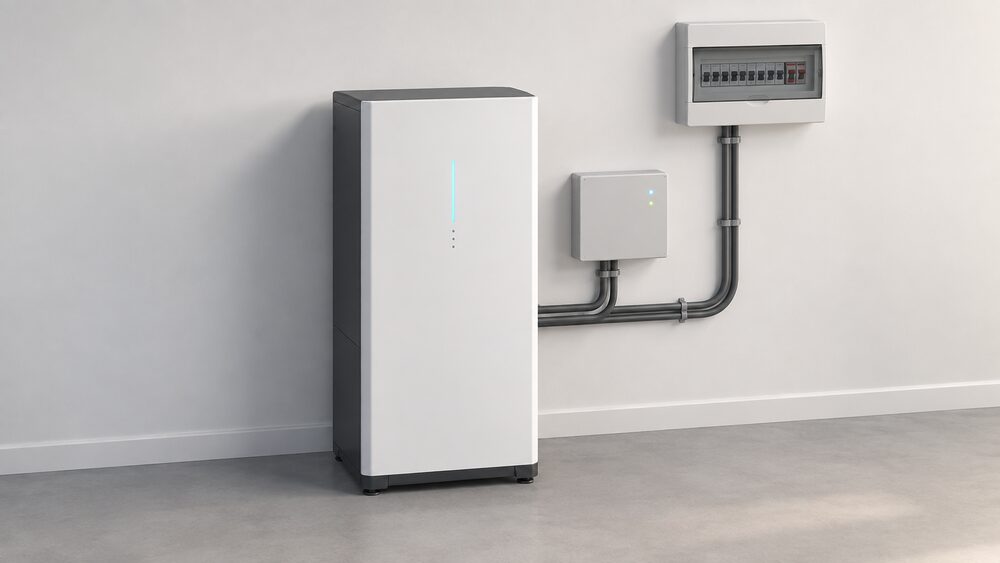 GivEnergy All in OneCan the GivEnergy All in One really keep your lights on in a power cut, and how much can it store?
 GivEnergy Batteries and All-in-One Systems for the HomeGivEnergy made some of the best known home batteries in the UK, and then the company went into administration in April 2026.
 GivEnergy home batteries and invertersIf you own a GivEnergy battery, or are being quoted for one, the company behind it went into administration in April 2026.