
In this guide
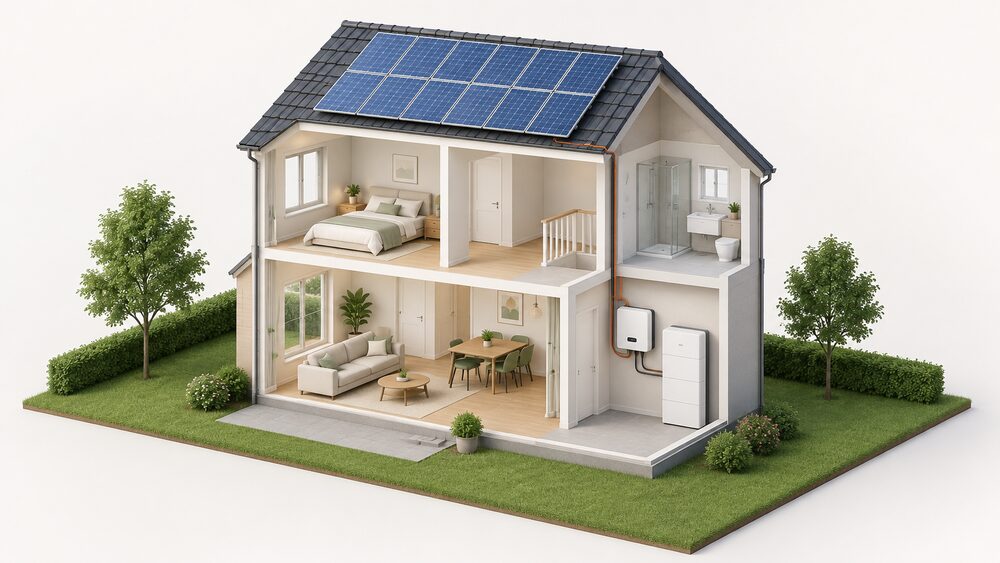
Huawei's solar business in the UK is built on two product families: the SUN2000 string inverter range and the LUNA2000 battery. The SUN2000-5KTL and 6KTL-M0 are the residential models most often documented for this market, and the LUNA2000-21-S1 pairs a single-phase off-grid inverter with a 20.7 kWh LFP battery in an all-in-one system1. Larger three-phase and commercial units sit above them, up to the SUN2000-330KTL-H1 certified for grid-code compliance in 2023.
The context for any household considering one is scale. UK homes had 6.6GW of solar power installed as of May 2026, and three million households planned to add panels within five years, with two fifths citing energy price volatility as the reason2. Solar Energy UK projects 90 GW of installed capacity by 20353. A Huawei system sits inside that growth, but it also carries specific questions about documentation, certification and what happens when monitoring runs through a manufacturer's servers.
This page sets out which models UK households actually encounter, what Huawei publishes for them and when, how conformity is evidenced, how the LUNA2000 pairs with an inverter, and what the arrangement means for a household's energy independence.
The SUN2000 range: which models UK households see
The SUN2000 name covers a wide span of inverters rather than a single product. At the residential end sit the SUN2000-5KTL and 6KTL-M0, the models Huawei documents for domestic installations and the ones most commonly quoted to UK householders. Above them the range extends into three-phase and commercial units, including the SUN2000-330KTL-H1 and the SUN2000-50K-MC0, which are not domestic products but appear in the same documentation set and are sometimes confused with the home range.
For a household, the practical distinction is single-phase against three-phase. Most UK homes are single-phase, which is why the 5KTL and 6KTL models dominate domestic quotations. Three-phase units suit larger properties and light commercial premises, and the network connection standard that applies changes with size: Engineering Recommendation G98 Issue 2 Amendment 1 governs connection and parallel operation with low-voltage distribution networks in Great Britain, while larger connections fall under G994.
The range is also sold into a market where the surrounding hardware is standardised. The IET Code of Practice for Grid-connected Solar Photovoltaic Systems sets out the requirements for the design, specification, installation, commissioning, operation and maintenance of grid-connected solar PV systems installed in the UK, and NAPIT publishes a practical guide covering expected performance, self-consumption and grid independence, array mounting, cable type, connections, inspection and testing7. Those documents, not the inverter badge, determine how a Huawei unit is installed and tested.
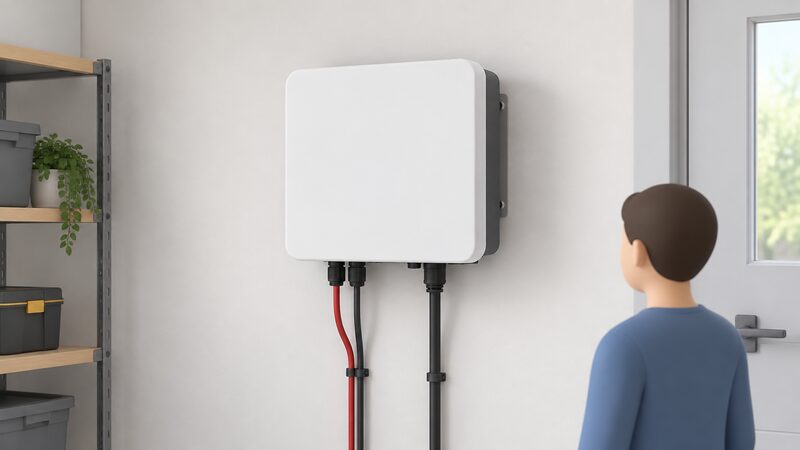
Residential inverters: the SUN2000-5KTL and 6KTL-M0
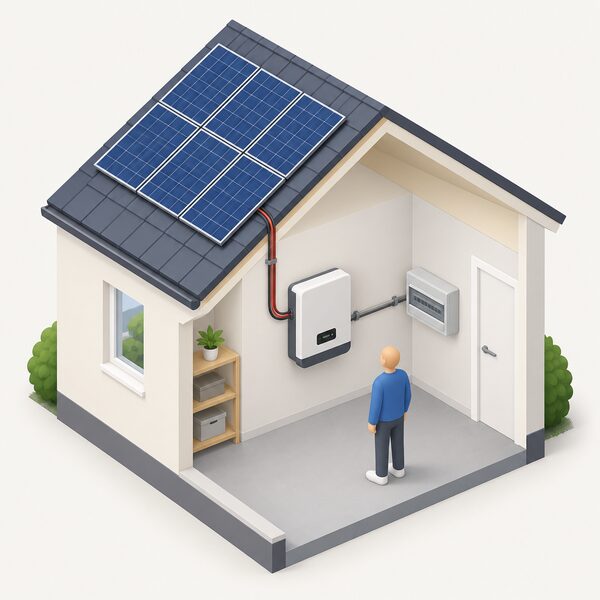
The 5KTL and 6KTL-M0 are the two residential models with the clearest published documentation trail. Huawei issued Issue 03 of the SUN2000-(5KTL, 6KTL)-M0 User Manual on 19 July 2019, adding commissioning, AFCI check and Italy CEI0-21 IPS test sections among other updates. That revision history matters to an owner because the manual that applies is the one matching both the model code and the highest issue number published for it.
A 5kW inverter sits in the band that suits a typical domestic array, and the 6KTL gives headroom for a larger roof. Suitability is not settled by the inverter alone: array size, roof orientation, shading and any export limitation imposed by the network operator all shape the choice. On the storage side, a standard 5kWh solar battery is estimated at £2,500 to £3,400 from installers9. That figure is an estimate from installer quotes rather than a published list price, and it covers the battery rather than the inverter.
The wider economics are visible in independent data. During a heatwave week, a high-usage household with ten panels and 4,100kWh annual consumption recorded £24.47 of import cost, £5.37 of export earnings and a £29.84 total6. Those are one household's figures for one week, not a forecast, but they show the shape of the arrangement: generation offsets import, and surplus earns a smaller amount on export.
Documentation and manuals: what is published and when
Huawei publishes model-specific user manuals, and the publication dates are the practical guide to which document applies. Issue 03 of the SUN2000-(5KTL, 6KTL)-M0 manual dates from 19 July 2019. Issue 01 of the SUN2000-50K-MC0 manual dates from 30 August 2025, and the document identifies itself as Issue 01 dated 2025-08-30. A householder holding a manual should match the model code on the cover first, then take the highest issue number available for that code.
Official statistics follow their own timetable. The solar photovoltaics deployment statistics include data for the UK for the period up to the end of June 2026, and the December 2026 release is confirmed for 28 January 2027 at 9:30am10. Those releases are the authoritative record of how much solar is installed nationally, and they are separate from anything a manufacturer publishes about its own products.
For equipment supplied under the plug-in solar framework, documentation requirements are explicit. Instructions and references must be provided in English, and the information must comply with the Waste Electrical and Electronic Equipment Regulations for decommissioning and disposal4. The Plug-in Solar Device Interim Product Specification is published by the Secretary of State, and the version is given as version 2 in the legislation and as Version 2.0 in the guidance, a discrepancy the documents do not resolve11. Where the two figures differ, both are stated here rather than one being chosen.
Certification and conformity: EU declarations and compliance certificates
Conformity for a Huawei inverter is evidenced by certificates tied to specific model codes and dates, not by a brand-level statement. Huawei issued an EU declaration of conformity for SUN2000 KTL inverter models on 2 July 2020, recording the CE marking date as 2020-07-02. Bureau Veritas issued certificate U20-0821 for the specified Huawei SUN2000-L1 models on 21 October 2020. For the commercial end of the range, DNV and Huawei held a handover ceremony on 16 June 2023 for the VDE-AR-N 4110/4120 and PTPiREE/PSE certificate for the HUAWEI SUN2000 330KTL-H1.
For grid connection in Great Britain, the network operator's requirements are the ones that bite. A G98 notification requires an approved inverter type test certificate and a G100 declaration5. That is why the certificate for the exact model matters more than the brand: a certificate issued for one model code does not transfer to another.
"Approved Inverter Type Test Certificate(s) and G100 declaration"
Certification schemes in the wider solar market work on the same principle of product-specific evidence. Solar Keymark certifies that a product conforms to the relevant European standards and fulfils additional requirements, and every certified product is in full conformity with the relevant European standards13. Solar collectors according to EN 12975-1 and custom built thermal systems according to EN 12977-1 can currently be granted the mark14. Those schemes cover solar thermal products rather than inverters, but the structure is the same: a named product, a named standard, a named certificate.
LUNA2000 batteries: pairing storage with a Huawei inverter
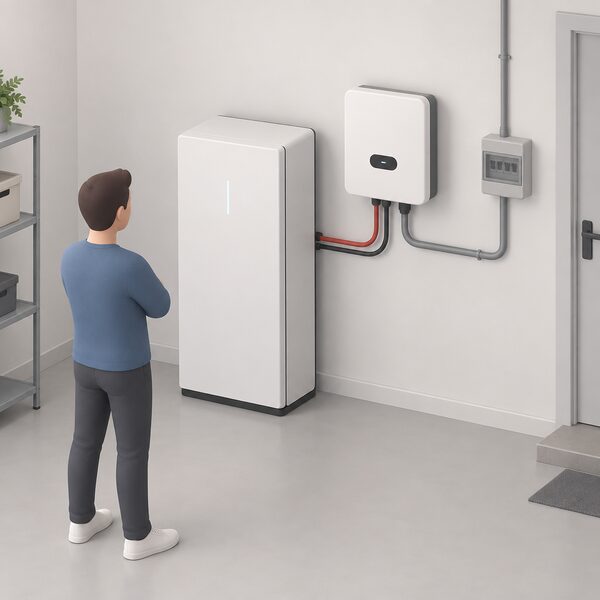
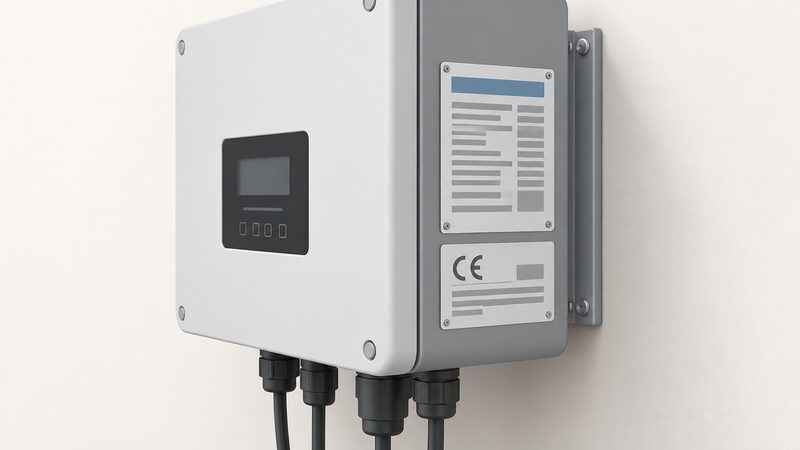
The LUNA2000-21-S1 is described as a single-phase off-grid inverter all-in-one system with a 20.7 kWh LFP battery, and its battery voltage class is high voltage (HV)1. The all-in-one description is significant: this is a packaged system rather than a battery module added to a separate inverter, which changes both the installation and the way the components are warranted.
An inverter does not need a battery to function. A solar inverter converts direct current from the panels into alternating current for the home, and surplus can be exported with no storage attached. Adding a battery changes what happens to generation rather than whether the system works. Independent data puts the self-consumption rate at 70% for households with solar and a 10kWh battery6. That figure is the practical case for storage: without it, generation outside the household's own demand periods leaves the property.
Storage also interacts with other generation. Where a household has battery storage, excess electricity from wind turbines and solar panels can be stored for later use15. A case study of two properties fitted with a 5.81kW solar PV system, a 6kWh battery, a smart hot water cylinder and infrared heating shows the same principle applied across heating and hot water rather than electricity alone16.
The dependence to note is that a Huawei battery pairs with Huawei's own system architecture. The LUNA2000-21-S1 is documented as an all-in-one unit, so the pairing is not a matter of choosing any battery for any inverter.
Larger models: the SUN2000-330KTL-H1 and 50K-MC0
The commercial end of the SUN2000 range is documented separately from the residential models and is not intended for domestic installation. The SUN2000-330KTL-H1 received its VDE-AR-N 4110/4120 and PTPiREE/PSE certificate at a DNV and Huawei handover ceremony on 16 June 2023. The SUN2000-50K-MC0 has a user manual issued on 30 August 2025, identified as Issue 01 dated 2025-08-30.
These models appear in household searches mainly because the SUN2000 name is shared across the range. A householder comparing quotations should check the model code on the quote against the residential models, because a commercial unit carries different certification, different connection requirements and a different installer skill set.
The wider inverter market shows how model ranges are structured by application. One maker's UK range covers single-phase systems from 3.6kW to 8kW for residential use, three-phase systems from 8kW to 12kW for larger homes and light commercial premises, and high-voltage commercial inverters from 20kW to 50kW17. That is a different manufacturer's range, given here to show the shape of the market rather than to compare products. Huawei's own range follows the same logic of splitting residential, three-phase and commercial units.
What owning a Huawei system means for household energy independence
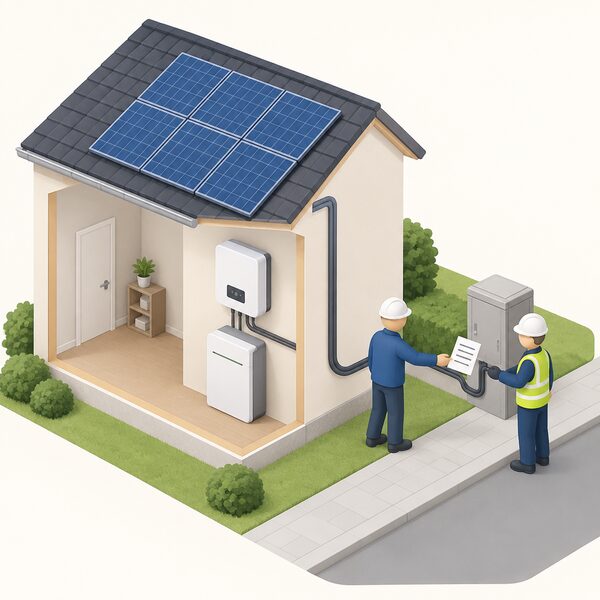
A Huawei inverter and battery reduce a household's dependence on imported electricity and increase the share of generation used on site. The independent figure for self-consumption with a 10kWh battery is 70%6. Solar Energy UK projects 90 GW of installed UK capacity by 2035, which describes a national trend rather than any one household's position3. The Energy and Climate Intelligence Unit's assessment is that insulating homes and running electric heat pumps and cars on an ev supply would boost energy independence18.
What remains is a set of dependencies that do not disappear with the hardware. The system stays connected to the grid for export, for import when generation is short, and for the network operator's registration requirements. Registration is a legal step: a solar installation must be registered with the local distribution network operator, usually by the installer, and London households register with UK Power Networks19. Plug-in solar devices are registered through the UK plug-in solar website, and registration requires the householder's name, postcode and the make and model of the device20.
Monitoring adds a further dependence. FusionSolar is Huawei's platform for its inverters and batteries, reached through a web portal or app using the account created at commissioning. That means a working internet connection at the property and Huawei continuing to operate the service. Registering the product with the manufacturer is also what activates any warranty and allows the maker to contact the owner about a problem or safety recall21.
For a household weighing independence, the position is that a Huawei system shifts the balance of where electricity comes from and when it is used, while leaving the property connected to the grid, dependent on a network operator's registration process, and dependent on a manufacturer's monitoring platform for remote visibility. The solar inverter manufacturers guide sets out how the wider market is structured, and home battery manufacturers covers storage options across brands.
Sources21 cited
- Huawei LUNA2000-21-S1, Energidea, 2026-09-17
- Three million households plan to get solar panels, Uswitch, 2026-05
- Solar's role in addressing the energy crisis, Solar Energy UK, 2025-04
- Plug-in solar interim product specification (withdrawn), Department for Energy Security and Net Zero, 2026-06
- G99 fast track process, Electricity North West, 2026-09-19
- Britain's homes with solar panels reap £40 million during the heatwave, Uswitch, 2026-06-28
- Code of Practice for Grid-connected Solar Photovoltaic Systems, 2nd Edition, NAPIT, 2026-09-17
- Practical Guide: Solar Photovoltaic Systems and Battery Storage, NAPIT, 2026-09-17
- Are solar panels worth it?, Uswitch, 2026-09-16
- Solar PV deployment: December 2026, Department for Energy Security and Net Zero, 2026-01-06
- The Plug-in Solar Device Interim Product Specification Regulations 2026, legislation.gov.uk, 2026-07-16
- The Plug-in Solar Device Interim Product Specification Regulations 2026, regulation 2, legislation.gov.uk, 2026
- Don't die for DIY, Electrical Safety First, 2026-09-19
- Plug-in solar, Electricity North West, 2026-09-20
- Plug-in solar explained, Low Carbon Hub, 2026-07-09
- Evaluating solar PV with electric heating with North Devon homes, National Energy Action, 2025-07-30
- Sunsynk inverter range, Sunsynk, 2026-09-17
- Household energy buying British, Energy and Climate Intelligence Unit, 2024-04-15
- Solar panels, London Borough of Hammersmith and Fulham, 2026-09-17
- Plug-in solar panels, Energy Saving Trust, 2026-09-17
- Plug-in solar consumer guide, Electrical Safety First, 2026-08
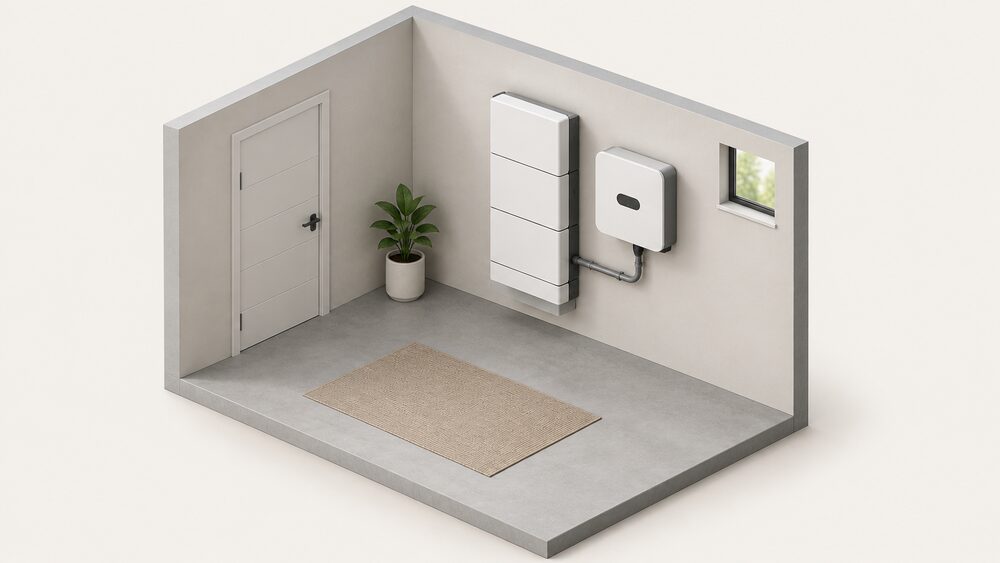 Huawei LUNA2000 Home Battery RangeThe Huawei LUNA2000 is a high-voltage LFP home battery range sold in 5 kWh and 7 kWh modules, expandable from 5 kWh to 21 kWh per system and compatible only with Huawei SUN2000 and SUN5000 inverters.
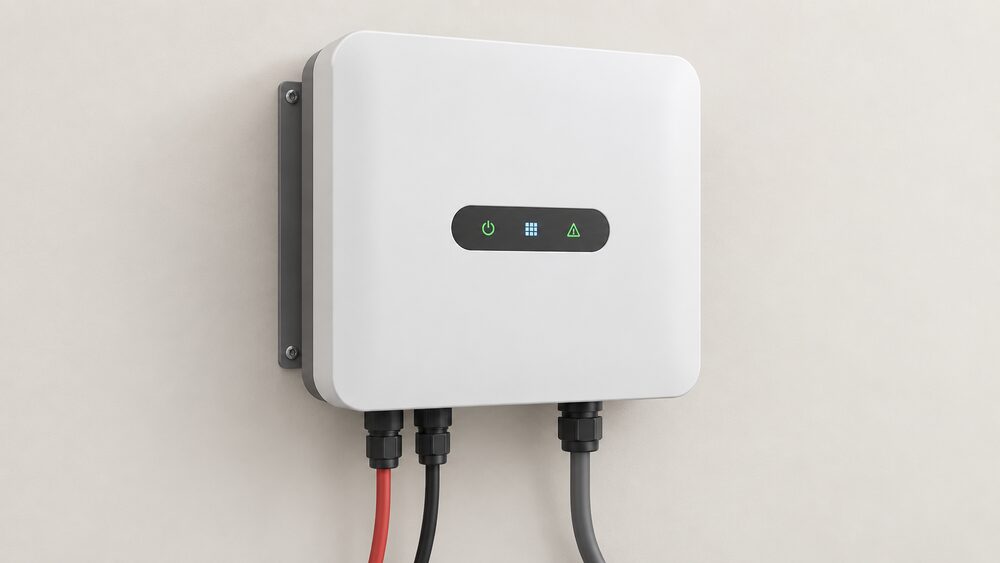 Huawei solar invertersHuawei makes a range of solar inverters for UK homes, but which models suit your roof, and how much power do you need?