
In this guide
A mark on a home energy product is a claim, and the marks are not interchangeable. Some are legal requirements, some are voluntary quality labels, and some are manufacturer self-declarations with no independent testing behind them at all. Knowing which is which is the difference between buying a certified solar collector and buying a box with a logo on it.
The legal layer is UKCA and CE. From 1 January 2023, products placed on the UK market for sale, excluding Northern Ireland, must meet the UKCA regime, and the CE mark ceased to be recognised within the UK from that date1. There is a live exception for Energy Related Products: those carrying the CE Mark can currently be sold in Great Britain if they comply with GB ecodesign standards, without also affixing a UK Conformity Assessment marking2. The Ecodesign for Energy-Related Products Regulations 2010 were amended so that references to CE marking were replaced with UK marking in the heading of Part 2 and in regulations 3, 4, 7 and 8, covering England, Wales and Scotland3.
The voluntary layer is where most of the reassurance sits for renewables and solar thermal. Solar Keymark is a voluntary third-party certification mark for solar thermal products, owned by CEN/CENELEC and managed by the Solar Keymark Network4. MCS certifies, quality assures and provides consumer protection for microgeneration installations and installers, covering solar photovoltaic panels, biomass, wind, heat pumps and heat products5. The Kitemark is a British or European approval mark, cited in official guidance as the kind of mark a carbon monoxide alarm should carry alongside compliance with British Standard EN 502916.
What the marks on a home energy product actually mean
There are three distinct things a mark can tell a householder, and they are routinely confused. The first is legal conformity: the product may lawfully be placed on the market. The second is independent certification: a third party has tested the product against a named standard and inspects the factory that makes it. The third is scheme eligibility: a grant or subsidy body will accept the installation.
Only the first is mandatory. UKCA marking is the GB conformity route, and the mandate for heating products sold on the GB market to display the UKCA mark sits within government's own assessment of minimum energy performance standards for heat pumps7. The Ecodesign regulations were amended to substitute UK for CE in the relevant provisions3. That is a market-access rule, not a quality judgement.
The second category is voluntary and is where the substance lies. Solar Keymark fulfils additional requirements to assure constant quality, ensures the certified product will provide a good performance, and ensures resistance and durability4. It also provides market surveillance authorities with reliable technical information4. That last point matters: a voluntary mark that feeds a regulator's information is doing more work than a self-declared one.
The third category is administrative. MCS certification is a requirement for heat pump installations made under the Domestic Renewable Heat Incentive, the Green Homes Grant and the Clean Heat Grant5. Installers under UK Government schemes must be TrustMark registered and/or Microgeneration Certification Scheme certified5. A product can be perfectly legal and well made and still fail a grant condition if the installer or the product is not on the right scheme list.
For a household's energy independence, the practical consequence is that the mark determines what can be installed, what can be funded, and what recourse exists if the product underperforms. It does not determine whether the installation suits the building. That remains a design question, and it is the one most often skipped.
UKCA marking: the GB requirement and when CE stops being enough
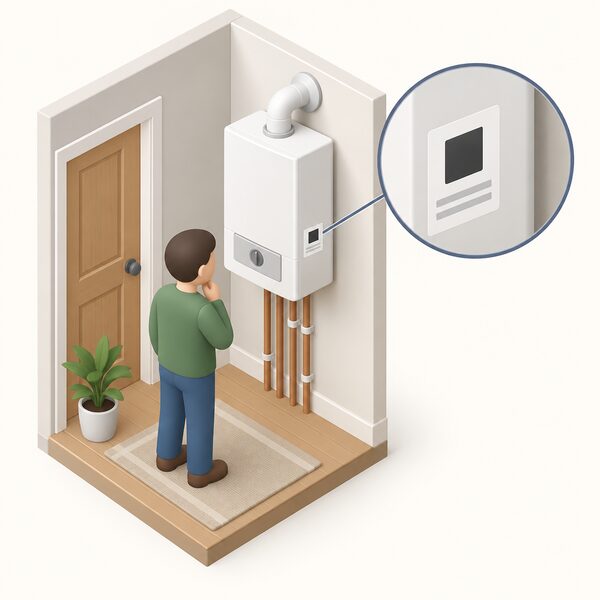
The UKCA regime applies to products placed on the UK market for sale, excluding Northern Ireland, from 1 January 20231. The CE mark ceased to be recognised within the UK from that date, and manufacturers and retailers were required to move to the UK regime1. That is the default position and it is the one most householders will encounter on heating equipment, controls and electrical goods.
The transition is conditional, and the condition is worth stating precisely. The transition period is only valid in circumstances whereby the CE and UKCA rules remain the same1. Where the two regimes diverge, the transitional arrangement does not hold. That is a live risk rather than a settled fact, and it means a CE mark on a product bought in Great Britain is not a permanent guarantee of market access.
There is a specific and current exception for energy-related products. Energy Related Products which have the CE Mark can currently be sold in Great Britain if they are compliant with GB's ecodesign standards, without the need to also affix a UK Conformity Assessment marking2. This is the route by which a great deal of heating and ventilation equipment reaches the GB market, and it is why CE marks remain visible on products sold in Britain after the 2023 date.
Not everything changed. Building Regulations, Ecodesign and local emission requirements in smoke control areas covered by the Clean Air Act are unaffected by the marking changes and still apply as they do now within the UK1. A stove or a boiler still has to meet the emissions and efficiency rules regardless of which conformity mark it carries.
CE marking: what it does and does not tell you
CE marking is a self-declaration. The Construction Products Regulation is an EU regulation requiring the appropriate testing and subsequent affixing of the recognised CE mark, a self-declaration by the manufacturer that the product meets the standards of the regulation1. The words "self-declaration" carry the weight here. The manufacturer asserts conformity; the mark itself is not evidence that a third party checked.
The limitation is stated plainly in Northern Ireland building control guidance:
"the CE symbol by itself does not necessarily indicate that the material is suitable for the building work"
That is the single most useful sentence for a householder reading a datasheet. A CE mark answers a market-access question. It does not answer whether this unit, at this size, on this roof, with this cylinder, will work.
What sits behind the mark is a technical file held by the manufacturer. For construction products, there is a slight amendment to the issue of any Declaration of Performance, which will now need to make reference against the new UKCA legislation document, superseding the EU regulation1. The declaration is a document the maker produces and holds, not one supplied in the box.
There is also a statutory backstop against marks being applied without the paperwork. Under the Lithium-ion Battery Safety Bill, a person must not display a CE or a UKCA mark on any product covered by the Act unless a certificate of conformity has been issued for the product10. That is a legislative statement of the principle that a mark without a certificate behind it is not a mark at all.
For energy independence, the CE mark tells a household that a product may be sold. It says nothing about performance in a British climate, about compatibility with an existing system, or about whether the maker will still exist to honour a warranty. Those are separate questions, and they are answered by different marks and different documents.
Mandatory versus voluntary marks: heat pumps, solar thermal and microgeneration

The split between mandatory and voluntary marks maps fairly cleanly onto product type. Heating products sold on the GB market are subject to the UKCA mandate7. Solar thermal products are covered by a voluntary mark, Solar Keymark, which is a voluntary third-party certification mark for solar thermal products4. Microgeneration installations are covered by MCS, which certifies, quality assures and provides consumer protection for microgeneration installations and installers, including solar photovoltaic panels, biomass, wind, heat pumps and heat products5.
The distinction between a product mark and an installer scheme is the one that catches people out. MCS certifies installations and installers as well as products5. The SEG and the government's previous Feed-in Tariff and Renewable Heat Incentive schemes all require the renewable energy product and installer to be certified and to meet MCS standards5. So a compliant product installed by an uncertified installer can fail the scheme condition even though the hardware is fine.
Domestic batteries illustrate how the layers stack. The Warm Homes Social Housing Fund guidance refers to domestic batteries on the UK market with UKCA/CE marking, which is required in the MCS Battery Installation Standard11. Here a legal conformity mark is written into a scheme standard, so the two layers are joined: the battery must carry the mark, and the installation must meet the standard.
| Product type | Legal conformity mark | Voluntary or scheme mark | Who runs it |
|---|---|---|---|
| Heating products on the GB market | UKCA mark mandated7 | MCS for the installation5 | Government; MCS |
| Solar thermal collectors and systems | UKCA or CE route | Solar Keymark4 | CEN/CENELEC |
| Solar PV, biomass, wind, heat pumps | UKCA or CE route | MCS5 | MCS |
| Domestic batteries | UKCA/CE required by the MCS Battery Installation Standard11 | MCS11 | MCS |
| CO alarms | British Standard EN 50291 compliance6 | Kitemark or equivalent approval mark6 | BSI or European body |
The practical reading is that a household buying a heat pump is dealing with a mandatory product mark, a scheme certification for the installer, and possibly a grant condition on top. A household buying a solar thermal panel is dealing with a voluntary product mark that carries real testing weight, plus an installer scheme if a grant is involved.
Solar Keymark: the main quality label for solar thermal
Solar Keymark is the reference quality label for solar thermal in Europe. It is a voluntary third-party certification mark for solar thermal products4. It is owned by CEN/CENELEC, the European standardisation bodies, and managed by a European group of experts, the Solar Keymark Network4. It is a well-proven 18-year trustful quality mark, and it is the basis for most European supporting schemes4.
What the mark adds over a bare conformity declaration is continuing surveillance rather than a one-off test. This level of quality is maintained by initial type testing and by regular controlled inspection of the products and their production sites by independent inspectors4. That is the mechanism that separates a genuine certification scheme from a self-declared mark: the factory is visited, repeatedly, by someone other than the manufacturer.
The scheme's stated purposes are specific:
- It fulfils additional requirements to assure constant quality4.
- It ensures that the certified product will provide a good performance4.
- It ensures that the certified product will provide resistance and durability4.
- It provides market surveillance authorities with reliable technical information4.
- It filters out many lower-quality products available on the market4.
Its reach extends beyond Europe. It is a true European mark which facilitates trade and helps overcoming barriers within Europe, and it is also increasingly recognised worldwide4. For a household in the UK, that means a Keymark certificate is a document with international standing, which matters if a product is imported or if a manufacturer sources components across borders.
For energy independence, Solar Keymark is the closest thing solar thermal has to an independent performance guarantee. It does not make a system suitable for a particular roof or cylinder, and it does not replace MCS for grant purposes. What it does is establish that the collector or system was type tested and that the production site is inspected, which is the evidence base a household needs when a system underperforms and the maker's own figures are the only other data available.
Solar Keymark standards: EN 12976 and EN 12977 for collectors and systems
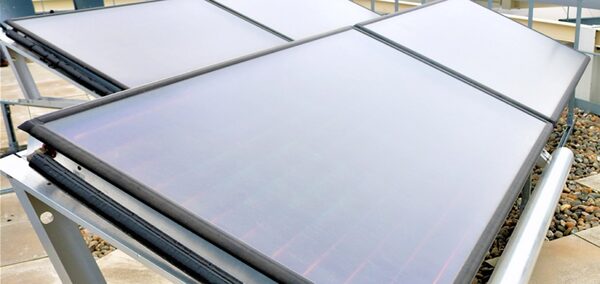
Solar Keymark certification is granted against named European standards, and which standard applies depends on what is being certified.
| What is certified | Standard | What it covers |
|---|---|---|
| Solar collectors | EN 12975-14 | A component, type tested on its own |
| Factory made solar thermal systems | EN 12976-14 | A matched package, tested as a whole |
| Custom built solar thermal systems (solar water heaters and combi systems) | EN 12977-14 | A bespoke design assessed against a standard method |
The three categories cover the three ways solar thermal reaches a building. A collector is a component, sold to be assembled into a system on site. A factory made system is a matched package, tested as a whole. A custom built system is designed for the individual dwelling, which is the category most self-build and retrofit projects fall into.
The distinction matters because testing a collector is not the same as testing a system. A collector certified under EN 12975-1 has been type tested as a component. A factory made system certified under EN 12976-1 has been assessed as a complete unit, which is a stronger statement about how the parts behave together. A custom built system under EN 12977-1 sits between the two, because the design is bespoke but the components and the method are standardised.
For a householder reading a certificate, the standard number is the first thing to check, because it tells you what was actually assessed. A certificate citing EN 12975-1 covers a collector, not an installed system. A certificate citing EN 12976-1 covers a package. A certificate citing EN 12977-1 covers a bespoke design assessed against a standard method.
BSI Kitemark: independent testing and what it adds
The Kitemark is a British or European approval mark, and official guidance treats it as the kind of mark a safety-critical product should carry. On carbon monoxide alarms, the advice is to always ensure it complies with British Standard EN 50291 and carries a British or European approval mark, such as a Kitemark, required before purchase6. That is a useful illustration of how a voluntary mark functions in practice: the standard sets the requirement, and the mark is the evidence that an independent body checked it.
The Kitemark is voluntary. It sits on top of any legal conformity requirement rather than replacing it, so a product can carry UKCA or CE marking and no Kitemark, and still be lawfully sold. What the Kitemark adds is third-party testing against a named standard, which is a different kind of assurance from a manufacturer's self-declaration.
The scope of what is tested depends entirely on the standard the product is certified against. That is why the certificate, not the logo, is the document that matters. A Kitemark on a carbon monoxide alarm certified against EN 50291 is a statement about that alarm's performance against that standard. The same logo on a different product certified against a different standard says something else.
For home energy products, the Kitemark's role is most visible where safety is at stake: alarms, electrical accessories, and components where failure has consequences beyond inconvenience. It is less commonly the mark that governs solar thermal or heat pump performance, where Solar Keymark and MCS do the work.
For a household's independence, the Kitemark is a signal about the reliability of a component rather than the performance of a system. It is worth checking, and it is not a substitute for checking the scheme certification that governs grant eligibility or the standard number that governs performance claims.
MCS certification and how it fits with the Kitemark
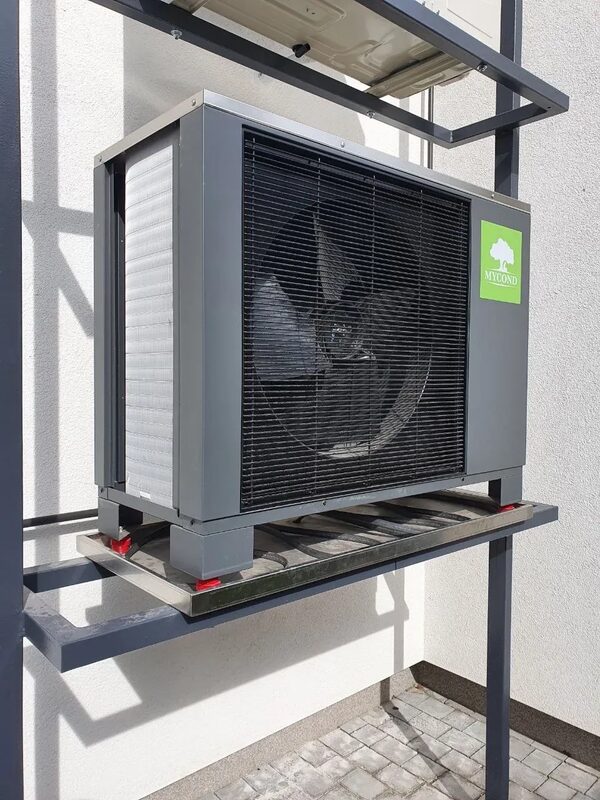
MCS and the Kitemark are often mentioned together and they do different jobs. MCS certifies, quality assures and provides consumer protection for microgeneration installations and installers, covering small-scale renewable electricity technologies such as solar photovoltaic panels, biomass, wind, heat pumps and heat products5. The Kitemark is a product approval mark against a named standard6. One is about the installation and the installer; the other is about the product.
MCS carries scheme weight that the Kitemark does not. MCS certification is a requirement for heat pump installations made under the Domestic Renewable Heat Incentive, the Green Homes Grant and the Clean Heat Grant5. The SEG and the government's previous Feed-in Tariff and Renewable Heat Incentive schemes all require the renewable energy product and installer to be certified and to meet MCS standards5. Installers under UK Government schemes must be TrustMark registered and/or Microgeneration Certification Scheme certified5.
That combination, product certification plus installer certification, is what a grant body is checking. A household applying for support is not simply buying hardware; it is entering a scheme whose rules require both halves to be in place. The MCS certificate is the document that evidences the installation half.
The two marks can coexist on the same project. A heat pump installation might involve a product carrying UKCA marking under the GB mandate7, an installer holding MCS certification5, and components such as carbon monoxide alarms carrying a Kitemark6. Each mark answers a different question, and none of them answers the design question of whether the system suits the dwelling.
For energy independence, MCS is the mark that determines whether an installation can be funded and whether there is a recognised route for consumer protection. The Kitemark determines whether a component was independently tested. Both are worth checking, and neither replaces a competent design.
How to check a mark is genuine: databases, documentation and misuse
Checking a mark means checking the document behind it, not the logo on the casing. The check follows a fixed order:
- Ask for the certificate that sits behind the mark.
- Check the standard number named on it, which states what was assessed4.
- Check the product named on it matches the unit being bought.
- Check the expiry date, because a lapsed certificate is not evidence of current certification4.
- For UKCA and CE, confirm the manufacturer holds the technical file and, for construction products, the Declaration of Performance referencing the new UKCA legislation document1.
There is a statutory prohibition on marks without certificates. Under the Lithium-ion Battery Safety Bill, a person must not display a CE or a UKCA mark on any product covered by the Act unless a certificate of conformity has been issued for the product10. That is the clearest statement in the material that a mark is a claim requiring a document, and it applies to a product category increasingly common in homes with solar and battery storage.
Misuse takes several forms. A mark may be applied to a product outside its certified scope. A certificate may have lapsed. A product may carry a mark that refers to a standard different from the one the buyer assumes. The remedy in each case is the same: ask for the certificate, check the standard number, check the product named on it, and check the expiry date.
For a household, the check is a five-minute task that determines whether a warranty claim, a grant application or an insurance position will hold up later. It is also the point at which a household's energy independence is most exposed, because an uncertified product installed by an uncertified installer leaves no scheme route for redress.
What the marks mean for grant and subsidy eligibility

Grant eligibility turns on certification, and the certification required depends on the scheme. MCS certification is a requirement for heat pump installations made under the Domestic Renewable Heat Incentive, the Green Homes Grant and the Clean Heat Grant5. Installers under UK Government schemes must be TrustMark registered and/or Microgeneration Certification Scheme certified5. The SEG and the previous Feed-in Tariff and Renewable Heat Incentive schemes all require the renewable energy product and installer to be certified and to meet MCS standards5.
The pattern is consistent: a scheme names a certification, and both the product and the installer must hold it. That is why a household cannot substitute a well-regarded product for a certified one, or a competent installer for a certified one, and still meet the condition.
The schemes themselves are aimed at particular outcomes. The Energy Company Obligation 4 is a Government scheme aimed at improving the least efficient homes in Great Britain through funding energy-saving measures12. Energy supplier schemes and grants fund making energy-saving improvements to your home13. Local authority schemes operate alongside: the Green Home Improvement Scheme in Cornwall is run by Lendology CIC on behalf of Cornwall Council14.
For energy independence, the marks are the gate. A household that installs a certified product through a certified installer has access to grant funding, to scheme-backed consumer protection, and to a documented evidence trail. A household that does not has a working system and no route to any of those things if something goes wrong. The marks do not make a home independent of the grid, and they do not remove the need for a supplier or a connection. What they do is establish that the equipment and the work meet a defined standard, which is the foundation any later claim rests on.
Sources14 cited
- All you need to know about UKCA marking, HETAS, 2025-11-17
- Extended CE marking recognition for ecodesign regulations, GOV.UK, 2025-12-09
- The Ecodesign for Energy-Related Products Regulations 2010, legislation.gov.uk, 2019-03-08
- Solar Keymark for public authorities, Solar Keymark, 2026-09-17
- Microgeneration Certification Scheme briefing, House of Commons Library, 2026-05-13
- Gas safety for owners and occupiers, Health and Safety Executive, 2026
- Raising minimum standards for heat pumps: options assessment, GOV.UK, 2024-11-27
- EPC leaflet, Building Control Northern Ireland, 2014
- Technical booklet B: materials and workmanship, Building Control Northern Ireland, 2013-07
- Lithium-ion Battery Safety Bill, Parliament, 2024-07-29
- Warm Homes Social Housing Fund wave 3 scheme guidance addendum, GOV.UK, 2026-06
- ECO4 Flex information document, Ceredigion County Council, 2026-09-17
- Energy efficiency schemes and ECO flexibility funding, Ceredigion County Council, 2026-09-17
- Green home improvements in Cornwall, Cornwall Council, 2026-09-17
 Certification and ApprovalsWhich certificates actually matter when you are choosing solar panels or a heat pump?
 Electrical Component MakersWhich companies actually make the circuit breakers, fuses and meters in your home energy setup?
 The Full Brands GuideWhich boiler, heat pump or solar brand can you trust, and who actually owns it?
 Standards for Emerging ProductsIf a heat pump or solar product is new, who checks it is safe and works properly?
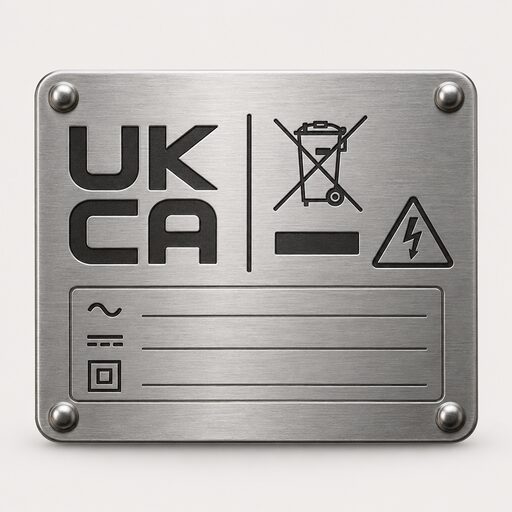 Appliance Standards and MarkingWhich marks should a boiler, heat pump or cylinder have before you buy, and what do they actually prove?
 Product RecallsHow recalls and safety notices work for energy equipment in UK homes, who issues them, how to check a product, and what replacement, repair and refund routes exist.