
In this guide
The BSI Kitemark is a certification mark that confirms a product or service's claim has been independently and repeatedly tested by experts, so that a buyer can have trust and confidence in products and services that are BSI Kitemark certified1. It was originally known as the British Standard Mark and was first registered as a trademark in June 1903, and BSI describes it as having been recognised for more than 120 years as a symbol of outstanding quality, safety and trust across a wide range of products and services1.
For a household, the mark answers a narrow but useful question: has somebody outside the manufacturer checked this claim, and do they keep checking? Certification is not a one-off test. BSI's process runs through testing, audit and certification, covering both the product and the manufacturing procedures behind it, and manufacturers must pass regular site audits2. The mark is recognised by 67% of UK consumers, and 70% say they are more confident in products that carry it than ones that do not1.
What the Kitemark is not is a statement about running costs, fuel source or suitability for a particular house. It sits alongside, not instead of, the scheme marks that govern home energy work, such as MCS for microgeneration and TrustMark for installers. The sections below set out how certification works, what it covers, where it combines with MCS, and what remains outside its scope.
A mark registered in June 1903, and what it certifies
The Kitemark's age is part of its function. A mark that has been registered since June 1903 carries recognition that a newer scheme has to build from scratch, and BSI's own figure for that recognition is 67% of UK consumers, with 70% saying they are more confident in products carrying it1. Those two numbers are the commercial case for the mark: it is a shorthand a householder may already half-recognise before reading anything about testing.
The definition BSI gives is deliberately about claims rather than products. Kitemark certification confirms that a product or service's claim has been independently and repeatedly tested by experts1. The word "repeatedly" is doing the work. A single type test at launch would not support the mark; the certification relationship continues for as long as the product is certified.
That distinction matters when comparing marks. TrustMark is a government-endorsed quality scheme providing assurance, certainty and protection to consumers who choose to have work carried out in or around their home, and it applies to the firm doing the work5. The Kitemark applies to a product or a service and its manufacturing or delivery process. A household choosing a heat pump or an EV charger may encounter both, and they answer different questions: whether the thing was tested, and whether the firm installing it is covered by a consumer protection scheme. The wider landscape of marks is set out in product markings and standards and in who writes the standards.
How testing, audit and certification work

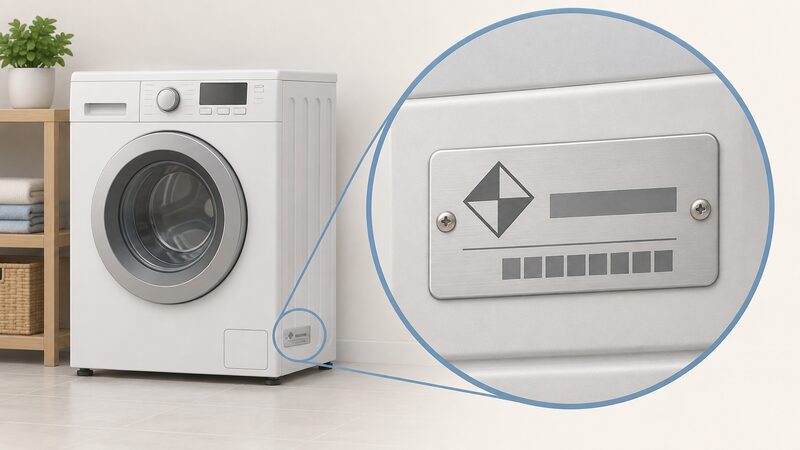
Certification is a process rather than an event, and BSI describes it in three stages: testing, audit and certification2. The testing stage establishes whether the product meets the requirements of the relevant standard or programme. The audit stage looks at the manufacturer, not the sample. BSI states that a product must pass all the tests required by the BSI certification programme, and that manufacturers must pass regular site audits3. The certification stage is the formal decision that follows.
The audit element is what separates this from a laboratory report. A test result describes one unit on one day; a site audit describes whether the factory can keep producing units to the same specification. BSI presents the process as improving a manufacturer's product and manufacturing procedures as well as certifying them2.
Surveillance continues after certification. The Inclusive Service Kitemark, which applies to organisations rather than products, was awarded to its first nine organisations following a two-part assessment that involves a programme of ongoing surveillance now that certification has been awarded6. The same principle applies across the product schemes: the mark is maintained, not granted once.
For a household, the practical consequence is that a Kitemark on a nameplate implies a paper trail. It means a standard was identified, a sample was tested against it, a factory was audited, and a certification body holds the record. It does not mean the individual unit in the box was tested, and it does not replace the installation requirements that apply to the work itself, which for electrical work sit in electrical safety regulation.
Certification categories: energy, construction and beyond
BSI lists its certification categories as cybersecurity, energy, construction, consumer claims, manufacturing, fire protection, PPE certification and healthcare1. Within those, the named product areas run from batteries, cables, doors, windows and glass, electrical safety and quality, gas appliances, hydrogen appliances, lighting, plumbing and heating, and EV chargers, through to microgeneration1. The breadth is the point: the mark is not specific to home energy, and a householder will meet it on a carbon monoxide alarm as readily as on a charge point.
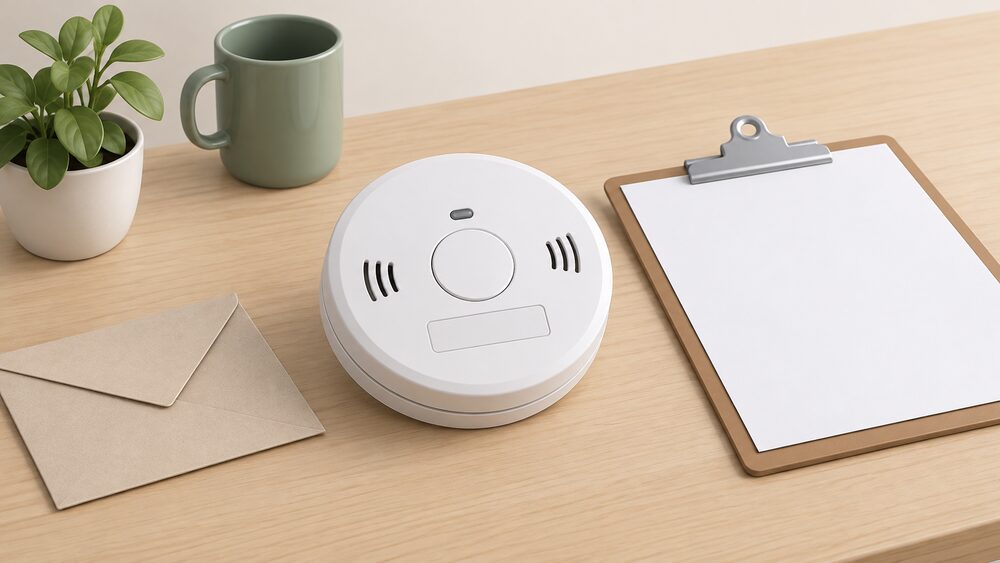
Two examples show how the mark is used in practice. HETAS and CoGDEM advise fitting a quality audible CO alarm that meets European Standard EN 50291 and is made by a trusted brand carrying the BSI Kitemark7. In Which? testing, 13 CO alarms from leading brands that carry the BSI Kitemark passed every one of the tests7. That is a consumer organisation's finding about marked products, and it is the kind of evidence the mark is meant to generate.
The mark also extends to services. The Inclusive Service Kitemark covers topics such as the identification of customer vulnerability, inclusive design of products and services, and the adoption of AI and data collection, protection and sharing6. The first nine certified organisations sit within the energy, water and financial sectors, and include Power NI, SP Energy Networks, South East Water, Northern Gas Networks, Santander UK PLC, PayPlan and Wales and West Utilities6. For a household, that means a Kitemark on a supplier's or network operator's service is a statement about how it treats customers, not about a product.
| Category | Example areas named by BSI |
|---|---|
| Energy | Gas appliances, hydrogen appliances, plumbing and heating, microgeneration1 |
| Cybersecurity | EV charger digital security, IoT enabled products, cyber essentials1 |
| Construction | Doors, windows and glass, structural steel and aluminium, BIM1 |
| Consumer claims | Consumer claims certification, customer service excellence1 |
| Manufacturing | Benchmark manufacturing, carbon footprint verification1 |
| Fire protection | Fire detection, fire suppression, fire systems installation1 |
| PPE certification | Eyewear, footwear, gloves, hearing and respiratory protection1 |
| Healthcare | Medical device electrical safety, internet of medical things1 |
Combined MCS and Kitemark certification for microgeneration
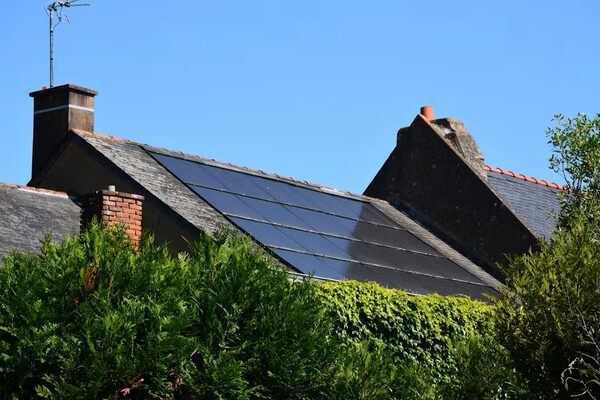
For home renewables, the two marks that matter most are MCS and the Kitemark, and BSI offers them together. BSI states that it offers a combined MCS and BSI Kitemark Certification for microgeneration products used to produce electricity and heat from renewable sources2. The combined route takes a product through the same testing, audit and certification process, covering the product and the manufacturing procedures behind it2.
MCS itself is a certification scheme for microgeneration installation companies and products, aiming to ensure consistent standards and provide confidence to consumers8. Its scope covers small-scale renewable electricity technologies such as solar photovoltaic panels, biomass, wind, heat pumps and heat products9. The distinction between the two is worth holding on to: MCS certifies both installers and products, while the Kitemark certifies the product and its manufacture. A household relying on MCS to access a grant is relying on the installer side as much as the product side, and the installer scheme landscape is covered in installer schemes and consumer codes and in MCS explained.
The combined certification is presented by BSI as a route to global market access through certification2. That framing is aimed at manufacturers, but it has a domestic consequence: a product certified through the combined route has been assessed against both a UK microgeneration scheme and a product certification programme, and the manufacturer carries the audit obligation for both.
Why the mark matters for consumer confidence
The confidence figures are the clearest evidence for what the mark does. BSI states that over 80% of UK consumers have increased confidence in products displaying the BSI Kitemark1. Separately, the mark is recognised by 67% of UK consumers, with 70% more confident in products that carry it than ones that do not1. The two figures come from the same source and measure different things: recognition of the mark, and the effect of seeing it.
There is wider evidence that marks of this kind are wanted. In Which? research, 82% of UK consumers said having a trademark or badge to show a product had been manufactured in a sustainable way would be beneficial, and a separate figure puts the same view at 81%10. Those are statements about sustainability claims rather than about safety testing, and they should be read as appetite for verifiable claims rather than as evidence about the Kitemark specifically.
The limits are as important as the benefits. A Kitemark tells a household that a claim was tested and that the factory is audited. It does not tell a household how much a product will cost to run, whether it suits a particular property, or whether the installer is competent. Those questions sit with other schemes and with the building regulations of each nation, which differ between England, Scotland, Wales and Northern Ireland, as set out in building regulations in England and Scottish building standards.
"Kitemark certification confirms that a product or service's claim has been independently and repeatedly tested by experts, meaning that you can have trust and confidence in products and services that are BSI Kitemark certified."
BSI as the national standards body, and UKAS accreditation
BSI is the UK national standards body, and it publishes European standards in the UK as BS EN11. That role is separate from its certification business: the same organisation writes and adopts standards, and then certifies products against standards, which is why the accreditation of its laboratories and certification activities matters.
UKAS is the sole national accreditation body recognised by the UK government to assess certification, testing, inspection and calibration organisations11. Accreditation is the check on the checker. In November 2022 BSI received accreditation from UKAS for its Electric Vehicle charger testing and certification labs, becoming the first UKAS accredited lab for Electric Vehicle charger testing, and it is also a CB test lab for EV chargers under the global IECEE scheme4. BSI describes its laboratories as UKAS-accredited1.
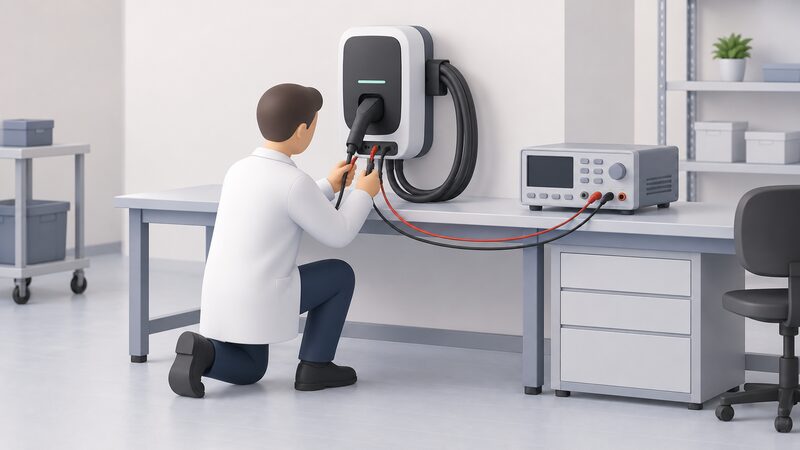
The Kitemark's own certification work is not confined to BSI's laboratories. BSI's testing services include product safety and performance testing, IECEE CB Certificates for those looking to export, a specification on accessible public charge points (PAS 1899:2022) and a Kitemark for electric vehicle charging12. The Kitemark for Accessible Ready Chargers is based on PAS 18993. For a household buying a charge point, the relevant chain is: a published specification, a UKAS-accredited laboratory, a certification decision, and continuing audit of the manufacturer.
Where the mark has limits
Three limits are worth stating plainly. First, the Kitemark certifies a claim, not a whole product's suitability. A marked appliance may still be the wrong size, the wrong fuel or the wrong control type for a particular home, and nothing in the certification addresses that.
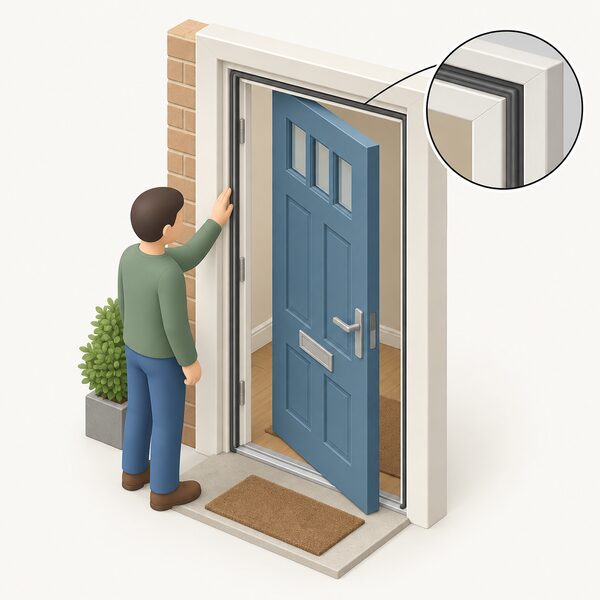
Second, the mark does not carry a warranty or a guarantee of durability. Durability claims sit with the product standard and with the manufacturer. One example from outside the energy sector shows how a standard number and a mark combine: draught proofing products to BS7386, carrying the British Standard Kite Mark, can last up to twenty years13. The mark identifies the standard; the standard sets the expectation.
Third, certification is not the same as a consumer protection scheme. TrustMark is a government endorsed quality scheme14, and Qualitymark Protection is an Insurance Backed Guarantee provider15. Those arrangements cover the work and the money if something goes wrong. The Kitemark covers the product and its manufacture. A household weighing a purchase is looking at two different kinds of assurance, and the mark answers only one of them.
Sources15 cited
- Kitemark certification, BSI, 2026-09-17
- MCS microgeneration certification, BSI, 2026-09-17
- What makes BSI Kitemark certified EV chargers a smarter choice, BSI, 2026-09-17
- BSI becomes the first UKAS accredited lab for EV charger testing, BSI, 2022-11-16
- Great British Insulation Scheme: homeowners and tenants, Ofgem, 2026-09-17
- SSEN Distribution among the first companies to achieve the Inclusive Service Kitemark, SSEN, 2023-01-26
- Which? CO alarm report, HETAS, 2023-06-29
- Domestic RHI: contacts, guidance and resources, Ofgem, 2026-09-17
- ECO4 Flex and GBIS Flex information document, Ceredigion County Council, 2025-11
- Supporting consumers in the transition to net zero, Which?, 2021-10-05
- Technical booklet B: materials and workmanship, Building Control Northern Ireland, 2013-07
- BSI becomes the first UKAS accredited lab for EV charger testing, BSI, 2022-11-16
- Draught proofing FAQ, National Insulation Association, 2021-06-06
- Get a grant or loan to improve your home energy efficiency, Bristol City Council, 2026
- Consumer charter guide, Flexi-Orb, 2025-02-18