

In this guide
A new energy product reaches a UK household through a chain of documents: a product standard, a test report, a certification certificate, an installer's registration and, for grant-funded work, a scheme rulebook. When the technology is genuinely new, the first links in that chain may not exist yet, and the buyer is left holding a device that no one has yet written a rule for.
The UK's answer to that gap is layered. MCS, the Microgeneration Certification Scheme, is described in government guidance as "a mark of quality which demonstrates adherence to industry-recognised standards for renewable products, contractors and their installations"1. It is an independent certification scheme for microgeneration installation companies and products, not a government body, and since October 2025 it has been the sole certification scheme for clean heat measures for UK government funded schemes2. Alongside it sit the BSI Kitemark, which offers a combined MCS and BSI Kitemark Certification for microgeneration products, and the UKCA and CE marking regimes that govern product safety and ecodesign3.
The practical effect for a household is that certification answers a narrow set of questions well, and a wider set of questions not at all. It confirms that a product was tested against a published standard and that an installer was assessed against scheme rules. It does not confirm that a heat pump will hit its predicted efficiency in a particular house, and it does not guarantee a company will still exist when a warranty claim arises.
What "standards" means for a new energy product in the UK
A standard is a published specification for how a product is built, tested or installed. Certification is the process by which an independent body checks a product or a business against that standard and issues a certificate. Accreditation is the layer above: the recognition that a certification body itself is competent to do the checking.
For household energy products, the standards that bite are of three kinds. Product safety and ecodesign rules set the minimum a device may do and the information that must accompany it. Installation standards set how a technology is fitted, commissioned and handed over. Performance standards set what the system is expected to deliver. The UK's product safety framework defines a safe product as one which, under normal or reasonably foreseeable conditions of use including duration and, where applicable, putting into service, installation and maintenance requirements, does not present any risk or only the minimum risks compatible with the product's use, considered to be acceptable and consistent with a high level of protection for the safety and health of persons8.
Ecodesign sits underneath that. The Ecodesign for Energy-Related Products and Energy Information Regulations 2021 introduced requirements for specified electrical products sold in Great Britain, and the government has since confirmed it will proceed with new Ecodesign and Energy Labelling regulations for household tumble dryers in Great Britain, broadly as consulted upon, with a small number of refinements based on stakeholder feedback9. For stoves, official guidance recommends looking for the Ecodesign standard, which ensures the appliance meets strict standards for emissions and efficiency11.
The marking regime is where new technology meets an old argument. Currently CE marked products can be sold in Great Britain if they are compliant with GB ecodesign standards, without the need to also affix a UKCA marking4. That recognition has been the subject of consultation, and it matters for emerging products because a small manufacturer weighing up whether to certify for the UK alone will look at whether an existing European test report is accepted.

MCS: the UK's quality mark for small-scale renewables

MCS describes itself as the standards organisation for small-scale domestic renewable energy and technology across the UK, and as an independent certification scheme for microgeneration installation companies and products12. Its stated purpose is to ensure consistent standards and provide confidence to consumers5.
The scheme's roles are set out in its own rules. For the Boiler Upgrade Scheme, MCS' roles include, but are not limited to: setting and maintaining technical standards for installations and products; certifying installers and products against those standards; issuing MCS certificates for completed eligible installations; and assisting certification bodies to review and address cases and consumer issues relating to installers or products13. That last role is the one households meet when something goes wrong.
Two features of MCS are worth separating. The first is product certification: a manufacturer submits a product to a certification body, which tests it against the relevant standard. The second is installer certification: a business is assessed on its processes, its competence and its compliance with scheme rules. A household buying an installation is relying on both, and the two can fail independently. A well-certified product fitted by an uncertified installer, or a certified installer fitting a product outside the scheme's scope, both leave the household outside the protection the certificate appears to promise.
MCS is not a regulator and cannot compel a business to remedy work. It can review cases and address consumer issues relating to installers or products, and it can withdraw certification. The limits of that power are the reason the consumer codes exist alongside it.
What MCS covers: seven product families, from solar PV to micro CHP
MCS product certification is available for a defined list of technologies: solar PV; solar mounting; small wind turbines; heat pumps; biomass; solar heating; and micro CHP2. BSI's own certification pages list micro CHP, biomass, heat pumps, solar PV and solar mounting among the technologies it certifies2.
The scheme describes itself as the leading quality assurance organisation for microgeneration, meaning small scale renewable 50kW or smaller, technologies14. Government guidance describes MCS as certifying, quality assuring and providing consumer protection for microgeneration installations and installers, and for small-scale renewable electricity technologies such as solar photovoltaic panels, biomass, wind, heat pumps and heat products15.
That list is narrower than the range of devices now sold into UK homes. Home batteries, smart hot water cylinders, heat batteries, bidirectional chargers and plug-in solar kits do not all sit inside the MCS product families, and where they do not, the certification a household can point to is different in kind. A battery installation may be registered on the MCS Installation Database as part of a wider retrofit, and MCS domestic battery installation statistics are collected for retrofitting electric batteries into domestic properties in the United Kingdom, but the product families above remain the core of the scheme16.
Size limits: 50kW for electricity, 45kW for heat

The boundary between microgeneration and something larger is drawn consistently across several documents, and it is the number that decides which rules apply.
| Limit | Value | Applies to | Source |
|---|---|---|---|
| Electrical technologies | 50kW | MCS product certification | 2 |
| Heating technologies | 45kW | MCS product certification | 2 |
| Microgeneration, electricity | up to 50 kilowatts of electricity | Permitted development, Scotland | 17 |
| Microgeneration, heat | 45 kilowatts of thermal energy | Permitted development, Scotland | 17 |
| Heat production | 45 kilowatts thermal | Definition of microgeneration | 18 |
| Solar thermal not on a roof | 45 kilowatts | England permitted development | 19 |
| Heat pumps and other electric heating | up to 45kW | Energy Smart Appliance regulations | 20 |
| Micro-renewable heat | up to 45kW | MCS heat technologies | 3 |
| Micro-renewable electricity | up to 50kW | MCS electricity technologies | 3 |
The same figures recur because they descend from a common definition. The Energy Act 2004 sets 45 kilowatts thermal in relation to heat production, and Northern Ireland's legislation uses the same phrase, that a source of energy "to produce heat, does not exceed 45 kilowatts thermal"18. Scotland's householder permitted development rights use equipment with an output of up to 50 kilowatts of electricity or 45 kilowatts of thermal (heat) energy17.
Above the microgeneration line, different rules apply. The Smart Export Guarantee supports solar photovoltaics, wind, micro-combined heat and power, hydropower and anaerobic digestion, which can be up to 5 megawatts in capacity, or up to 50 kW for micro-CHP, and installations must be located in Great Britain9. The older feed-in tariff guidance describes eligible installations at 5MW of total installed capacity for all technologies except CHP, where the maximum limit is 2kW22. The two documents disagree on the CHP figure, and the discrepancy is unresolved in the material available.
For a household, the limits rarely bind. A domestic heat pump is well under 45kW and a domestic solar array well under 50kW. The limits matter at the edges: a small commercial installation, a shared ground loop serving several properties, or a micro-CHP unit sized for a large house.
BSI Kitemark: combined certification and global market access
The BSI Kitemark is a separate certification mark from MCS, and for microgeneration products the two can be obtained together. BSI states: "We offer a combined MCS and BSI Kitemark Certification" for microgeneration products, and describes the benefit as the ability to "Gain global market access through certification"3.
The process is described as improving a product and its manufacturing procedures via testing, audit and certification3. For a manufacturer, the appeal is that one assessment route produces a mark recognised in the UK and a mark with wider international recognition. For a household, the practical difference is limited: both routes involve testing against a published standard by an accredited body.
Accreditation is the part that is easy to overlook. A test report is only as good as the laboratory that produced it, and laboratories are accredited by national accreditation bodies against international rules. The UK Accreditation Service publishes schedules of accredited testing, and those schedules carry issue numbers and dates, which is how a household or an installer can check that a laboratory's scope covers the test in question23.
"We offer a combined MCS and BSI Kitemark Certification"
Consumer protection: what an MCS certified installer must give you
Certification brings obligations. Installers under UK Government schemes must be TrustMark registered and/or Microgeneration Certification Scheme certified24. MCS certified installers must also be registered with a consumer protection scheme such as RECC or HIES25.
The handover is where the obligations become visible to a household. MCS specifies handover documentation but not the quality of verbal explanation, household understanding, structured follow-up or ongoing support26. In other words, the certificate guarantees that certain documents exist, not that anyone explained them.
The performance obligation is narrower than many buyers assume. MCS requires installers to provide a design-stage prediction of system efficiency, not verify actual performance, and MCS does not require remediation of systems that are underperforming relative to their design26. Weather compensation is not mandatory under current requirements of the Microgeneration Certification Scheme, and third party non-modulating controls are not prohibited26.
Where a grant is involved, the certificate becomes a condition of payment. Under the Domestic RHI, replacing the entire renewable heating system must be completed by an MCS-certified installer and accompanied by a new MCS installation certificate27. Under the Boiler Upgrade Scheme, MCS is the certification scheme for the measures, and its roles include issuing MCS certificates for completed eligible installations13. A scheme specification for a Welsh solar installation requires that no later than 10 working days after commissioning, the installation shall be registered by the MCS Contractor on the MCS Installation Database and an MCS Certificate generated28. Late registration is a common cause of grant delay.

Complaining about an installation: time limits, ADR and what MCS can and cannot do
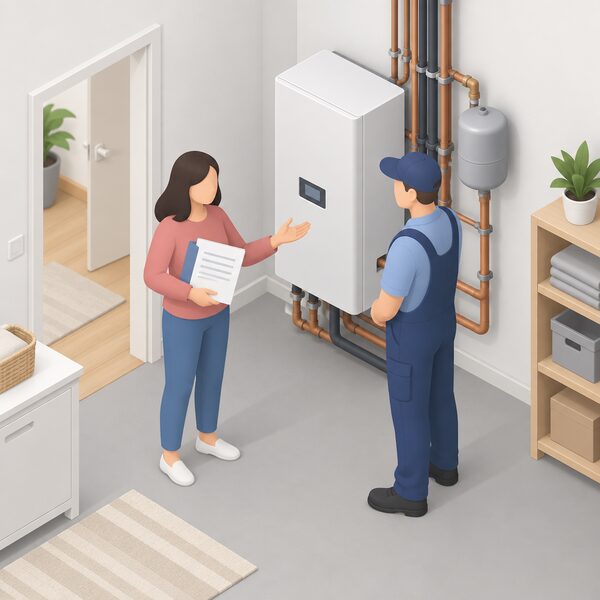
The complaint route has a defined order. If a complaint relates to installation quality, workmanship, or the behaviour of an installer, it should be raised with the installer in the first instance, then with the installer's consumer code, HIES or RECC, or through MCS installation quality complaints6. For complaints about an installation under the Energy Company Obligation, there is a separate complaints process page29.
The deadline is the fact most households need. For MCS certified installations, a complaint must be raised no more than two years after the date that the system was commissioned5. That is the outer limit for the scheme's involvement, and it runs from commissioning rather than from the date a fault appears.
MCS can be contacted on 0333 103 8130, and its website is at mcscertified.com6. Separately, MCS may contact a household for a short, routine verification on behalf of Ofgem either by email or by phone on 0333 103 8198, and property owners should aim to respond within seven days6. That second number is a verification line, not a complaints line, and a household receiving a call from it is being checked on, not sold to.
MCS has been developing its own dispute resolution capacity. In October 2023 it described work to shape the complaint handling and dispute resolution services that the organisation will offer to consumers12. Until those services are fully in place, the practical dispute resolution for most households runs through the consumer code the installer is registered with.
MCS in reform: air-to-air heat pumps and new standards in pilot
The scheme is being redeveloped, and the changes matter for technologies that previously sat outside it. Air-to-air heat pumps are being incorporated into the scope of the redeveloped installer Scheme and product Scheme, and the updated product and installation Standards have already been published30. Updated Scheme documents, Installer Operating Requirements and Conformity Assessment Guidelines, will soon be published30.
Air-to-air matters because it is the heat pump type most often sold without the wet system that MCS rules were written around. Bringing it into scope gives households a certification route where previously the equipment sat outside the scheme's product families.
The redevelopment has also been recognised by government. In October 2025, the Department for Energy Security and Net Zero confirmed MCS as the sole certification scheme for clean heat measures for UK government funded schemes, following recognition of the strength of the consumer protections offered by the redeveloped scheme7.
For a household, the direction of travel is towards a scheme that covers more product types and carries more consumer protection weight, but the transition is not complete. A product certified under the current rules and a product certified under the redeveloped rules may carry different scopes, and the certificate date is the way to tell them apart.
How standards connect to government grants and the Clean Heat Market Mechanism

Certification is the mechanism by which public money is controlled. A grant scheme needs a way to confirm that a measure was installed to a standard, and the certificate is that confirmation. This is why MCS holds the sole certification role for clean heat measures in government funded schemes7.
The Clean Heat Market Mechanism works differently: it places obligations on manufacturers and importers rather than certifying individual installations, and its revisions ahead of scheme year 2 in 2026 to 2027 drew responses from across the supply chain. The government response records 8 responses from energy suppliers and related trade associations, 7 from fossil fuel heating appliance manufacturers and related trade associations, 6 from other heating supply chain actors and related trade associations, and 30 from other organisations including individuals and NGOs31. The spread shows how many parties have an interest in how a heat standard is defined.
Standards also reach into building regulations and permitted development. In Wales, a new dwelling's energy rating must be calculated using the UK Government's Standard Assessment Procedure for energy rating of dwellings, version 1032. Energy efficiency statistics for new dwellings cover new dwellings in England and those built to the Part L 2021 Standard33. Minimum Energy Efficiency Standards are set by the UK Government, as energy is a reserved matter34. In Scotland, the Heat in Buildings quality assurance statement sets out expectations for installers working on heat measures3.
The pattern is consistent: a technology enters the grant system only once a certification route exists, and the certification route is built on a standard. Where a technology has no standard, it has no grant, and the household bears the full cost and the full risk.
Trade bodies and consultation: where manufacturers push back
Standards are not written in isolation. The UK's new product safety framework went through consultation and is recorded as a closed consultation, with the definition of a safe product quoted above forming part of the proposed framework8. The extended recognition of CE marking for ecodesign regulations was likewise consulted on, and the current position is that CE marked products can be sold in Great Britain if they are compliant with GB ecodesign standards, without also affixing a UKCA marking4.
Manufacturers and trade bodies engage with these processes because the cost of certification falls on them and the terms of recognition decide whether a single test programme serves one market or several. The tumble dryer regulations are an example of the outcome: the government confirmed it would proceed broadly as consulted upon, with a small number of refinements based on stakeholder feedback10.
For emerging technologies, the consultation stage is where the certification gap is most visible. A product category with no standard cannot be certified, and a category with a standard under development sits in a period where early buyers have no certificate to check. The practical advice that follows from the evidence is not to buy or avoid any particular product, but to establish what certificate exists, who issued it, what scope it covers and what date it carries.
Where certification stops and the household's judgement begins

Certification is a statement about process. It says a product was tested against a standard and a business was assessed against scheme rules. It does not say the system will perform as predicted in a particular house, that the company will still trade in ten years, or that the installed cost was fair.
The dependence that remains is worth naming. A certified installation still depends on the grid for import and export, on a supplier for billing and export payments, and on the manufacturer for spares and warranty service. Certification does not change any of that. What it changes is the household's position if something goes wrong during the period the scheme covers: there is a documented standard, a certificate, a registered installer and a complaints route with a deadline.
For technologies still outside the scheme, the household carries more of that risk directly. The certification gap is not a reason to avoid a technology, but it is a reason to know which protections apply and which do not before signing.
Sources34 cited
- Heat pumps explained: experts answer your questions, GOV.UK, 2024-03-28
- Certifying your product, MCS, 2026-05-18
- MCS Microgeneration Certification: where innovation meets sustainability, BSI, 2026-09-17
- Extended CE marking recognition for ecodesign regulations, GOV.UK, 2026-07-06
- Who to contact, Ofgem, 2026-09-17
- Boiler Upgrade Scheme guidance for installers V5, Ofgem, 2026-04-24
- DESNZ recognises strength of consumer protections offered by redeveloped MCS, MCS, 2025-10
- The UK's new product safety framework, GOV.UK, 2026-03-31
- Ecodesign and labelling requirements for electrical products, House of Commons Library, 2026-09-17
- Raising product standards for household tumble dryers, GOV.UK, 2025-07-17
- Smoke control area guidance: homes and businesses FAQs, Welsh Government, 2025-07-30
- Leading consumer protections champion supports MCS on future plans, MCS, 2023-10-12
- Boiler Upgrade Scheme, Ofgem, 2026-09-17
- WHSHF wave 3 scheme guidance addendum, GOV.UK, 2026-06
- ECO4 Flex information document, Ceredigion County Council, 2025-11
- MCS domestic retrofit battery installations 2025 to 2026, GOV.UK, 2026-05-28
- Circular 1/2024: householder permitted development rights, Scottish Government, 2024-05-28
- The Energy Act 2004 (Commencement) Order (Northern Ireland) 2015, legislation.gov.uk, 2015
- Permitted development rights impact assessments, Scottish Government, 2026-09-17
- Electricity distribution networks study: government response, GOV.UK, 2025-07-07
- The Energy Act 2004 (Commencement) Order (Northern Ireland) 2015, legislation.gov.uk, 2024-03
- Feed-in Tariff guidance for licensed electricity suppliers V17.1, Ofgem, 2024-09-06
- UKAS accreditation schedule issue 098, UKAS, 2026-07-02
- Energy efficiency of new dwellings, House of Commons Library, 2026-05-13
- Find a heat pump installer, GOV.UK, 2022-07-05
- Clean heat policy report: heat pump transition, GOV.UK, 2026-05
- Domestic RHI essential guide, Ofgem, 2022-03
- Barcud solar panel installation scheme specification, Sell2Wales, 2026-06-15
- Energy Company Obligation: contacts, guidance and resources, Ofgem, 2026-09-17
- Getting ready for air-to-air: an update on implementation into MCS, MCS, 2026-04-28
- Clean Heat Market Mechanism revisions ahead of scheme year 2: government response, GOV.UK, 2026-09-18
- Approved Document L Volume 1 consultation version, Welsh Government, 2026-09-17
- Energy efficiency characteristics of new dwellings, GOV.UK, 2026-02-04
- Decarbonising private housing: the net zero elephant in the energy inefficient room, Senedd Research, 2026-09-20
 Certification and ApprovalsWhich certificates actually matter when you are choosing solar panels or a heat pump?
 Standards and CertificationHow do you know a heat pump will really perform as promised?
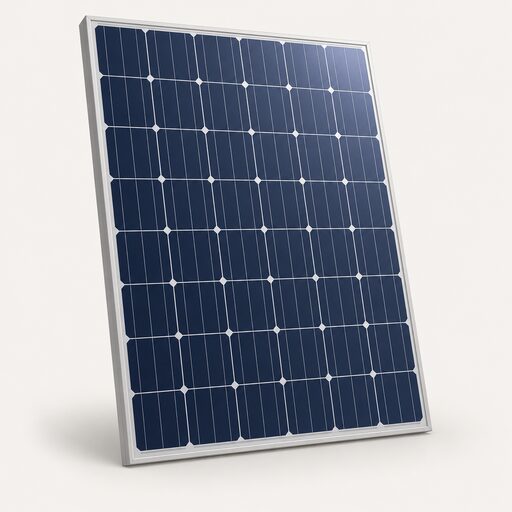 MCS ExplainedMCS is the quality mark for solar panels, heat pumps and other home renewables.
 Who Writes the StandardsWho actually decides what counts as safe or legal for the energy equipment in your home?
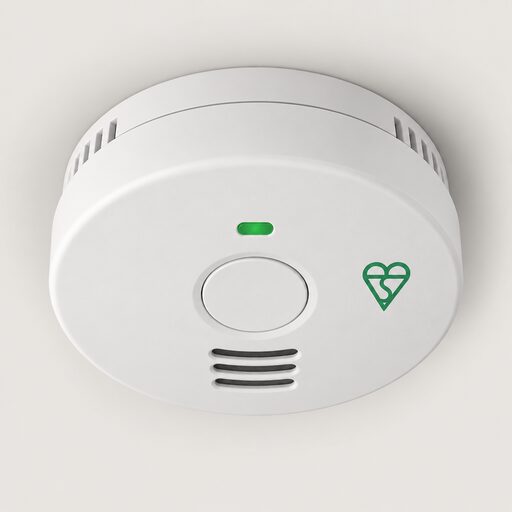 Product Markings and StandardsExplains what conformity markings and voluntary quality marks on home energy products actually mean, who issues them and what testing sits behind each.
 The Full Brands GuideWhich boiler, heat pump or solar brand can you trust, and who actually owns it?