

In this answer
Short answer
The Renewable Energy Consumer Code (RECC) is the consumer protection code that most solar, battery and heat pump installers in the UK sign up to, and its complaints route has been the main escalation path for households in dispute with a member. That route changed on 20 January 2026: from that date RECC stopped accepting new complaints through its dispute resolution process, while continuing to service complaints registered before it1.
What replaces it is a partnership. RECC is working with Green Homes Dispute Resolution as an approved Consumer Protection Scheme, and all RECC members and their consumers have access to that specialised dispute resolution service1. RECC itself continues to provide assurance around sales practices, contracts and deposits, and access to expert independent dispute resolution2.
The practical position for a household is therefore split. If a complaint was registered before 20 January 2026, it continues through the RECC process. If it arises now, the first step is still the installer, and the escalation route runs through the scheme RECC now points to, or through the installer's other registration bodies. This page sets out what the RECC process covered, what sat outside it, how a complaint was submitted, what the timescales were, and where escalation goes next.
What the RECC complaints service covered
RECC's remit was built around small-scale energy generators: solar panels, heat pumps, battery storage and similar domestic renewable installations. Its dispute resolution process sat alongside the code's wider assurance work on sales practices, contracts and deposits, and gave consumers access to expert independent dispute resolution when a member fell short2.
The code is run by Renewable Energy Assurance Ltd (REAL), and it is a CTSI approved consumer protection code5. That approval matters because it places RECC in the same family as other Trading Standards approved codes, which is what gives its decisions weight with members and with funders.
The scale of the operation is worth knowing. RECC receives over 100 complaints each month, handled by 10 complaint-handlers who work to resolve them6. That volume explains why the process is form-driven and why the scheme publishes its stages rather than dealing with each case informally.
RECC also used its position to warn consumers about practices it saw in the market. It published a warning about junk mail offering free solar PV and system check letters, and noted that ESE Services Ltd was found to be in breach of RECC when it was a member7. It also produced a consumer guide on demand-side response, listing 20 questions consumers should ask before agreeing to a demand-side response contract8.
For a household, the value of the code was never the complaint itself. It was the fact that membership is a condition of certain routes, and that a member has agreed to cooperate with mediation and arbitration. That is the leverage a complaint draws on.
What sat outside the remit: commercial work and excluded products
The RECC process was never a general-purpose complaints service for home energy work. Two limits matter most.
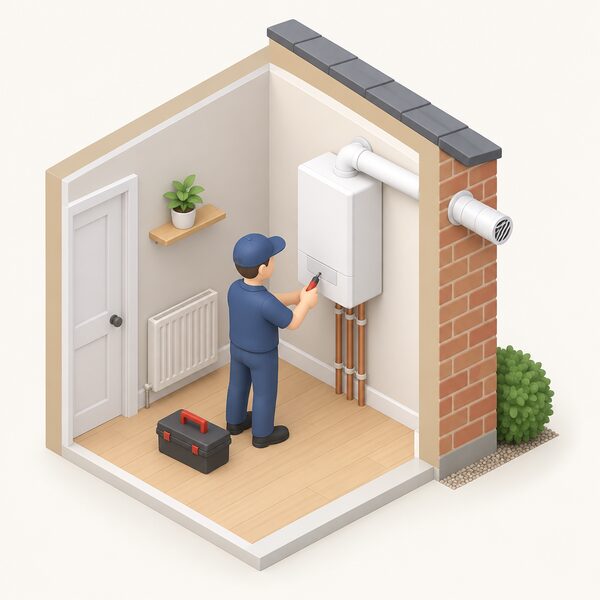
The first is product scope. Complaints relating to products which are not small-scale Energy Generators, including loft insulation and gas boilers, fell outside the dispute resolution process3. A household with a faulty gas boiler or badly fitted loft insulation could not use RECC's process for that work, even if the installer was a RECC member for its renewable business.
The second is the consumer's status. Micro-business consumers are not permitted to use the RECC complaints process4. RECC does publish a separate route for micro-businesses, and that route carries its own arbitration access, but the consumer process is closed to them.
Where a complaint falls outside RECC, other routes exist. Official guidance on the Boiler Upgrade Scheme states that for installation quality, workmanship or installer behaviour, the household should raise it with the installer in the first instance, then the installer's consumer code (HIES or RECC) or the MCS installation quality complaints route9. For ECO installations carried out by installers other than CES, householders should follow the standard ECO complaints process set out on the Ofgem website10. Smart meter products are not covered by the consumer connectable product security regulations11.
How to submit a complaint: online or by post
Complaints were submitted to RECC using the Complaints Registration Form, either online or by post3. RECC also maintained its own complaints form available online6. The contact address for the scheme is info@recc.org.uk1.
The form-based approach is common across the redress schemes in this sector, and it exists for a reason: a complaint that arrives with evidence attached moves faster than one that arrives as a narrative. The ECA's complaints procedure, for comparison, requires complaints to be submitted using its webform and to include relevant supporting evidence12.
If a household makes contact by telephone rather than in writing, the Consumer Council's advice is to follow it up with a letter or email, especially if the complaint is serious13. That is sound practice for any scheme: a written record with dates is what an investigator works from.
The Consumer Council's own complaint handling service accepts complaints online, by phone or by email, and covers billing issues, meter issues, faults not being repaired correctly, customer service and issues switching suppliers14. That is a different remit from RECC's, but it illustrates the range of routes a household may need to consider depending on what went wrong.

What happened after submission: acknowledgement and response times
The RECC dispute resolution process document sets out the stages of a complaint rather than a single published acknowledgement figure. Comparable schemes publish their own targets, which gives a sense of what a household should expect from a well-run process.
| Scheme | Acknowledgement target | Source |
|---|---|---|
| MCS | within 5 working days | 15 |
| ECA | within five working days | 12 |
| CIGA | within 2 working days of receipt | 16 |
| Installation Assurance Authority | within 2 working days | 17 |
MCS also states that most complaints should be fully resolved within 8 weeks, with updates along the way15. That eight-week horizon is a useful benchmark: a complaint that runs past it is not unusual, but it is long enough that a household should keep its own record of every contact.
RECC's own capacity, at over 100 complaints a month handled by 10 complaint-handlers, shapes how quickly a case can move6. The scheme's disciplinary powers are the backstop. RECC assesses the information it holds and carries out a further investigation where required before deciding whether any action is needed18. Where action is warranted, the available steps include taking steps to promote consumer protection, communicating with the code member, auditing the code member (which may be at the member's cost), consent orders, convening a hearing of the Non-Compliance Panel, termination of code membership following a panel determination, and termination of code membership by RECC without reference to the panel18.
That list is the real weight behind a complaint. A member that ignores a household risks an audit at its own cost or the loss of its membership, which in turn affects its ability to operate on routes that require code membership.
What happens if RECC cannot reach you during the investigation

Contact is the engine of the process. RECC assesses the information it holds and carries out a further investigation where required before deciding whether any action is needed18. If a complainant cannot be reached, the investigation has nothing to test the member's account against, and the case cannot progress to a determination.
The same principle appears in MCS's approach to vulnerable customers: any such complaint will be investigated fully and full cooperation will be given as appropriate, where an investigation is conducted by a third party19. The scheme's ability to act depends on the household staying engaged.
In practice this means keeping the scheme informed of any change of address, phone number or email, and responding to requests for evidence within the time given. A complaint that goes quiet is not dismissed, but it stalls, and a stalled complaint does not reach the point where the disciplinary steps become available.
Escalation beyond RECC: independent arbitration
RECC offers a mediation service and an independent arbitration service, which members must cooperate with20. That obligation is the reason arbitration has teeth: a member cannot simply decline to take part.
The arbitration scheme is operated by CEDR Solve. A micro-business consumer with a complaint against a RECC member that they have been unable to resolve directly with the member is permitted to apply4. Applications are made by contacting Abena Simpey at abena@recc.org.uk4. Independent arbitration is available under a dedicated scheme operated by the Centre for Effective Dispute Resolution16.
For consumers using the MCS route, escalation to alternative dispute resolution is available within 12 months of the complaint being concluded by MCS15. That deadline is worth noting: it is a limit, not a target, and a household that lets it pass loses the route.
Other schemes show the same shape. The ECA's complaints process applies after the member's own complaints process has been exhausted, or where reasonable attempts to raise the issue directly have left the matter unresolved12. TrustMark's process escalates an unresolved complaint to the business's Scheme Provider21, and TrustMark considers all complaints, whether or not they fall within its remit, as part of its ongoing monitoring of Scheme Providers and Registered Businesses, taking appropriate action if requirements are not met22. For domestic RHI complaints, the first step is to speak directly to the assessor, then contact their certification body if still unhappy23. Ofgem's feed-in tariff dispute resolution route acknowledges complaints within 2 working days24.
The pattern across all of them is the same: the installer first, the scheme second, independent arbitration last. RECC's version of that ladder now runs through Green Homes Dispute Resolution for new cases, with CEDR Solve arbitration available where a member will not resolve the matter directly.
Which installers fall under the Renewable Energy Consumer Code

RECC membership is voluntary for a business, but it is required for certain routes. Before registering for the Smart Export Guarantee, an investor must be a member of RECC or the Home Insulation and Energy Systems Quality Assured Contractors Scheme (HIES), both CTSI approved consumer protection codes5. That is why solar installers in particular tend to hold membership.
Checking is straightforward. RECC advises households to ensure that the company they are dealing with is a member of the Renewable Energy Consumer Code25, and to approach only companies listed on the RECC website26. The members list is the authoritative check, not a logo on a van or a claim in a quote.
The code sits alongside a wider set of registration bodies that a household may need to check depending on the work: MCS certified installers for the installation standard, TrustMark registered businesses for the government-endorsed quality scheme, and Gas Safe registered engineers where gas work is involved. For a fuller picture of how these fit together, see the Renewable Energy Consumer Code and the pillar guide to home energy installers and retailers.
Where a complaint concerns an installer who has stopped trading, the routes change again, and the guide to what happens when an installer goes bust covers deposits, warranties and unfinished work. For the general escalation ladder, complaining about an installer sets out the order of steps.
Sources26 cited
- How to complain, RECC, 2026-09-19
- RECC reinforces its value in the role of consumer protection following MCS update, RECC, 2026-04-28
- Dispute resolution process, RECC, 2023-07-05
- How to complain: micro-business, RECC, 2026-09-17
- Renewable Energy Consumer Code, Chartered Trading Standards Institute, 2026-09-20
- Memorandum of understanding and associated documents, RECC, 2026-09-17
- Beware of junk mail free solar PV and system check letters, RECC, 2020-08-13
- RECC launches consumer guide on demand-side response, RECC, 2018-10-23
- Boiler Upgrade Scheme guidance for property owners, Ofgem, 2026-03-25
- Written statement: support for householders impacted by closure of the Energy Company Obligation scheme, Welsh Government, 2026-03-13
- Regulations: consumer connectable product security, GOV.UK, 2024-01-08
- Complaints procedure, ECA, 2026-09-17
- How to complain effectively, Consumer Council, 2026
- Complaints about electricity, oil and gas, Consumer Council, 2026
- What to do if things go wrong, MCS, 2026-09-07
- CWISC complaints procedure, CIGA, 2026-09-20
- Complaints procedure, The Installation Assurance Authority, 2026-09-20
- Non-compliance action, RECC, 2026-09-17
- Our approach to supporting customers, MCS, 2026-09-07
- Consumer leaflet, RECC, 2026-09-17
- TrustMark roles and responsibilities, TrustMark, 2026-09-20
- Who to contact, Ofgem, 2026-09-17
- Dispute resolution, Ofgem, 2026-09-17
- Heat networks affected by the Energy Prices Act 2022, Energy Ombudsman, 2026-09-20
- Consumers, RECC, 2026-09-17
- Top tips, RECC, 2026-09-19
 Complain About Energy SupplierThe order of a complaint: the supplier's own procedure, the eight-week point or deadlock, and referral to the Energy Ombudsman in Great Britain or the Consumer Council in Northern Ireland.
 Complaining About a SupplierHow do you complain about your energy supplier, and how long should it take?
 Installer Schemes and CodesCheck whether your installer is on TrustMark, and whether they belong to HIES or the Renewable Energy Consumer Code.
 Energy ConsultationsWhen new rules on boilers, heat pumps or energy certificates are proposed, you can have your say before they become final.
 Report a Faulty MeterWhat to do when a meter over-records, stops recording or produces impossible readings: the evidence to gather, how to raise it with the supplier, the 5 working day and 8 week deadlines, and how the Energy Ombudsman handles meter disputes.
 Deposits and Staged PaymentsHow much deposit should you pay for solar panels or a heat pump, and what happens to your money if the installer goes bust?