
In this guide
Energy scams in the UK work by imitating the bodies households already trust: the Energy Ombudsman, Ofgem, a named supplier, or a government support scheme. The Energy Ombudsman reported a recent increase in fraudulent emails targeting energy consumers that falsely claim to be from it, with forms that request sensitive personal information such as full name, address, date of birth, or bank details1. The same pattern runs through rebate texts, grant cold calls and doorstep sales: a plausible name, a deadline, and a request for information or money.
The short answer is that reporting splits by what has happened. Suspected fraud goes to Ofgem's counter fraud team at counterfraud@ofgem.gov.uk or by calling 0207 901 7373, where a voice message can be left2. Scam emails go to the National Cyber Security Centre by forwarding them to report@phishing.gov.uk1. Energy supply problems in England and Wales go to the Citizens Advice consumer service on 0808 223 11333. If money or bank details have been given, the bank comes first, then the fraud report.
What follows sets out the figures behind the schemes being imitated, the checks that confirm whether contact is genuine, the rules on reporting, and how the routes differ across the four nations. The thread throughout is the same: a household's energy independence depends on knowing which bodies genuinely hold its account, its grant and its complaint, and which are borrowing their names.
What the figures show about the schemes being imitated
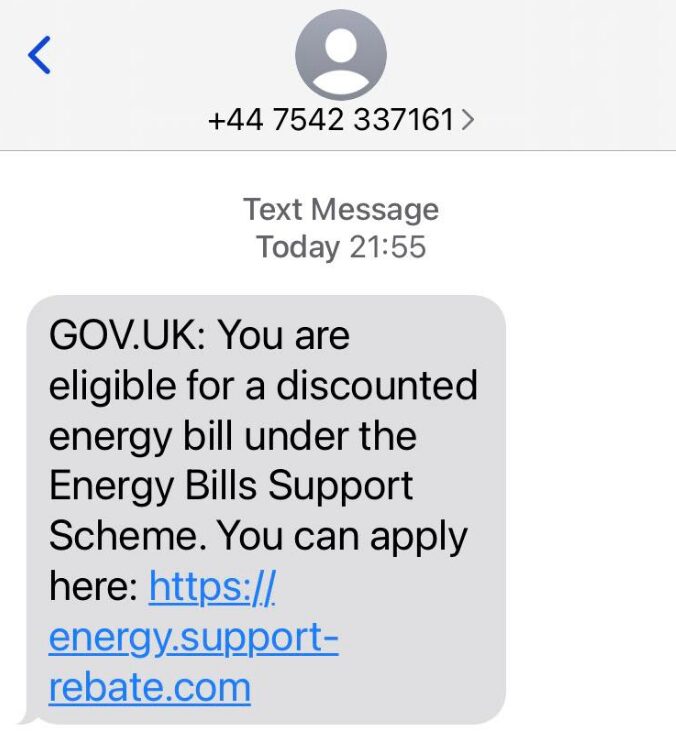
The scams borrow the language of real support schemes, so the scale of those schemes is the first thing to hold in mind. The Energy Bills Support Scheme accounted for £11,364 million of spend for Great Britain5. The Government Electricity Rebate provided around £321 million in rebates in its first scheme year6. These are the kinds of figures a fraudulent text or call will gesture at without ever naming a scheme precisely.
Fraud against the schemes themselves is documented. Ofgem had estimated businesses could have fraudulently claimed between £56 million and £165 million from energy suppliers, up to 3.9% of the £4.2 billion scheme delivery costs to the end of March 2025, a National Audit Office estimate4. That is fraud on the supply side rather than against households, but it explains why official bodies now publish dedicated counter fraud contacts and why grant paperwork is checked closely.
The Energy Company Obligation, the scheme most often invoked in fake grant calls, has its own reporting route. Ofgem publishes a counter fraud contact for it, and a separate complaints process for installations8. Suppliers obligated under ECO are expected to report to government the action they are taking to ensure support has been passed on to consumers, a requirement set out when the Energy Bills Support Scheme was announced9.
What drives the volume of energy scams

Two things drive the volume. The first is the money moving through support schemes, which makes impersonation worthwhile. The second is the cost pressure on households, which makes recipients receptive. Ofgem attributed part of the October 2025 price cap change to increases to parts of the costs of transporting energy in Great Britain and costs towards government schemes and essential support11. When bills are rising and schemes are in the news, a message about a rebate or a grant reads as plausible.
The Energy Ombudsman's own guidance describes the mechanics precisely. It states that scam emails use the Energy Ombudsman or a broker name and logo without permission, reference a complaint or review that the consumer has not raised, contain links to fake forms or websites, pressure the recipient to act quickly, come from a free email service such as Gmail, and use a misspelling of a company name1. Each of those is a check a household can run in seconds.
The forms behind those emails request sensitive personal information such as full name, address, date of birth, or bank details1. That is the point of the exercise: not a payment in the moment, but enough data to take payments later or to open accounts in the household's name.
"We are aware of a recent increase in fraudulent emails targeting energy consumers that falsely claim to be from Energy Ombudsman."
The pressure to act quickly is what turns a suspicious message into a loss. Official complaint routes are deliberately unhurried: the Energy Ombudsman requires sufficient evidence to support a case, including the date the complaint was raised with the supplier, before it will take a dispute on12. A genuine body will always allow time for that record to be assembled.
The checks that confirm whether contact is genuine
Genuine contact about an energy account, grant or complaint has three properties: it comes from a body that already holds the household's details, it does not need bank details to proceed, and it can be verified through a route the household chooses rather than one the message supplies.
The Energy Ombudsman's guidance is explicit on what to do with a suspected scam email: do not complete any forms or provide personal information, report the email to the National Cyber Security Centre by forwarding it to report@phishing.gov.uk, contact the Energy Ombudsman directly using the details on its official website or a named Dispute Resolution Executive if there is already an open case, and delete the email1. The order matters: verify through the official site, never through the link.
For grant approaches, the check is whether the scheme exists and who administers it. Ofgem publishes the contact details for obligated suppliers under ECO, and a complaints process for installations8. A caller who cannot name the scheme, the administrator and the supplier account is not describing a real grant.
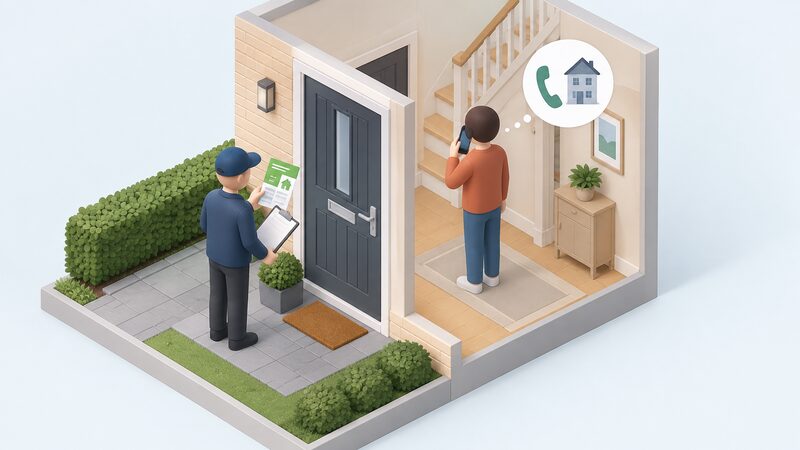
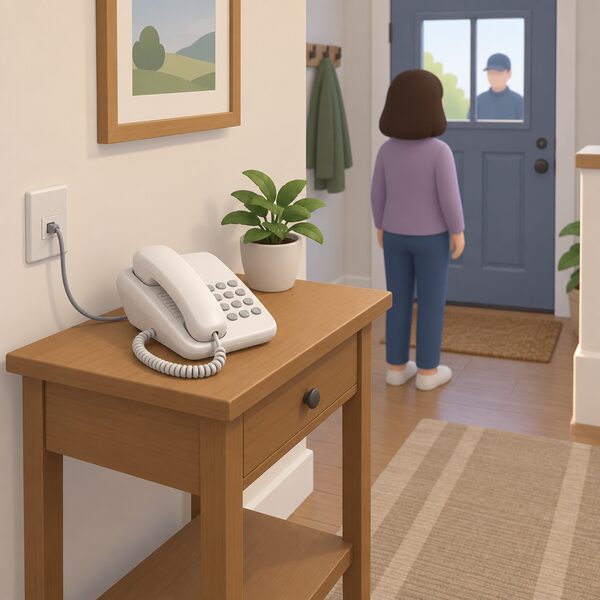
For doorstep approaches, the same logic applies in reverse: a genuine representative can be verified by contacting the company through its published number, not the one on a leaflet. Where a company has failed or is in administration, its paperwork and any warranty it issued cannot be relied on, and a doorstep caller invoking such a name is a clear warning sign.
Where to report, and in what order
Reporting follows the nature of the contact, and the routes are published and free.
- Suspected fraud: email counterfraud@ofgem.gov.uk or call 0207 901 7373, where a voice message can be left2. The same contact is published for the Boiler Upgrade Scheme and for Feed-in Tariff generators13.
- Scam emails: forward to report@phishing.gov.uk, the National Cyber Security Centre route named by the Energy Ombudsman1.
- Energy supply problems in England and Wales: the Citizens Advice consumer service on 0808 223 1133, or 0808 223 1144 for a Welsh-speaking adviser3.
- An unresolved complaint: the Energy Ombudsman, once the supplier has had its chance to resolve it12.
- Money or bank details given: the bank first, then the fraud report.
The consumer service may refer a household to the Extra Help Unit if it needs support with a difficult or urgent complaint, cannot deal with its energy supplier alone due to personal circumstances, is considered vulnerable, or is at risk of being disconnected from an energy supply3. That referral is a genuine escalation route and worth knowing about, because scam approaches often target households in exactly those circumstances.
The Energy Ombudsman is free for consumers and independent of the energy company7. It handles disputes involving suppliers trading in Britain17. Its published dispute pages for named suppliers, including Digital Power Energy Supply UK Ltd, Free Energy Help Ltd, The Energy Titans Limited, Outfox Energy, Energy Optimise Service and Beardvale Ltd, all require sufficient evidence to support the case, including the date the complaint was raised with the supplier18. A scam message that offers to skip that step is offering something the real scheme cannot.
How the routes differ across the UK nations
The reporting landscape is not uniform, and the differences matter most where a household is trying to verify a caller.
The Energy Ombudsman states that it only handles disputes involving suppliers trading in Britain17. Northern Ireland therefore sits outside its remit, and a caller claiming to represent the Ombudsman for a Northern Ireland account is describing something that does not exist. The Energy Price Guarantee operated, for the most part, in the same way for households across the whole of the UK, with differences for Northern Ireland10, which is the pattern to expect: broadly consistent schemes with territorial variations that a genuine body will be able to explain.
The Citizens Advice consumer service is described as a free consumer service for people living in England or Wales with problems with energy bills or supply3. Scotland and Northern Ireland have their own consumer arrangements, and a household there should use the route that applies locally rather than the England and Wales number.
The Energy Ombudsman notes that there are over 20 Ombudsman schemes in the UK12, and that the level of maximum financial award may vary depending on the type of energy company and the Terms of Reference that cover that scheme24. A scam that promises a specific, uniform award across all suppliers is contradicting that variation.
| Nation | Consumer advice route | Ombudsman position |
|---|---|---|
| England | Citizens Advice consumer service, 0808 223 11333 | Energy Ombudsman covers suppliers trading in Britain17 |
| Wales | Citizens Advice consumer service, 0808 223 1133 or 0808 223 1144 for a Welsh-speaking adviser3 | Energy Ombudsman covers suppliers trading in Britain17 |
| Scotland | Local consumer arrangements apply | Energy Ombudsman covers suppliers trading in Britain17 |
| Northern Ireland | Local consumer arrangements apply | Outside the Energy Ombudsman's remit17; Energy Price Guarantee differed10 |
The rules that govern complaints and reporting
The complaint framework is set in regulation. The Gas and Electricity (Consumer Complaints Handling Standards) Regulations 2008 require suppliers to provide the information consumers need, including that the Ombudsman service is independent of the energy company and free of charge7. That is the legal basis a household can point to when a supplier is slow to explain the escalation route.
The eight week and deadlock letter guidance sets out how a complaint moves from the supplier to the Ombudsman7. A scam that offers immediate resolution, bypassing the supplier entirely, is skipping a step the regulations require.
On the grant side, Ofgem publishes the compliance contact for Local Authority flex under ECO at laflex@ofgem.gov.uk, for questions related to declarations, notifications and statements of intent8. A genuine local authority scheme will have a route back to that contact. Ofgem also publishes the obligated supplier contact details page and the ECO4 complaints process for installation complaints8.
"report details of the crime to Action Fraud, either via their website or by calling 0300 123 2040."
Action Fraud is the national reporting centre for fraud, and its number is 0300 123 20408. Where a scam involves an energy supply or a mis-sold contract, the Citizens Advice consumer service on 0808 223 1133 will pass details to Trading Standards and can offer further advice8.
The reporting requirement on suppliers is the other half of the rule set. Suppliers are expected to report to government the action they are taking to ensure support has been passed on to consumers9. That expectation exists precisely because support can go astray, and it is why the counter fraud contact is published rather than kept internal.

What this means for a household's energy independence
Energy independence for a household rests on knowing exactly which bodies hold its account, its grant and its complaint, and being able to reach them without going through anyone who contacted it first. A scam works by inserting itself into that chain: it becomes the intermediary between the household and the scheme, the supplier or the Ombudsman.
The countermeasures are structural rather than technical. The Energy Ombudsman is free for consumers and independent of the energy company7, so there is never a fee to pay for its involvement. Ofgem's counter fraud contact is published and free to use8. The consumer service is free and may refer vulnerable households to the Extra Help Unit3. None of these routes requires bank details, and none requires a form reached through a link.
The dependence that remains is on the supplier and the grid, and on the accuracy of the records those bodies hold. A household that has been targeted should check its account directly with the supplier, confirm any grant application through the administering body, and keep dated records of every contact, because the Energy Ombudsman requires sufficient evidence including the date the complaint was raised with the supplier before it will act12.
Where a company in the chain has failed or is in administration, its warranty and paperwork cannot be relied on, and any approach invoking its name should be treated as suspect. The practical position is that a household's energy independence is protected by the same habits that protect its money: verify through a route you chose, never through one you were given, and report what does not check out.
Sources24 cited
- Guidance on scam emails claiming to be from Energy Ombudsman, Energy Ombudsman, 9 February 2026
- Guidance for FIT Generators V18, Ofgem, 1 April 2026
- Complain about your energy supplier, Ofgem, 2026
- Energy bills support: an update, Public Accounts Committee, 2025
- Energy bills support: an update, National Audit Office, 14 November 2024
- Government Electricity Rebate annual report, Ofgem, 28 January 2016
- Eight Week and Deadlock Letter Supplier Guidance, Ofgem, February 2020
- ECO contacts, guidance and resources, Ofgem, 17 September 2026
- £400 energy bills discount to support households this winter, UK Government, 29 July 2022
- Energy Price Guarantee up until 30 June 2023, UK Government, 17 September 2026
- Changes to the energy price cap between 1 October and 31 December 2025, Ofgem, 27 August 2025
- Raise a dispute, Energy Ombudsman, 19 September 2026
- Boiler Upgrade Scheme Installer Guidance, Ofgem, 25 September 2023
- Boiler Upgrade Scheme Installer Guidance, Ofgem, 21 July 2022
- Problems with services: consumer advice, Isle of Anglesey County Council, October 2025
- Complain about your energy supplier or network operator, Ofgem, 2026
- Energy Ombudsman FAQs, Energy Ombudsman, 19 September 2026
- Digital Power Energy Supply UK Ltd, Energy Ombudsman, 19 September 2026
- Free Energy Help Ltd, Energy Ombudsman, 19 September 2026
- The Energy Titans Limited, Energy Ombudsman, 19 September 2026
- ECO 7 Energy, Energy Ombudsman, 19 September 2026
- Energy Optimise Service, Energy Ombudsman, 19 September 2026
- Beardvale Ltd, Energy Ombudsman, 19 September 2026
- What to expect, Energy Ombudsman, 19 September 2026
 Grant ScamsGrant schemes attract cold callers, doorstep sellers and fake approval letters using real scheme names.
 Scams and Mis-SellingHow energy supplier scams present, what the doorstep and phone selling rules require, the redress available when a contract was mis-sold, and how the Energy Ombudsman handles a dispute.
 Insulation Scams and Cold CallsHow funded insulation mis-selling works, from the cold call and the fake 'illegal insulation' claim to spray foam removal bills, plus the TrustMark check, the guarantee position, and where to report a scam.
 Energy Theft and TamperingExplains what counts as energy theft, how to report a suspected tampered or bypassed meter, and what a supplier may do on investigation.
 Product RecallsHow recalls and safety notices work for energy equipment in UK homes, who issues them, how to check a product, and what replacement, repair and refund routes exist.
 Mis-Selling and Doorstep SalesCovers the practices that amount to misleading and aggressive selling of solar, insulation, boilers and batteries, and the rules that prohibit them.