In this guide
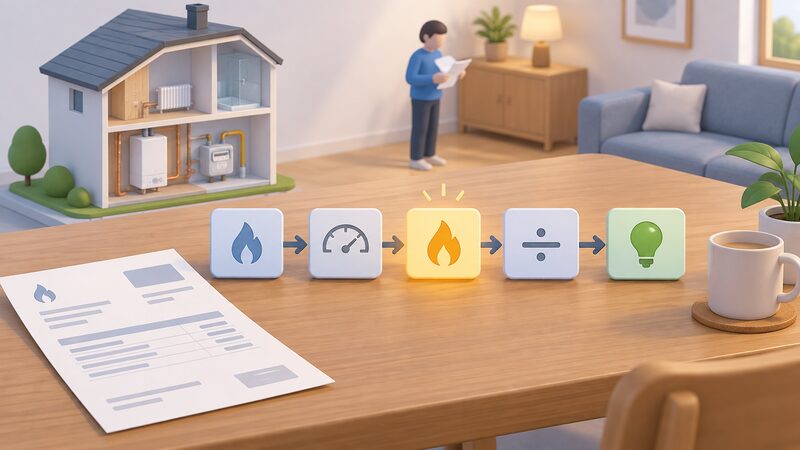
A gas meter counts volume, in cubic metres or in hundreds of cubic feet, but gas is sold in kilowatt hours1. The bridge between the two is a single arithmetic chain: take the volume used, multiply by the correction factor 1.02264, multiply by the calorific value printed on the bill, then divide by 3.62. The answer is the energy, in kWh, that the bill charges for. If the meter reads in cubic feet rather than cubic metres, one extra step comes first: multiply the cubic feet figure by 2.83 to convert it to cubic metres, then run the same chain3.
The volume that goes into the sum is never the number showing on the meter face. It is the difference between two readings: the closing reading minus the opening reading for the period being billed. Everything after that is fixed arithmetic except the calorific value, which changes with the gas actually delivered and is therefore reprinted on every bill rather than being a constant a household can memorise2.
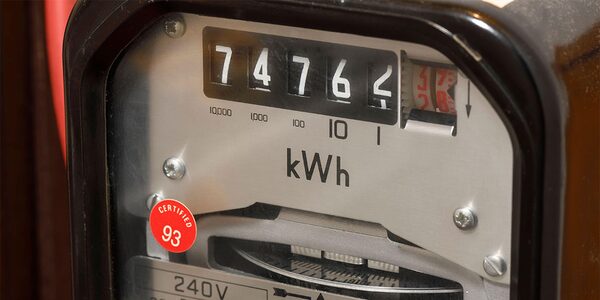
The reason for the whole exercise is that the meter cannot measure energy. Gas of the same volume can carry slightly different amounts of heat depending on its composition and on the temperature and pressure at the meter. Electricity meters have no such problem: they record energy units directly, known as kilowatt hours4. That is why an electricity reading can be multiplied straight by a unit rate while a gas reading cannot.
Gas is sold by energy, not by volume
Gas meters measure in units of 100s of cubic feet or cubic metres, but gas is sold in kilowatt hours1. The supplier performs the conversion before the unit rate is applied, so the volume figure never appears on the payment line4. This is a long-standing industry convention rather than a quirk of any one supplier: the price cap itself is expressed per kilowatt hour7, and every retail tariff states its price as pence per kilowatt hour for both fuels8.
A kilowatt hour is defined simply: one unit of electricity or gas refers to the use of 1,000 watts over one hour9. The unit rate is the price paid for every kilowatt hour actually consumed10. Because both fuels are expressed in the same unit, gas and electricity can be compared directly, which is the practical reason the convention survives. It is also why the familiar comparison between the two fuels can be stated at all: Scottish Government analysis put one kWh of electricity as more expensive than one kWh of gas by a factor of about 4 to 511.
The cost of that conversion for a household is a loss of transparency. The meter is a device you can walk up to and read; the calorific value is a number supplied by someone else, for a period already past, and it cannot be verified at home. The arithmetic below is the only way to hold the two ends of that chain together.
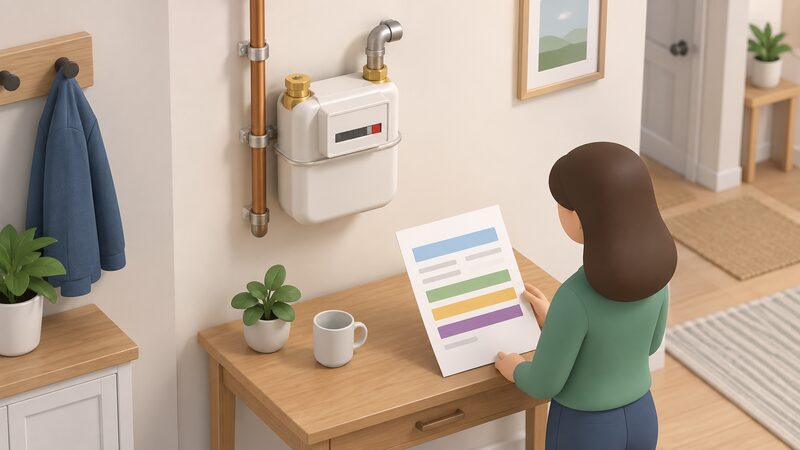
Metric or imperial: which meter do you have
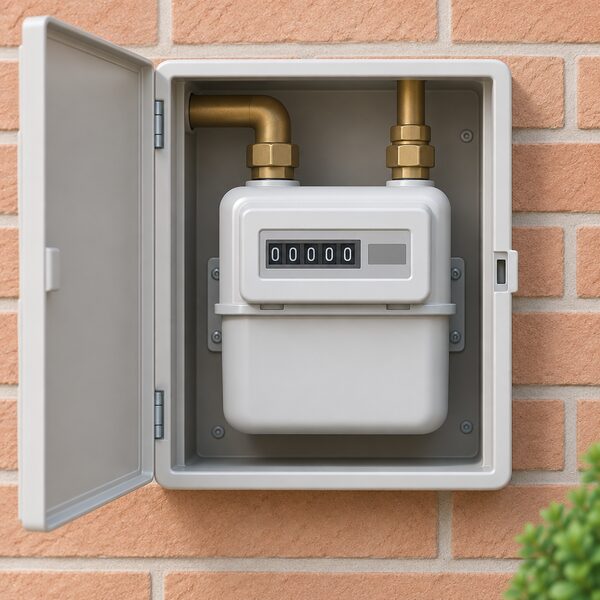
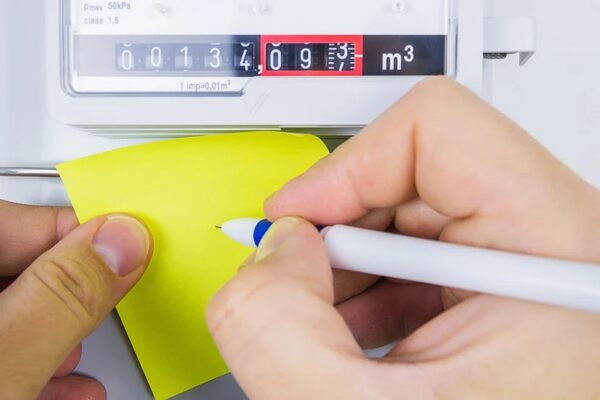
Most gas meters are metric: they show readings in cubic metres and have five numbers to read5. Newer meters have 5 numbers and are usually measured in cubic metres12. Digital metric meters usually show "m" or "m3" somewhere on the display3. Imperial meters, which include dial meters and some older analogue types, show readings in cubic feet and have four numbers5. Older gas meters are measured in cubic feet and have 4 numbers before the decimal point12.
Dial meters are the easiest to classify: these meters will always measure gas usage in cubic feet13. A digital imperial meter looks very similar to a digital metric one, except there are four numbers and the unit of measurement is given in cubic feet13.
| Feature | Metric meter | Imperial meter |
|---|---|---|
| Unit shown | Cubic metres (m³)5 | Cubic feet (ft³)5 |
| Digits to read | Five5 | Four5 |
| Typical display marking | "m" or "m3"3 | "ft3"3 |
| Extra conversion step | None | Multiply by 2.83 first3 |
| Dial-type meters | Not applicable | Always cubic feet13 |
Getting this identification right matters more than any other step, because mistaking an imperial reading for a metric one understates the energy used by a wide margin, and the error compounds across every subsequent multiplication. Detail on reading each face, including the dial types, is set out in how to read a gas meter.
The formula: volume, correction factor, calorific value, divided by 3.6
The full chain, in order, is:
- Subtract the previous meter reading from the current one to get the volume used.
- If the reading is in cubic feet, multiply by 2.83 to convert to metres2.
- Multiply by 1.022642.
- Multiply by the calorific value, which is shown on the gas bill2.
- Divide by 3.6 to work out the kWh figure2.
The same five steps appear in independent consumer guidance under the description of the industry standard formula, with the identical 1.02264 multiplier and 3.6 divisor3. There is no dispute between the sources on the arithmetic itself.
The divisor of 3.6 is the conversion between megajoules and kilowatt hours. The calorific value is quoted in megajoules per cubic metre, so steps three and four produce an energy figure in megajoules; dividing by 3.6 turns it into kilowatt hours. Nothing in the chain depends on the appliance, the boiler's efficiency or how the gas is used: it describes the energy delivered to the property, not the useful heat extracted from it.
Once the kWh figure exists, the bill applies the unit rate. Guidance for households estimating their own use suggests multiplying the kWh figure by the pence per kWh rate, noting that for many people this will be around 7p per kWh2. Standing charges are separate and are not affected by the conversion at all.
Working a metric meter reading through the formula
For a metric meter the volume figure is already in cubic metres, so the cubic feet step is skipped entirely. The reading difference goes straight into the multiplication by 1.02264, then by the bill's calorific value, then the division by 3.62.
Two practical points recur. The first is that the meter is cumulative. A household converting the raw five-digit display rather than the difference between two readings will produce a figure covering the whole life of the meter. The second is the decimal. Some metric meters show digits after a decimal point or in a differently coloured frame, and including them in the whole-number part inflates the volume by a factor of ten or more before the conversion has even begun.
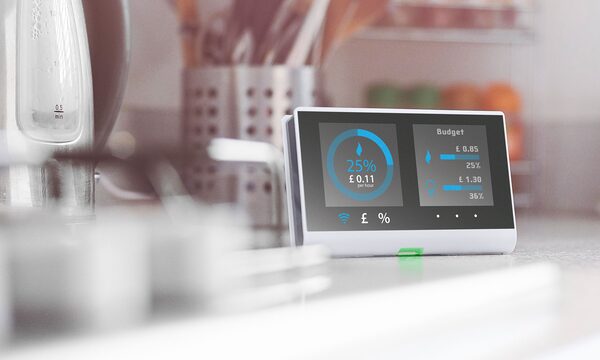
Where a smart meter is installed, the arithmetic is done upstream and presented directly. An in-home display shows how much gas and electricity is being used in kilowatt hours and its cost in as near to real time as possible14. That removes the need to convert anything, but it also removes the ability to check: the household sees the output of a calculation it has not seen the inputs to. The bill remains the only place where the volume, the correction factor and the calorific value appear together.
Imperial meters: convert cubic feet to cubic metres first
An imperial meter's four digits count cubic feet5. If your annual meter reading is in cubic feet, multiply by 2.83 to convert to metres2, after which the metric route applies unchanged. The same 2.83 multiplier is used to convert from hundreds of cubic feet to cubic metres on bills that express usage that way1.
This is where the greatest scope for error lies, because imperial meters are the older stock and their faces are the least clearly labelled. Some show the word "feet" in small type; dial meters show nothing at all but are always imperial13. A household that cannot identify its meter with confidence can compare the converted result against the bill's own kWh total for the same period: if the answer is roughly 2.83 times too small or too large, the unit was misread.
The volume correction factor: 1.02264
The correction factor is a flat multiplier of 1.02264 applied at step three2, and it appears with the same value in the industry standard formula set out by consumer guidance3. Its purpose is to reconcile the gas as it passed through the meter with gas at a standard reference condition of temperature and pressure. A cubic metre of gas at the meter is not quite a cubic metre of gas at standard conditions, and the factor accounts for that difference.
For a household the practical consequence is small: it adds a little over two percent to the volume figure. But it is applied before the calorific value, so it carries through the rest of the chain. Omitting it produces an answer that is consistently a fraction below the supplier's, which is a useful diagnostic: a calculation that is low by around two percent has probably lost this step rather than anything more serious.
The factor printed on the bill is the one that was actually applied, and it is the figure to use when reproducing a specific bill. Where it differs from 1.02264, the bill governs.
Calorific value: the number that changes between bills
The calorific value is the only variable in the chain. It describes the heat content of the gas that was delivered, and it is shown on the gas bill2. It is not published as a single national constant that a household can apply forever, because the gas mixture reaching a given part of the network changes over time.
There is a further complication worth knowing about, because it is a common source of confusion when comparing bills against appliance ratings. Building regulations guidance for Wales notes that the UK traditionally uses gross calorific values while most European standards use net, and that for gas appliances it is now the norm to express the rating as a net value in kW (net)15:
"Thus for gas appliances it is now the norm to express this rating as a net value (kW (net))."
Billing uses the gross basis. An appliance nameplate quoted in net kilowatts is therefore not directly comparable with a bill's calorific value, and no arithmetic on this page reconciles the two. For the purposes of checking a bill, only the calorific value printed on that bill is relevant.
Checking the result against your bill
A bill sets out the conversion explicitly, and reproducing it is the point of the exercise. On an Octopus Energy bill, for example, the second page breaks the overall charges down into kilowatt hour usage with unit rates and standing charge calculations16. Other suppliers present the same elements in their own layout, but the components are common: opening and closing readings, volume, correction factor, calorific value, kWh, unit rate, standing charge.
The kWh total is the figure to match. If it agrees to within a fraction of a percent, the conversion is confirmed and any dispute is about the readings themselves or the rate applied, not the arithmetic. If it is out by a factor close to 2.83, the meter type was misidentified. If it is out by roughly two percent, the correction factor was probably missed.
The unit rate side of the bill can be checked against published figures. Under the price cap for 1 October to 31 December 2025, a standard variable tariff customer paying by Direct Debit paid on average 6.29p per kWh for gas, including VAT, averaged across England, Scotland and Wales6. Welsh government guidance gives 5.93p per kWh for gas for 1 January to 31 March 2026, alongside a 35.09p standing charge17, and an industry response to the April announcement gives a gas unit rate of 5.74p per kWh from 1 April 202618. Rates from 1 October 2026 have been reported at 8p per kWh, described as up around 27 per cent year on year and the highest level since early 202319. Northern Ireland sits outside the Great Britain price cap, so cap figures do not describe bills there.
Why a household calculation rarely matches to the penny
Small differences are expected and are not evidence of an error. Each multiplication introduces rounding, and suppliers round the final kWh figure before pricing it. A calorific value read from one bill and applied to a different period will not be the value actually used for that period, because the delivered gas differs. The order of rounding also matters: rounding the volume before the multiplications gives a slightly different answer from rounding only at the end.
What a household calculation does establish is the order of magnitude, and that is enough to catch the errors that actually cost money: a transposed meter reading, an estimated reading carried forward for months, or a reading entered in the wrong units. Submitting an actual reading rather than accepting an estimate is the single step that removes most billing disputes, and the mechanics are covered in submitting meter readings.
What a converted figure tells you about consumption
Once a reading is in kilowatt hours it can be compared with published benchmarks. Ofgem's typical domestic consumption values, used to set the bill values quoted under the price cap, are 2,700kWh for electricity and 11,500 kWh for gas at medium consumption20. The gas distribution has been published more widely: 3,000 kWh a year at the 5th percentile and 29,000 kWh at the 95th21. The high consumption value was revised down from 18,000 to 17,000 kWh a year in 201722. Ofgem treats a change as material only where it is at least 100 kWh for electricity and 500 kWh for gas when rounded23, which gives a sense of the precision these figures are intended to carry.
Against that spread, an annual converted figure places a household in context. A home well above the 95th percentile has either a large heat demand or a fault worth investigating. Estimating usage from first principles is a different exercise, set out in how to take a meter reading and the wider home energy guidance.
What the conversion means for energy independence
The arithmetic is a small but real piece of control. A household that can reproduce its own bill is no longer dependent on the supplier's word for what it owes, and can distinguish a rate rise from a consumption rise from a billing error. That matters most where usage is high and the bill is the largest household outgoing of the winter.
The dependence that remains is complete on the gas side. The calorific value is set by what the network delivered; the correction factor is an industry standard; the unit rate is set by the supplier and moves with wholesale markets and the cap. Metering rules elsewhere in energy policy reflect the same split: under the domestic Renewable Heat Incentive, heat and electricity meters are required to read in kilowatt hours or megawatt hours, while gas and oil meters read in cubic metres or litres24. Volume is what a fuel meter can see; energy is what the bill charges for.
For a household moving away from gas, the conversion becomes redundant rather than easier: both gas and electricity usage are measured in kWh25, but an electricity meter reports the figure directly with no correction factor and no calorific value in between. That is one fewer number set by someone else, on a bill that the household can check in full.
Sources25 cited
- Understanding your gas or electricity bill, Centre for Sustainable Energy, February 2026
- How to estimate your energy use, Which?, 3 August 2026
- Gas meters and electricity meters: what you need to know, Which?, 16 January 2026
- Reading your gas or electricity meter, Centre for Sustainable Energy, August 2026
- How to read your gas meter, National Energy Action, 13 July 2026
- Changes to the energy price cap between 1 October and 31 December 2025, Ofgem, 2025
- Energy price cap, Ofgem, 17 September 2026
- What is the energy price cap, Energy Saving Trust, 7 September 2026
- Guide to kWh, Uswitch, 26 August 2026
- Low standing charge tariffs: who are they for, Ivie, 20 September 2026
- Heat in Buildings Strategy, Scottish Government, October 2021
- How to read your gas and electricity meter, Confused.com, 15 December 2025
- Energy meters, energyhelpline, 20 September 2026
- Does a smart meter need Wi-Fi, Smart DCC, 2026
- Approved Document J: heat producing appliances, Welsh Government, 2010
- How do I read my Octopus Energy bill, Uswitch, 10 September 2025
- Energy price cap explained, Welsh Government, 2026
- Response to the April energy price cap announcement, Uswitch, 1 April 2026
- Long term trends in extreme temperature deaths uncovered, End Fuel Poverty Coalition, 2026
- Summary of changes to the energy price cap, 1 October to 31 December 2025, Ofgem, 27 August 2025
- Typical Domestic Consumption Values open letter, Ofgem, 18 October 2019
- Typical Domestic Consumption Values open letter, Ofgem, 22 June 2017
- TDCV decision letter, Ofgem, September 2013
- Domestic RHI: guide to metering, Ofgem, 2026
- Consumer information, Renewable Energy Consumer Code, 17 September 2026
 Reading an Energy BillA line-by-line walk through a domestic gas and electricity bill: unit rate, standing charge, kWh consumption, meter readings, tariff name and balance, plus the 12-month back billing limit and the guaranteed standards payments that apply when a supplier or network operator gets it wrong.
 Reducing Your BillRanks household electricity and gas uses by share of the bill and sets out what each measure changes, from heating settings and insulation to appliance use and tariff choice.
 Baseline Your Energy UseBefore spending money on a heat pump, solar panels or a battery, you need to know what your home actually uses now.
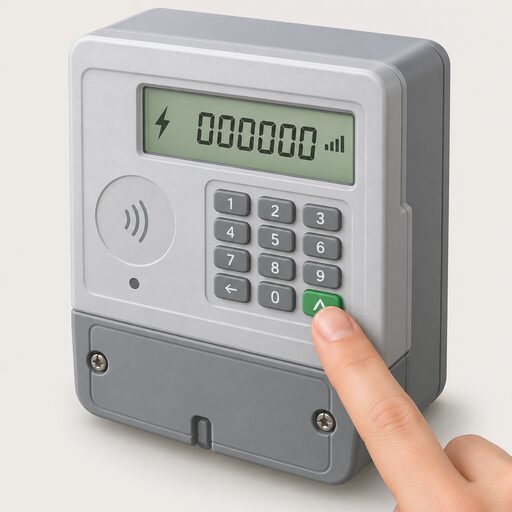 Get a Reading From a Smart MeterHow to bring up a meter reading on a smart electricity or gas meter when a manual reading is still needed, and the difference between the meter itself and the in-home display.
 How a Smart Meter WorksHow a British smart meter measures gas and electricity, how the in-home display and the DCC's secure network fit together, what data leaves the house, what it costs, and where smart mode goes wrong.
 Unit Rates by RegionWhy do electricity and gas prices differ depending on where you live?