
In this guide
A trip switch is doing its job. When there is a fault with your wiring or one of your electrical appliances, trip switches turn off the power to the circuit the fault is on, and they operate when there is a fault on the internal circuit1. The switch that has dropped is telling you where the problem is, not causing it. Resetting it without finding the fault simply repeats the exercise.
Start by separating your problem from the network's. If your neighbours still have power but your home does not, it is likely there is a problem with the fuses or trip switches in your home2. If the trip switches are pointing upward while your electricity is off, the fault is outside and the next step is to check with your neighbours and street lights3. That single check decides whether you are looking at your own installation or waiting on a network repair.
If the device is down, the sequence is: unplug what you can, reset once, and watch what happens. It will remain off until the fault is fixed, although once a faulty appliance is unplugged, you can try switching the trip switches back on1. A device that stays up has found its culprit. A device that drops again, with nothing plugged in, has not.
What a trip switch is and why it trips
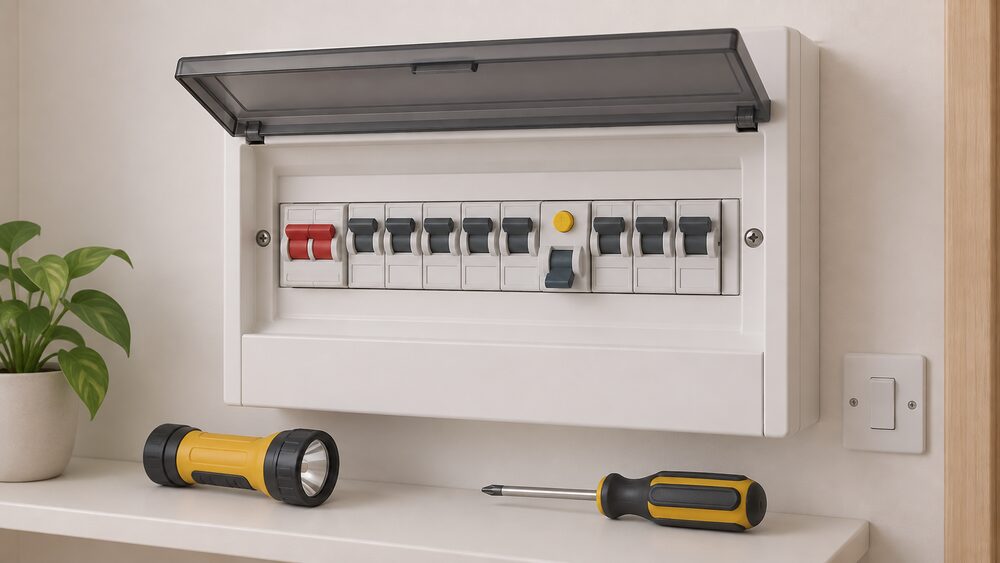
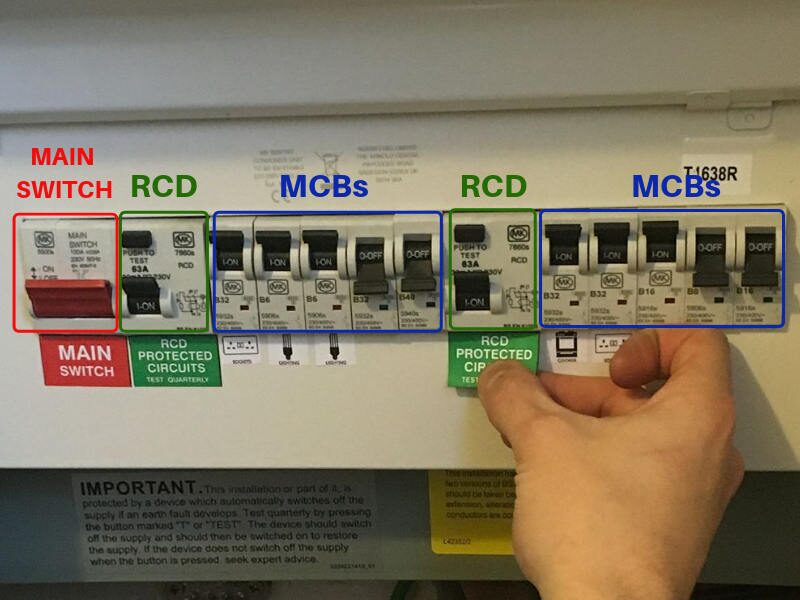
The consumer unit is the box that holds the protective devices for every circuit in the home. You can find your trip switches on your consumer unit, sometimes called the fuse box1. Inside it sit three things: the main switch, fuses and/or circuit breakers, and RCDs4. Older properties may not have trip switches at all: some homes, generally those with older wiring, will have rewireable fuses instead1. A rewireable fuse that has blown has to be rewired rather than reset, and repeated blowing on the same fuse points to the same fault-finding process described below.
Modern consumer units contain circuit breakers, which cut off electricity to the circuit more quickly and do not need replacing after being tripped6. That is the practical difference for a household: a breaker is a switch you can reset, a fuse is a component you replace. The main switch is the master control for all electricity entering the unit and allows the electrical system to be safely isolated during emergencies or maintenance work6.
Why does a fault trip the device rather than simply stop working? Because the protective device measures current going out against current coming back. An RCD stands for Residual Current Device, and switches off the electricity automatically if there is a fault, designed to prevent fatal electric shock4. A circuit breaker responds to overload and short circuit instead. Both are doing safety work, and both are telling you something when they operate.
The scale of what they prevent is worth stating. Every year, half of accidental domestic fires in the UK are caused by electricity, and this figure is not changing5. Over five fires a day in England are caused by white goods such as tumble dryers, washing machines and dishwashers5. These fires are caused by misuse of appliances, poor regulation of electrical safety checks, particularly in the private rented sector, and faulty appliances5. A trip switch that keeps operating is one of the few early warnings a household gets.
RCD, RCBO or main switch: which one has tripped
The position of the switch tells you which type of protection has operated, and that in turn narrows the fault.
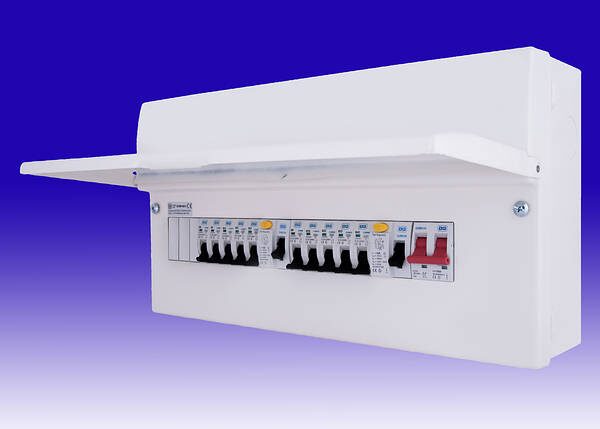
A consumer unit that comes with an RCD main switch and individual circuit breakers protecting each connected circuit is one common configuration6. In that arrangement, the RCD main switch can safely isolate the entire electrical supply of your home, and the RCD provides protection across the installation6. If that device has dropped, everything on the board is dead, which is why the fault can be anywhere on any circuit.
Some consumer units use residual current circuit breakers with overcurrent protection (RCBO), which combine the functions of an RCD and a circuit breaker6. An RCBO protects one circuit only. When one of those drops, the fault is on that circuit and nowhere else, which is a considerable advantage when you are trying to find it.
| Device | What it protects | What a trip tells you |
|---|---|---|
| Main switch | The whole installation | Isolates everything; not a fault indicator itself6 |
| Circuit breaker | One circuit, against overload and short circuit | The fault is on that circuit6 |
| RCD main switch | The whole installation, against residual current | The fault could be on any circuit6 |
| RCBO | One circuit, against residual current and overcurrent | The fault is on that one circuit6 |
The practical consequence is simple. A single device down on a board of many points to one circuit, and the appliances on it. A main RCD down with every breaker still up points to a fault that may be on any circuit, or to the RCD itself, and the elimination process has to start from the whole installation rather than one room.
First steps: what to do when the switch keeps tripping
Work in order, and stop when the evidence tells you to.
- Check whether the fault is yours or the network's. If your neighbours still have power but your home does not, it is likely there is a problem with the fuses or trip switches in your home2. If your trip switches are pointing upward whilst your electricity is off, check with your neighbours and street lights3.
- Identify which device has dropped. If your trip switches were pointing downward when your electricity went off, flick them back to an upward position3.
- If it drops again, unplug appliances on that circuit and reset once more. It will remain off until the fault is fixed, although once a faulty appliance is unplugged, you can try switching the trip switches back on1.
- If it will not stay up with nothing connected, stop resetting it. This could indicate a problem with your internal wiring such as a faulty appliance, and you may need to contact a local electrician3.
Two things are worth knowing before you start. First, a power cut and a trip look similar from the sofa, and the neighbour check is the fastest way to tell them apart2. Second, if you were already in the process of switching energy supplier when supply was interrupted, you will still move to the supplier you chose7, so a supply problem does not derail a switch in progress.
Finding the faulty circuit or appliance by elimination
Elimination is the whole method, and it depends on doing one thing at a time.
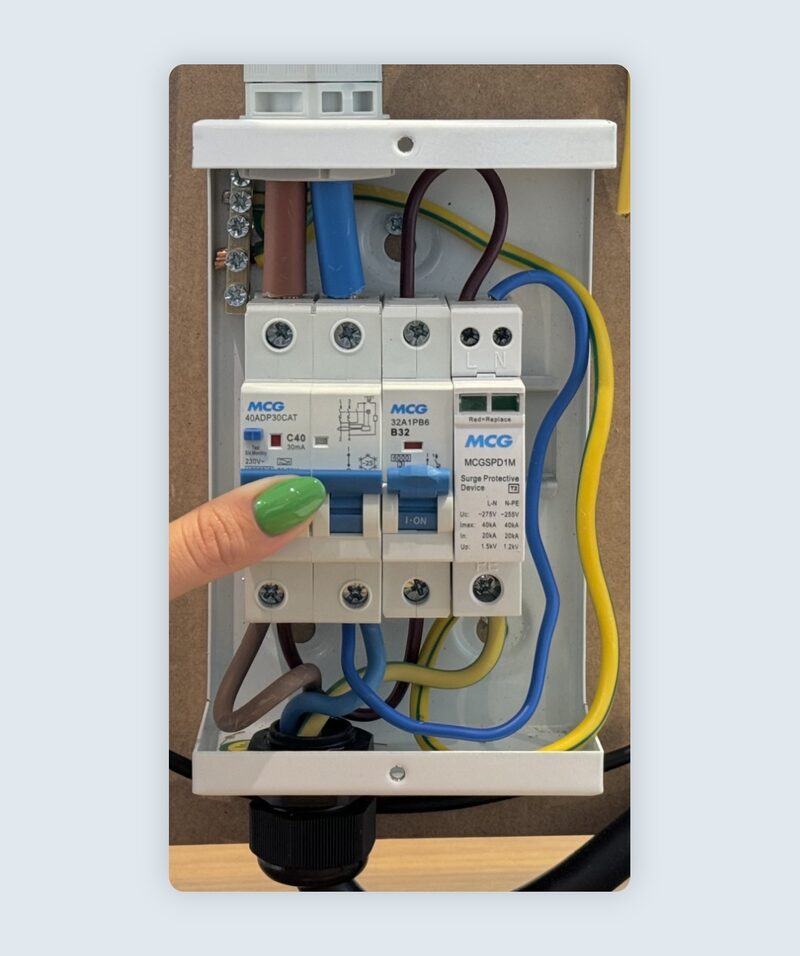
Start with the circuit. If a single breaker or RCBO has dropped, the fault is on that circuit6. If the main RCD has dropped, every circuit is suspect, and the fastest route is to switch off the individual breakers, reset the RCD, then bring circuits back one at a time until it drops again. The circuit that takes it down is the one to investigate.
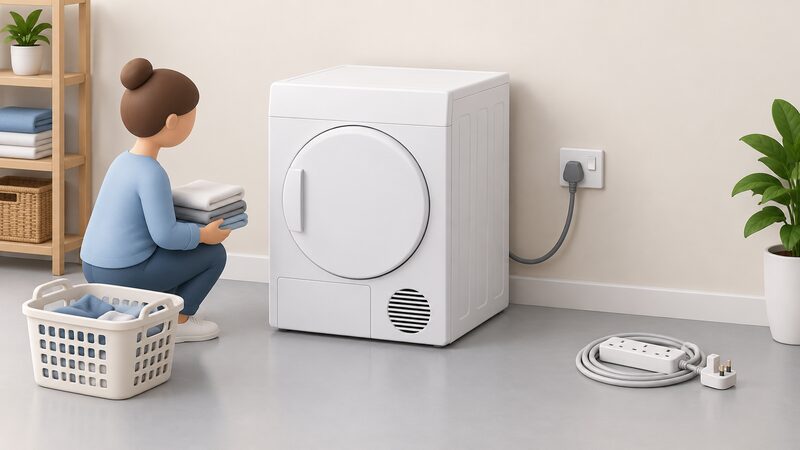
Then work along that circuit. Unplug everything on it, reset, and plug items back one at a time, giving each a moment under load. An appliance that trips the device when it is switched on, rather than when it is plugged in, is drawing current only when running, which is why a kettle, heater or tumble dryer has to be switched on to reproduce the fault.
Some faults are not appliance faults at all. Water ingress, damaged cable, a trapped flex behind a kitchen unit, or a socket that has been overloaded will all trip a device with nothing obviously at fault. The pattern matters: a trip that happens when it rains, or when a particular door is closed, is a wiring or moisture problem rather than an appliance problem.
The same discipline applies to the appliances themselves. Electrical Safety First's guidance for tumble dryers includes cleaning the lint filter after every use, registering appliances with the manufacturer, checking for recalls, reading the manufacturer's instructions, checking for scorching or burn marks and loose or worn wires, avoiding overloading, allowing drying programs to complete fully, not stopping the dryer mid-cycle unless removing items quickly and leaving the door open, not putting clothes contaminated with combustible substances in the dryer, and avoiding leaving appliances on overnight or unplugging or switching off when going out8. Several of those checks are exactly the ones that reveal a developing fault before it trips anything.
If you rent, the wiring itself is not yours to investigate. The Landlords and Tenant Act 1985 requires landlords of properties with short leases to keep the electrical wiring in repair and in proper working order9. A recurring trip on fixed wiring is a repair matter to report, not a fault to chase.
Common culprits: extension leads, white goods and recalled items
Extension leads and high-current appliances are the most predictable pairing in a tripping investigation.
Electrical Safety First is urging households to plug their tumble dryers directly into a wall socket8. The reason is that an extension lead can be overloaded and overheat8. Its guidance on patio heaters makes the same point in different words: the heater needs to have a cable long enough to reach a socket as it should not be plugged into an extension lead9. A heater or dryer on a lead is drawing more current than the lead is designed to carry continuously, and the result is heat where heat should not be.
Heaters carry their own set of conditions. Electrical Safety First advises putting a heater on a level surface, well away from anything or anyone that could knock it over, keeping it well away from combustible materials such as paper, furniture or curtains, never using it to dry clothes, never leaving it unattended for long periods whilst in use or while asleep, regularly inspecting it for damage and deterioration, and buying from manufacturers or retailers you know and trust, avoiding second-hand heaters or asking what safety checks were carried out if you do buy one10. It also advises ensuring a working smoke alarm on every floor and testing it regularly10.
Recalled products are a distinct category, and the action is unambiguous. Electrical Safety First strongly recommends that anyone who discovers they have an electrical item that has been recalled should stop using it until it has been checked by the manufacturer11. For one recalled lithium battery charger, the notice states that anyone who believes they have an affected product should stop using it immediately and contact the retailer for further advice11.
"If you believe you have an affected product stop using it immediately and contact the retailer for further advice."
Registering appliances with the manufacturer is what makes a recall notice reach you at all8. Without registration, a household may keep using a product for years after a safety notice has been issued.
When the RCD itself is the problem: the three-monthly test
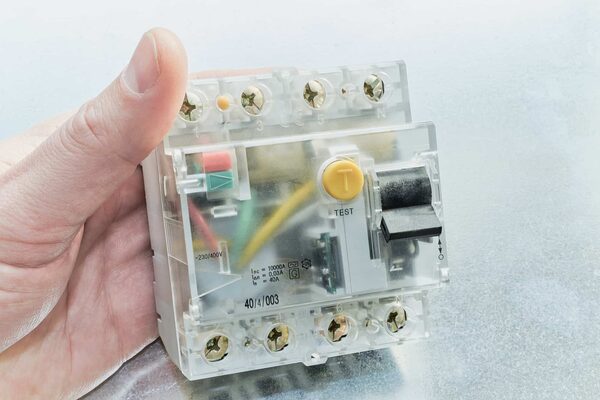
An RCD that has stopped working looks exactly like an RCD that is working, which is why the test button exists.
Electrical Safety First advises testing your RCDs every three months4. The test button on the device is the mechanism. Pressing it should switch the power off, demonstrating that the device can still operate. If it does not trip when the button is pressed, the protection is not functioning, and that is a fault in the device rather than in the installation.
There is a technical limit worth knowing about. Certain types of RCDs may not operate or trip where there is Direct Current (DC) residual current present12. That matters increasingly in homes with equipment that produces DC residual current, and it is one reason why the type of RCD fitted, not just its presence, is a question for a registered electrician rather than a householder.
The test button is not a substitute for an inspection. It confirms the mechanism moves; it does not confirm the device will operate at the residual current threshold that protects a person. That is what an electrical inspection tests, and it is why the three-monthly button test sits alongside periodic inspection rather than replacing it.
If you are arranging a formal inspection rather than a button test, how to arrange an electrical inspection and read the report sets out what the process involves and what the resulting document tells you.
When to stop and call a registered electrician
There is a clear line between a fault a household can isolate and a fault a household should hand over.
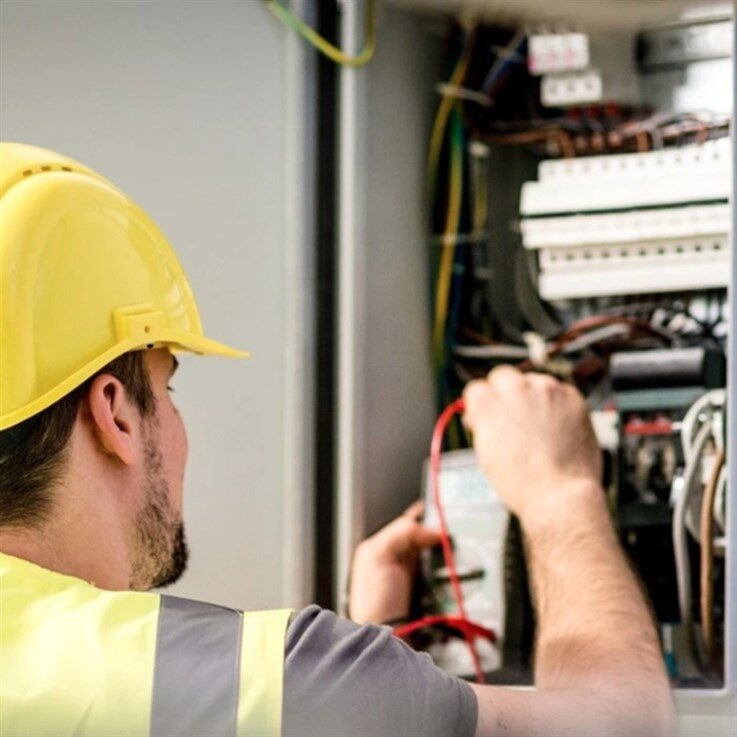
Stop and call a registered electrician when the device will not stay up with every appliance unplugged, when the fault returns after a reset with nothing connected, when there is any sign of burning, scorching or a burning smell at a socket or accessory, when water has entered an electrical accessory, or when the same circuit trips repeatedly over days or weeks. This could indicate a problem with your internal wiring such as a faulty appliance, and you may need to contact a local electrician3.
Finding one is straightforward. Visit the Competent Persons Register to check if your electrician is registered13. Registration matters because it is what allows certain work to be self-certified rather than notified separately to building control, and because it is the check a household can actually make.
NICEIC describes itself as the UK's largest certification body for electrical businesses, with almost 70 years of operation and over 40,000 currently certified14. It assesses, certifies and trains electricians, plumbers, renewable energy installers, and gas and heating engineers, and it certifies businesses, not individuals, unless they are a sole trader14. That last point is worth understanding: the registration belongs to the firm, so a check on the register confirms the business rather than the individual who arrives.
For gas work, the equivalent check is different and separate. A landlord must ensure that a communal appliance is maintained by a Gas Safe registered engineer and is checked as part of the annual gas safety check15. If the problem involves a gas appliance rather than an electrical circuit, how to check an engineer is Gas Safe registered covers that route.
Building regulations: which electrical repairs you can and cannot do yourself
The rules are less restrictive than many households assume, and more specific than they expect.
Building regulations do not restrict who may carry out electrical installation work16. They also do not set standards for the safety of electrical appliances, but they do require that fixed connections of appliances are safe16. The regulations set standards for electrical installation work only in relation to dwellings, meaning houses and flats, and work in industrial or commercial buildings is covered by the Electricity at Work Regulations 1989 instead16. These rules have been introduced to help reduce the number of deaths, injuries and fires caused by faulty installations16.
What is notifiable varies by nation. In England, special locations are the spaces around baths and showers; in Wales, special locations include kitchens and outdoors16. Most repairs, replacements and maintenance jobs, and alterations or additions to existing circuits outside special locations, are not notifiable16. Re-fixing or replacing the enclosures of existing installation components need not be notified to the council17. Where work is notifiable, the building control body or registered third-party certifier must be notified before work starts16.
| Route | Where it applies | What it means |
|---|---|---|
| Building control body | England and Wales | Your local authority or a private registered building control approver16 |
| Registered third-party certifier | England only | An electrician registered with a third-party certification scheme16 |
| Competent person scheme installer | England and Wales | A building control body does not need to be notified for certain services or fittings16 |
The competent person route is the one most households meet in practice. A building control body does not need to be notified for certain services or fittings if the owner employs an installer registered with a relevant competent person scheme designated in the regulations16. For consumer units specifically, replacement is typically triggered when the unit no longer complies with the latest wiring regulations, or when the home requires more electrical capacity than the current unit can handle6.
One thing is firmly outside the household's hands. It is illegal to move the meter yourself, so contact your supplier in the first instance18. If a meter needs moving rather than a circuit repairing, how to get a meter moved, exchanged or removed covers that separate process.
Rented homes: what tenants and landlords must do
In a rented home the split of responsibility is set by legislation, and it is worth knowing precisely where the line falls.
The legislation requires landlords to ensure that the electrical safety standards are met during any period when the residential premises are occupied under a specified tenancy19. Landlords must give their tenants proof that they have had installations and equipment inspected, tested and checked21. The Landlords and Tenant Act 1985 requires landlords of properties with short leases to keep the electrical wiring in repair and in proper working order9.
On frequency, the position is narrower than many tenants assume. A further electrical safety check is not required on each change of tenancy unless the tenant was told at the last inspection that a safety check was needed sooner14. Electrical Safety First is calling on the government to take action and introduce mandatory five-yearly electrical checks in rented homes5, which indicates that the current requirement falls short of a fixed five-year cycle.
Gas duties run alongside the electrical ones. A landlord must make sure an annual safety check is carried out on each appliance or flue provided for tenants' use22. Where a communal appliance is used by multiple dwellings, the landlord must ensure that the appliance is maintained by a Gas Safe registered engineer and is checked as part of the annual gas safety check15.
Tenants have rights that touch energy supply as well as safety. If you have to pay your energy bills, you can choose to switch your supplier or tariff at any time23. If you rent your home, the guidance is to discuss any changes with your landlord, as each meter may form part of your tenancy agreement24. For the wider picture on rented property and energy, can I switch energy supplier if I rent covers the conditions.
Sources24 cited
- What are trip switches and where can I find them, UK Power Networks, 2026
- What to do in a power cut, Met Office, 2026
- Checks for if you are without power, Electricity North West, 2026
- Electricity made easy, Electrical Safety First, 2026
- 10 ways to avoid electrical fires in your home, Electrical Safety First, 2026
- Consumer units and fuse boxes, NICEIC, 2025
- What happens if your energy supplier goes out of business, Ofgem, 2026
- Dire dryers: easy cleaning hack that could avoid a deadly fire, Electrical Safety First, 2026
- Patio heaters, Electrical Safety First, 2026
- Potential risk to households this winter as millions worried about energy bills will use electrical heaters, Electrical Safety First, 2026
- Lithium battery charger szYB-60W-29.4V2A recall, Electrical Safety First, 2026
- Plug-in solar consumer guide, Electrical Safety First, 2026
- Building control application guidance notes, London Borough of Bromley, 2026
- Householders and landlords help hub, NICEIC, 2026
- Gas safety checks: what they are, Health and Safety Executive, 2026
- Building regulations: general information, Planning Portal, 2026
- Apply for building regulations: electrical safety, Cumberland Council, 2026
- Domestic and homeowners connections help and support, NESO, 2026
- The Electrical Safety Standards in the Private Rented Sector (England) Regulations 2020, regulation 3, legislation.gov.uk, 2026
- Electrical safety standards in the private and social rented sectors: guidance, GOV.UK, 2025
- Checking your home is fit to live in, nidirect, 2026
- Domestic gas installation and health and safety, nidirect, 2025
- Switch your home energy supplier, Ofgem, 2026
- How to get a smart meter, Smart DCC, 2026
 EV Charge Point Faults and FixesDescribes the common failure patterns on domestic charge points: tripped protective devices, lost connectivity, stuck cables and locks, error indications and charging that stops early.
 Bleed a RadiatorThe step-by-step method for bleeding a radiator, the tools needed and the order to work through a house.
 Maintaining Backup PowerWill your generator actually start when the power goes off?
 Smart Meter Faults and FixesYour smart meter has stopped working.
 Maintenance and FaultsWhat does it mean when your home battery starts beeping or showing a warning, and can you fix it yourself?
 Heating Control FaultsWhy is my heating on when the thermostat says it is off, or why does one radiator stay cold?