
In this answer
Short answer
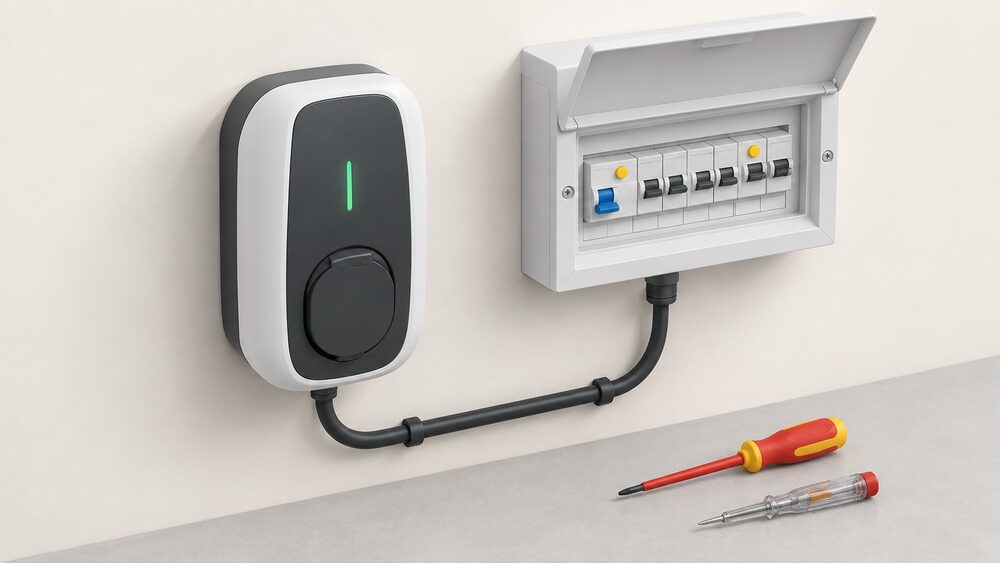
A charger with integral DC leakage detection does not need a Type B RCD. Where the equipment includes a built-in residual direct current detecting device (RDC-DD) complying with BS IEC 62955:2018, a Type A RCD is permitted instead1. Where the charger has built-in DC fault current detection to 6mA, a Type A RCD of 30mA is sufficient1. Without integral DC leakage detection, a Type B RCD is required1.
The underlying rule in BS 7671:2018+A2:2022 requires the charging point to be protected individually by an RCD of Type A, Type F or Type B2. For Mode 3 charging, a Type A or Type F RCD is required where protection against DC residual current in the form of an RDC-DD is provided within the EV supply equipment2. A Type AC RCD must not be used for EV charging circuits1.
The practical consequence is cost and complexity. A Type B device is a more expensive component than a Type A device, and where the charger already contains the DC detection, the extra device is not needed. The decision turns on what the charger's own documentation states, not on the age of the car or the size of the supply.
What the charger's integral DC detection does and the 6mA threshold
An EV battery takes direct current, and the alternating current from the mains has to be converted inside the car4. That conversion, and the electronics around it, can produce smooth DC residual current on the circuit. A conventional RCD is not designed to respond correctly to smooth DC, which can blind it to a genuine fault. The charger's integral detection exists to catch that DC component before it reaches the upstream protective device.
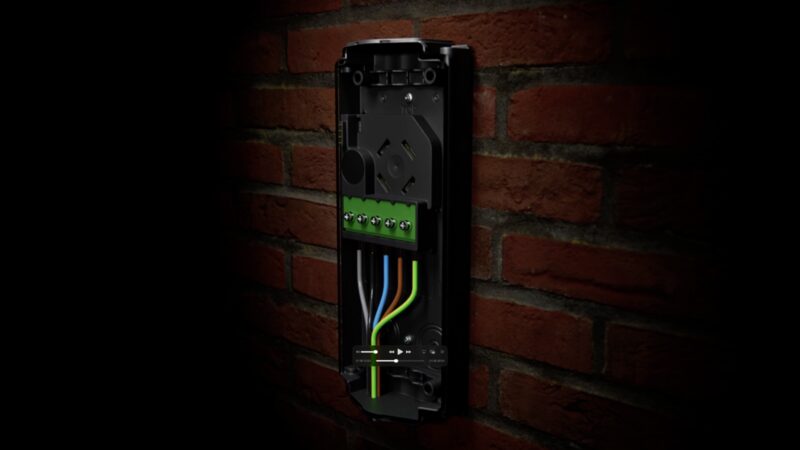
The threshold is 6mA. Where an EV charger has built-in DC fault current detection to 6mA, a Type A RCD of 30mA is sufficient1. A residual direct current detecting device complying with BS IEC 62955 is the standard route to meeting that requirement2. The device combines AC, pulsating DC and 6mA DC detection, evaluation and mechanical switching in one unit2.
Manufacturers state the feature plainly where it is present. The SolarEdge ONE EV Charger EVN22B lists a residual DC detecting device of 6mA according to IEC 629555. The SALUS EVT Charger Series and EV Charger Series both list 6mA DC residual current detection as a specification item6. Growatt's smart EV charger solution specifies Type A RCD plus 6mA DC fault current protection7. The Enphase IQ EV Charger 2 lists 6mA DC residual current protection, relay weld detection, overcurrent and overvoltage protection, and a seismic and tilt sensor8. The Sofar EV11K-AC-02 states Type-A+ 6mA DC leakage detection among its electrical protection functions9.
"Multiple functions for electrical protection, Type-A+ 6mA DC leakage detection, safer charging environment"
Type B, or Type A or F with an RDC-DD: which setup fits which charger
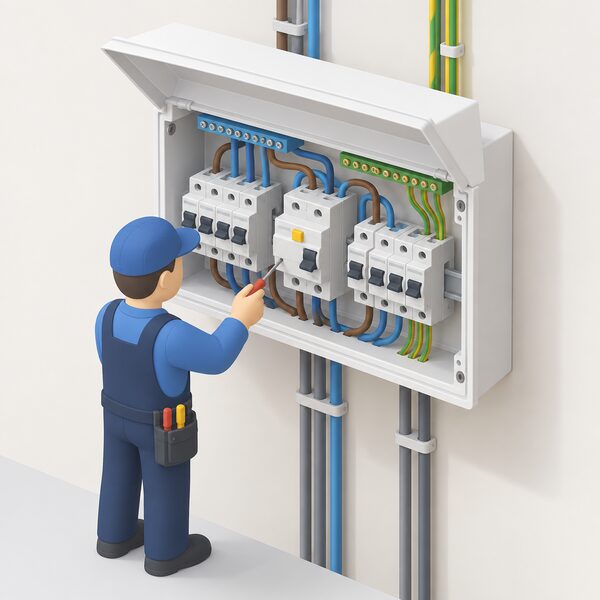
The choice follows the charger, not the householder's preference. Three arrangements are recognised.
| Charger specification | Protective device required | Source |
|---|---|---|
| No integral DC leakage detection | Type B RCD | 1 |
| Integral RDC-DD to BS IEC 62955:2018 | Type A RCD | 1 |
| Mode 3 charging with RDC-DD in the EVSE | Type A or Type F RCD | 2 |
| Charger on a dedicated circuit | Type A or Type B RCD, depending on charger specification | 1 |
Type B devices are also suitable for Type AC, Type A and Type F applications, so a Type B RCD will do the job in every case; it is simply not always necessary10. Type F devices are also suitable for Type AC and Type A applications10. The regulation contains further requirements for both Type A and Type B RCDs to take account of DC fault current11.
Some installers fit an additional consumer unit to house the protective device. One home charger package describes installing an extra consumer unit with a Type B or C MCB and a Type A RCD, or similar RCBO, if needed12. That is a standard installation arrangement rather than a universal requirement, and it depends on the existing board.
The independence point is straightforward: the protective device is part of the fixed wiring of the house, not part of the car. Once installed, it protects any vehicle plugged into that point, and it stays with the property. What the household remains dependent on is the charger's own electronics continuing to function, and on the installer having matched the device to the charger's specification.
Why older wiring and older RCDs may not cope with EV charging
Older installations were not designed with continuous high-current charging in mind. Signs of a vintage board include wooden backings, no RCD protection at all, and nuisance tripping13. A board with no test button has no RCD protection13. Where the existing protective device is a Type AC unit, it must not be used for EV charging circuits1.
The reason is the DC component. A Type A RCD trips on alternating sinusoidal residual current and on residual pulsating direct current10. Type A devices are designed and tested to tolerate moderate levels of DC residual current up to 6mA, and Type F devices tolerate varying levels above 10mA14. A Type AC device has no such tolerance, which is why it is excluded from EV charging circuits.
There is also a supply question. Homes sharing one electricity cable with a neighbour may not have a supply strong enough for an EV charger, and a dedicated cable may be needed before the charger can go ahead15. Where a supply assessment shows an upgrade is required, that upgrade must be completed before the charger is installed16. The recommended first step is to speak to an electrician or installer to see whether the home wiring can support an EV charger17.
Getting the wiring checked and the work certified
Installing a home charger is classified as development, and it is up to the householder to ensure the correct permissions are in place18. Building regulations approval is required in all cases, and it may be achieved through the use of a competent person or a local building control body3. A compliance certificate proves the work complies with building regulations3. A competent and reputable installer should be used, with specific processes for notifying the local building control authority19.
Registered electricians on a competent person scheme can self-certify their work as compliant with the Building Regulations20. Their work is regularly assessed21. NICEIC certifies businesses rather than individuals, unless they are a sole trader, and has operated for almost 70 years with over 40,000 currently certified businesses22.
Product certification is a separate check. BSI Kitemark certification for EV chargers covers testing and certification for charge points both for home and commercial use, and tests chargers against various electrical safety criteria23. It also confirms the charger works correctly with all types of charging methods, from basic to fast charging25.
Where the evidence is thinner
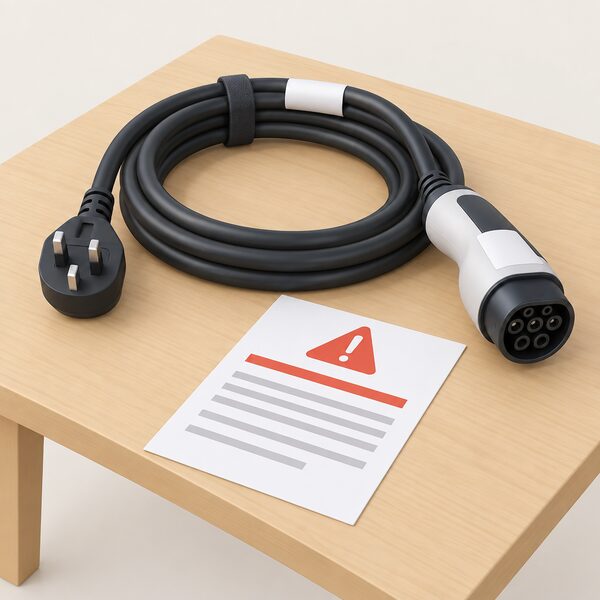
Not every claim about DC detection is equally well supported. The 6mA threshold and the BS IEC 62955 route to a Type A RCD rest on independent guidance and on the wiring regulations themselves1. Manufacturer statements about specific models are reliable for those models only, and a datasheet that does not state a DC detection threshold should not be read as implying one.
One recalled product shows what happens when RCD-related testing fails. A charging cable sold through an online marketplace was recalled over a risk of electric shock due to the failure of the sample to meet the RCD test requirements of Clause 9.726. The recall notice is a reminder that the protective arrangement depends on the equipment actually performing as specified.
Bi-directional charging adds a further layer. Not all EVs or chargers support it, and it requires specialised hardware and software including an inverter for AC and DC currents27. Where a household is considering that route, the DC protection question becomes more involved, not less.
Sources27 cited
- Section 722 EV charging complete guide, Elec-Mate, 2026-07-02
- RCDs for electric vehicle supply equipment (EVSE), IET, May 2024
- Electric vehicle charging: building regulations, Planning Portal, 2026-09-17
- Choosing an EV charging cable, Uswitch, 2022-02-04
- SolarEdge ONE EV Charger datasheet, SolarEdge, 2026-09-17
- EVT Charger Series, SALUS Controls, 2026-09-20
- Smart EV charger solution, Growatt, 2026-09-17
- IQ EV Charger 2, Enphase, 2026-09-17
- EV11K-AC-02, Sofar Solar, 2026-09-19
- Which RCD type, IET, September 2019
- The impact of the 18th Edition Sections 722, 753 and new 730, IET
- EV charging, EDF Energy, 2026
- EV charger in older homes: electrical upgrades explained, E.ON Next, 2026-09-17
- Plug-in solar consumer guide, Electrical Safety First, August 2026
- If your electricity supply can't cope with the new equipment, NIE Networks, 2026-09-19
- EV connections, SSEN, 2026-09-19
- Existing electricity supplies, SSEN, 2026-09-19
- Electric vehicle charging: planning permission, Planning Portal, 2026
- Electric vehicle charging, Planning Portal, 2026
- Wiring a shed: a guide for homeowners, NICEIC, 2026-09-17
- 5 questions to ask your electrician, Electrical Safety First, 2026-09-19
- Householders and landlords help hub, NICEIC, 2026-09-17
- Powering trust in electric vehicle charging with BSI Kitemark certification, BSI, 2026-09-17
- Powering trust in electric vehicle charging with BSI Kitemark certification, BSI, 2026-09-17
- What makes BSI Kitemark certified EV chargers a smarter choice, BSI, 2026-09-17
- Product recall: EV charging cable SEVA-24016P, Electrical Safety First, 2026-09-17
- What is bi-directional charging, Kia UK, 2026-09-17
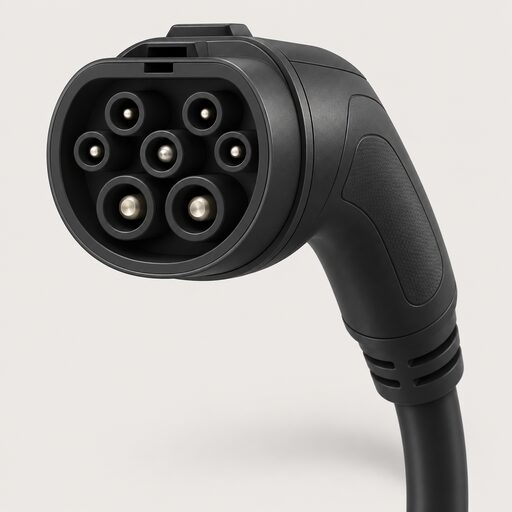 EV Connectors and CablesWhich cable fits your car, and will it work at every charge point you pull up to?
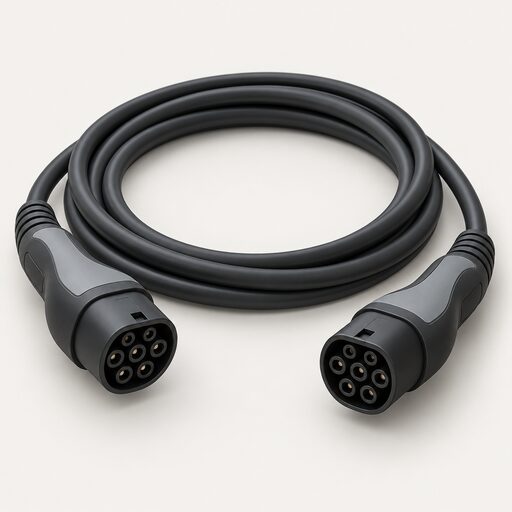 Types of Home EV ChargerWhich home charger suits your car and your driveway?
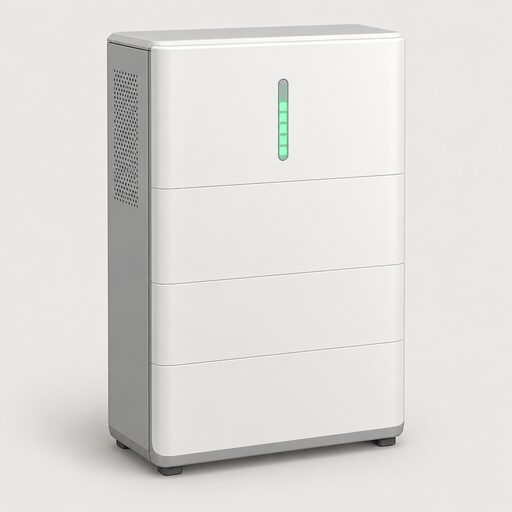 AC-Coupled vs DC-CoupledCan you add a battery to your existing solar panels without swapping the inverter, and does one kind waste more of your solar power than the other?
 Inverters and Inverter-ChargersIf the power goes off, what actually keeps your fridge and boiler running?
 Charging With a Home BatteryHow a home battery and an EV charger share one supply, whether a battery can usefully charge a car, and how combined systems are controlled so the battery is not discharged into the vehicle at a loss.
 Charger Cybersecurity and DataWho can control your home charger, and how do you keep it secure?