
In this answer
Short answer
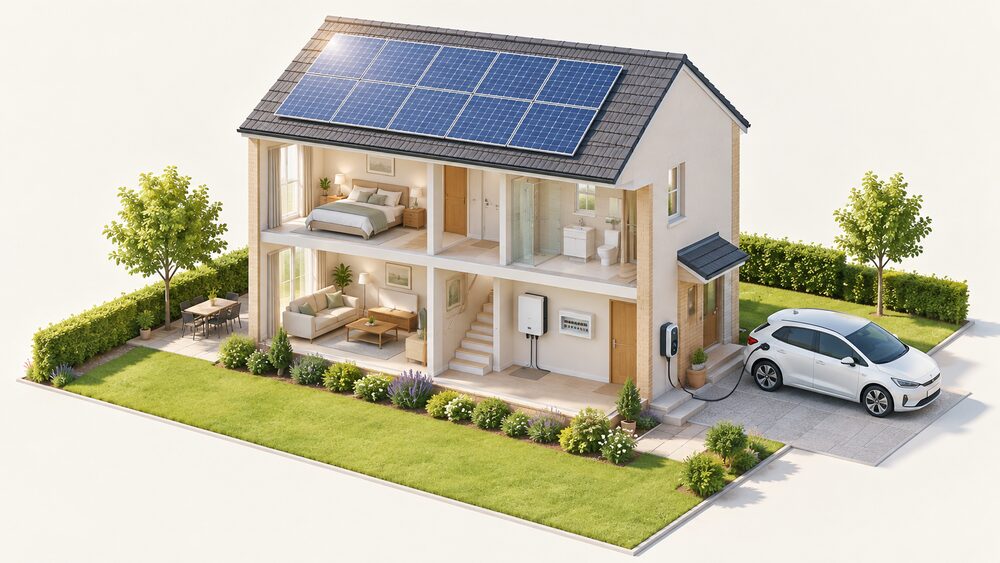
No, a special charger is not required. Any home charge point draws from the same supply that your solar system feeds, so a standard unit will charge the car from solar generation whenever the sun is up. What a solar-aware charger or app adds is control: it detects surplus generation and diverts it into the car rather than exporting it to the grid. Without that control, the car charges at whatever rate it is set to and any shortfall comes from the grid.
The distinction matters because the two things are often sold as one. E.ON Next states plainly that solar generation can directly charge an EV if the right equipment is present, and that some chargers have special modes to charge only from the extra solar energy a house is not using and would otherwise send back to the grid1. The Chartered Institute of Plumbing and Heating Engineering's consumer guidance makes the same split: standard chargers draw electricity from the home supply without distinguishing between solar-generated power and grid electricity, while smart chargers monitor real-time solar production, adjust charging speed accordingly, and switch between solar and grid supply depending on availability2.
So the question is not whether solar charging is possible, but how much of your own generation you want the car to absorb rather than export. That is a control question, answered by the charger's firmware, the app behind it, or both.
No special charger is required: any charge point can run from a solar home
The physical path is the same in every case. Solar panels generate direct current, an inverter converts it to alternating current for the house, and the charge point draws from that supply. Marley's explainer on inverters notes that the difference between inverter types is their suitability for specific applications, which is why the pairing of generation equipment and charging equipment is a design decision rather than a plug-in one4.
What varies is whether the charger knows where its electricity is coming from. A basic unit does not. It charges at its set rate and the household imports whatever the panels are not producing at that moment. A solar-aware unit watches generation and adjusts. The independent guidance is that smart chargers can monitor real-time solar production, adjust charging speed accordingly, and switch seamlessly between solar and grid supply depending on availability2.
Two practical points follow. First, the charger does not need to be made by the same company as the panels or the inverter. waEV-charge states that its chargers are designed to work with a range of compatible solar inverters, and that its chargers connect with solar panels so the vehicle runs on renewable energy at zero additional cost5. Growatt states its smart charger solution is compatible with different brand PV7. Second, no energy provider or tariff is a precondition for the charger to work: waEV-charge states that no specific provider or tariff is needed8.
"Our chargers seamlessly connect with your solar panels, letting you power your vehicle with renewable energy at zero add"
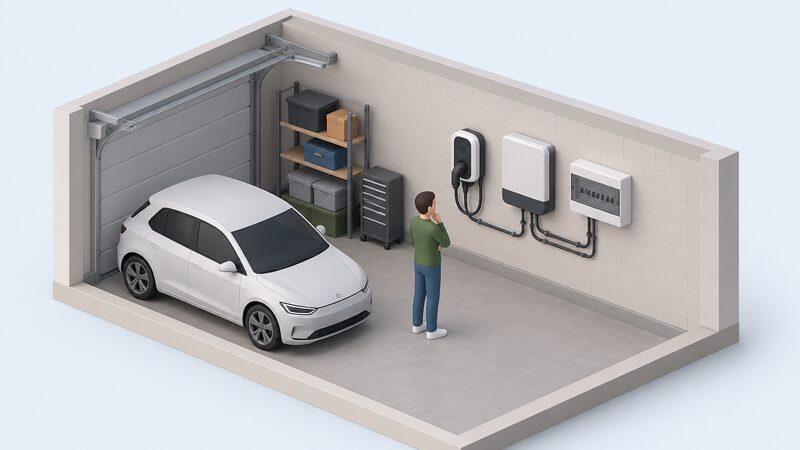
What solar-aware charging modes do: match the car to your spare solar energy
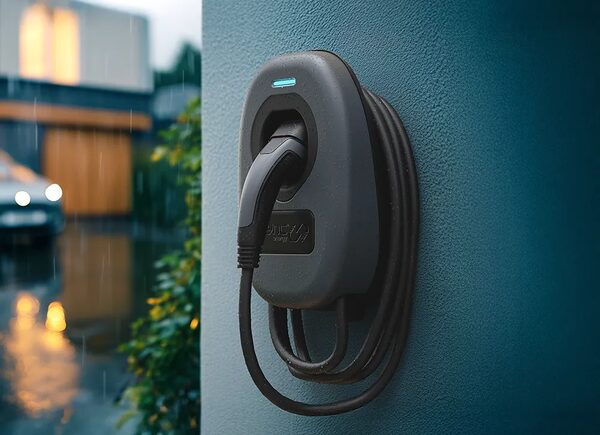
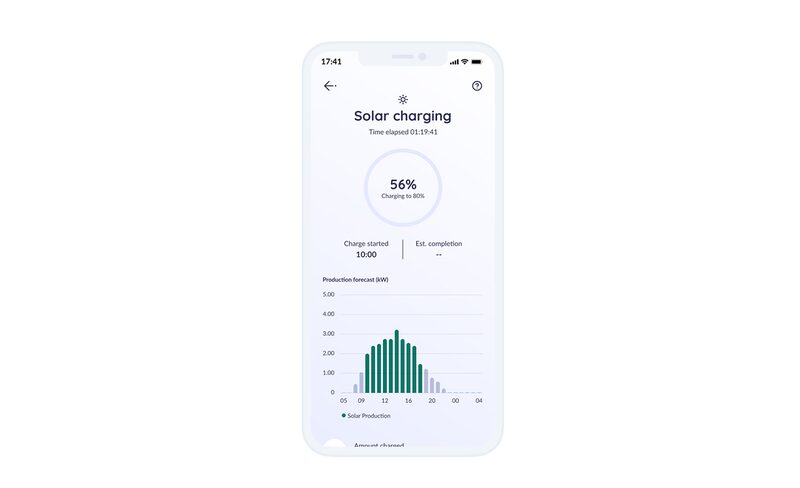
A solar mode changes the charging rate continuously rather than switching the car on and off at a fixed power. The ev.energy app's Solar Only Mode is described as matching the charge rate of the vehicle to the amount of solar power being exported to the grid, which allows the household to entirely self-consume the solar power it generates3. Wallbox describes its solar charging software as letting a driver charge with 100% solar energy or a mix of solar and grid energy9.
Makers name the same behaviour differently. SolaX calls it Green Mode, which detects surplus solar energy and uses it to charge the vehicle10. E.ON Next refers to solar integration, sometimes called Solar Match, where the unit detects when solar generation exceeds household demand and diverts the excess into the EV battery instead of exporting it1. SolarEdge describes delivering a solar-optimised charging experience11. Marlec's VEVA charger offers three modes: eco charge, which uses only solar PV, a hybrid charge, and fast charge12.
The practical effect is that the car becomes a flexible load rather than a fixed one. On a bright afternoon with a 7kW charger and 3kW of surplus generation, a solar mode will charge at roughly the surplus rather than pulling the difference from the grid. The trade-off is time: charging at the solar rate is slower than charging at the charger's full rating, and a passing cloud reduces or pauses it.
Charger and solar inverter compatibility: what makers say
Compatibility is stated at the level of ranges, not model-by-model pairings. waEV-charge says its chargers are designed to work with a range of compatible solar inverters, enabling households to optimise solar energy5. Growatt states compatibility with different brand PV7. OVO states that all of its chargers are solar compatible, subject to the correct setting13. SolaX lists solar compatibility among the features of its Smart EV Charger G214.
The independent guidance is that compatibility between the charger, the solar system and any battery storage should be considered from the outset, and that EV chargers should be installed by a qualified electrician with relevant experience2. E.ON Next's own installation guidance says installing a charger at home is usually straightforward but stresses the use of a qualified electrician1. The NICEIC, the electrical contracting body, covers the standards side of charge point work15.
| Maker | Stated solar position | Source |
|---|---|---|
| waEV-charge | Designed to work with a range of compatible solar inverters | 5 |
| Growatt | Smart charger solution compatible with different brand PV | 7 |
| OVO | All chargers solar compatible, when set to the correct solar charging setting | 13 |
| SolaX | Smart EV Charger G2 lists solar compatibility; Green Mode detects surplus | 10 |
| SolarEdge | Solar-optimised charging experience | 11 |
| Marlec VEVA | Eco charge uses only solar PV; hybrid charge mixes sources | 12 |
What this means in practice is that the inverter brand is rarely the constraint. The constraint is whether the charger has a current transformer or metering arrangement that lets it see household import and export, and whether its firmware exposes a solar mode. Where a household already has a battery, the battery and the car compete for the same surplus, and the order in which they take it is a setting rather than a fixed rule.
When a grid connection is still required: the E.ON Next example
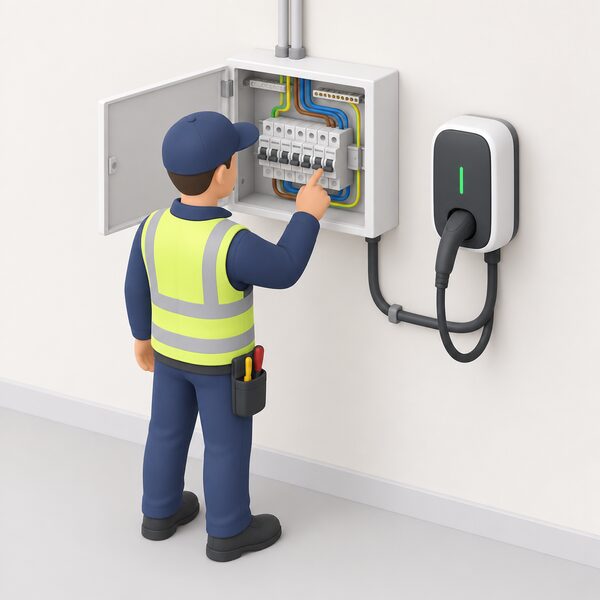
Solar charging reduces import; it does not remove the connection. Standard chargers draw from the home supply without distinguishing solar generation from grid electricity, and solar output varies through the day and the year2. A grid connection covers the shortfall, and it also covers the case where charging demand exceeds what the panels are producing.
The supply itself may need attention. The installer should assess the maximum load of the property, and if charging would exceed the circuit breaker rating or the service cable capacity, the energy network operator is the body to check with, and will need to upgrade the supply if it cannot cope16. That is a separate process from the charger installation and can affect timescales.
E.ON Next illustrates how the pieces sit together commercially. Its solar panel systems include a hybrid inverter ready for a battery to be added17, and its installation process runs from an online quote and system choice through custom design, installation after grid approval, and then documentation and a distribution network operator connection18. Its export tariff requires a solar or battery installation by E.ON Installation Services from 10 November 2025, for a residential customer with renewable generation up to 15kW19. Its home EV chargers list solar charging compatibility among their features20.
App-based solar charging: charging without a solar-enabled charger
The software route exists and is stated plainly by its makers. The ev.energy app says it works with the best electric vehicle and EV charger manufacturers and that no extra hardware is needed3. Its Solar Smart Charging feature is described as allowing a driver to charge with their own free 100% renewable solar energy, no matter what car or charger they own21. The Solar Only Mode matches the charge rate to the amount of solar power being exported to the grid3.
That matters for households that already own a charge point without a solar mode. Rather than replacing hardware, the control layer sits in the app and adjusts charging against generation or export data. Emporia's excess solar management works on the same principle: linking a monitor and enabling the charger and other connected devices, after which the charger starts charging whenever there is extra solar production22. Sync Energy describes its homeowner setup as easy, with no complex installations required23.
The limits are the same as for hardware solar modes. The car still needs to be plugged in when the sun is out, the charge rate is capped by the surplus, and a household with a small array and a large car will still import. Where the app depends on a smart meter or on export data, that dependency is part of the arrangement.
"Enjoy zero-cost, zero-carbon, solar-powered EV charging without costly hardware upgrades"
What to weigh before choosing a solar-capable charger
The first consideration is charging speed against solar output. Home chargers commonly run at 3kW or 7kW as standard, with some units capable of up to 22kW24. A solar mode will rarely hold a 7kW rate on generation alone, so the realistic pattern is a slower charge spread across the sunny hours, topped up from the grid when needed.
The second is whether storage is present. A home battery captures surplus solar energy for later use, including overnight EV charging, whereas without it unused solar electricity is wasted or exported to the grid, often at a relatively low rate2. Where a battery is fitted, the car and the battery draw on the same surplus and the priority between them is a setting.
The third is the electrical assessment. The installer should assess the maximum load of the property, and where charging would exceed the circuit breaker rating or service cable capacity, the network operator will need to upgrade the supply if it cannot cope16. This is the point at which a household learns whether its supply supports the charger it wants.
The fourth is the tariff and metering context. An EV tariff is of little use without a home charger to charge from25, and solar export arrangements sit alongside rather than replace the import tariff. The Smart Export Guarantee is the framework under which exported generation is paid for26.
Finally, the equipment itself. An untethered charger such as the Ohme ePod does not have a charging cable built in, which affects how the unit is used day to day27. Solar diversion, app control and dynamic scheduling are the features independent guidance identifies as desirable in a solar-integrated charger28. None of these is a recommendation of one product over another; they are the attributes that determine how much of a household's own generation ends up in the car.
Sources28 cited
- EV chargers for solar panel charging, E.ON Next, 2026-09-17
- Can solar panels charge electric cars?, Chartered Institute of Plumbing and Heating Engineering, 2026-04-15
- App features, ev.energy, 2026-09-17
- How does a solar inverter work, Marley, 2026-09-17
- Solar integration, waEV-charge, 2026-09-17
- Home installs, waEV-charge, 2026-09-17
- EV charger solutions, Growatt, 2026-09-17
- Do I need to change energy providers or be on a specific tariff?, waEV-charge, 2026-09-17
- Home EV charging, Wallbox, 2026-09-17
- How to choose the best electric car charger for home, SolaX, 2025-12-31
- Residential products, SolarEdge, 2026-09-17
- VEVA car charger, Marlec, 2026-09-02
- Upgrading to a smart EV charger, OVO Energy, 2025-09-01
- Smart EV Charger G2, SolaX, 2026-09-17
- Everything you need to know about EV charging points, NICEIC, 2024-09-27
- Public chargers, E.ON Next, 2026-09-19
- Solar panels, E.ON Next, 2026-09-17
- Solar panel buying guide, E.ON Next, 2026-09-17
- Smart Export Guarantee, E.ON Next, 2026-09-17
- EV smart charging at night, E.ON Next, 2026-09-17
- ev.energy for drivers, ev.energy, 2026-09-17
- Excess solar, Emporia Energy, 2026-09-17
- App for homeowners, Sync Energy, 2026-09-17
- EV charging, Uswitch, 2026-09-19
- EV energy tariffs, Uswitch, 2025-09-17
- Smart Export Guarantee, Solar Energy UK, 2026-09-17
- EV glossary, Ohme, 2026-09-17
- Integrating solar panels with EV charging, Uswitch, 2025-07-02
 Charging an EV from Solar PanelsCharging your car from solar panels means using the power your roof makes instead of sending it to the grid.
 Charging With a Home BatteryHow a home battery and an EV charger share one supply, whether a battery can usefully charge a car, and how combined systems are controlled so the battery is not discharged into the vehicle at a loss.
 Charging and Energy IndependenceCharging an electric car at home can cut your fuel costs, but how much does it really free you from the grid?
 Types of Home EV ChargerWhich home charger suits your car and your driveway?
 The Full EV Charging GuideCharging an electric car at home usually means a wallbox, but do you need one, and what will it cost to fit and run?
 Electrical RequirementsWill your home need a bigger electricity supply before a charge point can go in?