In this guide
Growatt is a solar inverter and battery manufacturer that also builds electric vehicle chargers. Its UK-facing range is the THOR family, sold as AC wallboxes for homes and businesses and as DC units for faster commercial charging. The headline figures are a 7 to 22kW AC range and a 20 to 200kW DC range, with the AC models intended for residential and commercial use1.
The feature that distinguishes the range is PV linkage mode. Growatt states that in this mode the EV is charged dynamically only by surplus solar power, so the car absorbs generation the house is not using rather than drawing from the grid3. That behaviour depends on the charger being paired with Growatt's own inverter, battery and monitoring ecosystem, which is where both the appeal and the limits of the product lie.
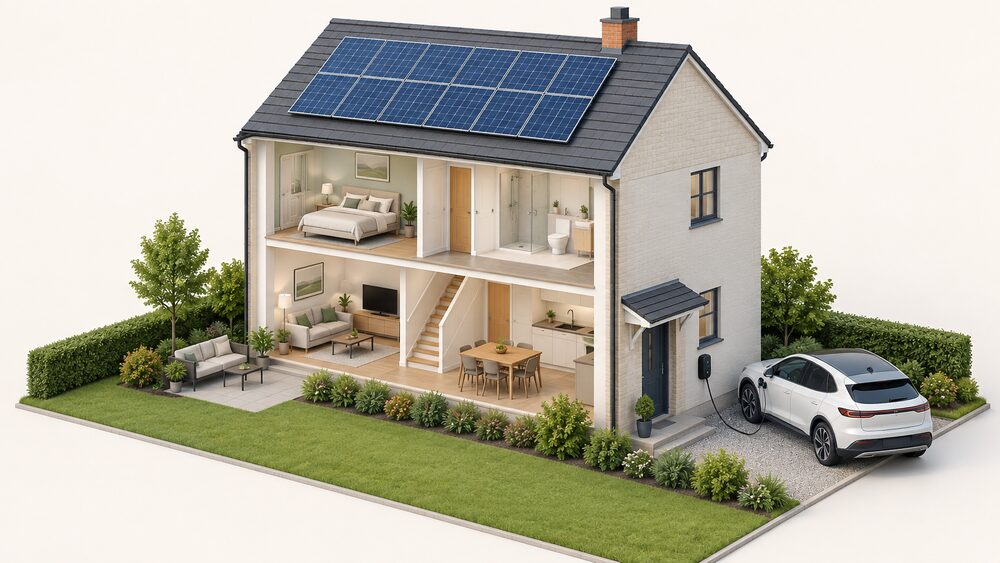
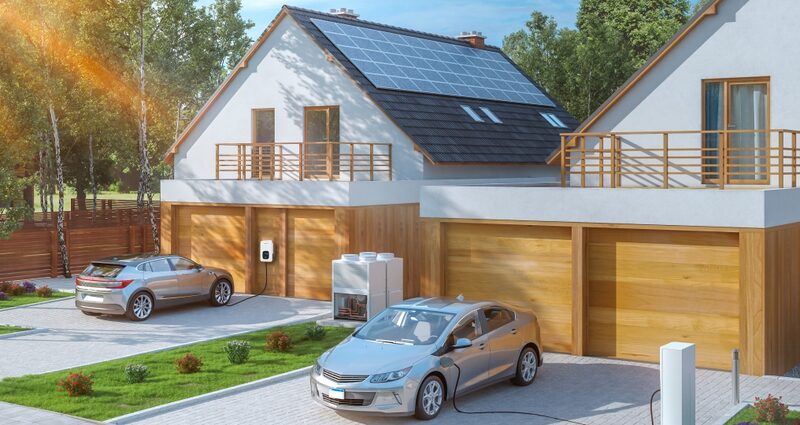
For a household, the practical question is how much of the car's annual energy can come from the roof rather than a supplier. Growatt's own claim is that the system lets a driver charge with 100% renewable energy4. Independent guidance is more measured: in summer a reasonably sized system can cover a significant portion of a typical household's EV charging needs, while in winter output drops considerably and grid top-ups become more necessary5.
Growatt: who makes the THOR charger and where it sits in the range
Growatt describes itself as one of the world's largest manufacturers of PV inverters and energy storage systems, present in the PV market for well over a decade and supplying residential, commercial and industrial installations in dozens of countries9. The company's own figures put its systems in more than 180 countries, with more than 43 representative offices worldwide and more than 1.7 million end users connected to its cloud platform7.
The EV charger range is branded THOR and splits by current type rather than by market. The AC models are the THOR 07AS-S/P/SE/PE and the THOR 11/22AS-S/P/SE/PE, both listed as AC EV chargers1. The DC models are the THOR 20DS-P, the THOR 40DS-P/DD-P and the THOR 60-200DD-P, listed as DC EV chargers4. The naming follows output: the 07 unit is a 7kW-class wallbox, the 11/22 unit covers 11kW and 22kW three-phase work, and the DC units step up through the 20DS, 40DS and the 60 to 200kW band.
This matters for a household because the charger is not a standalone product line. It is the vehicle-facing end of a system that starts with a Growatt inverter and, optionally, a Growatt battery. The company's hybrid inverter, for example, accepts a high-voltage battery that can be added at any point without replacing the inverter12. A household that already runs Growatt solar is therefore the natural buyer; one that does not is buying a wallbox whose distinguishing feature it cannot use.
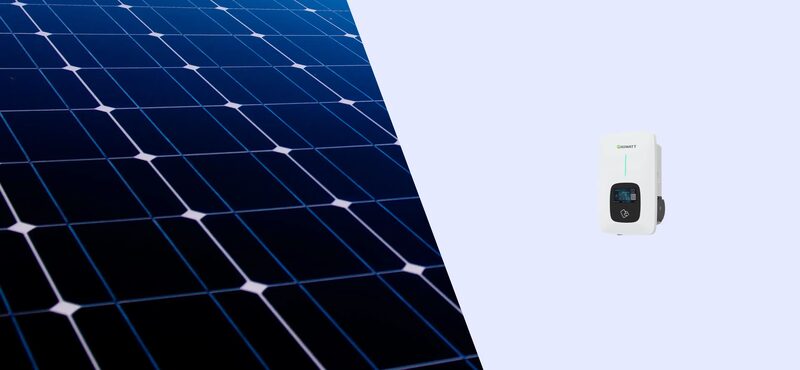
AC and DC models: 7 to 22kW for homes, 20 to 200kW for commercial
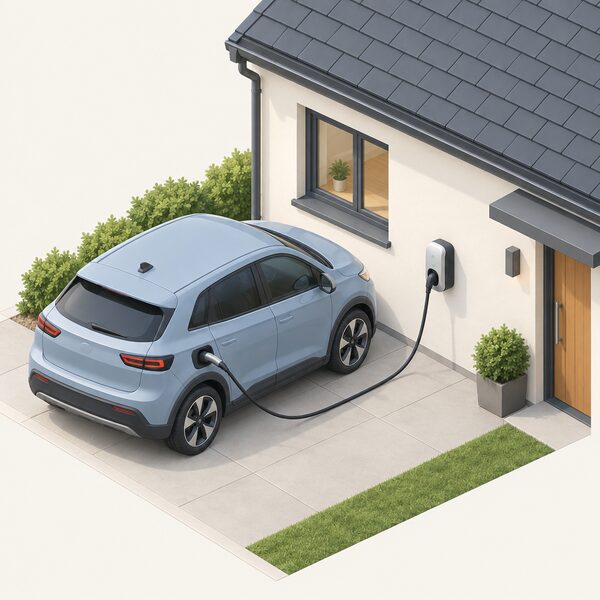
Growatt's own summary of the range is a capacity of 7 to 22kW for AC charging and 20 to 200kW for DC1. That split maps onto how charging is used rather than onto any technical preference. Independent guidance from Zapmap describes destination chargers, the kind fitted at homes, hotels and workplaces, as mostly AC and between 7kW and 22kW13. The Society of Motor Manufacturers and Traders gives the same band, describing them as usually AC chargers delivering 7 to 22kW, with faster chargers sometimes encountered14.
The lower end of that band is what most UK homes can actually support. BEAMA's guidance on EV infrastructure states that solutions available for home and workplace locations are mostly single-phase AC chargepoints, available from 3.6kW to about 7kW15. A 22kW AC charger needs a three-phase supply, which most domestic properties do not have. The NICEIC's consumer guidance makes the same point from the installation side: the supply available at the property, not the charger's rating, sets what can be installed16.
| Model family | Type | Output band | Intended setting |
|---|---|---|---|
| THOR 07AS-S/P/SE/PE | AC | 7kW class | Home and small commercial10 |
| THOR 11/22AS-S/P/SE/PE | AC | 11 to 22kW | Home and commercial, three-phase1 |
| THOR 20DS-P | DC | 20DS class | Commercial11 |
| THOR 40DS-P/DD-P | DC | 40DS class | Commercial4 |
| THOR 60-200DD-P | DC | 60 to 200kW | Commercial2 |
The DC units are not domestic products. A DC charger in the 20DS class draws a supply a house does not have, and the 60 to 200kW band belongs to depots, fleets and public sites. Where two vehicles share a DC unit, independent guidance notes that power is split: a 250kW-maximum car and a 50kW car sharing a 150kW device receive 75kW and 50kW respectively, a total of 125kW17. That behaviour is a property of shared DC charging generally, not of Growatt specifically, but it explains why the DC range is quoted in bands rather than as a single figure.
Solar integration: charging from surplus PV with PV linkage mode
PV linkage mode is the reason a Growatt charger is bought rather than a generic wallbox. Growatt states that the EV will be charged by the surplus solar power dynamically, and that in this mode the car is charged dynamically only by surplus solar power1. The charger is described as part of the GroHome system, with the PV linkage mode driven by solar1.
The three working modes Growatt lists are PV Linkage mode, Fast mode and Off-Peak Mode3. Fast mode ignores generation and charges at full rate; Off-Peak Mode schedules charging to a cheaper window; PV Linkage follows the array. A household choosing between them is choosing between using its own generation, using the fastest possible charge, and using the cheapest grid hours.
What surplus charging looks like in practice is set by the weather rather than by the charger. Independent guidance from the CPA sets out the seasonal pattern: in summer a reasonably sized system can cover a significant portion of a typical household's EV charging needs, while in winter output drops considerably and grid top-ups become more necessary5. The same guidance notes that a home battery captures surplus solar for later use including overnight EV charging, whereas without one, unused solar electricity is wasted or exported to the grid, often at a relatively low rate5.
That is the honest shape of the arrangement. A Growatt charger with PV linkage will put solar into the car when the sun is out and the car is plugged in. It will not make a car run on sunshine in December, and it will not store midday generation for an evening charge unless a battery is part of the system. More on the general case is at charging an EV from solar panels and EV charging alongside a home battery.
Charging your car with 100% renewable energy: what that means in practice
Growatt's marketing states that the system lets a driver charge a car with 100% renewable energy, and repeats the claim across its charger pages4. Read literally, that describes the PV linkage mode doing exactly what it says: when the car charges, it charges from solar. Read as an annual statement about a household's motoring, it needs qualifying.
The qualification is the seasonal one. Summer generation can cover a significant portion of a household's EV charging; winter output drops considerably and grid top-ups become more necessary5. A car charged only from surplus solar in July may be charged largely from the grid in January, and the annual share depends on array size, mileage and whether the car is at home during daylight.
There is also a definitional point. MCS, the certification body, defines grid electricity independence as the percentage of electricity consumed in the property over a year which is met by either behind-the-meter solar or electrical energy storage, and separately defines self-consumption as the fraction of electricity consumed in the property which is met by self-consumed electricity18. Those are measurable quantities, and they are the ones worth asking an installer about rather than a headline percentage.
Independent guidance from NICEIC notes that charging an EV with renewable energy such as solar panels significantly reduces a household's carbon footprint16. Solar Energy UK frames the wider case in terms of independence: more homegrown energy means greater energy independence19. Both statements are about reducing reliance on grid supply, not about eliminating it. A Growatt charger shifts the balance of a household's motoring energy towards its own roof; it does not take the car off the grid.
The ShinePhone and ShineServer monitoring ecosystem
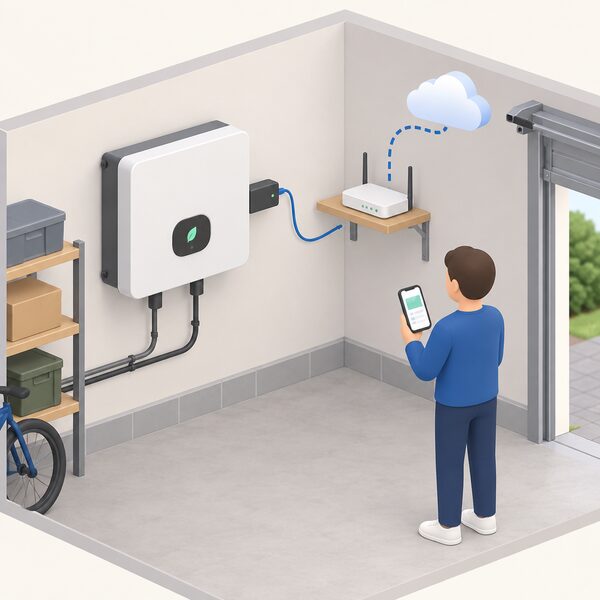
Growatt's monitoring runs through ShinePhone, a mobile app, and ShineServer, a web portal. The company describes ShinePhone as one app for all Growatt products, and as a system monitoring app for users6. The Shine WiLAN-X2 communications stick is designed to work with Growatt inverters and energy storage systems that support ShinePhone and ShineServer monitoring, and lets a household monitor production, consumption and battery state remotely in the app and the portal20.
The level of detail available depends on the hardware. On the AXE battery, the ShinePhone app and ShineServer portal show the state of charge, the charge and discharge power and the operating history, with fault notifications21. The residential storage system adds 24-hour self-consumption monitoring and remote firmware upgrade for inverter and battery22.
For a charger owner, the monitoring layer is what makes PV linkage visible. Without generation and consumption data there is no way to see whether the car actually charged from surplus or from the grid, and no way to check the split over a month. The same platform is the route for firmware updates, which matters because a solar-aware charger's behaviour is set in software.
The dependence is worth stating plainly. ShinePhone and ShineServer are cloud services. Local charging continues if the internet connection drops, but remote monitoring, historical data and remote firmware updates do not. A household that wants the solar-following behaviour to be visible and adjustable is relying on Growatt's servers, a home broadband connection and the company's continued support of the platform.
UK availability: buying through HDM Solar
Growatt's UK-facing product pages list its inverters and storage products as available at Growatt.tech, including the MIN 5000 single-phase inverter, the MOD 6000TL3-HU hybrid and the SPF 6000ES off-grid inverter9. The THOR charger range is documented on the same manufacturer site, with the AC models described as suitable for residential and commercial scenarios1.
There is no published UK list price for the THOR chargers in the material available, so supply and installation are quoted rather than sold at a fixed retail figure. That is normal for this category: a wallbox price depends on the supply at the property, cable run, whether earth rods or additional protection are needed, and whether the installation is a like-for-like replacement or a first fit. The NICEIC's guidance for consumers covers what an installation involves and who is competent to carry it out16.
Buyers should also note that the charger is one part of a system. A household without Growatt solar can buy and run a THOR AC charger, but PV linkage mode depends on the GroHome system and on generation data from Growatt equipment1. The pairing is what delivers the feature. For the general buying picture, see how much a home charge point costs, fitted and home charge point installation.
On the wider UK context, official statistics record 121,171 public EV chargers in the United Kingdom as of 1 July 202624. Grant schemes have funded 340,222 domestic charging device installations under the Electric Vehicle Homecharge Scheme, 85,547 workplace installations since 2016, and 24,945 public charger installations since 2017 on provisional estimates25. Those figures describe the market a Growatt buyer is entering, not the product itself.
What a Growatt charger means for household energy independence
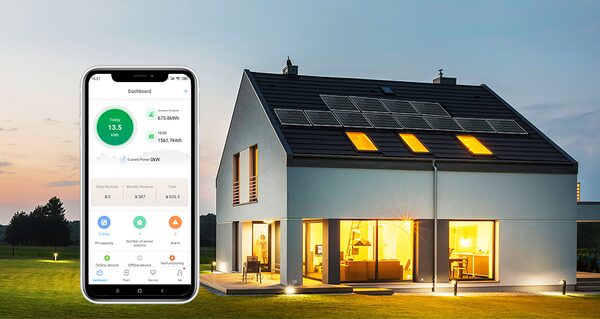
The independence a Growatt charger offers is real but partial, and it is worth separating the parts. On the electricity side, PV linkage mode lets a household meet some of its motoring demand from its own roof rather than from a supplier3. MCS defines grid electricity independence as the percentage of electricity consumed in the property over a year met by behind-the-meter solar or electrical energy storage, which is the measure that would capture this18.
What remains is substantial. The charger is an AC device drawing from the mains, so it depends on a grid connection and a supplier for every kilowatt the roof does not provide. In winter that is most of them5. The solar-following behaviour depends on Growatt inverters and the GroHome system, so the feature is tied to one manufacturer's ecosystem1. Monitoring and firmware updates depend on ShinePhone, ShineServer and a broadband connection6. And the household remains dependent on whoever installed the unit for servicing and on the manufacturer for parts.
Independent consultation work makes the wider case for this kind of setup: EV chargepoints, especially those able to export to the grid or allow in-home demand flexibility, can save households significant amounts of money while reducing strain on the grid at peak times25. That is the flexibility argument, and it applies to solar-aware chargers generally rather than to Growatt alone. The honest summary is that a Growatt charger moves a household's motoring energy partway towards self-supply, while leaving the grid, a supplier, a manufacturer's cloud and an installer in the chain. More on this is at EV charging and household energy independence.
Data security and the Growatt Protocol
A cloud-linked charger raises questions that a dumb wallbox does not. Growatt's smart EV charger solution uses the OCPP protocol, the open charge point protocol used for communication between chargers and management systems3. The company's charger hardware supports multiple communication methods: 4G, Ethernet, Wi-Fi and Bluetooth26. OCPP matters because it is an interoperability standard rather than a proprietary lock-in, and it is the protocol most commonly required where a charger needs to talk to a back office.
The screen codes are published rather than secret. Growatt's support documentation gives the EV charger screen setup password as 1234 and the configuration password as 69808. Both appear in public support material, so neither functions as a security control against someone with physical access to the unit. They are installation and configuration codes, and a household should treat them as such.
On the platform side, Growatt provides remote firmware upgrade for inverter and battery, which is the mechanism by which security and behaviour fixes reach installed equipment22. The account itself is protected the way any cloud account is: a strong unique password, any available two-factor option, and a home network that is not left on default credentials. The monitoring platform holds generation, consumption and battery data, so its value to a household is also its exposure. General guidance on this subject is at EV charger cybersecurity, data and remote control and EV charger apps, Wi-Fi, 4G and firmware.
Sources27 cited
- THOR 11/22AS-S/P/SE/PE AC EV charger, Growatt, 2026-09-17
- THOR 60-200DD-P DC EV charger, Growatt, 2026-09-17
- Smart EV charger solution, Growatt, 2026-09-17
- THOR 40DS-P/DD-P DC EV charger, Growatt, 2026-09-17
- Can solar panels charge electric cars?, The CPA, 2026-04-15
- Growatt monitoring platform, Growatt, 2026-09-17
- Growatt company site, Growatt, 2025-09-15
- Growatt support FAQ, Growatt, 2026-09-19
- Growatt MIN 5000 TL-X single-phase inverter, Growatt, 2026-09-17
- THOR 07AS-S/P/SE/PE AC EV charger, Growatt, 2026-09-17
- THOR 20DS-P DC EV charger, Growatt, 2026-09-17
- Growatt MOD 6000TL3-HU hybrid inverter, Growatt, 2026-09-17
- Destination charging, Zapmap, 2026-02-26
- Electric vehicle charging, SMMT, 2025-06-25
- Guide to electric vehicle infrastructure, BEAMA, 2024-09
- Everything you need to know about EV charging points, NICEIC, 2024-09-27
- How long does it take to charge an electric car?, Zapmap, 2026-04-15
- MCS 032 2025 V1.0, MCS, 2025-01-01
- Solar Energy Scotland manifesto, Solar Energy UK, 2026-09-17
- Growatt Shine WiLAN-X2, Growatt, 2026-09-17
- Growatt SPF 6000ES Plus with AXE off-grid kit, Growatt, 2026-09-17
- Growatt residential storage system, Growatt, 2026-09-17
- Growatt SPF 6000ES Plus off-grid inverter, Growatt, 2026-09-17
- Public electric vehicle charging infrastructure statistics, Department for Transport, 2026-07-01
- Grant schemes for electric vehicle charging infrastructure, Department for Transport, 2026-07-01
- Haier EV charger, Haier HVAC, 2026-09-17
- Growatt on-grid inverter FAQ, Growatt, 2026-09-17