In this guide
Firmware is the software inside an inverter, a battery, a charger or a heating control. It decides how the hardware behaves: when the battery charges, how the inverter responds to a grid fault, whether the unit talks to a monitoring platform. Manufacturers issue updates to it periodically, and those updates are the difference between a device that keeps working as the grid and the standards around it change, and one that quietly falls behind.
The update record is uneven. Some makers publish dated release notes and model-by-model end dates; others publish almost nothing. LuxpowerTek states it guarantees firmware updates for a minimum of 5 years from the product's launch date, and lists individual models with support running to dates between 2026 and 20301. SolarEdge publishes a firmware table giving CPU, DSP1 and DSP2 versions for each inverter family, including a UK-only variant2. Sunsynk says firmware updates are occasionally required, to keep the inverter or battery running the latest features, improvements and compatibility updates3.
What this means for a household is straightforward. A device with a live firmware and app platform stays inside the standards it was certified against, keeps its monitoring, and can be matched to new batteries. A device whose platform has ended keeps generating, but loses remote visibility and the update route. The sections below set out how updates are delivered, what they have fixed, how to read a version number, and how long support can be expected to last.
Why firmware updates matter for inverters and batteries
An inverter is not a fixed object. It is a power electronics device with a control board, and that board's behaviour is set by software. Sunsynk states plainly that firmware updates are occasionally required, and gives the reason: to ensure the inverter or battery is running the latest features, improvements and compatibility updates3. The same wording applies to its batteries3.
Three things drive the need. The first is compatibility. A hybrid inverter has to speak to a battery management system, and battery makers revise their requirements. BYD's compatible inverter list, updated to version 1.4 on 19 February 2024, sets minimum BMU and BMS firmware versions for SMA, Solis and GoodWe inverters paired with the Battery-Box Premium HVL. That is a battery maker telling inverter owners what firmware they need before the pairing is supported.
The second is safety and standards. Sungrow states that its multi-string inverters incorporate the AFCI 2.0 arc fault circuit interrupter function, providing enhanced electrical safety10. SolarEdge states that its Home Wave single-phase inverters at SE6000H and below now comply with the new IEC63027:2023 standard for arc fault protection devices used in PV systems, while inverters connected to a battery comply with UL1699B:20112. Arc fault protection is exactly the kind of function that arrives, or improves, through firmware.
The third is performance and behaviour. A firmware release dated 28 September 2024 fixed a Sunsynk issue where the battery would not consistently reach 100 percent state of charge, raised the 15.5kWh Gen 1 charge current limit with Sunsynk from 95A to 195A, and corrected a Growatt communication error. A stable release dated 22 August 2025 for the P16S200A-XXXX-2.0X raised usable capacity to 95 percent and cut the force charge threshold from 20 percent to 5 percent.
For a household, the independence question is direct. A device that receives updates keeps working with the grid as it is now, keeps its monitoring, and can be paired with newer batteries. A device that does not is frozen at the standards of its build date. That is a dependence on the manufacturer's continued software effort, and it sits alongside the physical dependence on the grid and the supplier.
How often manufacturers release firmware: the update record
Release cadence varies enormously, and the pattern is worth reading as a signal of how seriously a maker treats its installed base.
DEFA Power, an EV charger platform, published firmware 3.1.3 on 8 February 2024, 3.3.4 on 20 June 2024, 4.1.1 on 18 September 2024, 4.3.3 on 4 March 2025, 4.3.11 on 4 July 2025, 4.13.1 on 19 January 2026 and 4.13.15 on 25 August 2026. That is seven dated releases in roughly two and a half years, each with a stated purpose: OCPP use cases, Modbus connectivity, ISO 15118-20 protocol support, Wi-Fi handling, Plug and Charge. Simpson & Partners published firmware V1.10.26 and V2.3.26 on 6 November 2025, V3.3.9 on 16 December 2025 and V3.4.4 on 17 March 2026, and issued a quarterly trust and performance report covering a support audit and firmware updates on 15 December 2025.
At the other end, some makers publish a firmware table that is updated as versions change but carries no release notes. SolarEdge's table shows a UK-only firmware variant, 4.20.34, dated March 2024, alongside a general bundle 4.20.322. The table is useful for checking what is current; it does not tell a household what changed.
The practical point is that a maker with a public release-notes page is a maker whose update behaviour can be checked before purchase. A maker with no such page gives a household nothing to verify. Where a maker publishes model-level end dates, as LuxpowerTek does, the commitment is explicit rather than implied1.
Notable fixes delivered by firmware updates
The clearest evidence that firmware matters is what specific releases have fixed. These are documented changes, not marketing claims.
- State of charge accuracy. A release dated 28 September 2024 fixed a Sunsynk issue where the battery would not consistently reach 100 percent state of charge.
- Charge current limits. The same release raised the 15.5kWh Gen 1 charge current limit with Sunsynk from 95A to 195A.
- Cross-brand communication. The same release corrected a Growatt communication error.
- Usable capacity. A stable release dated 22 August 2025 for the P16S200A-XXXX-2.0X raised usable capacity to 95 percent and cut the force charge threshold from 20 percent to 5 percent.
- Arc fault protection. Sungrow states its inverters incorporate the AFCI 2.0 function for enhanced electrical safety10; SolarEdge states its Home Wave single-phase inverters at SE6000H and below now comply with IEC63027:2023 for arc fault protection devices in PV systems2.
- Charger protocol support. DEFA Power firmware 4.3.3, dated 4 March 2025, added ISO 15118-20 protocol support and support for simple hybrid installations combining CLU with eRange chargers and DEFA Power. Version 4.13.1, dated 19 January 2026, added AutoCharge and ISO 15118-2 Plug and Charge.
- Load balancing. Simpson & Partners firmware V3.4.4, dated 17 March 2026, added load balancing, OCPP Profile Stacking and MID meter prioritisation.
Two of these bear directly on a household's energy independence. A charge current limit raised from 95A to 195A changes how fast a battery can absorb surplus generation, which changes how much self-consumption is possible. A usable capacity raised to 95 percent changes how much of the battery a household can actually draw on. Both arrived through software, on hardware already installed.
The arc fault changes are the safety case. Arc fault protection detects dangerous arcing in PV wiring, and a firmware update that brings an inverter to a newer standard is a safety improvement delivered without touching the roof.
Firmware versions and what the numbering tells you
Version numbers look opaque but they carry information. SolarEdge publishes a table with separate columns for CPU, DSP1, DSP2 and additional firmware, which shows that a single inverter runs several firmware components that are versioned independently2.
| Model | CPU | DSP1 | DSP2 | Additional |
|---|---|---|---|---|
| SolarEdge Home Hub inverter, single phase | 4.19.36 (Nov 2023) | 1.0.1805 / 1.100.1631 | 1.0.1805 / 1.100.1631 | N/A |
| SolarEdge Home Wave inverter, single phase | 4.19.36 (Nov 2023) | 1.0.1805 / 1.100.1631 | EVSE: 1.51.0 | |
| Single Phase residential | 4.18.32 (Aug 2023) | 1.0.1709 | 2.0.1305 | |
| Three Phase residential | 4.18.32 (Aug 2023) | 1.13.2115 | 2.19.1701 | |
| SolarEdge Home Hub Inverter, Three Phase | 4.24.9 | 1.20.24102 | 2.20.23034 | 3.5.8 |
| SolarEdge Home Wave Inverter, Single Phase | 4.24.9 | 1.0.2205 / 1.100.2058 | 2.0.1305 / 2.100.1751 | EVSE: 1.51.1 |
The table shows the CPU version moving from 4.18.32 and 4.19.36 to 4.24.9 across the published entries, while DSP versions move separately2. A household checking its own inverter against this table can see whether it is behind, and by how much.
Sunsynk describes a different structure: its inverters generally have two firmware sets to keep updated, one for the LCD and comms board and one for the MCU11. That distinction matters because the two serve different functions. The LCD and comms set governs the display and the communications path; the MCU set governs the machine control. A household that updates one and not the other can end up with a mismatch, which is the failure mode Sunsynk warns about.
Where a maker publishes a UK-specific variant, that is the one to look for. SolarEdge lists a UK-only 4.20.34 against a general bundle 4.20.32, dated March 20242. Regional variants exist because grid codes and certification requirements differ, and installing the wrong regional firmware is a compatibility risk rather than a neutral choice.
Compatibility lists: keeping inverter and battery matched
A hybrid inverter and a battery are two devices from two companies that have to agree on a protocol. Compatibility lists are how makers manage that, and they are living documents.
Deye publishes an approved battery list, DY-LV48-0109, dated 24 July 2025, naming Wattsonic Li-LV battery series among the compatible models for the listed Deye inverter models12. The list carries a warning that the purchaser should confirm with the battery supplier if the battery is compatible with the Deye inverter12. That is the maker of the inverter telling the buyer that the list is not the final word.
Growatt states that its BDC 95045-A1 must match the voltage class of the battery and the inverter13. Voltage class is a hard constraint: a low-voltage battery cannot be paired with a high-voltage inverter regardless of firmware. Sunsynk states that all models include Wi-Fi monitoring and are compatible with Sunsynk LV batteries8.
The firmware dimension is what makes these lists time-sensitive. BYD's compatible inverter list, updated to version 1.4 on 19 February 2024, sets minimum BMU and BMS firmware versions for SMA, Solis and GoodWe inverters with the Battery-Box Premium HVL. A pairing that was unsupported at one firmware level can become supported at another, and the reverse is also true if a maker withdraws support.
For a household, the practical consequence is that battery choice is not purely a hardware decision. It is a decision about which firmware ecosystem the inverter belongs to, and whether the battery maker keeps that ecosystem in its list. A household that buys a battery outside the approved list is relying on the installer's judgement rather than the maker's statement.
Documentation and manual revisions alongside firmware
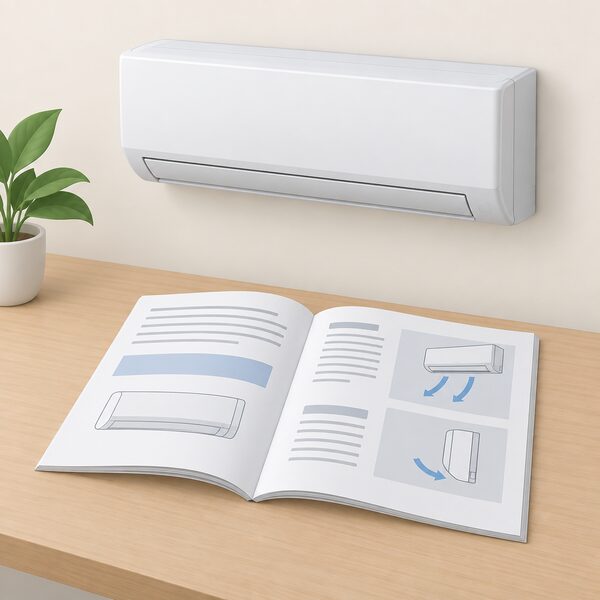
Firmware changes are usually accompanied by documentation changes, and the documentation version is a second way to date a product's support.
SolaX issued version 13.0 of its X3-FORTH user manual on 22 November 2024. The manual states that version 13.0 updated PV terminal connection recommendations, LCD interfaces, firmware upgrade steps, technical data and other figures. A manual revision that includes firmware upgrade steps is a maker keeping the instructions aligned with the software.
Toshiba publishes Installation Manual, Service Manual and Owners Manual for its RAS-B10S4KVPG, RAS-B13S4KVPG and RAS-B18S4KVPG wall-mounted units, and Installation Manual, Service Manual, Owners Manual and Data Book for its RAS-B10J2FVG-E, RAS-B13J2FVG-E and RAS-B18J2FVG-E, and for the RAS-B10U2FVG-E1, RAS-B13U2FVG-E1 and RAS-B18U2FVG-E1 console units15. The presence of a service manual is a signal that the maker expects the product to be maintained over a long life rather than replaced.
Official documentation is versioned too. Ofgem's FIT Supplier Guidance carries Version 17.1, dated 6 September 202417. The Scottish Government states that updated technical handbooks were published in November 202418. The INS-001 Installation Scheme document is at version v1.3, dated 28 July 202619.
For a household, the documentation trail matters at the point of a fault or a change. An installer changing an inverter under a ROC accredited system needs a defined set of paperwork: an installer report, a new inverter generation reading photo, an inverter nameplate photo, the inverter manufacturer's datasheet, a commissioning certificate, an installation invoice and an amended schematic diagram20. Where the documentation is versioned and current, that pack can be assembled. Where it is not, the change becomes harder to evidence.
App support and remote monitoring over the product's life
The app is the visible half of the platform. Sunsynk states that every unit ships with full remote monitoring via the Sunsynk Connect app and over-the-air firmware updates8. Its inverter range is described as offering live data, fault alerts and remote installer access14. Sungrow's Logger1000A and Logger1000B gateways support inverter batch parameter setting and firmware updates21.
That combination, monitoring plus over-the-air update, is what makes a modern inverter manageable without a site visit. It is also the point of dependence. The app runs on the maker's servers, and the update route runs through the same platform. A household that relies on the app for fault alerts is relying on the maker's cloud continuing to operate.
The failure modes are documented. A Duracell Energy support article describes data unavailable in the app as usually following a loss of wifi or internet signal with the inverter after commissioning, and advises reconnecting the inverter as soon as possible22. A separate article describes an Error status occurring if the inverter has not been fully commissioned or there is an error in how it communicates with the App Server22. Both are connectivity and commissioning issues rather than hardware failures, which is the reassuring part: the inverter keeps working while the app does not.
How long firmware and app support can be expected to last
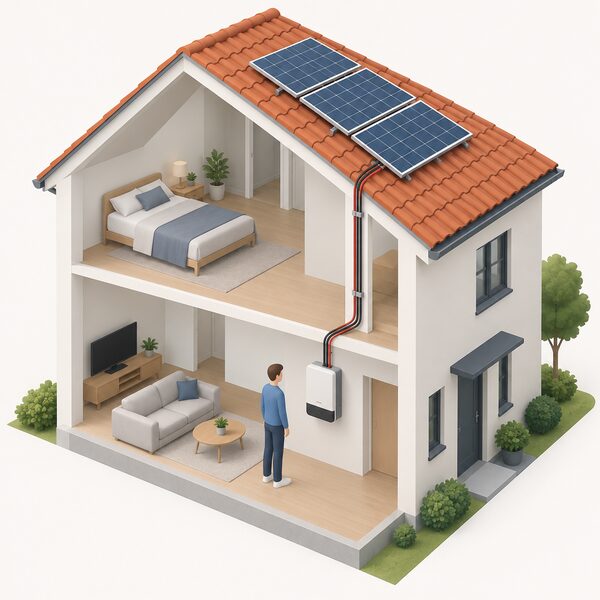
Support duration is where the evidence is thinnest and the stakes are highest, because a household is buying a device expected to last a decade or more.
LuxpowerTek is unusually explicit. It states it guarantees firmware updates for a minimum of 5 years from the product's launch date1. It then publishes model-level end dates, each marked as a minimum of five years: LSP 100K until 2027-02-05, SNA US 3-6K until 2027-11-26, LXP-LB-EU 12K until 2027-10-12, GEN-LB-EU 7-10K until 2028-09-26, SNA 10-14K until 2028-12-31, LXP-LB-US 12K until 2029-03-14, GEN2-LB-EU 3-6K until 2030-06-07, GEN-LB-US 13K until 2030-07-17, TriP2-LB-3P 5-20K until 2030-07-30, GEN-HB-US 25K until 2030-08-26, SNA2-LT-EU 10-14K until 2030-12-31, and SNA 3-6K (New with CT) until 2026-12-311.
| Model | Firmware support minimum until |
|---|---|
| SNA 3-6K (New with CT) | 2026-12-31 |
| LSP 100K | 2027-02-05 |
| LXP-LB-EU 12K | 2027-10-12 |
| SNA US 3-6K | 2027-11-26 |
| GEN-LB-EU 7-10K | 2028-09-26 |
| SNA 10-14K | 2028-12-31 |
| LXP-LB-US 12K | 2029-03-14 |
| GEN2-LB-EU 3-6K | 2030-06-07 |
| GEN-LB-US 13K | 2030-07-17 |
| TriP2-LB-3P 5-20K | 2030-07-30 |
| GEN-HB-US 25K | 2030-08-26 |
| SNA2-LT-EU 10-14K | 2030-12-31 |
Against that, the hardware expectations are longer. Independent guidance describes 10 years as a standard inverter warranty, with five years as a minimum on most inverters and extensions available4. The same guidance reports that inverters may need to be replaced after around 10 years6. One official consultation used 12 years for inverter replacement7. Independent news guidance states that a household should expect to need to replace an inverter at least once during the panels' lifespan, which is around 15 years or more23.
The gap is the issue. A five-year firmware guarantee against a ten-year replacement interval leaves five years where the device is expected to run but the maker has not committed to updating it. A household can read the published end date for its model and compare it with the warranty term, and that comparison is the single most useful piece of due diligence available.
There is also a consumer-protection angle. Honeywell stated it will offer two years of support from when the product is last available to buy24. That is a maker setting a floor, and it is short. Where a maker publishes no end date at all, the household has no floor to rely on.
What an update means for household energy independence
Firmware and app support sit at the boundary between what a household owns and what it depends on. The hardware is owned outright. The software platform is not.
What an update delivers is real. A charge current limit raised from 95A to 195A lets a battery absorb more surplus generation, which raises self-consumption. A usable capacity raised to 95 percent lets a household draw more from the same cells. Arc fault protection brought to IEC63027:2023 improves safety on the roof wiring2. None of these require new hardware.
What remains dependent is the platform. Over-the-air updates run through the maker's cloud, and so does the app8. A household that wants to keep a device updated is relying on the maker continuing to operate that service, and on the maker continuing to exist. Where a maker fails, the update route goes with it, and the device runs on the last firmware it received. The site's guide to when an energy equipment manufacturer fails sets out what owners face in that situation.
There is a second dependence, on the installer. Growatt states that its BDC 95045-A1 is installed by a qualified installer according to the manufacturer's instructions and the wiring diagram of the specific inverter or energy storage system13. Rayleigh Instruments requires its RI-ENERGYFLOW inverters to be installed by a properly certified MCS installer, or one authorised by Rayleigh Instruments, for the warranty to apply25. MCS certification is also the condition for claiming Smart Export Guarantees: the installer must be certified for a household to claim26. Where an update needs a site visit, the household is dependent on that installer relationship continuing.
The third dependence is regulatory. A change of inverter can affect the declared export capacity on a ROC accredited system27. A change of ownership of an accredited FIT installation must be notified to the Mandatory FIT Licensee as soon as possible28. FIT generators receive support for between 10 and 25 years depending on technology type, capacity, when their installation was commissioned, and whether it was previously accredited under the Renewables Obligation scheme29. Those obligations run alongside the firmware question, and they mean that a hardware change is never purely a technical matter.
The practical position is that firmware support is a finite, published commitment in the best case and an unpublished one in the worst. A household reading a maker's lifecycle policy before purchase, and comparing the end date with the warranty term, is doing the only check the evidence supports. The site's manufacturer warranties and warranty registration pages cover the hardware side of that comparison.
Sources30 cited
- Product Lifecycle and Support Policy, LuxpowerTek, 2025-08-22
- Residential Inverters Firmware, SolarEdge, 2026-09-17
- Sunsynk Support, Sunsynk, 2026-09-17
- How to Choose a Good Solar Installer, Low Carbon Hub, 2025-10-20
- Solar Panels Advice, Energy Saving Trust, 2026-08-27
- A Complete Guide to Solar PV, Centre for Sustainable Energy, 2025-11
- Draft Regulatory Impact Assessment, Northern Ireland Department of Finance, 2021-10
- Single Phase Hybrid Inverters, Sunsynk, 2026-09-17
- Sunsynk Data Logger, Sunsynk, 2026-09-17
- Maximizing Solar Power Efficiency with Multi-String Inverters, Sungrow, 2026-09-17
- PV Not Generating, Sunsynk, 2026-09-17
- Deye Approved Battery List DY-LV48-0109, Deye, 2025-07-24
- Growatt BDC 95045-A1, Growatt, 2026-09-17
- Sunsynk Inverters, Sunsynk, 2026-09-17
- RAS-Daiseikai High Wall, Toshiba Air Conditioning, 2025-12-02
- RAS Console Bi-Flow, Toshiba Air Conditioning, 2025-12-02
- FIT Guidance for Licensed Electricity Suppliers V17.1, Ofgem, 2024-09-06
- Building Standards, Scottish Government, 2026-09-17
- INS-001 Installation Scheme, Flexi-Orb, 2026-07-28
- Microgeneration, Power NI, 2026-09-17
- Logger1000 Monitoring Gateway, Sungrow, 2026-09-17
- Why Is My Duracell Energy App Showing Data Unavailable, Duracell Energy, 2026-09-17
- Beware These Solar Panel Cold Calls, Which?, 2024-08-29
- Best Smart Radiator Valves, Which?, 2026-09
- RI-EnergyFlow Warranty, Rayleigh Instruments, 2024-02-29
- G98 Single Premises, Energy Networks Association, 2026-09-17
- Solar Panels Safety Advice, Electrical Safety First, 2026-09-17
- Feed-in Tariffs Guidance for Renewable Installations V16, Ofgem, 2021-12-13
- Feed-in Tariffs (FIT), Ofgem, 2026
- Feed-In Tariffs Quarterly Report Issue 60, Ofgem, 2025-06-27
 Support and Spare PartsYour solar inverter or heat pump has broken down.
 Smart Heating Security and DataHow safe is your smart thermostat from hackers, and who sees the data it collects about your heating?
 Maintaining Backup PowerWill your generator actually start when the power goes off?
 Warranties and DegradationHow long do solar panels actually last, and what do the warranties really cover?
 Workmanship WarrantiesIf something goes wrong with your solar panels, who actually fixes it and who pays?
 Monitoring and AppsIf the internet goes down, does the app still show what the battery is doing?