
In this guide
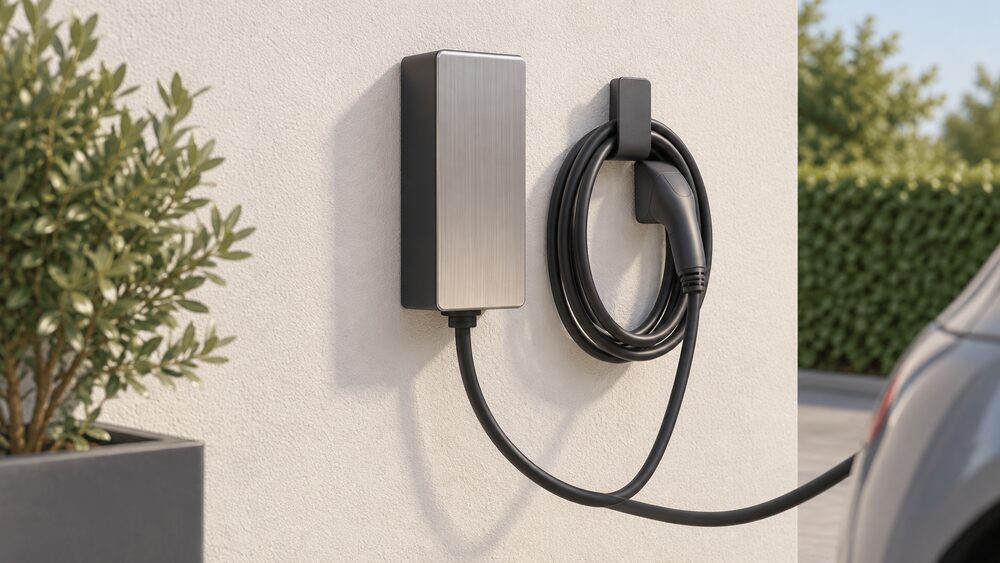
Simpson & Partners is a British, family-run EV charger maker based in the Cotswolds, and it states that its chargers are built by it at its headquarters there1. The company started making EV chargers in 2018 and sells the Home Series in 7 kW and 22 kW versions, in wall-mounted and free-standing forms, with tethered or untethered options1. Every unit carries a 5-year hardware warranty and a 10-year warranty on the enclosure and lid, and the chargers are solar-compatible, with battery integration supported where a battery is already installed4.
The range is deliberately narrow: two power ratings, two mounting styles, and a choice of lid material and colour rather than a ladder of feature tiers. What varies most is the finish. Simpson & Partners chargers come in 132 colour combinations, with lids in precision-CNC milled metal or sustainable Accoya wood7. Smart features, load management and over-the-air updates are standard across the range rather than optional extras3.
For a household, the appeal is a charger made and supported in the UK, with a long enclosure warranty and a design intended to be acceptable on older and listed properties. The dependence is the same as any smart charger: the physical charging works offline, but smart tariff control, remote monitoring and app scheduling run through a home broadband connection and the maker's cloud service4.
Who Simpson & Partners are: a family-run Cotswolds maker
Simpson & Partners describes itself as a family run business based in the Cotswolds, and states that its chargers are built by it at its headquarters at SN16 9SH1. The company began making EV chargers in 2018, which places it among the earlier British entrants to domestic charging rather than a recent badge on imported hardware3. It sells direct to households and through an installation partner, and its product line extends beyond the home into a Business Series and a Holiday Series12.
The manufacturing claim matters for a household weighing energy independence, because it shortens the supply chain for parts and service. A charger assembled in the UK is not the same as a charger whose software, cloud service and spares all sit abroad, and the smart side of the product still depends on the maker's servers and app. The hardware, though, is domestic.
The company's own account of its reliability work is unusually specific. It states that its chargers use high-copper-content PCBs and conformal coating, described as maximising reliability in all conditions5. It also states that it is continuing to invest in support throughout 2026, building on reliability gains delivered with its V3 hardware, and that the V3 platform is being extended to 22 kW chargers6. Those are maker statements about its own products and support, not independent findings.
On the trade side, Simpson & Partners chargers are engineered to support all EV models and plug-in hybrids, and the maker states that all its chargers are compatible with every Type 2 EV on the market4. The Home Series V3 is described as designed to work with the UK's standard electrical supply and with every EV connector type currently on the market14. For a household, that removes the connector question from the buying decision, though the cable type still matters: see EV connectors and cables.
The range: 7 kW and 22 kW Home Series chargers
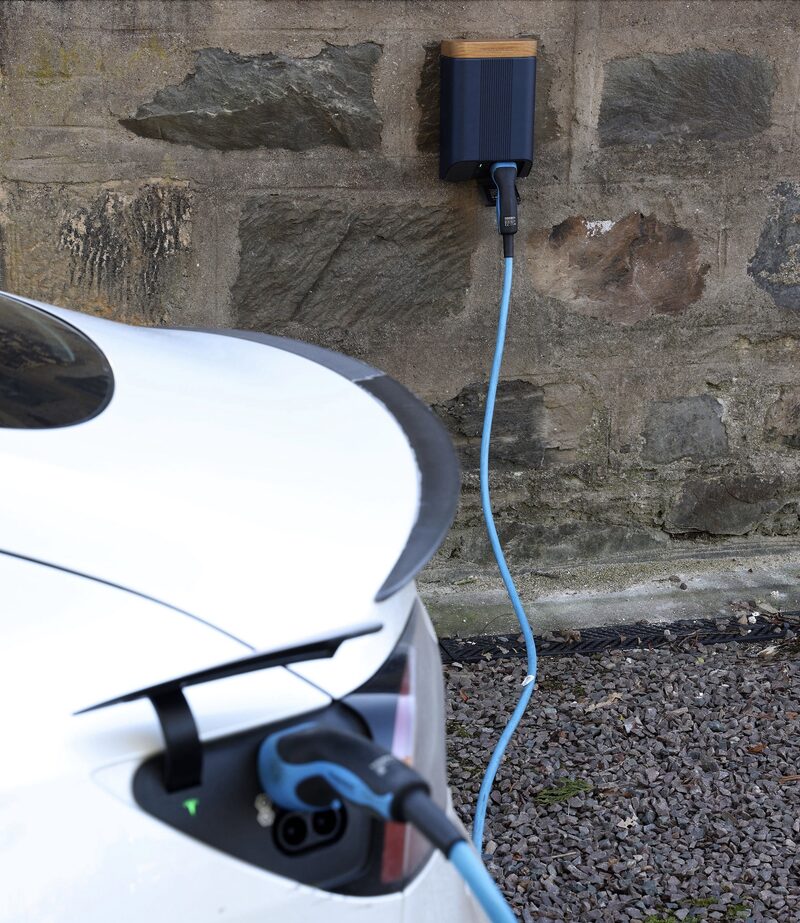
The Home Series comes in 7 kW and 22 kW models, in both wall mount and free-standing configurations, and in Basic or Plus versions with tethered or untethered options1. The maker's guidance is that 7 kW chargers suit standard UK homes and give a full overnight charge for most EVs, while 22 kW chargers deliver faster charging where a three-phase power supply is available, which suits larger batteries or multi-vehicle households4. The maker states that 22 kW is around three times faster than 7 kW but needs a three-phase supply15.
That three-phase condition is the practical limit on the 22 kW option. Most UK homes have a single-phase supply, so the higher rating is only reachable where the property already has three-phase power. The 7 kW unit is the mainstream choice, and the 22 kW model is a specification for the minority of homes that can use it. The difference between the two is set out in more detail at 7kW vs 22kW home EV charger.
The Home 7, Home 7 Plus and Home 22 Plus share dimensions of 286 mm high, 196 mm wide and 111 mm deep, so the physical footprint is the same across the range and the choice is about power and finish rather than size10. Tethered versions come with a 6.5 m cable and hook; untethered versions take a cable from the car16. The trade-off between the two is covered at tethered vs untethered EV charger.
| Model | Power | Mounting | Cable |
|---|---|---|---|
| Home 7 Basic | 7 kW | Wall mount or free-standing | Tethered or untethered4 |
| Home 7 Plus | 7 kW | Wall mount or free-standing | Tethered or untethered4 |
| Home 22 Plus | 22 kW, three-phase | Wall mount or free-standing | Tethered or untethered4 |
The Business Series extends the same platform to 7 kW to 22 kW wall-mount and free-standing models with add-on modules for features such as V2G and dynamic load balancing, and the Holiday Series applies the design to short-stay properties12. For a household, the relevant point is that the domestic range is small and the specification is consistent across it.
Design and finishes: 132 shades, metal or Accoya wood lids
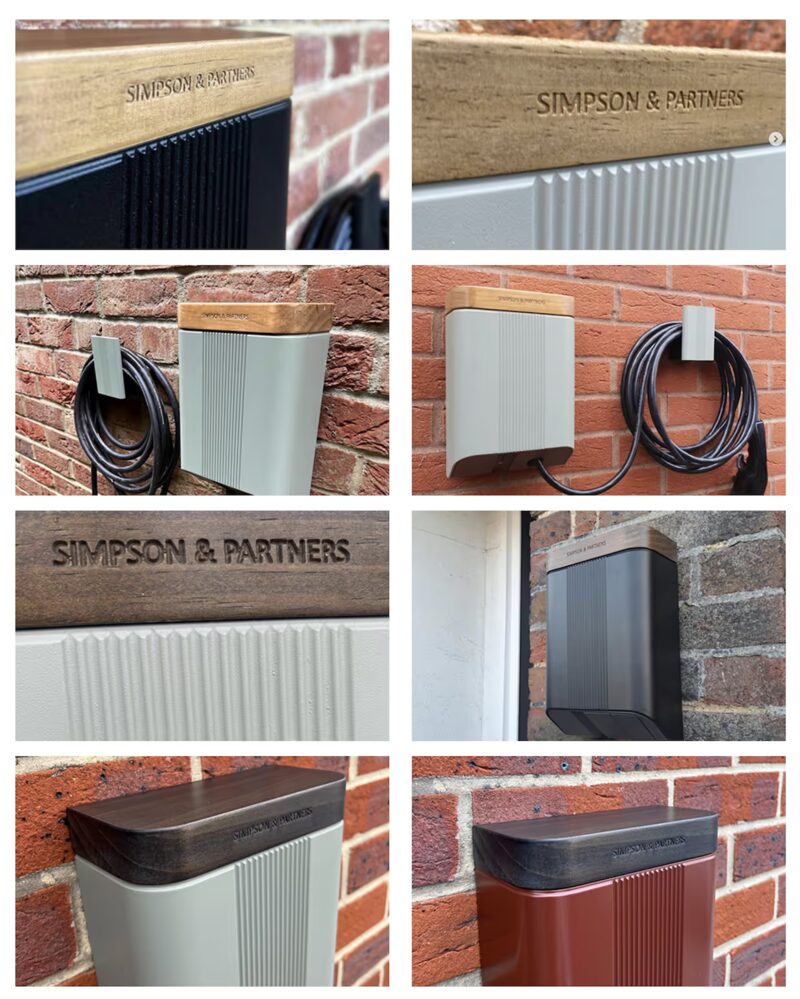
Finish is where this maker differs most from the mainstream. Simpson & Partners chargers come in 132 colour combinations, and the lids are available in precision-CNC milled metal or sustainable Accoya real wood7. Metal fronts are powder coated by hand, and lids are either anodised or made of Accoya wood carrying a no-rot guarantee for 50 years8. The wood lids come in four translucent shades, and the metal lids in finishes including Dark Copper and Bronze17.
Accoya is described by the maker as a modified pine that undergoes an acetylation process and is dimensionally stable17. The wood lid colours listed are Charcoal, Walnut, Mid Oak and Light Oak17. For heritage or listed buildings, the maker states that its Brick Red and Cotswold Green finishes are favourites with local authorities, blending with traditional settings4. That is a maker claim about local authority preference rather than a planning rule, and planning consent remains a separate question: see planning permission for a home EV charge point and EV chargers in conservation areas.
The finishes are not cosmetic only. A charger on the front wall of a period property is a visible addition, and a maker offering a colour matched to the building is addressing a real constraint on where a unit can go without objection. The 10-year enclosure warranty also covers the part that weathers, which is the lid and case rather than the electronics4.
Smart features: app control, tariff compatibility and offline operation
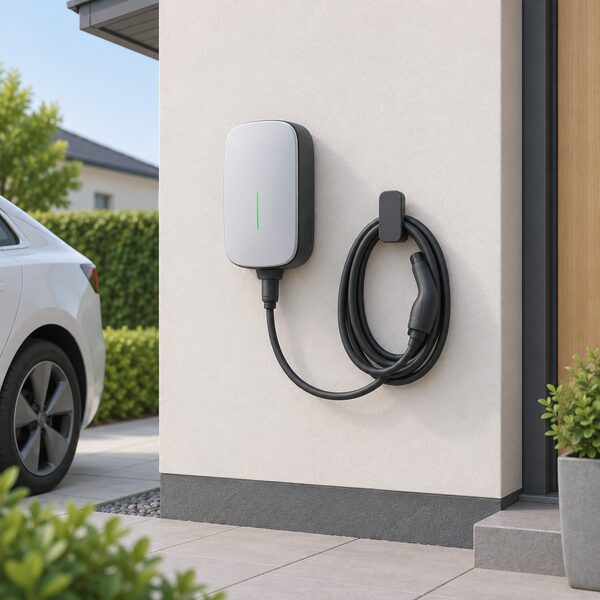
Every Simpson & Partners charger comes with smart app control, load management and over-the-air updates3. The chargers connect with Intelligent Octopus and offer app monitoring, energy management and integration with smart tariffs, and the maker states that smart tariffs such as OVO Anytime and Octopus Intelligent require connecting the charge point to the tariff6. Monitoring runs through the Simpson & Partners app with no third-party account required4.
The offline behaviour is the part worth understanding before buying. The maker states that its chargers work even without internet access and will still charge safely, though smart tariff control and usage logging pause until reconnection4. Scheduled charging, solar charging and cost tracking can be set up over Bluetooth, but are adjustable only within Bluetooth range of approximately 5 metres19. The Home Series V3 is described as designed to work without an internet connection, so the car can be charged in offline mode14.
That is a genuine independence point. The physical act of charging does not depend on the cloud, the app or the maker's servers. What does depend on them is everything that makes the charger smart: tariff-linked scheduling, remote monitoring, energy reporting and remote diagnostics. A household that loses broadband keeps a working charger but loses the cost optimisation, which is where much of the running-cost benefit sits. The wider picture is at EV charger apps, Wi-Fi, 4G and firmware and EV charger cybersecurity and data.
The charger needs a strong and stable Wi-Fi connection to use smart tariffs such as Octopus Intelligent19. It supports hardwired Ethernet connections, which the maker describes as a more stable and reliable alternative, though this requires a Plus charger with the Ethernet upgrade12. For a household where the charger sits far from the router, that wired option removes the most common cause of lost connectivity.
Solar and battery integration
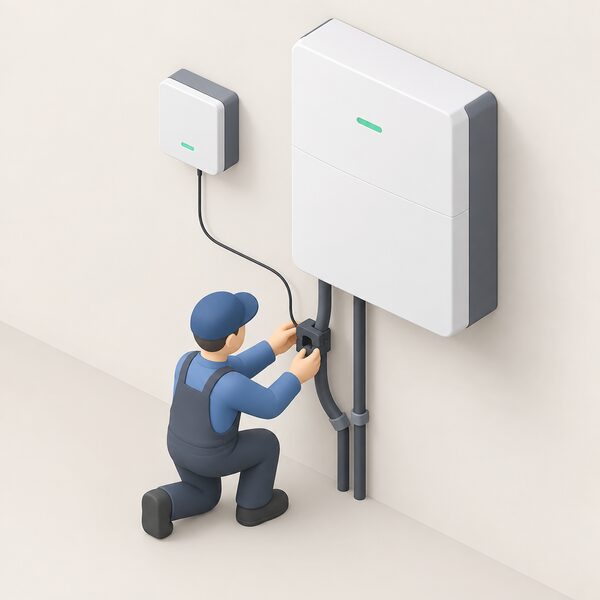
Simpson & Partners chargers are fully solar-compatible, and the maker states they can charge from solar using grid and property data from a wired or wireless energy manager6. The connection method is indirect: the solar inverter provides excess energy to the property, and there is no direct connection to the charger21. Charger installation is the same as a wired or wireless setup, so the solar feature does not change the electrical work at the charger itself21.
Battery integration works where a battery is already installed, and the maker states that smart priority logic manages energy between solar, battery and EV6. Only the battery CT placement changes, and charger wiring remains the same as wired or wireless setups22. A dedicated CT clamp ensures the charger does not discharge the battery while charging the EV, and the battery CT clamp excludes EV load to prevent discharging while charging22.
That CT clamp detail is the one that matters most in practice. Without it, a charger drawing from the house supply can pull the home battery down to charge the car, which defeats the point of having both. The maker's troubleshooting guidance for solar charging is to ensure the energy manager is correctly installed and connected, and to contact the installer if unsure23. Solar and battery integration are covered more broadly at charging an EV from solar panels and EV charging alongside a home battery.
The chargers are also V2G upgradable through an expansion module, which the maker states allows energy to be exported back to the grid4. That is a future capability rather than a present one, and it depends on the car as well as the charger: see vehicle-to-grid and vehicle-to-home charging.
Safety, data and the V3 platform
The Home Series V3 lists PEN protection, software and hardware fault detection, double insulation protection, active health monitoring and integrated surge protection3. The cable can be locked into the charger through the app while charging on the untethered integrated socket model, for added security14. Socketed chargers have a built-in motor lock that secures the charging cable during use, and tethered mode can be enabled through the lock cable button in the app24.
On data, the maker states that its chargers use 100% encrypted data transmission12. The Gen 3 platform features a redesigned power relay system with upgraded contactor clearances and mechanically linked contactor poles, which the maker states aligns with upcoming 2026 ICEE regulatory requirements and is fully V2G-ready12. The same relay design is described across the Home Series wall-mount, free-standing and Holiday Series pages14.
Independent certification exists for EV chargers as a category. BSI describes Kitemark certification for EV chargers as demonstrating safety, security, quality and reliability26. That describes what the certification covers rather than confirming which Simpson & Partners models hold it, and the maker's own pages do not state a Kitemark in the material reviewed here. Safety standards for home charge points generally are set out at EV charge point safety, standards and certification.
Warranty: 5 years on hardware, 10 on the enclosure
The warranty is the strongest single claim in the range. Every unit includes a 5-year hardware warranty and a 10-year warranty on the enclosure and lid4. The same split appears across the maker's pages: 10 years on the enclosure and 5 years on the electronics for home charging, a 10-year external enclosure warranty and a 5-year electrical warranty with every charger, and a 10-year enclosure warranty described as the longest in the market6. The warranty document itself lists a 10-year enclosure warranty and a 5-year power electronics warranty5.
The distinction between the two terms is what a household should read carefully. The enclosure and lid are the parts exposed to weather and the parts most likely to be damaged by impact or corrosion, and they carry the longer cover. The electronics, which are the parts that fail for electrical reasons, carry 5 years. Both are longer than the typical term on a mainstream charger, and the enclosure term is unusual.
Registration is what activates the extended warranty, and it is a step in the installer commissioning checklist28. The warranty terms state that to take advantage of the offer the unit must be registered in accordance with the customer information supplied with it at purchase5. The maker also states that its technical team will work with the owner to resolve an issue, including remote diagnostics and repair5. Warranty terms across the market are compared at EV charge point warranties and aftercare.
Buying and installing in the UK
All Home Series EV chargers now come with professional installation, and the maker states that its trusted installation partner will install the charger on the scheduled day, handle the paperwork and ensure everything is set up9. Installation is carried out by a partner of independent engineers rather than by the maker's own staff9. The installer checklist includes registering the charger to activate the extended warranty as a commissioning step28.
There is no published maker list price for a Simpson & Partners charger in the material reviewed here, so prices are installer-quoted. The independent figure for the market as a whole is that it now typically costs between £500 and £1,200 to buy and install a home EV charger11. That is a general range across brands and does not isolate this maker's pricing. Cost drivers and grant eligibility are covered at how much does a home EV charge point cost, fitted and the Electric Vehicle Chargepoint Grant.
The chargers are designed to work with the UK's standard electrical supply and with every EV connector type currently on the market, and they are IP-rated and weatherproofed for the UK climate14. They support hardwired Ethernet where a Plus charger with the Ethernet upgrade is specified20. The installation process, including who may carry out the work, is set out at home EV charge point installation and the supply requirements at electrical requirements for a home EV charge point.
Troubleshooting: lights, Wi-Fi and resets
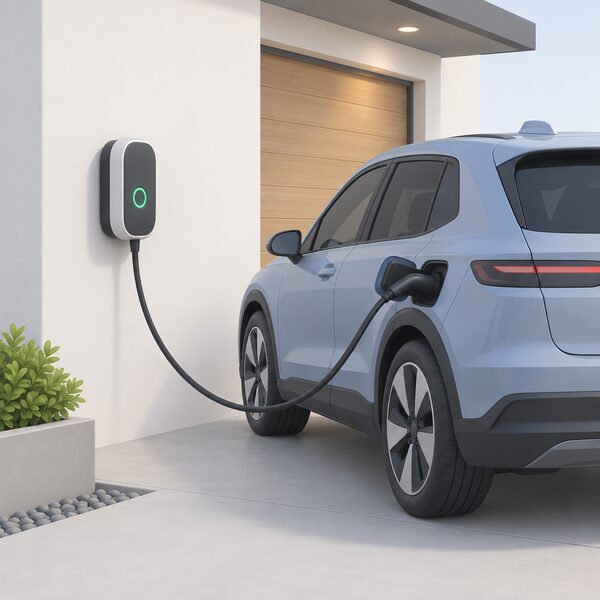
The status lights use colour to show state. Green means the car is charging, yellow means a schedule is set and the charger is waiting for the scheduled time to start charging, and a solid red light means the charger is locked to prevent unauthorised charging29. If no lights show at all, the maker suggests checking the app, which displays charger status such as charger offline, and raising a support ticket if the board stays dark30.
Offline status has a short list of causes: the charger has lost its Wi-Fi connection, home internet is down or unstable, the charger is too far from the router, Wi-Fi settings have changed or been reset, or there is a temporary server or network issue18. The charger needs a 2.4 GHz network rather than 5 GHz, with the correct password and good signal strength32. Where the router runs WPA2 and WPA3 in mixed mode that may work, but if it does not the router must be set to WPA233. The maker's suggested fixes for weak signal are moving the router closer or fitting a Wi-Fi booster or mesh system near the charger, and a 4G-to-Wi-Fi router can serve as a dedicated connection if the problem persists31.
Reconnection runs through the app: go to the Settings section, change the Wi-Fi network, pick the network, enter the password and connect18. A manual option lets the network name and password be entered directly32. For a full reset, the maker's procedure is to connect over Bluetooth, open advanced settings, accept the warning message, and under OCPP select remove OCPP settings and restart charge point34. For Octopus Intelligent specifically, the first step is to open the Octopus Energy app, go to Intelligent Octopus, select Manage Connection and tap Disconnect Vehicle or Charge Point, then reconnect through the Octopus setup process34.
If a cable is stuck, socketed chargers have a built-in motor lock that secures the cable during use, and tethered mode can be enabled through the lock cable button in the app24. Faults and fixes across the market are covered at EV charge point faults and troubleshooting.
Sources34 cited
- Simpson & Partners home page, Simpson & Partners, 2026
- Home Series wall mount, Simpson & Partners, 2026
- Charger comparison, Simpson & Partners, 2026
- How to choose the right EV charger for your home, Simpson & Partners, 2026
- Warranty, Simpson & Partners, 2025
- FAQs, Simpson & Partners, 2026
- Our colours, Simpson & Partners, 2026
- Installer check list, Simpson & Partners, 2026
- Installation service now available, Simpson & Partners, 2025
- Troubleshooting, Simpson & Partners, 2026
- Electric car charging at home, Which?, 2026
- Solar integration, Simpson & Partners, 2026
- House battery integration, Simpson & Partners, 2026
- Solar troubleshooting, Simpson & Partners, 2026
- Why do I need to connect my charger to Wi-Fi, Simpson & Partners, 2026
- Wi-Fi setup, Simpson & Partners, 2026
- My charger won't connect to my Wi-Fi, Simpson & Partners, 2026
- Adjusting your router to use WPA2, Simpson & Partners, 2026
- Octopus says my charger isn't connected to the internet, Simpson & Partners, 2026
- The app keeps showing cloud disconnected, Simpson & Partners, 2026
- My lights aren't showing on my charger, Simpson & Partners, 2026
- Charger lights, Simpson & Partners, 2026
- How to completely reset your charger, Simpson & Partners, 2026
- How to reset Octopus Intelligence, Simpson & Partners, 2026
- Home 22kW Plus, Simpson & Partners, 2026
- Home Series free-standing, Simpson & Partners, 2026
- Business Series wall mount, Simpson & Partners, 2026
- Home charging basic, Simpson & Partners, 2026
- Ethernet connectivity, Simpson & Partners, 2026
- Premium EV charging just got more affordable for blue light workers, Simpson & Partners, 2026
- Holiday Series, Simpson & Partners, 2026
- My cable is stuck in my charger, Simpson & Partners, 2026
- Powering trust in electric vehicle charging with BSI Kitemark certification, BSI, 2026
- Forever yours in 10 working days, Simpson & Partners, 2025