
In this guide
Octopus Energy runs more tariff types than most suppliers, and the differences between them matter more than the brand on the bill. There is a fixed deal that locks rates for 12 months, a half-hourly tariff that changes price every day, overnight rates for electric cars, and export tariffs that pay for electricity a home sends to the grid rather than drawing from it1.
The range splits into two halves. Import tariffs decide what a household pays for electricity it uses. Export tariffs decide what it earns for electricity it produces and does not use, and those are open to any Octopus customer who exports, without any requirement to buy solar or a battery from the company3.
The current price cap period, from 1 July to 30 September 2026, was set at £1,664, with Octopus Flexible at £1,6511. That figure is the backdrop against which every other Octopus tariff is judged, and it is the one most households arrive already knowing.
The tariff range at a glance
Octopus's import tariffs fall into four broad groups, and the group a household belongs to is decided by what the home contains rather than by preference.
Fixed tariffs lock rates for a set period, so the bill does not move when the cap changes7. Agile tracks half-hourly wholesale prices and updates its rates daily, which means the price a household pays changes through the day and from one day to the next8. EV tariffs give a block of cheaper overnight electricity: Octopus Go provides five hours of cheaper energy every night, and Intelligent Octopus provides six hours of cheaper electricity overnight2. Solar and battery tariffs combine an import rate with an export rate, so the same account both buys and sells9.
| Tariff | Type | Fixed end date | What it is for |
|---|---|---|---|
| Octopus Flexible | Variable | None | Default supply, tracks the cap1 |
| Octopus fixed deal | Fixed | 12 months | Locking rates against future rises7 |
| Agile Octopus | Variable, half-hourly | None | Shifting use to cheap half-hours8 |
| Octopus Go | EV, five cheap hours nightly | None | Overnight car charging2 |
| Intelligent Octopus | EV, six cheap hours nightly | None | Overnight charging, supplier-managed8 |
| Octopus Flux | Variable, import and export | No fixed end date | Solar and battery homes3 |
| Outgoing Octopus | Export, fixed | No fixed end date | Selling surplus solar3 |
Octopus is one of the leading time-of-use providers in the UK, alongside EDF Energy and E.ON Next8. The structure of these tariffs is not unique to Octopus, but the range is wider than most, and the export side is where it stands out: Which? notes that Octopus offers some of the highest export tariff rates, and that a household does not have to buy its solar solutions to get them5.
Fixed tariffs and the price cap

A fixed tariff is the simplest thing Octopus sells: rates and standing charges are set for a period, and the bill does not move when the cap is reviewed. The company's fixed-price tariffs lock in rates to avoid future price rises for 12 months7. The trade-off is symmetrical. If the cap falls, a household on a fix keeps paying the old rate; if it rises, the fix holds.
The cap itself does not cover everything. Fixed tariffs, business energy contracts, heat networks and heating oil all sit outside it, and some green tariffs and special time-of-use tariffs are excluded as well9. That matters for anyone weighing a fixed Octopus deal against a standard variable tariff: the protection a household gives up by fixing is not the same protection the cap provides, because the cap was never going to apply to the fix in the first place.
The cap is reviewed quarterly. The next review, for the January to March 2027 period, is due on 25 November 20267. For context on how fixed deals compare across the market, one 15-month fixed tariff from another supplier was priced £239 below the then-current cap in July 202611. That is a competitor's figure, not Octopus's, and it shows the shape of the market rather than what Octopus charges.
For a household, the independence question here is narrow but real. A fixed tariff buys certainty about price, not independence from the grid or from a supplier. The electricity still arrives the same way. What changes is who carries the risk of a wholesale price move, and for the length of the fix, that is the supplier. More on how fixes work is at fixed-rate energy tariffs.
Smart EV tariffs: Go and Intelligent Octopus
Octopus currently offers three EV tariffs for customers who want to charge an electric vehicle at home2. The two best known are Octopus Go and Intelligent Octopus.
Octopus Go is the original: five hours of cheaper energy every night to charge a car2. Intelligent Octopus gives six hours of cheaper electricity overnight and is Octopus Energy's most popular smart tariff8. Both work through an app that customers download, which is where the scheduling and the charging control sit2.
The difference between them is who decides when the car charges. On Go, the household sets the window. On Intelligent Octopus, the supplier manages the charging within the cheap period, which is why it is described as a smart tariff rather than simply an off-peak one. That control is the point of the tariff and also its main dependence: the cheap rate depends on the app, the car or charger being compatible, and the supplier's system working.
Compatibility is not universal. Some home chargers are built for it, such as the Indra Smart LUX, which is listed as compatible with OVO and Octopus Intelligent Go14. Others are not. A household considering either tariff needs to check the charger and the car before signing up, because the cheap hours are only useful if the equipment can use them.
The economics are straightforward where a car is charged at home overnight. Public charging is far more expensive: Octopus states that a slow or fast charge at one of the UK's public charging points costs an EV driver 54p per kWh on average, last checked in June 20262. Against that, an overnight home rate is a large saving, and it is the main reason these tariffs exist. The wider picture on EV tariffs is at electric vehicle energy tariffs.
Export tariffs: what Octopus pays for solar
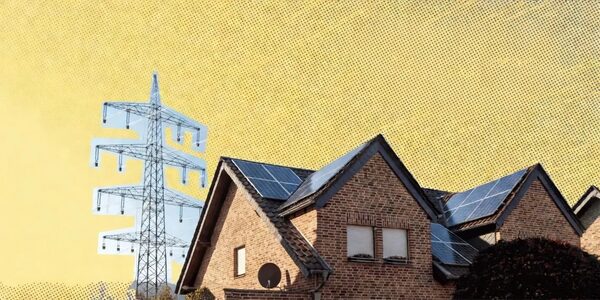
Octopus's export tariffs pay for electricity a home sends to the grid, and the rates vary more than most households expect. The company's standard SEG tariff pays 4.1p per kWh5. Outgoing Octopus, a fixed export tariff with no fixed end date, pays 12p per kWh3. Solar Saving, a variable export tariff, pays 15p per kWh3. Solar Savings Exclusive, a 12-month fixed export tariff, pays 25p3.
The spread is wide, and the reason is that these are different products aimed at different homes. A standard SEG tariff is the baseline. A fixed export tariff pays more in exchange for a commitment. A tariff tied to a battery and a smart import tariff pays most of all, because the supplier gets something in return: control over when the export happens.
The official picture confirms the position at the top of the market. Ofgem's Smart Export Guarantee annual report for Year 5 records that Octopus Energy's Intelligent Octopus Flux Export tariff offered the second highest rate available, averaging 27p per kWh15. The same report records that the lowest tied and untied tariffs were 5p per kWh (Octopus) and 1p per kWh (E Energy) respectively, which shows how far the bottom of the market sits from the top15.
Two conditions apply across the export range. Octopus's SEG tariffs are available to all Octopus customers who export electricity, so there is no requirement to buy panels or a battery from the company5. But the export tariffs require the household to be on an Octopus import tariff, which ties the two sides of the account together3. A household cannot take the export rate and buy its electricity elsewhere. The full rules are at the Smart Export Guarantee.
Tariffs for batteries and solar: Flux and storage pairing
Octopus Flux is the tariff built for homes with both solar panels and a battery. It is an import and export tariff, so what a household pays to use electricity varies with the time of day, and so does what it earns for exporting9. It has no fixed end date and is a variable tariff3.
The structure is what makes it work. Some tariffs pay for exporting at peak times, and Octopus Flux is the example Which? gives4. The idea is that a battery charges when power is cheapest and exports when the grid needs it most, which is why the tariff is only useful with storage. Without a battery, a household cannot move its export into the peak window, and the higher peak rate is unreachable.
Intelligent Octopus Flux goes further. It is a two-rate tariff with matching import and export prices, automated battery management that charges when power is cheapest and exports between 4pm and 7pm5. It pays 23p per kWh to Octopus customers who have solar panels and a battery5. The eligibility is specific: it was available to customers on the Intelligent Flux import tariff who had solar PV and battery storage but also allowed Octopus to control their battery exports15. That last condition is the trade at the centre of the tariff: the household hands over control of when its battery discharges, and in return gets a higher rate and automatic management.
The general eligibility rules for solar-specific tariffs are worth knowing, because they apply beyond Octopus. Usually, to be eligible, a household needs battery storage as well as solar panels, and needs to get its energy from that supplier4. These tariffs usually combine an export tariff with a smart time-of-use tariff, with different electricity prices based on peak and off-peak times4. And compatibility is not automatic: some battery tariffs only work with specific systems, so the battery already installed decides which tariffs are open4. More on this is at import tariffs designed for solar and battery homes.
Lower standing charges: the Ofgem trial

Standing charges are the daily fee a household pays whatever it uses, and they have become a larger share of the bill as unit rates have moved. Ofgem has been running a trial to test what happens when they are cut.
From June 2026, some suppliers, including British Gas, EDF, E.ON and Octopus, offer tariffs with a lower standing charge as part of a one-year Ofgem trial17. Octopus introduced its lower standing charge tariff trial to a limited number of homes as of 27 July 202617. The tariff is a 12-month tariff with fixed rates and standing charges17.
The trial has a wider ambition behind it. All suppliers in England, Scotland and Wales will offer new tariffs with a significant reduction in the daily standing charge14. That is a change to the shape of the market rather than a single product, and it does not extend to Northern Ireland, where the supply market and its rules are different.
The design work goes back further. Ofgem invited expressions of interest from domestic energy suppliers to collaborate on a trial of a restructured standing charge, with a trial design period running from July 2025 to September 202513. The trial is led by Ofgem's Consumer Insight and Behavioural Science team, which provides support to participating suppliers13. Ofgem has also consulted on a requirement to offer lower standing charge tariffs, with a contact address for the work at standingcharges@ofgem.gov.uk16.
For a household, the significance is about who benefits from a low-usage pattern. A high standing charge penalises homes that use little electricity, including those with solar panels that cover much of their demand. A lower standing charge shifts the balance back towards unit rates, which changes the arithmetic for exactly the households most likely to be on an Octopus export tariff. The detail on how these tariffs work is at tariff rules: what Ofgem requires suppliers to offer.
Green credentials: what the claims cover
Octopus was founded in 2015 and now accounts for almost a quarter of the domestic electricity market18. Its growth came partly from taking on customers from suppliers that failed or left: 1.5 million customers from Bulb and 1.3 million from Shell20.
On renewables, the figures are about sourcing rather than about what arrives at the meter. Octopus's overall fuel mix was 86.4% renewable in the year from April 2024 to March 2025, and its green tariffs were up to 100% renewable over the same period6. Its customer service record shows 85% renewable for January to March 20266. Green tariffs generally promise 100% renewably sourced electricity as a minimum, with some including renewably sourced gas21.
The distinction matters. A renewable sourcing claim means the supplier buys enough renewable generation, or the certificates that represent it, to cover the electricity it sells on that tariff. It does not mean the electrons in a particular home came from a wind farm, because the grid does not work that way. The claim is about what the supplier pays for, and it is verifiable at that level.
The Bulb takeover is part of the same story. Bulb ceased trading in November 2021 with over a million customers eventually transferred to Octopus20. It was too big for the Supplier of Last Resort system, so it was placed into special administration until its customer base was acquired by Octopus the following year20. Octopus took over operations for Bulb after the close of SEG Year 3 and supplied the data used in that year's report15. For households that came across in that transfer, the tariff they ended up on was an Octopus product, and the protections that applied during the administration ended when the transfer completed.
What these tariffs mean for household energy independence
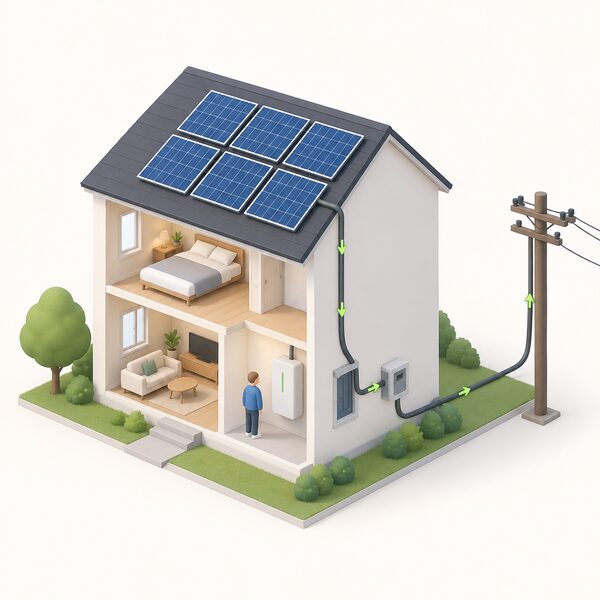
The honest answer is that Octopus's tariffs change what a household pays and what it earns, but not where its electricity comes from. Every import tariff on the list keeps a home connected to the grid and dependent on a supplier. The differences are in the terms of that dependence.
Where the tariffs do shift the balance is on the export side. A household with solar panels and a battery that exports on a tariff paying 12p, 15p or 25p per kWh is being paid for generation it would otherwise give away3. That is a genuine transfer of value from the grid to the home, and it is the closest thing in the tariff market to independence. The condition is that the household stays on an Octopus import tariff to get it3.
The dependencies that remain are worth naming plainly. Smart EV tariffs depend on an app, a compatible charger and the supplier's systems2. Intelligent Octopus Flux depends on handing control of battery exports to Octopus, and it is currently withdrawn because prices are volatile15. Agile depends on a household being able to shift its use into cheap half-hours, and on the price staying within the 100p per kWh cap4. A fixed tariff depends on nothing except the term running its course, and it gives up the upside if prices fall7.
For a household weighing all this, the useful question is not which tariff is best but which dependence is acceptable. A home with an electric car and no solar is buying cheap overnight electricity and accepting an app. A home with solar and a battery is selling into the grid and accepting a supplier relationship on both sides of the meter. A home with neither is choosing between certainty and flexibility, and the cap is the benchmark either way1. The wider context on how tariffs relate to self-sufficiency is at tariffs and household energy independence.
Sources21 cited
- Octopus price changes, Uswitch, 2026
- Octopus EV energy tariffs, Uswitch, 2025
- Smart Export Guarantee, Solar Energy UK, 2026
- Time of use tariffs explained, Which?, 2026
- Smart Export Guarantee rates: the best and worst SEG tariffs, Which?, 2026
- Octopus Energy customer service details, Citizens Advice, 2026
- Energy price cap October 2026: what we know so far, Uswitch, 2026
- How to choose the best energy company, Which?, 2026
- Energy price cap, Ofgem, 2026
- What is the energy price cap, Energy Saving Trust, 2026
- Fix now or pay later: households urged to lock in energy deals, Uswitch, 2026
- Should I get a no standing charge tariff?, Uswitch, 2026
- Split standing charge tariff trial, Ofgem, 2025
- Low standing charge tariffs: who are they for?, Ivie, 2026
- Smart Export Guarantee Annual Report Year 5, Ofgem, 2025
- Octopus temporarily pause new sign-up to Intelligent Octopus Flux and Flux tariffs, MoneySavingExpert forum, 2025
- What are low standing charge tariffs, Plymouth Energy Community, 2026
- Energy statistics, Uswitch, 2025
- Which? energy survey results, Which?, 2026
- Energy supplier out of business, Uswitch, 2026
- Green energy, Uswitch, 2026
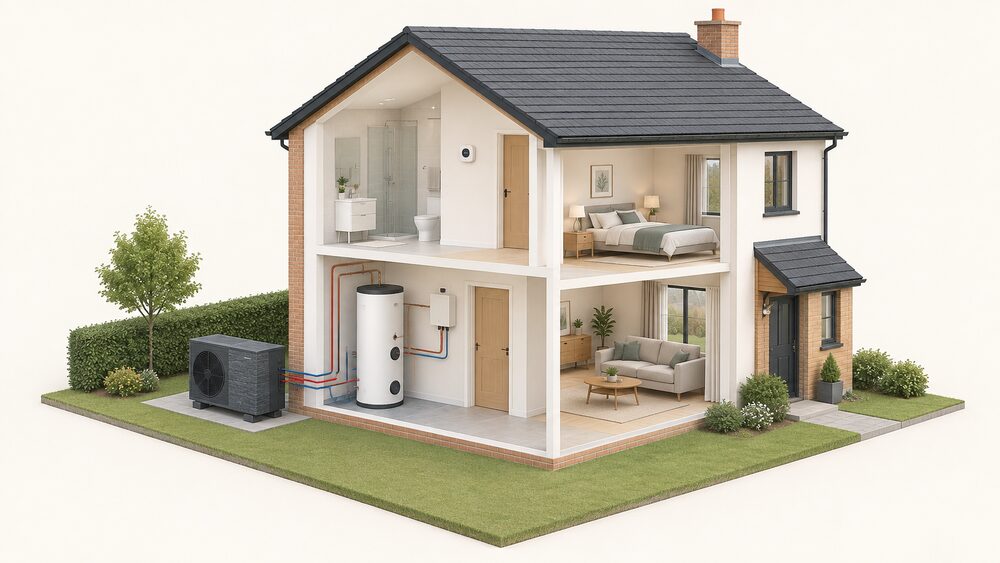 Octopus Energy heat pumps and the Cosy rangeOctopus Energy designs, makes and installs its own heat pumps in the UK, sold as the Cosy 6, Cosy 9 and Cosy 12 with a matching smart tariff, controls and an eight-year warranty on its own-brand units.
 Octopus EnergyOctopus Energy is the largest electricity supplier in Great Britain and the second largest for gas.
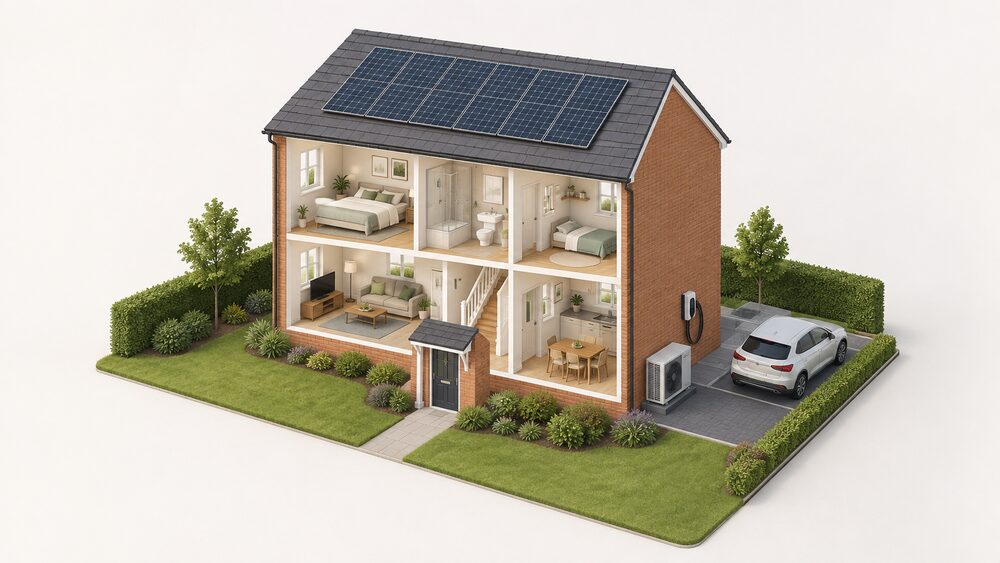 Octopus Energy Installation ServicesOctopus Energy Services installs heat pumps, solar panels and home EV chargepoints, backed by the Electroverse public charging network and smart tariffs.
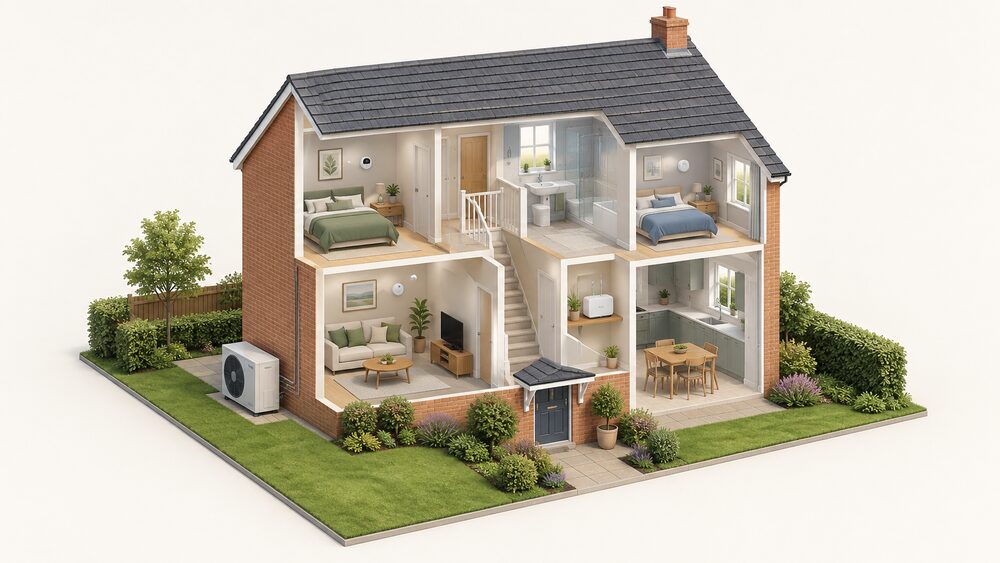 Octopus Cosy heat pumpsThe Octopus Cosy range explained: Cosy 6 output, what the package includes, which homes it suits, running costs on the Cosy tariff, Hush Mode and the Care Plan.
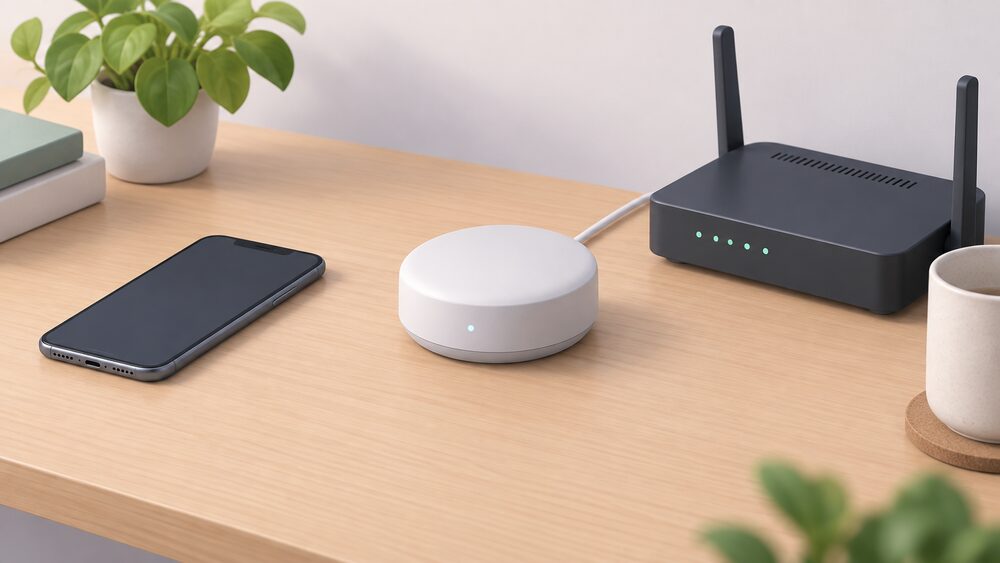 Octopus Home MiniThe Octopus Home Mini is a wi-fi device that pulls smart meter data into the Octopus app and online account every 5 to 15 seconds, giving near real-time electricity and gas visibility to Octopus customers.