
In this guide
Indra is a British EV charger manufacturer based in Malvern, Worcestershire, which designs and builds every product in the UK and has been doing so for more than a decade1. Its domestic range is built around two models, the Smart PRO and the Smart LUX, both rated at 7.4kW and both combining app control, dynamic load management, solar compatibility and support for leading smart EV tariffs2.
The commercial case rests on tariff integration. Indra chargers work with four of the UK's best-known EV saver tariffs, including EDF Smart Charging, Intelligent Octopus Go, OVO Charge Anytime and E.ON Next Drive Smart, and the company describes its chargers as tariff agnostic, so customers are not tied to one energy provider or plan3. Indra's own figures put the extra saving from pairing a charger with a compatible smart tariff at £106 a year, with total annual savings against petrol of £1,0131.
The limits matter as much as the benefits. A home charger keeps a household on the grid and on an electricity supplier, and the smart features that deliver the tariff savings depend on a broadband connection, the manufacturer's app and the supplier's systems. Indra's bidirectional products, which would change that relationship, are not yet on general sale4.
Indra at a glance: British-made smart chargers from Malvern
Indra Renewable Technologies Limited designs, manufactures and supports its chargers from its headquarters in Malvern, Worcestershire, and states that it designs and builds every product in the UK1. The company has been designing and manufacturing intelligent home-charging technology in the UK for more than a decade, and its award record includes the 2025 E-Mobility Award and the 2024 EVIE Special Recognition Award1.
That UK base is the main structural difference between Indra and most of the charger market. It shortens the supply chain for parts and support, and it means the same organisation that builds the unit also runs the installation network and the warranty. The company's reach extends beyond individual householders: its Smart PRO Untethered charger is supplied to Persimmon and Charles Church homes under an agreement with a UK homebuilder, which puts Indra hardware into new-build properties as standard8.
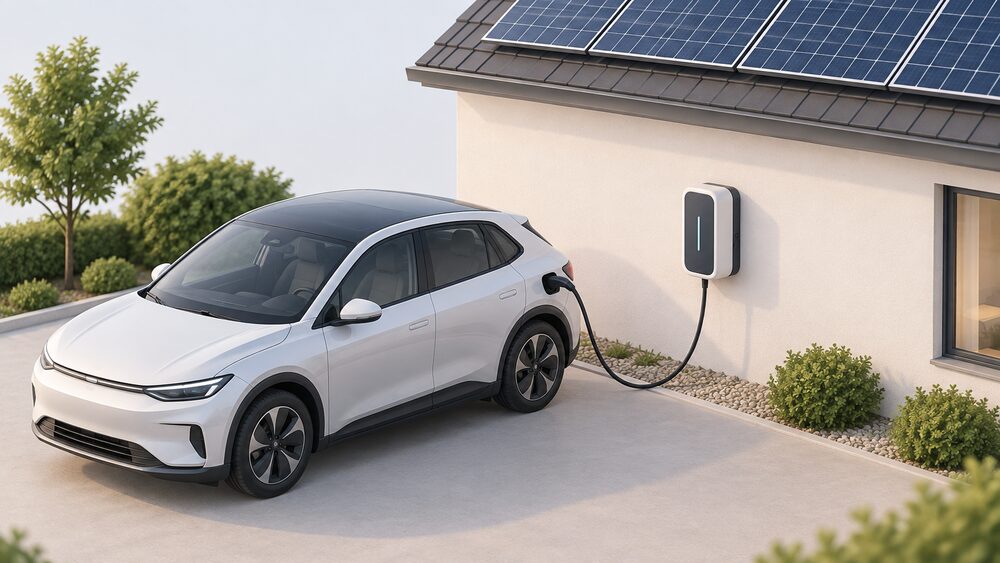
For a household thinking about energy independence, the position is straightforward. An Indra charger is a grid-connected device. It draws power from the home's electricity supply, and the only ongoing charges after purchase and installation are for the power used, fixed by the energy tariff and supplier1. What the smart layer adds is control over when that power is drawn, which is where the tariff savings come from, and solar compatibility, which allows a household with panels to divert surplus generation into the car rather than exporting it.
The dependence that remains is on the grid, on a supplier, and on the manufacturer's software. Scheduling, remote locking, cost tracking and tariff integration all run through the Indra app, and the tariff savings depend on the charger continuing to work with the supplier's systems1.
Smart PRO and Smart LUX: what each model offers
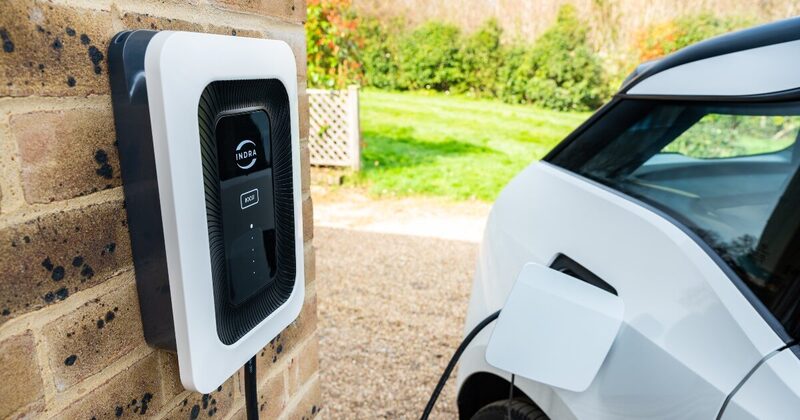
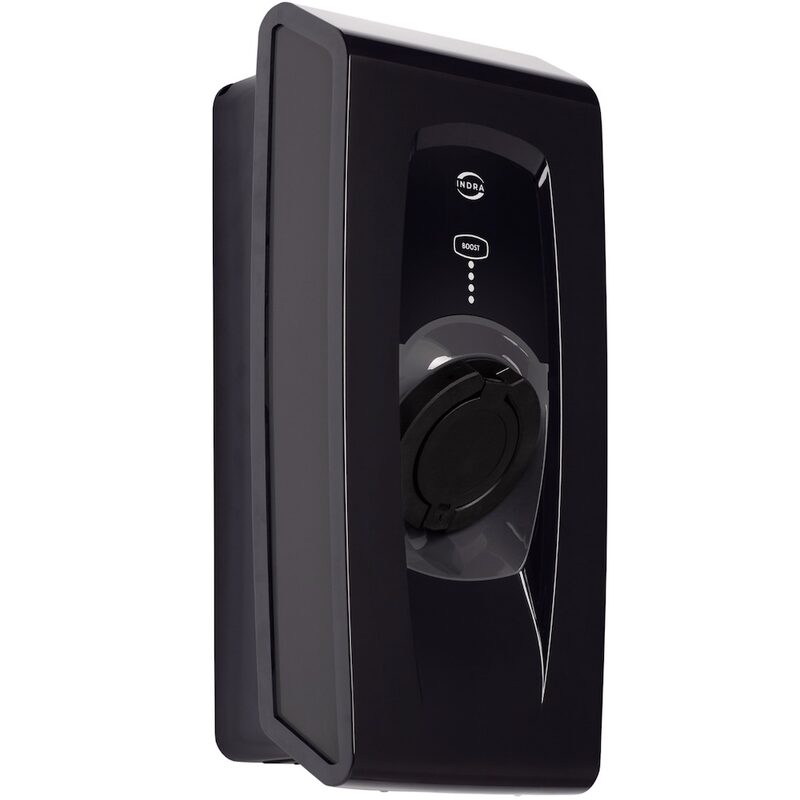
Both models sit in the same technical bracket. Indra describes the Smart LUX and Smart PRO as combining 7.4kW home charging with app control, dynamic load management, solar compatibility and support for leading smart EV tariffs2. An independent product listing gives the Smart LUX a maximum charging speed of 7.4kW and confirms smart tariff compatibility with OVO and Octopus Intelligent Go9.
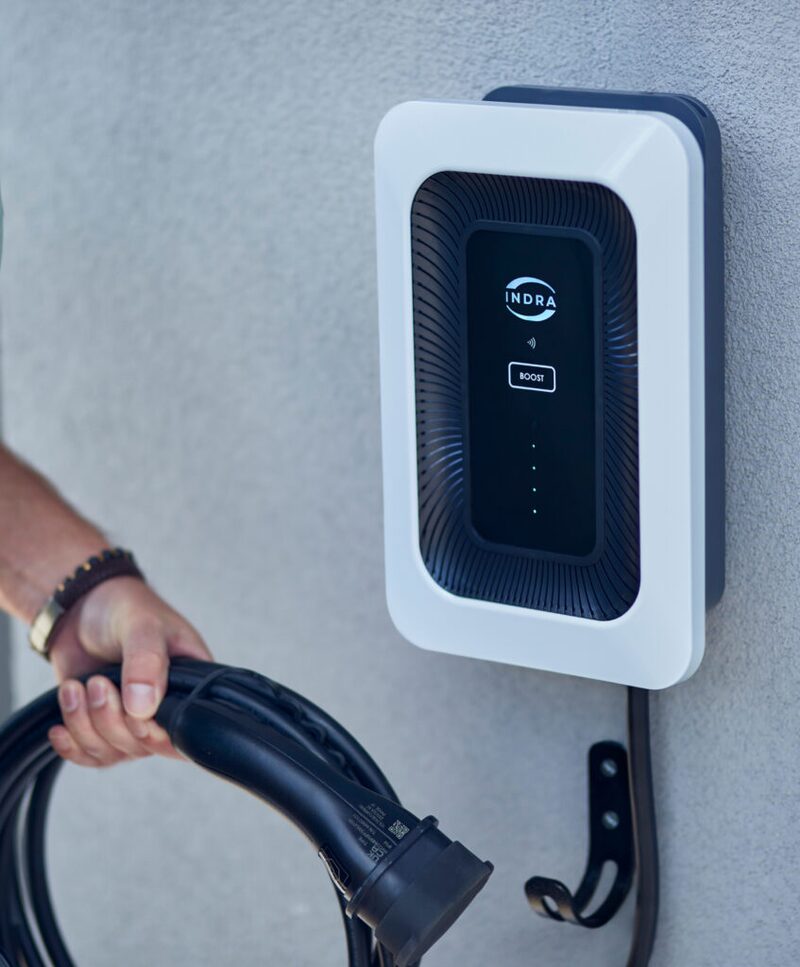
The differences are in presentation and in the status display. The Smart LUX features a turbine light that shows the charger's status at a glance, signalling charging, ready, scheduled or needs attention through colour and movement1. The Smart PRO is available in tethered and untethered forms, with the charging cable and charging gun holster supplied only on tethered chargers5. The untethered Smart PRO is the variant supplied to Persimmon and Charles Church homes, and it comes with solar compatibility8.
| Feature | Smart PRO | Smart LUX |
|---|---|---|
| Charging power | up to 7.4kW5 | 7.4kW9 |
| Cable options | tethered or untethered5 | not stated |
| Status display | primary LED status light10 | turbine light, colour and movement1 |
| Solar compatibility | yes8 | yes2 |
| Smart tariff support | yes8 | yes, OVO and Octopus Intelligent Go9 |
| Warranty | 3 years6 | 3 years6 |
One householder's account describes upgrading from a Smart PRO to a Smart LUX, and the same case study records that the LUX was demonstrated operating in a water tank at its launch11. That is a maker's account of its own product rather than an independent test.
Charging power and features: 7.4kW with app control, load management and solar
Indra states that its charger can deliver up to 7.4kW, which it equates to adding around 25 to 30 miles of range per hour for most EVs5. That is the standard single-phase domestic rate. Independent guidance puts the same figure in electrical terms: a 7.4kW EV charger adds 32A of continuous load to the installation, on a single-phase 32 amp supply12.
That continuous load is why load management is not optional in practice. Indra's chargers include dynamic load management, which adjusts charging against what the property is drawing2. The principle is the same across the market: a charger that monitors the property's load and automatically reduces charging current when needed avoids overloading the supply14. For a household, this is the difference between a charger that can be fitted to an existing supply and one that requires an upgrade first.
The app layer covers scheduling, remote locking, boost, cost tracking and solar integration1. Remote locking lets a householder lock or unlock the charger from anywhere, preventing unwanted charging, and a locked charger cannot be used even in boost mode until it is unlocked1. Solar compatibility means surplus generation from panels can be diverted to the car, which is the point at which a charger starts to reduce rather than simply shift grid dependence.
Indra's chargers are designed to comply with BS EN 61851 and the G98/G99 regulations for connecting to the electricity grid10. Those are the standards that govern how a charger behaves on the network, and they sit alongside the installation rules that apply to any home charge point.
Smart tariff compatibility: which tariffs the chargers work with
Indra chargers integrate with thousands of electric tariffs, including smart EV tariffs, and the company names Intelligent Octopus Go, OVO Charge Anytime, E.ON Next Drive Smart and EDF's Smart Charging bolt-on as supported options1. With the EDF integration, Indra states that its chargers now work with four of the UK's best-known EV saver tariffs3.
The EDF setup route is specific. Indra's guidance is to connect the charger in the EDF app, then plug in and set a ready-by time, switching off any existing charging schedules first so the two systems do not clash3. That last step matters: a charger running its own schedule while a supplier's system tries to run another will produce a car that charges at the wrong time or not at all.
Two conditions sit underneath all of this. The first is a smart meter: eligibility for an EV tariff requires a smart meter that works alongside a home EV charger16. The second is that smart tariff compatibility is not unique to Indra. Independent guidance lists the Ohme Home Pro, Wallbox Pulsar Max and Zappi as smart chargers that work with most EV tariffs from Octopus, E.ON Next and OVO17. Indra's claim is that its chargers are tariff agnostic, so a household is not tied to one provider or plan, which is a meaningful difference from chargers locked to a single supplier's scheme3.
For a household, the practical position is that the charger is the hardware and the tariff is the saving. The charger determines whether a given tariff can control it; the tariff determines what the electricity costs. Neither works without the other, and both depend on the grid connection remaining in place.
How much you can save with a smart EV tariff

Indra's published figures come with dates and assumptions, and they should be read that way. The company states that its smart EV tariff-enabled chargers unlock an extra £280 in annual savings4. Elsewhere it puts the extra saving from using an Indra charger with a compatible smart EV tariff at £106 a year, and the same £106 figure appears in its home survey material1.
The larger number is the total saving against petrol. Indra states that a smart charger paired with a smart EV tariff saves up to £921 a year, based on switching from a Seat Ateca 1.5 TSI EVO SE 5-Door to a Kia Niro 2, 7,000 miles, OVO Charge Anytime at 7p/kWh against petrol at 137p/litre, with data as of 27 November 202519. The company's product page gives a total annual saving of £1,013, with data updated 17 July 20261.
On charging cost itself, Indra's guidance is that a full charge can cost as little as £4 to £6 where cheaper off-peak rates on a smart EV tariff apply7. The company also states that once a charger has been purchased and installed, the only ongoing charges are for the power used, fixed by the energy tariff and supplier1.
The independence question here is real but partial. A smart tariff moves consumption to cheaper hours, which reduces cost and, at times of high renewable output, reduces the carbon intensity of the power drawn. It does not reduce the volume of electricity bought, and it does not remove the household from the supplier's systems. The saving is a price effect, not a self-sufficiency effect.
Warranty and what's covered
For Indra products purchased on or after 05/12/2025, the standard product warranty runs for 3 years, starting from the date of installation by a qualified electrical contractor6. Indra states that it will cover the cost of parts, labour and delivery for faults confirmed under warranty, and the warranty is provided by Indra Renewable Technologies Limited, registered in England and Wales6. The company's product page and its general guidance both confirm a three-year product warranty on home chargers1.
The warranty is explicit about what it does not promise. Indra states that it does not guarantee compatibility with all EV models, charging according to all schedules, or the availability or compatibility of future software updates with older products6. That third exclusion is the one worth reading twice: a charger bought today is not warranted to keep working with software released later, which is a limit on the useful life of the smart features rather than of the hardware.
Surge protection is handled separately. Indra states that charger installation includes surge protection, and an SPD can be added to an EV charger order at checkout20. Where it is purchased, the standard installation covers installation and testing of the required electrical connections and equipment, including the surge protection device11.
For context on the wider market, other UK charger makers publish comparable terms: evec offers a 3-year parts and labour guarantee covering defects in materials and workmanship, with exclusions for transport damage, misuse, improper installation, wear and tear, consumables and cosmetic parts, and second-hand or refurbished units21. A 3-year term is therefore a normal position rather than an exceptional one.
Installation: direct from the team who built your charger
Indra states that the charger will be installed by a qualified electrician from one of its carefully selected installation partners11. The company's position is that because the charger is wired into the house's electrical supply, a certified electrician must manage the installation1. That aligns with the wider regulatory picture: EV chargers should be installed by a registered electrician with experience in this type of installation, and householders are advised to hire an electrician registered with a recognised certification body such as NICEIC22.
The process starts with a survey. After an order is placed, Indra sends a guided installation survey to the phone by SMS, asking for information and photographs of the property and the proposed charger location11. Off-street parking is a stated requirement11. A standard installation covers fitting the charger on a brick or plaster wall or another suitable permanent structure, along with the required electrical connections and testing11.
Work beyond that standard scope is quoted separately. Indra lists more than 10 metres of cabling between the electricity supply and the charger, installation on a detached garage, carport or mounting post, a complex cable route through a loft or beneath floors, a consumer unit upgrade, earthing work, and gas and water bonding installation or upgrading as examples of additional work, for which it provides a no-obligation quote before arranging the installation11.
The network notification sits with the installer. Applications for a charge point go through the ENA Connect Direct platform, and the chosen installer completes the application form on the householder's behalf24. Building regulations approval is a separate question, and the position differs across the UK nations25.
Bidirectional charging: Indra's V2G and V2H development
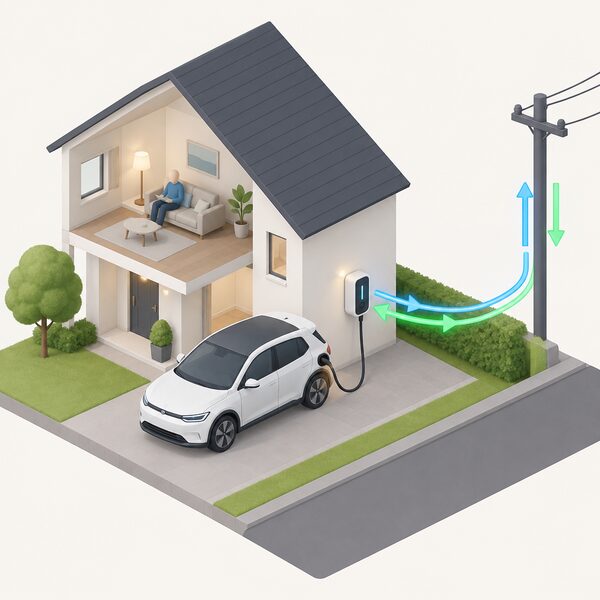
Indra's bidirectional work is the part of the range that would change a household's relationship with the grid, and it is not yet a product a householder can buy. Indra states that its V2H unit is not at present commercially available and that only those on the trial, now closed to new applicants, can currently purchase one4. Its V2G charger is described as currently in beta trials26.
The company's history in this area is longer than most. Indra states that it launched the world's first domestic V2G charger in 2018 and has been involved in several leading trials since4. A large-scale V2H trial with hundreds of participants launched in autumn 2022 and was set to run until 20244. Indra has also said it expects to move from energy-flex services to bi-directional charging in 202619.
Independent guidance describes the position plainly: bidirectional charging is currently being trialled in some places but is not widely available27. Where it does exist, smart V2G chargers such as the Wallbox Quasar 1 and Indra V2G units enable bidirectional energy flow, allowing the EV to both charge and discharge to the grid28. Indra's own estimate is that a V2G charger could save an extra £269 a year with a smart EV tariff26.
For a household, the distinction between V2G and V2H matters. V2G exports from the car to the grid, which involves a network agreement and a supplier arrangement. V2H powers the home from the car without exporting. Neither is available from Indra on general sale, and both depend on a vehicle that supports bidirectional flow as well as a charger that does. Until those products reach general availability, an Indra charger remains a one-directional device that draws from the grid and shifts when it draws.
Sources28 cited
- Indra home page, Indra, 2026
- Buying a 76-plate EV: 10 things to check before choosing your first home charger, Indra, 2026
- Indra adds EDF Smart Charging to its tariff line-up, Indra, 2026
- Indra V2H, Indra, 2025
- Smart PRO EV charger quick start guide, Indra, 2025
- Indra warranty, Indra, 2026
- EV charging and driving: a beginner's guide to going electric, Indra, 2026
- Indra agreement with UK homebuilder, Indra, 2024
- Home electric vehicle chargers, Carwow, 2026
- When your EV charger stops charging: understanding overvoltage, Indra, 2025
- Installation FAQs, Indra, 2026
- Section 722 EV charging complete guide, Elec-Mate, 2026
- Polestar home charging, Polestar, 2026
- VEVA car charger, Marlec, 2026
- Installer FAQs, Indra, 2026
- EV energy tariffs, Uswitch, 2025
- Does a hybrid car need an EV tariff?, Uswitch, 2025
- Book your home survey, Indra, 2026
- What the 2025 Budget means for EV drivers, Indra, 2025
- Protect your EV charger with a surge protection device, Indra, 2026
- Warranty information, evec, 2026
- EV charger regulations in England: what's changed, NICEIC, 2026
- Electric vehicle charger installation and maintenance, NICEIC, 2025
- Connecting to the networks: LCT strategy, Energy Networks Association, 2026
- Building regulations: electric vehicle charging, Planning Portal, 2026
- Indra V2G, Indra, 2024
- Battery storage, Energy Saving Trust, 2026
- Vehicle-to-grid charging, Uswitch, 2025
 IndraIndra makes bidirectional chargers in Britain, but can you actually buy one?
 Indra Smart PROThe Indra Smart PRO is a 7.4kW British-built smart charger with a 5-year warranty, solar charging and a £1,149 starting installation price.