
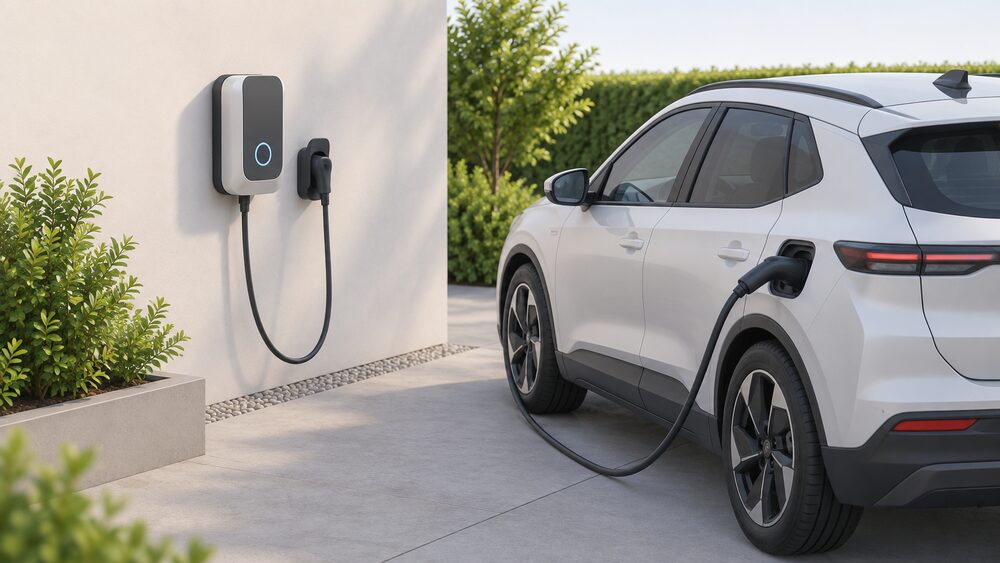
The Indra Smart PRO is a single-phase home EV charger rated at up to 7.4kW, which Indra states is equivalent to adding around 25 to 30 miles of range per hour for most electric cars1. It is designed and built in Malvern, Worcestershire, and Indra lists it as solar charging compatible, able to use surplus solar generation to charge a car2. Prices start at £1,149 for a standard installation2.
For a household weighing energy independence, the Smart PRO sits in the middle of the market rather than at its edge. It can shift charging into off-peak windows and soak up rooftop solar that would otherwise be exported, but it is not a bidirectional unit: it cannot send power back from the car to the house or the grid. Indra has worked on vehicle-to-grid hardware separately, and that work is not the same product as the Smart PRO3.
The warranty position needs care, because Indra publishes two different figures. Its product page states that a 5-year warranty comes as standard with all of its chargers1. Its warranty document sets out a 3-year standard product warranty for products purchased on or after 5 December 20254. Both are Indra's own words, and they are not reconciled on the pages themselves.
What the Smart PRO offers a UK household
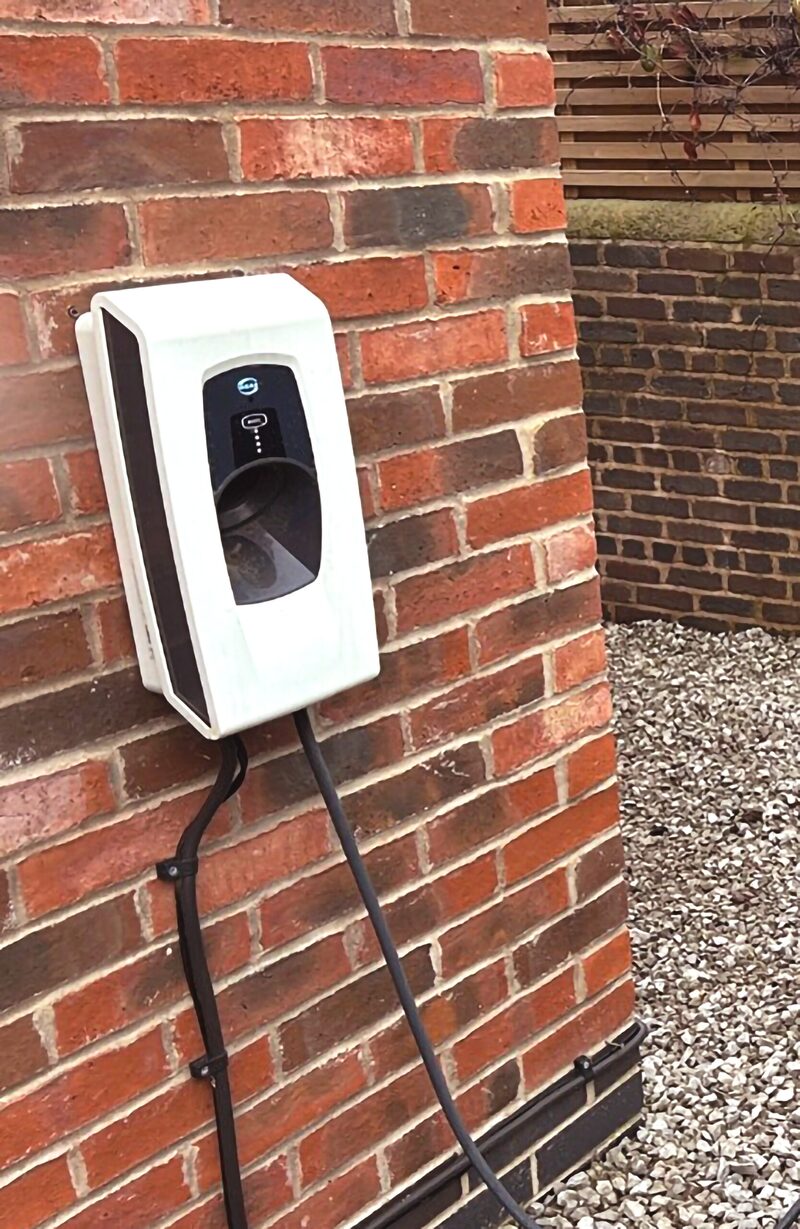
The Smart PRO is a wall-mounted unit intended for a garage or an outdoor wall, controlled through a membrane panel on the case and through the Indra App2. Its core proposition is scheduling: Indra states that where a household has more than one electricity tariff, such as peak and off-peak, a regular charging schedule can be set in the app so the car draws power when it is cheapest5. A boost button overrides any pre-set schedule for immediate charging at maximum power5.
Solar charging is the second strand. Indra describes the charger as compatible with solar, using surplus energy from panels to power the car2. That is a diversion function rather than a storage function: it makes use of generation at the moment it is produced, and it does nothing for a household charging overnight or in winter.
Connectivity is offered three ways, wired ethernet, Wi-Fi or 4G, which matters because a garage or a driveway away from the router is a common weak point for smart chargers2. Indra notes that a newly installed charger may take up to 48 hours to pair with the Indra App5.
The charger does not talk to the car. Indra states plainly that the charger does not communicate directly with the EV and cannot override the vehicle's own settings5. That limits what any schedule can achieve: the car's onboard charger sets the ceiling on acceptance rate, and the vehicle's own timers can conflict with the charger's.
Specifications
The published figures describe a standard single-phase domestic charger. Output current is variable up to 32A, and the input is 230V AC plus or minus 10% on a single phase supply2. The operating envelope is wide: minus 20 to 50 degrees Celsius, at 10% to 85% humidity2. The case measures 420mm by 200mm by 130mm2.
| Specification | Indra Smart PRO |
|---|---|
| Model name | Smart PRO2 |
| Maximum output power | 7.4kW (single phase)2 |
| Input voltage | 230V AC, plus or minus 10% (single phase)2 |
| Output current | Variable up to 32A2 |
| Dimensions | 420mm x 200mm x 130mm2 |
| Operating temperature | minus 20°C to 50°C2 |
| Operating humidity | 10% to 85%2 |
| Installation | Garage or outdoor wall-mounted2 |
| User interface | Membrane panel and app2 |
| Connectivity | Wired ethernet, Wi-Fi or 4G2 |
| Solar charging | Compatible2 |
The 7.4kW ceiling is the practical limit for a single-phase UK home supply, and it is the same figure most domestic chargers quote. A household wanting faster home charging would need a three-phase supply, which is uncommon in domestic properties. The cable is supplied only on tethered variants, along with a charging gun holster5.
Warranty: 5 years stated, 3 years in the terms
Indra's product page states that a 5-year warranty comes as standard with all of its chargers1. Its warranty document sets out different terms for products purchased on or after 5 December 2025, giving a standard product warranty of 3 years starting from the date of installation by a qualified electrical contractor4. The two figures are both Indra's, published on different pages, and they disagree. A buyer should confirm in writing which term applies to the unit being installed.
Where the warranty applies, Indra states it will cover the cost of parts, labour and delivery for faults confirmed under warranty4. The warranty is provided by Indra Renewable Technologies Limited, registered in England and Wales4. There is a separate installation warranty, under which labour for repairs is included only for faults confirmed as the responsibility of Indra or its appointed installer4.
Several conditions attach. The owner is required to adopt the product within the Indra App4. Indra's maximum liability under the warranty is limited to the purchase price of the product4. A repaired or replaced product remains under the original warranty period, with no extension4.
What the Smart PRO costs
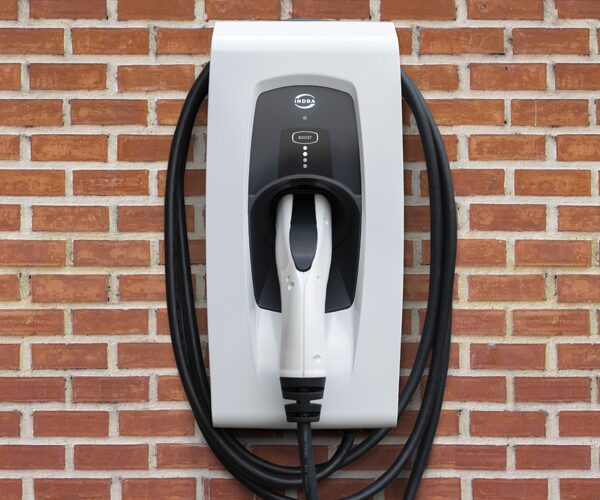
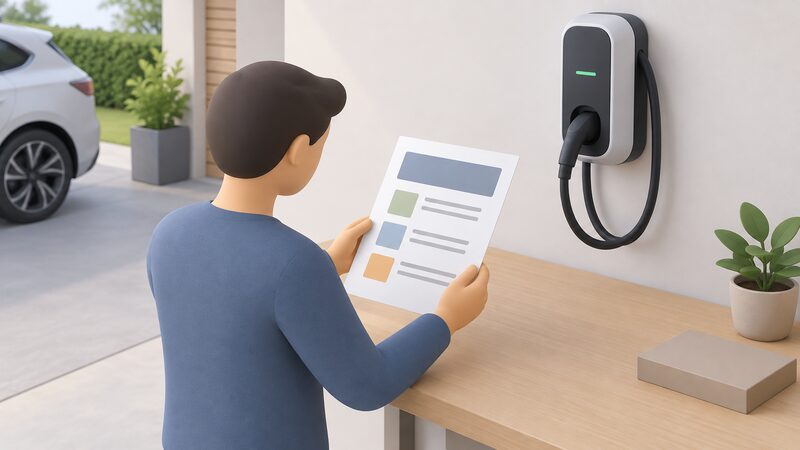
Indra states that prices start at £1,149 for a standard installation, quoted through its Just EVs partnership2. The same starting figure appears on the Peter Vardy page5. The installation service includes a site survey, internet connectivity and a charging cable for tethered units2.
That is a starting point, not a fixed price. Anything beyond a standard installation, such as a long cable run, an earth rod, or groundwork, changes the figure, and Indra directs enquiries to its team on 01684 7709192. The £1,149 figure should be read as the maker's own starting price for a straightforward job rather than a market rate.
For context on where that sits, an independent product page lists the related Indra Smart LUX at £1,075 with installation6. The two are different models with different specifications, so the comparison is indicative only. Wider cost context for home charging is covered in how much a home EV charge point costs, fitted.
VAT treatment is not stated in the published figures, so they should be read as quoted rather than as confirmed VAT-inclusive prices. Where a grant applies, it is claimed separately and the eligibility rules differ by nation and by property type.
Company status and UK manufacturing
Indra was founded in 2013, and its design, research, engineering and manufacturing operations are based in Malvern, Worcestershire3. The company states that all of its products are designed and built in Malvern2. As of January 2023 it reported more than 1,000 charging units manufactured to date3.
Indra has a longer history in bidirectional charging than in conventional wallboxes. It developed what it describes as the first domestic bi-directional vehicle-to-grid charger, and its hardware and software have been used in the first viable V2G trials3. In January 2023 it was awarded funding for two vehicle-to-everything charging projects and stated it would play a significant role in the UK Government's V2X Innovation Programme3. An independent assessment from 2021 noted Indra working on a CCS V2G unit through the CCS V2X project7. That is a different product from the Smart PRO and a different price bracket.
No administration, insolvency or withdrawal is recorded for Indra in the available material, and the company is named as the warranty provider in its own terms4. The relevant caution for a buyer is not company failure but the warranty discrepancy described above.
What it means for household energy independence
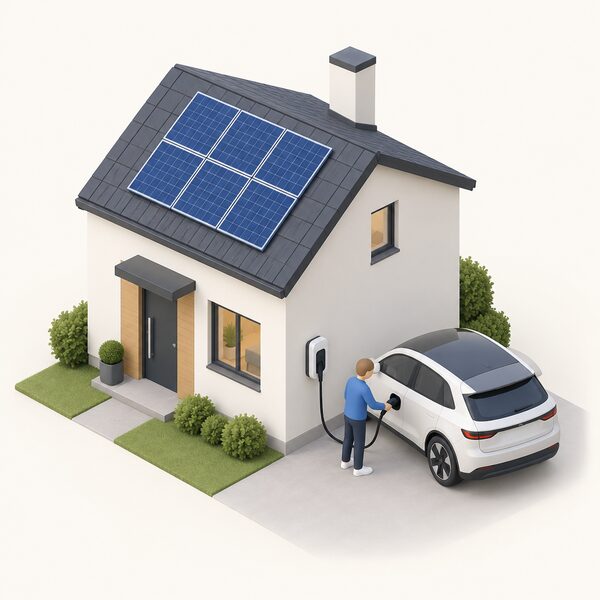
A smart charger of this kind changes when a household draws power, not whether it draws it. Indra's own framing is that scheduled charging makes the most of a peak and off-peak tariff5, and solar compatibility lets a household use its own generation rather than exporting it2. Both reduce the amount of grid electricity bought at expensive times, and neither removes the connection.
The wider policy direction treats this kind of device as part of the system rather than apart from it. Smart meters are described by the industry body responsible for the national network as the foundation of a smarter energy system, helping integrate renewable power such as wind, solar and hydropower and reduce reliance on fossil fuels8. Parliament's research service defines an energy smart appliance as an internet-connected appliance that can adjust its electricity usage automatically based on signals received remotely9, which is the category a scheduled charger sits in. The industry group BEAMA states that delivering smart, flexible products is essential for giving consumers the benefits of clean power while making the energy system more cost effective10.
The dependence that remains is specific and worth naming. The Smart PRO needs a home internet connection, whether by ethernet, Wi-Fi or 4G, and it needs Indra's app and servers for scheduling, monitoring and over-the-air updates2. Indra states that over-the-air updates mean the charger automatically receives the latest software1. Local charging continues without any of that, but the smart functions do not. The car itself is a second limit: the charger cannot override the vehicle's settings5. And the unit is unidirectional, so the household's independence stops at the meter. Bidirectional options are covered in vehicle-to-grid and vehicle-to-home charging in the UK, and the wider picture in EV charging and household energy independence.
Sources10 cited
- Indra Smart PRO product page, Indra
- Smart PRO EV charger quick start guide, Indra
- Indra wins government funding for V2X charging projects, Indra, 17 January 2023
- Indra warranty, Indra
- Indra Smart PRO via Peter Vardy, Indra
- Home electric vehicle chargers, Carwow, 9 January 2026
- Commercial viability of V2G, Cenex, January 2021
- Smart meters and decarbonisation, Smart DCC, 16 March 2026
- Energy smart appliances and load control, House of Commons Library, 20 September 2026
- Smart energy supply chain, BEAMA, 18 June 2025
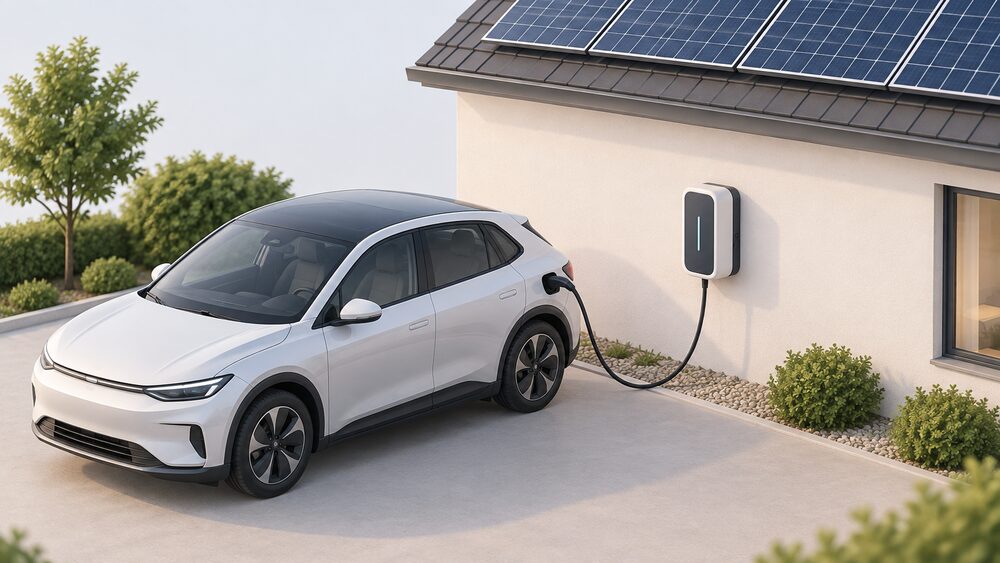 IndraIndra makes bidirectional chargers in Britain, but can you actually buy one?
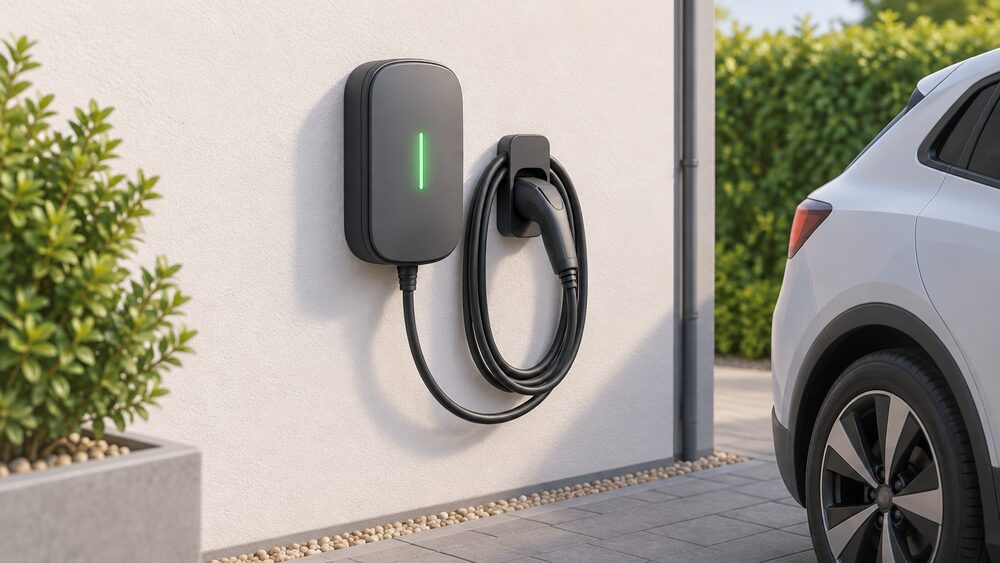 Indra smart EV chargersCan an Indra charger use your solar panels to cut costs, and does it work with cheap overnight tariffs like Intelligent Octopus Go?