
In this answer
Short answer
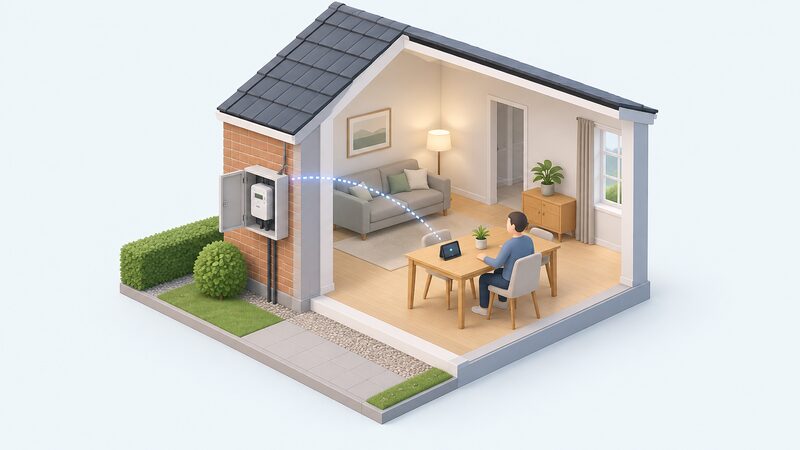
No. An in-home display is offered at no extra cost at the point of installation of a smart meter, and there is no separate charge for the device itself1. Everyone who gets a smart meter installed is provided with an in-home display, and the installer should demonstrate it if it has been accepted2.
The display is a small portable device that tells you in pounds and pence how much energy you are using, in near real time, with settings to view usage by day, week or month3. It costs less than £2 per year to run4.
What an in-home display is and what it shows
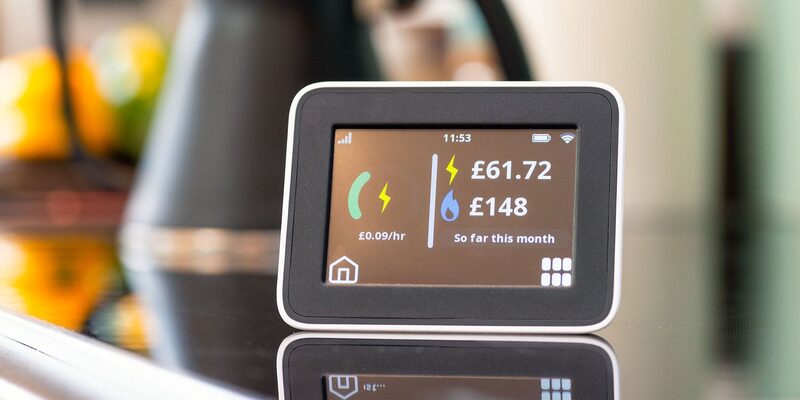
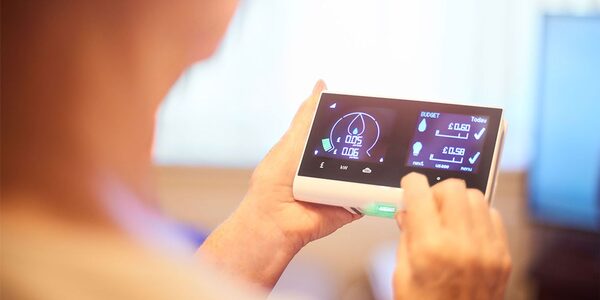
An in-home display is a small portable device that tells you in pounds and pence how much energy you are using3. It shows how much gas and electricity is being used in near real time, and what it is costing, with settings to view usage by day, week or month3. In credit mode, where the bill is paid at the end of each month or quarterly, it shows daily use and cost8.
For prepayment customers the display carries more: the price of the tariff, the credit balance, any debt on the account, and low credit alerts9. That makes it the main way a prepay household checks what is left without going to the meter.
The display should show energy use in pounds and pence and should take standing charges into account, including them in the costs shown10. It may not show any discounts or ad hoc charges, so the figure on the screen is not always the final bill10.
Displays are not identical. Each energy supplier may provide different models, and while all in-home displays provide the same information, they will not all look the same2. Accessible in-home displays, with larger buttons and information read out loud, are available from some suppliers2.
Cost: provided at no extra charge at installation
The in-home display is provided at no extra cost1. There is no extra cost for the in-home display, and it is offered at the point of installation, showing spending in near real time2. The same position is repeated across the rollout guidance: at the point of installation a household may be offered an in-home display that shows spending in near real time for no additional cost11.
The smart meter itself is also installed at no extra cost by the energy supplier12. Most suppliers offer free smart meter installation as part of the national rollout programme13. So the device and the meter that feeds it both arrive without an upfront charge.
Accessible in-home displays are being offered at no extra cost to selected customers, but they are not yet available widely14. That is a distribution limit rather than a price: where they are offered, they are not charged for.
| Item | Cost to the household | Source basis |
|---|---|---|
| In-home display at installation | No extra cost | 1 |
| Smart meter installation | No extra cost | 12 |
| Running the display | Less than £2 per year | 4 |
| Replacement after 12 months | In the region of £30 to £50 | 6 |
| Standalone retail energy monitor | £30 to over £100 | 7 |
The £30 to over £100 range covers retail monitors sold by a number of retailers with different functions7. Those are separate products, not the supplier-issued display, and the two should not be confused when comparing prices.
Why the display is free but the smart meter rollout matters
The display is free because it is part of the smart meter installation, not a product sold on its own. The meter is the thing being rolled out; the display is the visible end of it in the home. The smart meter itself, connected to the gas pipes or main electricity supply, will not show your spending, and only an in-home display shows standing charges10.
That division explains the cost position. A household that declines the display still gets the meter, and the meter still sends readings. What is lost is the in-home view of cost.
The rollout has a long horizon. The consultation proposes that suppliers complete installation of smart meters in remaining domestic premises by the end of 203015. Energy suppliers are required to take all reasonable steps to install smart meters in all remaining domestic premises by the end of 203016. A separate risk sits alongside that timetable: 2G and 3G mobile services are due to close by the end of 2033, which the consultation identifies as a risk requiring pre-emptive replacement of affected communications equipment17.
For a household, the practical point is that the display is tied to a national programme with a deadline, not to a retail purchase. The device arrives with the meter, and the meter is the subject of the obligation.
What a display does and does not do for energy independence
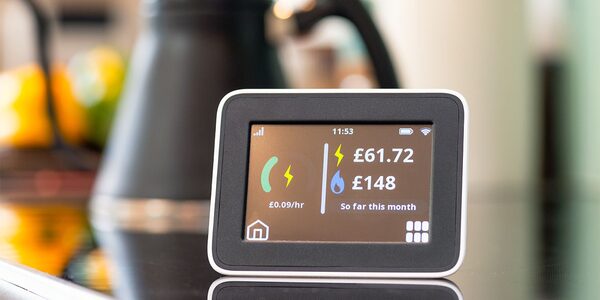
The display gives a household its own near real-time view of consumption and cost, without waiting for a bill. That is a genuine gain in visibility: the household can see what it is using in pounds and pence, by day, week or month, and prepay customers can see credit and debt9.
The limit is what the display measures. It shows how much energy is being bought from the supplier, and in future may also be able to reflect self-generated energy such as from solar panels18. Minimum specification displays show the cost and amount of energy drawn from the grid, meaning import, so they account for energy use as drawn rather than as generated; there are no barriers to suppliers offering displays that show energy generated by microgeneration19.
So the display is a grid-import meter in the home, not a whole-home energy management system. It does not control appliances, does not schedule loads, and does not by itself reduce dependence on the grid or on a supplier. It makes consumption legible, which is the precondition for acting on it, but the acting is separate. Households wanting control rather than display are looking at a different class of device, covered in home energy management systems and consumer access devices.
There is also a dependence on the supplier relationship. The display is paired with the meter, and replacement runs through the supplier rather than a shop. That is convenient while the pairing works and constraining when it does not.
Replacing or using a display without a smart meter
If a display is lost or broken, the first question is how long it has been installed. If a fault is reported within 12 months of the date of installation, and the supplier is satisfied the fault is not due to customer failure to keep the display in good working order, the supplier must repair or replace it free of charge5. The same 12-month window appears in consumer guidance: the supplier could repair or replace the in-home display if it is still within the 12-month warranty, and if it was installed longer ago the supplier may apply a charge3.
"If you report a fault with the in-home display within 12 months of the date of installation, and your supplier is satisfied that the fault is not due to your failure to keep the IHD in good working order, your supplier must repair or replace it free of charge."
After that period, a new display is expected to cost in the region of £30 to £506. Replacement should not involve replacing the meters; the new in-home display is paired with the existing smart meter12. A household that originally declined the display can request one within 12 months of installation, and charges may apply after that initial period3.
Displays are covered by the Waste Electrical and Electronic Equipment recycling regulations, under which energy suppliers should collect, recondition and reuse them as much as they can6.
Using a display without a smart meter is a different matter. The supplier-issued display is designed to work with the smart meter at that property4. Standalone home energy monitors can be bought from £30 to over £100 and used without a smart meter, but they are a separate product class7. You do not need to have an in-home display if you do not want one20, and you do not have to have one, though it is the easiest way to see what energy you are using and what it is costing you21. The comparison between the two routes is set out in smart meter vs standalone energy monitor, and the display itself in more detail in in-home displays.
Sources21 cited
- The installation process, Smart Energy GB, 2026-04-01
- What is a smart meter, Smart Energy GB, 2026-08-10
- The in-home display, Smart Energy GB, 2026-09-17
- Understanding smart meters, National Energy Action, 2026-04-21
- Smart meters, Energy Ombudsman, 2026-09-20
- Smart meter problems and solutions, Which?, 2026-08-24
- Energy efficiency tips, nidirect, 2026-09-17
- How do smart meters save energy, Smart DCC, 2026
- Frequently asked questions about smart meters, National Energy Action, 2024-05-03
- Do smart meters cost more, Smart Energy GB, 2026-03-16
- About the rollout, Smart Energy GB, 2026-03-16
- Do I already have one, Smart Energy GB, 2026-03-16
- How to bleed a radiator, Uswitch, 2026-09-04
- The priority services register, Smart Energy GB, 2026-08-17
- Smart metering policy framework post-2025 consultation document, Department for Energy Security and Net Zero, 2030-12-31
- Smart metering policy framework post-2025 government response, Department for Energy Security and Net Zero, 2030-12
- Smart metering policy framework post-2025 consultation document, Department for Energy Security and Net Zero, 2033
- Frequently asked questions, Smart Energy GB, 2025-08-08
- Written evidence to the Science and Technology Committee, Parliament, 2016-06
- How to read your gas meter, National Energy Action, 2026-07-13
- Getting a smart meter installed, Smart Energy GB, 2026-03-16
 In-Home DisplaysWhat does the little screen that came with a smart meter actually tell you, and what can you do when it stops working?
 What Does a Smart Meter Cost?There is no upfront charge for a smart meter or a standard installation: the cost is recovered indirectly through energy bills.
 HEMS and Monitoring CostsWhat does a home energy monitor cost to buy and run?
 The Full Smart Meters GuideDo smart meters really save you money, and how do you use one to cut your bills?
 Meters and Energy IndependenceDo smart meters really save you money, and can you still get one fitted for free?
 How a Smart Meter WorksHow a British smart meter measures gas and electricity, how the in-home display and the DCC's secure network fit together, what data leaves the house, what it costs, and where smart mode goes wrong.