In this guide
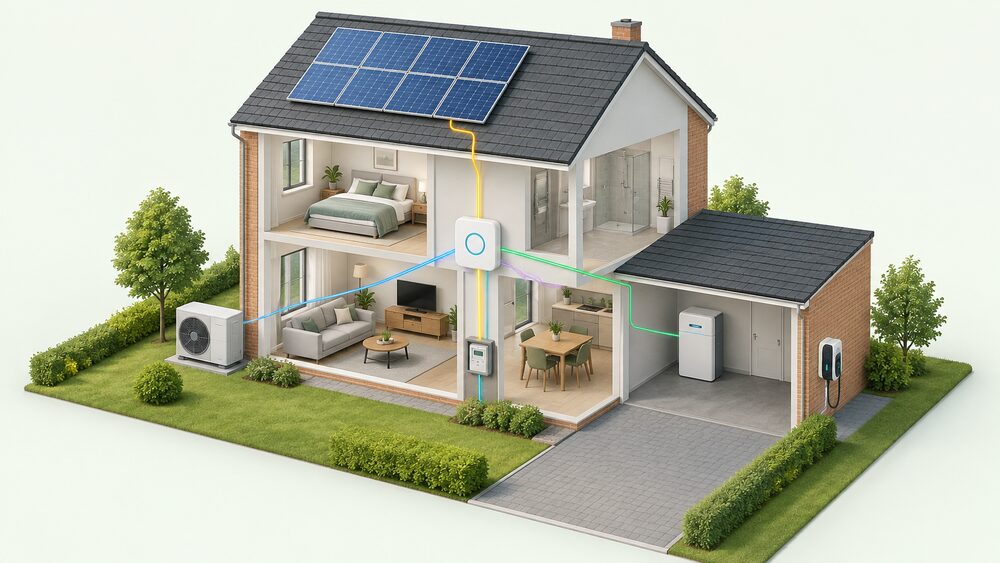
A home energy management system (HEMS) is the part of a home's energy setup that decides. It gathers what the home is using and generating, weighs that against the price of electricity and what it expects to happen next, and then switches or schedules the devices that use or store energy. Independent guidance describes three ways of delivering it: through a central hub device in the home, through software in the cloud, or through smart devices coordinating directly with each other1.
What a HEMS can manage is set by what is connected to it. The Centre for Sustainable Energy notes that a HEMS can integrate EV chargers, heat pumps and PV diverters alongside solar and battery systems, and that some systems require a particular inverter while others can be universally retrofitted2. That single distinction, between systems tied to one maker's hardware and systems that fit around whatever is already installed, shapes much of what follows.
For a household aiming at independence, a HEMS makes better use of the energy a home produces for itself. It does not remove the grid connection, the supplier, the smart meter network or, in many cases, the maker's cloud service. How much of that dependence remains is a design choice, and it varies widely between systems.
What a home energy management system does
A HEMS combines four jobs that were once done by separate gadgets, or not at all: measuring, forecasting, knowing the price, and acting on all three.
Measuring. The system needs to know what the home is drawing from the grid, what the solar panels are producing and what the battery holds. One UK trial system, the Heatio Home Energy Management System, was described as combining "smart meter data, artificial Intelligence, discreet sensors, machine learning, and intelligent business modelling"7. The smart meter is the usual starting point: it records how much gas and/or electricity the home uses and shares readings automatically with the energy supplier8.
Forecasting and tariff awareness. A HEMS earns its keep when prices or generation change through the day. Smart Energy GB states that a smart meter is not required for a heat pump, but that a household will need one to access the full benefits of flexible schemes and smart tariffs9. A system that knows when cheap electricity starts, and roughly how much sun is expected, can plan charging and heating around both. For more on how these tariffs work, see smart meters and time-of-use tariffs.
Control. This is what separates a HEMS from a monitor. A smart meter's in-home display shows how much energy the home is using and helps the household monitor and manage consumption10, and the display shows use during the day11, but it switches nothing. A HEMS turns that information into action: starting a car charge, holding the battery for the evening, or raising a hot water cylinder's temperature while the panels are exporting.
In practice, the value a household gets depends on how much flexible load it has. A home with a heat pump, battery and electric car gives a HEMS a great deal to shift; a home with none of these gives it little beyond reporting. The difference between monitoring and managing is covered further in home energy monitors and in-home displays.
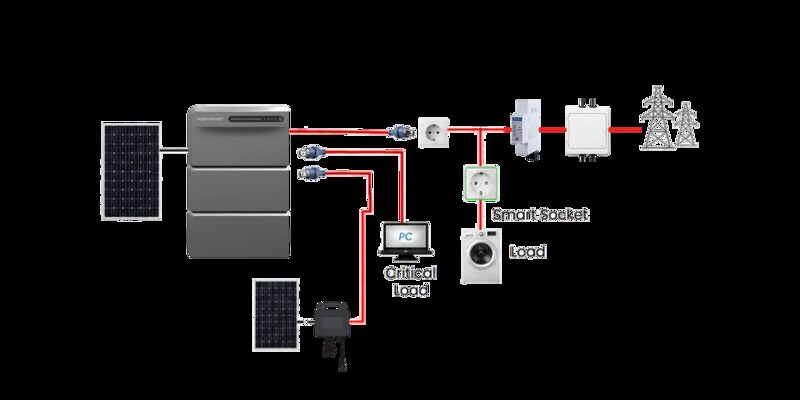
A hub in the home, software in the cloud, or devices coordinating directly
The Energy Systems Catapult sets out three delivery forms for home energy management1. They differ less in what they aim to do than in where the decisions are made, and that matters for resilience.
| Delivery form | Where decisions are made | What it depends on |
|---|---|---|
| Central hub device in the home | A box on the home network | The hub itself and the devices it can talk to |
| Software in the cloud | The provider's servers | Broadband or mobile data, and the provider's continued service |
| Devices coordinating directly | Among the devices themselves | Shared standards between devices |
In market terms these forms map on to three broad kinds of system. Supplier-linked systems are offered by or through an energy supplier and usually run in the cloud, tied to the supplier's tariffs and flexibility schemes. Inverter-led systems come from the maker of the solar inverter or battery and are built around that maker's hardware; these are the systems the Centre for Sustainable Energy means when it says some HEMS "may require a particular inverter"2. Open platforms are designed to connect equipment from several makers and are the ones that "can be universally retrofitted"2.
What each needs to be installed follows from that:
- A supplier-linked system typically needs a working smart meter, an account with that supplier and, often, a smart tariff3.
- An inverter-led system needs the maker's own inverter or battery, and its app or portal.
- An open platform needs a hub or server in the home, plus a way to read the meter or a separate sensor, and compatible connections to each device.
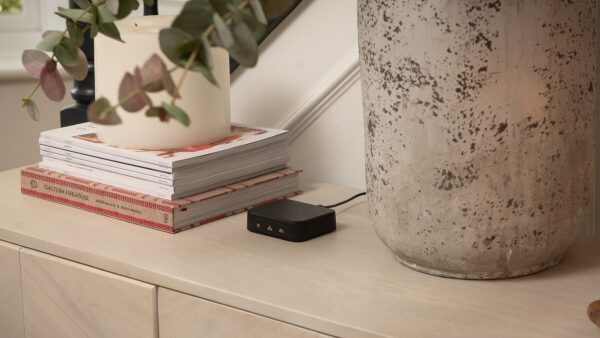
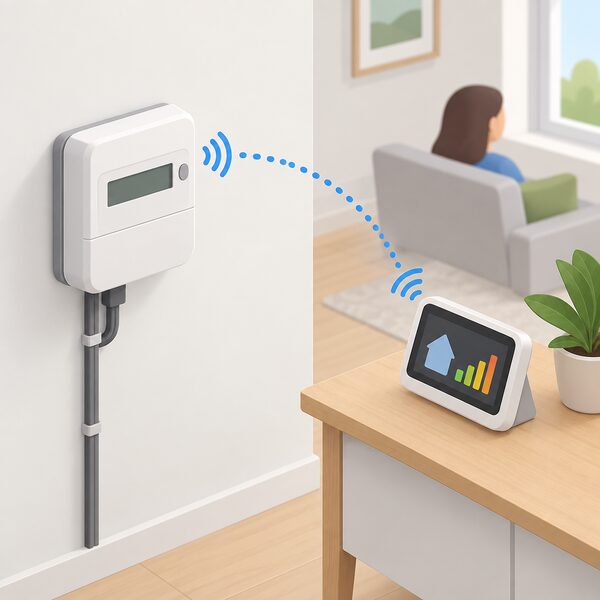
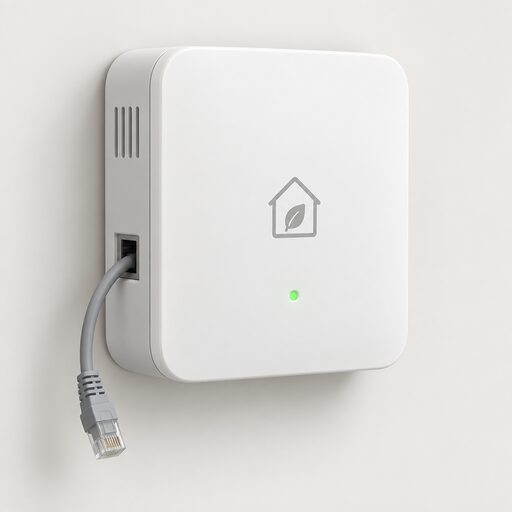
Hardware that sits in the home can include its own sensors and communications. The ivie Gateway Connect, for example, connects wirelessly to the home's smart meter and features a 4G SIM that sends energy data to the ivie cloud12. That combination of a physical box and a cloud service is common: the hub gathers the data, and the processing or the app lives elsewhere. Guidance on the devices themselves is in smart home hubs and controllers.
Solar, batteries, heat pumps and EV charging: what a HEMS can control
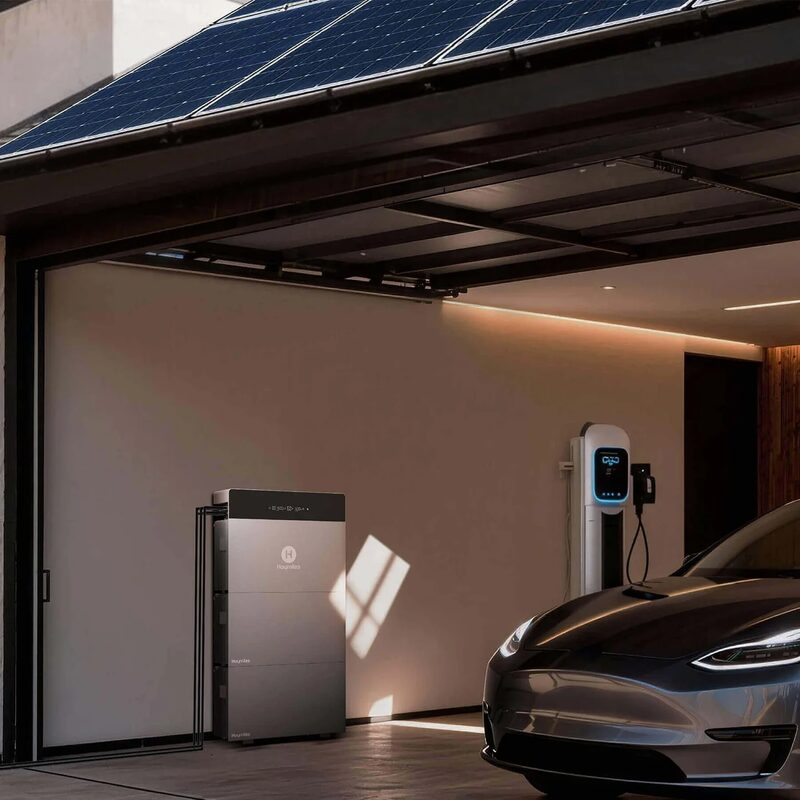
The Centre for Sustainable Energy lists the devices a HEMS can bring together: "HEMS can also integrate EV chargers, heat pumps and PV diverters"2. Each is controlled for a different reason.
- Solar PV and batteries. The HEMS decides whether surplus generation goes into the battery, into another load, or out to the grid, and when the battery should charge from the grid on a cheap rate.
- PV diverters. These send surplus solar into an immersion heater, storing it as hot water rather than exporting it.
- Heat pumps. Heating can be run earlier or later, within comfort limits, to use cheaper or self-generated electricity. The heating industry is also working in this direction: OpenTherm, a communication protocol for heating controls, lists among its future expansion possibilities "connecting OpenTherm controllers to other Smart energy systems like HEMS, Grid control or other related systems"13.
- EV charging. The car is often the largest flexible load in a home, and charging can follow solar output or the cheapest hours.
Control of these devices is becoming a regulated matter. In its response to the government's consultation on draft load control licence regulations under the Smart Secure Electricity Systems programme, the Energy Systems Catapult stated that government "should clarify how Home Energy Management Systems (HEMS) and optimisation services are treated where they may initiate or schedule control actions"14. In plain terms, a HEMS that switches large loads may fall within rules designed for companies controlling household demand, and how far those rules reach is not yet settled. Background is in energy smart appliances and automated control.
The number of homes with devices worth managing is set to grow. The Climate Change Committee refers to "the Warm Homes Plan's expansion of rooftop solar and home battery storage"15. Every added battery or panel gives a HEMS more to coordinate.
Local control versus cloud dependence
Whether a HEMS keeps working when the internet drops depends on where it makes its decisions. A system run from the cloud needs a connection to receive instructions; a system that decides locally can carry on.
GivEnergy's local access option shows what local control looks like: the system can be managed over the home network through the GivEnergy app, and the maker's support material states:
"Your system can continue to function independently of cloud services."
Not every system offers this. A cloud-led product that loses its connection may fall back to a basic default mode, or may stop optimising altogether until the link returns. The provider's continued existence is a further dependence: if the service is withdrawn, the hardware may lose functions it was sold with.
Power is the harder limit. The Energy Networks Association warns that in a power cut "electrical appliances and your home's internet and landline connections will stop working"16. A HEMS hub, router and inverter controls are all mains-powered unless backed by a battery arranged to supply them. Local control protects against a broadband fault; it does not by itself protect against a grid outage.
Supplier failure is different again. Ofgem states that if an energy supplier goes out of business, the household will still have electricity and gas supplied, and the supply will not be cut off17. A supplier-linked HEMS, though, may lose features tied to that supplier's tariffs or app.
These trade-offs are set out further in app subscriptions and cloud dependence and local data access and Modbus.
Matter: the open standard that lets devices from different makers talk
Much of the difficulty in building a HEMS from mixed equipment is that devices speak different languages. Matter is an attempt to fix that for the smart home. The Energy Systems Catapult describes it as "a universal, open-source, and secure connectivity standard for smart home devices", allowing products from brands such as Apple, Google, Amazon and Samsung to communicate, and working over Wi-Fi, Ethernet and Thread "rather than relying on lots of separate control hubs"1.
For a household, the practical gain is fewer separate apps and hubs, and more freedom to mix makers. For independence, an open standard reduces reliance on any single company's ecosystem.
Matter is not the only standard in the home. Zigbee Smart Energy is used for smart meters and the home area network, and the Connectivity Standards Alliance states that Zigbee standards "deliver innovative solutions for smart meters and the home area network (HAN)"18. The smart meter's own home area network links the meter to the in-home display and to authorised devices that read it.
Limits need stating plainly:
- Matter lets devices connect; it does not oblige a heat pump, inverter or charger maker to expose every control through it.
- Many large energy devices still use their maker's own connections or cloud interfaces.
- A HEMS can control only what a device makes available to it, whatever the standard.
The standards landscape is covered in Zigbee, Matter, Thread and KNX in home energy devices.
The range of systems available in the UK
Systems sold in the UK range from simple meter-reading devices to full controllers. The examples below describe what the makers and providers state about their own products; they are not ranked.
| Product or service | Who provides it | What is stated |
|---|---|---|
| Gateway Connect | Chameleon Technology (ivie brand) | Connects wirelessly to the smart meter; 4G SIM sending data to the ivie cloud; screenless, about the size of a deck of cards; built-in temperature and humidity sensors12 |
| GivEnergy local access | GivEnergy | System managed over the home network through the GivEnergy app; can function independently of cloud services4 |
| Heatio Home Energy Management System | Heatio | Combines smart meter data, artificial intelligence, sensors and machine learning; described in a 2023 trial7 |
| Home Energy Saver | UK Power Networks | Available via the UK Power Networks Smart Connect website19 |
The Gateway Connect shows how some products are aimed at landlords rather than occupiers. The maker states it was created for social housing providers, councils and landlords to monitor home quality, helping "to avoid any issues like damp or mould developing, as well as intervening in instances where fuel" poverty is suspected, and that it is more expensive than the ivie Bud12. Because it has no screen, the home's energy data can only be viewed through the ivie app. The maker described it as set to launch very soon.
Beyond these, the site covers makers across the monitoring and control market, including Wondrwall, SolarEdge, Enphase, Victron Energy, Smappee, Home Assistant and Hive. A comparison of two inverter-led platforms is in GivEnergy vs myenergi. The history of one company in this field is told in Moixa and GridShare.
Cost and subscriptions: what owning a HEMS involves
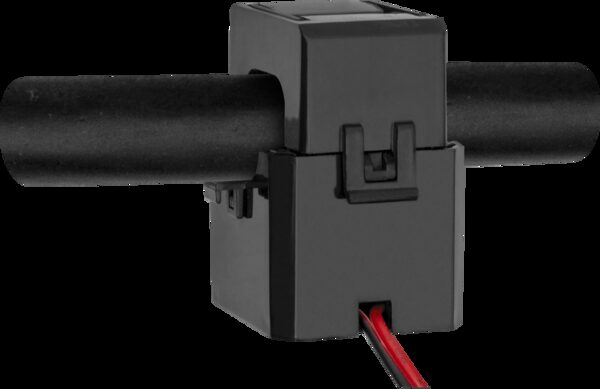
There is no single published price for a HEMS. Prices depend on the system and on what else is installed, and full controllers are generally installer-quoted. The running cost is often less visible than the purchase price. Smart Energy GB warns that "some wireless energy monitoring devices may also require subscription apps or additional accessories depending on the manufacturer"20.
What ownership can involve:
- the controller or hub, and any meter sensors or clamps;
- installation, particularly where the system must be wired to an inverter, charger or heating system;
- a subscription for the app or the optimisation service;
- the connection it relies on, such as home broadband or, for some devices, a built-in mobile data link12.
The smart meter, by contrast, costs nothing extra. The Data Communications Company states that a smart meter can be installed by the energy supplier "at no extra cost"21.
Public funding has included home energy management in some schemes. In Wales, Green Homes Wales lists "heating controls and smart home energy management systems" among the projects it supports, alongside heat pumps, solar PV with battery storage and insulation22. Welsh Government guidance for the Optimised Retrofit Programme states that "Environmental & Energy monitoring systems and survey fees are eligible costs"23. Equivalent support differs in England, Scotland and Northern Ireland, and eligibility is set by each scheme.
Fuller figures are in what home energy monitoring and management costs.
What a HEMS means for energy independence
Solar Energy UK puts the principle simply: "More homegrown energy means greater energy independence"24. A HEMS does not generate anything. What it does is raise the share of a home's own generation that the home actually uses, by storing it, heating water with it or charging a car with it, rather than exporting it and buying power back later.
What it strengthens:
- Self-consumption. Solar output is steered to where the household needs it.
- Price resilience. Grid imports can be shifted to cheaper hours.
- Visibility. The household sees exactly where energy goes.
What dependence remains:
- The grid. Almost every home remains connected, and a HEMS without backup power stops in a power cut16.
- The supplier. Tariff-driven features depend on the supplier's pricing and, in most cases, a smart meter and smart tariff3.
- The maker. Inverter-led systems tie the household to one company's hardware and software2.
- The cloud. Unless a system offers local control, a lost connection or a withdrawn service removes functions4.
- Regulation. Rules on who may control household loads are still being drawn up14.
The most independent arrangement, on the evidence available, is one where decisions are made in the home, devices use open standards, and the system keeps working without the internet. That is a set of properties to look for in any system, not a product. The wider picture is in smart meters, monitoring and energy independence.
Smart meter coverage and network changes that affect a HEMS
Because so many systems read the smart meter, changes to the meter network reach the HEMS too.
Who can get a smart meter
Smart meters are being offered to every household in England, Wales and Scotland25, as part of upgrading the energy system in Great Britain26. Any household that pays for its energy, whether owning or renting, should be able to book an installation where one is expected to work27. Suppliers are required to offer smart meters to all households and small businesses by the end of 20306. Northern Ireland is outside the Great Britain programme; see smart meters in Northern Ireland. Where a meter cannot be fitted, the reasons are covered in why you might not be able to get a smart meter.
SMETS1 and SMETS2
The generation of meter matters when switching supplier. SMETS2 meters allow the consumer to switch seamlessly between suppliers because they are connected to a nationwide secure smart meter network21. First-generation SMETS1 meters could temporarily go "dumb" and lose automatic readings after a switch; where they cannot be migrated to the national network, a supplier may replace the meter with a SMETS2 meter28. Uswitch notes that a SMETS1 meter may stop sending data to the new supplier, requiring manual readings29. A HEMS that depends on meter data can lose it in the same way. See SMETS1 and SMETS2 meters.
The meter itself stays with the property. Only the current supplier can move a meter, and to use another supplier the household must switch its supply to them first30.
The 2G and 3G switch-off
Data and policy change
For smart meter data, the householder controls who can access it, how often and for what purposes, except where required for regulated purposes such as billing27. Data held by a HEMS maker's cloud is a separate matter under that company's terms; see smart meter data.
Policy is moving around the HEMS as well. BEAMA notes that the Warm Homes Plan's associated policies, including Smart Secure Electricity Systems, the Future Homes Standard, EPC reform and the Home Energy Model, need aligning over the coming months31. Once the smart meter rollout is complete, responsibility for smart metering will pass to Ofgem and the Smart Energy Code governance32. Progress is tracked in the UK smart meter rollout, and the full picture is on the smart meters and home energy management guide.
Sources32 cited
- Making home energy management work for consumers, Energy Systems Catapult, 2026-02-12
- Making the most of your solar PV panels, Centre for Sustainable Energy, 2026-08
- Flexibility for homes, Flex Assure, 2026-09-19
- GivEnergy FAQs, ESA UK, 2026-04-17
- Delayed smart meter programme fails to hit targets, Public Accounts Committee, 2023-10-20
- A guide to smart meters, Age UK, 2026-08-24
- Green mortgages with discounted rates trialled, Energy Systems Catapult, 2023-05-22
- How do smart meters work, Smart Energy GB, 2026-08-27
- How smart meters work with heat pumps, Smart Energy GB, 2026-04-24
- What is a smart meter, Smart Energy GB, 2026-08-10
- Get help with your smart meter, Ofgem, 2026
- ivie Bud vs Gateway Connect, ivie, 2026-09-20
- What is OpenTherm, OpenTherm Association, 2026-01-26
- Response to the DESNZ consultation on the SSES load control licence, Energy Systems Catapult, 2026-03-17
- Well adapted energy system, Climate Change Committee, 2026-09-19
- Storms and bad weather, Energy Networks Association, 2026-09-17
- What happens if your energy supplier goes out of business, Ofgem, 2026
- Zigbee, Connectivity Standards Alliance, 2026
- New website from UK Power Networks, UK Power Networks, 2025-12-11
- Smart meters vs home energy monitors, Smart Energy GB, 2026-08-17
- How to get a smart meter, Data Communications Company, 2026
- Green Homes Wales, Development Bank of Wales, 2026-09-17
- Optimised Retrofit Programme 3 guidance, Welsh Government, 2022-10-25
- Solar Energy Scotland manifesto, Solar Energy UK, 2026-09-17
- Energy meters, Age UK, 2026-09-10
- Can a smart meter cut off power, Smart Energy GB, 2026-04-24
- Smart meters: your rights and expectations, GOV.UK, 2025-08-08
- How do you know if you have a smart meter, Data Communications Company, 2026
- Smart meters explained, Uswitch, 2026-07-29
- Move your gas or electricity meter, Citizens Advice, 2026-09-20
- Warm Homes Plan: a major step forward for heat electrification, BEAMA, 2026-01-05
- Public Accounts Committee report on smart meters, UK Parliament, 2023-10-20
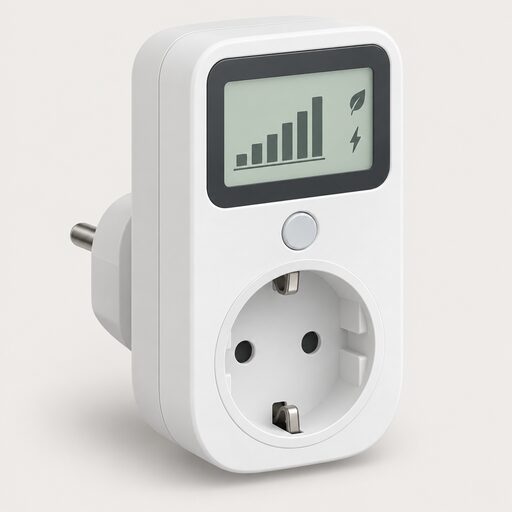 HEMS and Monitoring CostsWhat does a home energy monitor cost to buy and run?
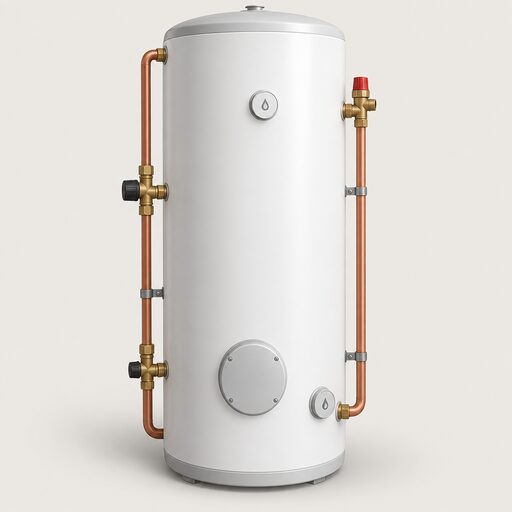 Whole-Home Energy DesignHeating and hot water use more energy than anything else at home, so that choice shapes everything.
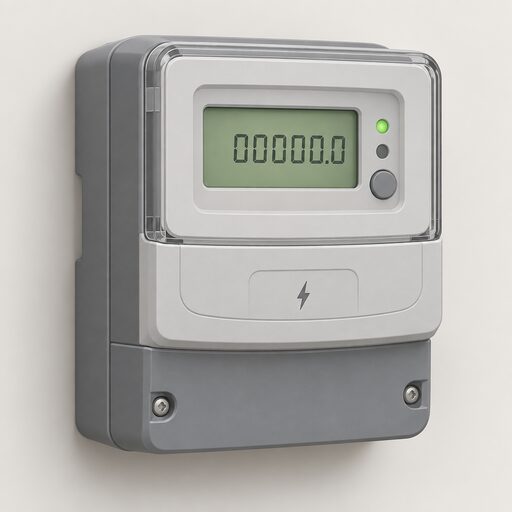 Take Control of Your EnergyHow do you read your own energy use and keep hold of your meter readings?
 Energy IndependenceA heat pump runs your heating on electricity instead of gas or oil, so how much does that really cut what you pay and how exposed you are when fuel prices jump?
 Local Control vs the CloudCan your solar, battery or charger still work if the maker's app or servers disappear?
 Baseline Your Energy UseBefore spending money on a heat pump, solar panels or a battery, you need to know what your home actually uses now.