In this guide
Zigbee and Matter solve different problems for heating controls. Zigbee is a low-power wireless mesh that links thermostats, radiator valves and sensors to a hub, with over 1 billion chipsets sold worldwide, AES-128-CCM encryption and a typical range of 10 to 100 metres between devices1. Matter is not a radio at all but a common language that runs over Wi-Fi, Ethernet and Thread, backed by Apple, Google, Amazon and Samsung so that devices from different brands can work together2.
For a household, the practical difference is this. Zigbee gives a proven, local mesh but usually ties devices to one maker's hub and app. Matter promises cross-brand pairing and local communication "not via a cloud", but it covers only common basic functions such as on and off; special time programmes and proprietary services still need the maker's own app3. The two are designed to coexist, with bridging written into Matter itself1. KNX, a wired standard used in high-specification buildings, and plain Wi-Fi thermostats sit at either end of this range.
What none of them removes is dependence on electricity. Gas boilers and heating, and the home's internet connection, stop working in a power cut4. Protocol choice decides how much keeps running when the broadband or the maker's servers fail; it does not decide what happens when the grid does.
What each protocol actually is
The word "protocol" covers several different things, and the confusion between them is the main source of disappointment when a smart heating system does not behave as expected.
Zigbee is a wireless standard for low-power devices, maintained by the Connectivity Standards Alliance, which was formerly the Zigbee Alliance3. It is a "mesh" protocol: in theory each device on the network can act as a repeater for others, though in practice only mains-powered devices do so, not battery radiator valves or sensors6. It runs in unlicensed bands at 2.4GHz worldwide and 868MHz in Europe, among others1. Many inexpensive sensors use it; the Xiaomi Aqara temperature and humidity sensor is one example6.
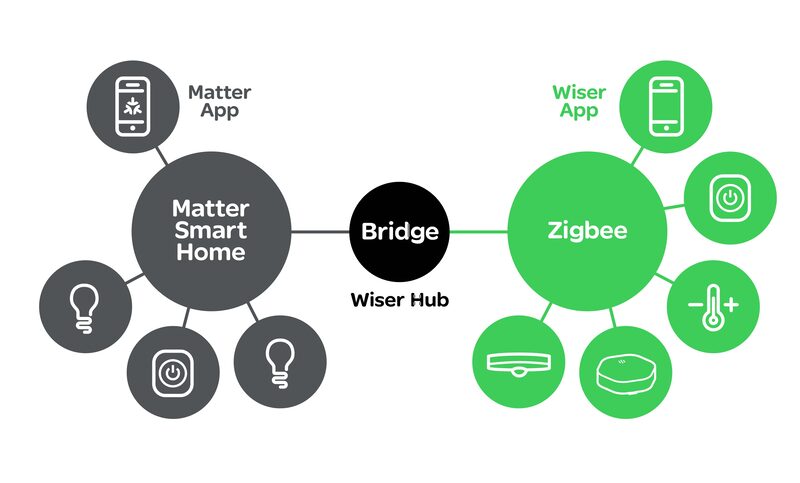
Matter is a connection standard for smart home devices from a range of manufacturers3. It sits above the radio. Its wireless carriers are Thread and WLAN (Wi-Fi), both IP-based, and a bridge can translate signals from a maker's own standard such as Zigbee into Matter3. It is free for any manufacturer to use3.
Thread is one of Matter's carriers: a mesh network in which range and density increase with each Thread device added3.
Wi-Fi thermostats connect straight to the home router. Smart thermostats such as Hive and Nest connect to Wi-Fi so heating and hot water can be controlled from a phone, tablet or desktop7.
KNX is a building control standard installed by specialists. In a high-specification home in the Highlands of Scotland, Function Control Ltd designed a KNX system to control and monitor all aspects of the building8.
Makers also use their own proprietary radio links. Lightwave, for example, states a range of approximately 100m in a typical home for its own radio devices9.
| Protocol | What it is | Carrier | Needs a hub or bridge? |
|---|---|---|---|
| Zigbee | Low-power wireless mesh1 | Own radio, 2.4GHz or Sub-GHz | Usually a hub or coordinator |
| Matter | Cross-brand application standard3 | Wi-Fi, Ethernet, Thread2 | A Matter controller; a bridge for non-Matter devices |
| Thread | IP mesh used by Matter3 | Own radio | A Thread border router |
| Wi-Fi | Direct link to home router7 | Home Wi-Fi | No, but depends on the router |
| KNX | Installed building control8 | Installer-designed | Part of the installed system |
Zigbee vs Matter for heating controls: the core differences

Smart heating controls differ from conventional ones mainly because they are connected to the internet and offer more functionality10. Both Zigbee and Matter add that connection, but in different ways.
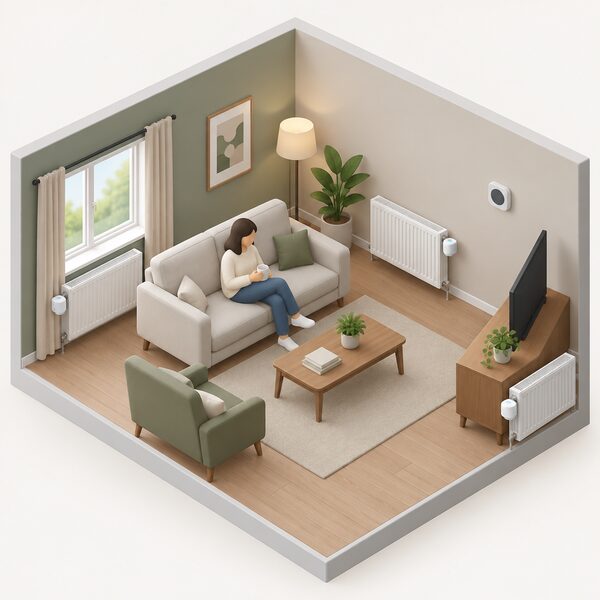
Zigbee defines the whole stack, from the radio to how a thermostat describes itself. That makes it a complete, tested system, but in heating it is usually delivered inside one maker's ecosystem: the valves, thermostat and hub come from one brand and are managed through that brand's app. Zigbee and Matter use a similar underlying data model, but they are different technologies1.
Matter's aim is the reverse. It is described as a universal, open-source and secure connectivity standard, so that products from Apple, Google, Amazon and Samsung ecosystems communicate without lots of separate control hubs2. The limit for heating is scope. Matter defines common basic functions for each device category, and in the words of one maker:
"Advanced functions, such as special time programs or proprietary services, are not covered by the Matter smart home apps"
Heating depends heavily on exactly those advanced functions. Heat pumps in England must have weather compensation or internal temperature control, and a timer or programmer for space heating11. Weather compensation, multi-zone schedules and boiler modulation are the parts of a heating system most likely to sit outside the Matter common set and inside a maker's app.
In short:
- Zigbee: a full, mature mesh; deep features, but normally tied to one brand's hub.
- Matter: cross-brand pairing and local communication; basic control only, with advanced heating logic left to each maker.
Heating controls can be upgraded independently of the boiler12, so a household can change protocol without changing heat source. Matter-compatible products are already on the UK market: the Habi Wireless Smart Thermostat supports multi-zone heating and Matter, controls hot water and has frost protection13. For the brand ranges, see smart thermostats and smart TRVs.
Matter: the universal standard backed by Apple, Google, Amazon and Samsung
Matter was developed by Apple, Google, Amazon, Samsung SmartThings and the Zigbee Alliance, which together formed the Connectivity Standards Alliance3. That lineage matters: the same body now maintains both Zigbee and Matter, which is why Matter was built to accommodate Zigbee rather than replace it overnight.
Three properties define Matter for a household:
- Cross-brand: products from different brands communicate seamlessly, rather than relying on separate control hubs2.
- Local: communication between Matter devices takes place locally, not via a cloud3.
- Encrypted: Matter devices communicate exclusively in encrypted form3.
Identification is straightforward: most Matter-compatible devices carry the Matter logo on the packaging3.
The Energy Systems Catapult frames Matter as part of making home energy management work for consumers, precisely because it removes the need to buy into one ecosystem for every device2. For heating, the promise is that a Matter thermostat could be operated from an Apple, Google, Amazon or Samsung app without the maker's app. The reality is narrower. Setting a temperature or switching heating on and off is well within Matter's common functions; weather-compensated flow temperatures, hot water priority rules and tariff-aware schedules generally are not, so those remain in the maker's own software3.
Matter's IP basis also has a cost. Over Wi-Fi, each device depends on the home router. Over Thread, it depends on a Thread border router, often built into a smart speaker or hub. Either way, "no hub" rarely means no central box; it means the box can come from a range of brands. For how these choices play out with voice assistants, see which smart thermostats work with Alexa or Google Assistant.
Zigbee: the established mesh with over a billion chipsets sold
Zigbee is the incumbent. The Connectivity Standards Alliance states that over a billion Zigbee chipsets have been sold, and that hundreds of companies build and deploy Zigbee products14. The same body's FAQ elsewhere refers to "more than a half-a-billion chipsets deployed worldwide"1; the two figures come from different pages and measure sales and deployment respectively, so they do not match.
Its network design is the core of its reliability claim. The mesh is self-organising and self-healing, scalable to thousands of nodes, and has been proven by nearly a decade of use14. Its addressing supports hundreds of nodes per network, with multiple coordinators able to link for very large networks1. A typical home heating system, with perhaps a thermostat, a dozen radiator valves and a few sensors, is far inside those limits.
Other features that bear on heating:
- Compatibility: Zigbee was developed to be backwards and forward compatible1, and is described as fully backward compatible with over a billion devices already deployed14.
- Zigbee Direct: combines Zigbee with Bluetooth Low Energy so a phone, tablet or other Bluetooth device can interact with a Zigbee network14.
- Green Power: combines ultra-low power radio with energy harvesting, for devices without wires or batteries1.
- Certification: four programmes (Product, Platform, Certification by Similarity and Transfer) show interoperability between certified products14.
Zigbee also has an official role in UK homes. The UK Government selected Zigbee Smart Energy as the mesh network connecting devices in the home to the utility network1, which is the link smart meters use. Smart meters are independent of smart heating controls, but combining the two can improve remote management of heating and energy use, as the Welsh Government notes15.
The catch is that "Zigbee" on a box does not guarantee cross-brand pairing in heating. Many heating makers use Zigbee under their own hub with their own features, and a third-party hub may only see basic functions. See smart TRVs compared for how individual ranges handle this.
Range and reliability: what each protocol delivers in a real house
Range is where brochures and houses part company. Zigbee transmission distances range from 10 to 100 metres, depending on power output and environmental characteristics1. On North American or European and UK Sub-GHz radios, 1 km or more can be attained1, but that is an open-air figure. Lightwave gives the same kind of split for its own radio devices: approximately 100m in a typical home, and successful tests of up to 1km in an open field9.
What drives the gap in a real house is walls, floors, foil-backed insulation and metal. Zigbee's answer is the mesh: each mains-powered device repeats the signal onward6. That has a direct consequence for heating. Radiator valves and wireless thermostats are usually battery-powered and do not repeat, so a home where every Zigbee device is a battery device gains little from the mesh. A mains-powered plug or relay placed between the hub and a distant room often does more for reliability than a stronger hub.
Interference is the other variable. Zigbee's 2.4GHz band is shared with Wi-Fi. Zigbee has 16 separate 5MHz channels in that band1 and uses the IEEE 802.15.4 CSMA-CA protocol, which reduces the probability of interfering with other users1. Raw throughput is 250Kbs at 2.4GHz and 100kbs at 868MHz1; heating commands are tiny, so speed is not the constraint.
Thread, used by Matter, behaves like Zigbee here: its range and density increase with each Thread device added3. Wi-Fi thermostats depend entirely on router coverage.
Reliability also depends on the heating design. Zoning lets individual rooms be controlled separately, and programmable thermostats keep a home heated on a schedule16. In Scotland, electric heating in dwellings under 150 m2 should have at least two space heating zones with independent temperature control, one assigned to the living area17. More zones mean more wireless devices, and more places where coverage matters. See heating zoning and wired vs wireless thermostats.
Local control and what happens when the internet drops
This is the question that matters most for energy security: when the broadband goes down, or a maker's servers fail, does the heating keep to its programme?
The protocols themselves are designed to work locally. The Connectivity Standards Alliance states:
"This consistent and responsive local connectivity still works if the internet is down and doesn't require connection with/communication to the cloud."
Matter makes the same design choice: communication between Matter devices takes place locally, not via a cloud3.
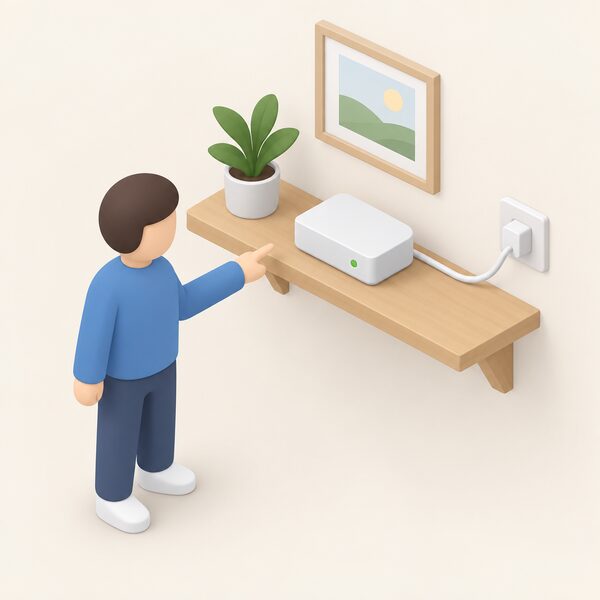
But the protocol is not the whole system. Where the schedule is stored, and which box runs it, decides what happens in practice. Lightwave states that if the internet drops, its timers and automations continue to function as long as its link hub stays connected and powered9. That is the general pattern for hub-based systems: the hub holds the schedule and keeps running it.
What typically keeps working without internet, and what typically does not:
| Usually keeps working locally | Usually stops without internet |
|---|---|
| Stored heating schedules on the hub or thermostat | Control from a phone away from home |
| Radiator valve and thermostat communication over Zigbee or Thread | Voice assistant commands routed through a cloud |
| Temperature holds and frost protection on the device | Weather-based or tariff-based features fed from online data |
| Matter device-to-device communication3 | Maker app features outside Matter's scope3 |
Wi-Fi thermostats that store their programme on the device behave similarly, though the app will not reach them. The weakest arrangement is one where the schedule itself lives only in the maker's cloud.
The internet is not the deepest dependence. Gas boilers and heating, electrical appliances and the home's internet and landline connections all stop working in a power cut4. No wireless protocol changes that. For the wider picture, see heating controls and energy independence.
Encryption and security across the four protocols
Security is built into both main wireless standards. Zigbee uses a variety of security mechanisms including over-the-air AES-128-CCM encryption1. Matter devices communicate exclusively in encrypted form3, and because Matter communication is local, commands between devices do not need to pass over the internet at all3.
Wi-Fi thermostats inherit the security of the home network and of the maker's cloud service, since remote control runs through it. KNX security depends on how the installer designs and configures the system; the case study in the Highlands shows it used for control and monitoring across a whole building8.
Encryption on the radio link is only part of the picture. The practical risks for a heating system tend to lie elsewhere:
- The account: a weak or reused password on the maker's app gives remote control of the heating.
- Firmware: devices depend on the maker continuing to publish updates.
- Company continuity: where features run in a maker's cloud, they depend on that company's service.
Heating controls are also treated as ordinary building services by regulators. Energy assessments record the main heating controls from SAP 10.2 Table 4e according to system type, not by protocol. For more, see smart heating control security and data.
Bridging and coexistence: how Zigbee devices fit into a Matter home
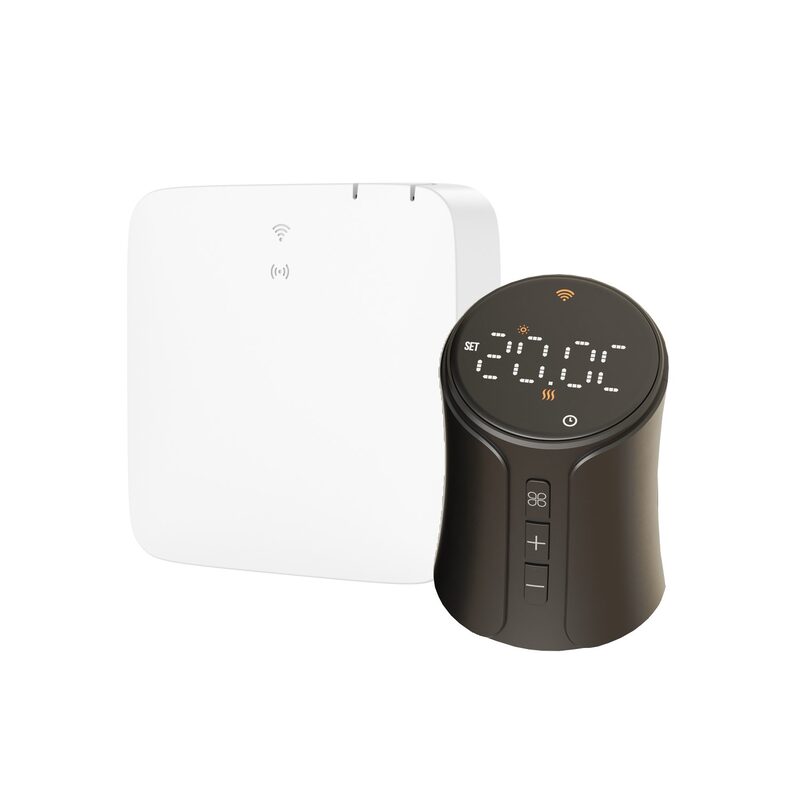
Zigbee and Matter were not designed as rivals. The Connectivity Standards Alliance describes them as different technologies with a similar underlying data model, expected to coexist, with bridging specified in Matter1. A bridge translates signals from a maker's standard such as Zigbee into the Matter IP standard3.
In practice a bridge works like this:
- The Zigbee valves and thermostat stay on their own Zigbee mesh, talking to their hub.
- The hub, if it supports Matter bridging, presents those devices to a Matter controller.
- Apps from other brands can then see and control them, within Matter's common functions.
- Advanced settings stay in the original maker's app3.
The result for a household that already has Zigbee heating controls is that nothing needs replacing to gain some cross-brand control; the hub is the piece that decides whether bridging is available.
Bridging also matters for heat pumps and hybrids. A hybrid system uses intelligent controls to decide the most efficient way to heat a home, and its smart controller can be used like a thermostat. Those controllers usually run their own logic, and a bridge will expose at most the room temperature setting, not the choice between heat pump and boiler. Controls for low-temperature systems carry specific rules: where the heat generator also provides hot water, controls must ensure it does not supply hot water and space heating simultaneously. In Wales, hot water circuits fed from a store should have time control independent of space heating circuits18. These are functions of the heating controller, not of the smart home protocol. See hot water controls and open-source heating control, where bridging is common.
KNX in UK homes
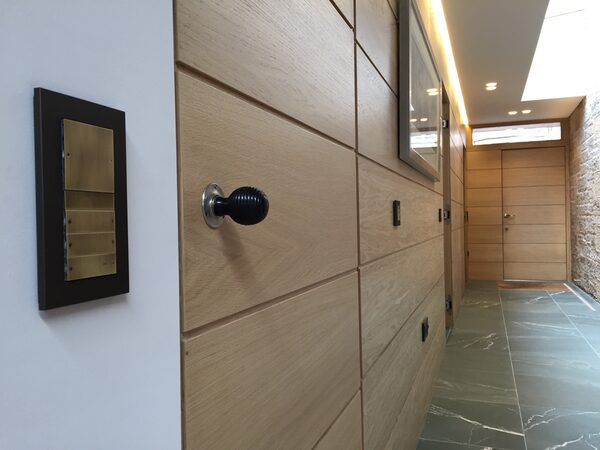
KNX occupies a different place from the wireless options. It is designed in by a specialist, often at build or major refurbishment, and controls lighting, blinds, heating and monitoring as one system. The UK example is an energy efficient home in the Highlands of Scotland, where Function Control Ltd designed a KNX system to control and monitor all aspects of a high-specification building8.
For a household, the relevant points are:
- Local by design: KNX systems run within the building rather than through a consumer cloud.
- Installer dependence: changes usually need the installer or someone with KNX skills.
- Heat pump fit: heat pumps need weather compensation or internal temperature control plus a timer or programmer11; a KNX system can supervise a heat pump, but the heat pump's own controller normally keeps charge of flow temperature.
No published UK price exists for a domestic KNX heating installation; prices are installer-quoted. Underfloor heating, often paired with KNX in new builds, is easy to combine with low carbon systems such as heat pumps16. See KNX heating control.
What protocol choice means for household energy independence
Protocol choice is really a choice about which dependences a home accepts.
The grid. Every option here needs electricity. Heating and internet both stop in a power cut4, and no protocol alters that.
The internet and the maker's cloud. Zigbee and Matter both communicate locally1, so schedules held on a hub or device keep running without broadband. Remote control and cloud-based features do not. Wi-Fi-only products vary: some hold their programme locally, some rely on the cloud.
The maker. Zigbee heating kits normally tie valves and thermostats to one brand's hub. Matter loosens that tie for basic control, but advanced heating functions still need the maker's own app3, so the maker's continued support still matters.
The utility. Zigbee Smart Energy is the UK Government's chosen mesh for linking home devices to the utility network1, which is how smart meters and some tariff-aware controls exchange data.
Scale. Controls are among the most common home energy measures: 514,780 heating control measures had been notified under the Energy Company Obligation as of 11 August 20265. Popular smart thermostats connect to Amazon Alexa, Siri and Google Home19, and Zigbee is used by Amazon's Echo Plus, Samsung SmartThings and Signify (Philips Hue)14. Smart thermostats and TRVs give control from anywhere12, which is useful, but "from anywhere" is the part that depends on the cloud.
For costs, see heating controls cost; for the full range of controls, see the heating controls guide.
Sources19 cited
- Zigbee FAQ, Connectivity Standards Alliance
- Making home energy management work for consumers, Energy Systems Catapult, 2026-02-12
- Matter standard, Bosch Smart Home, 2026-09-20
- Storms and bad weather, Energy Networks Association
- ECO public reports and data, Ofgem, 2026-08-11
- A guide to monitoring your home environment, Carbon Co-op, 2020-07
- Ultimate energy saving tips guide, Smart Energy GB, 2026-04-24
- Energy efficient home, Highlands, Scotland, KNX Association
- Honeywell Home wireless thermostat, Lightwave, 2026-09-20
- Thermostats and heating controls, Energy Saving Trust, 2026-02-10
- Approved Document L Volume 1: Dwellings, UK Government
- Thermostats and heating controls, Home Energy Scotland, 2026-09-20
- How to buy the best smart thermostat, Which?, 2026-09-17
- Zigbee, Connectivity Standards Alliance
- Smart meters, Welsh Government
- Underfloor heating, Energy Saving Trust, 2025-10-02
- Domestic Building Services Compliance Guide 2022, Scottish Government, 2022-06
- Approved Document L Volume 1 2026, Welsh Government, 2026-04
- Best boilers, Confused.com, 2025-11-03
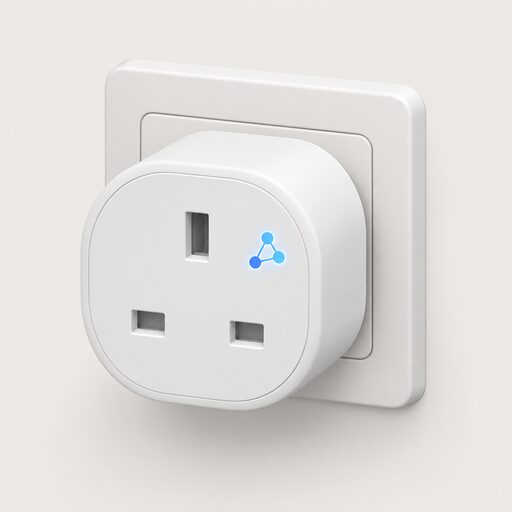 Zigbee, Matter and ThreadWhich smart plugs, meters and heating controls will still work together in ten years, and what happens to them when your broadband goes down?
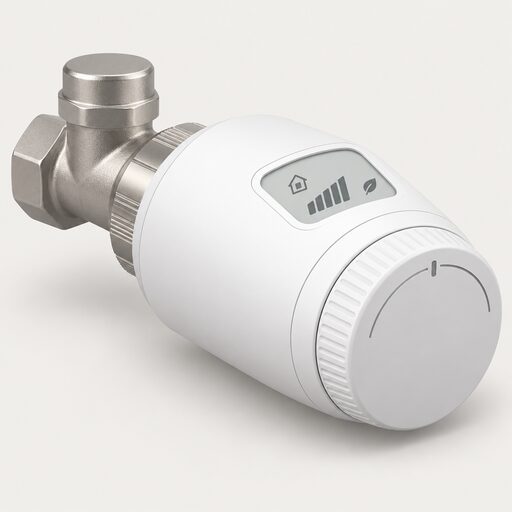 Controls and Energy IndependenceIf the broadband goes down, will your heating still come on?
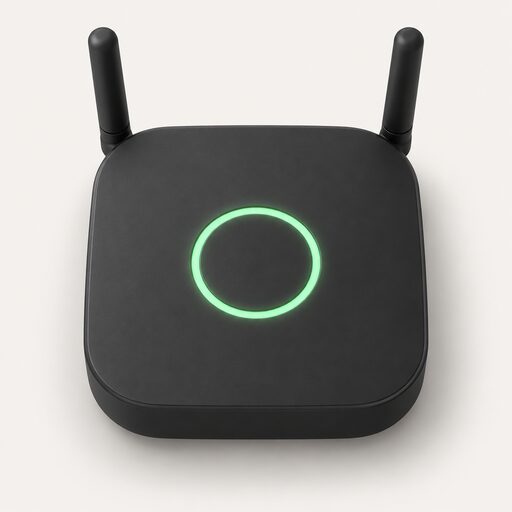 Smart Home Hubs for EnergyHow a smart home hub joins Zigbee, Thread and Matter devices, runs schedules and automations, and whether it keeps working without internet access.
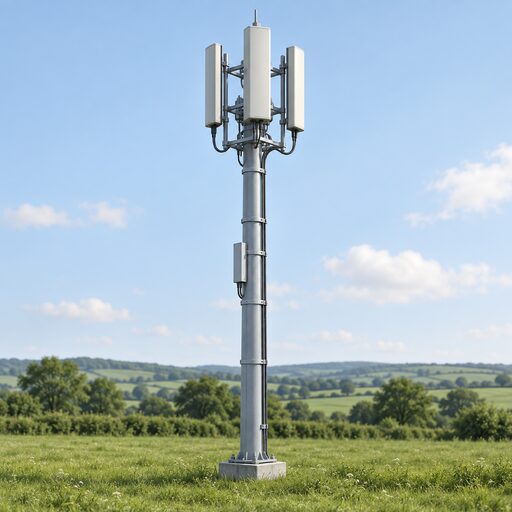 How Smart Meters CommunicateSmart meters send readings without using your home wifi or broadband, so they still work if your internet goes down.
 The Full Heating Controls GuideA room thermostat, a programmer and valves on your radiators are the basics.
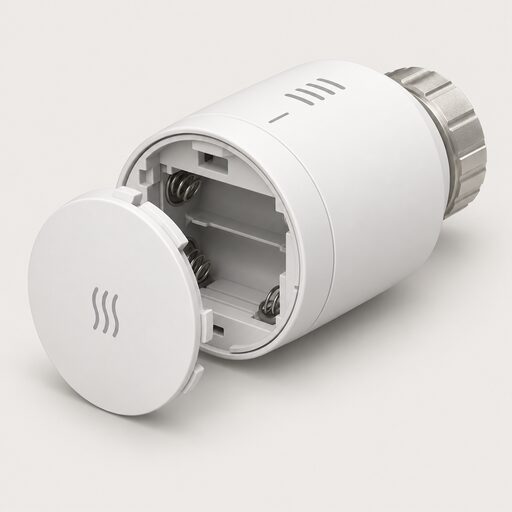 Smart TRVs ExplainedSmart radiator valves let you heat one room without heating the rest, on a schedule you set from your phone.