
In this guide
Most heating control faults are not failures of the boiler. They are a thermostat reading the wrong air, a radiator valve that has seized over a summer of disuse, a flat battery in a wireless sensor, or a programmer whose backplate has lost contact. The controls are a separate system from the boiler itself, and they can be upgraded or installed independently of it1. That separation is what makes most faults diagnosable at home, and it is also what makes them easy to misread: a cold radiator is usually a valve problem, not a boiler problem.
The core of a working system is small. Independent guidance lists a programmer for time control, at least one room thermostat, thermostatic radiator valves on radiators, and a cylinder thermostat if the home has a hot water cylinder1. Where any of those is missing, the system is not faulty so much as incomplete, and upgrading is the answer rather than repair1. Where all of them are present and the house is still cold, the fault is in one of them, or in the boiler, pressure or power supply behind them.
This page sets out what each control does, how each fails, and how to tell a control fault from an appliance fault. It also states plainly where the limits sit: a thermostatic radiator valve has no communication with the boiler, so it can never fix a system-wide problem, and no control work should involve opening a gas appliance.
What counts as a heating control fault
A control fault is any failure in the devices that decide when the heating runs and how warm each room gets. Heating controls help control when the heating system operates and the temperature in each room1, so a fault is anything that breaks that decision-making: a thermostat that reads the wrong temperature, a valve that will not close, a timer that has lost its schedule, a wireless link that has dropped.
The distinction that matters is between a control that is faulty and a control that is simply absent or set wrongly. Guidance is explicit that a household should consider upgrading if the system lacks a programmer, at least one room thermostat, or TRVs on the radiators1. That is not a fault to troubleshoot; it is a gap to fill. The same guidance directs households to the manufacturer's manual or the installer for specific advice on their own equipment1, which is the right first stop for anything model-specific.
There is also a category of fault that is not a fault at all: a heat emitter that has been taken out of use. Even a fixed heating source or heat emitter that is not working should still be taken into account when deciding on the primary and secondary heating for a home6. In practice this means a dead radiator or a disconnected heater still counts in the assessment of how a home is heated, which matters when controls are being specified or replaced.
For a household's energy independence, controls are the part of the system the occupant actually owns and operates. They decide how much gas or electricity is drawn and when. A control fault therefore has a direct cost: the system runs when it need not, or fails to run when it should. The dependence that remains is on the boiler, the fuel supply and, for smart controls, the maker's app and cloud service. Fault-finding starts with the controls because that is where the household has the most leverage.
The room thermostat: how it decides whether the boiler runs
A room thermostat is a switch with a thermometer attached. It turns the boiler on and off automatically when the room temperature reaches the level chosen7. That is the whole of its job. It does not set the temperature of the water in the radiators, and it does not control how hot the cylinder gets.
That second job belongs to the boiler thermostat, which changes the temperature of the water in the system8. The two are separate, and the separation causes a great deal of confusion. Boiler controls are separate from the central heating controls, such as the room thermostat, programmer and radiator valves8. Adjusting the boiler's flow temperature without the room controls set correctly may not produce the result expected8, and guidance is clear that the heating controls should be right before any attempt to change the flow temperature8.
Wireless thermostats add a link that can fail on its own. A wireless thermostat usually sends a signal to a receiver connected to the boiler, which then tells the boiler when to turn the heating on or off, with no direct wired connection between thermostat and boiler9. When that link drops, the thermostat may display a sensible temperature while the boiler never receives the instruction. That is the classic "thermostat not calling for heat" symptom, and it is a pairing or battery problem rather than a boiler fault.
A home with a boiler usually needs a room thermostat, a timer or programmer, boiler and cylinder thermostats, and TRVs10. Each of those can fail independently, and each produces a different symptom. The room thermostat's failure mode is a boiler that runs constantly or not at all, with the radiator valves behaving normally.
Room thermostat faults: wrong readings, dirt and dead batteries
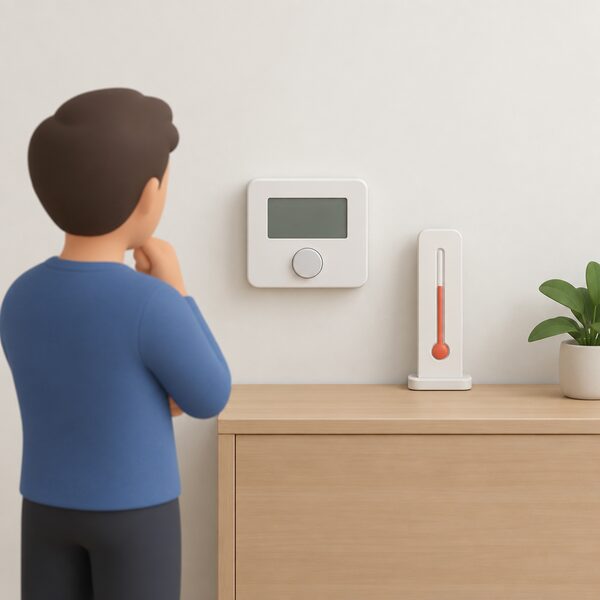
The most common thermostat complaint is not a dead unit but an inaccurate one. A thermostat that reads two degrees high will hold the house two degrees cool, and the household will blame the boiler. Testing accuracy properly is a laboratory job: Which? puts smart thermostats in a temperature-controlled chamber, measuring how accurately they record the temperature and how quickly the relay responds11. No household test replicates that, but a comparison against a separate thermometer placed beside the unit, with the heating off and no sun or draught on either, will show whether the reading is plausible.
Dirt and obstruction are the low-tech causes. A thermostat covered in dust, painted over, or tucked behind a curtain reads the air inside its own housing rather than the room. The guidance on siting is really guidance on what the sensor must not be exposed to, and it applies to accuracy faults as much as to installation.
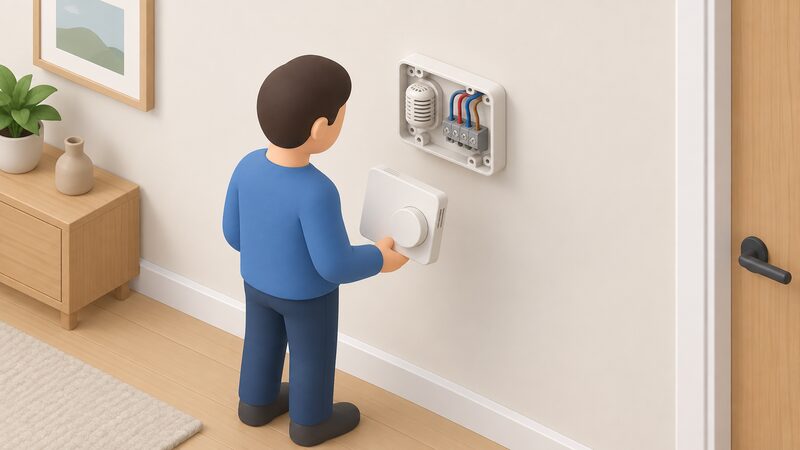
Batteries are the other common cause, particularly in wireless units and in smart TRV heads. A wireless thermostat depends on both its own power and the receiver's, and a failing battery can produce intermittent behaviour that looks like a boiler fault: the heating runs, then stops, then runs again with no schedule change.
Smart thermostats add a layer of behaviour that can be mistaken for a fault. They may interpret inputs such as preferred room temperature, learn from what the occupant does, react to other data such as weather forecasts, and some have a learning function that predicts behaviour from how the heating is set and adjusted and how the home is occupied12. A thermostat that appears to ignore its schedule may be running a learning programme. Checking the app's mode before calling an engineer is worthwhile.
Where a thermostat is sited matters: heat sources, sunlight and draughts
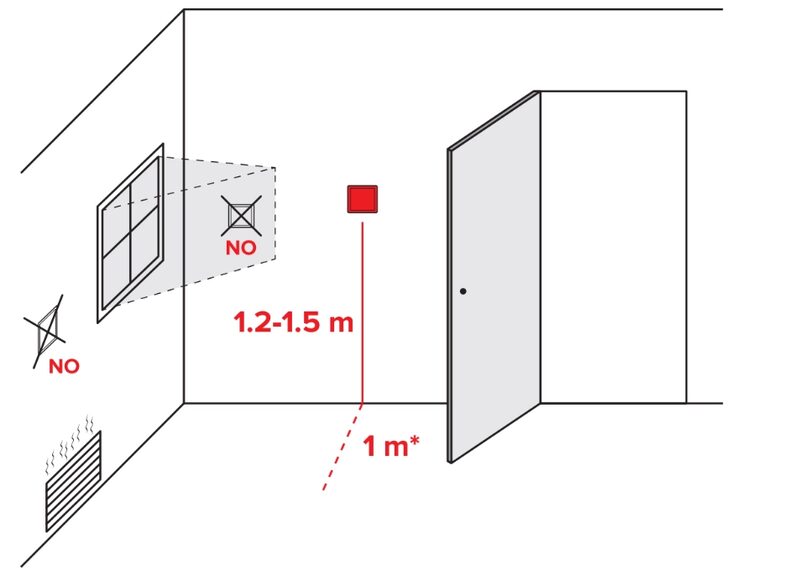
Siting is the single largest cause of a thermostat that "will not hold the temperature". The rule is that a thermostat should not be blocked by furniture or curtains, should be kept away from heat sources such as electric fires or heaters, and should be protected from draughts and placed away from sources of draughts such as windows or a front door13. Each of those conditions corrupts the reading in a predictable direction: heat sources make it read high and cut the heating early, draughts make it read low and run the heating long.
The general principle is that a thermostat belongs where the temperature is relatively consistent14. A hallway next to a front door is not that place in winter. A south-facing wall in direct sun is not that place in the afternoon. A kitchen is not that place while the oven is on. The same logic applies to smart controls: official guidance on self-build sustainability recommends smart systems that control heating based on occupancy and time of day15, which only works if the sensor is measuring the space people actually occupy.
For homes with a heat pump, the control arrangement can be simpler. Ground source heat pumps can be controlled using a straightforward thermostat and timeclock system16, which reduces the number of devices that can go wrong but does not remove the siting question.
The practical test is to note the thermostat's reading at a moment when the room feels wrong, then compare it with a thermometer placed in the middle of the room at seated height. A consistent gap points to siting. An inconsistent one points to the unit. Where the gap is caused by siting, no replacement thermostat will fix it, and the household's independence from the problem lies in moving the sensor or the furniture, not in buying new hardware.
Thermostatic radiator valves: what the numbers mean
A TRV is a local, self-contained control. It controls the temperature of each room by opening and closing automatically to control the flow of hot water through the radiator it is fitted to17. It works by regulating the flow of hot water to the radiator based on the room's temperature18. It gives better control over individual room temperatures19, and it can be manually adjusted to different settings17.
The dial is where most confusion starts. TRVs do not usually show specific temperatures; they often use numbered settings that correspond to a temperature range18. The dial runs from 0 to 6, where 0 is off and 6 is fully open2. Most have five or six settings20. The numbers are not a thermometer, and they do not map to one fixed temperature across makes.
| Dial setting | Published temperature | Source note |
|---|---|---|
| 1 | Approximately 12°C | Described as a low room temperature for an unoccupied room21 |
| 2 | 15°C | From a dial with numbers 0 to 510 |
The two published scales disagree, and the documents do not resolve it. What they agree on is the direction: a higher number means a warmer room, and 0 means off. Guidance suggests turning down the TRVs in non-living rooms such as bathrooms, bedrooms and hallways to the midway point18, and using TRVs on individual radiators to adjust the temperature in different rooms based on usage, turning down TRVs in unused rooms22.
TRVs are also written into building rules. Approved Document L requires each room to be provided with thermostatic room controls able to separately adapt the heating output in each room served, for heating systems in new dwellings or when a heat generator such as a boiler is replaced in an existing dwelling23. The same requirement appears in the 2021 edition of Approved Document L incorporating 2023 amendments24. In Wales, a TRV gives better control over individual room temperatures19, and a common way of achieving the self-regulating requirement in existing homes is thermostatic radiator valves on radiators in each room25. Scottish building standards give a thermostatic radiator valve to each radiator as an example control26.
For a household, the TRV is the most independent control in the system: no wiring, no app, no cloud. That independence is also its limit, and the next section explains why.
Stuck or seized TRVs: the most common radiator fault
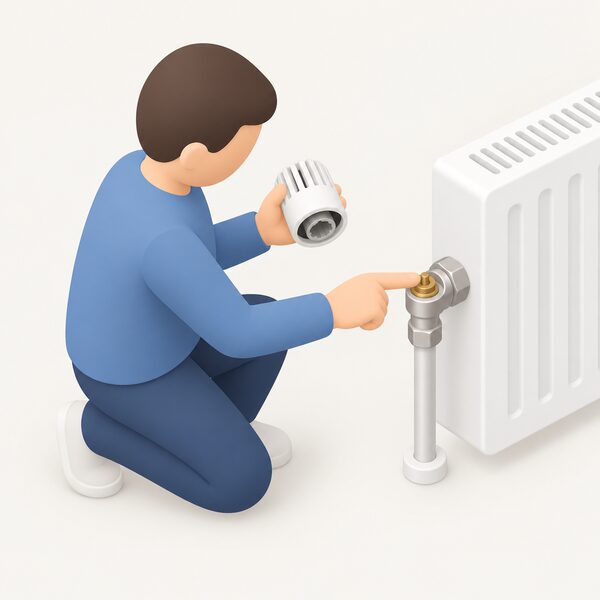
A TRV that has sat closed or open through a summer of disuse can seize. The pin inside the valve body sticks, and the head can no longer move it. The symptom is a radiator that stays cold with the dial turned up, or one that stays hot with the dial turned down. Both are the same fault seen from opposite ends.
The first check is the head. Removing the head and pressing the pin to see whether it moves freely is within reach of a careful householder, and it distinguishes a seized valve from a failed head. If the pin will not move, or if water appears at the spindle, the valve body needs attention from a heating engineer, because it is part of the water circuit.
A radiator that will not heat with the valve fully open may not have a TRV fault at all. A TRV has no communication with the boiler17, so it can only regulate what arrives. If the radiator is cold while others are hot, the likely causes are air in the radiator, a closed lockshield valve on the other end, or a balancing problem. If every radiator is cold, the fault is upstream: the boiler, the pump, the motorised valve or the programmer.
TRVs are also not suitable everywhere. They are not recommended in bathrooms, because humidity will interfere with their perception of the air temperature27. That is a siting rule rather than a fault, but it explains a great many "faulty" bathroom TRVs.
How TRVs and the main thermostat interact
TRVs and the room thermostat can fight each other, and the result looks like a fault in both. The rule is that TRVs should not be used in the room where the main boiler thermostat is, because the TRVs and the thermostat will compete27. Approved Document L states the same requirement in regulatory language: thermostatic radiator valves should not be used in the same room as the thermostat, and heat emitters in the same room as the thermostat should have manual controls23.
The mechanism is straightforward. The room thermostat decides when the boiler runs, based on the temperature where it sits. If a TRV in that same room closes first, the radiator stops emitting heat, the room cools, the thermostat calls for the boiler, and the boiler fires to serve a room whose radiator is shut. The system cycles without warming the house, and both devices appear faulty.
The same logic applies to hot water. Controls must prevent simultaneous hot water service and space heating service where the heat generator provides hot water28. A cylinder thermostat stops the cylinder becoming hotter than it needs to be, and once the water reaches the set temperature the heat supply from the boiler is turned off4. Where a system has a cylinder, the interaction between the cylinder thermostat, the programmer and the motorised valve is a common source of "the heating will not come on" complaints, because a valve stuck in the hot water position will not divert to the radiators.
Programmable TRVs add timing to the local control. These are TRVs with timing control as well, letting each radiator come on at different times and heat each room separately4. They increase the number of devices that can fail, but they also reduce the number of times the whole house is heated for one occupied room.
For independence, this section is the heart of the matter. A well-set system with a correctly sited thermostat and TRVs that do not compete gives the household direct control over which rooms are heated and when, with no dependence on an app or a supplier. A badly set one wastes fuel regardless of how good the hardware is.
When the fault is not the controls: boiler, pressure and power issues
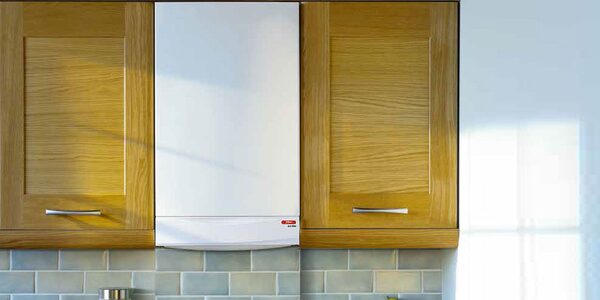
Many faults that present as control failures are appliance or supply faults. The common causes of a boiler breakdown are no power supply, no gas supply, no water supply, low or high pressure, a frozen condensate pipe, a faulty thermostat, no pilot light, and faulty or broken controls such as a diverter valve29. Note that a faulty thermostat appears on that list alongside the supply problems, which is why the diagnosis has to work through both.
The order of checks matters. Power first: a boiler with no electricity is not a control fault. Gas supply second, and this is where a household must stop. Water supply and pressure third, since low pressure is a common and visible cause. A frozen condensate pipe is a winter-specific cause with a distinctive symptom, and it is one of the few boiler-side issues a household can identify without opening anything.
Where a leak is found, the guidance is to call a qualified heating engineer as soon as possible and not to remove the boiler casing29. That is a firm limit, and it applies regardless of what the controls are doing.
Building rules also bear on replacement. If a heating system or hot water system is to be replaced, a building control application may not be required, and if required it may not be necessary to apply in advance of the work30. That matters when a fault leads to replacement rather than repair, because the compliance route is not always obvious.
The independence question here is blunt. Controls are the household's own; the boiler, the gas supply and the pressure vessel are not. A household can replace a thermostat, re-pair a wireless receiver, free a TRV head or reprogramme a timer. It cannot safely open a gas appliance, and it cannot fix a supply problem. Knowing which side of that line a fault sits on is the most useful diagnostic skill in the whole system.
When to call a Gas Safe engineer
The rule is absolute: never DIY on a gas appliance, and call a Gas Safe registered engineer if something is wrong with the appliance or it is not working correctly5. The Gas Safe Register engineer finder can be reached on 0800 408 55005.
The line between control work and appliance work is the casing. Anything inside the boiler casing, anything involving gas, and anything involving the flue is engineer territory. Control devices outside the casing, such as a room thermostat, a programmer, a TRV head or a wireless receiver, are not gas appliances, and guidance confirms that heating controls can be upgraded or installed independently of the boiler1.
Some symptoms should trigger a call without further investigation. A boiler that fires continuously with the thermostat satisfied may be a stuck motorised valve or a control wiring fault, and both need an engineer. A boiler showing a fault code, a leak, a smell of gas, or a pilot that will not light all need an engineer. A radiator that will not heat after bleeding and valve checks needs an engineer if the pin is seized.
For a household's energy independence, this is the boundary that cannot be moved. The controls are the part of the system a household can own, adjust and repair. The gas appliance is not, and the safety rules that keep it that way are the reason the rest of the system can be worked on at home at all.
Sources30 cited
- Thermostats and heating controls, Home Energy Scotland, 2026
- Take control of your heating at home, Energy Saving Trust, 2026
- Insulation, nidirect, 2026
- Thermostats and heating controls, Energy Saving Trust, 2026
- Gas Safety Week 2024, Cadent Gas, 2024
- RDSAP conventions v12, BRE Group, 2025
- How to use your heating controls, Age UK, 2026
- Should I turn my boiler's flow temperature down?, Energy Saving Trust, 2026
- What is a smart thermostat?, Smart Energy GB, 2026
- Heat your home efficiently, Citizens Advice, 2022
- How to buy the best smart thermostat, Which?, 2026
- Smart homes, lower carbon footprint, Energy Saving Trust, 2026
- Turning down thermostats, Smart Energy GB, 2026
- What are smart thermostats?, Uswitch, 2026
- Self-build homes: sustainability, Planning Portal, 2026
- Ground and water source heat pumps, MCS Certified, 2026
- ECO4 New Measures and Products Guidance v3.0, Ofgem, 2026
- Radiator valves, Smart Energy GB, 2026
- Building regulations: energy efficiency, Welsh Government, 2026
- Wallet Warmers: British families can save £160 on annual bills, Nesta, 2023
- How to save on your heating bill this winter, Which?, 2022
- The best way to run your central heating to save money, ivie, 2026
- Approved Document L Volume 1, 2026, Welsh Government, 2026
- Approved Document L, Conservation of Fuel and Power, Volume 1: Dwellings, UK Government, 2023
- Building regulations Part L and F review, stage 2a consultation, Welsh Government, 2020
- Building standards technical handbook 2019: domestic, 6.3 heating system, Scottish Government, 2019
- Best smart radiator valves, Which?, 2026
- Low temperature heating, NCM PCDB, 2026
- What to do if your boiler breaks down at Christmas, Which?, 2025
- Boilers and heating: building regulations, Planning Portal, 2026
 Faults and TroubleshootingWhat to check when a heat pump stops working, how to read fault logs and error codes, why short cycling happens, what servicing and warranty cover, and which refrigerant and F-gas rules apply.
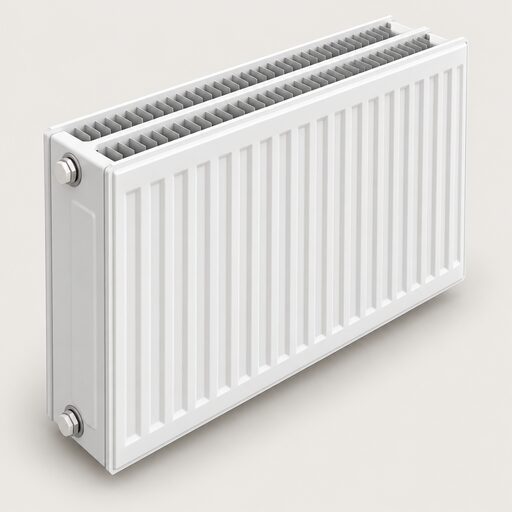 Radiators and Heat EmittersA radiator's real heat output depends on how hot the water inside it is compared with the room, so the figure in a catalogue often overstates what you will actually get.
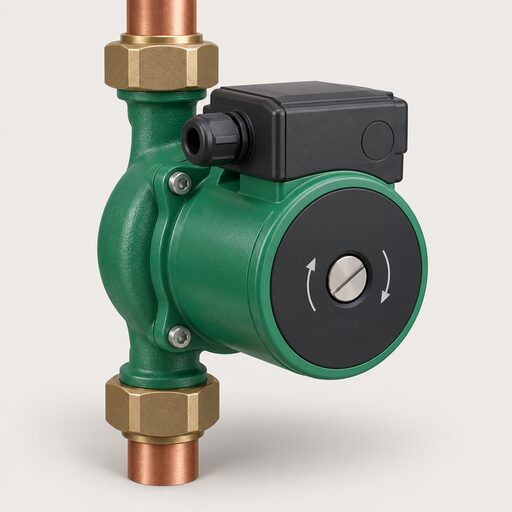 System Design and BalancingWhy do some radiators stay cold while others get too hot, and what does balancing actually do?
 Radiators and EmittersWill your radiators still heat the house properly with a heat pump?
 The Full Heating Controls GuideA room thermostat, a programmer and valves on your radiators are the basics.
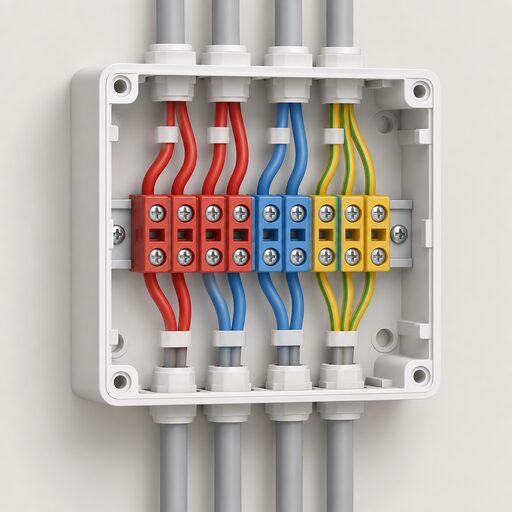 Boiler Interlock ExplainedWhy does your boiler keep firing when nothing is calling for heat?