In this guide
Heating controls in the UK span a very wide price range, and the gap between the cheapest and dearest options is larger than most households expect. A single room thermostat can cost £22, a normal thermostatic radiator valve about £15, while a smart thermostat runs from £59.99 to £199 and a three-channel smart kit with radiator heads reaches £387.801. The device is only part of the bill: fitting, wiring, hubs and receivers decide the final figure.
For a typical household, Which? puts a smart thermostat at around £100 to £250, and Uswitch gives £100 to £200 for most smart thermostats, with add-ons such as installation pushing the total higher2. Smart radiator valves typically cost between £35 and £80 each, about five times more than a traditional TRV, so a whole-house smart TRV installation is a per-radiator calculation rather than a single purchase6.
What a household gets for that money is finer control over when and where heat is delivered, and the running-cost case rests on small temperature changes rather than on the hardware itself. Turning a thermostat down from 22°C to 21°C can save £120 a year in GB and £80 in NI, and adding TRVs to a system that already has a programmer and thermostat can save £30 a year in GB and £40 in NI7. The controls cost is therefore best judged against those annual figures, not against the price of the box alone.
What you pay: smart thermostats from £60 to £440
The entry point for a smart thermostat is lower than many buyers assume. Tado's V3+ Smart Heating Thermostat Starter Kit is listed at £59.99, and the Habi Wireless Smart Thermostat at £623. At the other end, the Google Nest Smart Thermostat E is £199, the Worcester Bosch EasyControl Smart Thermostat £170, and the Hive Smart Thermostat from £1303. Which? frames the general market at around £100 to £250 for a smart thermostat for boiler heating controls, and Uswitch at £100 to £200 for most smart thermostats2.
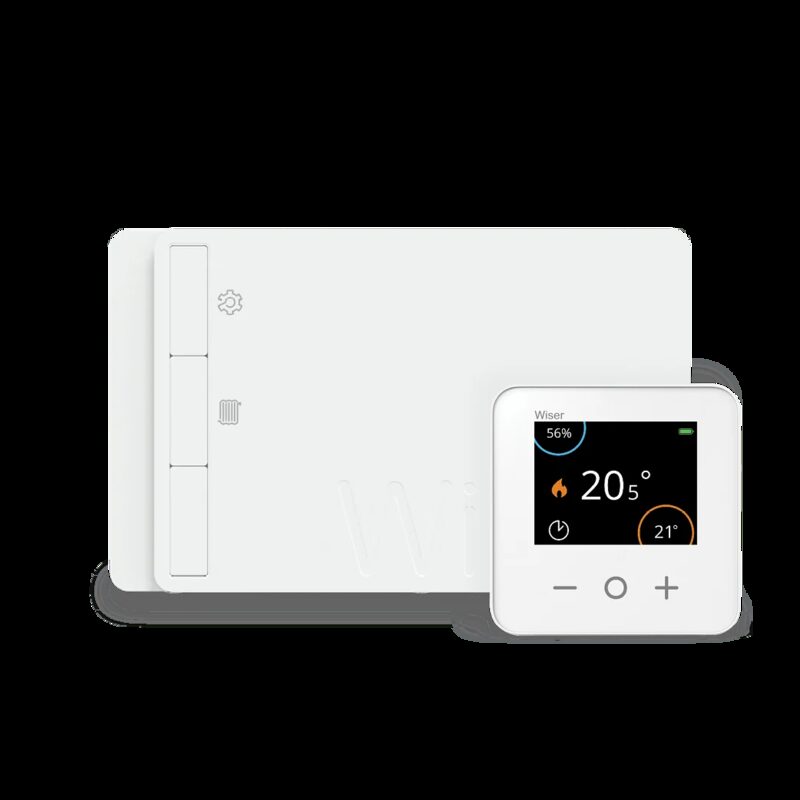
Multi-zone kits move the price up sharply because they bundle a hub, a thermostat and several radiator heads. Drayton's Wiser range illustrates the shape of it: the 2 Channel Smart Room Thermostat Kit (2nd Generation) is £247.80, the 3 Channel Smart Thermostat and Temperature & Humidity Sensor Kit (2nd Generation) is £274.80, the 3 Channel Smart Thermostat Kit (2nd Generation) is £352.80, the 2 Channel Smart Room & Radiator Thermostat Kit (2nd Generation) is £367.78, and the 3 Channel Smart Room & Radiator Thermostat Kit (2nd Generation) is £387.804. Each step adds a channel or a set of radiator heads, which is what drives the difference.
| Product | Price | Source |
|---|---|---|
| Tado V3+ Smart Heating Thermostat Starter Kit | £59.99 | 3 |
| Habi Wireless Smart Thermostat | £62 | 3 |
| Hive Smart Thermostat | from £130 | 8 |
| Worcester Bosch EasyControl Smart Thermostat | £170 | 3 |
| Google Nest Smart Thermostat E | £199 | 3 |
| Drayton Wiser 2 Channel Smart Room Thermostat Kit (2nd Generation) | £247.80 | 4 |
| Drayton Wiser 3 Channel Smart Room & Radiator Thermostat Kit (2nd Generation) | £387.80 | 4 |
Prices are as listed by the maker or the reviewing publisher and are not installer quotes. Where a household buys a kit with radiator heads, the per-radiator cost is already inside the kit price; where it buys a thermostat alone and adds heads later, the per-head price applies.
Room thermostats and TRVs: the cheaper end of controls
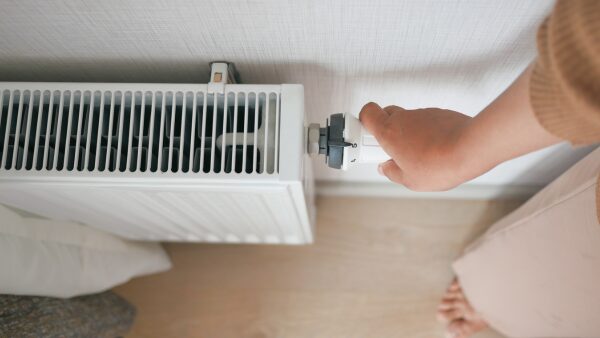
The traditional end of the market is where the cost per unit of control is lowest. A room thermostat is listed at £22 in the current domestic compliance guide, and a normal thermostatic radiator valve at about £151. Those are hardware figures, not installed prices, but they set the floor. Energy Saving Trust puts the whole-house figure for TRVs at around £370 where a programmer and thermostat already exist, which is the cost of adding TRVs to all radiators rather than a single valve7.
TRVs work by controlling the temperature of each room, opening and closing automatically to control the flow of hot water through the radiator they are fitted to, and they can be manually adjusted to different settings9. They have no communication with the boiler, which is why they are a local control rather than a system control9. A TRV gives better control over individual room temperatures, and lowering them can reduce demand in rooms that are not being used10.
The regulatory position matters for cost planning. Any new radiator installed requires a thermostatic radiator valve to be installed, and it is also encouraged to place TRVs on existing radiators12. That means a radiator replacement carries a TRV cost whether or not the household wanted one. TRVs were also eligible under the Green Homes Grant voucher scheme as secondary measures, and rank sixth in the BEIS preference list13.
Smart radiator valves sit above this. Which? gives £35 to £80 each for smart radiator valves, about five times a traditional TRV, with named examples including the Tado Smart Radiator Thermostat at £74.99, the Habi Smart Thermostatic Radiator Head at £31, and the Energenie MiHome Smart Radiator Valve Kit at £199.996. Tado's smart radiator attachment is listed at £79.9914. The spread reflects whether the head is bought singly, in a kit, or as part of a starter bundle.
How much a smart thermostat can save you
The savings case is real but conditional, and the sources give different figures because they model different households. Cambridge Architectural Research modelled a saving of £64 per year for a typical household from a smart thermostat15. Confused.com puts the figure at up to £110 a year from installing a smart thermostat and controls to fine-tune heating16. The gap between £64 and £110 reflects assumptions about the home, the existing controls and how the thermostat is used.
The mechanism is not the thermostat itself but the behaviour it enables. Smart thermostats can be programmed or remotely controlled to manage a home's temperature, and a quick tap on a phone can save hours of wasted heat17. They allow multiple routines so the home is at the desired temperature when needed, and some learn from heating habits until adjustment is barely needed17. Features vary by model and can include app control, voice control, hot water settings, location-based heating, reminders or alerts, open window detection, routine learning and heating-use tracking18.
The independent evidence is clear that savings are not automatic. A smart thermostat could save money, but savings are not guaranteed and depend on the home, heating habits, existing controls, energy prices and how the thermostat's features are used18. That is the honest framing: the hardware enables control, and the household's use of it decides the return.
The comparison that matters most is against the simpler alternative. Turning a thermostat down from 22°C to 21°C can save £120 a year in GB and £80 in NI, and adding TRVs to a system that already has a programmer and thermostat can save £30 a year in GB and £40 in NI7. Those figures come from changing settings and adding cheap valves, not from buying a smart device. A household weighing a £100 to £250 smart thermostat against a £22 room thermostat and £15 TRVs is comparing a control upgrade with a settings change, and the evidence supports both.
Smart thermostat, TRVs or both: which fits which home
The choice between a smart thermostat, smart TRVs, or both comes down to what the household wants to control. A smart thermostat controls the boiler and the whole-home temperature; TRVs and smart TRVs control individual rooms. Vaillant's guidance is that one smart thermostat per property is enough, because the thermostat's job is to call for heat rather than to regulate each room19.
Where room-by-room control is the goal, the radiator heads do the work. Bosch smart radiator thermostats work with EasyControl, so the heating in each individual room can be controlled separately20. That is the zoning model: one thermostat or hub as the system controller, and a smart TRV on each radiator as the zone control. A household that wants different temperatures in bedrooms, living rooms and unused rooms is buying heads, not thermostats.
The cost shape follows from that. A single smart thermostat at £59.99 to £199 covers the whole-home case3. A smart TRV installation at £35 to £80 per radiator covers the room-by-room case, and a kit such as the Drayton Wiser 3 Channel Smart Room & Radiator Thermostat Kit at £387.80 bundles both6. A household with a programmer and thermostat already in place can add TRVs to all radiators for around £3707.
There is a middle path that costs less and delivers much of the benefit. A conventional programmer and room thermostat with ordinary TRVs on the radiators gives scheduled whole-home control and per-room limiting for a fraction of the smart hardware price. The smart layer adds remote control, learning, alerts and app data, which is what the extra money buys. Which of those matters depends on the household's routines and how often the home is empty.

Compatibility: boilers, heat pumps and heating fuels
Compatibility is the first thing to check and the most common reason a purchase goes wrong. Vaillant states that smart thermostats work with not every boiler, but most, and advises checking with the boiler manufacturer that it is compatible before committing to the purchase19. Smart Energy GB says to check that the thermostat is compatible with the boiler and heating system before buying, usually in the product description or on the thermostat manufacturer's website18.
The compatibility question has several parts. The boiler type matters, as does the existing wiring and whether the system has a hot water cylinder as well as heating. Some smart thermostats connect to Wi-Fi and form part of a more connected home heating system, and some connect to Amazon Alexa, Siri and Google Home18. The BEAMA buyers' guide notes that listed products are compatible with the definition in the 2018 Building Regulations Compliance Guide, known as a Boiler Plus option, and include automation and optimisation functions21.
Heat pumps change the picture. Hybrid heat pumps as an integrated boiler replacement product are priced at £3,500 to £4,500 for units from 5kW to 11kW with an integrated 33kW combi boiler22. Using a heat pump flexibly with a smart tariff could save up to £600 per year compared to a standard electricity tariff23. Those are system costs, not control costs, but they show that controls are bundled into heat pump pricing rather than bought separately.
For a household on a gas boiler, the practical check is whether the existing thermostat wiring suits the new device and whether hot water control is needed. For a household on a heat pump, the controls are usually part of the installation and the compatibility question is answered by the installer. For a household on electric heating, the controls are a different product family again.
Installation: who fits it and what it adds to the cost
Installation is where the advertised price and the final bill diverge. Uswitch notes that most smart thermostats cost between £100 and £200, but some have add-ons such as installation which push the total higher5. Smart Energy GB states plainly that if you want a smart thermostat, you may have to pay for the device and the installation24. Hive recommends finding a local tradesperson to install the smart thermostat, as it can be a task if you are not confident with wiring14.
The Great British Insulation Scheme government response gives average installation costs that are useful benchmarks: room thermostats £100, boiler programmers £80, and thermostatic radiator valves a further figure25. Those are scheme averages rather than retail quotes, but they show the labour component is comparable to the hardware cost for a simple thermostat. A like-for-like replacement of an existing thermostat is at the lower end; a first-time installation with new wiring, a receiver and a cylinder sensor is at the upper end.
Some controls are free to install because they belong to a different programme. Smart meters are installed at no cost to the household, arranged by the supplier, and getting a smart meter installed is free for UK energy customers26. Smart meters are currently being installed in homes and small businesses across Great Britain at no extra cost to consumers, and whoever pays the energy bills organises the installation28. Consumers are also eligible for £40 in compensation if they face issues throughout the process of installing a smart meter27.
The distinction matters for cost planning because the two are often confused. A smart meter installation is free and arranged by the supplier; a smart thermostat is a purchase and its fitting is paid for by the household. The smart meter gives consumption data, and the thermostat gives control. Neither substitutes for the other.
Where to place a thermostat, and where not to
Placement affects performance more than price, but it can affect cost if a poorly sited thermostat leads to a replacement or a rewire. Uswitch advises that the best place to put a smart thermostat is where the temperature is relatively consistent5. That rules out positions near radiators, in direct sunlight, in draughts, or close to cooking appliances, because the thermostat reads the local temperature rather than the room's average.
The interaction with TRVs is the point most often missed. TRVs control the temperature of each room by opening and closing automatically to control the flow of hot water through the radiator they are fitted to, and they have no communication with the boiler9. A TRV in the same room as the room thermostat can shut the radiator down before the thermostat is satisfied, which leaves the thermostat calling for heat that the TRV is refusing to deliver. The two controls then work against each other.
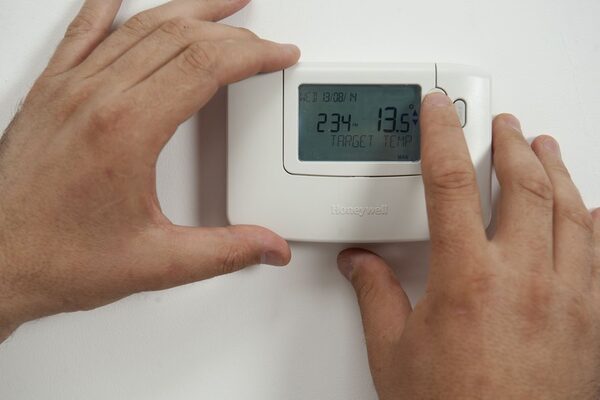
The room thermostat's own function is simple: it turns the boiler on and off automatically when the room temperature reaches the level chosen16. That is why its location determines how representative its reading is. A thermostat in a hallway that is cooler than the living rooms will run the heating longer than needed; one in a warm kitchen will cut it short.
Building regulations and scheme eligibility for heating controls
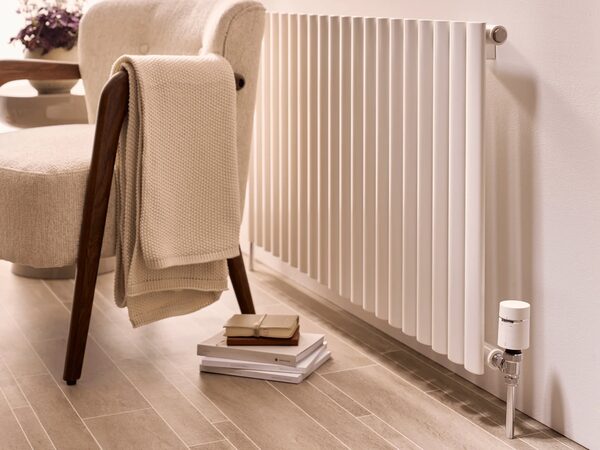
The regulatory position on controls is settled for new radiators and moving for smart devices. Any new radiator installed requires a thermostatic radiator valve to be installed, and it is also encouraged to place TRVs on existing radiators12. That requirement applies across the UK's building regulations, and it means a radiator replacement carries a TRV cost as standard.
Smart thermostats are recognised in scheme rules. The ECO4 measures table lists Smart Thermostat as a measure type under the name Smarttherm29. Citizens Advice supported a proposal to make smart thermostats eligible measures for low-income households30. That is a consultation position rather than a settled entitlement, and eligibility depends on the scheme and the household's circumstances.
The Green Homes Grant position is historical but instructive. TRVs were eligible under the Green Homes Grant voucher scheme as secondary measures, and rank sixth in the BEIS preference list13. The scheme's structure, with primary and secondary measures, is the model that later schemes have followed.
The wider policy context is that low-cost measures have been treated as a group. Rolling out additional low-cost measures under £300 each to all eligible homes, including topping up loft insulation, installing smart thermostats and installing TRVs where not already present, was modelled as sharing £7 billion across consumers and government31. That figure is a national total, not a household entitlement, and it shows the scale at which controls have been considered.
Warranty and what owning smart controls means for energy independence
A smart thermostat is an internet-connected thermostat that gives digital control over a home's central heating18. That definition carries the independence question inside it: the control depends on Wi-Fi, on the maker's app and on the maker's cloud service, as well as on the boiler and the gas or electricity supply. A conventional room thermostat and TRVs depend on none of those beyond the boiler itself.
The practical dependence is worth stating plainly. Most smart heating controls link to a phone, and heating can be controlled via smartphone, tablet or laptop, or by telling a smart speaker what is wanted32. That is convenient, and it also means the household's control path runs through a third party's servers and a home broadband connection. If the app or the service is withdrawn, the local controls still work but the remote features do not.
The savings guarantee is the other limit. A smart thermostat could save money, but savings are not guaranteed and depend on the home, heating habits, existing controls, energy prices and how the thermostat's features are used18. A household buying controls for the independence they give, rather than for a promised return, is judging them on the right basis.
The thermostat does not affect the ability to switch energy supplier. The thermostat helps to control how much energy is used, but will not be a barrier to switching the actual energy deal5. That is a genuine independence point: the control layer and the supply layer are separate, and changing one does not lock the other.
For a household weighing the cost, the honest summary is that controls buy finer control over heat delivery, and the cheapest route to most of that benefit is a room thermostat and TRVs rather than a smart system. The smart layer adds remote access, learning and data, at a price that runs from £59.99 for a starter kit to £387.80 for a three-channel kit with radiator heads3. What remains dependent is the boiler, the fuel, the broadband and the maker's service.
Sources32 cited
- Written evidence 60052, UK Parliament, 2015-09
- Boiler prices: how much does a new boiler cost, Which?
- How to buy the best smart thermostat, Which?, 2026-09-17
- Newest products, Drayton Controls, 2026-09-20
- What are smart thermostats, Uswitch, 2026-02-05
- Best smart radiator valves, Which?, 2026-09
- Thermostats and heating controls, Energy Saving Trust, 2026-02-10
- Best boilers, Confused.com, 2025-11-03
- ECO4 New Measures and Products Guidance v3.0, Ofgem, 2026-03-26
- Building regulations extensions: energy efficiency, Welsh Government, 2026-09-17
- Five top tips from Which? to cut your energy bills, Welsh Government, 2026-03-18
- Building regulations energy efficiency, Planning Portal, 2026
- Home and business grants schemes and advice, East Herts Council, 2026-09-17
- Tado vs Hive: which smart thermostat is best, Energy Helpline, 2026-09-20
- UK households could save £1 billion on energy costs by making one simple change, Nesta, 2022-10-13
- Energy saving tips for the home, Confused.com, 2025-10-14
- How a smart thermostat can save you money this winter, ivie, 2025-11-18
- What is a smart thermostat, Smart Energy GB, 2026-08-19
- What is a smart thermostat and are they worth it, Vaillant, 2026
- Smart meters, Worcester Bosch, 2026-09-20
- Heating controls buyers' guides, BEAMA, 2020-11-27
- Domestic Hybrid Heat Pumps, UK Government, 2016-11
- What will my energy costs look like with a heat pump, Nesta, 2025-01-21
- Do I already have one, Smart Energy GB, 2026-03-16
- GB insulation scheme government response, UK Government, 2023-03
- Smart meters for landlords, Smart Energy GB, 2026-03-16
- Tough new rules force suppliers to fix faulty smart meters, UK Government, 2026-03-10
- Support with energy bills, Energy UK, 2025-09-03
- ECO4 Measures Table v4.0, Ofgem, 2025-07-29
- Citizens Advice response to government consultation on mid-scheme changes, Citizens Advice, 2024-12-12
- Government energy saving advice campaign is missing plank of long-term plan for energy bill support, Nesta, 2022-10-17
- Smart homes lower carbon footprint, Energy Saving Trust, 2026-01-21
 Smart Thermostats ExplainedWhat does a smart thermostat actually do, and is it worth it?
 The Full Heating Controls GuideA room thermostat, a programmer and valves on your radiators are the basics.
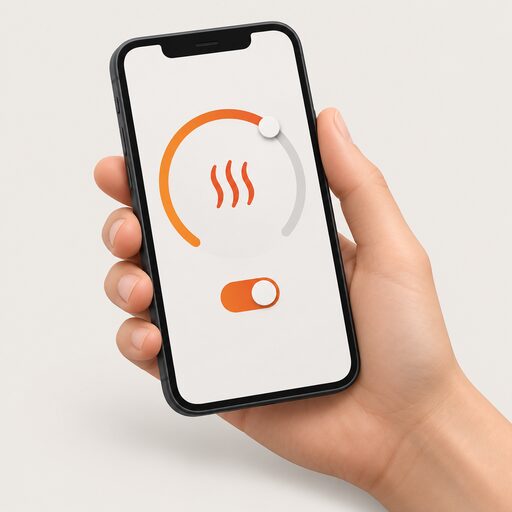 Do Smart Controls Save Money?Do smart heating controls really cut your bills, and by how much?
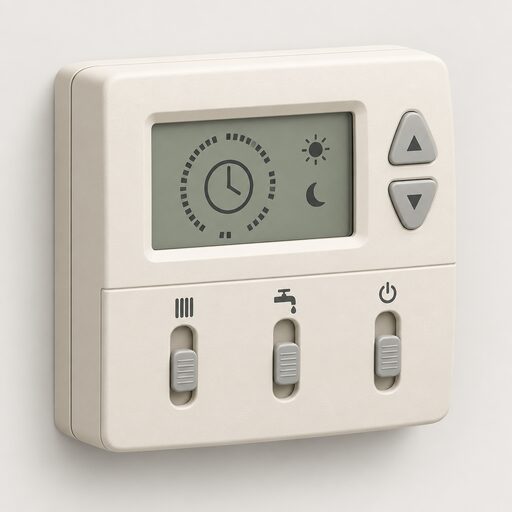 Controls, Thermostats and TRVsWhich heating controls actually cut your bills, and what does each one do?
 Smart Thermostat SubscriptionsDo you have to pay a monthly fee to use your smart thermostat, and what do you actually get for it?
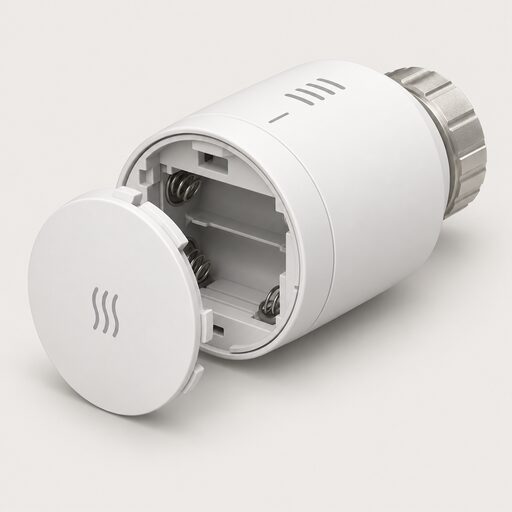 Smart TRVs ExplainedSmart radiator valves let you heat one room without heating the rest, on a schedule you set from your phone.