
In this guide
Heating controls do affect an EPC, but not in the way most households assume. The certificate is produced from a modelled calculation of the building, and the assessment reflects the energy performance of the building itself, not the way it is used by its occupants1. What the methodology records is the control provision: whether there is a programmer or timer, a room thermostat, thermostatic radiator valves, and zone control. A smart thermostat that supplies those functions is credited for supplying them, and its app features are not scored at all.
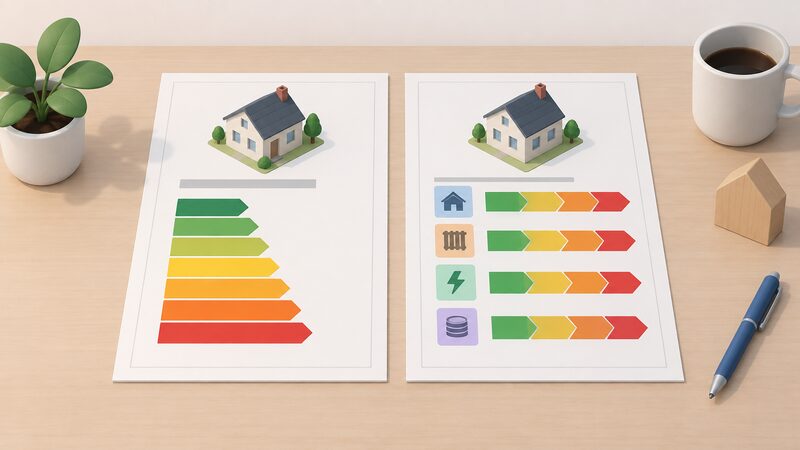
The rating itself is a modelled figure on a scale of 1 to 100, split into bands A to G, with A the most efficient2. Both the energy efficiency rating and the environmental impact rating use that scale. The current EPC is built on the Standard Assessment Procedure, or the Reduced Standard Assessment Procedure for existing dwellings, where the complete data set for a full SAP calculation is not available3.
Controls sit inside a wider picture. The Energy Efficiency Rating is the only metric currently used in government policies targeting domestic buildings4, and it is the basis of many energy efficiency policies in the domestic built environment5. That is why the reform programme matters: the current EPC rating metrics do not accurately incentivise the energy efficiency and heating solutions required to deliver Net Zero homes, according to the Climate Change Committee4.
What an EPC actually measures
An EPC provides information about the energy efficiency and emissions of a building9. It is a widely used measure of the energy performance of buildings, both in the residential and commercial sectors10. The regulated energy uses it covers are space heating, water heating, space cooling, ventilation and fixed lighting11. Heating controls act on the first two of those, and indirectly on ventilation where a system is interlocked with it.
The certificate rates the building on a scale from A to G, with A being the most efficient1. It also carries information on measures which could be made to improve the energy efficiency of the building, and an indicative cost for each improvement1. That recommendation list is where controls most often appear to a householder, and it is worth understanding its status: the list of recommendations is advisory only and is generated as part of the calculation methodology and software tools used by the EPC assessor3.
The assessment is a snapshot of the building, not of the household. It reflects the energy performance of the building itself, not the way it is used by its occupants1. A household that runs its heating carefully, or that has fitted a sophisticated control system and uses it well, will not see that behaviour in the rating. What the assessor records is the presence and type of control, because that is what the methodology can model.
Coverage is partial. EPCs cover around 60% of the housing stock in England and around 55% in Wales, based on Census 2021 analysis by the ONS7. In the quarter January to March 2026, 460,000 EPCs were lodged on the register in England and Wales, a 2% decrease compared to the same quarter in 20258. Of those, 416,000 were domestic EPCs in England, a 1% decrease on the same quarter8.

Yes, heating controls affect the EPC score, and here is how
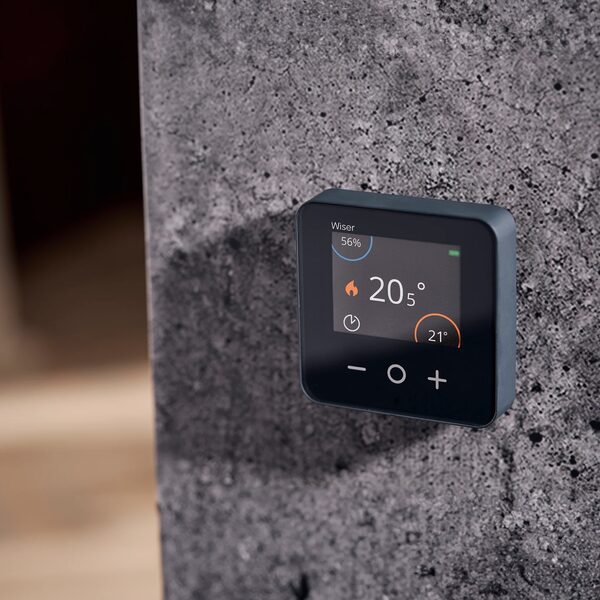
Controls enter the calculation as an input to the heating model. The methodology needs to know how the heating is switched, how its output is limited and whether different parts of the home can be heated separately. Each of those is a control question, and each changes the modelled energy demand.
The direction of travel in EPC reform makes the split explicit. Domestic EPCs will show ratings for heat retention, heating system and energy costs12. The proposed primary metrics are four: total energy use intensity in kWh/m2/yr, space heating demand intensity in kWh/m2/yr, heating system type ranked from 1 to 6, and energy cost intensity in £/m2/yr4. Controls bear most directly on the energy and cost metrics, because they change how much of the heating demand is actually delivered and when.
There is a limit worth stating plainly. EPC ratings are based on the costs of home heating, rather than its carbon footprint, which means that cheaper heating sources can score better than lower-carbon ones2. That is why Parliament's Environmental Audit Committee reported that replacing a gas boiler with a heat pump can, in fact, reduce a property's EPC score, which can negatively impact the property's value2. A control system that reduces running cost therefore helps the modelled score; a control system that reduces carbon but raises cost may not.
For a household's energy independence, this matters in a specific way. Controls that let a home heat only the rooms in use, and only when needed, reduce the energy the household must buy. That is a real reduction in dependence on a supplier and on the grid, whatever the certificate says. The certificate is a modelled proxy for that, not a measurement of it.
Which controls count: programmers, thermostats and zone controls
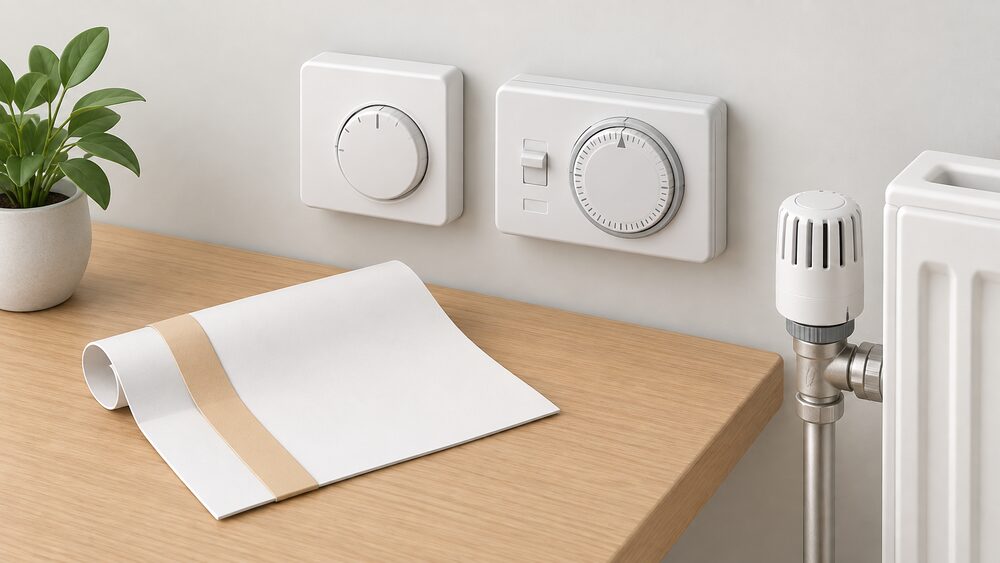
The controls the methodology recognises are the ones that change modelled demand: time control, temperature control, and the ability to control rooms separately.
| Control function | What it provides | Where the requirement is set |
|---|---|---|
| Weather compensation or internal temperature control | Flow temperature matched to conditions | Minimum provision for heat pumps13 |
| Timer or programmer for space heating | Time control | Minimum provision for heat pumps13 |
| Programmable room thermostat with override | Time and temperature control per direct electric zone | Electric underfloor heating, all direct electric zones13 |
| Time and temperature control per room or appliance | Separate control of each room | Electric panel heaters, new systems or replacement components14 |
For heat pumps, the minimum controls are weather compensation or internal temperature control, plus a timer or programmer for space heating13. Weather compensation adjusts the flow temperature to the outdoor conditions, which is what makes a heat pump run efficiently across the year. A weather compensation control is therefore not an optional extra on a heat pump; it is part of the minimum provision.
For direct electric zones of electric underfloor heating systems, programmable room thermostats with an override feature should be provided for all direct electric zones13. The override matters because it is what allows a household to depart from the schedule without disabling the control entirely.
For electric panel heaters, time and temperature control should be provided for separate control of each room or each appliance, on new systems or replacement components14. The same principle appears in the Welsh guidance for electric panel heaters: time and temperature control should be provided15.
The pattern across all of these is consistent. The methodology wants a time control, a temperature control, and room-by-room separation. A room thermostat provides the temperature reference; a programmer or timer provides the schedule; thermostatic radiator valves and zoning provide the separation. A smart thermostat that performs the first two is recorded as performing them.
Building Regulations Part L: why effective controls are required, not optional
Controls are not only an EPC input. They are a building regulation requirement, and that requirement is separate from the certificate.
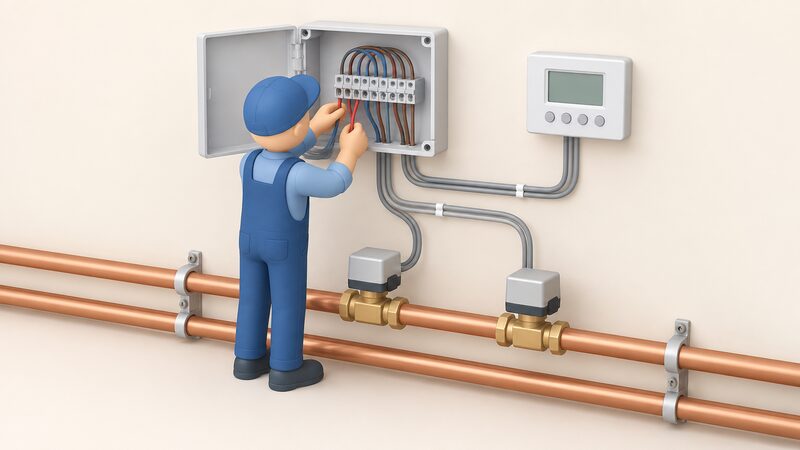
Approved Document L Volume 1 sets the rule for new dwellings and for boiler replacements: for heating systems in new dwellings, or when a heat generator such as a boiler is replaced in an existing dwelling, each room should be provided with thermostatic room controls able to separately adapt the heating output in each room served13. That is a room-by-room requirement, not a single thermostat.
The scope of Part L is broad. The Part L requirements apply to buildings, or extensions of such buildings (except those of Class 7 type), or work to or in connection with such building or extension where the building is a roofed construction having walls and uses energy to condition the indoor climate16. Regulation 21 frames the same test in legislation for England and Wales: the energy efficiency requirements apply where a building is a roofed construction having walls, uses energy to condition the indoor climate, and does not fall within an excluded category18.
For on-site electricity generation systems, Requirement L2 requires that the system has effective controls19. The principle runs through the document: a system that cannot be controlled effectively is not treated as compliant.
There are exemptions, and they matter for older housing. EPCs are not required for:
- protected buildings
- places of worship
- temporary buildings of two years or less
- low energy demand industrial and agricultural buildings
- seasonal residential buildings
- stand-alone buildings under 50 m2
- buildings suitable for demolition20
An EPC is not required for listed buildings or historic buildings in designated conservation areas where compliance with minimum energy performance requirements would unacceptably alter their character or appearance21. Adding electrical work or new installations, including electric floor or ceiling heating systems, requires notification to Building Control22.
How much a band can move: controls alone versus fabric and heating upgrades
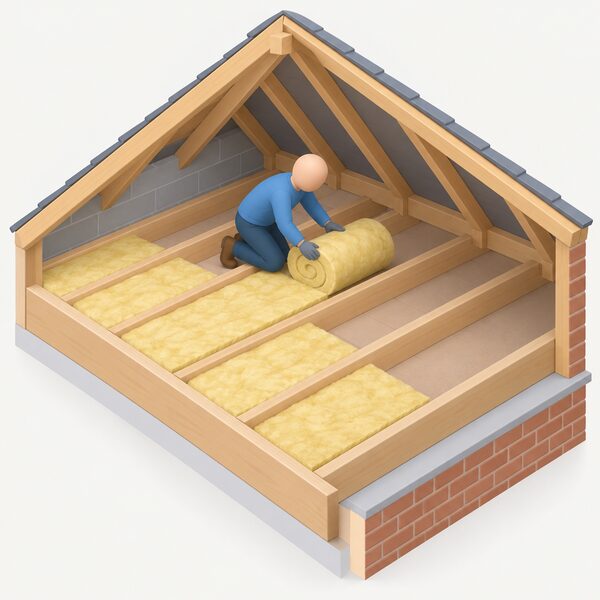
Controls contribute to the modelled result, but they are one input among several, and the evidence on band movement is about the whole package rather than controls alone.
The reform work gives a sense of scale. When the upper boundary of the Heat Retention Rating Band C is set to 120 kWh/m2/year, only 50% of properties currently at EPC Band C achieve HEM HRR Band C23. Where Heat Retention Rating Band C was set between 71 and 120 kWh/m2/year of energy used to heat the home, then for a sample around 80% of homes currently at EPC C also achieve Band C on the HRR23. The intention is that the new Band C should be as largely as possible equivalent to the current EPC's SAP-based Band C23.
What that shows is that the rating is dominated by fabric and heating demand, not by controls. A household expecting a control upgrade alone to lift a property a full band is likely to be disappointed. The larger movements come from insulation, glazing, and a change of heat generator. Controls change how much of the demand is delivered and when, which is a smaller effect on the modelled total.
There is a further complication for households considering a heat pump. Because EPC ratings are based on the costs of home heating rather than its carbon footprint, a heat pump can score worse than the gas boiler it replaces2. That is a known distortion, and it is one of the reasons the metrics are being reformed.
For energy independence, the practical reading is this. Controls reduce the energy a household must buy, and that reduction is real regardless of band movement. Fabric improvements reduce the demand itself. A household seeking independence gets more from doing both than from either alone, and the certificate will reflect the combination more than it reflects the controls.
Where controls appear on the certificate: the recommendation report
The recommendation report is where a householder is most likely to see controls named. Each EPC comes with a report that sets out the cost effective measures that homeowners or businesses can take to improve the energy efficiency and energy rating, such as low energy bulbs or upgrading insulation9.
The report is a regulatory requirement. Regulation 29 requires that the certificate include a recommendation report unless there is no reasonable potential for energy performance improvements24. For on-construction certificates in Wales, the occupier should also be provided with the on-construction energy performance certificate that includes a recommendation report24.
Its status is advisory. The list of recommendations is advisory only and is generated as part of the calculation methodology and software tools used by the EPC assessor3. That means the recommendations are produced by the software from the modelled inputs, not written by the assessor as a bespoke plan for the property.
The report also carries an indicative cost for each improvement1. Those costs are indicative, and the actual cost of an EPC itself varies from one company to another and depends on the size, location and age of the building, so households have to shop around20.
For a household, the report is best read as a list of modelled options rather than a ranked plan. A control measure that appears there is one the software has identified as reducing modelled energy use. Whether it suits the home, the heating system and the household's pattern of use is a separate question, and one the certificate does not answer.
SAP and RdSAP: how the assessor accounts for your controls
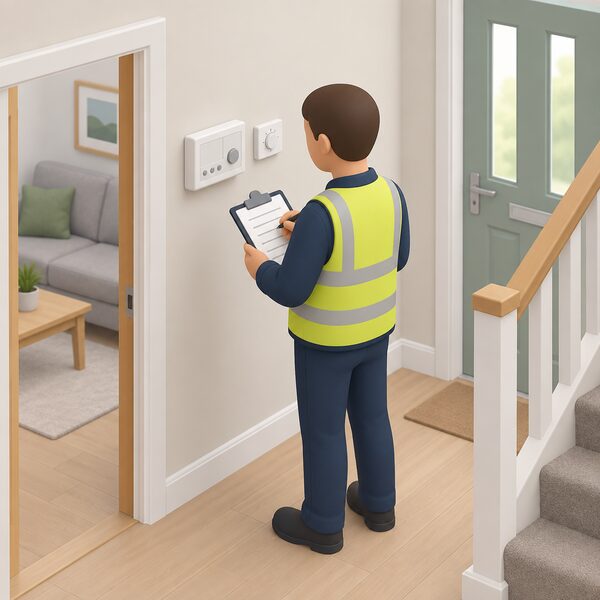
To determine the energy efficiency rating of a home, EPC assessors use the standard assessment procedure (SAP)2. For existing dwellings, EPCs are produced using Reduced Standard Assessment Procedure (RdSAP), a simplified implementation of the SAP methodology, based on a site survey when the complete data set for a SAP calculation is not available3.
The distinction matters for controls. A full SAP calculation for a new dwelling can take detailed information about the heating system and its controls. RdSAP, used for existing homes, works from a site survey and a reduced data set, so it relies on the assessor identifying the control types present and recording them against the methodology's categories. A control that does not fit a recognised category is not modelled, however capable it is in practice.
An EPC can only be produced by an accredited energy assessor who will visit the property to carry out an assessment9. Qualified assessors can be found on the EPC register25. The assessment reflects the energy performance of the building itself, not the way it is used by its occupants1.
The accuracy of that process has been the subject of official research. Energy Performance Certificates are the basis of many energy efficiency policies in the domestic built environment, and research has been designed to support energy efficiency policy in the area of updates to the Standard Assessment Procedure and informing the succeeding Home Energy Model, and the processes surrounding the generation and usage of Energy Performance Certificates5.
For a household, the practical implication is that the control information on the certificate is only as good as what the assessor can see and record. Documentation for a control system, and a clear installation, help the assessment reflect what is actually there.
The reform context: the Home Energy Model and new-style certificates
The methodology behind the EPC is being replaced, and the replacement changes what controls are worth in the calculation.
The reform programme will reform EPCs by introducing new ratings, redesigning the certificates, and improvements to the operational infrastructure23. In Scotland, EPCs are to be generated using the UK Government's new Home Energy Model, which will replace the current Standard Assessment Procedure methodology in autumn 202626. The new ratings include a Heat Retention Rating reflecting fabric energy efficiency, a Heating System Rating covering type, emissions and efficiency, and an Energy Cost Rating23. Scotland's consultation response describes ratings for heat retention, heating system and energy costs12, and the earlier Scottish position set out a Heat Retention Rating to provide information on how well-insulated the home is, on an A to G scale27.
The proposed primary metrics are four: total energy use intensity, space heating demand intensity, heating system type ranked from 1 to 6, and energy cost intensity4. A separate heating metric is defined as heating system type, with categories of heating system ranked from 1 to 64.
Scotland has also consulted on reducing the validity period of EPCs from ten to five years26. The current position remains ten years1.
The direction of the reform is towards metrics that reward lower energy use and lower-carbon heating, rather than only lower cost. That is a change that should, over time, make controls that reduce demand more visible in the rating than they are today. Until the Home Energy Model is in use, the current SAP-based rating is what applies.
Validity, cost and when you need a new assessment
An EPC is valid for a maximum of ten years or until another EPC is commissioned for the same building, whichever is sooner20. Each EPC is valid for 10 years and can be used multiple times during that period9. EPCs are valid for 10 years28.
An EPC is required when selling or letting an existing building25. EPCs must be provided when a building is advertised for sale or for let to a new tenant23. They are also required upon completion of construction of a new building23. In Northern Ireland, EPCs are needed whenever a property is built or marketed for sale or rent9. More broadly, they are only required when a dwelling is constructed, converted, sold, or let28.
Responsibility sits with the owner. It is your responsibility as the owner or landlord to make sure you have an EPC, to make it available to potential buyers or tenants, and to give a copy to the new owner when selling9. For shared ownership properties, responsibility for obtaining an EPC sits with whichever party is initiating the sale or letting, and an EPC is not required where a housing association sells an additional share to an existing shared owner29.
The cost of the EPC will vary from one company to another and you will have to shop around for the best price20. There is no published fixed price, and the figure depends on the size, location and age of the building.
A new assessment is needed when the existing certificate expires or when another EPC is commissioned for the same building. A control upgrade does not by itself require a new EPC, but a household that wants the improvement reflected in the rating will need a new assessment, because the certificate records the building as assessed on the day.
Sources29 cited
- Energy Performance Certificates guide, Scottish Government, 2026-08-24
- Energy Performance Certificates, House of Commons Library
- Domestic EPC reform consultation, Scottish Government, 2021-07-23
- Letter on reform of domestic EPC rating metrics to Patrick Harvie MSP, Climate Change Committee, 2026-09-19
- Energy Performance Certificate accuracy research, GOV.UK, 2026-05-26
- Letter on reform of domestic EPC rating metrics to Lee Rowley MP, Climate Change Committee, 2026-09-19
- Energy efficiency of housing in England and Wales, Office for National Statistics, 2025-10-28
- Energy performance of buildings certificates, January to March 2026, GOV.UK, 2026
- Energy Performance Certificates, nidirect, 2026-02-26
- Energy Performance Certificates in buildings: call for evidence, GOV.UK, 2018-07-26
- Technical annex for chapter 2: what EPCs measure, GOV.UK, 2026-03-09
- EPCs are changing, Scottish Government, 2026-08-24
- Approved Document L Volume 1: Dwellings, GOV.UK, 2026-04
- Approved Document L: Conservation of fuel and power, Volume 1, GOV.UK, 2026-09-17
- Building Regulations Approved Document L Volume 1, Welsh Government, 2026-09-17
- Building regulations, Planning Portal, 2026
- Exemptions from building regulations, Planning Portal, 2026
- Building Regulations 2010, Part 6, legislation.gov.uk, 2026-09-17
- Approved Document L: frequently asked questions, GOV.UK, 2026-09-08
- Trading standards guidance: other consumer problems, Isle of Anglesey County Council, 2025-09
- Improving energy saving and sustainability in conservation areas and listed buildings, Brighton and Hove City Council, 2026-09-17
- Building control application guidance notes, London Borough of Bromley, 2026-09-17
- Energy Performance of Buildings (Scotland) Regulations 2025 update, Scottish Government, 2025-10-10
- Amendments to the Approved Documents Part L, Welsh Government, 2013
- When is an Energy Performance Certificate required?, Planning Portal, 2026
- Heat in Buildings progress report 2025, Scottish Government, 2025-10-02
- EPC reform consultation: government response, Scottish Government, 2025-01-21
- Energy performance of buildings certificates, April to June 2025, GOV.UK, 2025-07-31
- Buildings for let, Scottish Government, 2023-11-29
 Read an EPCA walk through each part of an EPC: the A to G rating and potential rating, the estimated costs, the fabric and heating assumptions and the recommendation table, plus what the assessor did and did not inspect and how the rules differ across the UK.
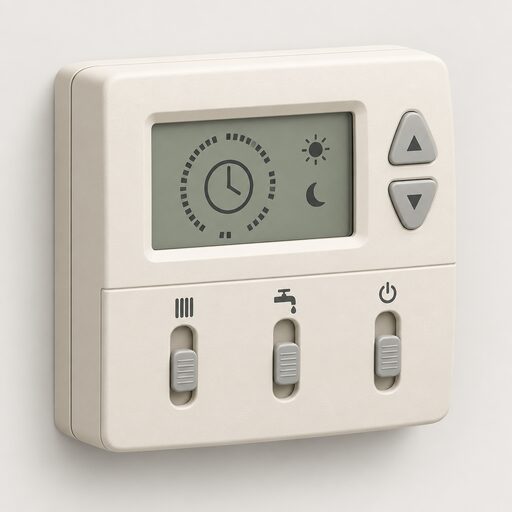 Controls, Thermostats and TRVsWhich heating controls actually cut your bills, and what does each one do?
 Energy Performance CertificatesAn Energy Performance Certificate rates how energy efficient your home is, from A down to G.
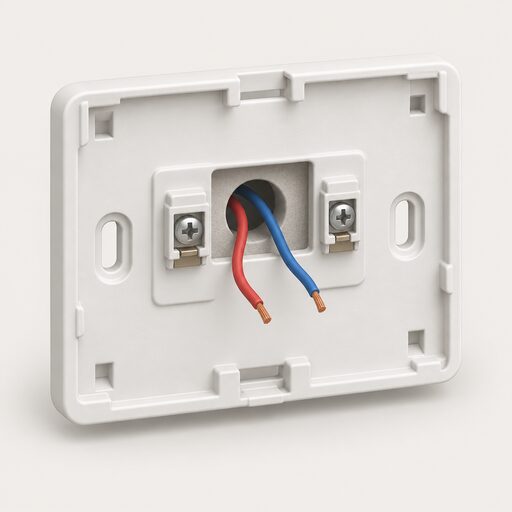 Installing Heating ControlsSwapping a thermostat or programmer looks simple, but which jobs can you safely do yourself and which need a registered installer?
 The Full Heating Controls GuideA room thermostat, a programmer and valves on your radiators are the basics.
 Improve an EPC RatingWhich home improvements actually raise your EPC score, and by how much?