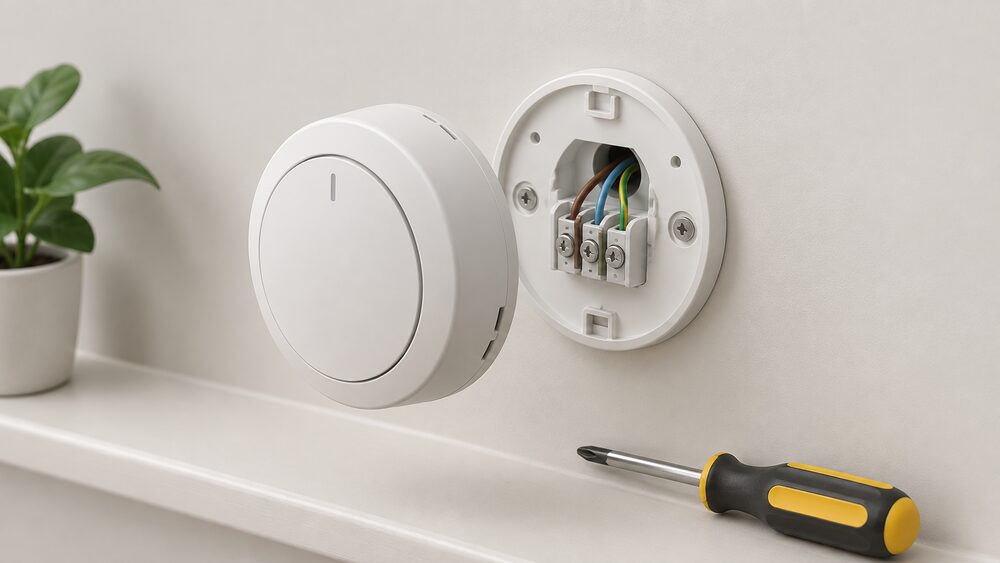
In this guide
Replacing a thermostat or programmer is one of the smaller jobs in a heating system, and one of the most commonly attempted by householders. The work divides cleanly in two. Swapping a low-voltage or battery-powered room thermostat, or pairing a wireless unit with an existing receiver, is within reach of a competent DIYer. Anything that involves opening a mains-voltage backplate, working inside a boiler, or altering the wiring centre is electrical installation work, and government guidance recommends hiring an installer registered with a competent person scheme who can self-certify that the work meets the required standards1.
The choice of hardware sets the difficulty. Which? reports that Google Nest recommends professional installation of the Nest Learning Thermostat but says self-installation of the Smart Thermostat E should be achievable for most, while Hive recommends professional installation of its smart thermostats2. Cost sits in a similar band: most smart thermostats cost between £100 and £200, with add-ons such as installation pushing the total higher3.
What follows covers what a smart thermostat replaces, how to choose between a smart, programmable or basic room thermostat, what the hardware costs, who is qualified to fit it, the electrical safety rules that apply, what the evidence says controls deliver, how to check an installer, and how servicing keeps the system working as intended.
What a smart thermostat does and what it replaces
A smart thermostat is an internet-connected thermostat that gives you digital control over your home's central heating6. It connects to Wi-Fi, which allows it to form part of a more connected home heating system, and most link to your phone so heating can be controlled via smartphone, tablet or laptop, or by telling your smart speaker what you want7. That is the functional definition, and it is worth holding on to, because it separates the thermostat from the wider smart meter programme that is often mentioned in the same breath.
Smart meters are replacing analogue gas and electricity meters as part of the national infrastructure upgrade to improve and modernise Great Britain's energy system8. They are a metering change, not a heating control, and the two are frequently confused. A smart thermostat replaces the room thermostat and, in many installations, the programmer or time switch as well. Where a home has a hot water cylinder, the thermostat may also take over hot water timing, though not every model offers hot water control: Which? notes that the Google Nest Smart Thermostat E has no hot water control4.
The practical replacement is usually a straight swap at the same position. The best place to put a smart thermostat is in a place where the temperature is relatively consistent3, which is the same siting rule that applies to any room thermostat. Most smart thermostats allow you to programme in multiple routines, so that your home is always at your desired temperature9, and some go further: Energy Saving Trust notes that they may interpret inputs such as preferred room temperature, learn from what you do, react to other data like weather forecasts, and some have a learning function that predicts behaviour from how you set and adjust heating and how you occupy the home7.
For a household's energy independence, the thermostat itself changes little. It does not generate anything, and it does not reduce reliance on the gas grid or a supplier. What it changes is the household's grip on when heat is called for, and how much of that control sits in a phone app and a manufacturer's cloud service rather than on a wall. That distinction is covered in more detail in Heating Controls and Energy Independence.
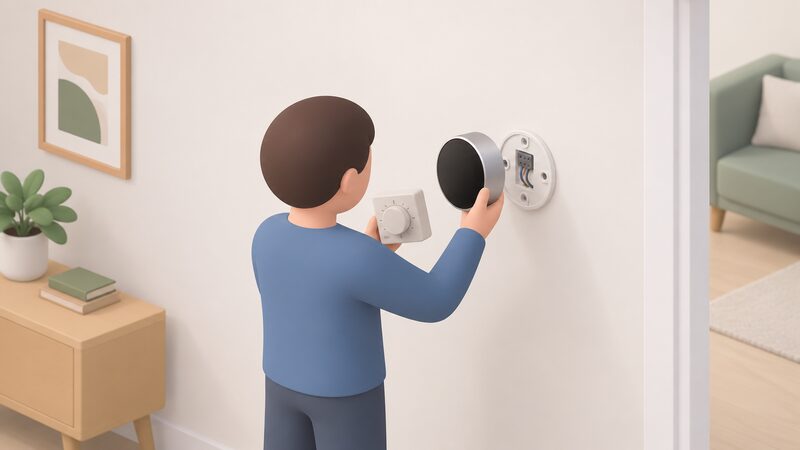
Smart thermostat, programmable thermostat or basic room thermostat: which fits which home
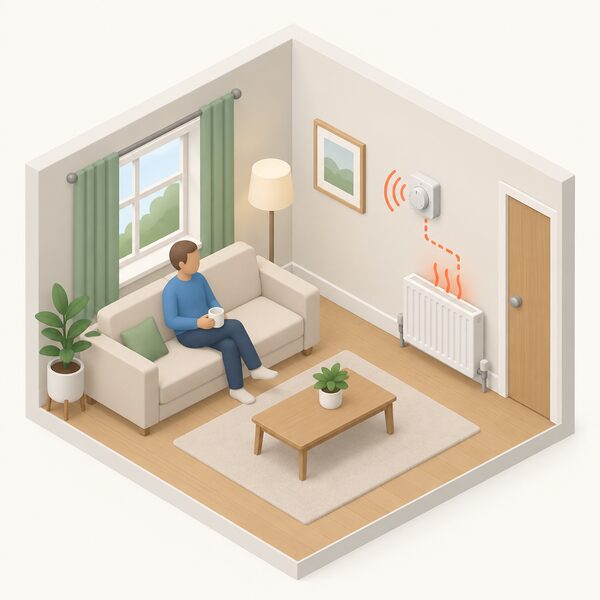
The three types are not a ladder of quality. They suit different households, and the deciding factors are how the home is occupied, whether there is a cylinder, and how much control the occupants actually want.
A basic room thermostat does one job: it measures temperature and switches the heating on or off at a set point. A programmable thermostat adds a schedule, so different temperatures can be set for different times of day. A smart thermostat adds connectivity, remote control and, in some models, learning. Which? tests smart thermostats in a temperature-controlled chamber to check thermostat function and accuracy, ease of use, and privacy and security testing2, and separately measures how accurately they record the temperature and their relay response time4. Those are the qualities that separate one smart model from another, not the marketing.
| Control type | What it adds | Suits |
|---|---|---|
| Basic room thermostat | Temperature sensing and on/off switching | Homes with simple, regular occupancy |
| Programmable thermostat | Time and temperature schedules | Homes with predictable daily routines |
| Smart thermostat | Wi-Fi, app and voice control, routines, some learning | Homes with variable occupancy or a wish for remote control |
Two compatibility points matter before buying. Smart Energy GB advises checking that a thermostat is compatible with your boiler and heating system before buying, usually in the product description or on the thermostat manufacturer's website6. And where a home has a hot water cylinder, hot water control is a separate feature that not every thermostat provides4. A thermostat that controls heating only will leave the cylinder on its existing programmer.
On switching, the thermostat is not a lock-in: it helps to control how much energy you use, but won't be a barrier to switching your actual energy deal3. The dependence that remains is on the maker's app and cloud service, and on the boiler itself. Households weighing the wider picture can compare the options in Smart Thermostats: How They Work and What They Do and Smart thermostat vs traditional programmer.
Cost: from around £105 for a smart room thermostat to £200 for a full smart system
Hardware prices cluster in a narrow band, and installation is the variable that moves the total most. Most smart thermostats cost between £100 and £200, but some will have add-ons such as installation which push the total higher3. That is the headline range, and it holds across the models with published prices.
| Model | Published price | Installation position |
|---|---|---|
| Google Nest Smart Thermostat E | £1994 | Self or professional installation4 |
| Worcester Bosch EasyControl Smart Thermostat | £1704 | Not stated in the published listing |
| Drayton Wiser Kit 1 | £195 to just under £470, plus installation costs if required3 | Installation quoted separately |
| Google Nest Learning Thermostat | From £2193 | Requires professional installation3 |
The spread within a single brand is instructive. The Nest Learning Thermostat starts from £219 and requires professional installation, while the Thermostat E starts from a lower figure and is offered as a self-install option3. The Drayton Wiser range runs from £195 to just under £470 for the Wiser Kit 1, plus installation costs if required3, which reflects that a kit can include radiator valves and additional components rather than a single unit.
Where a price is not published, it is installer-quoted, and no range is given for those. Installation charges vary with the property, the existing wiring and whether the work is a straight swap or a new circuit. A full set of heating controls, comprising a programmer, a room thermostat and thermostatic radiator valves for all radiators, costs around £600 to install10. For a fuller breakdown of hardware and fitting costs, see How Much Do Heating Controls Cost?.
Who should install it: registered electricians and competent heating installers
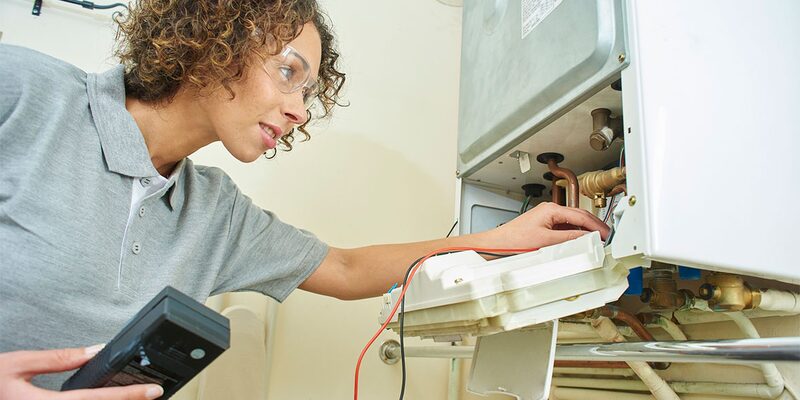
The dividing line is voltage and location. A battery-powered or low-voltage thermostat that sits on a wall and talks wirelessly to a receiver is a householder task. Anything at a mains backplate, inside a boiler casing, or in the wiring centre is electrical installation work, and the guidance is consistent.
Government guidance states that it is recommended to hire an installer who is registered with a competent person scheme (a registered competent person) who can self-certify that the work meets the required standards1. The Planning Portal puts it the same way: it is best to use an installer registered with a competent person scheme (a registered competent person) who can self-certify compliance with the building regulations11. An installer, for example of windows or boilers, who is registered with a scheme can self-certify that their work complies with building standards12.
For heating specifically, the Warm Home Discount (England and Wales) Regulations 2026 require that the boiler or central heating system is installed by, or under the responsibility of, a person who is registered with TrustMark, with a certificate of lodgement issued by the operator of TrustMark13. Approved Document L adds that the installer should install and commission the system to the standards set out in the approved document14. TrustMark is named in government guidance as a competent person register for finding an installer that will assess your circumstances and property to identify suitable measures15.
The Chartered Institute of Plumbing and Heating Engineering makes the competence point for newer technologies: when considering low temperature technologies it is important to engage the services of installers and designers who are competent and confident with the variety of options available16. It also points households to its find a plumber tool for plumbing and heating engineers16. For controls work, the practical test is whether the installer is registered for the specific work being done, not simply whether they are a heating engineer.
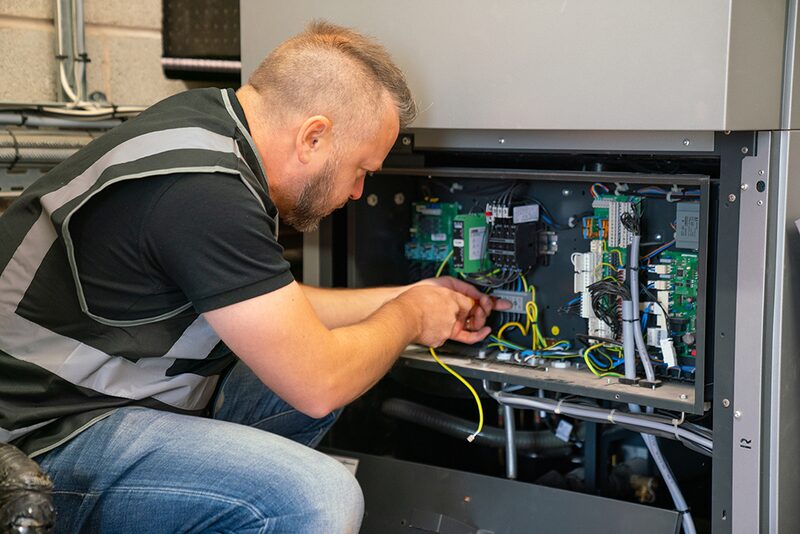
Electrical safety: recalls, extension leads and working smoke alarms
Heating controls sit inside a home's electrical installation, and the safety record of that installation is worth stating plainly. Every year, half of accidental domestic fires in the UK are caused by electricity, and this figure isn't changing17. Those fires are caused by misuse of appliances, poor regulation of electrical safety checks (particularly in the private rented sector) and faulty appliances17. Electrical Safety First has called on the government to introduce mandatory five-yearly electrical checks in rented homes17.
For anyone working around heating and portable heaters during a controls change, the charity's advice is specific. Put your heater on a level surface, well away from anything or anyone that could knock it over. Make sure your heater is at least well away from combustible materials, such as paper, furniture or curtains. Never use it to dry your clothes. Never leave your heater unattended for long periods whilst in use, or while you are asleep. Never power a heater from an extension lead, as they can easily be overloaded and cause fires. Regularly inspect your heater for damage and deterioration, and if it isn't in good condition, don't use it18.
"Never power a heater from an extension lead, they can easily be overloaded and cause fires"
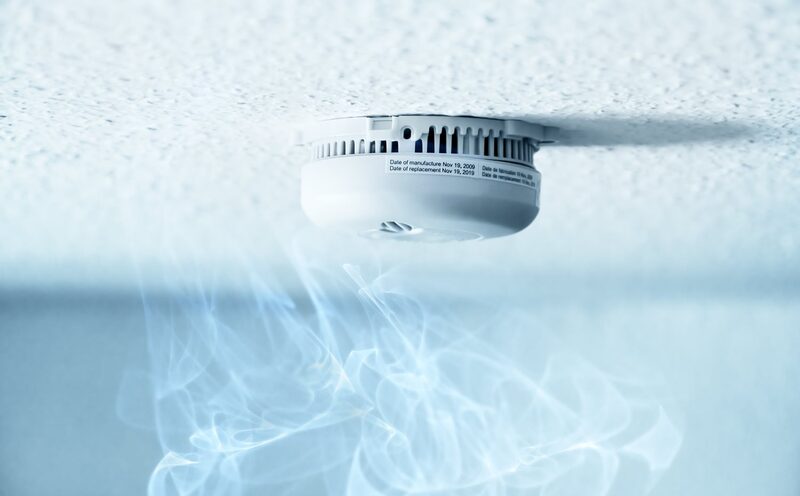
Smoke and heat alarm coverage is part of the same picture. Ensure there is at least one smoke or heat alarm per floor in your property19, and ensure you have a working smoke alarm on every floor in your home and test it regularly, as it could save your life18. In Northern Ireland, smoke and heat alarms must be installed and maintained in accordance with British Standard BS 5839-620.
Recalls are the other safety thread. Tesco is recalling its halogen heaters as a precautionary measure, and customers are given a full refund21. Electrical Safety First maintains product recall advice, and its wider guidance on smart homes states that for more complicated devices or smart systems, a professional installer should be used and checked as properly qualified19. The charity has also warned about plug-in devices claiming to save energy or stabilise electrical current, having purchased four samples of such devices22.
What the evidence says controls actually deliver
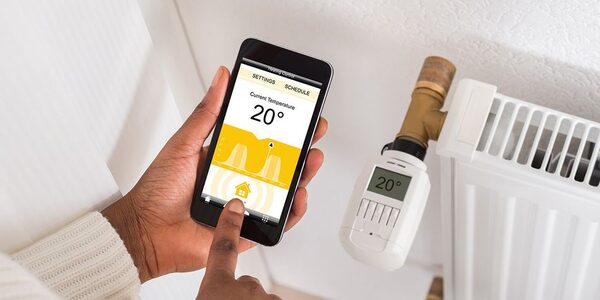
The evidence on controls is strongest on control itself, and weaker on guaranteed bill reductions. Smart Energy GB states that most smart heating controls link to your phone, and heating can be controlled via smartphone, tablet or laptop, or by telling your smart speaker what you want7. Energy Saving Trust describes the same category as able to interpret what you input, such as your preferred room temperature, learn from what you do, react to other data like weather forecasts, and, in some models, predict behaviour from how you set and adjust heating and how you occupy the home7.
The smart meter programme provides the closest thing to a national dataset on connected home devices, and it shows how far the infrastructure has spread. Smart meters are now installed in half of UK properties23. Other figures put penetration higher: over 60% of homes in the UK now have smart meters24, and more than 70% of UK homes now have smart meters installed10. Energy UK recorded over half of UK homes with a smart meter, with around 10,000 installations happening each working day25.
The data those meters produce is the point for households: the data provided by your smart meter puts you in control of your energy usage, meaning you can take energy-saving steps to reduce your CO2 emissions26. Getting a smart meter installed is free for UK energy customers27. For controls, the equivalent claim is about scheduling and setback rather than a fixed percentage saving, and the household's own routine drives the result. The wider question of whether controls pay back is examined in Do Smart Heating Controls Actually Save Money?.
Finding and checking a qualified installer
Checking an installer is a short, specific process, and the sources agree on its steps.
- Identify the work: a straight thermostat swap, a new control circuit, or work at the boiler or wiring centre.
- Check the installer is a member of a competent person scheme covering that work. You are advised to check your installer is a member of a scheme covering the work they will be undertaking28.
- Confirm the scheme allows self-certification of building regulations compliance for that work11.
- Ask for the lodgement certificate where the scheme issues one, as the Warm Home Discount regulations require for boiler and central heating installation under TrustMark13.
- For heat pumps and low temperature systems, confirm the installer is competent and confident with the technology16.
Competent person schemes are not self-certifying by default. Work will be assessed to check the installer meets the level of competence required before approval29. That assessment is what sits behind the certificate a household receives.
The same qualification logic applies to the metering side of the home, which is a useful benchmark for what regulated installation visits look like. Smart meter installers have to pass a formal qualification to meet specific national standards30, and all installers have to pass a formal qualification and have to meet specific national standards31. Installers also provide energy efficiency advice on those visits30. Heating control installers are not covered by that metering regime, which is why the competent person scheme check matters more, not less.
Where an installation goes wrong, the routes are the installer, then the scheme operator that certified the work. Ofgem's rules for the smart meter programme give consumers £40 in compensation if they face issues throughout the process of installing a smart meter32, which illustrates the standard expected on a regulated installation visit. For heating controls, the scheme operator and the installer's own complaints process are the routes, and the certificate of lodgement is the document that identifies who is responsible.

Ongoing servicing and getting the most from your controls
Controls only deliver what the schedule and the settings ask of them, and servicing is where both get checked. Energy Saving Trust advises getting an engineer to service a heat pump according to the manufacturer's advice, usually once a year5. The same annual rhythm is the sensible baseline for a boiler and its controls, and it is the point at which siting, schedules and any fault codes are reviewed.
Seasonal adjustment is part of the routine. The Association of Plumbing and Heating Contractors advises householders to update thermostat settings for spring and to consider upgrading to a smart or programmable thermostat for more efficient energy use and greater control over the home33. That is a maintenance prompt rather than a performance guarantee, and it sits alongside the practical point that replacing an old thermostat is easier before the cold arrives: the best piece of advice is to look into replacing your old thermostat before it gets too cold9.
For households on the Energy Company Obligation, smart thermostats are a recognised measure. Ofgem's ECO4 measures table lists Smart Thermostat as Smarttherm34, and detailed guidance was added on smart thermostats in the scheme's summary updates35. Eligibility for a notified smart thermostat under the scheme is specific: a product can only be notified as a smart thermostat where it is listed in the SAP 10 PCDB as a smart thermostat, for use with the heat source of the home where it is installed36. That is a scheme rule, not a general compatibility statement, and it applies where the pre-retrofit RdSAP assessment uses RdSAP 1036.
The independence picture at the end of the job is mixed, and worth stating plainly. A well-set schedule, a correctly sited thermostat and working TRVs reduce how much the household leans on the boiler, and the controls themselves are cheap relative to the heat they govern. What remains is dependence on the gas grid or the electricity supply, on the boiler manufacturer for spares and support, and, for smart models, on the maker's app and cloud service for remote control and learning features. A household that wants the schedule to survive a broadband outage should keep the local schedule and manual override in use, and treat the app as an addition rather than the only way in. The related questions of data, security and long-term product support are covered in Smart Heating Controls: Security, Data and Product Support.
Sources36 cited
- Do I need building regulations approval for alterations to or installation of electrics, Planning Portal, 2026
- How to buy the best smart thermostat, Which?, 2026-09
- What are smart thermostats, Uswitch, 2026-02-05
- How to buy the best smart thermostat: Hive brand filter, Which?, 2026-09-17
- Heat pump questions answered, Energy Saving Trust, 2026-05-27
- What is a smart thermostat, Smart Energy GB, 2026-08-19
- Smart homes and lower carbon footprint, Energy Saving Trust, 2026-01-21
- Smart meters and decarbonisation, Smart DCC, 2026
- How a smart thermostat can save you money this winter, ivie, 2025-11-18
- How to choose the best energy company, Which?, 2026-01-19
- Building regulations general information: electrics, Planning Portal, 2026
- Use a competent person scheme, GOV.UK, 2026-09-17
- Warm Home Discount (England and Wales) Regulations 2026, legislation.gov.uk, 2026-03-27
- Approved Document L, Volume 1: Dwellings, HM Government, 2026
- Energy Company Obligation (ECO) scheme, Leeds City Council, 2026-09-20
- Future of home heating, CIPHE, 2026-09-17
- 10 ways to avoid electrical fires in your home, Electrical Safety First, 2026-09-19
- Potential risk to households this winter as millions worried about energy bills will use electrical heaters, Electrical Safety First, 2026-09-19
- Smart homes safety advice, Electrical Safety First, 2026-09-19
- Smoke and heat alarm regulations (Northern Ireland) 2024, legislation.gov.uk, 2024-05-30
- Tesco electric heater recall, Electrical Safety First, 2026-09-17
- A costly saving: highly dangerous energy saving devices put consumers at risk of fire, Electrical Safety First, 2026-09-19
- Smart meters and the energy system, UK Parliament POST, 2026-06-07
- Getting a smart meter installed, Smart Energy GB, 2026-03-16
- Smart meter statistics, Uswitch, 2024
- Does a smart meter save money, Smart DCC, 2024
- Energy UK explains smart meters, Energy UK, 2024-11-14
- Solar photovoltaics and planning in conservation areas, West Suffolk Council, 2026-09-17
- Building regulations competent person schemes, GOV.UK, 2026-09-17
- Smart meters: your rights and expectations, GOV.UK, 2025-08-08
- The installation process, Smart Energy GB, 2026-04-01
- Tough new rules force suppliers to fix faulty smart meters, GOV.UK, 2026-03-10
- Spring into home care, APHC, 2025-05-07
- ECO4 Measures Table v4.0, Ofgem, 2025-07-29
- ECO4 summary updates document, Ofgem, 2026-09-17
- Great British Insulation Scheme scoring methodology, Ofgem, 2025-08-06
 The Full Heating Controls GuideA room thermostat, a programmer and valves on your radiators are the basics.
 Controls, Thermostats and TRVsWhich heating controls actually cut your bills, and what does each one do?
 Smart Thermostats ExplainedWhat does a smart thermostat actually do, and is it worth it?
 Smart Thermostat SubscriptionsDo you have to pay a monthly fee to use your smart thermostat, and what do you actually get for it?
 Controls in Rented HomesCan you change the heating controls in a rented home, and who pays if they break?
 Smart Heating Security and DataHow safe is your smart thermostat from hackers, and who sees the data it collects about your heating?