

In this guide
TrustMark is the only UK Government Endorsed Quality Scheme for work done in and around homes1. It covers work a consumer chooses to have carried out in their home, and it is the only Government endorsed scheme for domestic trades2. It does not itself install anything, vet every firm in person or hold the guarantees: it licenses scheme providers, which are certification bodies, consumer codes and guarantee providers, and those providers vet and monitor the businesses that carry the TrustMark logo.
TrustMark operates under licence from the Department for Business and Trade and is overseen by an independent board. It is a not-for-profit social enterprise, funded by a small fee from its scheme providers for each registered firm that joins3. As reported in 2023, there were over 15,000 registered businesses and 35 licensed scheme providers, audited annually4. For households, the practical significance is narrower than the badge suggests: registration is a prerequisite of all government-funded schemes, so any firm fitting insulation, a heat pump or other measures under ECO, the Great British Insulation Scheme or a council grant has to hold it5.
Registration is trade specific, time specific and enforced through a chain of other bodies. A firm registered for one trade is not vetted for another, a complaint about work done before or after registration falls outside the process, and the dispute route runs through the scheme provider first, not through TrustMark.
Where the scheme came from and who runs it
TrustMark was set up over 10 years ago, and following the Each Home Counts review the scheme was chosen as the route to provide homeowners with reassurance and protection from rogue traders8. That review is the reason the scheme sits at the centre of retrofit policy rather than beside it: the standards produced in its wake, PAS 2035 and PAS 2030, were integrated into the TrustMark quality assurance scheme, with Green Deal approved installers transitioning across9.
The scheme is operated by TrustMark (2005) Limited, a company registered in England and Wales with company number 05480144, and that definition is carried in the statutory instruments that govern the energy efficiency schemes it underpins10. The same definition appears in 2026 legislation, so the operator has not changed11.
Governance rests on three documents that member companies must follow: the Framework Operating Requirements, a Customer Charter and a Code of Conduct2. The Framework Operating Requirements are the instrument scheme providers are audited against every year, and they include dispute management3. TrustMark retains the right to suspend or remove registered businesses from the scheme3.
A household should read this structure honestly. TrustMark is a licensing and oversight layer. The vetting, the monitoring visits and the first line of complaint handling all sit with the scheme provider, and the guarantee sits with a guarantee provider or an insurer. The badge on a van is evidence that a chain of obligations exists behind the firm, not that TrustMark has checked that particular job. Related routes are covered on competent person schemes and in the pillar guide to home energy installers and retailers.
The figures: 15,000 businesses, 35 providers, annual audits

The scale reported in 2023 was over 15,000 registered businesses and 35 licensed scheme providers, the providers being made up of certification bodies, consumer codes and guarantee providers, with TrustMark conducting annual audits4. TrustMark confirms it audits scheme providers every year for continued compliance with the Framework Operating Requirements3.
Volume of public interest has been substantial for a long time. In 2016, more than 8.3 million search results were provided to homeowners who used the TrustMark website and telephone helpline8.
The other set of numbers worth watching is lodgement volume, because that is what turns registration into a record a household can rely on later. Under the Warm Homes: Local Grant, around 14,700 measures were lodged in the TrustMark data warehouse up to the end of July 2026, covering around 6,700 households12.
| Figure | Value | Period |
|---|---|---|
| Registered businesses | over 15,0004 | reported 2023 |
| Licensed scheme providers | 354 | reported 2023 |
| Scheme provider audits | annual3 | current |
| Warm Homes: Local Grant measures lodged | around 14,70012 | to end of July 2026 |
| Households covered by those measures | around 6,70012 | to end of July 2026 |
Two caveats matter. The business count is a 2023 independent figure and the register changes as firms join, are suspended or leave. And lodgement counts measures, not quality: the Public Accounts Committee found that neither TrustMark nor the Department for Energy Security and Net Zero had been able to provide minutes of meetings that took place between 2022 and 202413, which bears on how much confidence the record itself carries.
How a business becomes registered: PAS 2030, MCS and the scheme providers
Registration is not granted on application alone. Installers who want to be TrustMark approved must be MCS certified if they install low carbon heat and renewables, and must hold PAS certification for energy efficiency measures4. PAS 2030 is the certification required by installers to be able to carry out energy efficiency measures on domestic properties7, and businesses must achieve PAS 2030 certification to be eligible for TrustMark registration5.
PAS 2030:2023 was published on 28 September 2023, with an 18-month transition period ending on 30 March 2025, and became mandatory from 31 March 2025, replacing the 2019 edition5. It covers three primary types of installation: building fabric measures, building services mechanical and building services electrical5. It complements PAS 2035 by focusing on the delivery phase of retrofits5. Certification involves assessment by a certification body, detailed documentation of installation processes from pre-installation inspections to handovers, and proof that operatives are competent5. In practice that means installers holding National Vocational Qualifications or equivalent, with thorough on-the-job training14.

Scheme providers reach businesses by different routes. OFTEC operates a TrustMark registration scheme in accordance with the Framework Operating Requirements, available as an extension to its competent person scheme, with a desktop audit of the business before acceptance; that scheme sits outside OFTEC's UKAS ISO 17065 accreditation but is subject to periodic compliance audits from TrustMark15. Scopes are trade by trade, covering electricians, heating engineers, air source heat pumps, ground source heat pumps and solar thermal15. The Renewable Energy Consumer Code was approved by TrustMark as a scheme operator for businesses in renewables and related home improvement and energy efficiency sectors in March 20178. See also MCS certified installers and the Renewable Energy Consumer Code.
What the vetting covers, and what it does not
TrustMark states that all registered businesses are vetted and monitored by its scheme providers to ensure they meet high standards of technical competence, customer service and trading practices16. The same three headings appear in scheme provider descriptions of what registration assures1. Trading records and financial positions are checked by scheme providers when a business is first registered, and the business is then subject to monitoring and audit16. Members face initial and ongoing assessment and surveillance visits to check they continue to meet all requirements2.
Monitoring is not only paper. For works lodged in the data warehouse, TrustMark carries out both desktop monitoring and risk-based inspections on work done by registered businesses16. The scheme also offers a national Trading Standards Approved option of membership as an additional level of customer confidence, delivered through its primary authority partner, Buckinghamshire and Surrey Trading Standards16. In Scotland, any supplier approved under the TrustMark scheme or MCS is subject to a thorough screening process including checks against Trading Standards systems, with monitoring and possible sanctions including suspension or removal11.
What registration brings the firm is worth knowing, because it explains what the badge signals: permission to use the TrustMark logo across marketing materials, inclusion in the Find a Trader directory, and access to a central hub where businesses can source apprentices1. Registered traders also get a free to use business portal to communicate directly with customers, and have their work regularly inspected in line with government quality standards17.
The limits are equally clear. Vetting is of the business, not of a specific job. Inspection is risk-based, not universal. And a firm's registration is tied to trade scope, so a business registered for insulation has not been vetted for electrical work.
Where registration is compulsory
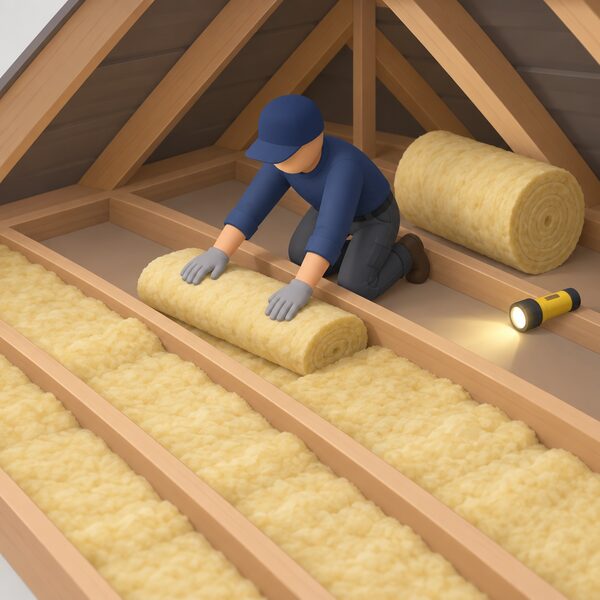
The strongest driver is public money. A key driver for TrustMark registration is the GB-wide Energy Company Obligation, which requires suppliers to be TrustMark approved in order to access the funding18. Businesses including installers, retrofit assessors and retrofit coordinators must be registered with TrustMark to access ECO and other taxpayer funded, UK government led energy efficiency schemes, and work and financial protection must be lodged in the TrustMark Data Warehouse to allow oversight of retrofit activities9.
Specific scheme rules repeat the requirement:
- Great British Insulation Scheme: TrustMark is responsible for ensuring installers comply with PAS and MCS standards and that appropriate guarantees are in place19.
- ECO4 innovation measures: all innovation measures must be lodged with TrustMark, or an equivalent, and delivered by TrustMark, or equivalent, registered businesses20.
- Green Homes Wales loans: the borrower must ensure the installer contracted to supply and install the eligible measures is registered with TrustMark and remains registered until the installation work has been completed21.
- Historic grant schemes: to qualify for government incentive schemes such as the Green Homes Grant, installation contractors had to be TrustMark registered22.
- Council schemes: local authorities point households to TrustMark as a competent person register for finding an installer who will assess the property and identify suitable measures23, and describe it as a government endorsed quality scheme in their own grant and loan guidance24.
Registration also sits alongside the quality standards themselves: PAS 2030 certification is mandatory for businesses delivering energy efficiency measures under schemes like ECO4, and without it a business is not eligible to access those opportunities5. All publicly funded work in this sector, and work under ECO, requires TrustMark registration4. More detail sits on installer requirements for grants.
Checking a business before you sign
Three checks are practical. First, use the TrustMark online directory, which registration entitles a firm to appear in1. Second, confirm the tradesperson is registered with TrustMark for the specific trade needed, which TrustMark itself sets out as a step in hiring25. Third, treat price as a separate question: TrustMark states there should be no premium for using a registered business, and suggests obtaining a minimum of three quotes for any work planned3.
TrustMark's helpline is 0333 555 1234, open Monday to Friday, 9am to 5pm. Calls can cost up to 16p a minute from a landline, or between 3p and 65p a minute from a mobile7.
There is a reason to be careful at the doorstep as well as at the directory. The Renewable Energy Consumer Code and the HIES scheme, both operating in this space, are separate consumer codes with their own complaint routes, and a firm may hold one of those as its scheme provider. Further checks are set out in checking an installer before you sign and installer reviews and directories.
How the four nations differ

TrustMark is operated by a company registered in England and Wales10, and the scheme covers domestic work only11. The funding routes that make registration compulsory, however, are devolved or GB-limited, so the practical position differs.
| Nation | Position |
|---|---|
| England | Registration required for ECO and UK government led schemes9; Warm Homes: Local Grant measures lodged in the TrustMark data warehouse, around 14,700 covering around 6,700 households to end of July 202612 |
| Scotland | The Scottish Government stated it would work with TrustMark to develop a quality assurance scheme for Scotland enabling domestic consumers, including private sector landlords, to access approved suppliers in accordance with PAS 2035/30 standards11; approved suppliers screened against Trading Standards systems11 |
| Wales | Green Homes Wales loan terms require the contracted installer to be TrustMark registered and to stay registered until the work is complete21; TrustMark nominated by the Department for Energy Security and Net Zero to directly support customers affected by the closure of a scheme in 202627 |
| Northern Ireland | ECO, the main driver of TrustMark registration, is described as GB-wide18, so the mandatory route does not bite in the same way; the scheme remains domestic only11 |
Scotland is the clearest example of the limits of the framework. Government guidance there notes that, unlike PAS 2035/30, there is currently no approval mechanism for certain standards, and that TrustMark covers domestic work only11. The Scottish Government also said it would promote PAS 2035/30 and MCS standards to ensure installations are good quality and fit for purpose11. Nation-specific routes are covered on installers in Scotland, installers in Wales and installers in Northern Ireland.
Lodgement, certificates and guarantees
Lodgement is the mechanism that connects a job to the protection behind it. A certificate of lodgement is defined in legislation as a document entitled "TrustMark Certificate of Lodgement" which sets out the address at which a measure has been installed or repaired and the type of measure10. TrustMark issues that certificate once the project retrofit coordinator has signed off the project and submits a lodgement28.
The guarantee position for funded work is set out in parliamentary briefing: a minimum two-year warranty for work, and a minimum 25-year guarantee for certain measures installed under the ECO6. Registration also opens the door to further cover. One Scottish insulation firm reported that certification allows it to offer insurance backed guarantees to clients14. Separately, TrustMark has teamed up with Transpact, an escrow service, to provide payment protection for consumers and traders, and lists cashback offers and financial and insurance partners alongside schemes and grants for making a home more energy efficient29.
"For works completed and lodged under government-funded or capital schemes, the Registered Business should have provided..."
Where a householder cannot find guarantee paperwork for work lodged under a government funded or capital scheme, TrustMark sets out an order: contact the registered business, then its scheme provider, then TrustMark by email for a copy of the guarantee information3. Guarantee providers may impose their own conditions: TrustMark has advised that guarantee providers may currently require park home insulation to be installed as part of a system in order to provide suitable guarantees.
Keeping the certificate of lodgement and the unique measure reference matters more than keeping the installer's brochure. Those are the identifiers that survive a firm going out of business.
Complaints: a three stage route with a narrow remit

TrustMark's own statement of its role is unambiguous:
"Our role is not to investigate specific consumer complaints but to ensure that the Scheme Provider has handled the complaint appropriately, correctly and in accordance with their dispute procedures."
The same wording appears in the scheme's roles and responsibilities page, which adds that all complaints, whether or not they fall within TrustMark's remit, are considered as part of ongoing monitoring of scheme providers and registered businesses, with appropriate action taken if requirements are not met31. TrustMark is a member of the Dispute Resolution Ombudsman16.
Two situations fall outside the process, as set out in guidance updated on 7 April 2026:
- the business was not registered with TrustMark at the time it did the work30;
- the business no longer holds an active registration with TrustMark, or has ceased to trade30.
Those two exclusions are the reason the badge is checked before signing rather than after a dispute. Citizens Advice notes that a trader making energy efficiency home improvements might be registered with MCS or TrustMark, and treats that registration as one of the routes for resolving an ongoing consumer problem32. Contact points for disputes include an email address, disputes@trustmark.org.uk, and an online support form27. The escalation sequence is set out in more detail in complaining about an installer and how to complain about a TrustMark registered business.
What the solid wall insulation failures showed
In January 2025 the government announced action after routine checks carried out by TrustMark, described as the independent body which oversees tradespeople working in homes, uncovered substandard solid wall insulation33. The remedy offered to affected households is a free audit, part of a government-backed programme to ensure energy efficiency improvements installed in homes meet required standards34. The audit involves inspecting the measures installed, verifying that the installation meets required technical and quality standards, taking photographs, conducting property measurements to support verification checks, and explaining the outcome and any next steps34.
For wall insulation installed inside or outside a home, a qualified professional looks at the insulation to see if it was installed correctly, and if problems are found TrustMark should get an installer to fix them at no cost to the householder7.
Oversight since has been questioned. The Public Accounts Committee recorded that, as of November 2025, 22 installers had been fully reinstated after meeting requirements on TrustMark's "robust six-point plan", including full remediation of the problems identified13. The same report noted that neither TrustMark nor the department could provide minutes of meetings that took place between 2022 and 202413. That record matters because Citizens Advice had, in 2019, supported the proposal that firms delivering ECO should belong to the scheme while asking that government set out plans for monitoring and feedback to demonstrate the scheme is operating effectively and providing consumers with adequate protection. TrustMark states it has full oversight of the monitoring process for ECO measures, excluding district heating connections and novel demand-led measures. Further context sits on poor quality installations.
What registration means for household energy independence

TrustMark describes its purpose as helping consumers make energy efficiency improvements to their homes and enhancing the protection they can depend on when making those decisions25. Stated plainly: registration does not generate a kilowatt-hour. What it does is make the measures that reduce a home's draw on the grid and on gas, insulation, heat pumps, solar thermal, more likely to perform as specified and more likely to be put right if they do not.
The dependencies that remain are real and should be weighed. Registration is a condition of public funding rather than a benefit granted to the household, so a home relying on grant support depends on the continuation of ECO or a successor scheme, on a scheme provider remaining licensed, and on the installer remaining registered until the work is finished21. The protection is administered through a chain: TrustMark licences the scheme provider, the scheme provider vets and handles complaints, and a separate guarantee provider or insurer stands behind the 25-year guarantee on certain ECO measures6. If the installer ceases to trade, TrustMark's own complaints route closes30, and the household falls back on the lodged guarantee, insurance backed cover or its statutory rights.
For a home pursuing independence, the sequence is the point. Check the registration is live and covers the specific trade before signing25; take three quotes3; insist on the certificate of lodgement and the unique measure reference at handover10; and keep them, because those documents outlast the business that issued them. See also installers and energy independence and when your installer goes bust.
Sources34 cited
- About TrustMark, HIES Scheme, 2026-07-15
- TrustMark and the guarantee framework, CIGA, 2026-09-20
- TrustMark homeowner FAQs, TrustMark, 2026-09-20
- Which? response to the CMA call for information on consumer protection in green heating and insulation, Which?, 2023
- PAS 2030 guide, Retrofit Academy, 2026-04-06
- Energy efficiency schemes briefing CBP-9585, House of Commons Library, 2026-05-13
- Get help with faulty solid wall insulation, Citizens Advice, 2026-09-17
- RECC gains official TrustMark approval, RECC, 2017-03-08
- Heat in Buildings quality assurance statement, page 3, Scottish Government, 2022-06-07
- The Energy Company Obligation Order 2022, legislation.gov.uk, 2022-07-06
- Heat in Buildings quality assurance statement, page 4, Scottish Government, 2022-06-07
- Warm Homes: Local Grant statistics, August 2026, GOV.UK, 2026
- Booking your free TrustMark audit, TrustMark, 2026-06-04
- Insulation installers in Scotland: TrustMark and PAS 2030 accreditation, Energy Saving Trust, 2026-09-17
- TrustMark registration for technicians, OFTEC, 2026-09-17
- Consumer protection, TrustMark, 2026-09-20
- What is TrustMark UK registered?, CPA, 2022-09-05
- Heat in Buildings quality assurance policy statement, Scottish Government, 2022-05
- Great British Insulation Scheme delivery guidance, Ofgem, 2023-08-31
- ECO4 new measures and products guidance, summary of updates, Ofgem, 2025-08-07
- Green Homes Wales loan standard terms and conditions, Development Bank of Wales, 2026-09-17
- Register energy devices in homes or small businesses, GOV.UK, 2021-03-31
- Energy Company Obligation scheme, home energy efficiency, Leeds City Council, 2026-09-20
- Get a grant or loan to improve your home energy efficiency, Bristol City Council, 2026
- TrustMark for homeowners, TrustMark, 2026-09-20
- Get help with faulty solid wall insulation, Citizens Advice, 2026-09-20
- Written statement: support for householders impacted by scheme closure, Welsh Government, 2026-03-13
- Summary of guidance updates: mid-scheme changes to ECO4 and GBIS, Ofgem, 2025-04-07
- Funding, schemes and grants, TrustMark, 2026-09-20
- Complaints process, TrustMark, 2026-04-07
- TrustMark roles and responsibilities, TrustMark, 2026-09-20
- Action taken to protect households with poor quality insulation, GOV.UK, 2025-01-23
- Public Accounts Committee report, UK Parliament, 2026-01-23
- ECO3 consumer protection consultation response, Citizens Advice, 2019-08-06
 Competent Person SchemesIf a tradesperson says they can sign off their own work, how do you know they are genuinely registered?
 Checking an InstallerBefore you sign anything, how do you know your installer is genuine?
 Installer ReviewsCheck whether an installer is signed up to a scheme like MCS or TrustMark before you trust their star rating.
 Using an Installer in EnglandHow do you check an installer is registered to sign off their own work, and what happens if they are not?
 Certification and ApprovalsWhich certificates actually matter when you are choosing solar panels or a heat pump?
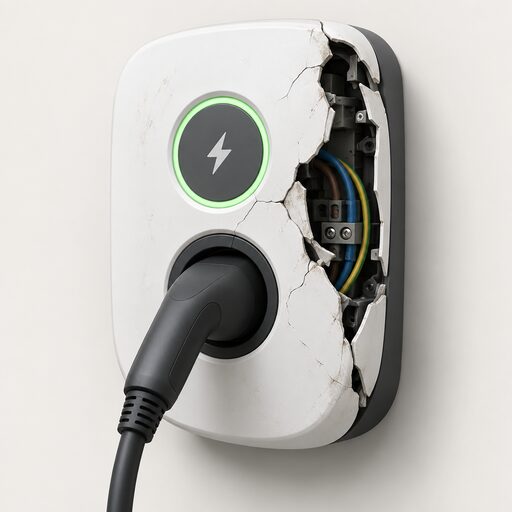 EV Charger Safety and StandardsHow do you know a home charge point is safe to use?