

In this guide
MCS product certification is the mark a manufacturer earns for a specific model, not for its brand. It shows that a product, or an installation including one or more MCS certificated product, meets requirements defined in the MCS standards1. To achieve it, a product must meet certain criteria for quality, and the assessment rests on evidence that the product complies with the relevant MCS Product Standard, a review of technical documentation, and an assessment of the manufacturer's factory production control2.
The scheme is large. MCS certification covers installations of small-scale renewables, from solar panels to heat pumps to small wind turbines, with over 2 million MCS certified installations across the UK3. MCS currently recognises three European product certification schemes as equivalent, so a product certified under one of those can be listed in the Product Directory without a separate MCS assessment4.
For a household, the practical point is that certification is the gate to grant funding and to a route of complaint. MCS certification is a requirement for accessing many UK government incentives and ensures access to robust protections5. It is also a route to many consumer grants and incentives5. What it does not do is guarantee that a particular installation performs as its design predicted, and that limit is set out in official guidance rather than by critics6.
What MCS product certification is and what it covers
MCS is an independent certification scheme for microgeneration installation companies and products9. Its product side covers microgeneration products used to produce electricity and/or heat from renewable sources1. The technologies open to certification are solar PV, solar mounting, small wind turbines, heat pumps, biomass, solar heating and micro CHP7. Additional technologies include battery storage, biomass, micro CHP, solar heating and small wind turbines8.
The scheme's own description of its role is broad: setting and maintaining technical standards for installations and products, certifying installers and products against those standards, issuing MCS certificates for completed eligible installations, and assisting certification bodies to review and address cases and consumer issues relating to installers or products10. That last function matters to a household because it gives a route beyond the installer.
MCS product certification is described as a mark of quality7, and it ensures compliance with UK regulations7. The MCS product standards, developed by technical working groups, outline the performance test methods and the criteria that a certified product must meet2. Certification is therefore a statement about a defined standard and a tested method, not a general endorsement of a company.
The scope has boundaries that a household should know before assuming a product is covered. MCS does not cover heat pumps installed with a thermal output larger than 45kW, nor the majority of installations in new-build properties11. A large rural heat pump or a new-build estate installation may therefore sit outside the scheme entirely, and the consumer protections that come with it.
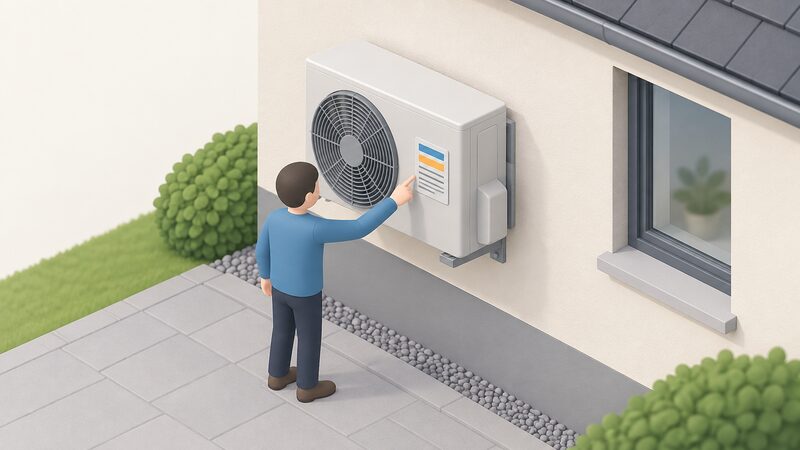
The size limits: 50kW for electricity, 45kW for heat, 70kW for multiple heating units

The capacity limits are the clearest dividing line in the scheme, and they are consistent across official and independent documents. MCS product certification covers 50kW for electrical technologies and 45kW for heating, rising to 70kW if multiple heating units are in the same installation7. Kiwa states the same in output terms: electricity generating products with outputs of up to 50kW, and heat generating products with outputs of up to 45kW1. MCS's own scope statement gives up to 50kW for electrical technologies such as solar PV and up to 45kW for heat technologies such as heat pumps, with up to 70kW for multiple products installed in a single system8.
The limits are not administrative trivia. They define which installations appear in official statistics. The heat pumps counted in the quarterly deployment statistics are MCS certified and have a capacity of less than or equal to 45 kW12. The same criterion appears in earlier editions of the same series11. The Domestic RHI guidance states that MCS can certify products up to 45 kilowatts of capacity, which may be combined to meet larger heat demands but cannot exceed 70 kilowatts in total13.
| Technology | MCS capacity limit |
|---|---|
| Electrical technologies, such as solar PV | up to 50kW7 |
| Heat generating products, such as heat pumps | up to 45kW1 |
| Multiple products in a single system | up to 70kW8 |
For a domestic household, these ceilings are rarely reached. A typical home heat pump and a typical rooftop solar array sit well inside them. The limits bite on larger properties, on small commercial buildings, and on installations that combine several units to meet a bigger heat demand. Where a system exceeds them, the certification route changes and the grant routes that depend on MCS certification may not be available.
Which technologies can be certified
The certified technology list is wider than many households expect. MCS certifies, quality assures and provides consumer protection for microgeneration installations and installers, covering small-scale renewable electricity technologies such as solar photovoltaic panels, biomass, wind, heat pumps and heat products14. The Scottish Government's quality assurance statement lists heat pumps, biomass, solar photovoltaics and wind turbines15. MCS certification is described as the UK's quality mark for renewable energy technologies like solar panels and heat pumps5.
The list of technologies a manufacturer can certify is set out directly: solar PV, solar mounting, small wind turbines, heat pumps, biomass, solar heating and micro CHP7. Battery storage appears as an additional technology rather than in the core list8, which reflects its different treatment under the scheme.
Air-to-air heat pumps are moving into the scheme. MCS reported on 8 September 2026 that implementation of air-to-air heat pumps into MCS had entered its next phase7. Plug-in solar panels also became available in the UK, and MCS responded to that development on 14 September 20262. Both are areas where the certification landscape is still settling, and a household buying into either should check the current listing rather than assume coverage.
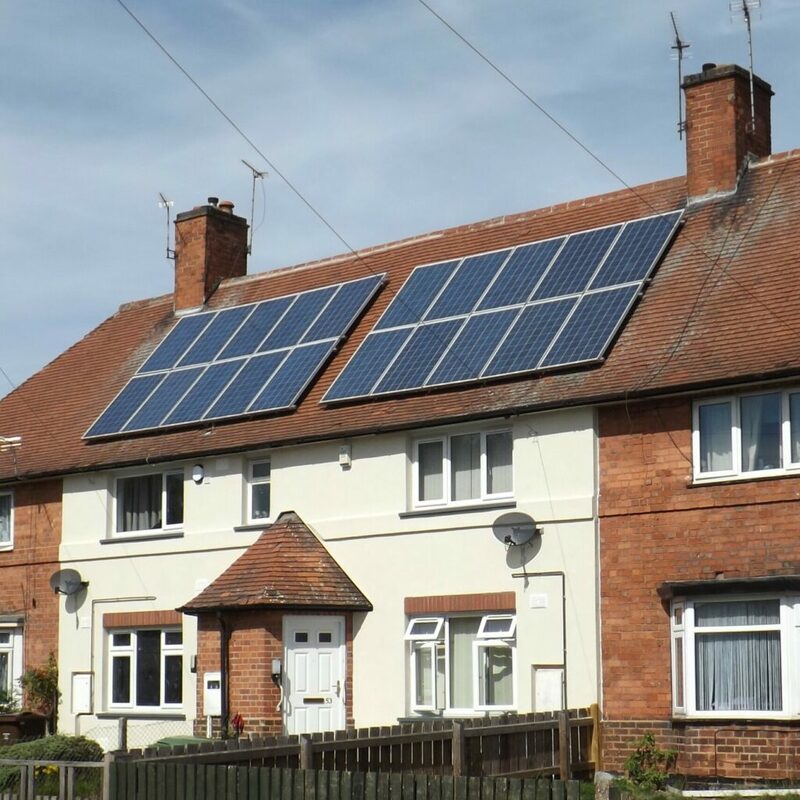
What the assessment involves: product standards, technical documentation and factory production control
Certification is an assessment of evidence, not a single test. It comprises an assessment of evidence that demonstrates the product complies with the requirements of the relevant MCS Product Standard, a review of technical documentation relating to the product, and an assessment of the evidence that demonstrates the manufacturer's factory production control procedures comply with the relevant Standard2.
The product audit itself consists of a review of technical data files, a review of end of line tests in line with the quality plan, and a review of product testing evidence7. Where corrective action is needed, it must be completed within 45 days of the factory audit7.
Certification is not a one-off. Maintaining certification for a product is based on periodic audits of the manufacturer's factory production control, and further product testing where required2. Listing in the MCS Product Directory is subject to ongoing compliance with MCS standards, as well as satisfactory factory production control audits and product audits where necessary7. A product that stops passing those audits can lose its listing.
This structure is what separates MCS product certification from a self-declared specification. The manufacturer does not simply state a coefficient of performance or an output; the evidence behind the claim is reviewed, and the production line that makes the unit is audited. For a household, that means the figure on a datasheet has been checked against a defined test method, and the factory that produced the unit has been inspected at least periodically.
Why certification matters for households: incentives, consumer protection and the Product Directory

The grant link is direct. MCS certification is a requirement for accessing many UK government incentives and ensures access to robust protections5. For the Boiler Upgrade Scheme, installers must be MCS certified and meet the MCS standards9, and MCS certification is required for installations to qualify for the funding7. Installers must be MCS certified to participate in the BUS scheme16. Ofgem's installer guidance repeats the requirement: installers must be MCS certified and be certified to install heat pumps and/or biomass boilers17.
The consumer protection side runs through a separate requirement. A requirement of companies wanting to gain MCS certification is that they are members of a CTSI Approved Consumer Code of Practice scheme in the first instance18. MCS installation companies working with domestic customers must also be a member of a Consumer Code approved by the Trading Standards Institute10. That membership is what gives a household a dispute route with an ombudsman-style process behind it.
The Product Directory is the checking tool. Products certified through schemes recognised as MCS equivalent are listed in the Product Directory4. A household can look up a specific model rather than rely on a badge on a brochure.
Where a problem arises, MCS is the contact for issues with the installation process, the installer, or the MCS certificate or product10. MCS can be reached through its website or by calling 0333 103 813020. MCS may also contact property owners for a short routine verification on behalf of Ofgem, by email or on 0333 103 8198, and owners should aim to respond within seven days20.
The BSI Kitemark and combined MCS and Kitemark certification
BSI offers a combined MCS and BSI Kitemark Certification for microgeneration products used to produce electricity and heat from renewable sources21. The same offer is described as a combined MCS and BSI Kitemark Certification22. The technologies covered in BSI's listing are micro CHP, biomass, heat pumps, solar PV and solar mounting7.
The two marks answer different questions. MCS certification is a quality mark that shows that a product, or an installation including one or more MCS certificated product, meets requirements defined in the MCS standards1. The Kitemark is a separate certification delivered through the testing, audit and certification process, and BSI presents it as a way to improve a product and its manufacturing procedures through that process, and to gain global market access through certification21.
For a household, the practical difference is that a combined certificate means both assessments were carried out, and the product carries a mark recognised beyond the UK market. It does not change the grant position, which turns on MCS certification, and it does not change the capacity limits. A product can hold MCS certification without the Kitemark, and the Kitemark route is a manufacturer's commercial choice rather than a scheme requirement.
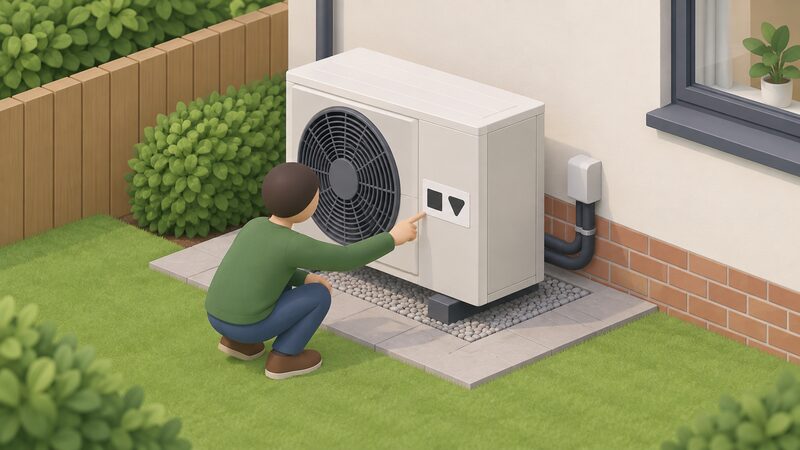
The Heat Pump KEYMARK: the European mark and how it relates to MCS
MCS recognises the CEN Heat Pump Keymark as equivalent7, and it currently recognises three European product certification schemes as equivalent4. The recognised schemes cover heat pump products and solar heating products4. Products certified through schemes recognised as MCS equivalent are listed in the Product Directory4.
The Keymark rests on independent, third-party testing conducted by laboratories accredited under ISO 1702523. The scheme now covers more than 10,000 certified heat pump models from over 180 renowned brands23. Its stated purpose is harmonisation across Europe, benefiting both manufacturers and end-users23.
The equivalence matters for a household in a simple way: a heat pump carrying the Keymark does not need a separate MCS product assessment to appear in the directory, and the grant routes that depend on MCS certification can still be satisfied. It also means the model range available in the UK is wider than the set of products that went through a UK-only assessment.
Battery storage: the exception to the certified-product rule
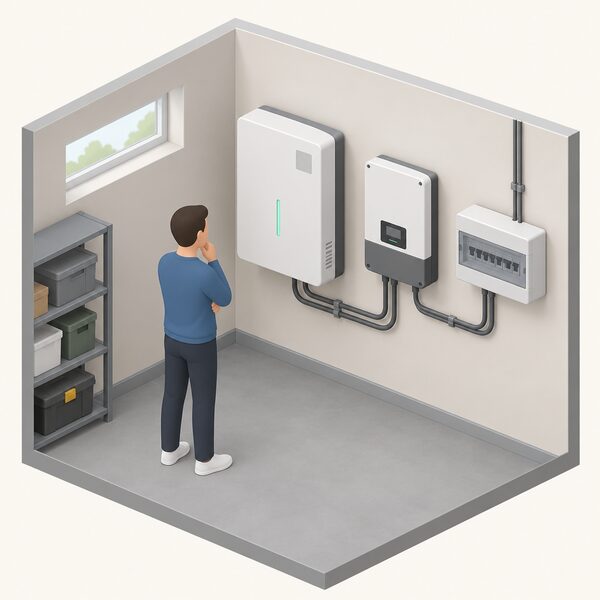
Battery storage is the one clear exception. All MCS certified installers delivering certified installations must install an MCS certified product, except for battery storage7. That single carve-out means a home battery can be fitted under an MCS certified installation without itself holding MCS product certification.
The rules that do apply are installation-side and marking-side. Domestic batteries on the UK market carry UKCA or CE marking, which is required in the MCS Battery Installation Standard24. For the Warm Homes: Social Housing Fund, the product must be installed by an MCS certified installer, to the relevant MCS installation standard, MCS 301224. Heat batteries are treated differently again: they will not be eligible for that fund until they can be MCS certified, because the scheme requires both an installation and a product standard24.
Battery storage installations are covered by added guidance under ECO4, with a paragraph added in regard to battery storage installations25. The official statistics on MCS domestic battery installations exclude commercial and newbuild properties, and exclude data where the battery nominal storage capacity was less than 1kWh or greater than 30kWh26.
What MCS certification does not guarantee: performance prediction and underperformance
Certification sets a standard for the product and the process. It does not guarantee an outcome in a particular home, and the official guidance is explicit about the gap. MCS requires installers to provide a design-stage prediction of system efficiency, not verify actual performance6. MCS does not require remediation of systems that are underperforming relative to their design6.
The same guidance identifies where the scheme is silent. MCS specifies handover documentation but not the quality of verbal explanation, household understanding, structured follow-up or ongoing support6. Weather compensation is not mandatory under current requirements of the Microgeneration Certification Scheme, and third party non-modulating controls are not prohibited6.
The purpose of the scheme is stated as ensuring consistent standards and providing confidence to consumers10. That is a statement about standards and confidence, not about measured performance in a given property. A household should read a design-stage prediction as a prediction, and treat the certification as evidence that the product and the installer met a defined standard.
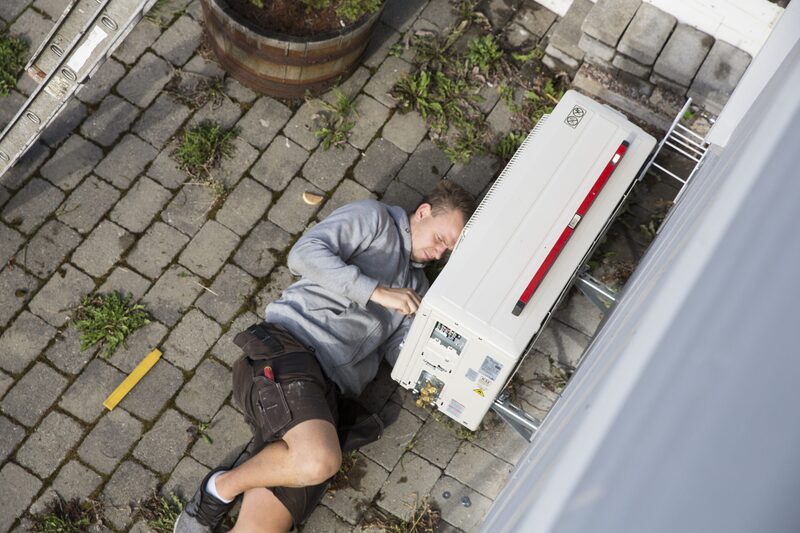
The scale of the scheme: nearly 600 manufacturers, 120,000 certified products and 2.2 million installations
The scheme's reach is substantial. MCS certification covers installations of small-scale renewables, from solar panels to heat pumps to small wind turbines, for homes and small businesses throughout the UK, with over 2 million MCS certified installations across the UK3. MCS certification is described as an important step in giving customers confidence that their installations meet industry-recognised standards3.
The equivalent-scheme route widens the product pool further. MCS currently recognises three European product certification schemes as equivalent4, and the Heat Pump Keymark alone covers more than 10,000 certified heat pump models from over 180 brands23.
The scheme also appears in the wider policy picture. The UK's heat pump deployment statistics count MCS certified heat pumps with a capacity of less than or equal to 45 kW12, and the government's heat pump investment roadmap sets an expected annual UK deployment of 600,000 heat pumps by 2028, with an aim to phase out fossil fuel heating in homes and businesses on the gas grid by 20356.
For a household, scale is a form of protection. A certification scheme with millions of installations behind it has an established complaints route, a published directory and a set of standards that installers and manufacturers are audited against. That is the practical value of the mark, and it is separate from the question of how well any one system performs.
Sources27 cited
- MCS product certification, Kiwa, 2026-09-17
- Product requirements, MCS Certified, 2026-05-21
- Tomlinson Longstaff: powering the rooftop revolution in the North East, MCS Certified, 2026-08-20
- Product scheme equivalency, MCS Certified, 2026-05-08
- Why MCS certification matters, MCS Certified, 2026-08-17
- CFP report: heat pump transition, GOV.UK, 2026-05
- Certifying your product, MCS Certified, 2026-05-18
- MCS data requests, MCS Certified, 2026-04-20
- Boiler Upgrade Scheme, Ofgem, 2026-09-17
- Who to contact, Ofgem, 2026-09-17
- Heat pump deployment tables Q2 2026, GOV.UK, 2026-09-10
- Heat pump deployment quarterly statistics, UK 2025 Q3, GOV.UK, 2025-12-04
- Domestic RHI essential guide, Ofgem, 2024-06
- Energy efficiency schemes, Ceredigion County Council, 2026-09-17
- Heat in buildings quality assurance statement, Scottish Government, 2026-09-17
- BUS Annual Report 2024 to 2025, Ofgem, 2025-07
- Boiler Upgrade Scheme guidance for installers v5.1, Ofgem, 2026-07-02
- Renewable Energy Consumer Code, Trading Standards, 2026-09-20
- Feed-in Tariff FAQ v5, Ofgem, 2018-12
- BUS guidance for property owners v5 draft, Ofgem, 2026-03-25
- MCS microgeneration certification, BSI, 2026-09-17
- MCS microgeneration certification, BSI, 2026-09-17
- Testing for trust: the journey to Heat Pump Keymark certification, EHPA, 2025-01-16
- WHSHF wave 3 scheme guidance addendum, GOV.UK, 2026-06
- Barcud Solar Panel Installation Scheme specification, Sell2Wales, 2026-06-15
- MCS domestic retrofit battery installations 2025 to 2026, GOV.UK, 2026-05-28
- Lithium-ion Battery Safety Bill, UK Parliament, 2024-07-29
 Standards and CertificationHow do you know a heat pump will really perform as promised?
 Standards for Emerging ProductsIf a heat pump or solar product is new, who checks it is safe and works properly?
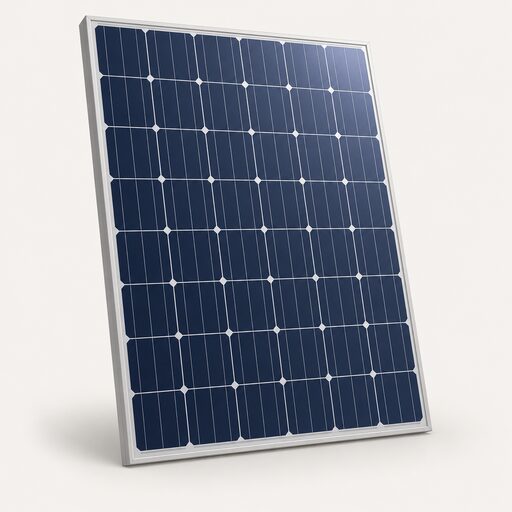 MCS ExplainedMCS is the quality mark for solar panels, heat pumps and other home renewables.
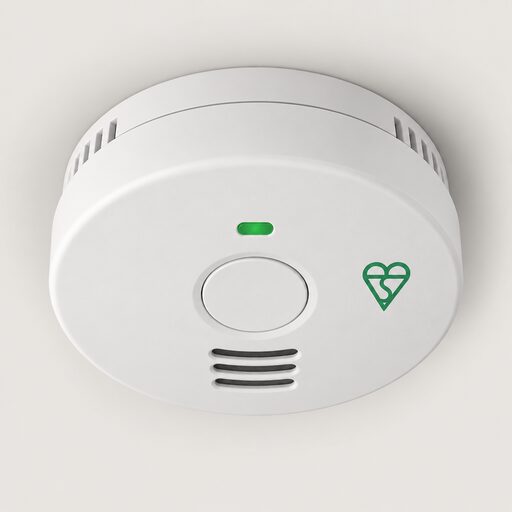 Product Markings and StandardsExplains what conformity markings and voluntary quality marks on home energy products actually mean, who issues them and what testing sits behind each.
 MCS CertificationWhy do so many installers and tariff schemes ask about MCS certification when you get solar panels?
 Appliance Standards and MarkingWhich marks should a boiler, heat pump or cylinder have before you buy, and what do they actually prove?