
In this guide
Kiwa is a testing, inspection and certification group whose certificates appear throughout UK home energy paperwork. In the UK it has provided MCS certification for air and ground source heat pumps1, and its KIWA BDA Agrément certificates are named in Ofgem's approved innovation measures for external wall insulation systems2. A Kiwa certificate is a third-party assessment of a product or system against a defined standard, not a performance guarantee and not an energy source.
The most important thing to know about Kiwa's UK energy certification work is that it is winding down. Kiwa Energy UK is no longer taking applications for new MCS product certification and is set to cease operations later in 20263. Certificates already issued remain part of the record, but a manufacturer seeking a new MCS product certificate now needs a different body. That is a change in the certification market rather than a statement about any product already installed in a home.
For a household, Kiwa matters in three places: the certificate number on a heat pump or insulation system, the scheme paperwork that names it, and the assurance that an independent body assessed the product before it was fitted. It does not change what the home is connected to. A certified heat pump still draws electricity from the grid, and a certified insulation system still depends on the quality of the installation.
What Kiwa offers in the UK
Kiwa's UK presence in home energy is narrow but load-bearing. The clearest official reference is in government guidance on domestic hybrid heat pumps, which states that "KIWA provide MCS certification for air and ground source heat pumps"1. MCS certification is the route by which a heat pump becomes eligible for government support schemes, so the certification body sits between the manufacturer and the household.
The second strand is product certification for construction products. Ofgem's ECO4 approved innovation measures documents name Soltherm Dynamic EWI with KIWA BDA Certificate Number BAE-21-215-S-A-UK or BAW-22-253-S-A-UK2. The same certificate numbers appear in a later version of the same document, confirming the reference is stable across revisions7. A KIWA BDA certificate identifies a specific system build-up, so the number on the paperwork should match the system actually installed.
Beyond energy, Kiwa's certification work touches the wider building envelope. Ofgem's approved measures also specify K Systems EWI with K Systems HP14 ECO for basecoat and adhesive layers under BBA certificate 18/55708, showing that external wall insulation systems in the ECO4 framework are certified by a range of bodies, of which Kiwa is one.
The UK certification landscape is not uniform across the four nations. The self-certification scheme system operates in England and Wales9, while Scotland and Northern Ireland run separate building standards and energy performance arrangements. A certificate that satisfies an English scheme may not be the reference point in Scotland, where the domestic quality assurance arrangements for heat and buildings programmes are set out separately10.

Specifications: what a Kiwa certificate actually covers
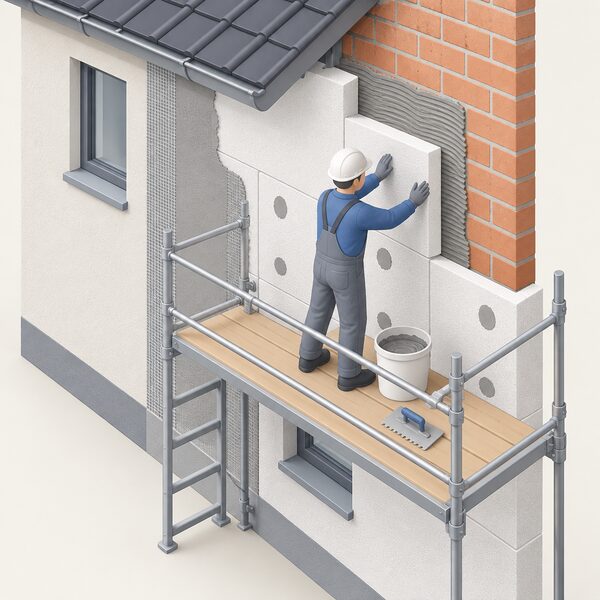
A Kiwa certificate is a statement about a defined product or system, assessed against a defined standard. The scope varies by product type, and the certificate number is the identifier that ties the assessment to the thing installed.
For external wall insulation, the certificate covers the system as specified, including the basecoat and adhesive layers. Ofgem's documents name Soltherm Dynamic EWI with KIWA BDA Agrément BAE-21-215-S-A-UK and BAW-22-253-S-A-UK7, and separately name K Systems EWI when specified with K Systems HP14 ECO for basecoat and adhesive layers under BBA certificate 18/55708. The certificate is therefore tied to a build-up, not to a brand name alone.
For gas appliances, the relevant standard is different. Official guidance on carbon monoxide alarms states that a household should "always ensure it complies with British Standard EN 50291 and carries a British or European approval mark, such as a Kitemark"11. That is a product marking requirement rather than a Kiwa certificate, but it illustrates the same principle: a recognised mark or certificate is the evidence that a product has been assessed.
For batteries, the requirements are set out in legislation. The Lithium-ion Battery Safety Bill requires conformity assessment by a conformity assessment body authorised by the Secretary of State, technical documentation and a declaration of conformity by the manufacturer, and CE or UKCA marking before placing on the UK market12. Certification bodies sit inside that framework, and the marking is the visible output.
| Product area | Certificate or marking | Reference |
|---|---|---|
| Air and ground source heat pumps | MCS certification | Kiwa provides MCS certification1 |
| External wall insulation | KIWA BDA Agrément BAE-21-215-S-A-UK or BAW-22-253-S-A-UK | Soltherm Dynamic EWI2 |
| External wall insulation | BBA certificate 18/5570 | K Systems EWI with HP14 ECO8 |
| CO alarms | British Standard EN 50291 plus approval mark | Official guidance11 |
| Lithium-ion batteries | Conformity assessment, CE or UKCA marking | Legislation12 |
What the warranty covers, and what it does not
A Kiwa certificate is not a warranty. It is evidence that a product or system was assessed against a standard at the point of certification. The warranty that a household relies on comes from a different source: the manufacturer, the installer, or an insurance-backed scheme.
The clearest example of an insurance-backed guarantee in the UK retrofit market is the CIGA Guarantee, which "covers defects in materials or workmanship and any concerns will be investigated and defects rectified free of charge"13. That is a scheme guarantee, not a certification body's product certificate, and the two should not be confused. A duplicate guarantee from the same scheme costs £60.00 inclusive of VAT13.
Where a scheme names a certificate, the certificate number is the reference point for the measure delivered. In ECO4, the approved innovation measures documents name specific certificate numbers for specific systems2, which means the delivered measure can be checked against the certificate. That is the practical value to a household: a way to confirm that what was installed matches what was assessed.
What certification costs, and who pays

Certification is paid for by manufacturers and installers, not directly by householders. There is no consumer price for a Kiwa certificate, and no published fee schedule in the material available. The costs that do reach households are indirect and appear in scheme and register charges.
In Scotland, building standards register entries are estimated at an extra £10 per certificate, rising to £25 or more per certificate where comprehensive information is required4. Those are register costs rather than certification fees, but they show how per-certificate charges accumulate across a programme.
Training and certification for the people who coordinate retrofit work carries its own cost. Training and certification for the Level 5 Diploma in Retrofit Coordination and Risk Management can cost up to £2,0005, and a Scottish Government consultation records costs ranging from £1,700 to £2,500 plus VAT depending on how quickly the qualification is achieved, with one training provider at the time10. Those costs sit with the coordinator, not the household, but they feed into the price of a retrofit project.
At programme level, PAS compliance costs for ECO4 compliant delivery are given as £55.9m, discounted6. That is a scheme-wide figure rather than a per-home charge, and it illustrates that the compliance layer which certification supports has a measurable cost across a national programme.
The company's status: Kiwa Energy UK is winding down
The most consequential fact for anyone reading a Kiwa certificate today is that Kiwa Energy UK is no longer taking applications for new MCS product certification and is set to cease operations later in 20263. A household or installer seeking a new MCS product certificate needs a different certification body. Existing certificates issued before that point remain part of the record.
This is a change in the certification market, not a statement about any installed product. A heat pump certified by Kiwa before the wind-down is not thereby invalidated, and the certificate number on the paperwork still identifies the assessment that was carried out. What changes is the route for new certifications.
The wider Kiwa group continues to operate and expand elsewhere. Kiwa announced that Belgian company Electro-Test and Danish firm 360 Brandrådgivning are joining the Kiwa Group14, and it launched Kiwa India Medical for medical device certification and regulatory assurance in India14. It also announced participation in the Hydrogen Technology Expo Europe in Hamburg, Germany14. Those are group-level activities outside UK home energy certification.
For a household, the practical point is that the certification body named on a certificate is a company whose UK energy operations are closing. That does not affect the physical product, but it does affect where a new certificate would come from and who would answer questions about a certificate in future.
What certification means for a household's energy independence
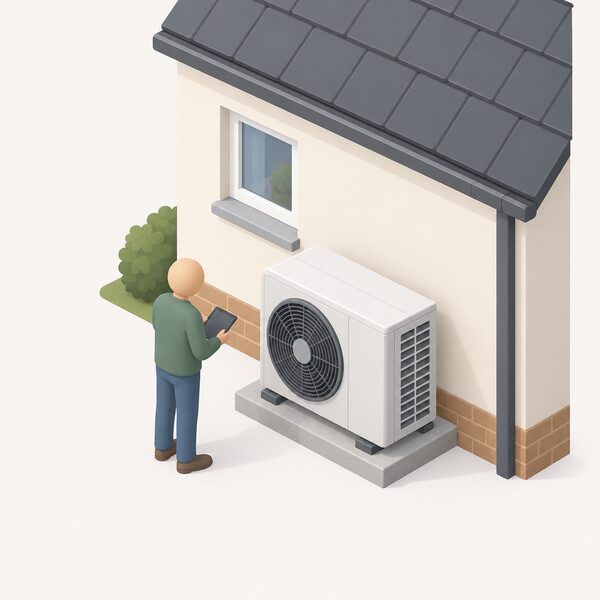
Certification is a quality assurance layer, not an energy source. It allows a household to check that a heat pump, an insulation system or a gas appliance has been assessed to a recognised standard before it is fitted. That supports confidence in home upgrades, and confidence is a precondition for the work that reduces a home's exposure to energy prices.
The independence that certification supports is indirect. Energy performance certification of buildings and the inspection of heating and air-conditioning systems must be carried out in an independent manner by qualified and accredited experts15. That independence is what makes an assessment meaningful: the body doing the assessing is not the body selling the product.
The wider policy context is about reducing dependence on imported energy. The British energy security strategy sets out how Great Britain will "accelerate homegrown power for greater energy independence"16, and the phase out of coal from UK electricity generation alongside the expansion of the second largest national offshore wind capacity is part of that shift17. GB electricity supply emissions intensity was 104 gCO2e/kWh in 2025 provisional figures18. Certification bodies sit underneath those programmes, assessing the products that deliver them.
What certification does not do is remove dependence. A certified heat pump still draws electricity from the grid and still depends on a supplier. A certified insulation system still depends on the quality of the installation. A certified gas appliance still depends on the gas network. The certificate is evidence about the product, not about the home's independence.
Energy consumption statistics for the UK are published as accredited official statistics19, and the domestic EPC provides a primary energy indicator, described as the amount of energy used to produce one kilowatt of power for the household20. Those measures describe the home's position; certification describes the products that might change it. The two are separate, and a certificate alone does not move a home along that scale.
For households in Northern Ireland, the energy advice tool provided by the Northern Ireland Housing Executive is a separate route to advice21, and the energy certificate service is available in Welsh (Cymraeg) for households in Wales22. Certification references should be checked against the scheme operating in the relevant nation.
Sources22 cited
- Domestic Hybrid Heat Pumps, GOV.UK, 2016-11
- ECO4 Innovation Approved Innovation Measures v1.5, Ofgem, 2023-10
- Certifying your product, MCS, 2026
- Building Standards Register Fees, legislation.gov.uk, 2026-09-17
- EINAS 2025: Heat and Buildings, GOV.UK, 2025-06
- ECO4 and Great British Insulation Scheme Mid-Scheme Changes, GOV.UK, 2025-04-07
- ECO4 Innovation Approved Innovation Measures v1.6, Ofgem, 2024-01
- ECO4 Innovation Approved Innovation Measures v1.10, Ofgem, 2024-07
- Reforming Consumer Protection for Home Upgrade Schemes, GOV.UK, 2026-06-17
- Domestic Quality Assurance: Heat and Buildings Programme, Scottish Government
- Gas Safety: FAQ for Owner Occupiers, HSE, 2026
- [Lithium-ion Battery Safety Bill [HL]](https://bills-api.parliament.uk/api/v1/Publications/56005/Documents/4984/Download), UK Parliament, 2024-07-29
- The CIGA Guarantee, CIGA, 2026-09-20
- Kiwa Testing Services, Kiwa, 2026-08-03
- Energy Performance of Buildings Directive, legislation.gov.uk, 2026-09-17
- British Energy Security Strategy, GOV.UK, 2022-04-07
- Progress in Reducing Emissions: 2025 Report to Parliament, Climate Change Committee, 2025-06-25
- DESNZ Annual Report and Accounts 2025 to 2026, GOV.UK, 2025
- Energy Consumption in the UK 2025, GOV.UK, 2025-09-25
- Domestic EPC Reform Consultation, Scottish Government, 2021-07-23
- Energy Advice Tool, Northern Ireland Housing Executive
- Get a New Energy Certificate, EPB NI Register, 2026-09-20