

In this comparison
For most home energy products sold in Great Britain, the answer is that both marks are not required. CE marked energy related products can currently be sold in Great Britain if they are compliant with GB ecodesign standards, without the need to also affix a UK Conformity Assessment marking1. The same flexibility applies to metering: both CE and UKCA marked meters can continue to be placed on the market in GB2.
The picture changes by territory. UKCA is the mark for goods placed on the market in Great Britain, meaning England, Wales and Scotland, and it covers most goods that previously required the CE marking3. Northern Ireland runs a different regime: products there continue to be administered under the current EU marking regime and are required to carry the recognised UK(NI) mark4. Northern Ireland recognises CE marking but not UKCA marking, because of the Northern Ireland Protocol5.
So the practical question for a household is not which mark is better, but which market the product was placed on and whether the mark on the box matches the rules for that market. A mark is a market-entry check. It is not a statement that a particular appliance suits a particular home, and it does not replace Building Regulations, gas safety duties or the electrical installation rules that govern the work.
Where each mark applies: Great Britain, Northern Ireland and the EEA
The UKCA regime covers the placing of products within England, Scotland and Wales4. It is the new product marking used for goods placed on the market in Great Britain and covers most goods which previously required the CE marking, known as new approach goods3. The extended CE recognition consultation applies to England, Scotland and Wales1.
Northern Ireland is the exception that catches most buyers out. Things differ slightly there, in that products continue to be administered under the current EU marking regime and are required to carry the recognised UK(NI) mark4. Northern Ireland will continue to recognise CE marking, but not UKCA marking, due to the Northern Ireland Protocol5. A UKCA mark on its own therefore does not open the Northern Ireland market, and a UK(NI) mark does not substitute for UKCA in Great Britain.
The EEA sits outside all of this. CE marking is a mandatory conformity marking for certain products sold within the European Economic Area since 19857. Manufacturers selling products within the EU will still be required to have products CE marked when selling into Europe4. It is likely the UKCA conformity assessment mark will not be recognised across the EU after the enforcement date4.
For a household in England, Scotland or Wales buying a heat pump, a solar inverter or a domestic battery, the mark on the rating plate is most likely to be CE, and that is lawful for energy related products that meet GB ecodesign standards. For a household in Northern Ireland, the relevant mark is CE or UK(NI). The devolved building rules sit on top of both: equivalent safety, product and competence standards are called for across England, Wales and Northern Ireland8, and Scotland operates its own building standards system.

Key dates: when UKCA became the requirement in Great Britain
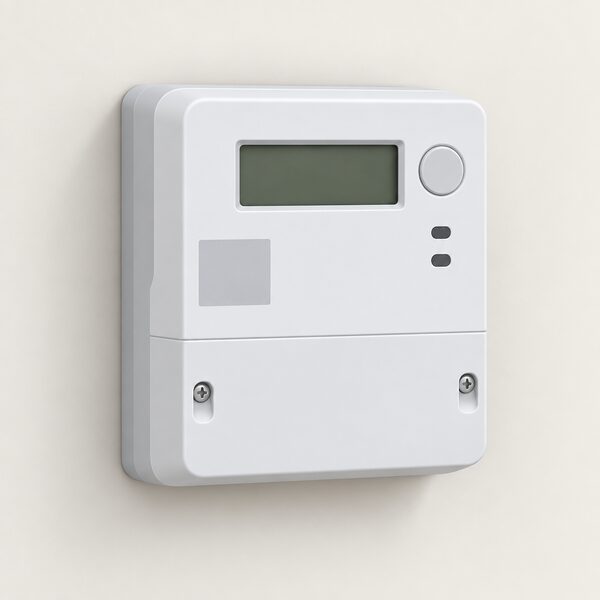
The UKCA mark could be applied as early as 1 January 2021 by manufacturers whose products had already been tested by a UK recognised authority, in line with the 12-month transition period allowed for by the government3. From 1 January 2023, all products placed on the UK market for sale, excluding Northern Ireland, must meet the UKCA regime3.
That headline date has been softened in practice by extended CE recognition. CE marking on relevant products will continue to be acceptable without the accompanying UKCA marking5. For construction materials and products falling under the Construction Products Regulation 2011, CE marking was acceptable until 30 June 20255. The extension gives businesses flexibility and choice to use either the UKCA or CE approach to sell products in Great Britain9.
Two conditions matter. The transition period is only valid in circumstances whereby the CE and UKCA rules remain the same3. And CE recognition continues to apply when ESPR regulations come into force from 20271, which matters for anyone buying an appliance expected to last a decade or more.
| Date | What changed |
|---|---|
| 1 January 2021 | UKCA could be applied to products already tested by a UK recognised authority3 |
| 1 January 2021 | New electricity meter designs allowed to carry UKCA for the GB market2 |
| 1 January 2022 | UKCA regime opened for solid fuel heating products placed on the market in England, Scotland and Wales4 |
| 1 January 2023 | Products placed on the UK market, excluding Northern Ireland, must meet the UKCA regime3 |
| 30 June 2025 | End of CE acceptance for construction materials and products under the Construction Products Regulation 20115 |
| From 2027 | CE recognition continues to apply when ESPR regulations come into force1 |
Conformity assessment and authorised representatives: the practical differences
The most consequential difference for a buyer is who stands behind the paperwork. Continued CE recognition means manufacturers selling both into the UK and EU can rely on a single conformity assessment, rather than running separate UKCA and CE processes for the same product8. That reduces cost and duplication, and it is the main reason CE marked stock remains common on UK shelves.
Where a UKCA route is used, the requirements tighten. Any product placed on the market after the implementation date will need its conformity assessment undertaken by a UK recognised notified institute listed on the UK notified laboratory database3. The manufacturer must have a technical evidence file underpinned by a UK approved body supporting any placing of marked products in the UK4.
Authorised representatives are the second practical difference. For any products imported from within the EU, any authorised representative appointed to deal with the marketing and sale of UK products must be based and have a business address situated within the UK3. Authorised representatives based within the EU will no longer be recognised within the UK after the implementation date3. An EU based importer will likely be required to set up a local registered address and premises when importing products for sale in the UK4.
Declarations of performance also shift. These declarations will need to continue to be made available to market surveillance authorities, and also make reference against UK designated standards rather than existing EU standards referenced in the Official Journal3. The changes at this time strictly cover the requirements of the CPR3.
"The CE / UKCA mark and Declaration of Conformity can only be applied to the product once specific requirements have been met, including provision of necessary technical documentation."
What documentation must a manufacturer hold to apply a mark?

The mark is the visible end of a paperwork chain. The CE or UKCA mark and Declaration of Conformity can only be applied to the product once specific requirements have been met, including provision of necessary technical documentation6. A Declaration of Conformity is issued alongside the CE, UKCA or UKNI mark and confirms that the manufacturer takes full responsibility10.
For products within the CPR scope, declarations of performance will now need to make reference against the new UKCA legislation document, superseding (EU) 305/20113. The technical evidence file underpinned by a UK approved body supports any placing of marked products in the UK4.
Proposed legislation on lithium-ion batteries shows the direction of travel. Under the Lithium-ion Battery Safety Bill, a person must not display a CE or UKCA mark on any product covered by the Act unless a certificate of conformity has been issued for the product11. The same Bill sets out that conformity assessment procedures carried out by a conformity assessment body authorised by the Secretary of State, technical documentation and a declaration of conformity by the manufacturer, and CE or UKCA marking, are required before placing on the UK market11.
In the context of CE marking, standards are voluntary6. That is a point worth holding on to: a manufacturer may meet a standard without being obliged to, and the mark records conformity with the applicable requirements rather than a guarantee of fitness for a particular installation.
Is a CE or UKCA mark a guarantee the product is right for my home?
No, and the sources are unusually direct about it. CE or UKCA marking alone does not necessarily indicate that a material is suitable for the intended work12. The mark demonstrates that the material is safe to place on the market and meets a harmonised European Standard or has been subject to a European Technical Assessment12. The CE symbol by itself does not necessarily indicate that the material is suitable for the building work13.
The Office of Product Safety oversees the correct use of the CE / UKCA marking in the UK6. That oversight is about the mark, not about whether a given unit suits a given house.
Fraud is a live risk. On electric blankets, buyers are told to ensure the product has the UKCA or CE marks but not to rely on those marks, as unscrupulous sellers may use these safety marks fraudulently14. A heated throw or blanket should carry a UKCA or CE safety mark15. Which? found illegal and dangerous electric heaters for sale on online marketplaces during the energy crisis, and advises checking for a UKCA or CE marking on the packaging and the product, the WEEE disposal logo, manufacturer and importer information, English instructions with safety warnings, a UK three pin plug, and no loose wires16.
What this means when buying heat pumps, air conditioning and refrigeration products
For this product group the marking position is settled. CE / UKCA marking is mandatory for Refrigeration, Air Conditioning and Heat Pump (RACHP) products6. The same statement appears in the Heat Pump Association's safety zone guidance6.
Policy is moving in the same direction. A government consultation on raising minimum energy performance standards for heat pumps refers to the mandate for heating products sold on the GB market to display the UKCA mark, with a territorial extent of the GB market17. That sits alongside the current position that CE marked energy related products compliant with GB ecodesign standards can be sold in Great Britain without a UKCA mark1.
For other household energy equipment, the mark is one check among several. Dehumidifiers should carry safety markings such as UKCA or CE18. Genuine far infrared heating products are sold with CE and UKCA markings, RoHS and Lot 20 compliance and other relevant certifications19. A Ratio io5 unit is marked UKCA20. Domestic batteries on the UK market carry UKCA/CE marking, which is required in the MCS Battery Installation Standard21. Solar panel installations bring their own fire risk mitigation guidance, which is separate from marking22.
The independence point is straightforward. A conformity mark tells a household that a product was placed on the market through a defined route, with technical documentation behind it and an authority able to act if the mark is misused. It does not tell a household that the product will perform in a particular property, that the installer is competent, or that the installation complies with Building Regulations. Those are separate checks, and the mark is the beginning of the paperwork rather than the end of it.

Sources22 cited
- Extended CE marking recognition for Ecodesign regulations, GOV.UK, 2025-12-09
- MIR approved gas and electricity meters, GOV.UK, 2025-11-06
- All you need to know about UKCA marking, HETAS, 2025-11-17
- Update on the new UKCA marking regime, HETAS, 2024-08-19
- CE and UKCA marking of goods, CIPHE, 2022-12-13
- HPA UK Statement on R290 Safety Zone, Heat Pump Association, 2026-05-12
- Glossary, Heatrae Sadia, 1985
- Extended CE marking recognition, HETAS, 2026-07-10
- CE mark, CIPHE, 2023-08-01
- RCDs for electric vehicle supply equipment, IET, 2024-05
- [Lithium-ion Battery Safety Bill [HL]](https://bills-api.parliament.uk/api/v1/Publications/56005/Documents/4984/Download), UK Parliament, 2024-07-29
- Product standards and selection, Energy Saving Trust, 2025-04-02
- Technical booklet B: materials and workmanship, Building Control Northern Ireland, 2013-07
- Electric blankets, Electrical Safety First, 2026-09-19
- Heat your home efficiently, Citizens Advice, 2022-12-21
- Illegal and dangerous electric heaters for sale on online marketplaces, Which?, 2023-02-23
- Raising minimum standards for heat pumps: options assessment, GOV.UK, 2024-11-27
- Dehumidifiers, Electrical Safety First, 2026-09-19
- Buying genuine far infrared heating, Tansun, 2026-06-15
- Ratio io5 brochure, Ratio EV, 2024-11
- WHSHF wave 3 scheme guidance addendum, GOV.UK, 2026-06
- How to mitigate fire risks associated with solar panel PV installations, Marley, 2023-02-13
 Product Markings and StandardsExplains what conformity markings and voluntary quality marks on home energy products actually mean, who issues them and what testing sits behind each.
 Electrical Component MakersWhich companies actually make the circuit breakers, fuses and meters in your home energy setup?
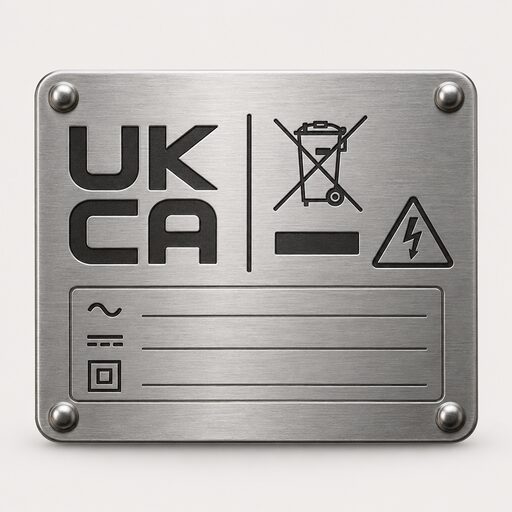 Appliance Standards and MarkingWhich marks should a boiler, heat pump or cylinder have before you buy, and what do they actually prove?
 The Full Brands GuideWhich boiler, heat pump or solar brand can you trust, and who actually owns it?
 Product RecallsHow recalls and safety notices work for energy equipment in UK homes, who issues them, how to check a product, and what replacement, repair and refund routes exist.
 Who Owns Which Energy BrandMaps the corporate groups that sit behind familiar UK boiler, cylinder, heating and renewables brands, and which names are badges rather than separate factories.