

In this guide
UK heat pump policy is a patchwork of statutory rules, funded schemes and stated ambitions, and the distinction between them matters to any household trying to read the direction of travel. The headline commitment is a target of 600,000 heat pump installations per year by 20281. A separate ambition, set out in the Carbon Budget and Growth Delivery Plan factsheet, is for 450,000 annual installations per year by 2030, with 70% of those units targeted to be manufactured in the UK by 20352. Against those numbers, Government-supported installations reached 46,423 in the year ending June 2025, a 30% increase on the 35,702 recorded in the year ending June 20243.
The gap between ambition and delivery is the central fact of UK heat pump policy. Heat pumps are currently installed in 1% of UK homes, and the number of heat pump units installed in the UK is just 7% of that in France1. The Climate Change Committee has assessed that the UK does not have anywhere near enough capacity in its supply chains to install the number of heat pumps or heat networks that the UK will need in the years to come5. Policy is therefore aimed as much at building a market and a supply chain as at persuading individual households.
For a household, the practical questions are narrower: what is already law, what is still a proposal, what applies in England, Scotland, Wales and Northern Ireland, and what any of it does for energy independence. This page sets out the framework as it stands, separating the binding from the aspirational.
Targets, delivery and the gap between them
The short answer is that the UK has a set of installation targets and market mechanisms, but very little of the framework is a direct legal requirement on an individual household. The UK Government set out plans to scale up heat pump rollout in its 2021 Heat and Buildings Strategy1. That strategy set the direction: an intention to phase out installation of new and replacement natural gas boilers from 2035, running in line with replacement cycle timelines so that almost all heating systems in 2050 are low-carbon7. No legally binding regulatory decision has been made on that phase-out.
What is binding sits mostly on manufacturers and, in Scotland, on new buildings. The Clean Heat Market Mechanism places an obligation on appliance manufacturers: from 1 April 2026, manufacturers are required to meet a target of 6% of sales with heat pumps or acquire credits2. The New Build Heat Standard in Scotland prohibits polluting heating systems, like gas and oil boilers, in new buildings8. Both are rules on builders and makers rather than on a household replacing a boiler.
The government has also pursued supply-side policies, including obligations on boiler and heat pump manufacturers and potentially energy companies to deliver a certain number of low carbon heat installations each year5. A 2021 consultation on a market-based mechanism for low-carbon heat described an obligation that would require the obligated parties to achieve the installation of a certain number of heat pumps up to 45kWth to existing UK properties9. That is the lineage of the mechanism now in force.
For a household, the practical reading is this: no rule currently compels the replacement of a working gas boiler with a heat pump. The pressure is indirect, arriving through what manufacturers must sell, what builders must install in new homes, and what grant funding makes available. The Heat Pump Grants and Funding Across the UK page covers the funding side in detail.
The figures: 600,000 a year against 46,423 delivered
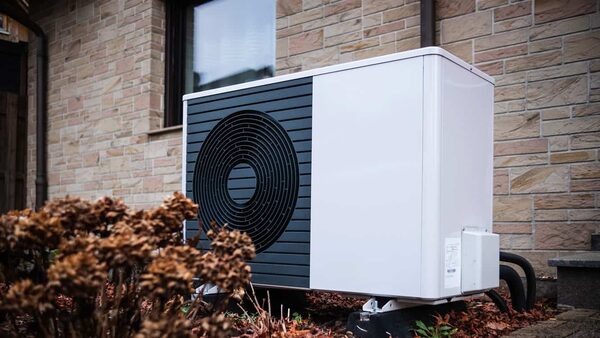
The figures divide into targets, delivery and the shape of what has been installed. The targets are the 600,000 installations per year by 20281 and the 450,000 annual installations per year by 2030 ambition, with 70% of units targeted to be manufactured in the UK by 20352. The Warm Homes Plan restates the manufacturing aim as at least 70% of heat pumps installed in the UK being made in the UK10.
Delivery is measured through the Heat Pump Deployment statistics, which monitor the number of hydronic heat pumps with a capacity up to 45kW installed in the United Kingdom11. The most recent annual figure is 46,423 Government-supported installations in the year ending June 2025, against 35,702 in the year ending June 2024, a 30% increase3. The preceding year had grown faster: a 52% increase in the year ending December 2024, with 42,645 installations compared to 28,084 in 202312.
| Measure | Figure | Period | Source |
|---|---|---|---|
| Installation target | 600,000 per year | by 2028 | 1 |
| 2030 ambition | 450,000 per year | by 2030 | 2 |
| UK manufacturing target | 70% of units | by 2035 | 2 |
| Government-supported installations | 46,423 | year ending June 2025 | 3 |
| Government-supported installations | 35,702 | year ending June 2024 | 3 |
| Year-on-year growth | 30% | year ending June 2025 | 3 |
| Year-on-year growth | 52% | year ending December 2024 | 12 |
| Air source share | 98% | year ending June 2025 | 3 |
The composition of the market is heavily skewed to air source. In the year ending December 2024, 98% of Government-supported installations were air source heat pumps, up from 87% in the year ending December 201912. The same 98% share held in the year ending June 20253. Funding routes matter to the totals: in the year ending December 2024, 53% of installations were funded through the Boiler Upgrade Scheme and 40% through the Energy Company Obligation12. By the year ending June 2025 the Energy Company Obligation share was 31%3.
Quarterly figures show how uneven the path is. There were 11,001 Government-supported installations in 2025 Q2, a 10% decrease on the previous quarter, of which 10,852 were air source3. In 2025 Q1 there were 12,175 installations3. In England alone, 2025 Q2 saw 8,897 installations3. The quarterly series is published as an official collection13.
What drives the numbers
Three forces drive the numbers: grant funding, manufacturer obligations and supply chain capacity. Grant funding has a direct and measurable effect on demand. Applications surged after an increase in the government grant14. The Boiler Upgrade Scheme and the Energy Company Obligation together accounted for the overwhelming majority of supported installations in the year ending December 202412.
The Clean Heat Market Mechanism works from the supply side. Its stated purpose is to incentivise the UK heating industry to invest in making heat pumps an increasingly attractive and affordable choice for families and businesses14. By requiring manufacturers to meet 6% of sales with heat pumps or acquire credits from 1 April 2026, it shifts the decision from the household to the boardroom2.
Supply chain capacity is the constraint that policy is trying to relieve. Stakeholders indicate the supply chain is currently constrained by a lack of consumer demand and government policy uncertainty1. The Climate Change Committee's assessment is blunter: the UK does not have anywhere near enough capacity in its supply chains to install the number of heat pumps or heat networks that the UK will need in the years to come5. The Heat Pump Ready Programme was set up to establish an evidence base to enable effective design and development of future heat pump policy and regulation, and to support high-density deployment of heat pumps in the UK through the development and trial of innovative approaches15.
There is also an industrial strategy dimension. The Heat and Buildings Strategy estimated that growing heat pump manufacturing and installation could increase the rate of installation, grow opportunities for exports, and create more than 10,000 manufacturing-related UK jobs7. The Climate Change Committee provides independent assessment of the strategy as part of the approach to climate change17.
Scotland, England, Wales and Northern Ireland
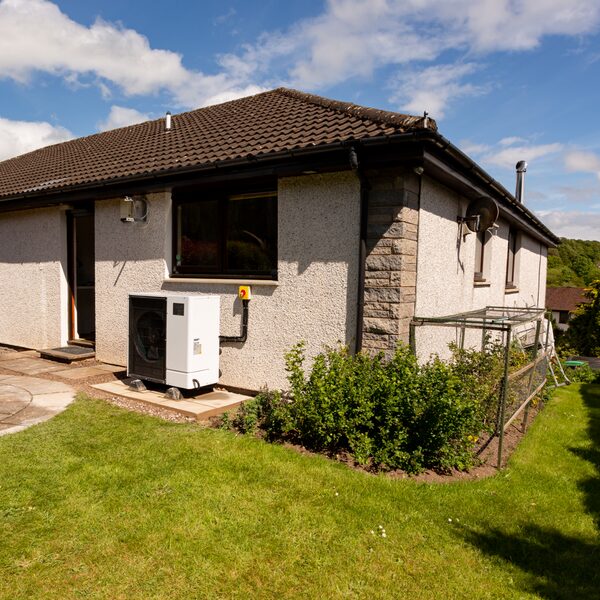
Heat is a devolved matter, and the four nations have diverged. Scotland has the most developed framework. Its Heat in Buildings Strategy targets over 1 million homes in Scotland converting to zero emissions heating by 2030, and the equivalent of 50,000 non-domestic buildings6. Emissions from heat in buildings will have to fall by 68% by 2030 as compared to 20206. On energy efficiency, the target is for a large majority of homes to reach at least the equivalent of an EPC Band C by 2030, with all homes meeting at least this standard by 20336.
The New Build Heat Standard is the sharpest Scottish rule. It prohibits polluting heating systems, like gas and oil boilers, in new buildings8. An amendment now permits wood burning stoves, bioenergy and peat heating systems in new buildings8. The Scottish Government is also committed to prohibiting the use of polluting heating systems across all homes and business premises by the end of 204518. A consultation proposed prohibiting polluting heating in all buildings after 204519.
Scotland's strategy carries an employment estimate: research suggests the additional jobs supported in 2030 will exceed those displaced by an estimated 16,400 as a result of investment in zero emissions heat20. The Climate Change Committee provides regular advice to Scotland, including an annual Scottish progress report on reducing emissions17.
England's distinctive policy lever is planning. Amendments to permitted development rights in England include the removal of the rule that a heat pump must be installed at least one metre from the property boundary21. Installation of an air source heat pump is permitted development, though rules still in place around listed buildings continue to apply22. The Heat Pump Planning Permission in England page covers the detail.
Wales and Northern Ireland have their own planning regimes. Official guidance notes that guidance on permitted development relates to the planning regime for England, and the policy in Wales may differ23. The deployment statistics themselves have a coverage limit: they currently cover DESNZ Government-supported heat pump installations only, domestic and non-domestic schemes, excluding some devolved administration schemes in Scotland and Northern Ireland24. That means the UK totals understate activity in those nations.
| Nation | Distinctive policy | Status |
|---|---|---|
| Scotland | New Build Heat Standard; 1 million homes by 2030 | In force / target |
| England | Permitted development; 1m boundary rule removed | In force |
| Wales | Planning regime differs from England | Guidance notes divergence |
| Northern Ireland | Some schemes excluded from UK statistics | Coverage gap |
What is already law, and what is not
The rules fall into three groups: what manufacturers must do, what builders must do, and what a household may do without permission.
For manufacturers, the Clean Heat Market Mechanism requires a target of 6% of sales with heat pumps, or the acquisition of credits, from 1 April 20262. This is the mechanism that converts a government target into a commercial obligation.
For builders, the New Build Heat Standard in Scotland prohibits polluting heating systems in new buildings, with the amendment permitting wood burning stoves, bioenergy and peat systems8. In England, the Future Homes Standard has been consulted on. A detailed specification was consulted on from November 2023 to March 202425. One option would have required solar PV panels covering the equivalent of 40% of a new home's ground floor area, with solar PV panels not required for blocks of flats over 15 storeys25. Rooftop solar for new builds has been promoted as saving people money26.
For households, the key rule is that air source heat pump installation is permitted development in England, and the one metre boundary rule has been removed21. That change was announced in November 2024 and confirmed again in June 202522. The practical effect is that a heat pump can be sited closer to a boundary than previously allowed, which matters on tight urban plots. The MCS 020 noise assessment remains part of the permitted development conditions.
The 2035 gas boiler phase-out is the rule most often described as settled when it is not. The Heat and Buildings Strategy states the government intends to phase out installation of new and replacement natural gas boilers from 2035, running in line with replacement cycle timelines so that almost all heating systems in 2050 are low-carbon7. No legally binding regulatory decision has been made. Households should treat 2035 as a stated intention rather than a date in law.
What it means for household energy independence

The energy independence case for heat pump policy rests on shifting demand from gas to electricity. The Heat and Buildings Strategy states that delivering on its goals will help to protect UK consumers from future price spikes and increase energy security by reducing energy needs and shifting demand from gas to electricity, which in future will be predominantly supplied from UK-based renewable generation17. That is the official framing: less imported gas, more domestically generated electricity.
"Emissions from heat in buildings will have to fall by 68% by 2030 as compared to 2020."
The direction of travel is set in law and in standards rather than in any one product. The Climate Change Committee, an independent statutory body established under the Climate Change Act 2008, advises that all home heating should come from low-carbon sources by 205018. In Scotland, the Heat in Buildings Strategy targets over 1 million homes converting to zero emissions heating by 2030, alongside the equivalent of 50,000 non-domestic buildings, and at least 50% of the building stock using zero emission heating systems by the same year17. The New Build Heat Standard has applied since 1 April 2024, so no new buildings constructed under a building warrant applied for from that date have heating systems such as gas and oil boilers19. In England, the Future Homes Standard sets new requirements for homes built in England from 2028, requiring all new build homes to be "zero-carbon ready" and fitted with solar panels covering at least 40% of the ground floor surface area where appropriate, with the legislation taking effect from 24 March 202720. For a household, the practical meaning is that a home's heating choice is increasingly bounded by regulation, and that the residual dependence is on the electricity grid and on whatever generates that electricity, not on a gas connection alone.
The mechanism is not automatic. Reducing the price of electricity relative to gas would make heat pumps more competitive1. Until that relative price changes, the running cost case for a heat pump depends on the tariff and the efficiency of the installation rather than on policy alone. The Heat Pump Running Costs page sets out what that means in practice.
Heat pumps are described in official guidance as a key solution for decarbonising homes and as critical for meeting the UK's commitment to achieve net zero15. The carbon benefit is stated as potentially slashing a heating carbon footprint by up to 70%28. That figure is a potential, not a guarantee, and depends on the electricity mix and the efficiency of the specific installation.
What dependence remains is worth stating plainly. A heat pump household still depends on the electricity grid and on an electricity supplier. It depends on a manufacturer for parts, warranty support and, in many cases, app-based controls. It depends on the skills of the installer for performance. Policy can shift the economics and the supply chain, but it does not make a household self-sufficient. The Heat Pumps and Household Energy Independence page examines where the remaining dependencies sit.
The Heat Pump Ready Programme, running across the UK, was designed to establish an evidence base for future policy and to trial high-density deployment approaches15. Its findings feed into the design of the rules that follow. For households, the direction is clear even where the dates are not: more heat pumps, more often specified by builders and manufacturers rather than chosen freely, and a continuing gap between the 600,000 heat pumps a year the Government says it wants by 2028 and what is installed now1.
Sources28 cited
- Heat pumps and the transition to low-carbon heating, UK Parliament POST, 2026
- Carbon Budget and Growth Delivery Plan: heat and buildings factsheet, GOV.UK, 2025
- Heat pump deployment quarterly statistics, United Kingdom 2025 Q2, DESNZ, 2025
- Energy innovation needs assessment: heat and buildings, DESNZ, 2025
- Taking stock of the UK government's heat and buildings strategy, Climate Change Committee, 2022
- Heat in Buildings Strategy: Fairer Scotland duty assessment summary, Scottish Government, 2021
- Heat and Buildings Strategy, GOV.UK, 2021
- Heat in Buildings progress report 2025, Scottish Government, 2025
- A market-based mechanism for low-carbon heat, BEIS, 2021
- Warm Homes Plan technical annex, GOV.UK, 2026
- Heat pump deployment statistics: June 2025, DESNZ, 2025
- Heat pump deployment quarterly statistics, United Kingdom 2024 Q4, DESNZ, 2024
- Heat pump deployment statistics collection, DESNZ, 2025
- Heat pump applications surge after increase in government grant, GOV.UK, 2023
- Heat Pump Ready Programme, GOV.UK, 2021
- Heat Pump Ready Programme: Stream 1, Phase 2, GOV.UK, 2022
- Independent assessment: the UK's heat and buildings strategy, Climate Change Committee, 2022
- Heat in Buildings Strategy: business and regulatory impact assessment, Scottish Government, 2021
- Heat in Buildings Strategy: child rights and wellbeing impact assessment, Scottish Government, 2021
- Heat in Buildings Strategy: strategic environmental assessment, Scottish Government, 2020
- Amendments to the Boiler Upgrade Scheme: government response, DESNZ, 2025
- Help to save households money and deliver cleaner heat to homes, GOV.UK, 2024
- Air and ground source heat pumps, London Borough of Croydon, 2026
- Heat pump deployment quarterly statistics, United Kingdom 2025 Q1, DESNZ, 2025
- The Future Homes Standard, House of Commons Library, 2026
- Rooftop solar for new builds to save people money, GOV.UK, 2025
- Families to save in biggest home upgrade plan in British history, GOV.UK, 2025
- Your essential guide to heat pumps, Welsh Government, 2025
 Which Homes Suit a Heat PumpMost UK homes can have a heat pump fitted, so the real question is whether yours makes it easy or expensive.
 The Full Heat Pumps GuideWill a heat pump keep my house warm in winter, and what does one cost to buy and run?
 Heat Pump Install StatisticsHow many heat pumps are actually being fitted in the UK each year, and is that number going up?
 How They Perform in UK HomesHow well do heat pumps really work in UK homes, and why do some run far better than others?
 Heat Pump Electricity TariffsA heat pump tariff gives you cheaper electricity for part of the day, so running your heating costs less than on a standard rate.
 Planning Permission in EnglandDo you need planning permission for an air source heat pump?