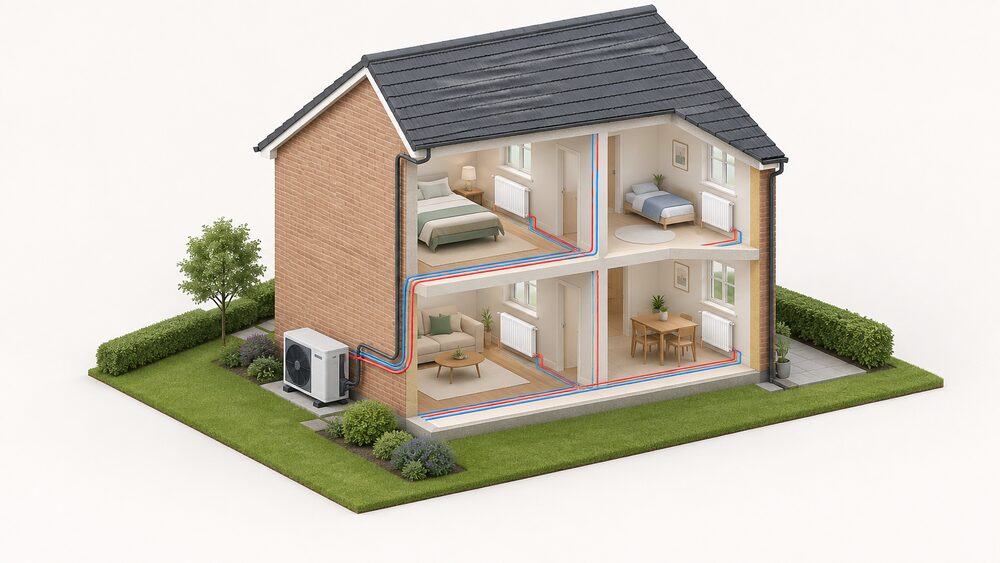
In this guide
At least 33 manufacturers supply air source heat pumps to UK homes, and four of them, Mitsubishi Electric, Vaillant, Daikin and Samsung, account between them for nearly two thirds of total annual UK sales1. The ground source market is smaller and more concentrated still: at least 17 manufacturers compete in it, but only Kensa builds its systems in the UK, with 41 per cent of that market1. So the field a householder actually chooses from is long on paper and short in practice, dominated by a handful of global HVAC groups and European heating brands, with a growing tail of newer UK entrants.
Volumes are rising from a low base. A record 125,000 heat pumps were sold in 2025, a 27 per cent increase over 2024, of which approximately 45,000 were manufactured in the UK2. That matches earlier official analysis finding the UK manufactures around one third of the heat pumps it sells, with two thirds imported3. Around 1 per cent of UK homes have a heat pump today4, and UK sales ran at 3.5 per 1,000 households in 2024, with an installed stock of 19 per 1,000 households5.
For a household, the manufacturer choice sets the equipment's efficiency, its noise, its physical size (which decides whether permitted development applies), the warranty and the availability of parts over a life that one independent guide puts at 20 years or more. It does not change the fundamental dependence: an air-to-water heat pump replaces a gas or oil supplier with a full dependence on mains electricity, a grid connection and an electricity tariff.
Who supplies heat pumps to UK homes
The supply side divides into four rough groups. Global heating, ventilation and air conditioning groups, including Mitsubishi Electric, Daikin and Samsung, bring compressor and refrigeration engineering from much larger air conditioning businesses. European boiler brands, Vaillant among them, have added heat pump ranges alongside gas. British heating manufacturers such as Ideal have entered the same space. And energy retailers and start-ups have arrived: Octopus Energy supplies and installs heat pumps, including to households that are not its energy customers9.
Market data on all of them comes largely from the industry itself. The Heat Pump Association compiles UK market statistics from data provided by its manufacturing members, extrapolated using market estimation techniques to represent the whole UK market10. Its members represent around 90 per cent of the volume of heat pumps currently sold in the UK market on one 2025 statement11, and around 85 per cent on association statements in 202412; the figures are from different dates and both are the association's own.
Scale is the sector's central problem. The number of heat pump units installed in the UK is just 7 per cent of that in France1. Government ambition runs far ahead of present output: the heat pumps investment roadmap sets up to 1.9 million installations a year by 203513, and there is an aim of 450,000 annual installations per year by 20302. One independent guide notes that the UK market is quite new and there are not many installers, so it can be hard to find someone to install one14. Support is also available for installers and manufacturers to expand supply chains15.
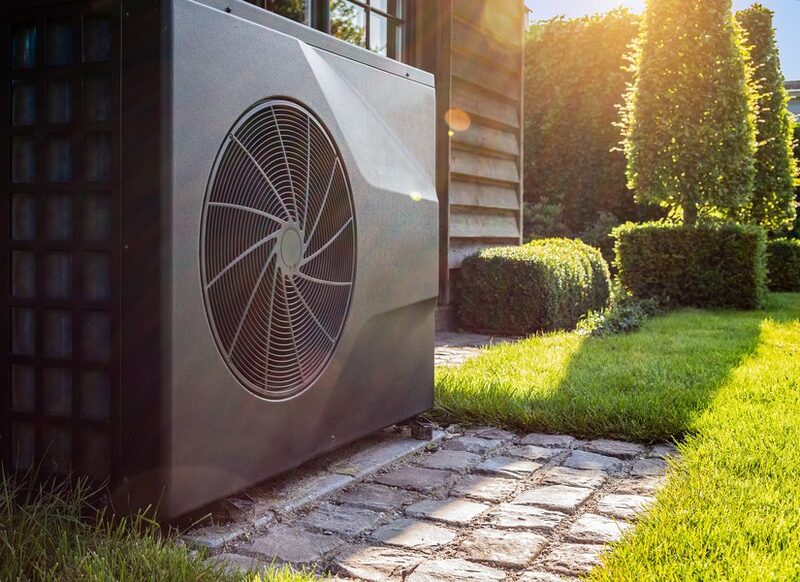
The major manufacturers and their share of the UK market

Concentration is high at the top and long at the bottom. Four brands take nearly two thirds of annual UK air source sales1. Ground source is more concentrated again, with Kensa alone holding 41 per cent1.
| Measure | Figure | Period |
|---|---|---|
| Manufacturers supplying ASHPs to the UK | at least 331 | 2024 |
| Mitsubishi Electric, Vaillant, Daikin, Samsung combined | nearly two thirds of annual UK sales1 | 2024 |
| Main UK-based ASHP manufacturers (Mitsubishi Electric, Vaillant, Ideal, Octopus Energy) | 34 per cent combined market share1 | 2024 |
| Manufacturers in the GSHP market | at least 171 | 2025 |
| Kensa share of GSHP market | 41 per cent, only UK manufacturer of GSHP systems1 | 2025 |
| UK sales per 1,000 households | 3.55 | 2024 |
| Installed stock per 1,000 households | 195 | 2024 |
The same four names appear in both lists for a reason: the companies with the largest UK sales are also the ones that have committed UK assembly capacity. Official analysis names Mitsubishi Electric, Vaillant, Ideal and Octopus Energy as the main companies manufacturing air source heat pumps in the UK in 2024, with a combined market share of 34 per cent1. Individual brand pages cover several of these in more detail, including Mitsubishi Electric, Vaillant, Daikin, Samsung, Ideal Heating, NIBE and Octopus Cosy, and a direct Mitsubishi and Daikin comparison sits alongside them.
New entrants continue to appear, some with public funding behind them. The Heat Pump Ready programme has supported a fully UK designed and manufactured heat pump project for distressed purchases, led by Nusku Ltd16. For a buyer, a new entrant carries the ordinary risk that the company behind a 20 year product may not be there for all of it, an issue explored under orphaned products.
British-made versus imported
Around one third of heat pumps sold in the UK are manufactured here, with two thirds imported3, and the UK manufacturing sector meets just over 30 per cent of UK demand1. The 2025 figures are consistent: approximately 45,000 of the 125,000 units sold were UK-made2.
What counts as UK-made is a defined thing, not a marketing claim. The Heat Pump Association's definition requires a unit to be wholly produced, manufactured or assembled within the UK, or significantly changed through a treatment or process within the UK, where "significantly changed" means UK processes involve the manufacture or assembly of multiple major internal component systems, for example integration of the refrigerant circuit, charging and sealing of the system, installation of heat exchangers, integrating electronics and adding the hydronic water circuit, to create a finished unit materially different from its imported parts10.
Policy is pushing the share upwards. The Heat and Buildings Strategy aimed to grow UK manufacture and supply to over 300,000 units a year by 2028 and said this could create more than 10,000 manufacturing-related UK jobs17. Industry analysis suggests up to 300,000 heat pumps could be manufactured in the UK by 202811. Government consultation work predicted the UK-manufactured market share growing to around one half by 20303, while the Warm Homes Plan states a target that at least 70 per cent of heat pumps installed in the UK are made in the UK18, with 70 per cent targeted by 20352. Independent supply chain modelling is more cautious, putting UK-manufactured hydronic heat pumps at 33.5 per cent of UK sales in a baseline scenario, rising from 33 per cent to 59 per cent over a ten-year period under an alternative manufacturing scenario19. The official and independent projections disagree on how far and how fast domestic manufacture grows.
For household energy sovereignty, the distinction matters less than it sounds. A UK-assembled unit still uses an imported compressor and refrigerant circuit components, and still runs on grid electricity. Wider questions of origin are covered under where home energy products are made.
Air-to-water or air-to-air: what the manufacturers sell
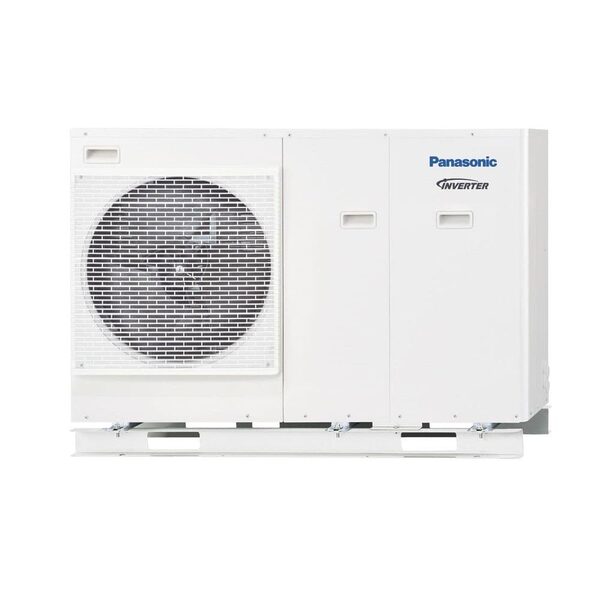
Two types are most common in the UK, air source and ground source20, and air source is the most commonly installed21, suitable for most types of home20. Within air source, the split matters. An air-to-water system transfers heat drawn from surrounding air to water in a wet central heating system22; these are the units that replace a boiler. Low temperature air-to-water monobloc systems, a single outdoor unit, represent 69 per cent of the total UK heat pump market1. Split systems place part of the refrigerant circuit indoors.
Air-to-air heat pumps move heat to air rather than water. They remain uncommon in the UK23, are most commonly used for commercial premises, and are often mislabelled as air conditioning in the UK24. Critically for a household, most models currently available in the UK do not provide hot water23, so a separate water heating method is still needed. Air-to-air systems are also not considered a renewable system in ECO422.
UK market statistics count factory gate sales across air-to-water monobloc, air-to-water split, ground and water source, domestic hot water heat pumps and an "other" category including exhaust air heat pumps and integrated hybrid heat pumps10. Manufacturer ranges map onto those categories, and the hot water side is often a separate cylinder product, covered under hot water cylinder manufacturers.
Specifications to compare: capacity, SCOP and flow temperature
Comparing brands means comparing like with like, and the figures that decide a system are capacity, seasonal efficiency and the flow temperature at which that efficiency is declared.
- Capacity. The median capacity of air-to-water installations recorded in England and Wales was 8.0 kW in the second quarter of 20266. Government deployment statistics cover hydronic heat pumps with a capacity up to 45 kW installed in the United Kingdom, which is the domestic and small commercial band25.
- SCOP. Seasonal coefficient of performance is the headline efficiency number. Under Boiler Upgrade Scheme rules, heat pumps must have a SCOP of at least 2.87. A SCOP is only comparable between products tested at the same flow temperature, which is why low temperature and higher temperature figures for the same unit differ sharply.
- Flow temperature. Low temperature air-to-water monoblocs are 69 per cent of the market1, and a lower design flow temperature raises seasonal efficiency but requires larger emitters.
Manufacturer datasheets do not always make this straightforward. Published documentation for a single model can carry two different seasonal space heating efficiency figures, two annual energy consumption figures and two declared coefficient of performance values for the same product number, reflecting different test conditions on the same page. Reading a datasheet correctly is treated separately in comparing manufacturer specifications and how products are tested. Sizing is not a matter of picking a number from a table: it follows from a heat loss calculation for the specific property, and heat pumps are technically suitable for most UK homes if installed appropriately15.
Certification: Heat Pump KEYMARK and MCS

Two certification routes matter to a UK buyer, and they do different jobs.
The Heat Pump KEYMARK is a voluntary, independent, third-party certification mark based on the European standards EN 14825 and EN 14511, introduced in 201626. It supports the quality and performance of heat pumps on the European market: the certificate is granted by independent certification bodies and the testing is carried out by registered test centres27. A manufacturer applies to an empowered certification body, which sets out testing, inspection and assessment procedures and costs; a factory inspection and product sampling follow, with testing by a recognised institute and conformity assessment by the certification body27. Published certificates cite the scheme version, for example the Heat Pump KEYMARK Certification Scheme (2025), and the test basis EN 14825:202228.
MCS is the UK scheme. Heat pumps are certified under MCS 00729. MCS matters beyond quality assurance: permitted development in England depends on it, and the Boiler Upgrade Scheme routes through it. Further detail sits under manufacturer certification and approvals and the MCS certified product directory.
Permitted development rules that shape what can be installed
Planning rules constrain which manufacturer's unit can go where, because the limits are written around physical size, siting and noise. In England the rights sit in Part 14 (Renewable Energy) of The Town and Country Planning (General Permitted Development) (England) Order 201530. They cover installation, alteration or replacement of an air source heat pump on a house or block of flats, or within its curtilage31.
The principal conditions in England:
- The outdoor compressor unit, including housing, must not exceed 1.5 cubic metres on a house or 0.6 cubic metres on a block of flats31.
- Only the first installation is permitted development on a house that is not detached or a block of flats; for detached houses the first two are permitted31. Further units require planning permission32.
- Installations on pitched roofs are not permitted development, and on a flat roof all parts must be at least one metre from the external edge of that roof31.
- Permitted development rights do not apply within the curtilage of a listed building or a scheduled monument31, and listed building consent is usually required for a listed property even where planning permission is not33.
- In a conservation area or World Heritage Site, the unit must not be installed on a wall or roof fronting a highway, or nearer to a bounding highway than any part of the building31. Elsewhere it must not go on a wall above ground floor storey level where that wall fronts a highway31.
- Development is permitted only if the installation complies with MCS Planning Standards (MCS 020) or equivalent34.
- The unit must not be used solely for cooling31, must be removed as soon as reasonably practicable when no longer needed for microgeneration31, and must be sited so far as is practicable to minimise its effect on the external appearance of the building35.
- There must be no existing wind turbine on the building or within the curtilage31.
The one-metre boundary rule has been removed in England, enabling air source heat pumps to be installed within one metre of the property boundary36. Some council guidance still sets out the former requirement that all parts be at least one metre from the boundary34, so the published guidance is not uniform. Ground source and water source heat pumps on domestic premises are usually considered permitted development39. Building Regulations apply regardless of planning: in England, parts A to T apply to an air source heat pump plus Regulation 734, and in Wales installation of either a ground source or air source heat pump must comply with the Building Regulations41. Scottish analysis of new-build standards found the air source heat pump consistently resulted in the lowest delivered energy emissions rate across the archetypes modelled, and the lowest capital cost for houses, though not for a block of flats42.
Noise
The noise limit shapes product design. The legal noise limit for heat pumps in the UK is stated as 42 decibels39, measured on its own from a metre away from any habitable room34. A typical heat pump when running sits between 40 and 60 decibels43. Where a unit exceeds the MCS standards and planning permission is needed, a condition may require that noise does not exceed 37 dB LAeq at any time, measured on the boundary with any neighbouring residential property32. If the noise level is exceeded, planning permission approval is required34.
Cost: what the published ranges show

There are no manufacturer list prices for installed heat pumps; prices are installer-quoted, and the published ranges vary widely because they cover different scopes.
| Source and date | Figure | Scope |
|---|---|---|
| BEAMA, 2023 | £7,000 to £13,00044 | Air-to-water, including installation |
| BEAMA, 2023 | £24,000 to £40,00044 | Ground-to-water, including installation |
| CPA, February 2025 | £7,000 to £14,00045 | Heat pump |
| CSE, June 2026 | around £11,000 to install8 | Air-to-water, before grant |
| GOV.UK, March 2024 | around £6,500 to £11,50021 | Including VAT, labour and the Boiler Upgrade Scheme grant |
| Smart Energy GB, March 2026 | £14,000 to £28,00046 | Depending on type, Great Britain |
The Smart Energy GB range sits considerably higher than the others and covers Great Britain across heat pump types, so published figures for an ordinary air source installation vary widely. The Boiler Upgrade Scheme provides a grant of £7,500 for air-to-water heat pumps8. Ground source is consistently and substantially more expensive because of the ground loop.
Running costs, efficiency and what ownership means for independence
Efficiency is the whole argument for a heat pump, and electricity pricing is what blunts it. A parliamentary briefing states plainly that heat pumps currently have similar running costs to gas boilers, and that reducing the price of electricity relative to gas would make heat pumps more competitive15. A Public Accounts Committee summary is blunter: electricity prices mean that heat pumps can be more expensive to run47. One building regulations consultation uses 300 per cent efficiency as an illustrative running cost example48. Independent advice puts annual running costs at around £800 to £1,050 a year, describing heat pumps as one of the cheapest electric heating options8, and one guide gives potential energy savings of £38545. These are modelled or indicative figures rather than measured bills, and the difference between them reflects different assumptions rather than different hardware.
Evidence on households at risk of fuel poverty has been built from in-depth interviews, technical home audits, analysis of monitored heat pump performance data, cost modelling and a review of existing evidence49, which is a stronger basis than a single headline number.
For energy independence, the honest position is this. A heat pump removes a household from gas or oil and from the imported fuel chain behind it. In exchange it creates a near-total dependence on the electricity grid and on an electricity supplier, with no on-site fuel store. It adds a dependence on a manufacturer for parts, firmware and warranty across a life that may exceed 20 years45, and on a shrinking pool of qualified installers. Pairing with solar and storage reduces imported units but does not remove the grid connection; the trade-offs are set out under manufacturers and household energy independence. Around 1 per cent of UK homes currently have a heat pump4, against advice that approximately 10 per cent of existing homes will need to be heated by one by 203050, so most households considering the step are still early movers in a market where brand support, not just brand efficiency, is worth weighing. The wider field of home energy equipment makers is covered on the manufacturers pillar.
Sources50 cited
- Energy Innovation Needs Assessment 2025: heat and buildings, GOV.UK, June 2025
- Carbon Budget and Growth Delivery Plan: heat and buildings investor factsheet, GOV.UK
- Raising minimum standards for heat pumps: options assessment, GOV.UK, 27 November 2024
- Energy Security and Net Zero Committee report on heating, UK Parliament, 9 May 2025
- EHPA Market Report 2025 executive summary, EHPA, July 2025
- Boiler Upgrade Scheme statistics, July 2026, GOV.UK, 2026
- Boiler Upgrade Scheme property owner guidance v2.3, Ofgem, 25 September 2023
- Electric heating advice, Centre for Sustainable Energy, June 2026
- Air source heat pump costs and savings, Which?, 14 April 2026
- UK heat pump market statistics, Heat Pump Association, 10 July 2026
- Heat pump supply chain readiness to deliver net zero homes, Heat Pump Association, February 2025
- HPA reaction to Boiler Upgrade Scheme year 2 budget underspend, Heat Pump Association, 17 April 2024
- Heat pumps investment roadmap, GOV.UK
- Cut your home's carbon emissions by getting a heat pump, Nesta, 3 February 2022
- Heat pumps in UK homes, POST, UK Parliament, 19 September 2026
- Heat Pump Ready programme stream 2 wave 2 projects, GOV.UK, 28 May 2026
- Heat and Buildings Strategy, GOV.UK, October 2021
- Families to save in biggest home upgrade plan in British history, GOV.UK, 20 January 2026
- From Carbon to Competitiveness, Heat Pump Association, January 2026
- In-depth guide to heat pumps, Energy Saving Trust, 16 July 2026
- Heat pumps explained: experts answer your questions, GOV.UK, 28 March 2024
- ECO4 new measures and products guidance v3.0, Ofgem, 26 March 2026
- Air-to-air heat pumps project, Nesta, 17 September 2026
- Domestic heating technology options: air-to-air heat pumps, Nesta, 3 February 2025
- Heat pump deployment statistics, GOV.UK, 26 September 2024
- Heat Pump KEYMARK certification celebrates a decade, EHPA, 5 January 2026
- Heat Pump KEYMARK, EHPA, 19 August 2026
- Heat Pump KEYMARK certificate, Heat Pump KEYMARK, 5 September 2025
- MCS microgeneration certification, BSI, 17 September 2026
- Planning guidance on heat pumps, Richmond Council, 22 April 2026
- Planning permission for an air source heat pump, Planning Portal, 17 September 2026
- Air source heat pumps: householder planning advice, Central Bedfordshire Council, 17 September 2026
- Air source heat pumps planning guidance, Westmorland and Furness Council, 17 September 2026
- Building regulations and renewables guidance, Bedford Borough Council, 17 September 2026
- General Permitted Development Order 2015, Schedule 2 Part 14 Class G, legislation.gov.uk
- Amendments to the Boiler Upgrade Scheme: government response, GOV.UK, November 2025
- Rooftop solar for new builds to save people money, GOV.UK, 6 June 2025
- Permitted development for retrofit, Cotswold District Council, 17 September 2026
- Air and ground source heat pumps guidance, Croydon Council, 17 September 2026
- Heat pumps: common projects, Planning Portal, 17 September 2026
- Building regulations: heat pumps, Welsh Government, 17 September 2026
- Energy standard for new domestic buildings in Scottish building regulations, Scottish Government, 24 July 2026
- Heat pump fact check, Energy Saving Trust, 1 July 2026
- Future Homes Standard Phase 1: network to emitter impact report, BEAMA, April 2023
- Heat pumps vs boilers, CPA, 18 February 2025
- How do heat pumps work, Smart Energy GB, 16 March 2026
- Public Accounts Committee report summary, UK Parliament, 26 May 2024
- Building regulations discussion document, Department of Finance Northern Ireland, 11 October 2023
- How to ensure a successful transition to heat pumps for households at risk of fuel poverty, GOV.UK, 1 July 2026
- UK off track for net zero, say country's climate advisors, Climate Change Committee, 18 July 2024
 Air Conditioning BrandsWhich air conditioning brands can you actually buy in the UK, and who makes them?
 Which Homes Suit a Heat PumpMost UK homes can have a heat pump fitted, so the real question is whether yours makes it easy or expensive.
 The Full Brands GuideWhich boiler, heat pump or solar brand can you trust, and who actually owns it?
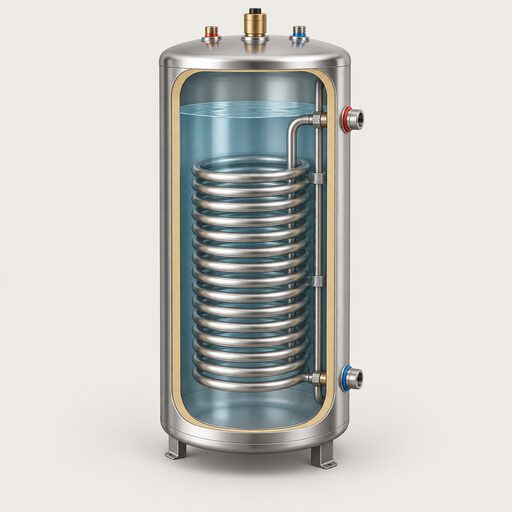 Hot Water Cylinder ManufacturersWhich hot water cylinder brands are actually made in the UK, and which are imported?
 Heat Pump Install StatisticsHow many heat pumps are actually being fitted in the UK each year, and is that number going up?
 Policy, Targets and Coming RulesHeat pumps are central to the government's plans for greener home heating.