
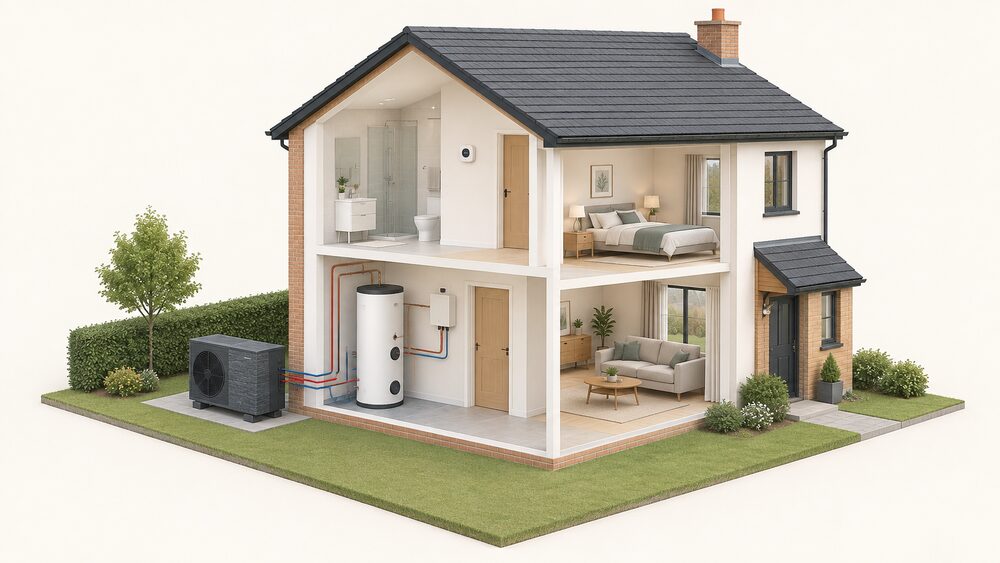
In this guide
Octopus Energy is unusual among UK heat pump sellers because it both makes and installs the product. The Cosy range comes in three sizes, the Cosy 6, Cosy 9 and Cosy 12, and the Cosy 6 is described as Octopus Energy's first heat pump built entirely in-house1. The company supplies and installs heat pumps including to households that are not its energy customers, so a home does not have to be on an Octopus supply to buy one3.
The headline figures for the smallest model are a 5.2 kW heat capacity at minus 5 degrees C ambient and 65 degrees C flow, a sound power level of 58 dB(A) operating at 55 degrees C, and a SCOP of 3.4 designed at 50 degrees C1. It uses R290 refrigerant and works with copper or plastic microbore piping 10mm or larger1. Octopus offers an eight-year warranty on its own-brand heat pumps and a five-year warranty on other brands it installs3.
The independence question is mixed. A Cosy heat pump moves a home off gas for heating, but it keeps the household on electricity, on a supplier, and on Octopus's own controls, tariff and monitoring. The sections below set out what the range does, what it costs to run, and where the dependence remains.
The Cosy range: Cosy 6, Cosy 9 and Cosy 12
Octopus sells the Cosy heat pump in three sizes, described as ready to keep a home snug: Cosy 6, Cosy 9 and Cosy 121. The number refers to the nominal size class rather than a guaranteed delivered output at every condition, which is why the published capacity for the Cosy 6 is 5.2 kW at minus 5 degrees C ambient and 65 degrees C flow1. That gap between the badge and the cold-weather figure is normal across the market and is the number a heat loss calculation should be checked against.
The units are now installed in a dark grey finish with what Octopus calls its signature hard-wearing mottled texture1. The range launched in September 2023, when the chief executive Greg Jackson presented the Cosy Octopus smart heating system at a London tech summit, with availability from December of that year2. The original package was built around the Cosy 6 heat pump, a Cosy Hub home controls system, Cosy Pods room sensors, a bespoke smart tariff and Octopus's service operation2.
Sizing across the three models is the main decision. The Cosy 6 is aimed at smaller homes, the Cosy 9 and Cosy 12 at larger or less insulated properties with higher heat loss. Because the range is Octopus's own product, the company controls the specification, the installation and the warranty in one place, which shortens the chain between a fault and a fix but also concentrates the household's relationship with a single company.
Cosy 6 at a glance: 6 kW class, 58 dB(A) and R290
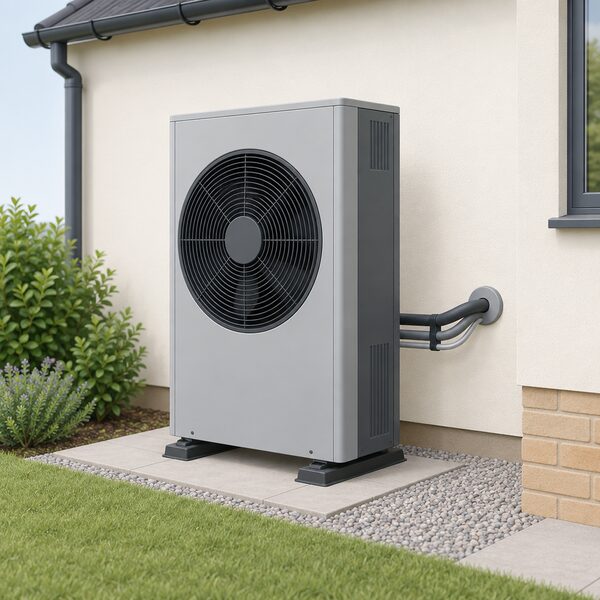
The Cosy 6 is the model most households will be quoted. Its published specification gives a heat capacity of 5.2 kW at minus 5 degrees C ambient and 65 degrees C flow, a maximum flow temperature of 70 degrees C, a minimum power draw of 0.35 kW, and dimensions of 855mm wide by 1125mm high by 595mm deep1. The maximum flow temperature matters for retrofit: 70 degrees C is high enough to serve existing radiators in many homes without a full emitter replacement, though the efficiency figures are quoted at lower flow temperatures.
| Specification | Cosy 6 |
|---|---|
| Heat capacity at minus 5 degrees C ambient, 65 degrees C flow | 5.2 kW1 |
| SCOP designed at 50 degrees C | 3.41 |
| Maximum flow temperature | 70 degrees C1 |
| Minimum power draw | 0.35 kW1 |
| Sound power level at 55 degrees C | 58 dB(A)1 |
| Dimensions (W x H x D) | 855mm x 1125mm x 595mm1 |
| Refrigerant | R2901 |
| Piping compatibility | Copper or plastic microbore, 10mm or larger1 |
The refrigerant is R290, which Octopus describes as the new natural refrigerant, better for the environment than the synthetic gases used in many heat pumps1. R290 is a hydrocarbon with a low global warming potential, and it appears across the market: the NIBE S2060 uses R290, and the InstaGen IG6-MP1-A1 lists R290 with a global warming potential of 36. The wider refrigerant picture, including the F-Gas rules that shape which gases installers may use, is covered in heat pump refrigerants.
On noise, the published figure is a sound power level of 58 dB(A) at 55 degrees C1. Sound power is measured at the unit, not at a neighbour's boundary, so it cannot be read straight across into a planning assessment. In England and Wales the MCS 020 noise assessment uses a pass or fail limit of 37.0 dB(A) at the assessment point, and the calculator supports an assessment for four heat pumps8. The practical comparison is in how noisy is a heat pump.
Efficiency: SCOP 3.4 and the 2.8 grant floor
Octopus publishes a SCOP of 3.4 for the Cosy 6, designed at 50 degrees C1. SCOP is the seasonal coefficient of performance, an average across a heating season rather than a single spot reading, and it is the figure the grant scheme uses. The Boiler Upgrade Scheme requires an in situ SCOP of at least 2.8 for air-to-water and ground source heat pumps9. The Cosy 6 figure sits above that floor, and the same 2.8 threshold appears in scheme guidance going back to 202311.
Octopus also publishes a figure of 2.8 for the Cosy 6 in the same specification material, alongside the 3.4 value, and the two are not reconciled1. The 3.4 figure is the one quoted as designed at 50 degrees C, which is the flow temperature a well set up system would run at; the 2.8 figure matches the grant minimum. A household reading the specification should treat the higher number as the design target and the lower as the floor.
For context, the Energy Saving Trust states that heat pumps are around four times as efficient as a gas boiler, maybe slightly more12. That is a general statement about the technology, not a measurement of any one model. Independent monitoring of a water source installation in Cirencester recorded a SCOP of 4.2 at 35 degrees C space heating, which shows what lower flow temperatures can do13. The relationship between flow temperature, emitter size and real-world performance is set out in heat pump efficiency: COP, SCOP and SPF.
What drives the difference between the badge figure and the bill is the flow temperature the system actually runs at, which depends on radiator sizing and weather compensation rather than the unit alone. A Cosy 6 running at 50 degrees C will not deliver the same seasonal performance as one pushed to 65 degrees C to compensate for undersized radiators.
What is in the package: heat pump, cylinder, controls and Cosy Pods
The Cosy system was launched as more than a box on the wall. The original package consisted of the Cosy 6 heat pump, a Cosy Hub home controls system, Cosy Pods room sensors, a bespoke smart tariff and Octopus's service operation2. The Cosy Pods are room sensors that feed temperature information back to the controls, which is how the system decides where to send heat rather than heating the whole house evenly.
Hot water is part of the package rather than an add-on. Octopus publishes reheat times for cylinders of two sizes, which tells a household what to expect in practice. The Cosy 6 reheats a 180-litre cylinder from 10 degrees C to 48 degrees C in about 70 minutes, and a 300-litre cylinder in about 125 minutes1. The larger models are quicker: the Cosy 9 takes about 45 minutes for 180 litres and about 80 minutes for 300 litres, while the Cosy 12 takes about 40 minutes and about 70 minutes respectively1.
| Model | 180L cylinder reheat (10 to 48 degrees C) | 300L cylinder reheat (10 to 48 degrees C) |
|---|---|---|
| Cosy 6 | about 70 minutes1 | about 125 minutes1 |
| Cosy 9 | about 45 minutes1 | about 80 minutes1 |
| Cosy 12 | about 40 minutes1 | about 70 minutes1 |
Those times assume the cylinder is being heated from cold, which is not the normal daily pattern: a cylinder is typically topped up as hot water is drawn off, so the recovery is shorter in use. The choice of cylinder size and coil is covered in hot water cylinders for heat pumps.
The controls side is where the package creates its clearest dependence. The Cosy Hub and Pods are Octopus hardware, and the smart tariff that makes the running cost work is an Octopus product. A household that switches supplier keeps the heat pump but loses the tariff structure the system was designed around.
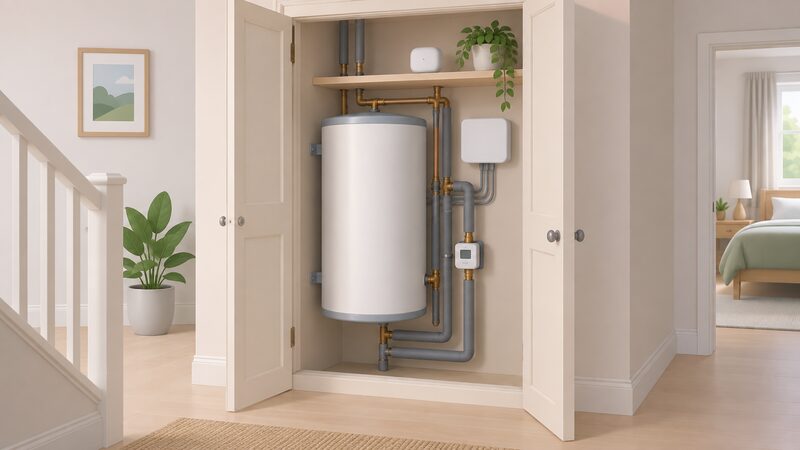
Running costs: the Cosy tariff and off-peak periods
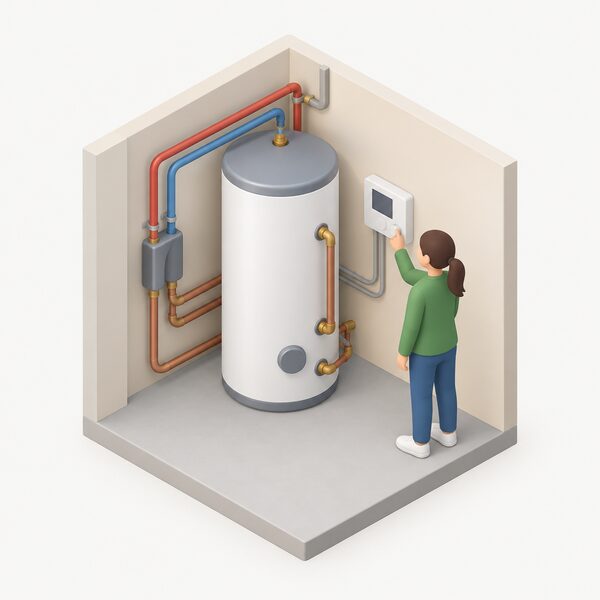
Running cost is where a heat pump's case is made or lost, and the Cosy system leans on a specialist tariff. Which? reports a specialist Octopus Cosy electricity tariff of 19.6p/kWh for heat pump owners4. That is a unit rate for a specific tariff at a point in time, not a universal price, and it depends on the household being on that tariff and using the off-peak windows.
Uswitch modelling for a typical UK household with both an electric vehicle and a heat pump puts annual heat pump cost on a heat pump-focused tariff such as Octopus Cosy at £850 per year, with £550 per year for electric vehicle charging and a total annual cost of £1,4006. Those are modelled figures for a household with both loads, not a quote, and they will move with wholesale prices and with how much heating the property needs.
The tariff structure rewards shifting demand. Octopus added a third off-peak period, the 10pm to 12am window, to Cosy Octopus in July 2024, on top of the existing cheap windows. A heat pump with a cylinder and a controls system can pre-heat the building and the water in those windows and coast through the expensive hours, which is why the controls and the tariff are sold together.
The independence position here is worth stating plainly. A Cosy heat pump removes gas from the heating bill, but it keeps the household on electricity and on a supplier, and the cheapest running depends on a specific supplier's tariff and on the household's willingness to run heating at times the tariff favours. A household that wants to cut that dependence further would look at solar and battery storage alongside the heat pump, covered in solar panels and a battery with a heat pump, and at the wider running cost picture in heat pump running costs.
Warranty, monitoring and the Care Plan
Octopus offers an eight-year warranty on its own-brand heat pumps and a five-year warranty on other brands it installs3. Because the Cosy range is Octopus's own product, the warranty sits with the company that also designed and fitted the unit, rather than being split between a manufacturer and an installer. The published terms do not set out a separate self-registration step for householders, so registration runs through Octopus as installer and maker.
Monitoring is part of the offer. Octopus publishes typical real-world seasonal performance based on data from a fleet of installed Cosy heat pumps, which is how the company arrives at its typical SCOP figure of around 3.61. Fleet monitoring of this kind gives a household a realistic expectation rather than a laboratory number, and it also means the manufacturer can see how individual systems are performing.
The wider question of what servicing does to a warranty, and whether an annual service is required to keep it valid, is covered in does servicing a heat pump affect the warranty. For the general maintenance picture, see heat pump servicing and maintenance.
Suitability: heat loss, piping and which homes fit
Octopus states that the Cosy 6 is generally suitable for homes with one to four bedrooms and a heat loss of less than 5.6 kW1. That is a maker's sizing guide, and it sits alongside the published capacity of 5.2 kW at minus 5 degrees C ambient and 65 degrees C flow1. The two figures are close, which is the point: a home whose calculated heat loss exceeds the unit's cold-weather output will need a larger model or fabric improvements.
Piping is often the constraint in older properties. Octopus states that Cosy heat pumps work with copper or plastic microbore piping 10mm or larger1. That widens the pool of homes that can take the unit without opening up walls and floors, and it matters for flats and for houses where narrow pipework was installed decades ago. The design still depends on a heat loss calculation, covered in heat pump sizing and heat loss calculations.
Insulation remains the other half of the question. Official guidance states that heat pumps are best suited to buildings with good insulation levels, and that insulation may need to be added internally or externally where homes do not already have good levels14. Air source heat pumps are described as suitable for residential homes, apartments and small commercial buildings15. The practical sequence, and whether a heat pump can be fitted before insulation work, is set out in can you fit a heat pump without insulating the house first.

Grants and installation: the £7,500 BUS grant

The Boiler Upgrade Scheme pays £7,500 for air-to-water heat pumps, a figure that has applied since 28 April 2026 under the current guidance5. The same £7,500 value for air source heat pumps appears in official statistics, and the grant rose from £5,000 to £7,500 on 23 October 202316. Exhaust air-to-water heat pumps are also eligible for the £7,500 grant5.
Eligibility is not automatic. The scheme requires the heat pump to meet the property's heating and hot water demands, with a capacity of no more than 45 kWth and a SCOP of at least 2.812. The same 2.8 SCOP minimum appears in installer guidance9. A Cosy 6 at a published SCOP of 3.4 designed at 50 degrees C sits above that threshold, though the conflicting 2.8 figure in the same specification material is worth noting1.
Installation runs through registered installers. TrustMark registration covers air source heat pump work under the OFT21-504A scope18. Octopus installs its own units, and the company's own route handles the survey, the design and the commissioning. The grant is claimed by the installer on the household's behalf under the scheme rules, so the paperwork sits with the installer rather than the household.
For the full picture across the four nations, including schemes that sit alongside the Boiler Upgrade Scheme, see heat pump grants and funding across the UK. The cost side, including what a heat pump costs with the grant applied, is covered in how much does a heat pump cost with a Boiler Upgrade Scheme grant.
Where the Cosy range has limits
The Cosy range is a single company's product line, and that shapes its limits. The heat pump, the controls, the tariff and the warranty all come from Octopus Energy, so the household's relationship is with one supplier rather than a market of interchangeable parts. That is efficient when things work and concentrated when they do not.
The tariff dependence is the clearest. The Cosy system is designed around a specialist tariff with off-peak windows, and the running cost case rests on using them4. A household that moves to a different supplier keeps the hardware but loses the tariff structure the controls were built to exploit. The controls themselves are Octopus hardware, so the smart features depend on Octopus's systems continuing to work.
On the technical side, the Cosy 6 suits homes with one to four bedrooms and a heat loss below 5.6 kW1. Homes above that need a larger model in the range or fabric improvements first, and official guidance is clear that heat pumps are best suited to well insulated buildings14. The microbore compatibility helps older properties, but it does not remove the need for a proper heat loss calculation1.
The wider context for a household weighing independence, including what a heat pump does and does not change about reliance on the grid and a supplier, is set out in heat pumps and household energy independence. For the technology itself, start with air source heat pumps explained or the full UK heat pump guide.
Sources18 cited
- Cosy heat pump, Octopus Energy, 2026-09-18
- Octopus launches its new heat pump Cosy 6, Flexi Orb, 2023-09-14
- Air source heat pump costs and savings, Which?, 2026-04-14
- Heat pumps vs boilers, Which?, 2025-09-22
- Boiler Upgrade Scheme guidance for installers V5, Ofgem, 2026-04-28
- Best tariffs for EV and heat pump, Uswitch, 2025-07-02
- InstaGen IG6-MP1-A1 heat pump, Quiet Mark, 2026-09-17
- MCS 020a calculator, MCS Certified, 2026-09-19
- Boiler Upgrade Scheme guidance for installers v5.1, Ofgem, 2026-07-02
- Boiler Upgrade Scheme: installers, Ofgem, 2026-09-17
- BUS PO guidance V2.3, Ofgem, 2023-09-25
- What is the Boiler Upgrade Scheme, Which?, 2025-10-22
- Domestic water source heat pump case study, Renewables First, 2026-02-16
- Heat pumps, New Forest District Council, 2026-09-17
- Heat pumps, nidirect, 2025-02-24
- BUS annual report 2024 to 2025, Ofgem, 2023-10-23
- BUS quarterly report issue 8, Ofgem, 2024-05-31
- TrustMark registration, OFTEC, 2026-09-17
 Octopus Energy TariffsWondering what Octopus actually offers, and whether any of it suits your home?
 Octopus EnergyOctopus Energy is the largest electricity supplier in Great Britain and the second largest for gas.
 Octopus Energy Installation ServicesOctopus Energy Services installs heat pumps, solar panels and home EV chargepoints, backed by the Electroverse public charging network and smart tariffs.
 Octopus Cosy heat pumpsThe Octopus Cosy range explained: Cosy 6 output, what the package includes, which homes it suits, running costs on the Cosy tariff, Hush Mode and the Care Plan.
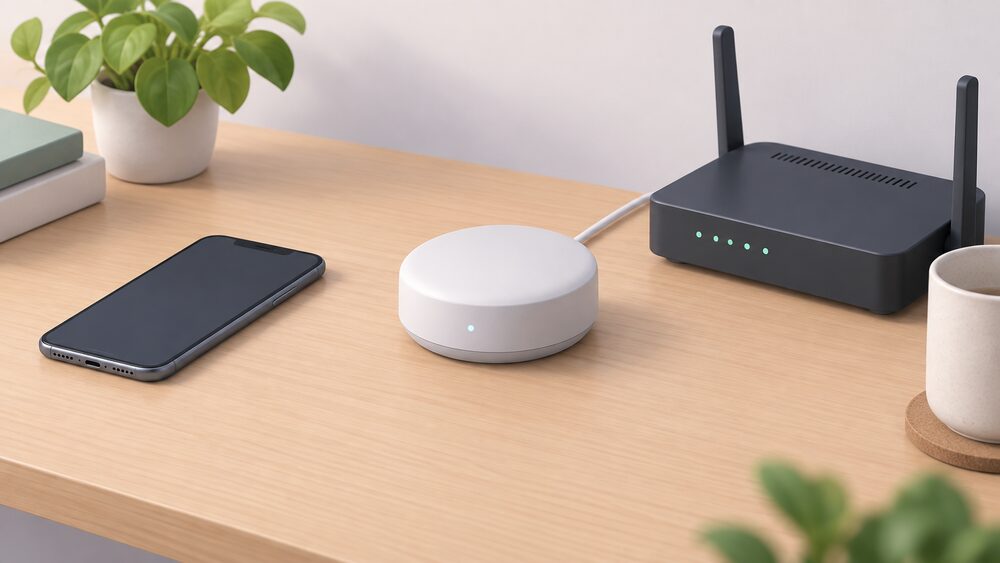 Octopus Home MiniThe Octopus Home Mini is a wi-fi device that pulls smart meter data into the Octopus app and online account every 5 to 15 seconds, giving near real-time electricity and gas visibility to Octopus customers.