
In this comparison
Agile Octopus and Octopus Tracker are the two dynamic products most UK households weigh against each other, and they follow wholesale prices in different ways. Agile tracks half-hourly wholesale prices and updates its rates daily, so the price changes every half hour in line with the changing wholesale price of electricity1. Tracker adjusts to wholesale energy prices daily, giving one price for the day rather than 48 separate rates3.
The practical difference is attention. Agile's 2026 average sits at around 20p to 22p/kWh, against an average standard variable unit rate of 26.11p/kWh based on the July 2026 Ofgem price cap for direct debit customers3. Agile is capped at 100p/kWh to protect against extreme spikes, and price spikes are short-lived, typically lasting 30 minutes to an hour2. Tracker usually carries an inbuilt cap too, but it could be as much as £1 per kWh3.
Neither tariff is a fixed deal. Both pass wholesale costs through, so both carry the risk that a cold, still week lifts the price, and both reward a household that can move load. What follows sets out how each is priced, what the caps do, what the tariffs cost in practice, and which household shape each one fits.
Agile and Tracker at a glance: two ways of following wholesale prices
Both products are wholesale-linked, but they sample the market at different resolutions. Tracker tariff costs usually follow wholesale energy prices and can change on a daily basis, and some tracker tariffs work by tracking wholesale energy prices and setting the prices customers pay for their energy on a daily basis3. Agile takes the same principle and slices it finer: it tracks half-hourly wholesale prices and updates its rates daily, with prices varying every 30 minutes and set the day before1.
That difference changes what a household can do with the tariff. A daily price can be read once in the morning and acted on across the day. A half-hourly price can be read 48 times, which is what makes appliance scheduling, battery charging and EV charging meaningful, and also what makes the tariff demanding.
| Agile Octopus | Octopus Tracker | |
|---|---|---|
| Pricing basis | Half-hourly wholesale prices1 | Wholesale energy prices, daily3 |
| How often the price changes | Every 30 minutes2 | Daily3 |
| When prices are known | Next 24 hours published between 4pm and 8pm2 | Typically after 4pm on the preceding day3 |
| Cap | 100p/kWh2 | Usually an inbuilt cap, could be as much as £1 per kWh3 |
| Negative rates | Import rates can go negative in high-renewable, low-demand periods3 | Some rates might be negative, meaning you might be paid to use electricity on those days6 |
| Export pairing | Agile pairs with Agile3 | Tracker pairs with Outgoing or Agile3 |
The export pairing matters more than it looks. The import tariff a household is on determines which export tariff it can use: Octopus Go and Intelligent Octopus Go pair with the Smart Export Guarantee, Standard, Fixed, Flexible and Tracker pair with Outgoing or Agile, Flux pairs with Flux, and Agile pairs with Agile3. A solar household choosing between the two is therefore also choosing its export route.

Agile Octopus: half-hourly prices set daily from the day-ahead market

Agile's rates come from the day-ahead wholesale market, which is why they can be published before the day begins. Customers on Octopus Energy's Agile tariff find out the electricity unit rates they will pay for the next 24 hours between 4pm and 8pm daily, and the prices for the subsequent day are typically provided after 4pm on the preceding day2. The tariff passes the costs of supplying energy directly through to consumers, with no fixed or pre-advertised cheap times7.
That last point is the one households most often miss. There is no guaranteed cheap window on Agile, in the way Economy 7 has night hours. The cheap periods exist, but they move with wind, demand and interconnector flows. Octopus Energy also has an open API for the prices on its dynamic time-of-use tariff, Agile, which is how third-party apps and home energy systems read the rates and automate a battery or charger8.
From 1 April 2026, every half-hour rate is 3.5p/kWh lower than it would have been previously, reflecting the government's decision to remove certain levies from energy bills3. That is a structural change to the whole price curve rather than a change to how the tariff works.
The engagement cost is real and documented. Agile Octopus is a dynamic tariff that keeps users in control but requires more engagement, and smart time-of-use tariffs require increased engagement from consumers at key points in the consumer journey, from choosing a tariff to monitoring their usage9. A household that ignores Agile still gets the wholesale price, but it gets the average of it rather than the benefit of the cheap half-hours.
Price limits and spikes: the 100p/kWh cap and periods above 40p
The cap is the single most important protection on either tariff. Octopus has capped unit rates on its Agile tariff at 100p/kWh to protect customers from the biggest shocks, and the maker describes the same limit as £1/kWh to protect against extreme spikes2. Octopus says that "price spikes are short-lived, typically lasting 30 minutes to an hour"2.
"price spikes are short-lived, typically lasting 30 minutes to an hour"
Tracker's protection is less predictable. There is usually an inbuilt cap, but it could be as much as £1 per kWh of energy used3. The word "usually" is doing work there: the cap is a feature of the product as described, not a uniform guarantee across every tracker design.
For context on what a cap is protecting against, the wider cost stack has been moving. Suppliers' operating costs and similar factors have added £100 to the October 2025 price cap, according to the Energy and Climate Intelligence Unit11. That is a cost inside the capped default tariff, not a wholesale spike, but it shows how much of a bill sits outside the energy itself.
What Agile costs in practice: around 20 to 22p/kWh against the price cap
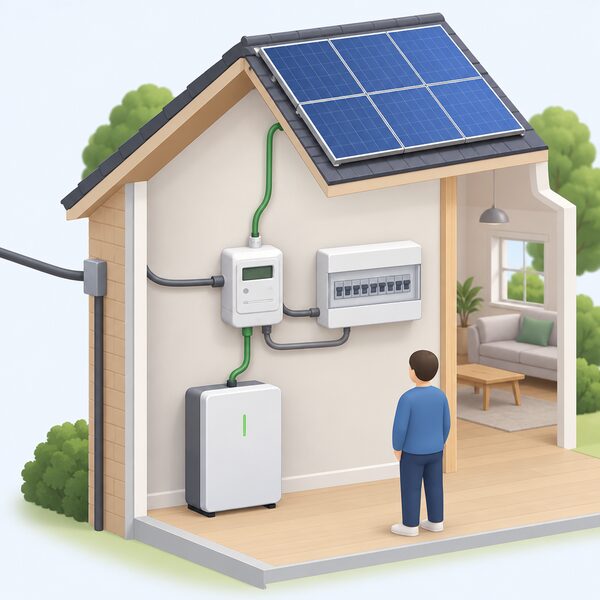
The headline comparison is straightforward. The 2026 average for Agile sits at around 20p to 22p/kWh3. The average electricity unit rate of a standard variable tariff, based on the July 2026 Ofgem energy price cap for customers paying by direct debit, is 26.11p/kWh3. The current Ofgem price cap period from 1 July to 30 September 2026 was set at £1,664, with Octopus Flexible at £1,65112.
Octopus promises to keep its own standard variable rate tariff, Octopus Flexible, below the price cap, typically around £15 cheaper12. That is the baseline Agile is being measured against, and it is a moving one: the cap resets, and the gap between Agile's average and the cap will move with it.
Independent work on Agile has used an average electricity unit price of 21.57p/kWh in its calculations, which sits inside the maker's 20p to 22p/kWh band13. That agreement between a maker figure and an independent modelling figure is worth noting, because dynamic tariff averages are easy to state loosely.
| Tariff | Unit rate | Basis |
|---|---|---|
| Agile Octopus | Around 20p to 22p/kWh | 2026 average3 |
| Agile Octopus | 21.57p/kWh | Average used in independent calculations13 |
| Standard variable | 26.11p/kWh | July 2026 price cap, direct debit3 |
| Octopus Flexible | £1,651 annual | July to September 2026 cap period12 |
| Price cap | £1,664 annual | July to September 202612 |
On the export side, Outgoing Octopus Agile paid an average of 9.09p per kWh as of April 2026, paid based on real-time energy pricing varying every half hour8. Octopus has said these typically vary between 4 and 10p/kWh14, and Outgoing Octopus agile is priced on the day-ahead wholesale price15. A household with solar and a battery is therefore exposed to wholesale prices on both sides of the meter.
Savings: modelled heat pump figures and small load-shifting gains
Savings figures for dynamic tariffs need their conditions attached, because most of them are modelled against a specific alternative. Independent modelling found that a heat pump on a time-of-use tariff could save as much as £476 per year at SCOP 4.0 compared to running a gas boiler, with a separate figure of around £331 per year in the same work; the two figures are not reconciled10. Another independent study put the saving at £214 per year at SCoP 3.0 or £395 per year at SCoP 4.0 compared to running a gas boiler13.
The load-shifting element is smaller and better evidenced. Shifting washing machine and dishwasher use could save an additional £38 per year, according to an official consultation16. Monitoring use with an energy monitor typically saves £69 a year17. A typical household will save an average of over £100 a year by switching, according to the Energy Saver App trial18.
The wider switching literature is more cautious. Ofgem research found a £300 saving per year at 90% switch probability with other attributes at optimum19. Switching costs offset around £3.80 to £5.40 annualised per dual fuel customer20. And a Centrica claim that switching off electrical items on standby can save £147 a year was described as a large over-estimate21. Savings claims in this area vary widely in quality, and the ones tied to a named comparison and a named model are the ones worth weighing.
The engagement trade-off: a tariff that rewards attention

Agile and Tracker sit at different points on the control spectrum. Agile Octopus keeps users in control but requires more engagement, while propositions such as Intelligent Octopus Go promise lower pricing in exchange for handing over control9. A household choosing between Agile and Tracker is choosing how much of its own attention to spend.
The evidence on engagement is consistent. Smart time-of-use tariffs require increased engagement from consumers at key points in the consumer journey, from choosing a tariff to monitoring their usage10. There is more evidence of familiarity with flexibility products such as the Agile tariff from Octopus, including discussion of how these interact with the Demand Flexibility Service22. Familiarity is not the same as ease, and the households that do best on half-hourly pricing tend to be the ones with automation.
Automation is where the tariff becomes less of a chore. Octopus Energy has been testing and trialling how heat pumps can be integrated with innovative smart tariffs like Agile Octopus to get even cheaper running costs23. The Octopus Power Pack enables EVs to charge during off-peak hours and discharge excess energy back to the grid when demand is high24. Both point the same way: the value of a half-hourly tariff rises sharply when a machine reads the prices instead of a person.
Agile or Tracker: which suits which household
The choice comes down to how much load a household can move and how much attention it will give the tariff. Agile suits a home with a battery, an EV, a heat pump or heavy appliances that can be run at any hour, because the half-hourly signal is only worth having if something responds to it. Tracker suits a home that wants wholesale exposure without reading 48 prices a day, and it pairs with Outgoing or Agile for export3.
For a household with solar and a battery, the pairing rules decide part of the answer. Agile pairs with Agile, and Outgoing Agile export prices change half-hourly based on day-ahead wholesale rates3. Octopus Flux is a two-rate tariff with matching import and export prices and automated battery management, charging when power is cheapest and exporting between 4pm and 7pm8. Intelligent Octopus Flux was temporarily unavailable as of 16 September 2026 because energy prices were particularly volatile, while the standard Octopus Flux tariff remained available26.
Neither tariff is a route to independence from the grid. Both are routes to a different relationship with it: the household still buys every unit, still depends on Octopus as supplier, still depends on the wholesale market and on the interconnectors and generation behind it, and on a working smart meter and, for automation, on a manufacturer's app or cloud service. What changes is that the price becomes visible and, to a degree, movable. For a household with a battery and an EV, that visibility is worth money. For a household without them, Tracker's daily price is the simpler way to hold the same wholesale exposure, and Agile's half-hourly detail is largely unused.
Sources26 cited
- What is a tracker tariff?, Uswitch, 2026-06-26
- Time of use tariffs explained, Which?, 2026-04-23
- Best Octopus tariff for solar and battery, Spirit Energy, 2026
- Energy tariffs explained, Uswitch, 2026-02-17
- Discovering disabled consumers' future energy needs, Energy Systems Catapult, 2023-11-16
- Choosing an energy tariff, Citizens Advice, 2023-08-24
- Can time-of-use tariffs make heat pumps cheaper to run, Nesta, 2025-02-17
- Smart Export Guarantee rates: the best and worst SEG tariffs, Which?, 2026-04-24
- Making home energy management work for consumers, Energy Systems Catapult, 2026-02-12
- Smart timing: making time-of-use tariffs work for consumers, Citizens Advice, 2025-09-09
- Price cap: gas price still adding £300 a year to energy bills, Energy and Climate Intelligence Unit, 2025-09-30
- Octopus price changes, Uswitch, 2026-07-10
- A heat pump might be a lot cheaper than you think, Which?, 2024-11-26
- Solar panels and renewable energy: costs and rewards, Which?, 2020-01-12
- Will solar panel owners struggle to get new SEG payments, Which?, 2019-06-18
- Smart meter Guaranteed Standards of Performance draft impact assessment, Ofgem, 2025-08
- Tips for lower energy bills, Centre for Sustainable Energy, 2024-02-29
- Save money on energy bills with the free Energy Saver App, Low Carbon Hub, 2025-01-23
- Understanding consumers' energy tariff choices, Ofgem, 2025-07
- Price cap: consultation on possible wholesale cost adjustment, Ofgem, 2022
- The energy price crisis: issues for energy use, CREDS, 2022
- Smart prepayment customers' experience of the Demand Flexibility Service, Nesta, 2024-10-07
- Pump it up: innovation in low carbon heating, Energy Systems Catapult, 2022-12-23
- Vehicle-to-grid charging, Uswitch, 2025-07-02
- Best energy tariff for Wondrwall, Wondrwall, 2026
- Intelligent Octopus Flux, Octopus Energy, 2026-09-16
 Tracker vs Price CapTracker tariffs can cost more than the price cap, so how do they compare?
 How Tracker Tariffs WorkTracker tariffs move your unit rate with wholesale prices or the Ofgem price cap, so what you pay can change daily.
 Agile and Dynamic TariffsAgile tariffs change the price of your electricity every half hour, so what you pay depends on when you use power.
 The Full Tariffs GuideWhich energy tariff suits how you live, and will switching really save you money?
 Time-of-Use Tariffs ExplainedCan you pay less for electricity by using it at different times of day?
 Home Energy ModelThe energy rating on your EPC is about to be worked out differently when you buy, sell or build a home.