

In this comparison
Octopus Energy is now the largest supplier of electricity in Great Britain and the second largest for gas, behind British Gas1. EDF is the UK's fifth-largest energy supplier and is French-owned2. That single fact answers the question most people arrive with, but it says nothing about which one suits a particular home.
The two differ most on smart tariffs, solar export rates and customer service scores. Octopus is a Which? Recommended Provider and has been named one for nine years running, the only large supplier to hold that status1. EDF is a major incumbent with a long-standing presence in the UK market and a full range of standard tariffs2.
Both are licensed suppliers bound by the same Ofgem rules on prepayment meters, switching and credit balances. Both pay for exported solar electricity under the Smart Export Guarantee. Where they part company is in how they price, how they are rated by customers, and how much of your home's energy setup they can integrate.
Octopus and EDF at a glance: who each supplier is
Octopus Energy entered the UK energy market in 2016 and is majority owned by Octopus Group, a UK company2. It has grown largely by taking on customers from suppliers that failed or exited, including Bulb and Shell Energy, and it also manages the Co-op Energy brand on its behalf2. It holds a Which? Recommended Provider award and was named a Which? Eco Provider in 20244.
EDF Energy is the UK arm of the French state-owned EDF group and is described as the UK's fifth-largest energy supplier2. It sells standard variable and fixed tariffs, and its Essentials tariff is a fixed unit price product requiring a smart meter, available in multiple contract lengths7. EDF also sells zero carbon tariffs8. Its business supply arm absorbed Opus Energy's business customers after Opus announced in 2023 that it would no longer trade in the gas market7.
For a household, the practical difference is what each company is: Octopus is a technology-led challenger that has become the establishment, while EDF is an incumbent generator and supplier with a European parent. Neither is a co-operative or a local supplier, and neither gives a household independence from the grid. Both buy wholesale and bill you for what you use.

Size and stability: from challenger to largest supplier
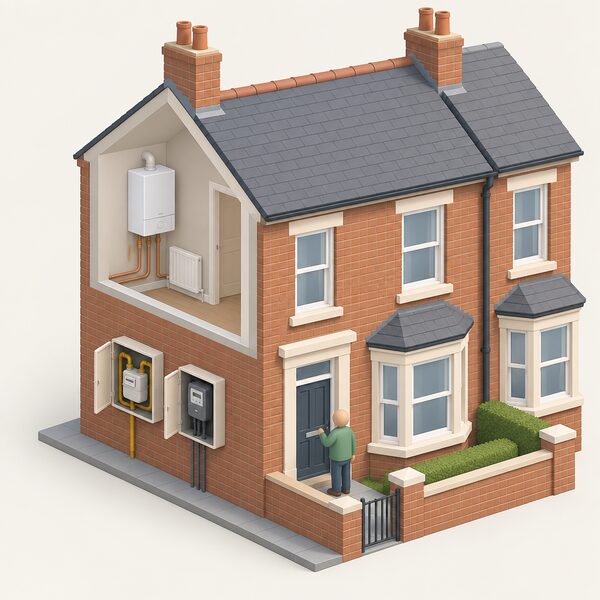
Octopus became the UK's largest electricity supplier in late 2023 and closed the gap in the gas market to become the largest supplier overall in March 20262. Ofgem's own market reporting describes six large companies holding 91% of the domestic market, with Octopus now the largest electricity supplier and the second largest for gas in Great Britain, which covers England, Scotland and Wales3.
The growth came partly from acquisitions. Octopus took on 1.5 million customers from the failed supplier Bulb and 1.3 million from Shell Energy, which exited household supply voluntarily1. The Shell Energy Retail takeover completed in December 20232. Customers from Qwest Energy, Engie and Roar Power also transferred to Octopus starting in 20201.
EDF's position is different in kind. It is a long-established incumbent rather than a consolidator, and its scale comes from its own customer base and generation business rather than from absorbing failed rivals2. Ofgem's 2022 review of how suppliers support vulnerable customers placed EDF in a group identified with minor weaknesses, alongside British Gas, Bulb, E.ON, Ovo, Scottish Power and Utility Warehouse, while Octopus was placed in a second group identified with moderate weaknesses9.
Tariffs and pricing: fixed deals, standing charges and how each sets rates
Both suppliers set their own rates within the Ofgem price cap on variable tariffs, and both sell fixed deals priced individually. A fixed rate tariff means the price you pay is set for a period of time, but only the unit price and standing charge are fixed, not the total bill10. That distinction matters: use more and you pay more, even on a fix.
Octopus has offered fixed tariffs substantially cheaper than the price cap through its Which? Recommended Provider status, according to Which?8. It also runs a low standing charge tariff, a 12-month product with fixed rates and standing charges that takes £150 a year off the standing charge part of the bill11. That tariff sits within a one-year Ofgem trial of lower standing charge tariffs that began in June 2026 and includes British Gas, EDF, E.ON and Octopus11.
EDF's Essentials tariff is a fixed unit price product requiring a smart meter, with multiple contract lengths available7. EDF's published business electricity example shows a 1-year fixed rate of 31.2p per kWh at 25,000 kWh a year, which is a business figure and not a domestic rate7.
Neither supplier publishes a single domestic price that applies to every home, because rates vary by region, payment method and tariff. Prices are quoted per address, and the only meaningful comparison is a current quote for your own usage.
| Octopus | EDF | |
|---|---|---|
| Variable tariff | Capped by Ofgem | Capped by Ofgem |
| Fixed deals | Yes, including 12-month fixes11 | Yes, including Essentials with smart meter7 |
| Low standing charge tariff | Yes, £150 a year off standing charges11 | Part of the June 2026 Ofgem trial11 |
| Green tariff claim | Up to 100% renewable electricity12 | Zero carbon tariffs available8 |
Smart tariffs and green generation: where Octopus differs
This is the clearest difference between the two. Octopus runs a family of smart tariffs that shift consumption to cheaper periods, and they depend on a smart meter and, in most cases, an app. Its electric vehicle tariffs work through an app customers download, and there are three EV tariffs13. Octopus Go gives five hours of cheaper energy every night, while Intelligent Octopus offers six hours of cheaper electricity overnight13. On the EV tariffs, customers select the time they need the car by and the amount of charge, and Octopus's systems charge at the cheapest times13.
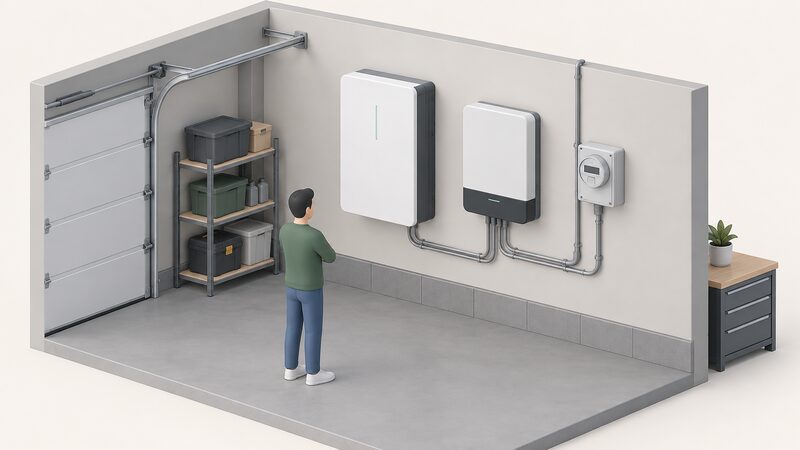
For solar and battery homes, Octopus's export tariffs are the standout. Outgoing Octopus pays 12p per kWh with no fixed end date, Outgoing Octopus Agile pays an average of 9.09p per kWh based on real-time pricing that varies every half hour, and Intelligent Octopus Flux pays 23p per kWh to customers with both solar panels and a battery4. Intelligent Octopus Flux is a two-rate tariff with matching import and export prices and automated battery management, charging when power is cheapest and exporting between 4pm and 7pm4. The Intelligent Octopus Flux Export tariff is available to customers on the Intelligent Flux import tariff who have solar PV and battery storage and who allow Octopus to control their battery exports14.
EDF's export offer is narrower. Export Exclusive 12m V3 pays 18p per kWh, but only to EDF customers who had solar panels or a battery installed through EDF4. EDF also appears as a Smart Export Guarantee licensee with Export Variable and Export 12m products15. On the import side, EDF sells zero carbon tariffs8.
"This tariff was available to customers on the 'Intelligent Flux' import tariff, who had solar PV and battery storage but also allowed Octopus to control their battery exports"
The trade-off is control. Octopus's best export rates require handing scheduling decisions to its systems. A household that wants to run its own battery without outside control will not access the 23p rate.
Customer service scores and complaints record

The independent and official evidence points the same way. Ofgem's January 2026 survey found a significantly higher proportion of Octopus customers were satisfied or very satisfied with customer service than average, and a significantly lower proportion were dissatisfied or very dissatisfied9. EDF was the mirror image: a significantly lower proportion of its customers were satisfied with customer service than average, and a significantly higher proportion were dissatisfied9. EDF also had a significantly lower than average proportion of customers satisfied overall9.
Citizens Advice's comparison table, covering January to March 2026, scored Octopus 3.4 out of 5 for complaints and EDF 2.0 out of 55. Octopus ranked 4th in the supplier comparison table and scored 3.5 out of 5 for fewer complaints received5. Which?'s January 2025 assessment found Octopus scored maximum points for customer support and mostly five stars across the customer satisfaction survey, dropping to four stars only for value for money and customer communications12. In Which?'s 2026 rankings, Octopus came second with an overall score of 74% and was named a Recommended Provider for the ninth year running1.
Ofgem's earlier surveys show the pattern is not new. In July 2024, a significantly lower proportion of Octopus customers said they were dissatisfied with customer service compared with average16. In the July to August 2025 survey, 1% of Octopus respondents were dissatisfied or very dissatisfied17, and in January 2025 the figure was 3%18.
Prepayment meters and the Ofgem rules both must follow
Both suppliers appear on the list of firms permitted to install prepayment meters without consent. As of August 2026 that list is EDF Energy, E.ON Next, Good Energy, Octopus Energy, Ovo Energy, Scottish Power, Utilita and Utility Warehouse13. Ofgem allowed EDF, Octopus and Scottish Power to resume force-fitting in January 2024 after they met new rules, following a suspension of the practice in early 2023.
The rules that constrain both are strict. Energy firms are banned from forcibly installing a prepayment meter if you are over 75 with no support at home, have children under two at home, have severe health issues including terminal illness, are medically dependent on electricity or a warm home, or if nobody in the household is able to top up the meter13. Suppliers should also not move you to prepayment if you have owed money for less than three months, owe less than £200 per fuel, or have a repayment plan agreed13. If a meter is changed to prepay, suppliers must give £30 credit per meter13.
Ofgem rules protect customers in debt where a supplier wants to install a prepayment meter, and a supplier will check whether a prepayment meter is suitable for you if you tell them about your circumstances19. The Code of Practice for involuntary prepayment installations was incorporated into mandatory Supply Licence Conditions in September 202320.
Compensation is available in a specific window. You may be able to claim if you were forced to have a prepayment meter between 1 January 2022 and 21 January 2023 and your supplier did not follow the rules properly21.
Octopus offers prepayment as a payment method5. EDF's payment features include online billing, direct debit, smart meters, a mobile app, flexible payment options and monthly billing7. EDF states that switching payment method involves no credit check but is based on an assessment of each customer's circumstances13.
What each supplier means for home battery and solar households
For a home with solar panels, a battery or an electric vehicle, the two suppliers are not equivalent. Octopus's tariff range is built around shifting load and paying for export, with three EV tariffs and multiple export products13. Its best export rate, 23p per kWh on Intelligent Octopus Flux, is roughly double its standard Outgoing Octopus rate of 12p per kWh, and it requires both solar and a battery4.
EDF's strongest export rate, 18p per kWh on Export Exclusive 12m V3, is available only to customers who had their solar panels or battery installed through EDF4. A household with an existing system installed by someone else would not qualify for that rate. EDF's other export products, Export Variable and Export 12m, are listed as Smart Export Guarantee tariffs15.
The Smart Export Guarantee itself is the floor. It obliges licensed suppliers above a size threshold to pay for small-scale low carbon generation exported to the grid, and Ofgem's Year 5 report records the lowest tied and untied tariff rates in the market as 5p per kWh from Octopus and 1p per kWh from E Energy respectively14. That 1p figure shows how low export payments can go, and why the specific tariff matters more than the supplier's name.
For independence, the picture is mixed. A solar and battery household with an Octopus smart tariff can buy at cheap overnight rates, store the power and export at peak, which reduces reliance on grid prices at the times when they are highest. But the arrangement depends on the supplier's app, the supplier's scheduling systems and a smart meter that reports half-hourly. If the tariff changes or the product is withdrawn, the household's economics change with it. EDF's offer is simpler and less integrated, which means less control handed over but also less of the automation that makes a battery pay.

Switching between them: credit balances, meter readings and exit terms
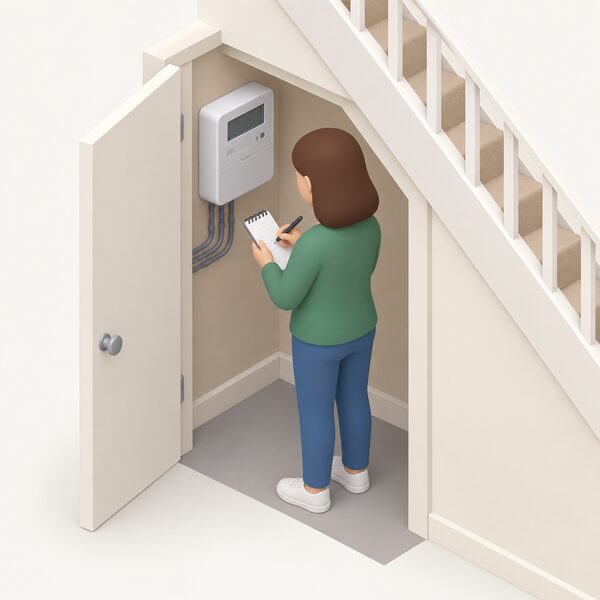
Switching between Octopus and EDF follows the same process as any other domestic switch. A smart meter does not block it, and Octopus reports that smart meters are working correctly for its customers, with 96.44% bills accuracy on smart meters in January to March 20265. Some Octopus tariffs, including its EV tariffs, require a smart meter to sign up, and EDF's Essentials tariff also requires one13.
On payment flexibility, Octopus has outlined offering weekly or fortnightly direct debits, with payments reviewed and adjusted more easily23. EDF states that switching payment method involves no credit check but is based on an assessment of each customer's circumstances13. For comparison, E.ON Next requires an external credit check before agreeing a new contract and customers must have cleared all outstanding debt13.
Credit balances are protected. Ofgem's guidance allows you to check whether you are owed money on your energy bill, and a credit balance is refundable when you switch or close an account24. The Energy Switch Guarantee sets out what suppliers promise during a switch, including a 14-day cooling off period and a guarantee that any credit balance is refunded.
The practical steps are the same for both suppliers:
- Take a meter reading on the day of the switch and keep it.
- Give the new supplier that reading when you sign up.
- Leave the Direct Debit in place until the final bill is settled, then cancel it.
- Check the final bill against your own readings.
- Claim any credit balance from the old supplier.
Neither supplier charges an exit fee on a standard variable tariff. Fixed tariffs can carry exit fees, and the terms are set out in the tariff's own conditions rather than by the supplier as a whole.
Sources24 cited
- Revealed: the latest Which? energy company rankings, Which?, 2026-01-19
- Big Six energy suppliers guide, Uswitch, 2026-07-17
- State of the energy market report: retail, Ofgem, 2025-04-15
- Smart Export Guarantee rates: the best and worst SEG tariffs, Which?, 2026-04
- Compare domestic energy suppliers: customer service, Citizens Advice, 2026
- Best energy companies for 2024, Which?, 2024
- EDF Energy, Energy Helpline, 2026-09-20
- How to choose the best energy company, Which?, 2026-01-19
- Customers' satisfaction with their supplier: supplier level findings, January 2026, Ofgem, 2026-05
- Switching your energy supplier, Energy Saving Trust, 2026-06-26
- What are low standing charge tariffs?, Plymouth Energy Community, 2026-09-20
- Powering ahead or powering off? Which? research reveals the best and worst energy firms, Which?, 2025-01-17
- Is a prepayment energy meter right for you?, Which?, 2026-08-27
- Smart Export Guarantee Annual Report Year 5, Ofgem, 2025-12
- Smart Export Guarantee, Solar Energy UK, 2026-05-12
- Customers' satisfaction with their supplier: supplier level findings, July 2024, Ofgem, 2024-11
- Customers' satisfaction with their supplier: supplier level findings, July to August 2025, Ofgem, 2025-12
- Customers' satisfaction with their supplier: supplier level findings, January 2025, Ofgem, 2025-05
- You home energy checklist, National Energy Action, 2026-05-20
- Tackling fuel poverty: priority actions, Welsh Government, 2023-11-08
- Installing a prepayment meter without your permission, Ofgem, 2026
- Installing a prepayment meter without your permission: information for consumers, Ofgem, 2026
- Consumer vulnerability strategy progress report, Ofgem, 2026-07
- Check if you are owed money on your energy bill, Ofgem, 2026
 The Big Six Energy SuppliersWho were the Big Six energy suppliers, and do they still exist?
 Ofgem Consumer ArchetypesWhich kind of household are you, and does it change what you pay for energy?
 Who Owns Which Energy SupplierWho is actually behind the company that sends your energy bill?
 Supplier Market ShareWho supplies most homes in Britain, and does the answer change for gas and electricity?
 The Full Tariffs GuideWhich energy tariff suits how you live, and will switching really save you money?
 Customer Service RatingsWhich energy suppliers answer the phone quickly and deal with complaints properly?