

In this answer
Short answer
Shell Energy's household customers went to Octopus Energy. Octopus has taken on customers from suppliers that ceased trading, such as Bulb, and from suppliers that exited the market voluntarily, such as Shell Energy, and the reported figure for the Shell book was 1.3 million customers1. The move was handled through the regulated process that follows a supplier leaving the market, so households did not have to do anything to keep the lights on: Ofgem's guidance states that customers are moved automatically to a new supplier and supply is not interrupted2.
What changes is the commercial relationship, not the physical one. The old contract ends, the account is re-papered onto the new supplier's default terms, and the price cap becomes the relevant protection for a household that has not signed a fixed-term contract3. Credit balances are protected through processes set by Ofgem, and the same framework transfers the account automatically4.
For a household's energy independence, the episode is a reminder of where dependence actually sits. The wires, the meter and the gas network stay put; what moves is the billing entity, the app, the account data and the tariff. A supplier failure or exit is absorbed by the system rather than by the home, but the home still depends on a supplier, a network operator and, for gas, on imports.
What happens when an energy supplier stops trading
When a supplier fails, Ofgem's process places the company under an Energy Supply Administration Order, and an administrator is chosen to run the company of the energy supplier that has gone out of business2. The special administrator runs the company until it is rescued, for example through restructuring, or until it is sold or its customers are moved to other suppliers2. That is the machinery behind the headline: the brand stops selling, the customer book is transferred, and the supply itself continues.
The pattern is not new. Qwest Energy ceased trading and its customers transferred to Octopus Energy starting in 2020, alongside Engie and Roar Power4. Rebel Energy's customers were transferred to British Gas4. Shell Energy sits in a different category from those failures: it exited the market voluntarily rather than collapsing, which is why the language around it is a sale or transfer of the customer book rather than a rescue.
For the household, the practical sequence is short. The account moves, a welcome pack arrives from the new supplier, and the old supplier's final bill follows. Ofgem's switching guidance is explicit that no action is needed from the customer when a supplier goes out of business, and that the regulator moves the account and protects continuity of supply2. The dependence that remains is on the new supplier's systems: its billing accuracy, its customer service and its app. That is a real exposure, and it is the reason the transfer is worth checking rather than assuming.
How to find out who supplies your home now
The quickest route is a recent bill, a statement or the online account held with the supplier. Where a household has just moved into a newly built property, the developer or house-building company will be able to tell you who supplies the gas and electricity to the newly built home6. For the network rather than the billing, the Energy Ombudsman directs households to the Energy Networks Association website to find out who the network provider is7.
If the account is in debit or money is still owed to the old supplier, switching is still possible, but a final bill must be paid in full8. That matters after a transfer, because the final bill from the outgoing supplier and the first bill from the incoming one can arrive close together.
Ofgem's role in transferring customers and protecting credit
Ofgem's role in a supplier exit is administrative and supervisory. It appoints the special administrator, oversees the transfer of the customer book, and monitors suppliers and network operators closely to make sure they meet the rules set out in licences, regulations and law, provide good customer service, and reply quickly to customers who contact them9. The credit balance protection is part of the same framework: processes set by Ofgem protect the credit balance and automatically transfer the customer to a new supplier4.
Where a household is unhappy after a transfer, the escalation route is defined. Ofgem handles complaints only after the supplier's own process has been used, and the Energy Ombudsman is approved by Ofgem to handle service disputes in the energy sector10. The Ombudsman's remit covers consumer complaints about energy bills, mis-selling, problems with energy supply and problems with switching supplier11.
The limit of the protection is worth stating plainly. Ofgem guarantees continuity of supply and the treatment of credit, not the preservation of a tariff. A household that was on a particular fixed deal with the outgoing supplier does not carry that deal across; the new supplier's default terms apply until the household chooses otherwise.
What the price cap means after a supplier change
After a transfer, most households land on default terms, and the price cap is the relevant protection. The cap applies where a customer has not signed up for a fixed-term contract with their supplier3. It sets a maximum amount that suppliers can charge per unit of energy for customers on default tariffs, as well as a limit on the daily standing charge12. It is a cap on the maximum a supplier can charge per unit of energy, not on the overall bill13, and it is a limit on the amount suppliers can charge homeowners for the energy they use8.
The distinction matters after a transfer because a household's bill depends on how much energy it uses, not only on the capped rates. The cap includes a levelisation allowance, which exists to make sure prepayment and Direct Debit customers pay the same standing charge14. That is a fairness mechanism inside the cap rather than a separate charge.
On payment method, the practical guidance for a switch is to set up the Direct Debit with the new supplier ahead of the date it takes over, and to cancel the old Direct Debit after paying the final bills15. Reviewing current payments and debt repayments is part of managing the change16.
Radio Teleswitch Service decommissioning: why some transferred customers need a smart meter
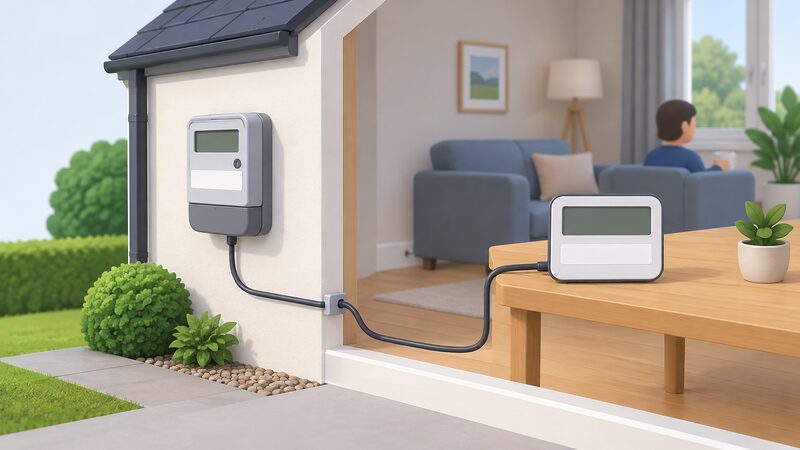
Some households that moved supplier also sit on meters that depend on the Radio Teleswitch Service. RTS produces the radio signal to household meters that have off peak tariffs but are not smart meters; it sends signals via radio waves to switch between peak and off-peak electricity rates and controls when heating and hot water systems turn on17. Suppliers are required to proactively contact customers who currently use RTS meters to inform them about the upcoming switch-off date and the need to upgrade to a smart meter to avoid disruptions17.
That obligation sits with the supplier, which means a transferred household should expect contact from the new supplier rather than having to chase the issue. The wider smart meter programme is described by the industry body as helping provide visibility of energy use, enabling consumers, energy suppliers and other organisations to better understand how energy is being used18.
There is a caveat for anyone who switches again after the transfer. A household can switch suppliers if it has a smart meter, but the new supplier might not offer all smart meter services such as remote meter readings, and the meter may need replacing11. For a home on an off-peak heating tariff, that is the point at which the meter, the tariff and the supplier all have to line up.
Warm Home Discount and eligibility after a supplier change
The Warm Home Discount is funded through a levy on all domestic gas and electricity customers, and under the scheme larger energy suppliers support people who are in fuel poverty or are at risk of it19. Eligibility turns on being a customer of a participating energy supplier on the qualifying date5. For winter 2025/26, the qualifying date was 24 August 20255.
The England and Wales scheme requires that the energy supplier is part of the scheme, that the customer or their partner gets certain means-tested benefits, and that the customer's name or their partner's is on the electricity bill20. Scotland has its own published conditions21. The scheme continues to be administered and enforced by the Gas and Electricity Markets Authority22.
The consequence of a transfer is straightforward and worth checking: if the qualifying date falls before or during the move, the household needs to know which supplier it was with on that date, because that is the supplier whose participation in the scheme determines eligibility. A household that moved to a supplier outside the scheme, or that was between suppliers on the qualifying date, may fall outside the discount for that year.
Staying, switching, and what the transfer does not change
Staying with the new supplier is the default position after a transfer, and it is a legitimate one. Switching afterwards is a choice rather than a requirement, and a household in debit can still switch energy suppliers, though it will receive a final bill which must be paid in full8.
What the transfer does not change is the physical dependence. The home remains connected to the same distribution network, the same gas grid where gas is used, and the same meter unless that meter is replaced. The supplier is the commercial interface; the network operator is the physical one, and the Energy Ombudsman's guidance points households to the Energy Networks Association to identify it7.
For energy independence, the honest reading is that a supplier transfer is a change of counterparty, not a change of control. A household that wants to reduce its exposure to supplier risk has the same levers it had before: the tariff it chooses, the payment method it uses, and the extent to which it generates or stores its own energy. The transfer itself is absorbed by the regulated system, and the credit balance is protected, but the reliance on a supplier, an app and a billing system remains.
Sources22 cited
- Which energy suppliers are British?, Uswitch, 2026-06-26
- What happens if your energy supplier goes out of business, Ofgem, 2026
- Energy price cap, House of Commons Library, 2026-09-20
- Which energy survey results, Which?, 2026-01-19
- Warm Home Discount eligibility statement, England and Wales 2026 to 2027, GOV.UK, 2026-02-26
- A step by step guide to setting up gas and electricity in a new home, Energy Helpline, 2026-09-20
- Network operators, Energy Ombudsman, 2026-09-20
- Gas, Energy Helpline, 2026-09-20
- Complain about your energy supplier or network operator, Ofgem, 2026
- FAQs, Energy Ombudsman, 2026-09-19
- Problems with services, Isle of Anglesey County Council, 2025-10
- Energy UK explains typical domestic consumption values, Energy UK, 2026-07-01
- Student energy guide, Confused.com, 2026-07-03
- Energy price cap, Ofgem, 2026-09-17
- Direct Debit, Uswitch, 2025-10-22
- Get help with your energy bills, Ofgem, 2026-09-17
- Radio Teleswitch Service, Electricity North West, 2026-09-19
- Smart meters and decarbonisation, Smart DCC, 2026
- Warm Home Discount, Ofgem, 2026-09-17
- The Warm Home Discount Scheme: if you live in England and Wales, GOV.UK, 2026-09-17
- The Warm Home Discount Scheme: if you live in Scotland, GOV.UK, 2026-08-23
- The Warm Home Discount Regulations 2026, legislation.gov.uk, 2026-03-27
 Supplier Market ShareWho supplies most homes in Britain, and does the answer change for gas and electricity?
 Who Owns Which Energy SupplierWho is actually behind the company that sends your energy bill?
 Heating Oil and LPG SupplyHow heating oil and bulk LPG reach off-grid homes, who owns the tank, what the fuels cost, why neither is covered by the price cap, and what supply risk looks like in winter.
 The Big Six Energy SuppliersWho were the Big Six energy suppliers, and do they still exist?
 Every Supplier CollapseA record of the domestic suppliers that ceased trading, when they failed, and which supplier took on their customers.
 Moving Home Energy AccountsMoving home means you get a new energy supplier whether you choose one or not, so who supplies your new place and what happens to your old account?